Close-ups
Framed and on the wall
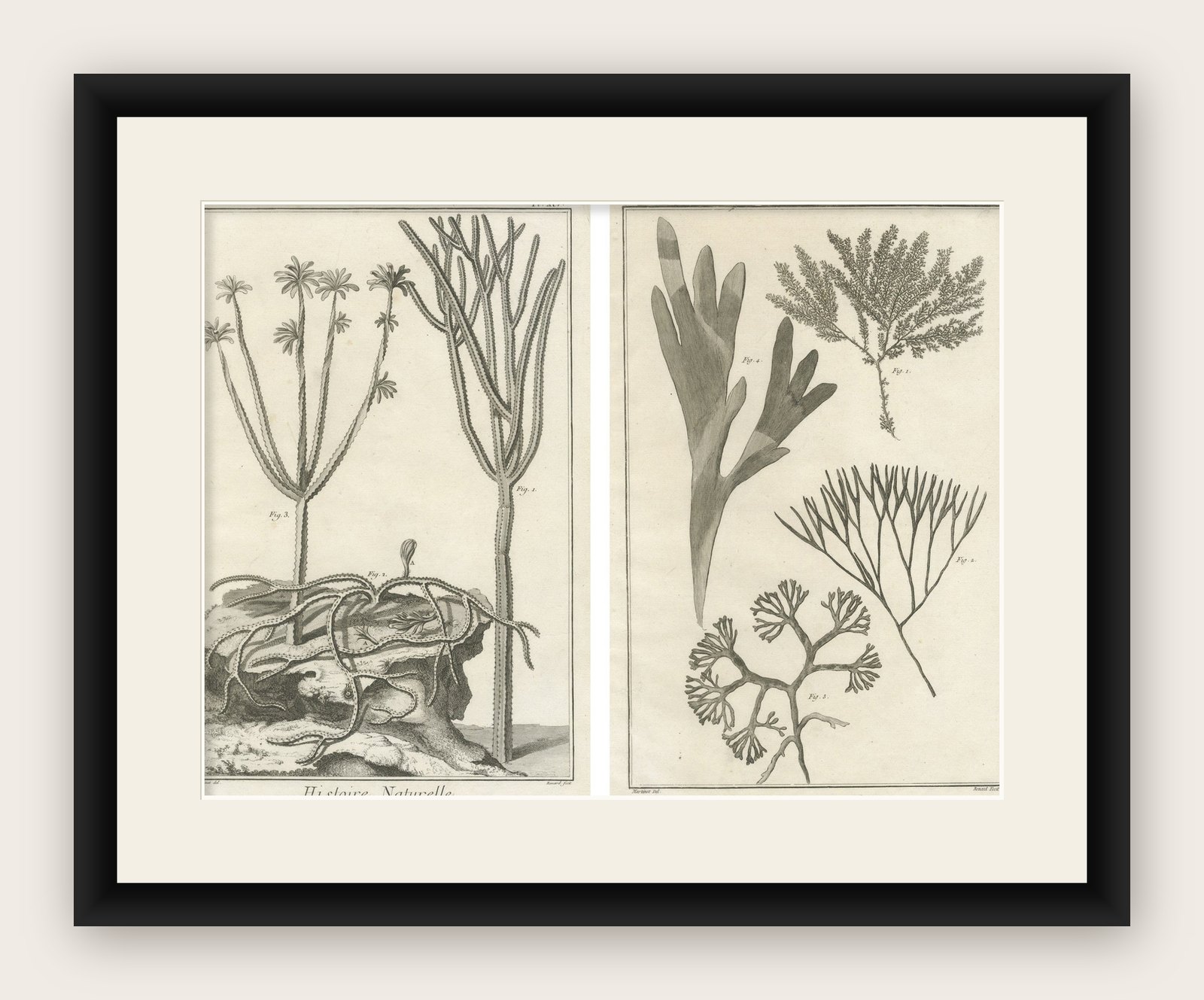
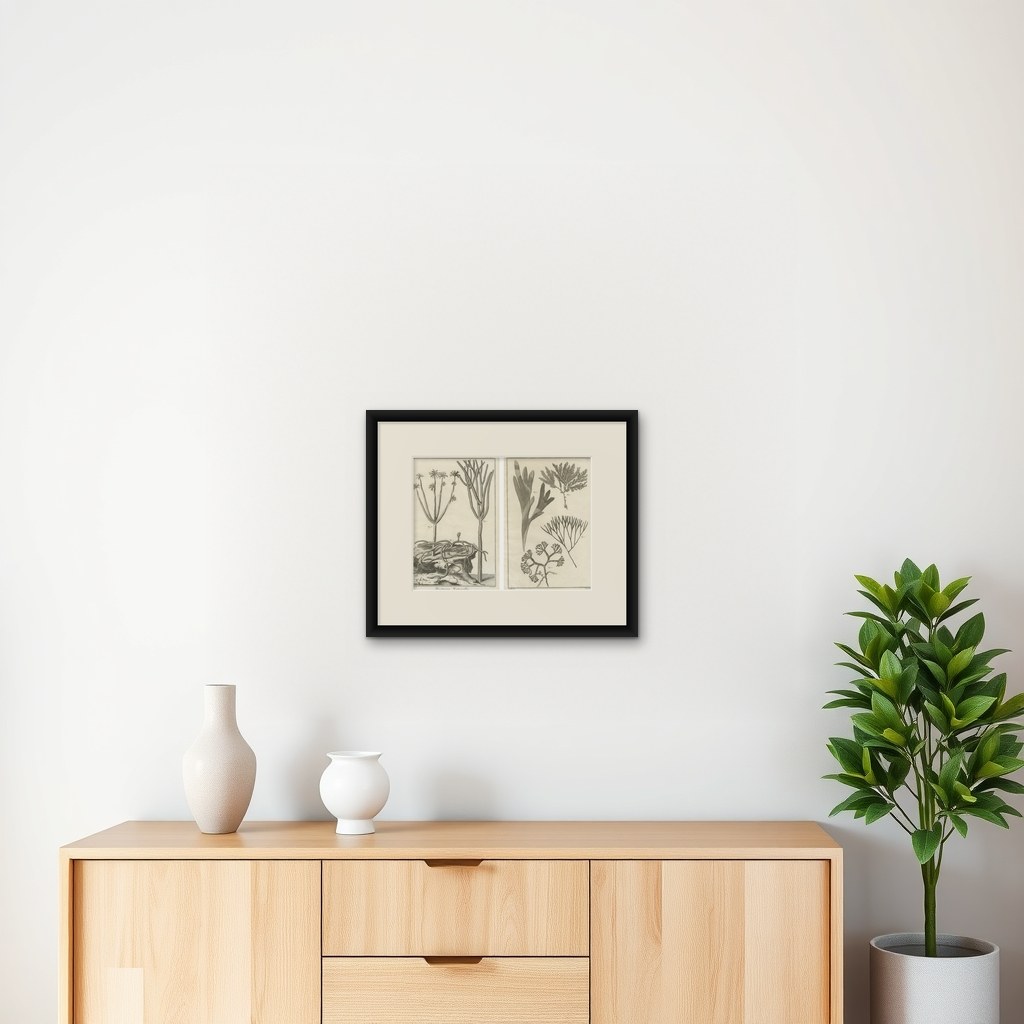
Frame and rooms are illustrations of how the print could look; the description says what is included.
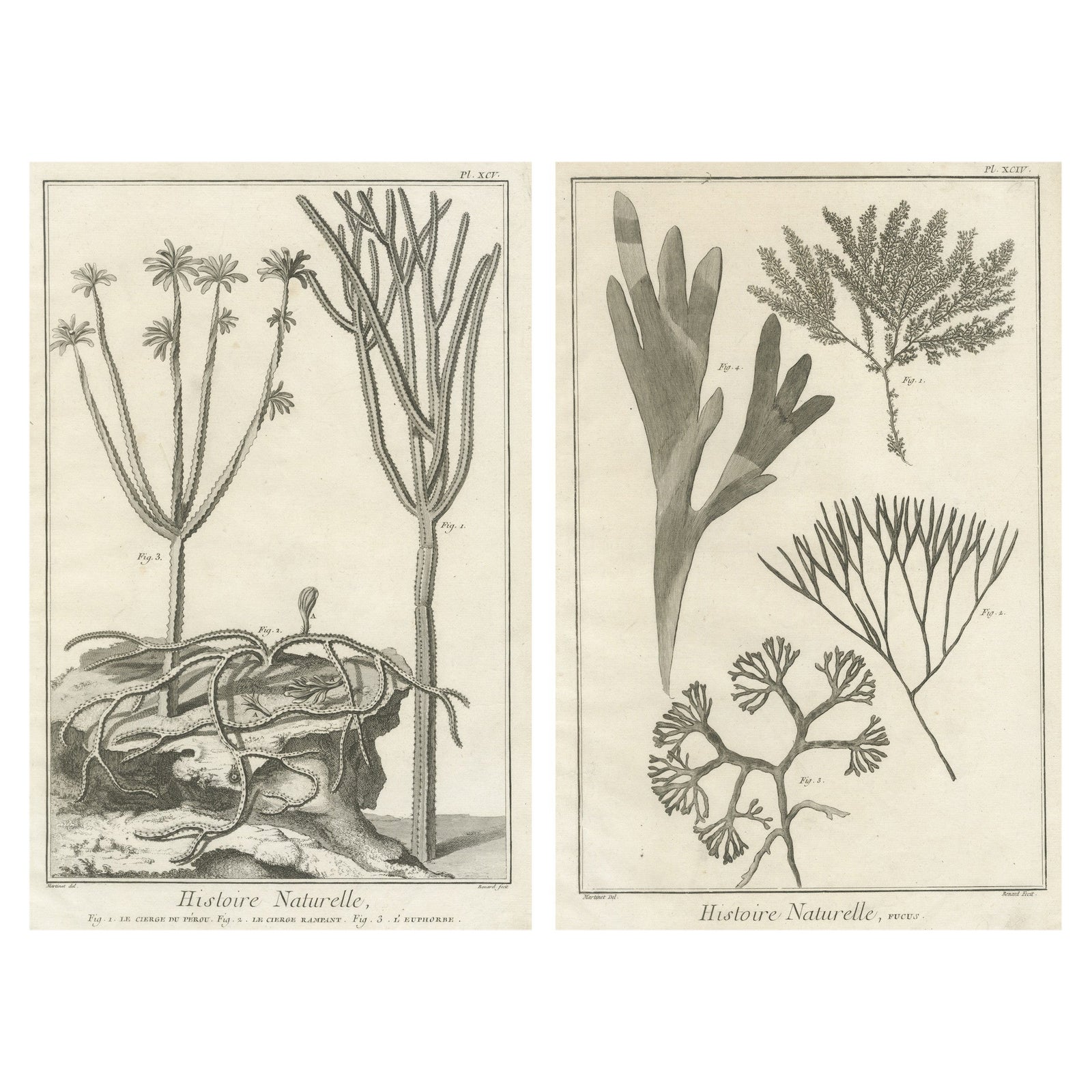
Decorative Antique Prints, Marine Plants and Cactus Engravings, c.1770
$235 (£180, €210)
Period original, not a reproduction.
Shipped from the Netherlands, flat, insured and tracked, worldwide. Returns accepted within 14 days.
- Date
- 1770
- Size
- 15.4 × 9.8 in (39 × 25 cm)
- Condition
- Good. Condition report: Both plates in good condition with strong platemarks. Light age-related toning and minor foxing at margins, consistent with age. Images remain crisp and well-preserved. Offered as two separate folio sheets, unframed.
- Period
- 18th century
- Section
- Botanical
- Reference
- f_46682332
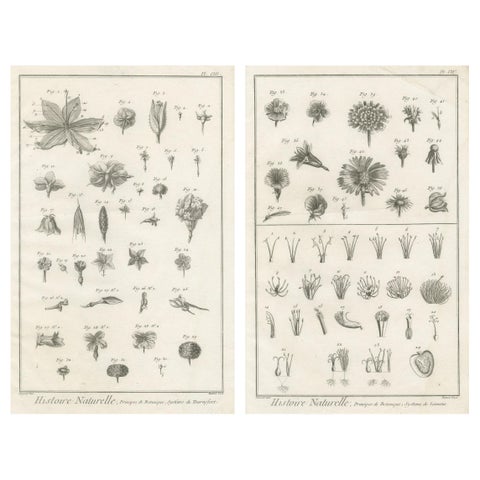
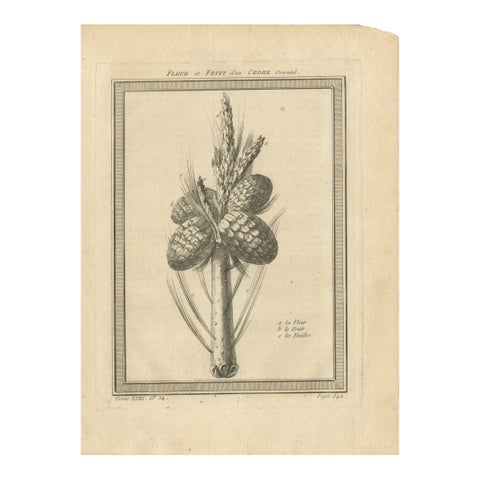
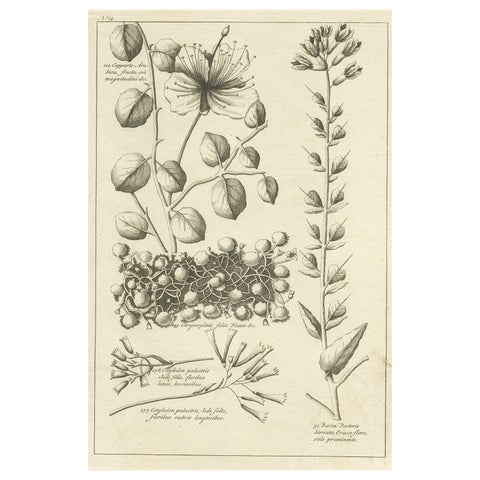
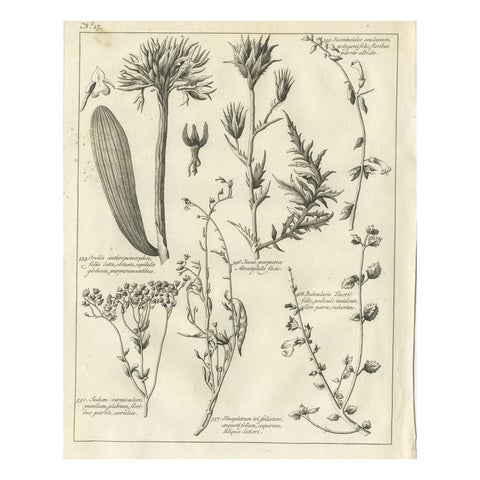
Pair of Antique Engravings of Marine Plants and Cactus Forms from Diderot’s Encyclopédie, ca. 1770
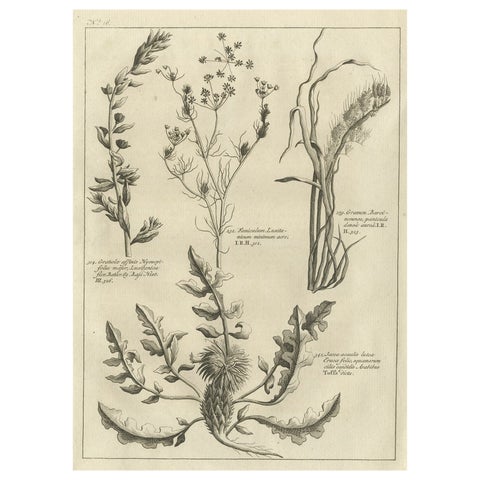
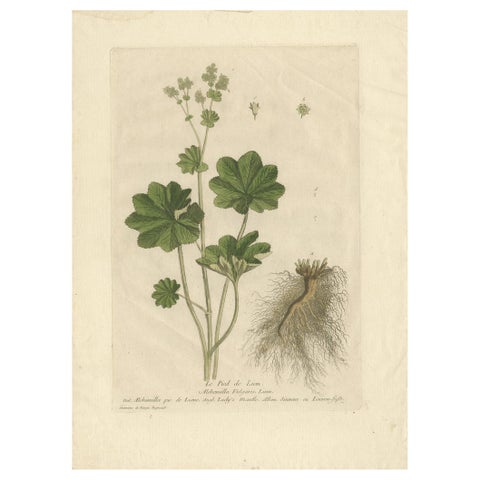
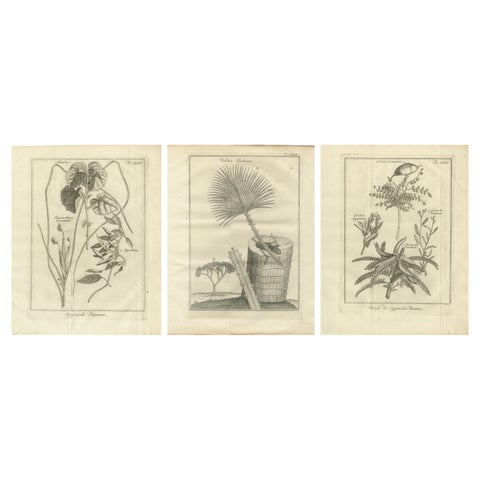
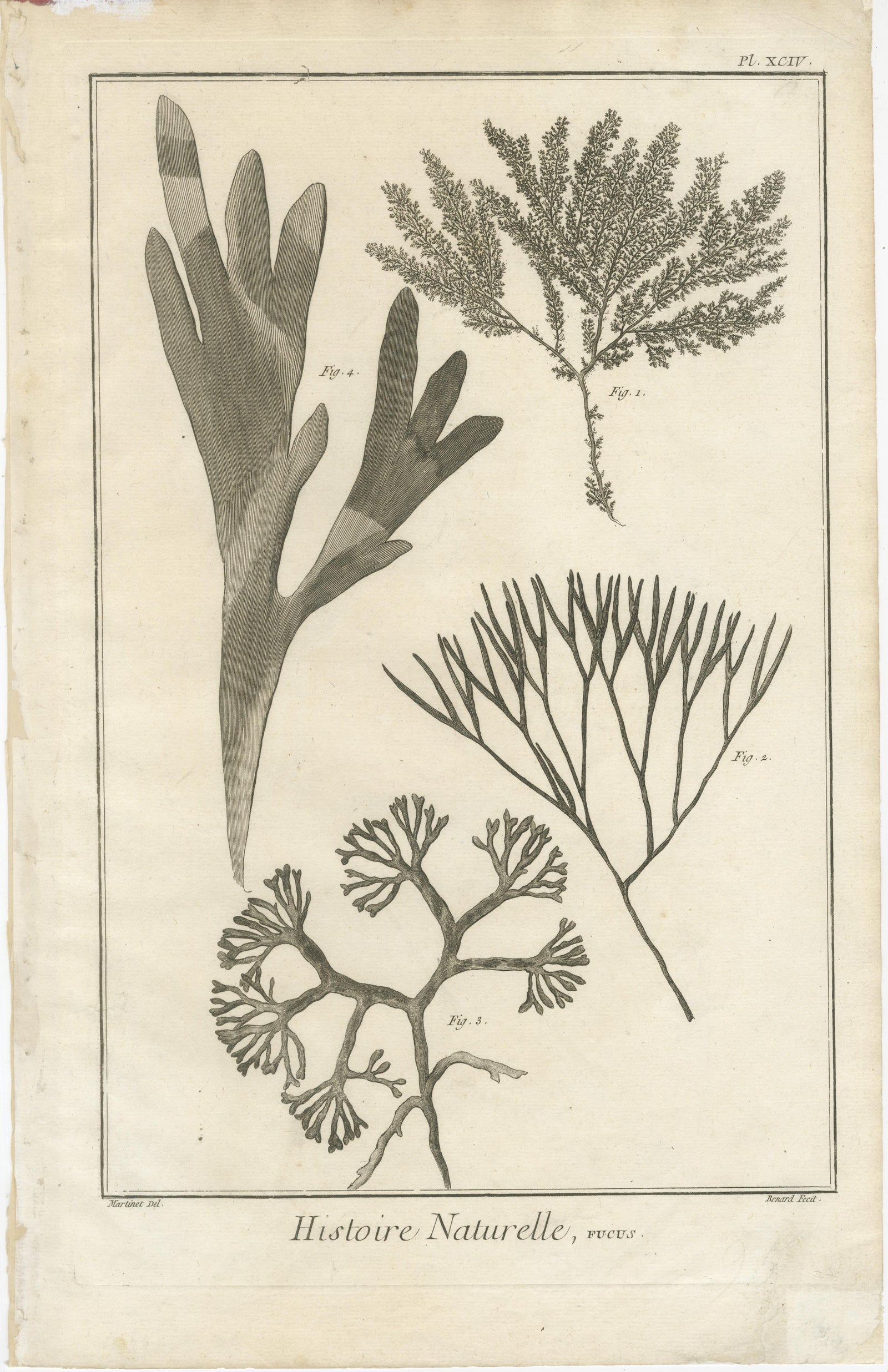
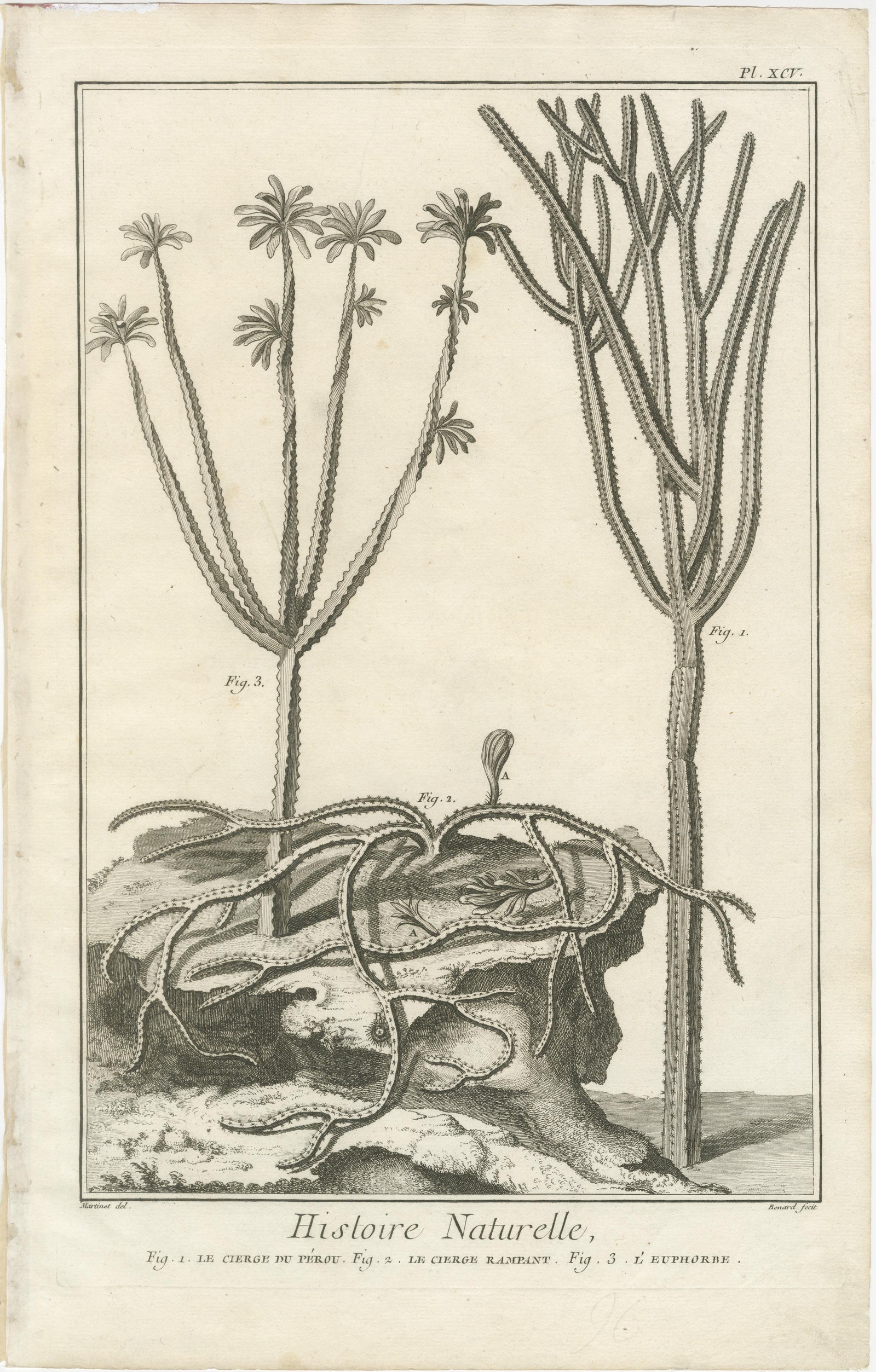
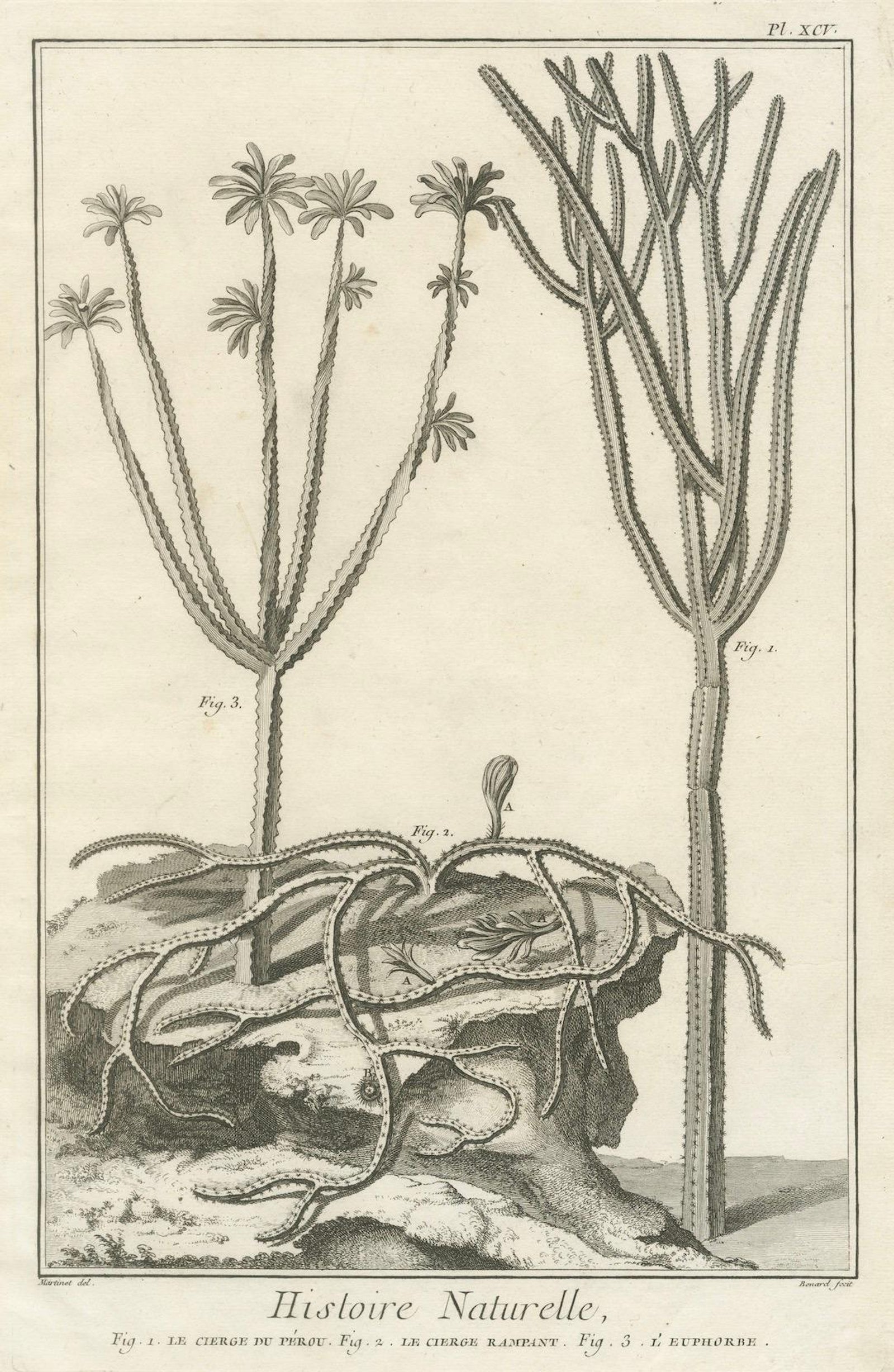
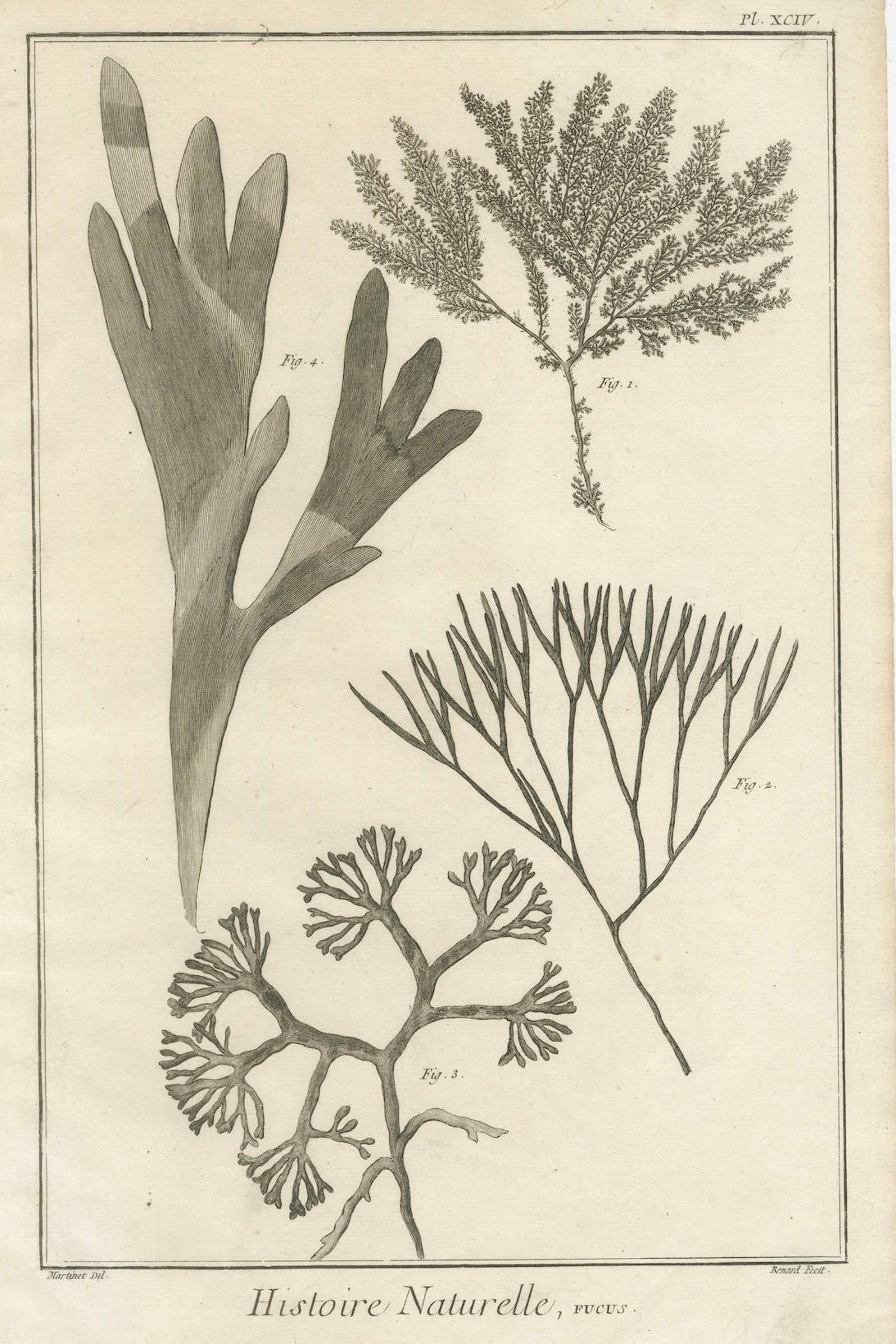
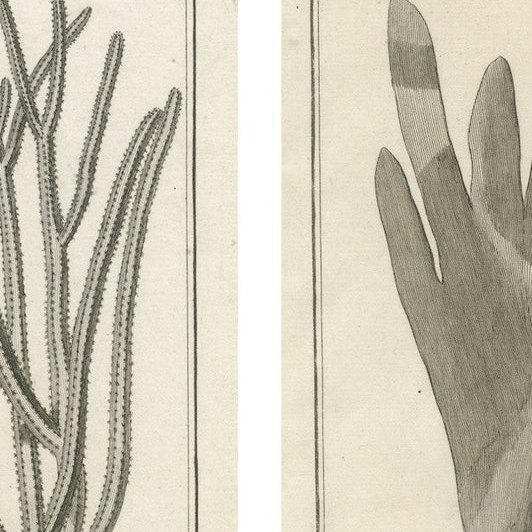
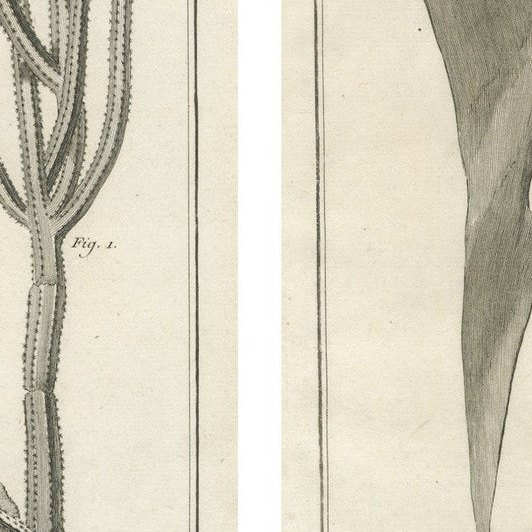
A pair of copperplate engravings from Denis Diderot and Jean le Rond d’Alembert’s monumental Encyclopédie ou Dictionnaire raisonné des sciences, des arts et des métiers, Paris, circa 1770. These plates belong to the Histoire naturelle section and illustrate unusual marine plants (fucus) alongside cactus-like and euphorbia forms, reflecting the encyclopedists’ ambition to catalog the full breadth of the natural world.
The first plate (Pl. XCI) depicts cactus-like marine organisms or “corallines” including Le Cierge de Pirogue and Le Cierge Rameant, rendered with elongated branching structures resembling desert plants. At the base is an unusual euphorbia, its curling forms entwined with an octopus, creating a dramatic and exotic scene. This composition exemplifies the period’s fluid understanding of boundaries between plant, animal, and mineral life, particularly in marine biology.
The second plate (Pl. XCII) presents a variety of marine plants (fucus), including branching algae and broad-bladed forms. Each specimen is isolated for comparative study, emphasizing diversity of structure and texture. These depictions not only served scientific purposes but also influenced contemporary decorative design, where coral- and algae-like motifs appeared in art and ornament.
These engravings highlight the Enlightenment fascination with marine life and the blurred lines between botany and zoology. They are valuable as historical records of scientific thought and as decorative works of art with striking compositions. Together, they represent the encyclopedists’ drive to document nature in all its surprising and unfamiliar forms.
Condition report: Both plates in good condition with strong platemarks. Light age-related toning and minor foxing at margins, consistent with age. Images remain crisp and well-preserved. Offered as two separate folio sheets, unframed.
Framing tips: These plates pair well together, especially when displayed side by side. Wide ivory or cream mounts highlight the engravings’ clarity, while black or dark wood frames provide a strong visual contrast. For a refined touch, double matting with a green or blue inner line will draw out the natural theme and add depth.
Technique: Copperplate engraving
Maker: Denis Diderot & Jean le Rond d’Alembert, Paris, ca. 1770