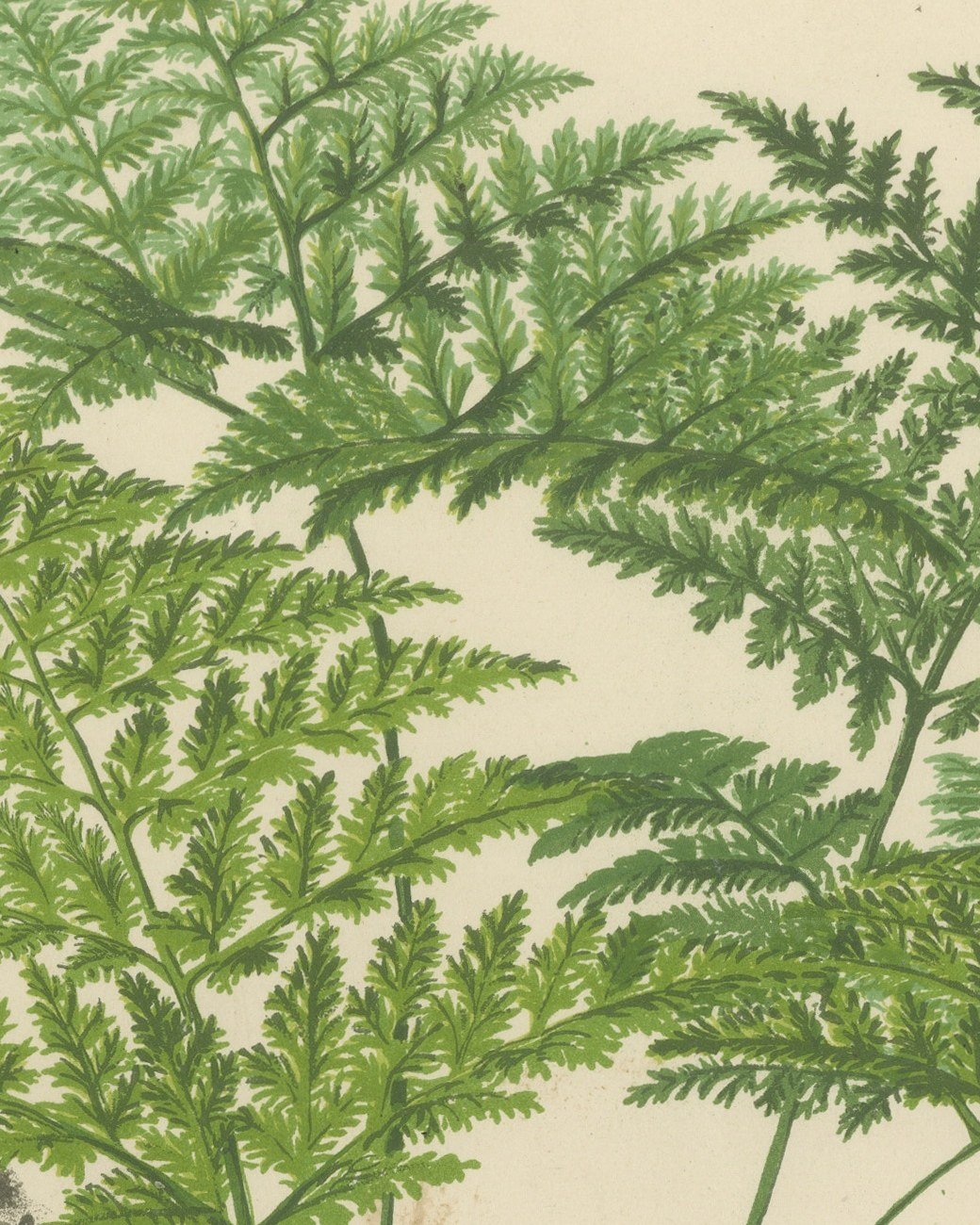
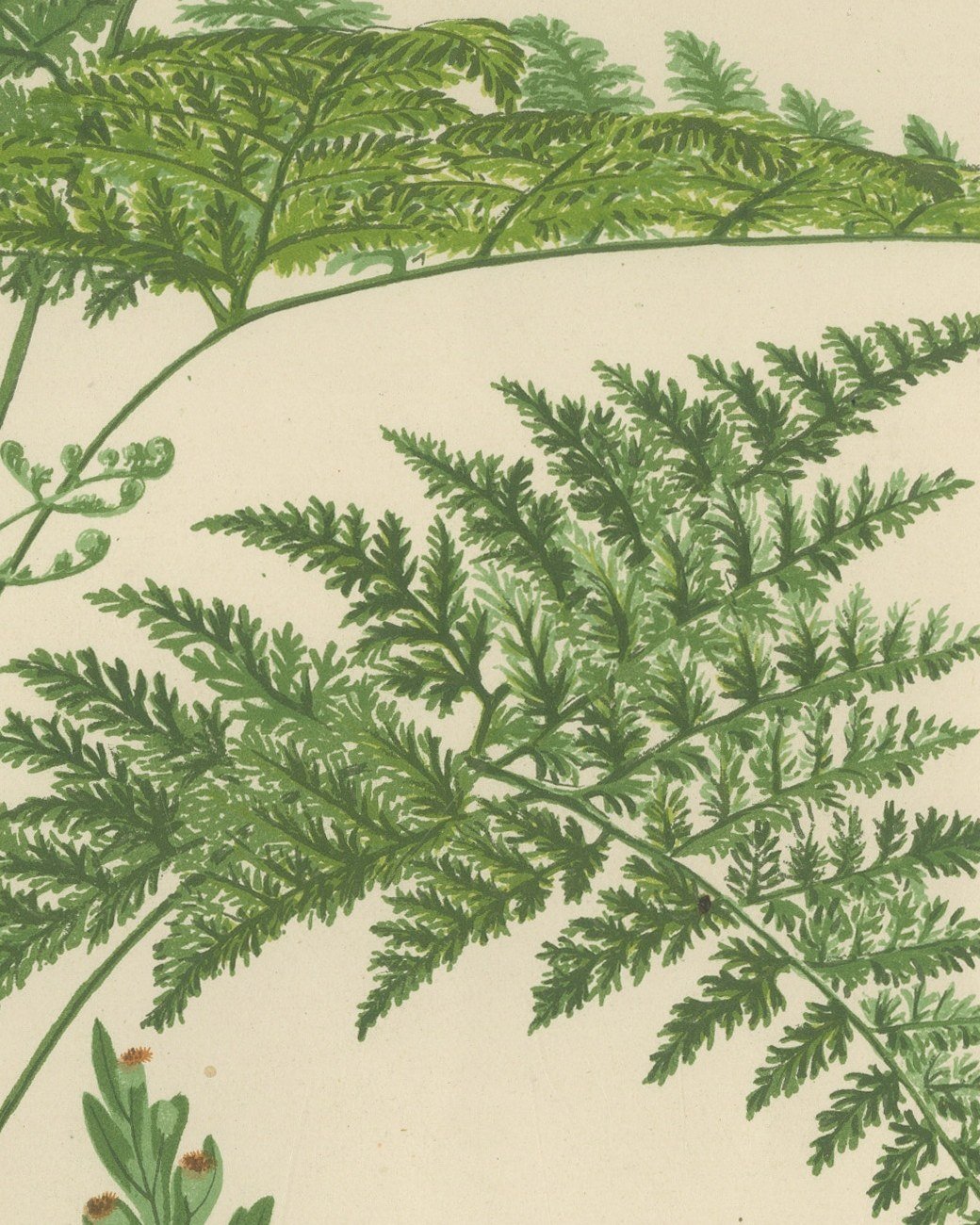
Close-ups
Framed and on the wall
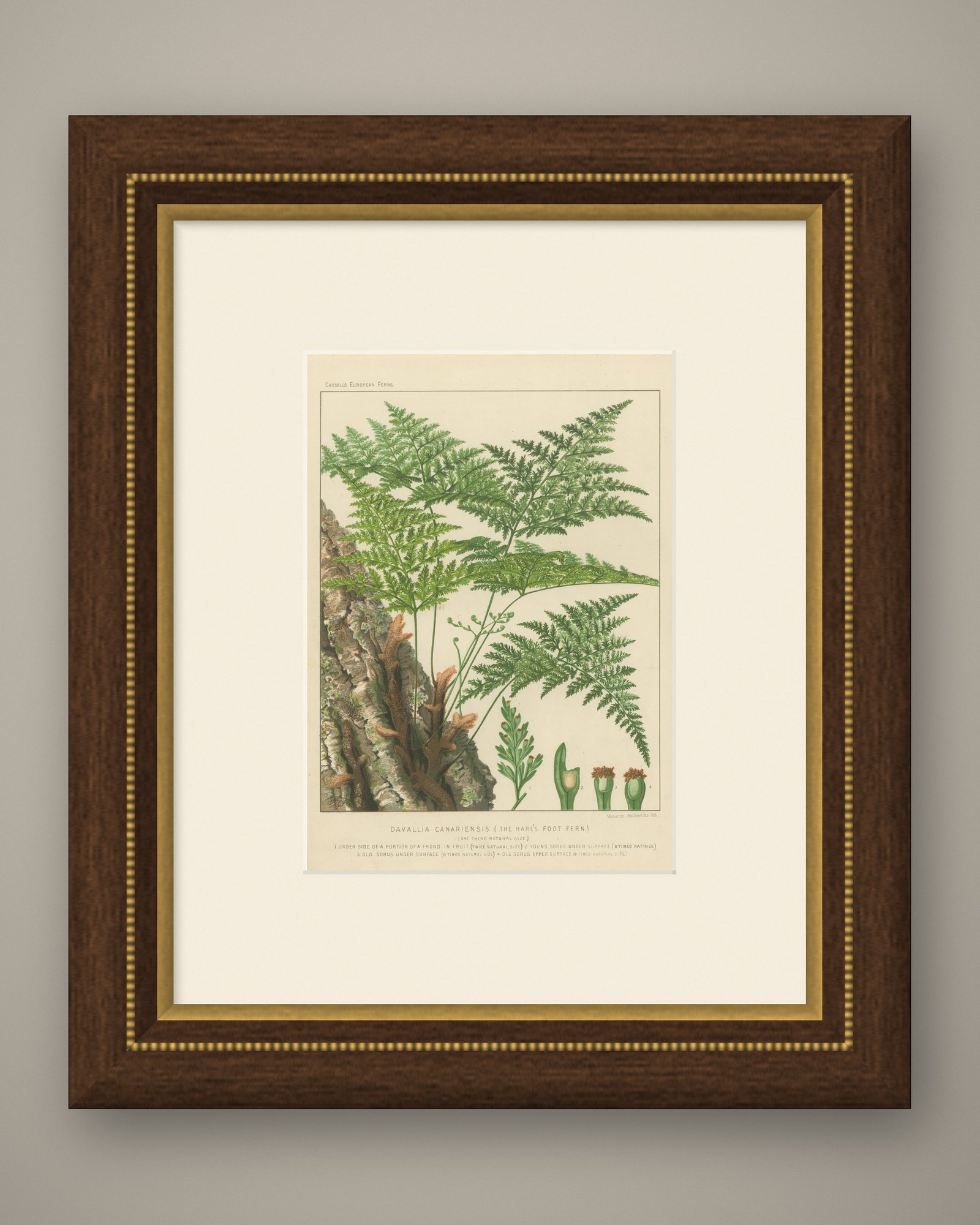
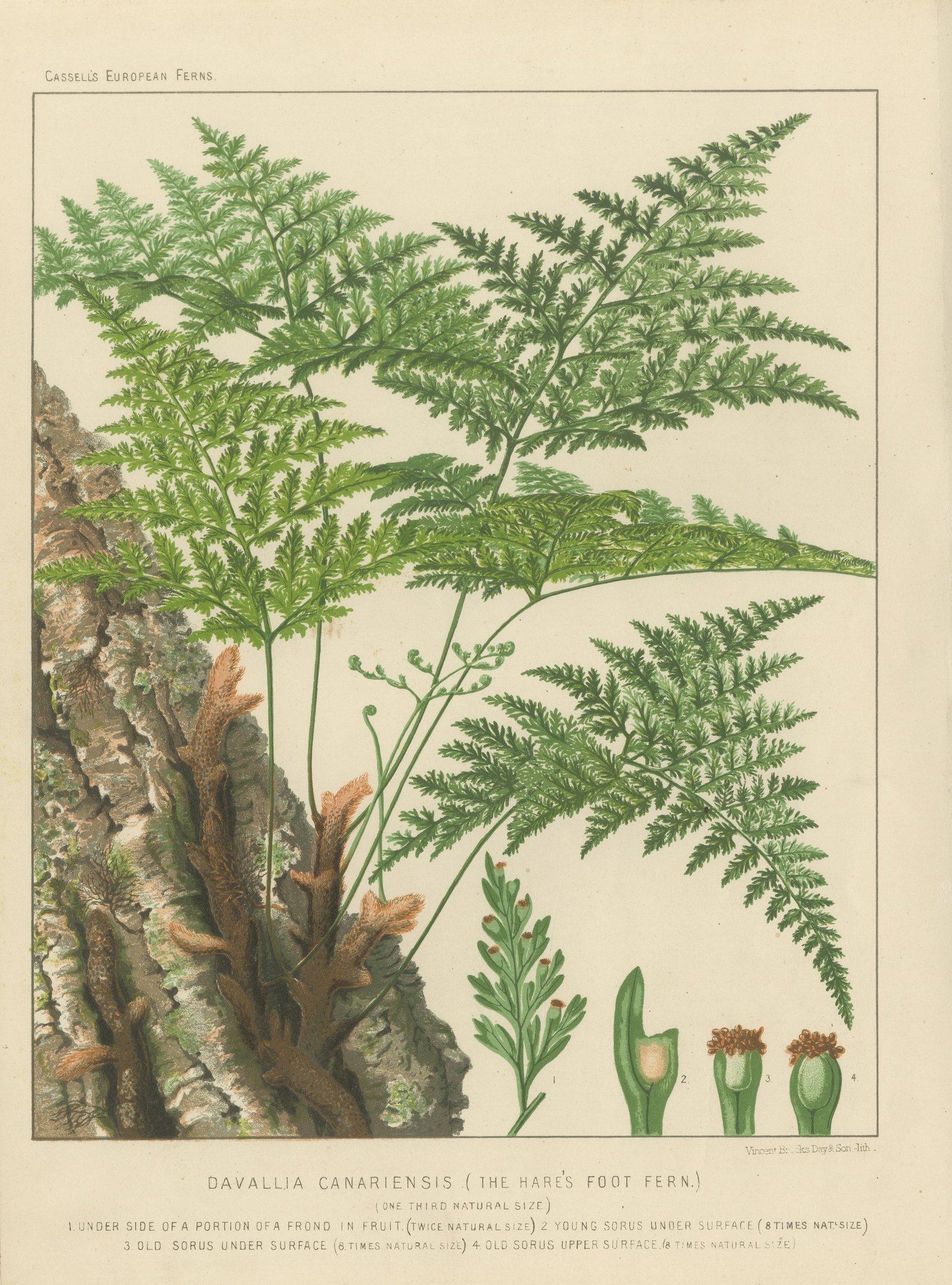
Frame and rooms are illustrations of how the print could look; the description says what is included.
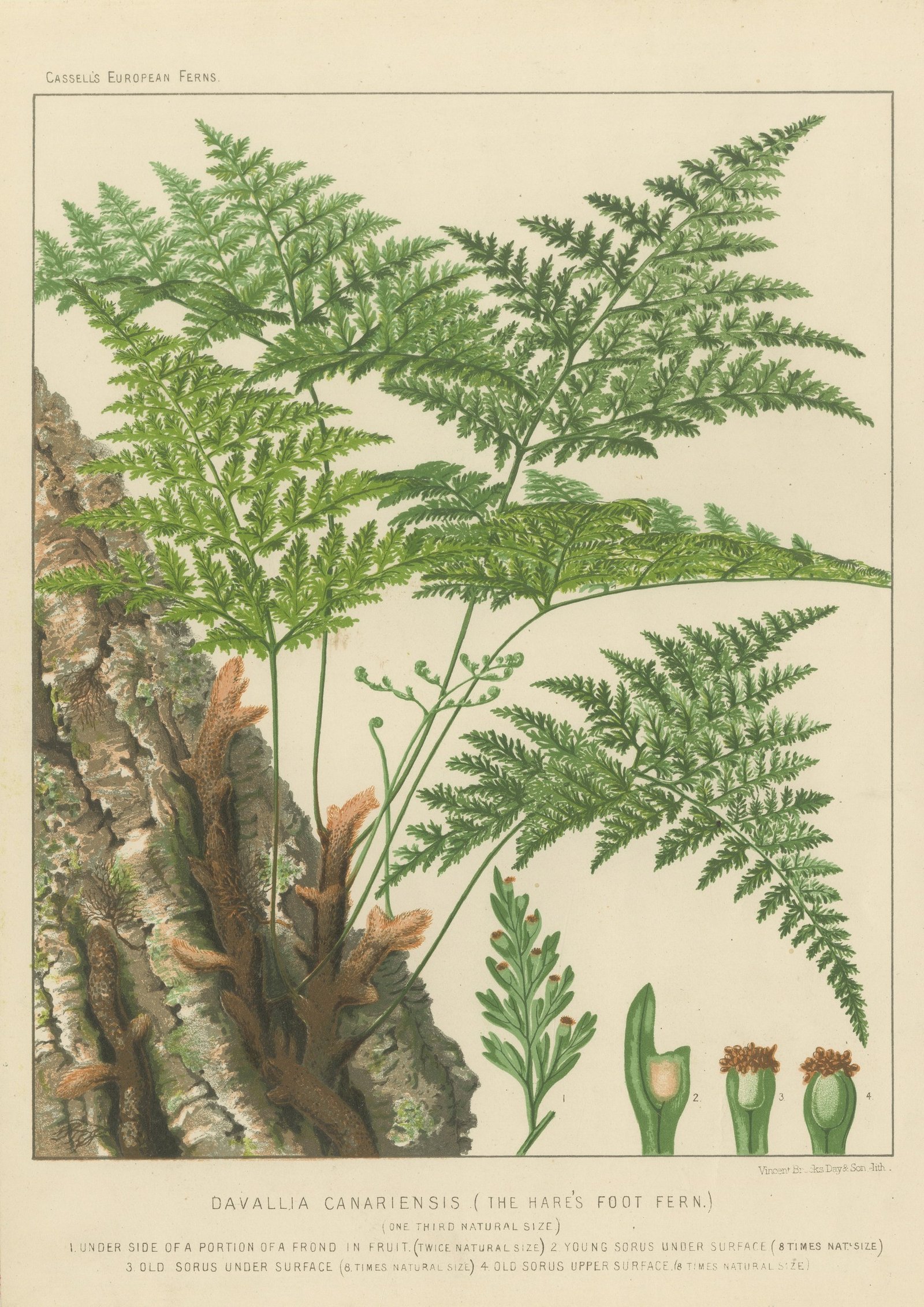
Decorative Antique Chromolithograph of the Hare's Foot Fern, circa 1885
$150 (£115, €135)
Period original, not a reproduction.
Shipped from the Netherlands, flat or rolled, insured and tracked, worldwide. Returns accepted within 14 days.
- Date
- circa 1885
- Size
- 10.6 × 7.9 in (27 × 20 cm)
- Technique
- Chromolithograph
- Coloring
- Printed color
- Condition
- Good. Even age toning. Handling soiling along the left and right edges. All four corners complete.
- Period
- Late 19th century
- Section
- Botanical
- Reference
- BG-14433-6
What the condition grades mean
- Excellent
- Bright and clean, with no faults worth mentioning.
- Very good
- Only light signs of age, such as faint toning.
- Good
- Normal signs of age for a sheet of this period: toning, some foxing, small marks or neat old repairs.
- Fair
- Clear faults such as staining, tears or repairs, priced to match.
Every fault we see is written in the condition note, and the whole sheet is shown uncropped in the photos.
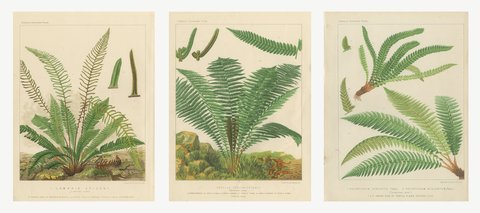
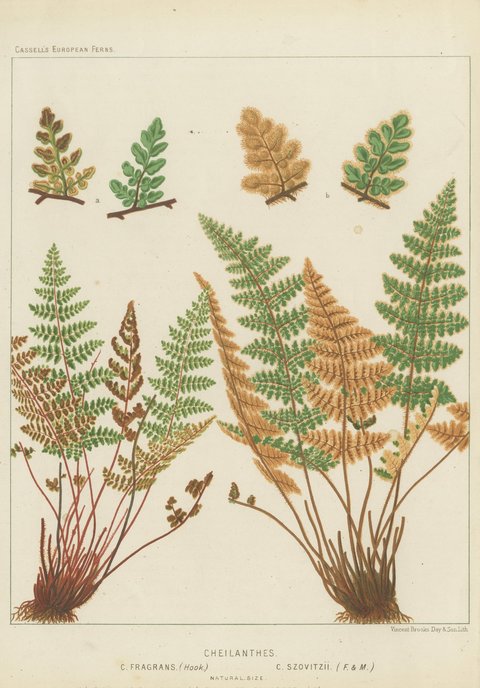
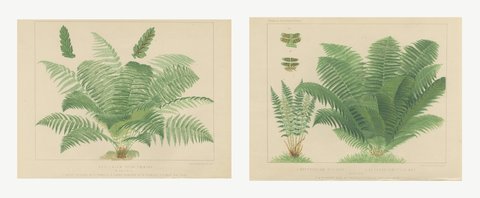
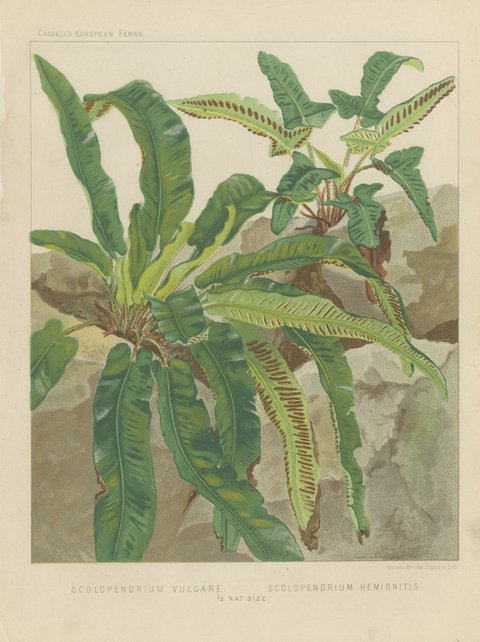
This original antique fern chromolithograph shows the hare's foot fern, Davallia canariensis, climbing a fissured tree trunk on the furred, russet rhizomes that give it its name, its triangular lacy fronds arching out across the sheet. Four magnified details of a fertile frond and its spore cases stand in a row at the foot. It is a plate from James Britten's European Ferns, published in London by Cassell, circa 1885, after a drawing made from the living plant by David Blair.
Published in London by Cassell, European Ferns was the work of the botanist James Britten, 1846 to 1924, of the British Museum, with thirty plates drawn from living plants by David Blair. The parts first came out between 1879 and 1881; this copy bears the Cassell and Company, Limited imprint used from 1883 onward, so it is a later issue of circa 1885. Unlike most fern books of the period, which kept to the British flora, Britten's covers species from Madeira to Scandinavia and the Caucasus. The plates were printed in color by Vincent Brooks, Day and Son of London, one of the foremost chromolithographic printers of Victorian England, and the lithographers' credit appears at the lower right of the image. The color is printed throughout, built up from separate stones, not applied by hand.
The Victorian fern craze turned plates like this into decoration almost as soon as they were printed, and they remain among the most popular botanical prints for interiors today. With its furred, creeping rhizomes the hare's foot fern is one of the most characterful plants in the book. The fresh greens suit a garden room, a kitchen or a study, and the sheet sits well beside other botanical prints.
Even age toning. Handling soiling along the left and right edges. All four corners complete.
This is an original antique print, not a modern reproduction. This item is sold unframed.