Close-ups
Framed and on the wall
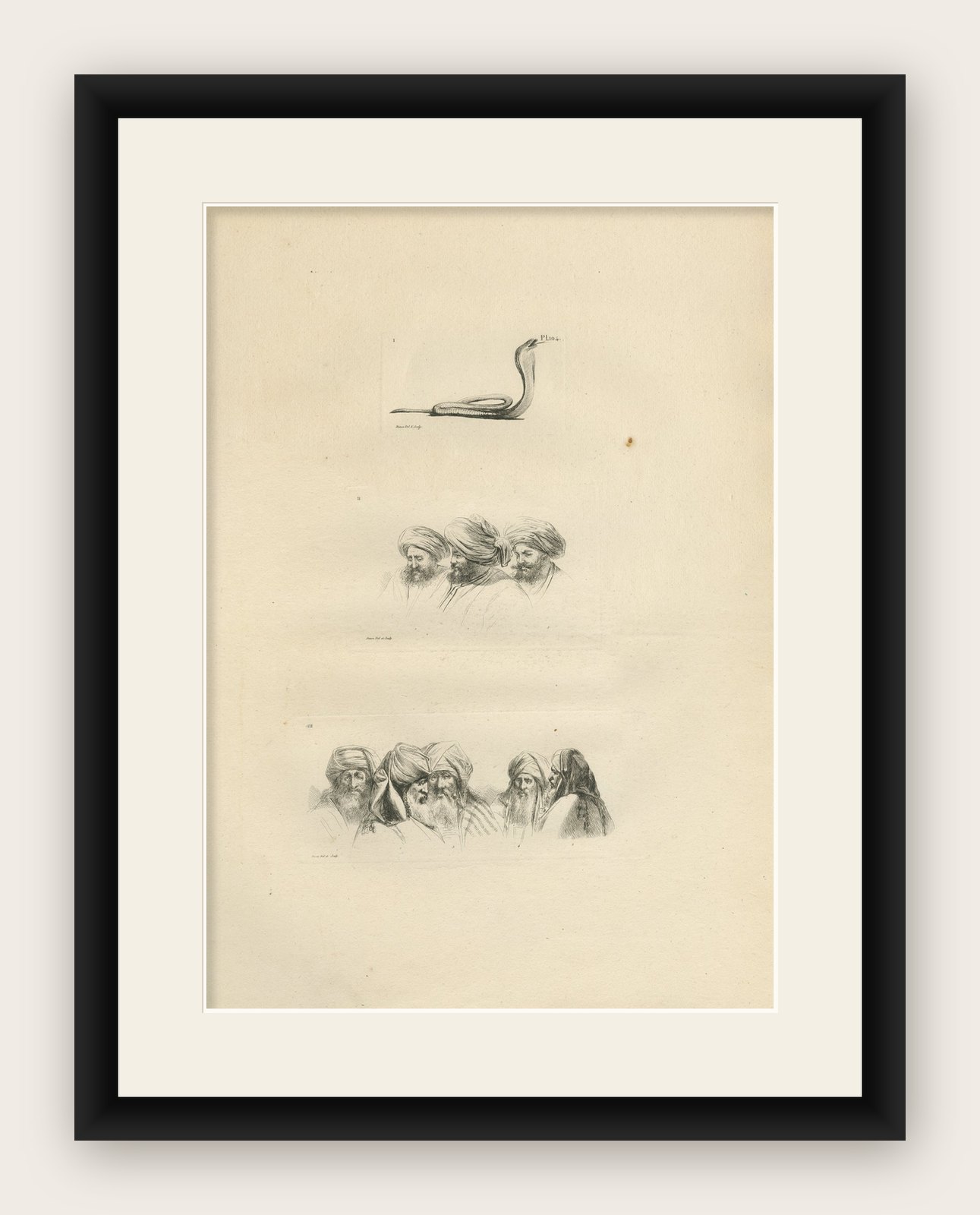

Frame and rooms are illustrations of how the print could look; the description says what is included.
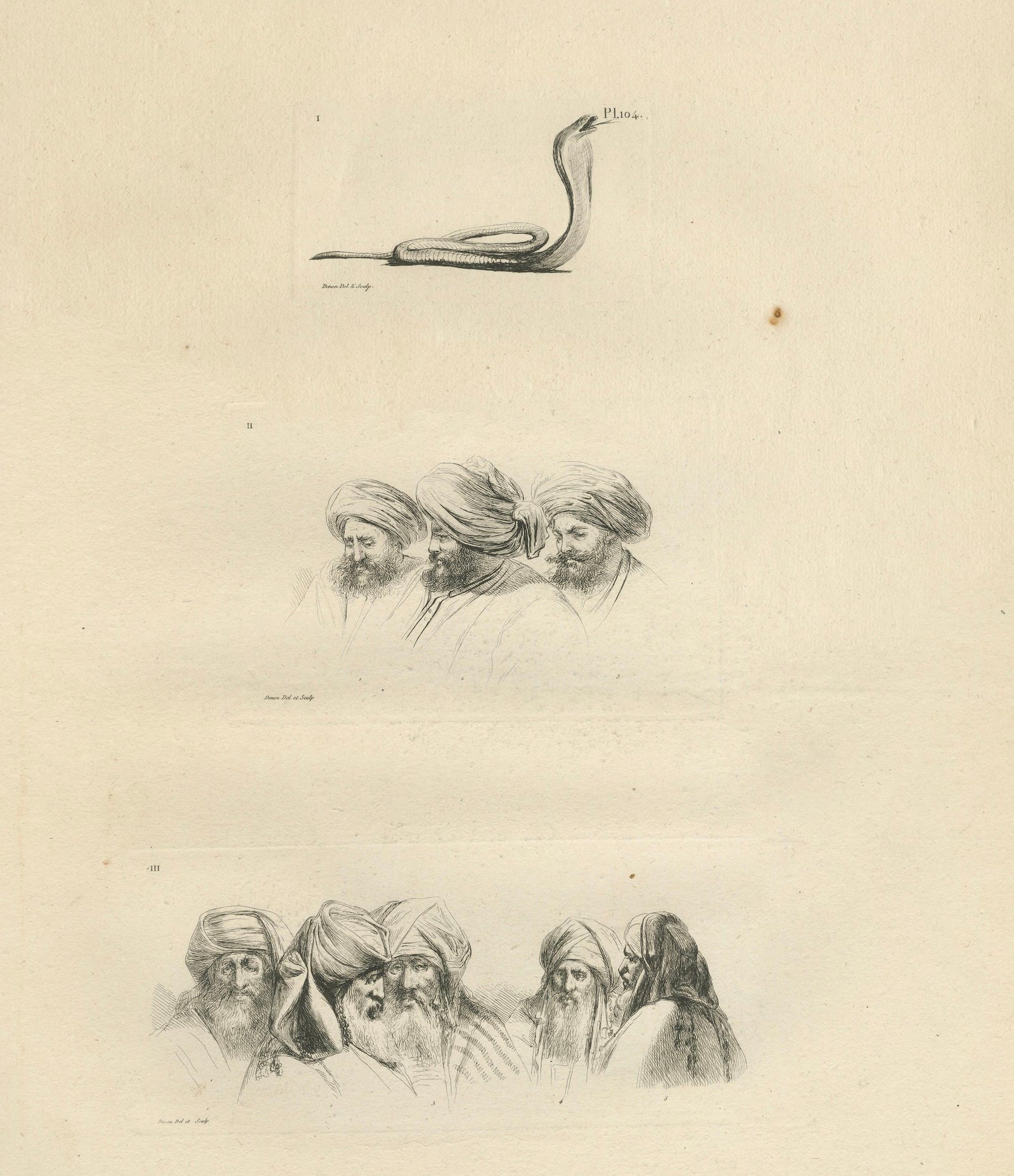
Comparative Head Studies and Cobra, Egypt, Antique Engraving, c.1802
$720 (£545, €640)
Period original, not a reproduction.
Shipped from the Netherlands, flat, insured and tracked, worldwide. Returns accepted within 14 days.
- Date
- 1802
- Size
- 23 × 16.3 in (58.5 × 41.5 cm)
- Condition
- Original antique engraving on laid paper. Light overall age toning and scattered spotting consistent with age. Small foxing marks visible. Wide margins preserved. Plate mark faintly visible.
- Period
- Early 19th century
- Section
- Reptiles and amphibians
- Reference
- f_48440422
Comparative Head Studies and Cobra, Egypt, Antique Engraving, c.1802
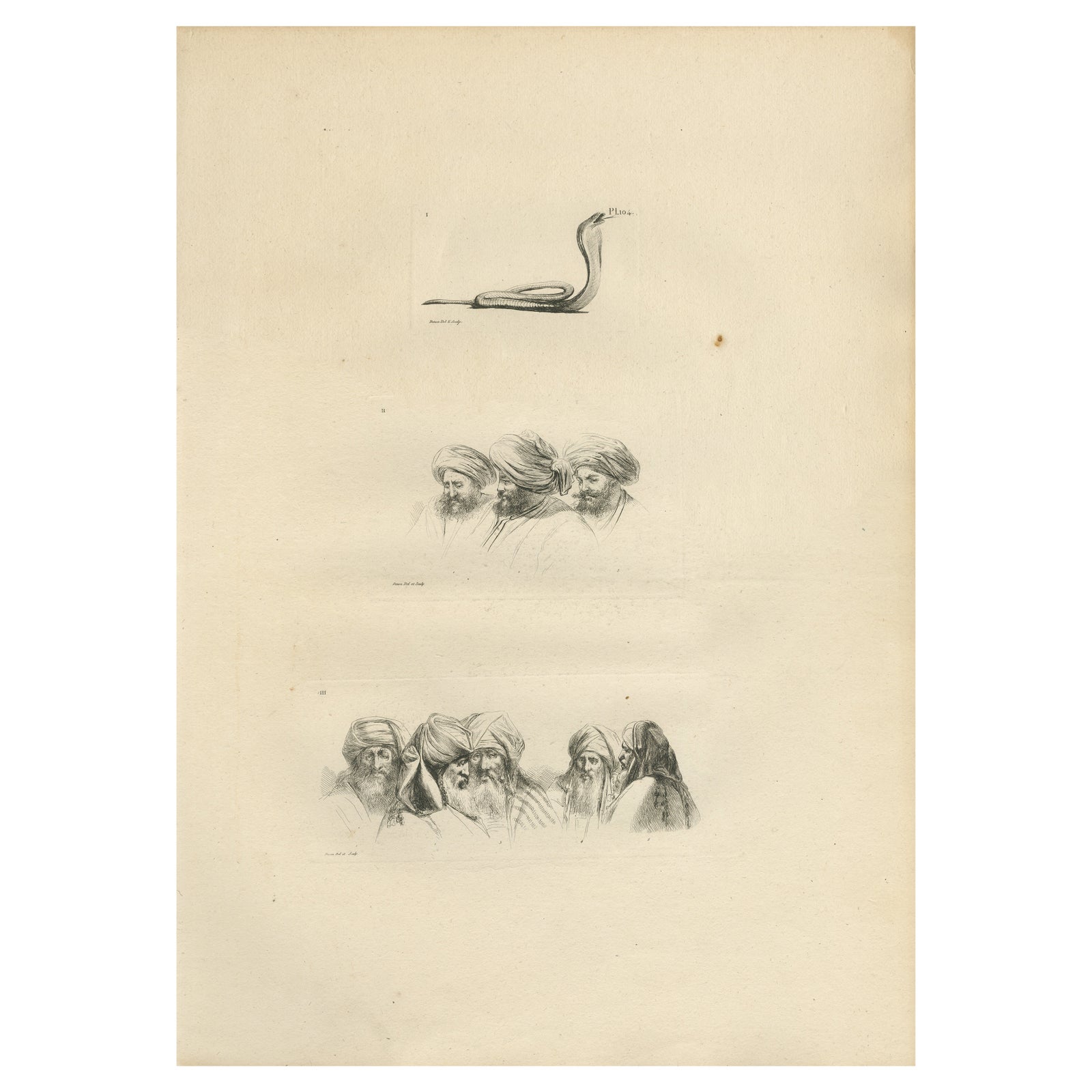
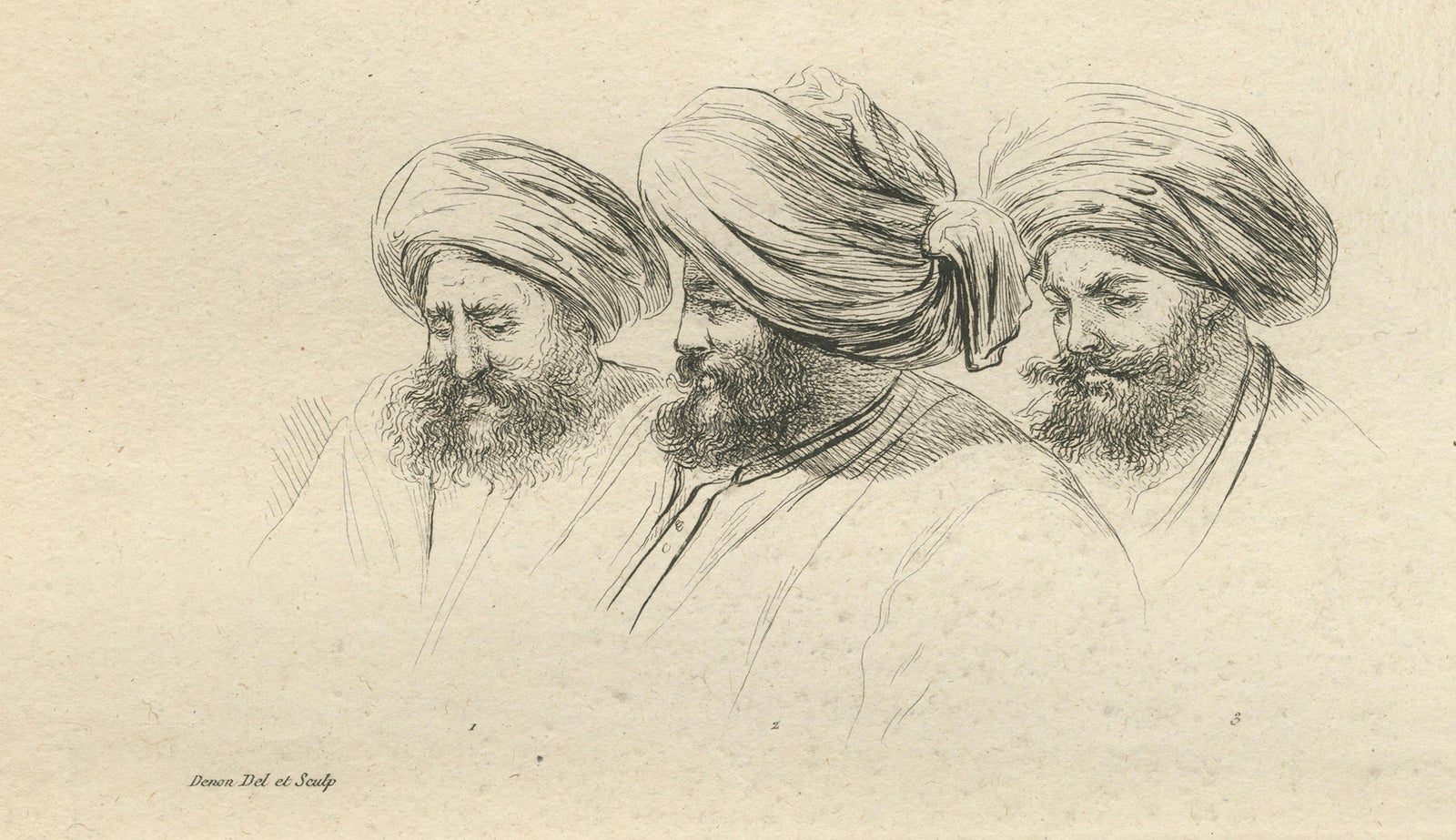
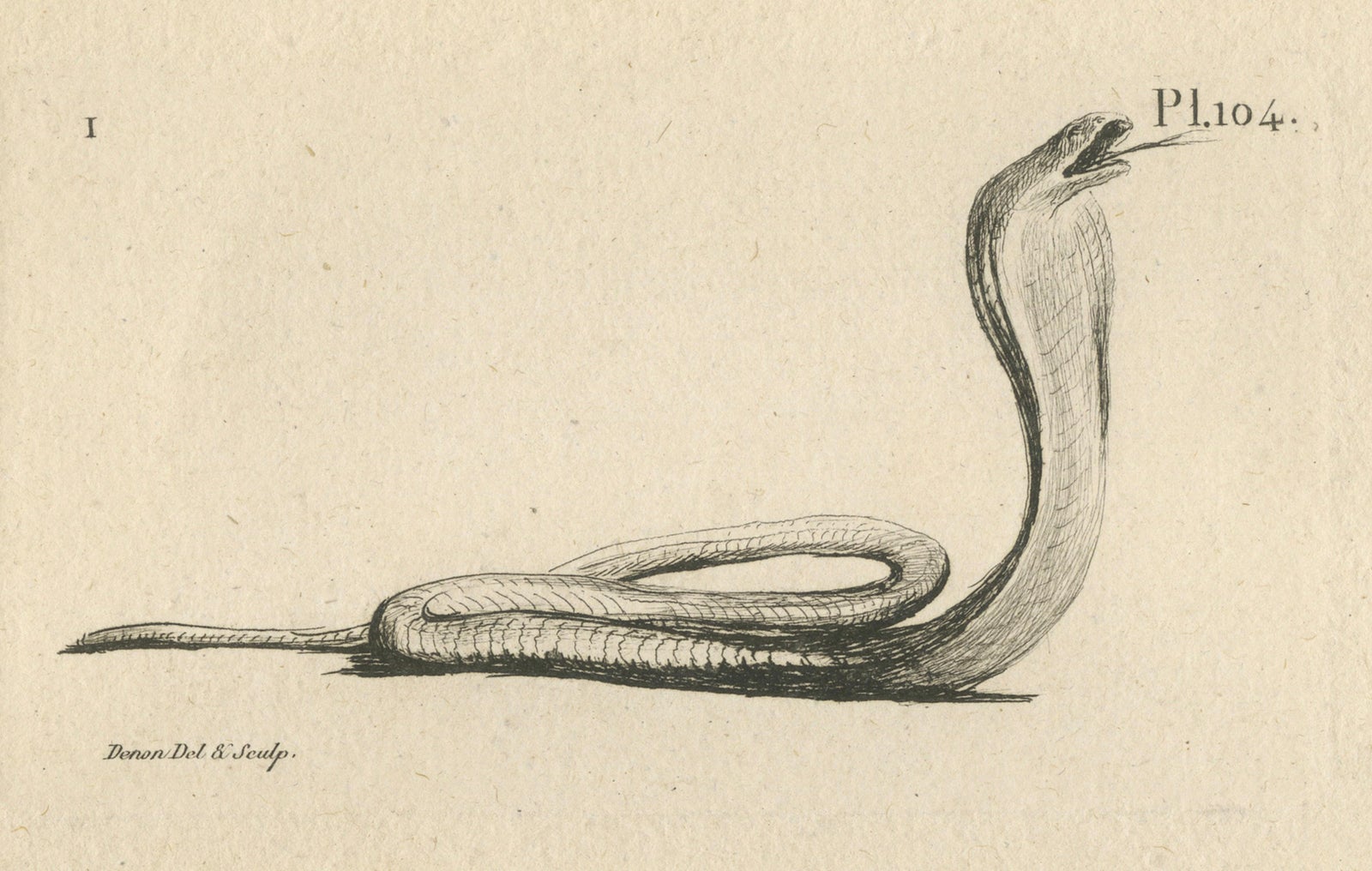
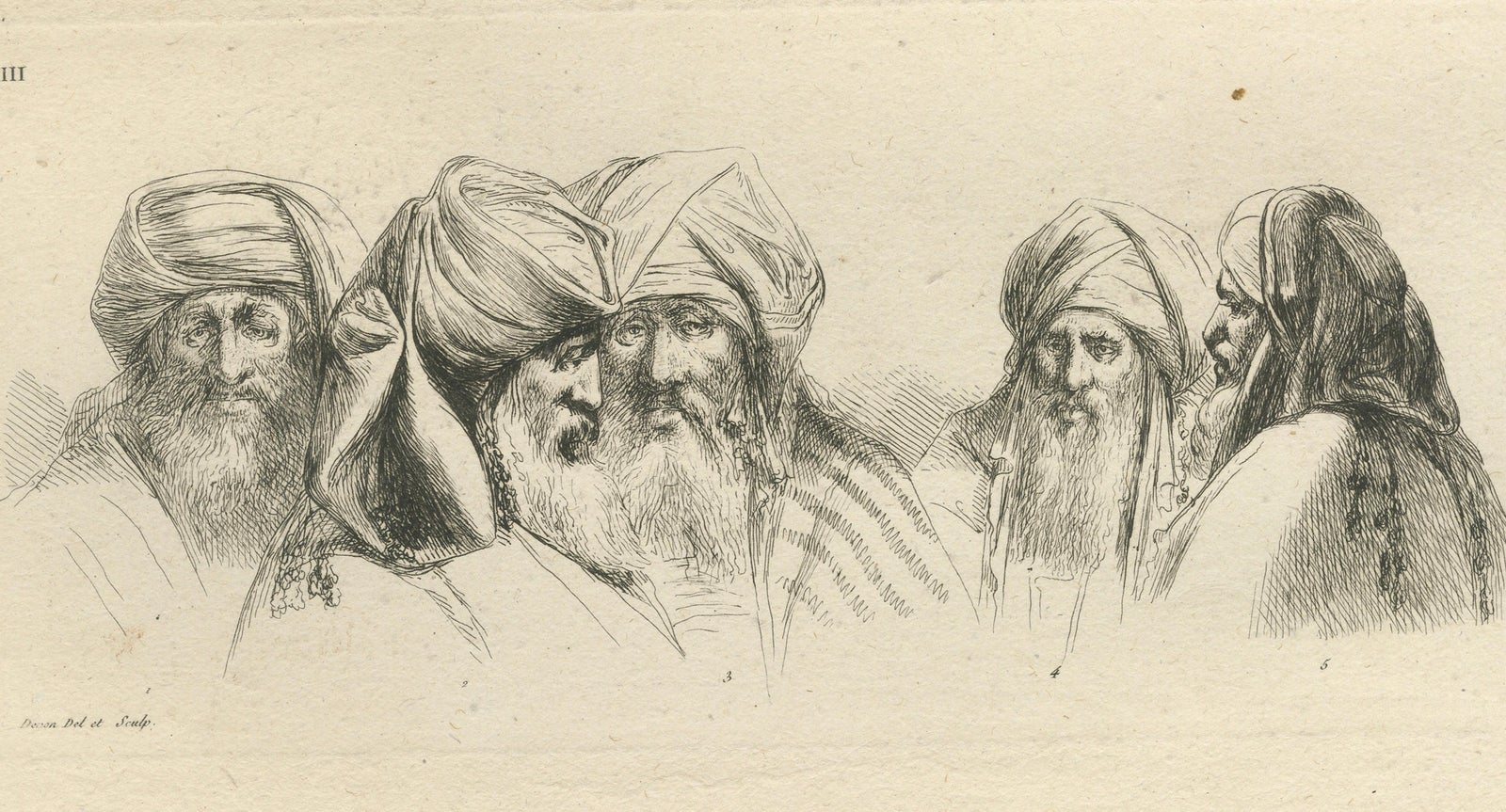
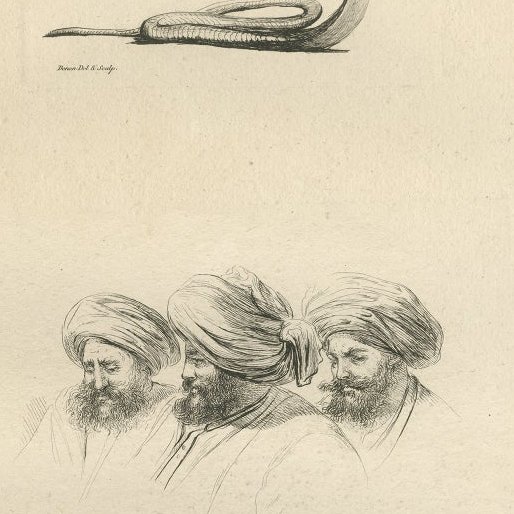
This refined engraved plate presents a series of comparative figural studies associated with early nineteenth-century European observation of Egypt and the Near East. The composition is arranged in three distinct registers: a delicately rendered cobra above, followed by two groupings of male heads shown in profile and three-quarter view, wearing varied forms of turbans and head coverings.
Rather than depicting named individuals, the figures are presented as typological studies, intended to illustrate physiognomic variation, dress, and character as understood by contemporary observers. Such comparative head studies were a common feature of early ethnographic and travel publications, reflecting the period’s growing interest in anthropology, natural history, and visual classification. The inclusion of the cobra, an animal of profound symbolic significance in ancient Egypt, further reinforces the intellectual scope of the plate, bridging natural history, symbolism, and human observation.
The engraving is executed with notable subtlety and restraint. Fine line work captures the texture of beards, folds of fabric, and facial expression without theatrical emphasis, resulting in a calm, contemplative image. The generous use of blank paper around the figures enhances their graphic presence and gives the sheet a distinctly modern, museum-like quality when framed.
Plates of this type are particularly appealing to collectors of early Egyptology, Orientalist studies, and the history of anthropology, as well as to interior designers seeking intellectually engaging works on paper. The combination of human studies and symbolic animal imagery makes this a compelling and conversation-worthy piece for libraries, studies, and curated interiors.
Condition: Original antique engraving on laid paper. Light overall age toning and scattered spotting consistent with age. Small foxing marks visible. Wide margins preserved. Plate mark faintly visible.
Framing tips: Best presented with a wide off-white or pale sand-coloured mat to emphasise the delicate scale of the figures. A dark walnut, ebonised, or black frame will enhance contrast and create a museum-style presentation.
Technique: Engraving
Maker: After Dominique Vivant Denon, France, early 19th century