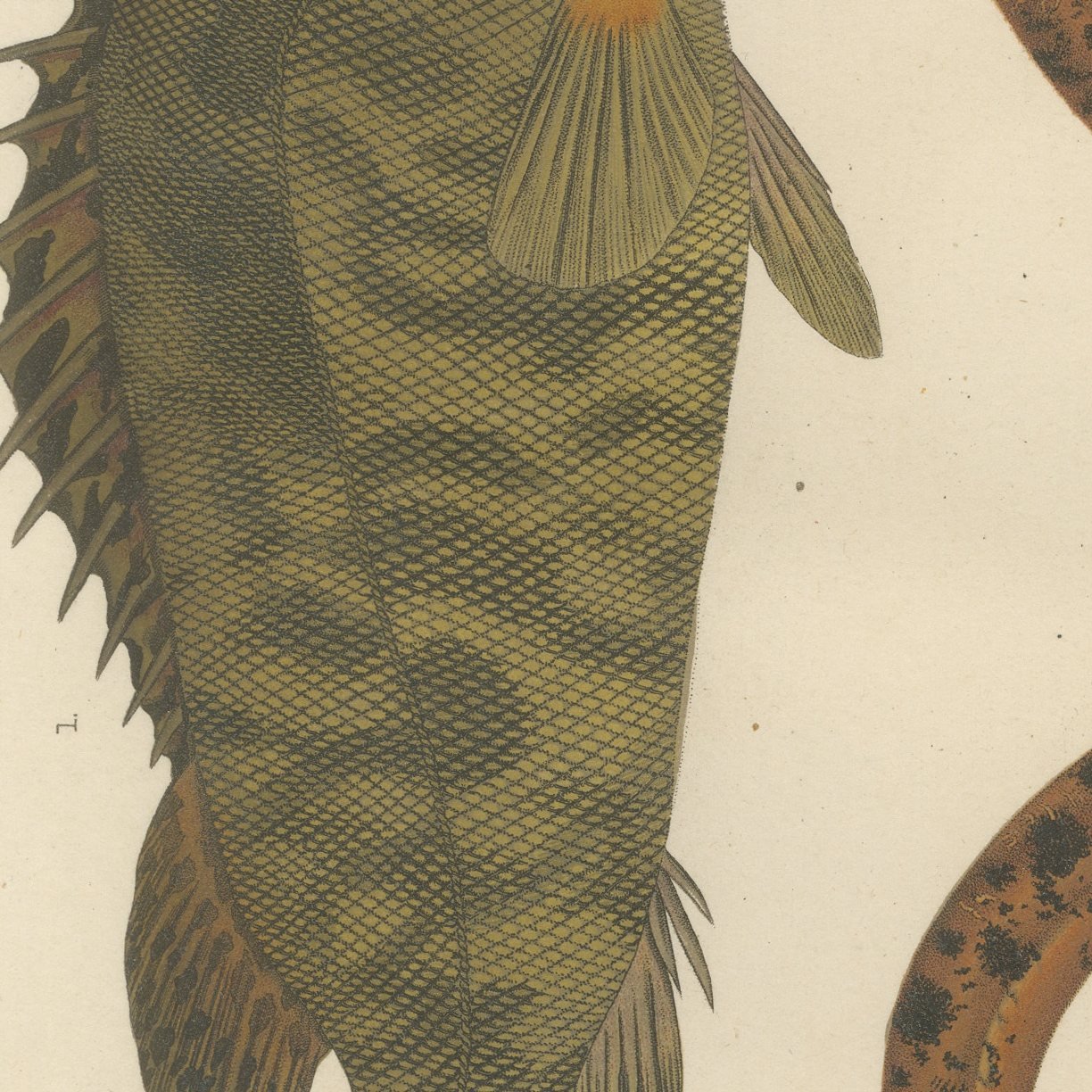
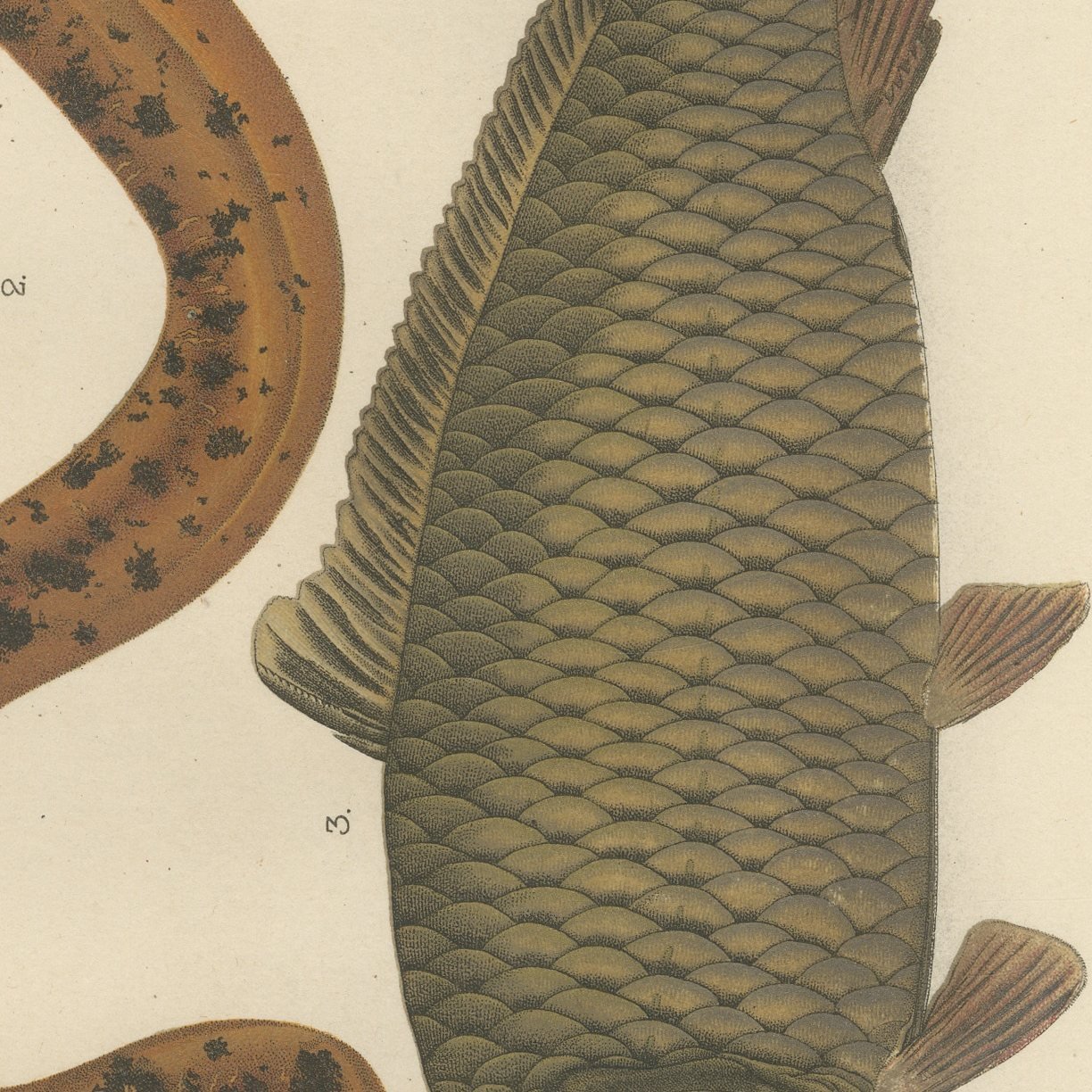
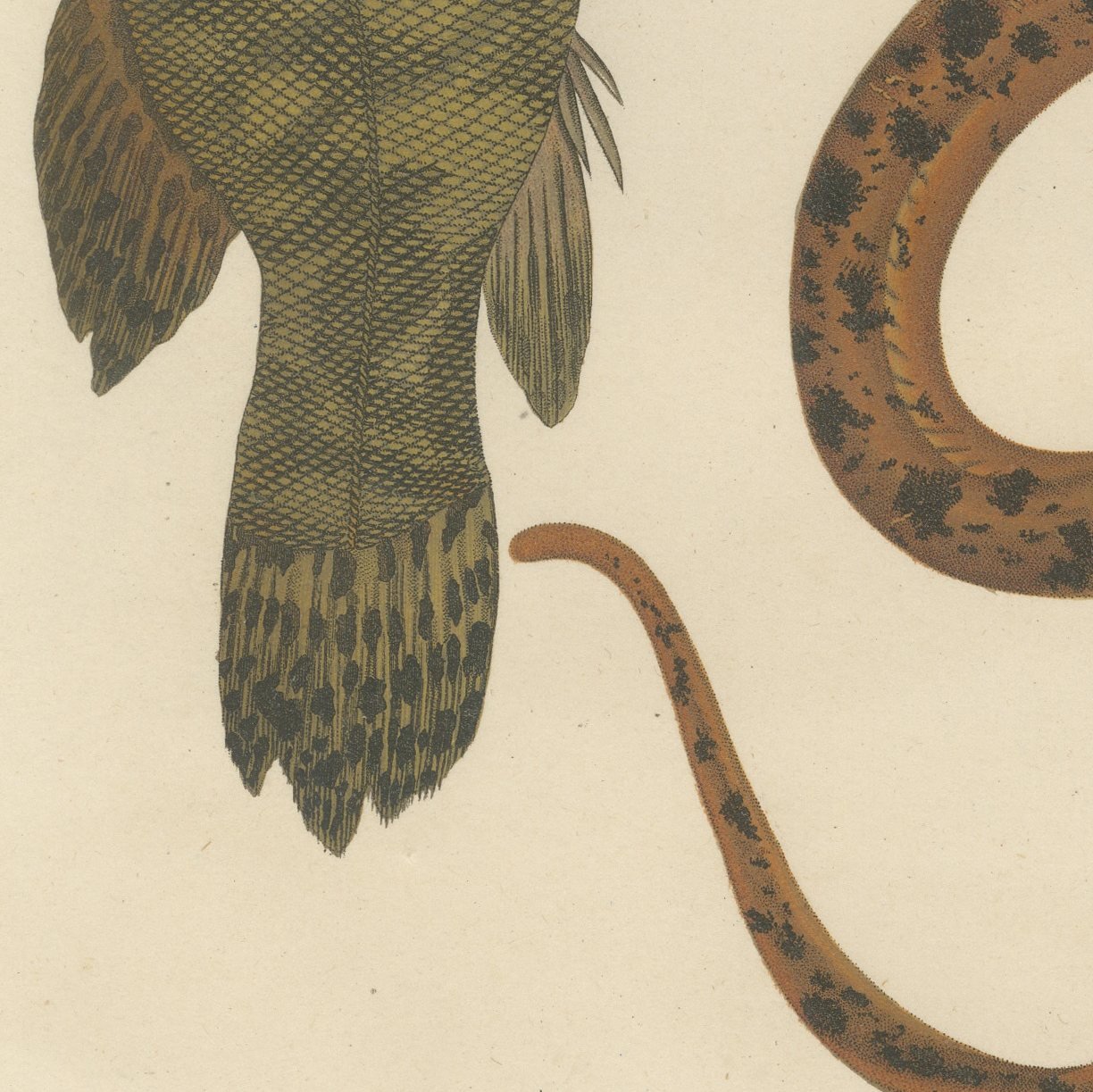
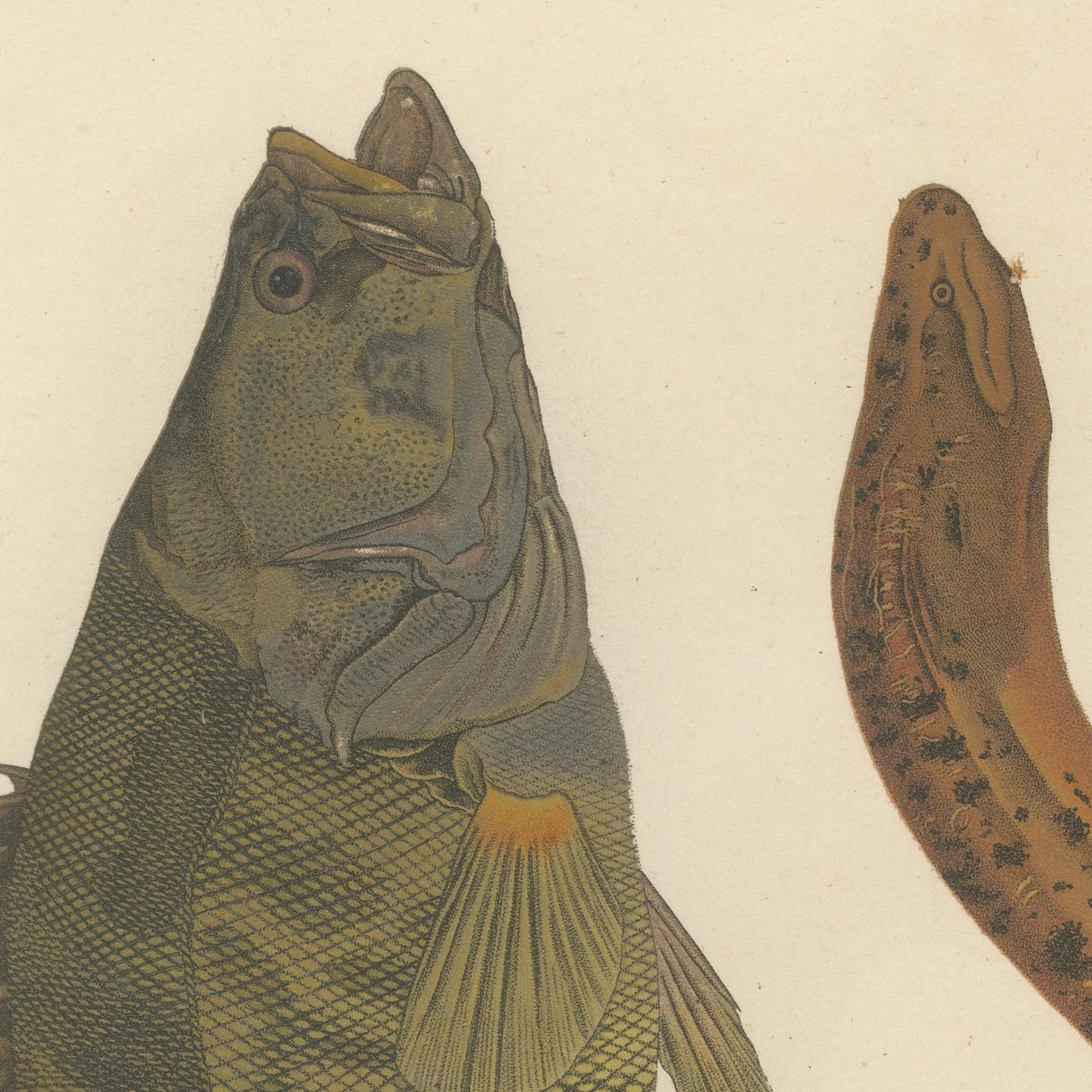
Close-ups
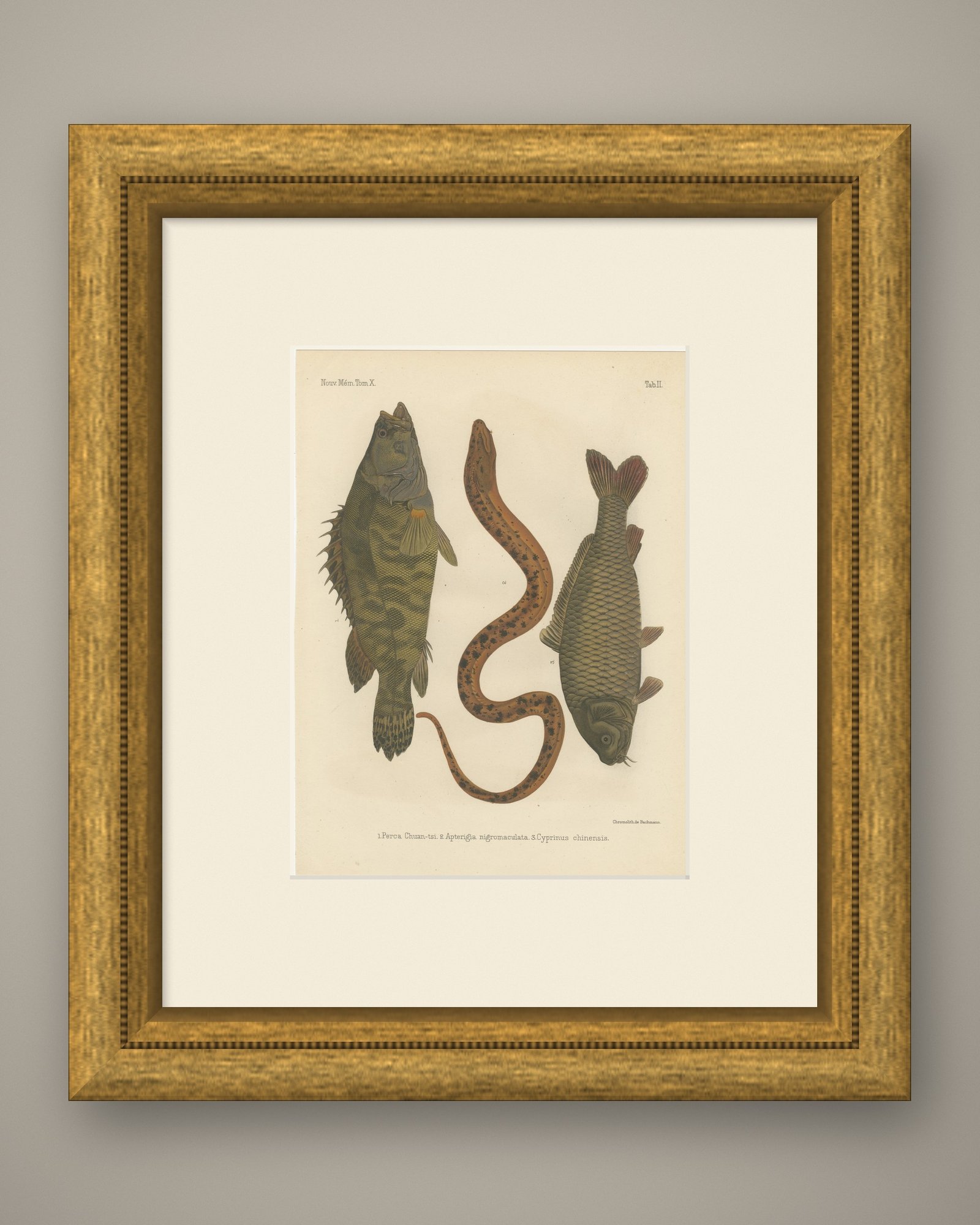
Framed and on the wall
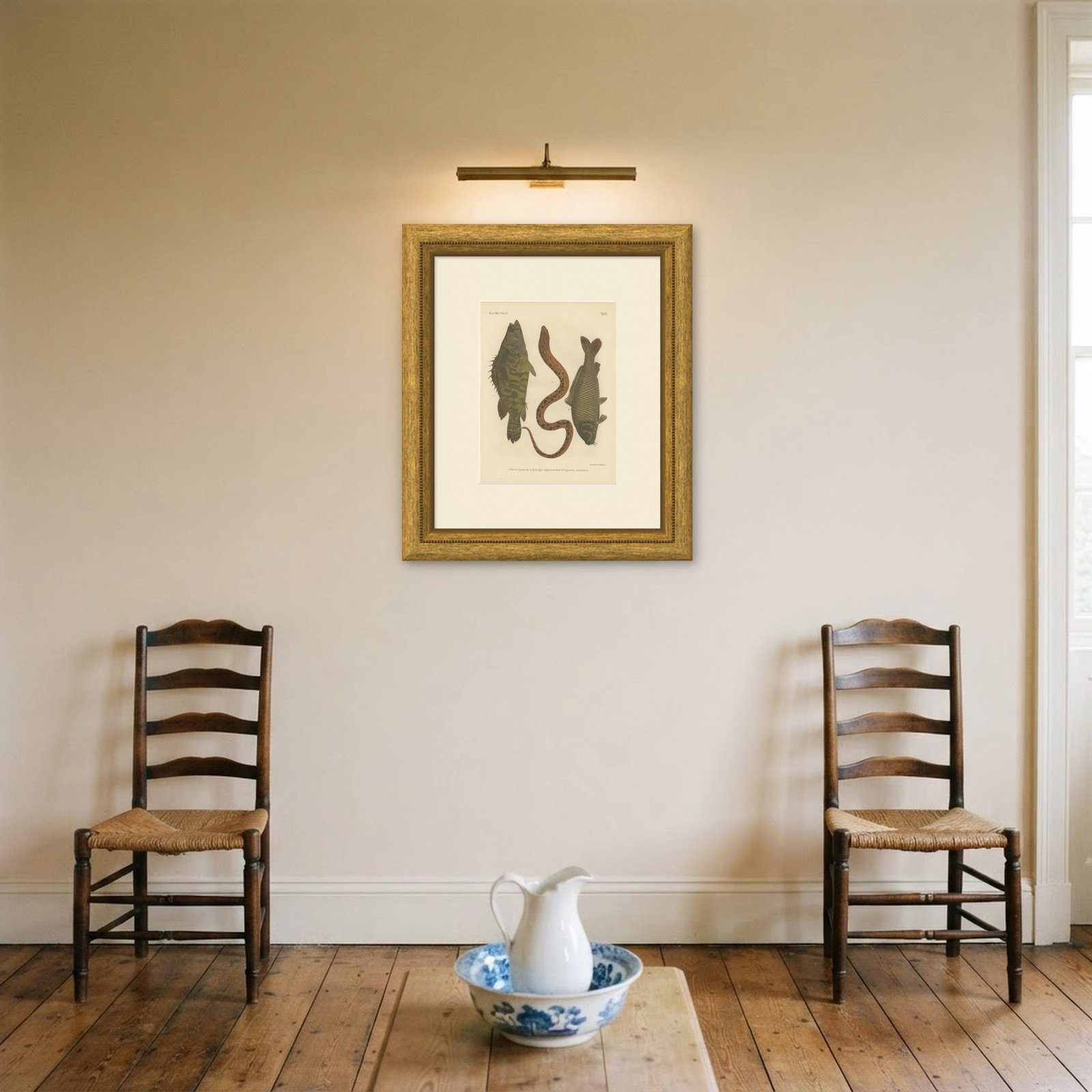
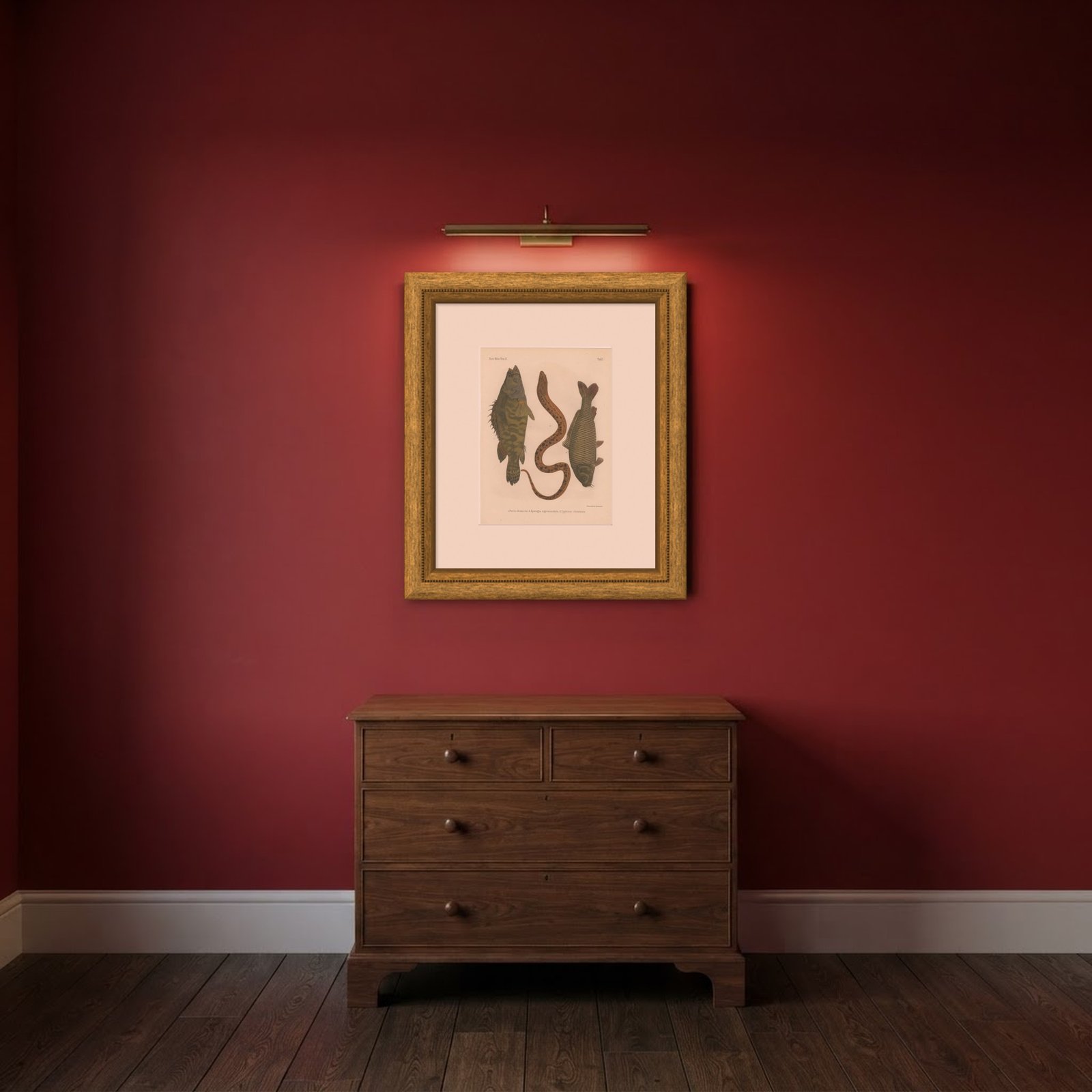
Frame and rooms are illustrations of how the print could look; the description says what is included.
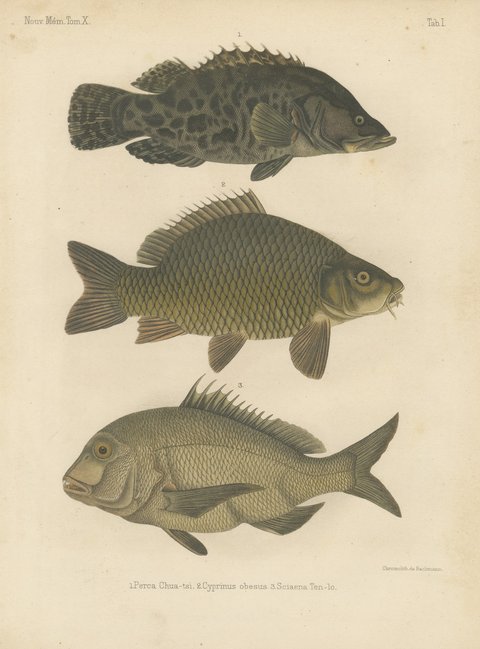
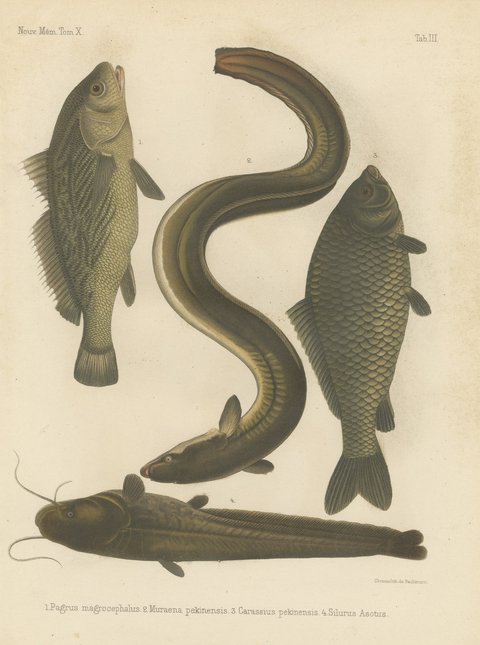
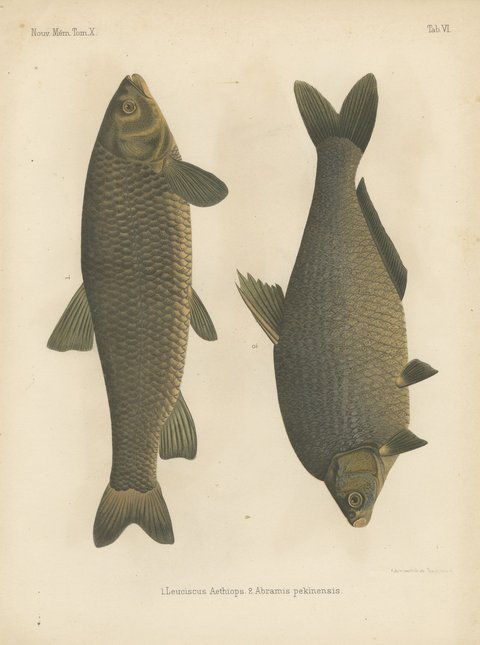
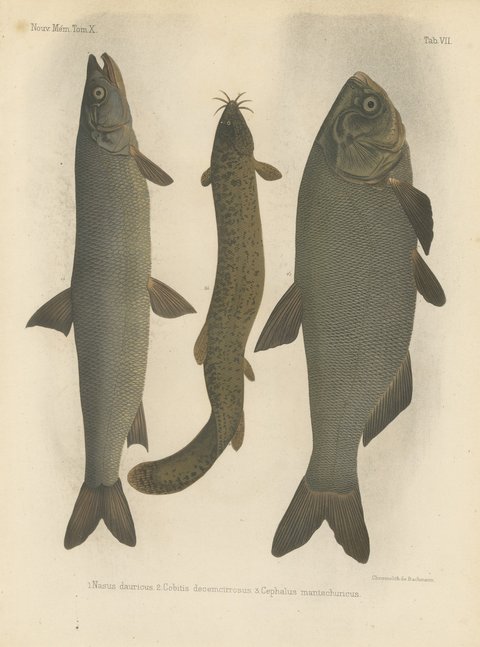
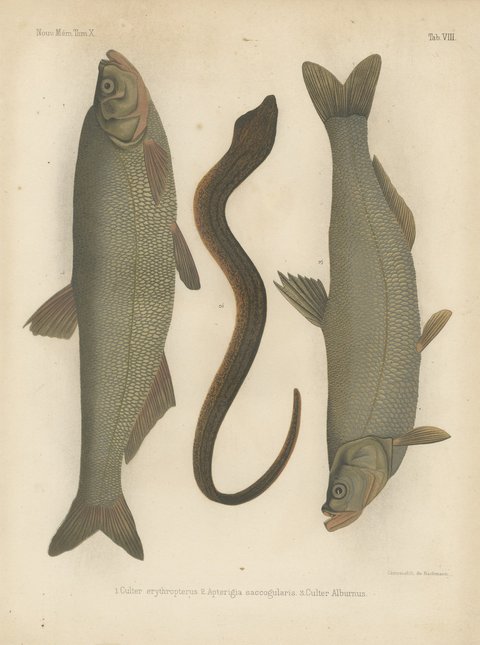
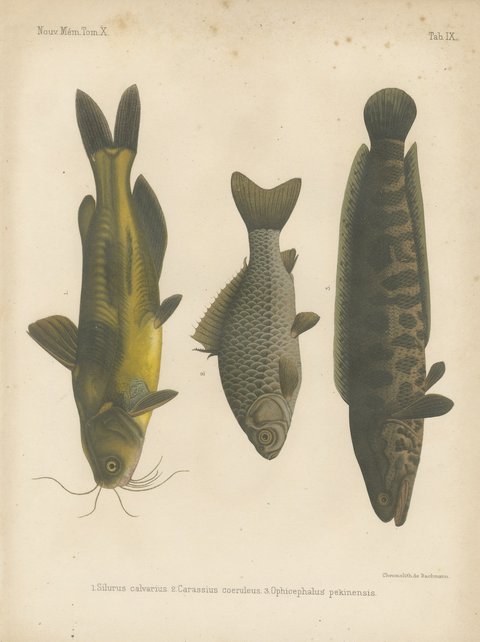
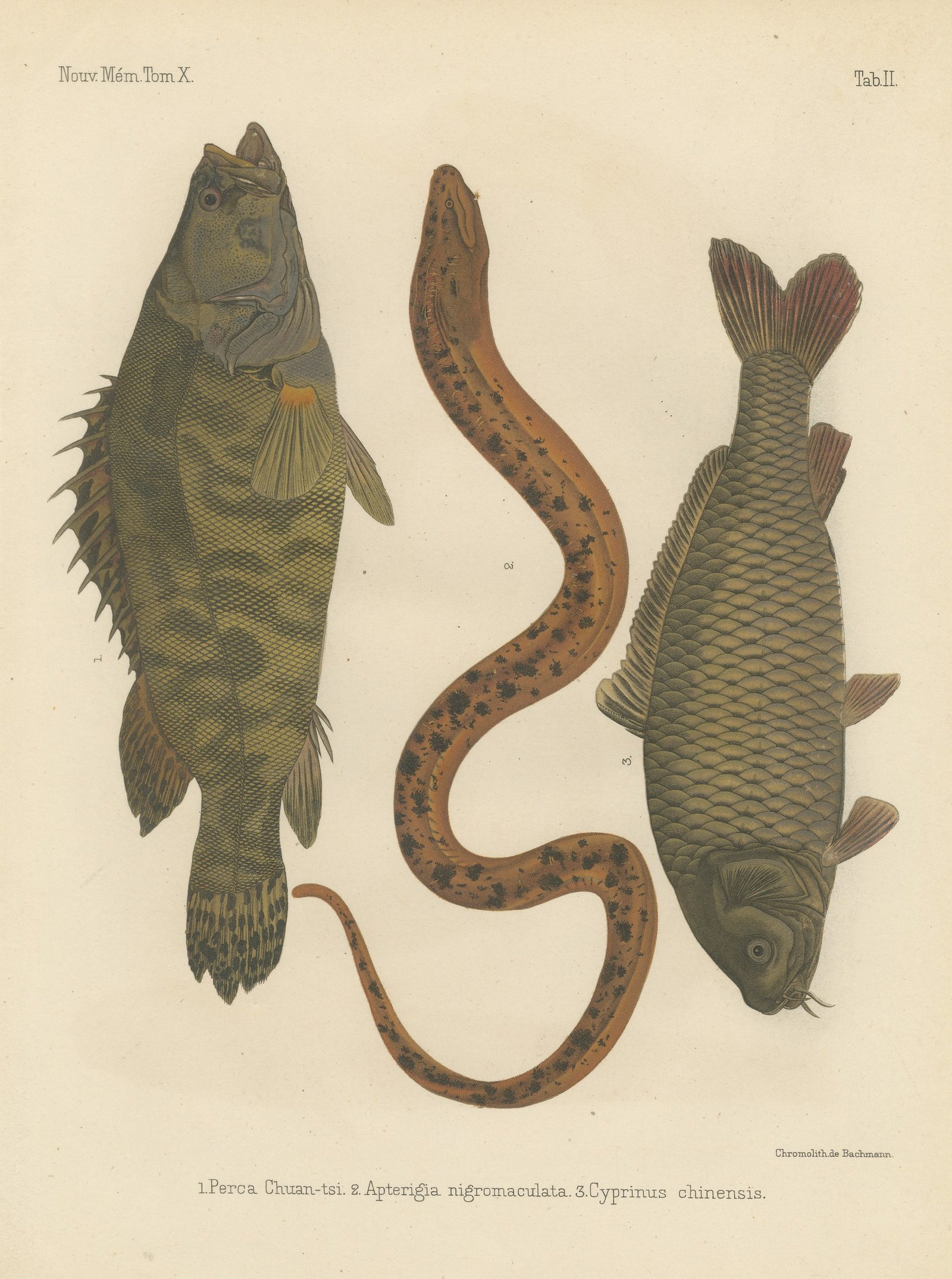
Chinese Perch and Spotted Eel, Antique Fish Chromolithograph, 1855
£240 ($315, €285)
Period original, not a reproduction.
Shipped from the Netherlands, flat or rolled, insured and tracked, worldwide. Returns accepted within 14 days.
- Date
- 1855
- Size
- 11 × 8.3 in (28 × 21 cm)
- Technique
- Chromolithograph
- Coloring
- Printed color
- Condition
- Good. Even age toning. Handling soiling along the top edge. A few small foxing spots in the margin. All four corners complete.
- Period
- Late 19th century
- Section
- Fish and shells
- Reference
- BG-14475-1-2
What the condition grades mean
- Excellent
- Bright and clean, with no faults worth mentioning.
- Very good
- Only light signs of age, such as faint toning.
- Good
- Normal signs of age for a sheet of this period: toning, some foxing, small marks or neat old repairs.
- Fair
- Clear faults such as staining, tears or repairs, priced to match.
Every fault we see is written in the condition note, and the whole sheet is shown uncropped in the photos.
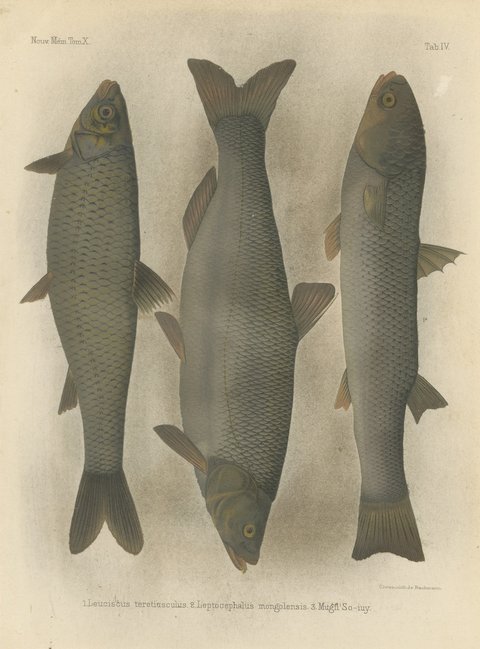
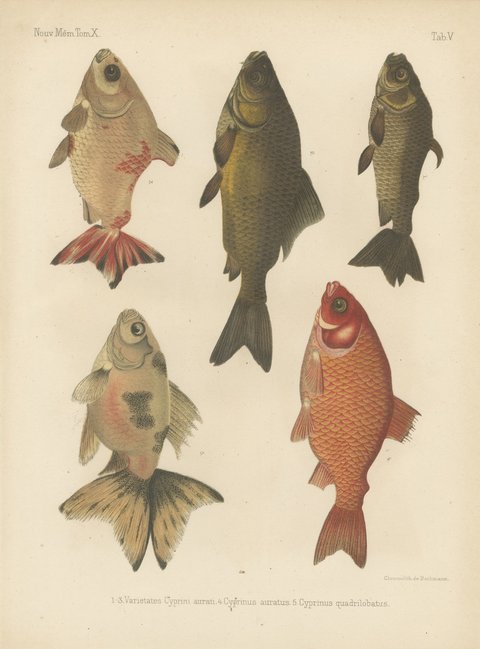
This is an original antique chromolithographed plate of Chinese fishes, the second of the nine plates of Basilewsky's Ichthyographia Chinae Borealis. Three figures are printed in color and named in Latin at the foot: the perch Perca Chuan-tsi, the long spotted eel like Apterigia nigromaculata, which is one of the genera Basilewsky himself established in this paper, and the carp Cyprinus chinensis. The sheet is lettered Tabula the second and carries the Bachmann chromolithography line.
The sheet is one of the nine plates of Ichthyographia Chinae Borealis by Stepan Basilewsky, a physician of the Russian ecclesiastical mission at Peking, published in 1855 in the tenth volume of the Nouveaux Memoires of the Imperial Society of Naturalists of Moscow. The figures were painted from nature by a Chinese artist and printed in color by Bachmann of Moscow.
The genus Apterigia was created by Basilewsky in this very work and is still recognized, so the plate is the first published picture of the animal that carries the name. The combination of exact scientific drawing and the soft Russian chromolithographic color is what makes these sheets so attractive on a wall. A plate of this kind frames well in plain dark wood and sits happily in a kitchen, a study or a hallway, alone or in a run with its companions.
Even age toning. Handling soiling along the top edge. A few small foxing spots in the margin. All four corners complete.
This is an original antique print, not a modern reproduction. This item is sold unframed.