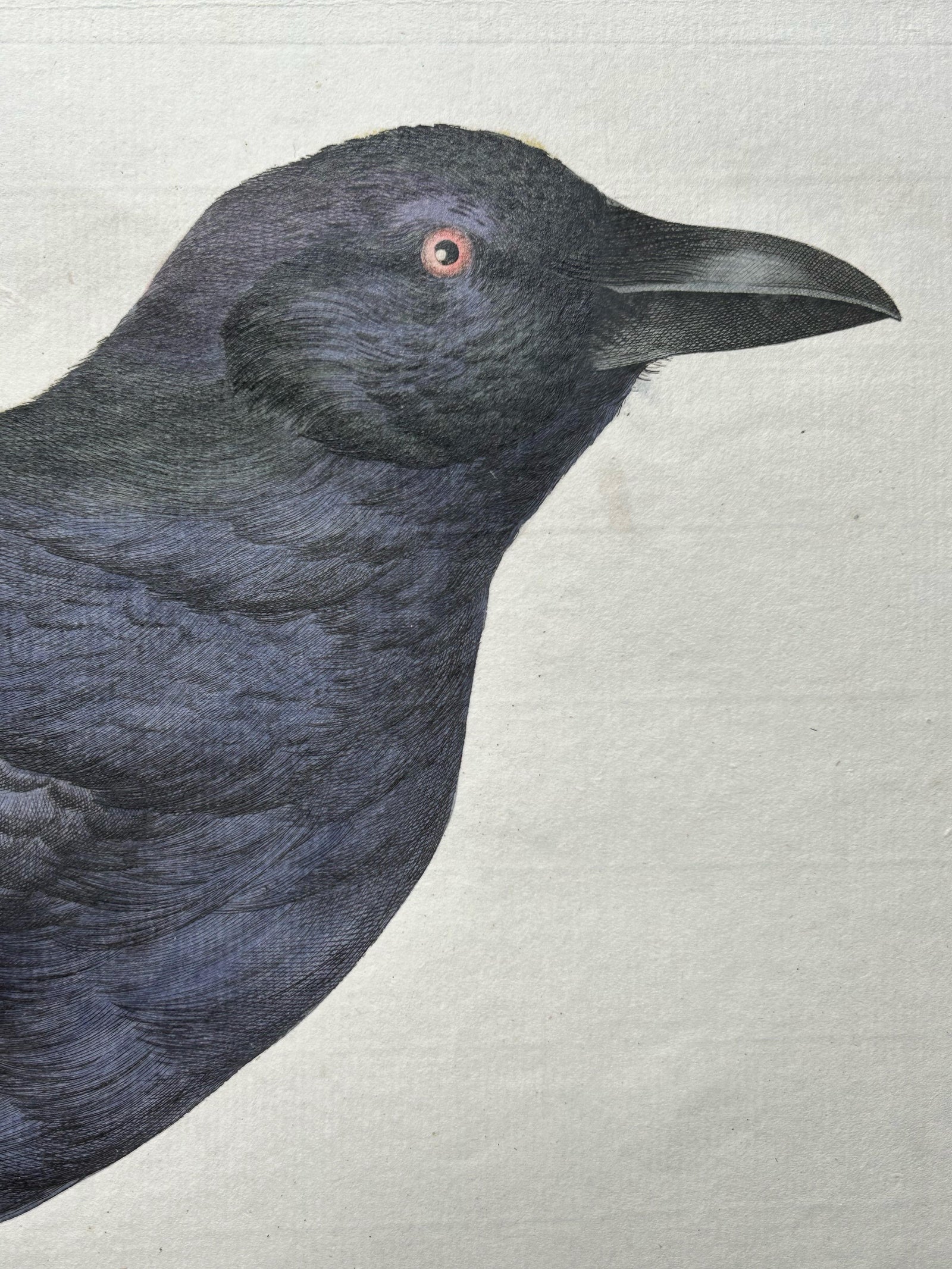
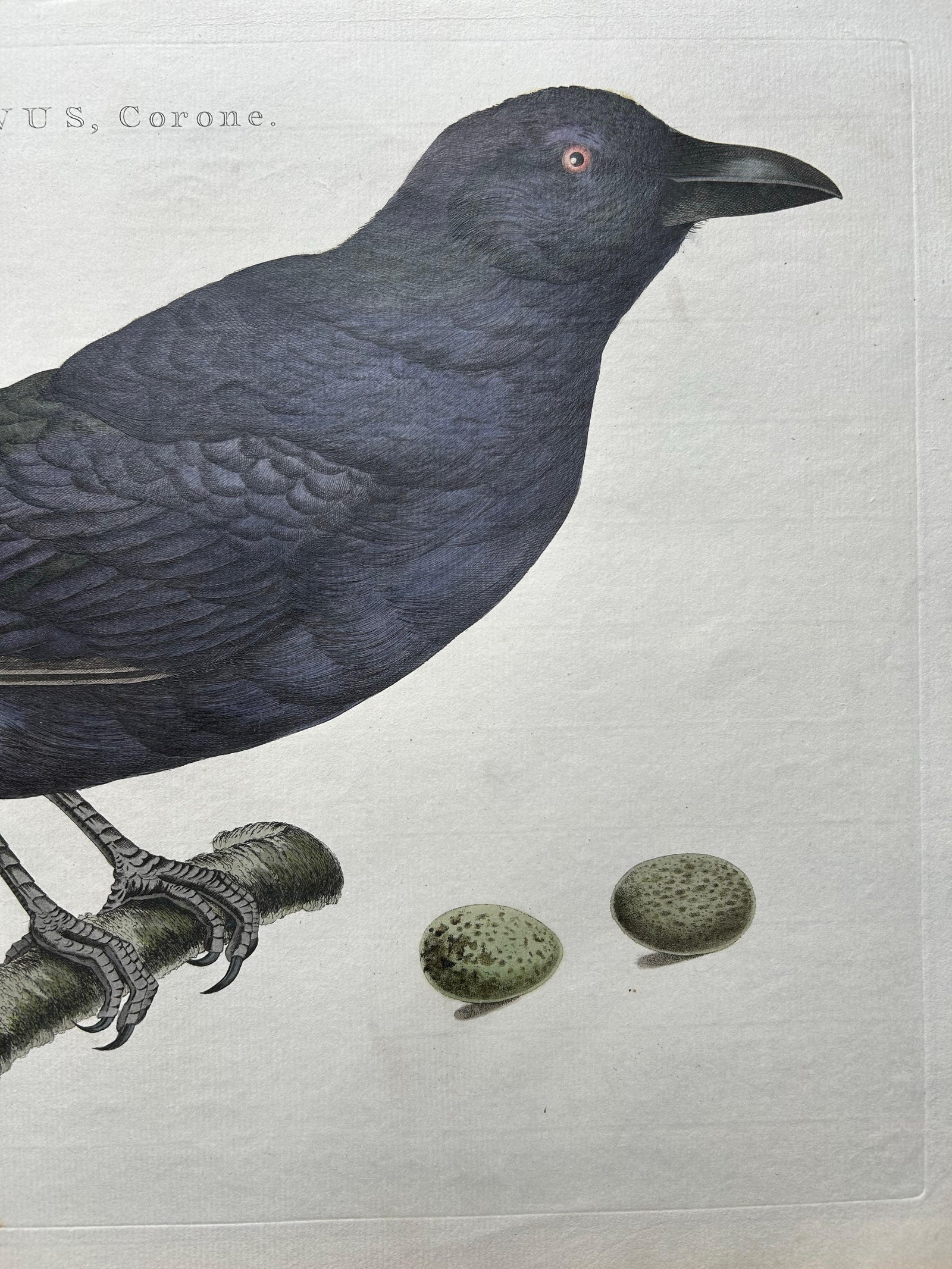
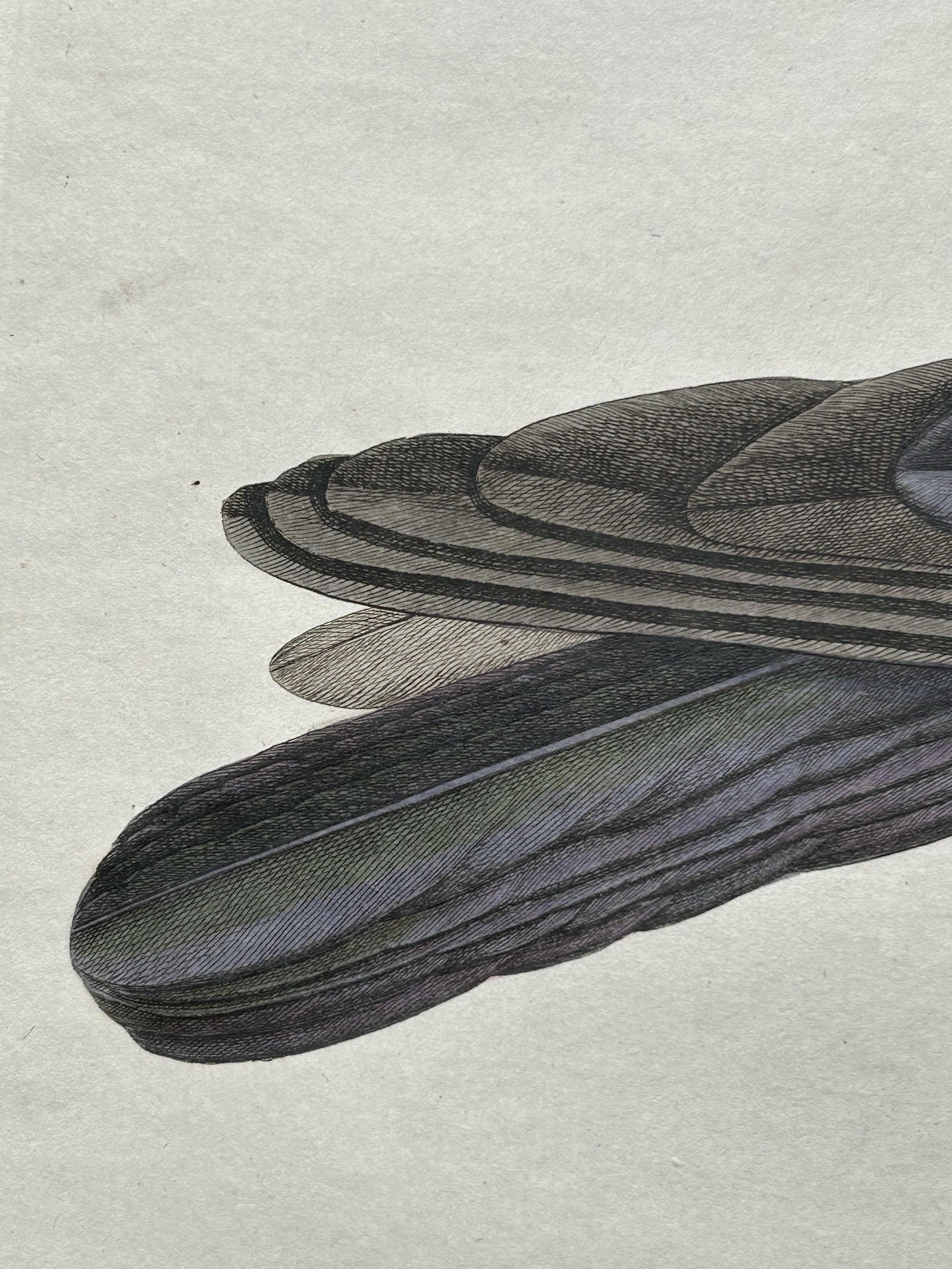
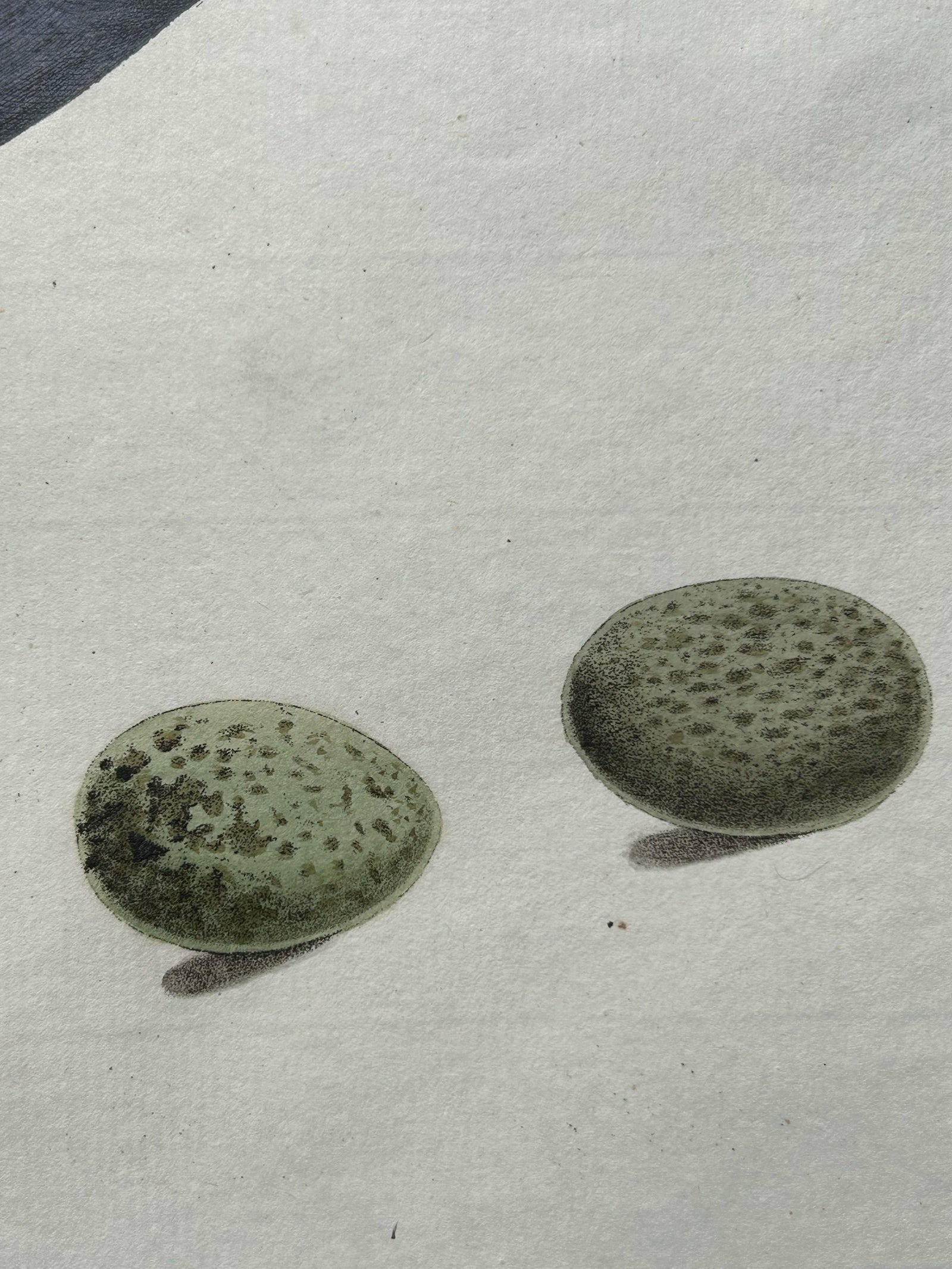
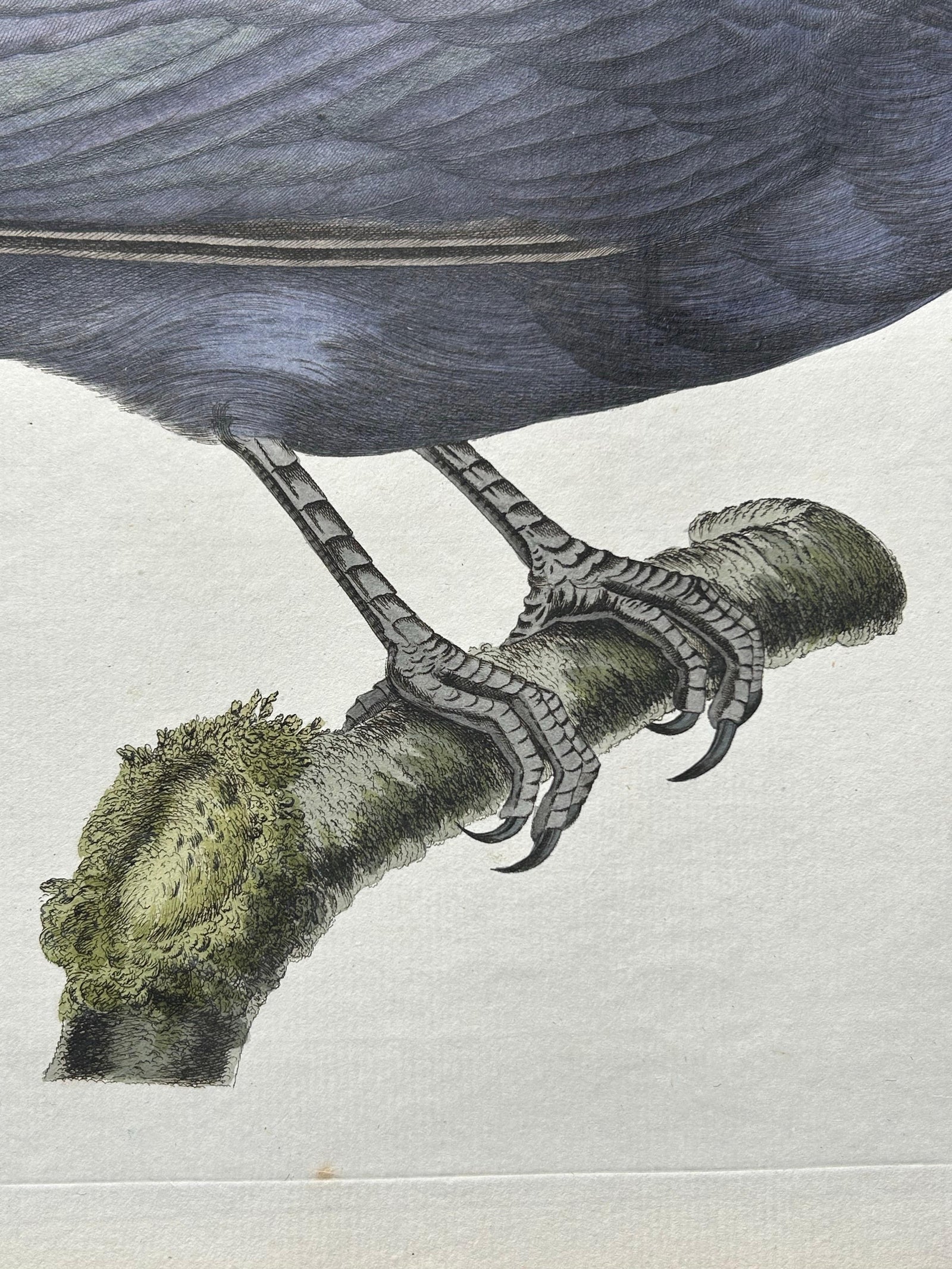
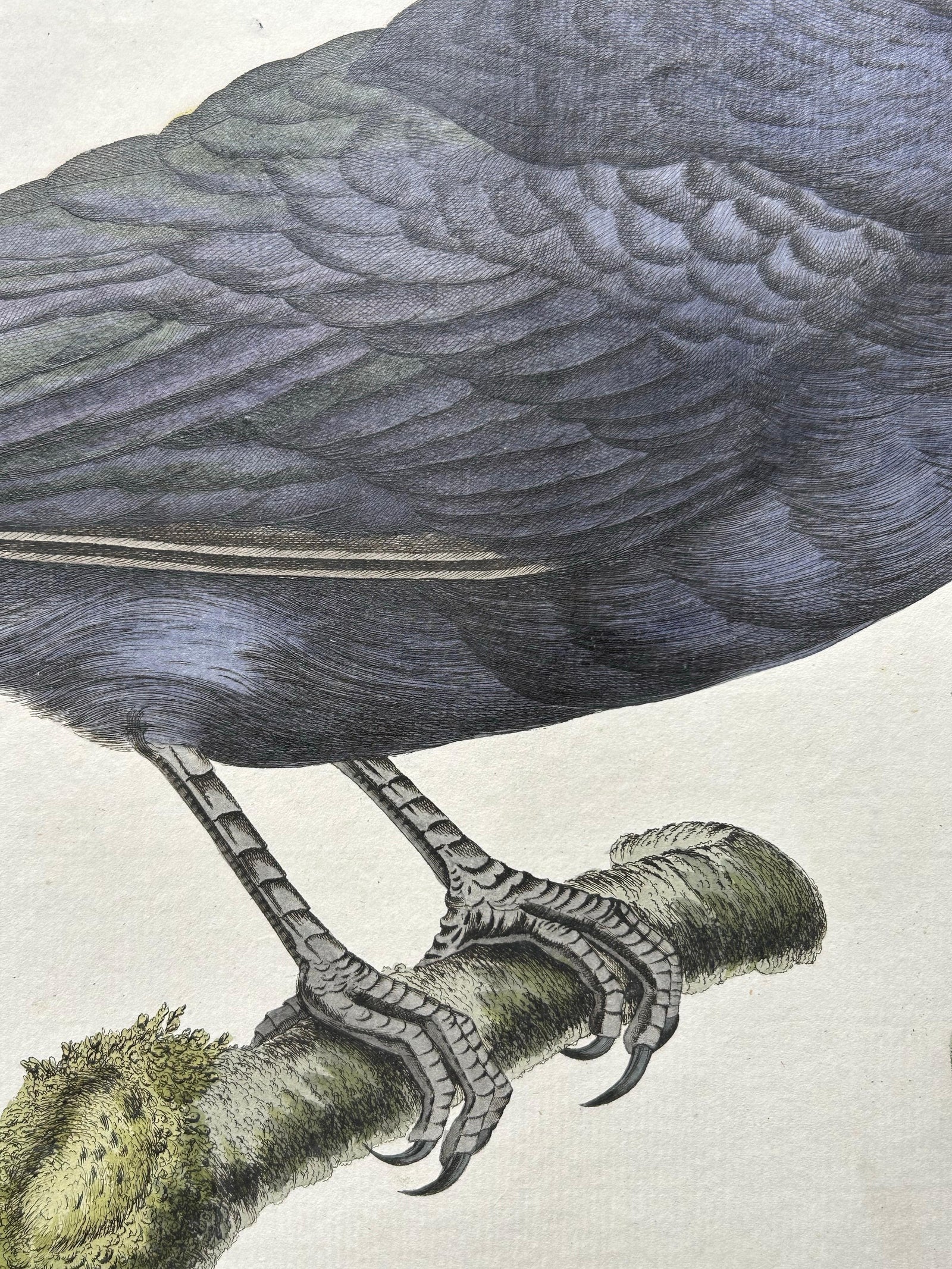
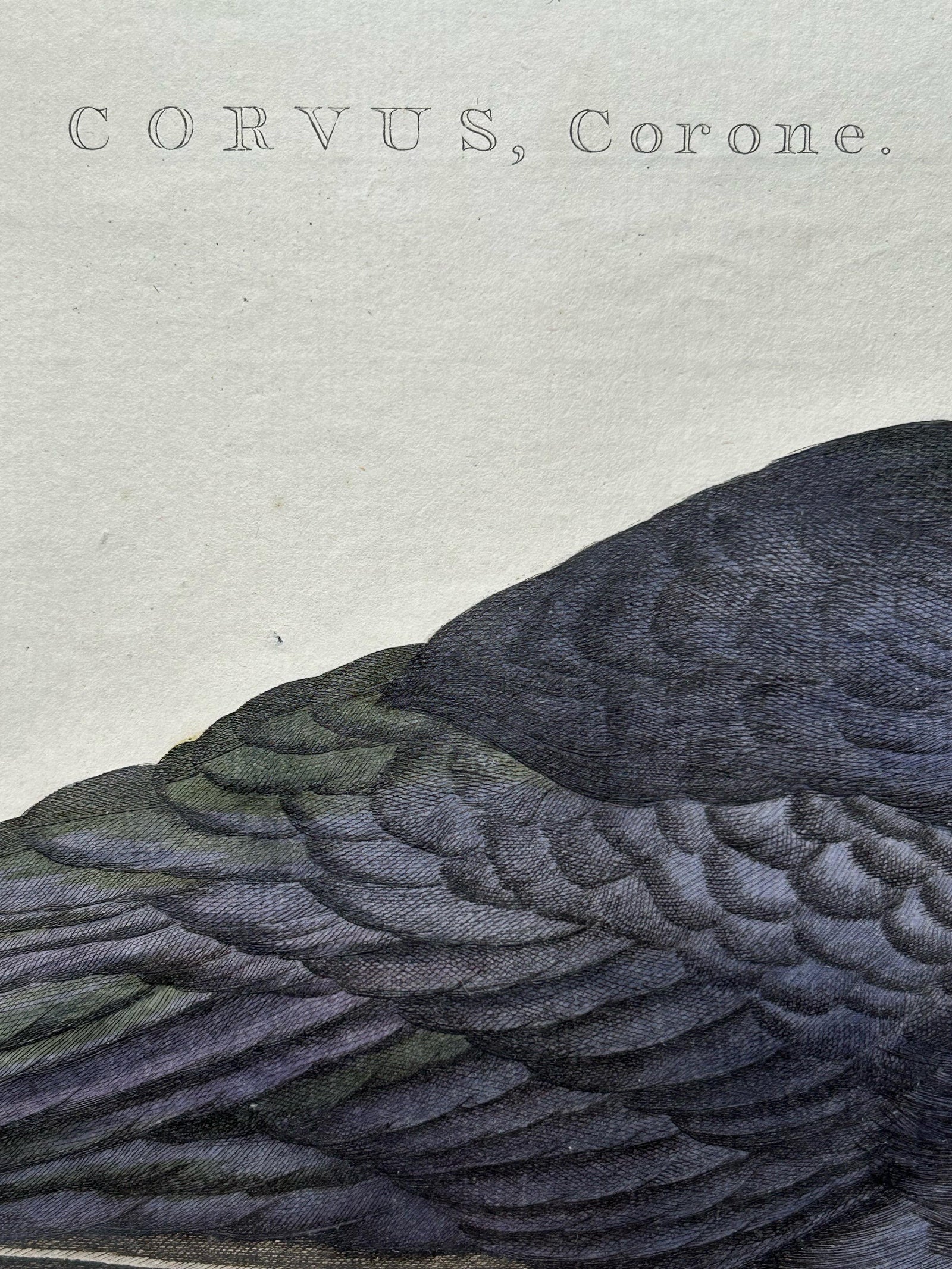
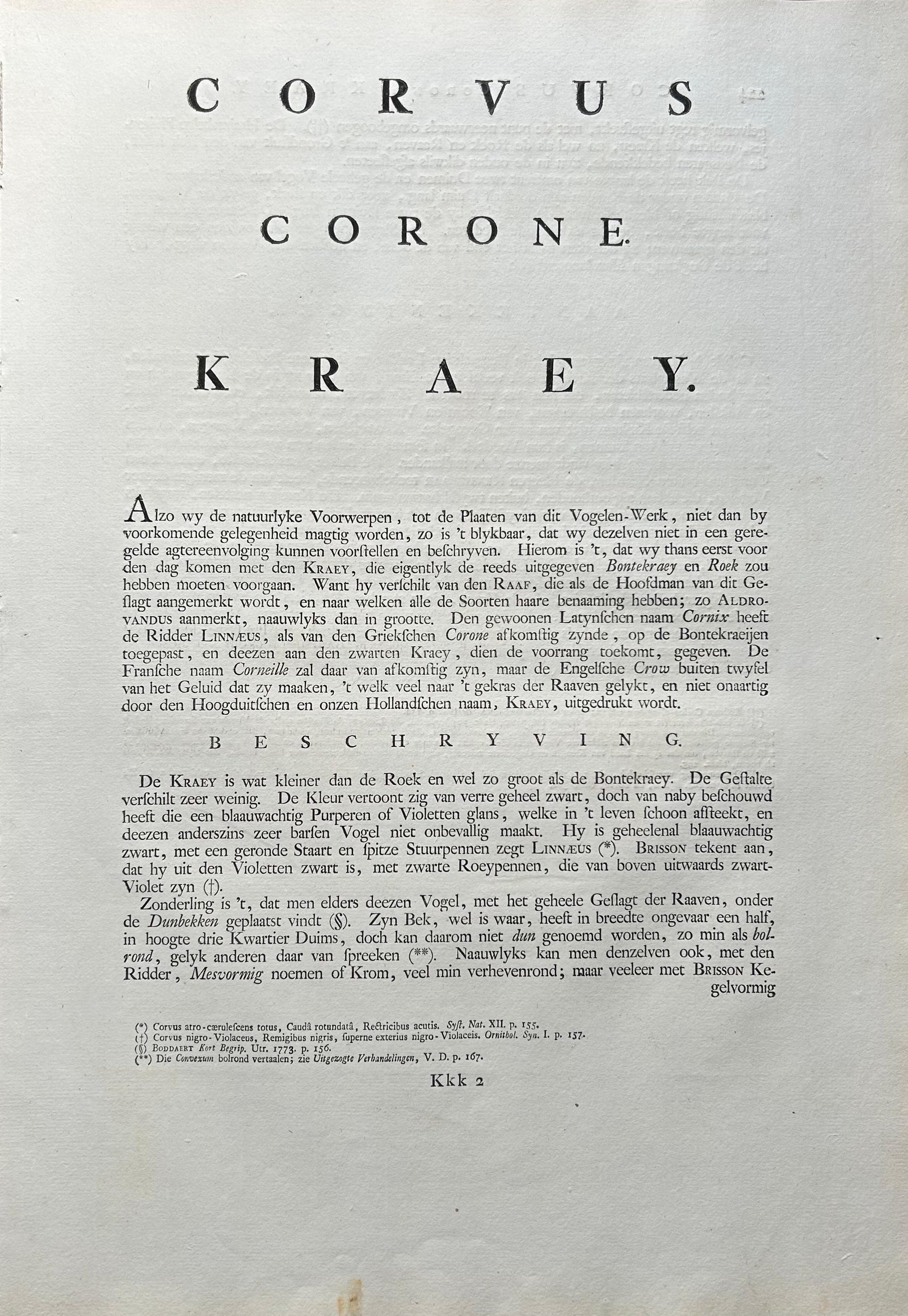
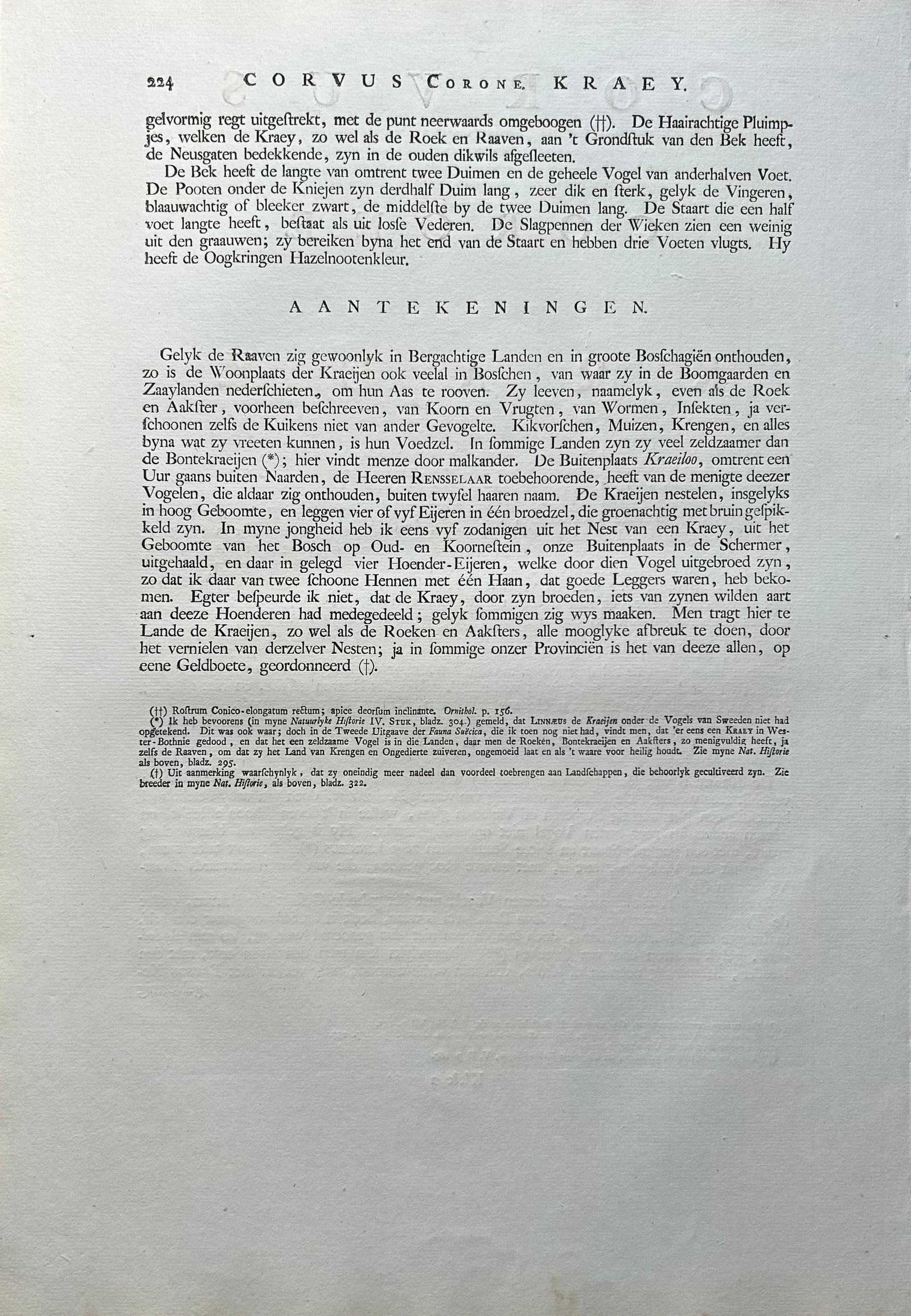
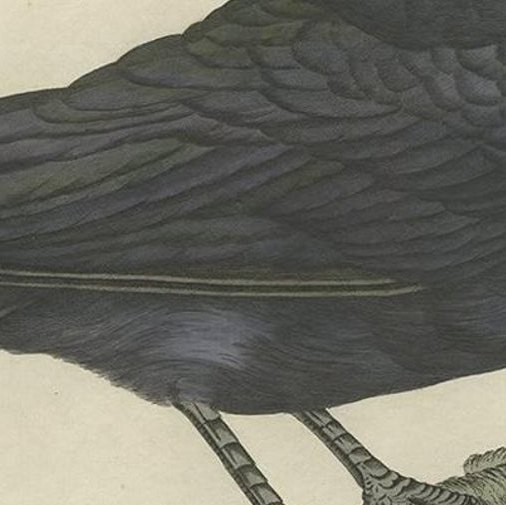
Close-ups
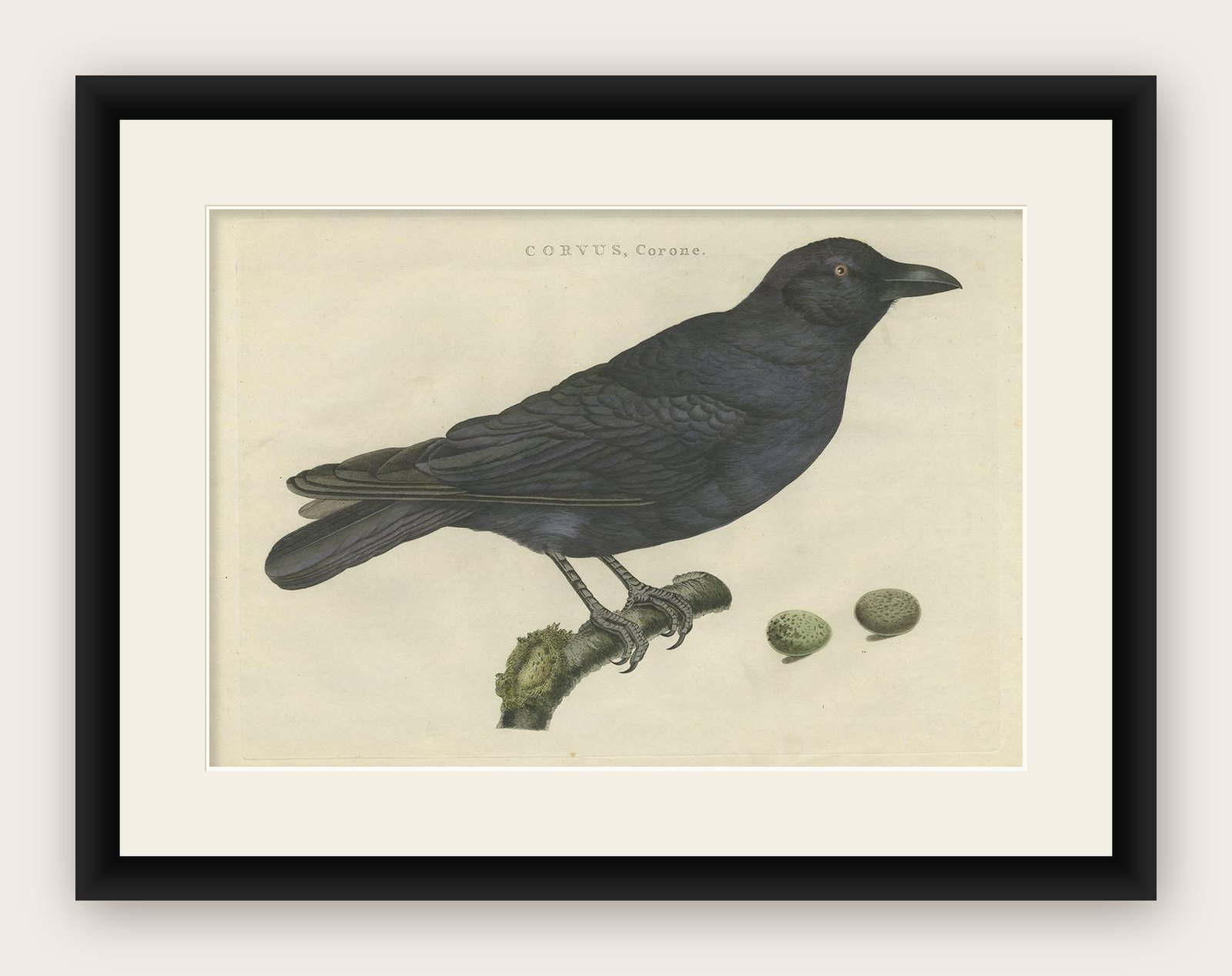
Framed and on the wall
Frame and rooms are illustrations of how the print could look; the description says what is included.
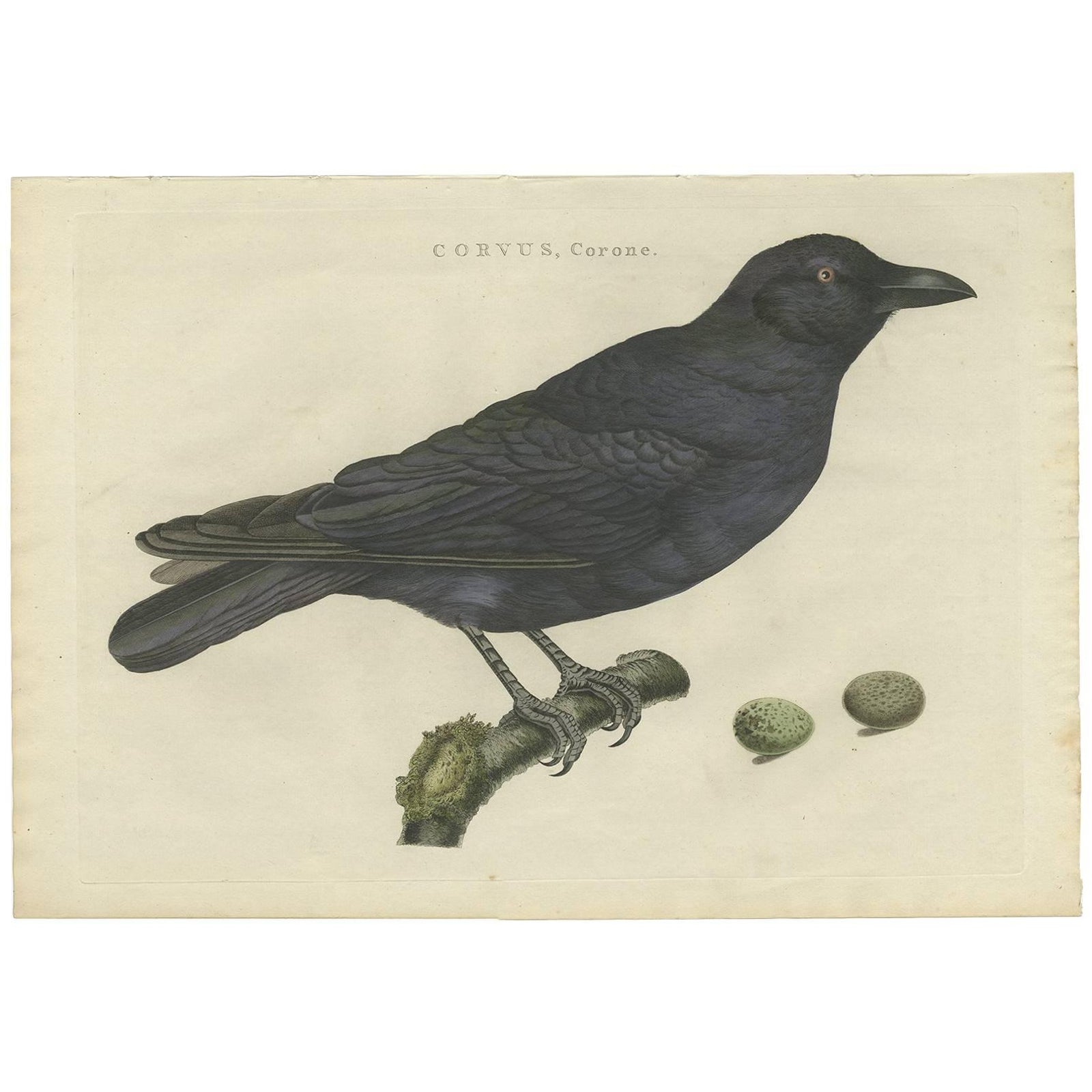
Carrion Crow with Eggs, Hand-Coloured Engraving from Nozeman, 1797
$1,070 (£805, €950)
Period original, not a reproduction.
Shipped from the Netherlands, flat, insured and tracked, worldwide. Returns accepted within 14 days.
- Date
- 1797
- Size
- 21.1 × 14.6 in (53.5 × 37 cm)
- Technique
- Engraved
- Condition
- Good. Very good impression with rich original colour. Light toning to paper edges, faint handling marks. Text pages clean with minor age spots to lower margins. Visible plate mark.
- Period
- 18th century
- Artist or book
- Nozeman and Sepp
- Section
- Birds
- Reference
- f_10880493
Carrion Crow with Eggs, Hand-Coloured Engraving from Nozeman’s Nederlandsche Vogelen, 1770–1829
Antique print titled 'Corvus, Corone'. The carrion crow (Corvus corone) is a large, all-black passerine bird in the Corvidae family, native to western Europe and eastern Asia. Known for its intelligence, adaptability, and varied diet, the carrion crow thrives in both rural and urban environments. This species can be distinguished from the similar rook by its heavier bill, more robust build, and the absence of bare skin at the base of the bill. Its plumage is a deep black with a subtle bluish or purplish sheen in good light. It is omnivorous, feeding on carrion, invertebrates, seeds, and scraps, and is also known for caching food for later consumption. The carrion crow is a solitary nester, often building a large stick nest high in trees or on man-made structures.
This print originates from Nederlandsche Vogelen; volgens hunne huisdouding, aert, en eigenschappen beschreeven, Amsterdam, 1770–1829, by C. Nozeman, M. Houttuyn, and J.C. Sepp. This monumental work was the first comprehensive ornithological study published in the Netherlands, depicting birds life-sized where possible and in their natural surroundings. Each species was carefully illustrated and accompanied by detailed text describing its appearance, habits, and role in nature.
The accompanying original Dutch text pages provide rich historical and scientific observations on the species, its behaviour, feeding, and nesting habits, as understood in the late 18th and early 19th centuries.
Condition report: Very good impression with rich original colour. Light toning to paper edges, faint handling marks. Text pages clean with minor age spots to lower margins. Visible plate mark.
Framing tips: A dark walnut or black wooden frame will complement the deep blacks of the crow’s plumage. A soft ivory or pale cream mount will provide a balanced contrast, allowing the details of the bird and the eggs to stand out. For a more dramatic presentation, a charcoal or dark green mount can be used to echo the tones in the illustration and evoke a natural setting.