Close-ups
Framed and on the wall
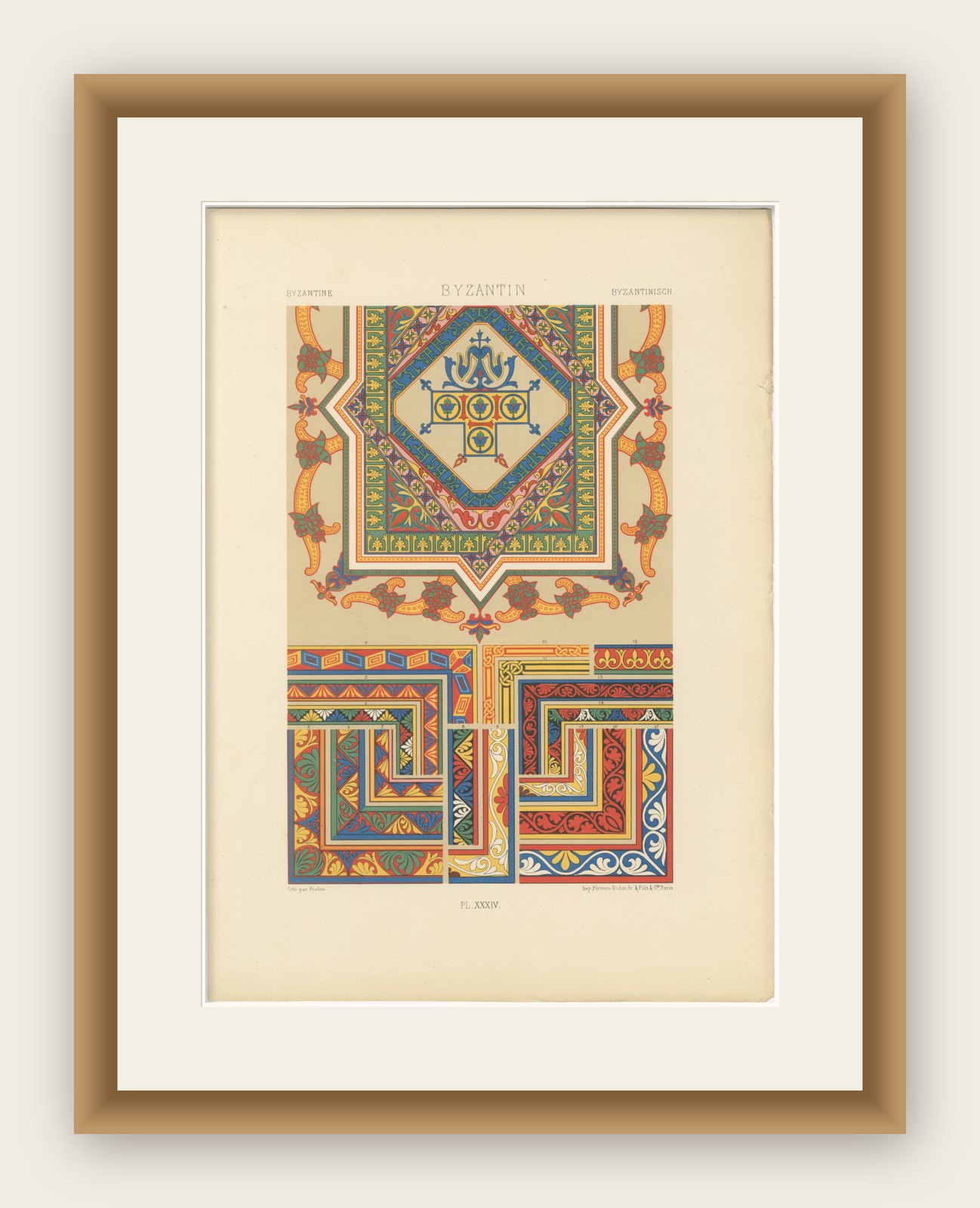
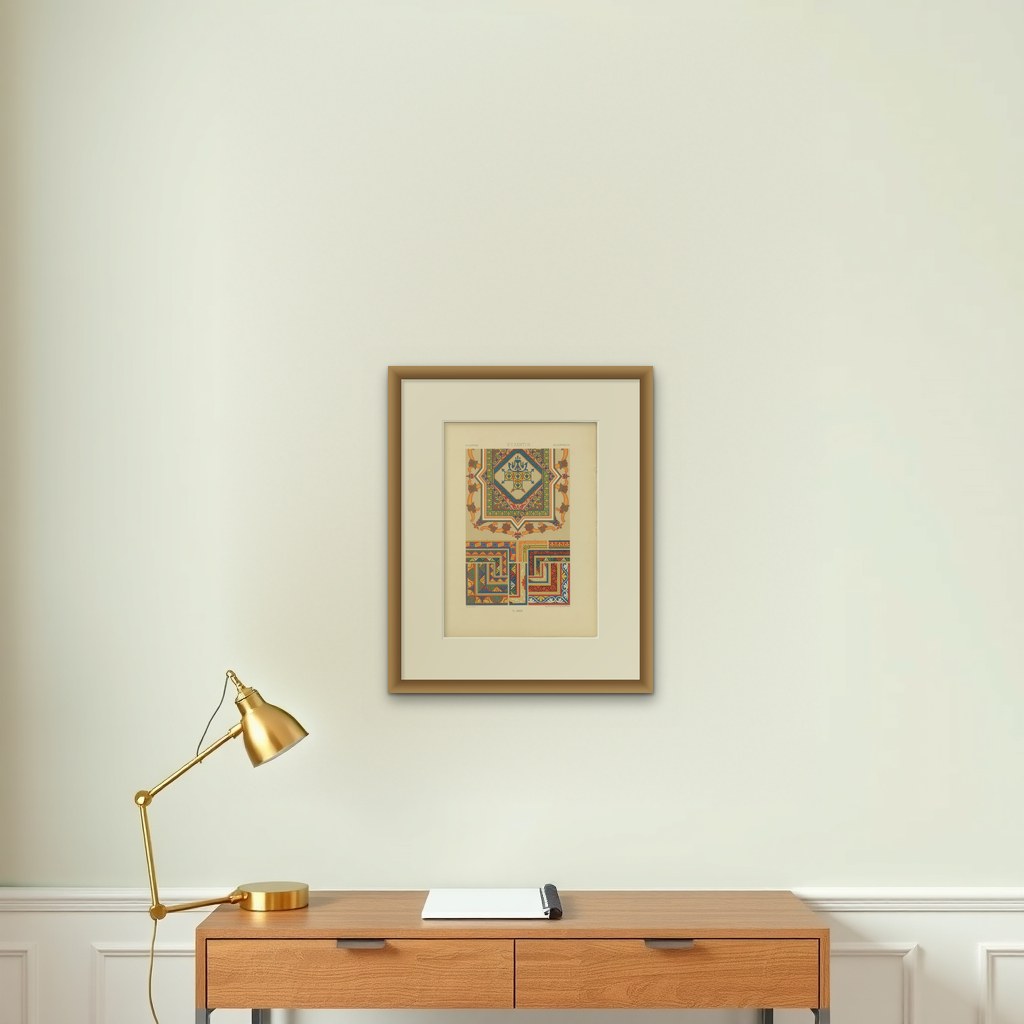

Frame and rooms are illustrations of how the print could look; the description says what is included.
Byzantine Decorative Borders & Motifs, Geometric & Floral, Plate XXXIV, ca.1890
$170 (£125, €150)
Period original, not a reproduction.
Shipped from the Netherlands, flat, insured and tracked, worldwide. Returns accepted within 14 days.
- Date
- 1890
- Size
- 16.3 × 11.4 in (41.5 × 29 cm)
- Condition
- Good. Very good condition. Strong original colors with only minor toning at the sheet edges. No tears or foxing visible. Paper stable and clean.
- Period
- Late 19th century
- Section
- Botanical
- Reference
- f_20402922
Byzantine Decorative Borders & Motifs, Geometric & Floral, Plate XXXIV
Description:
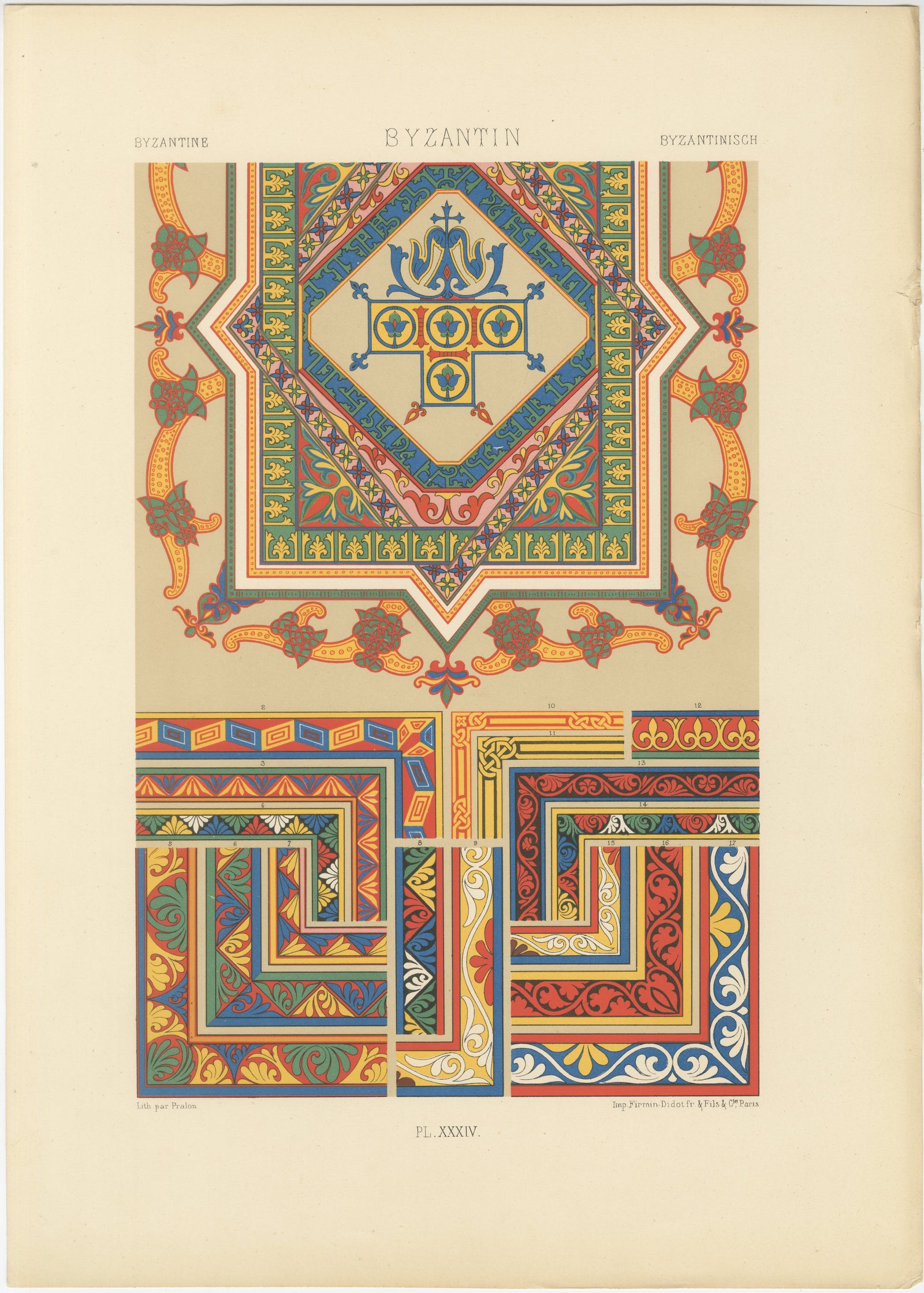
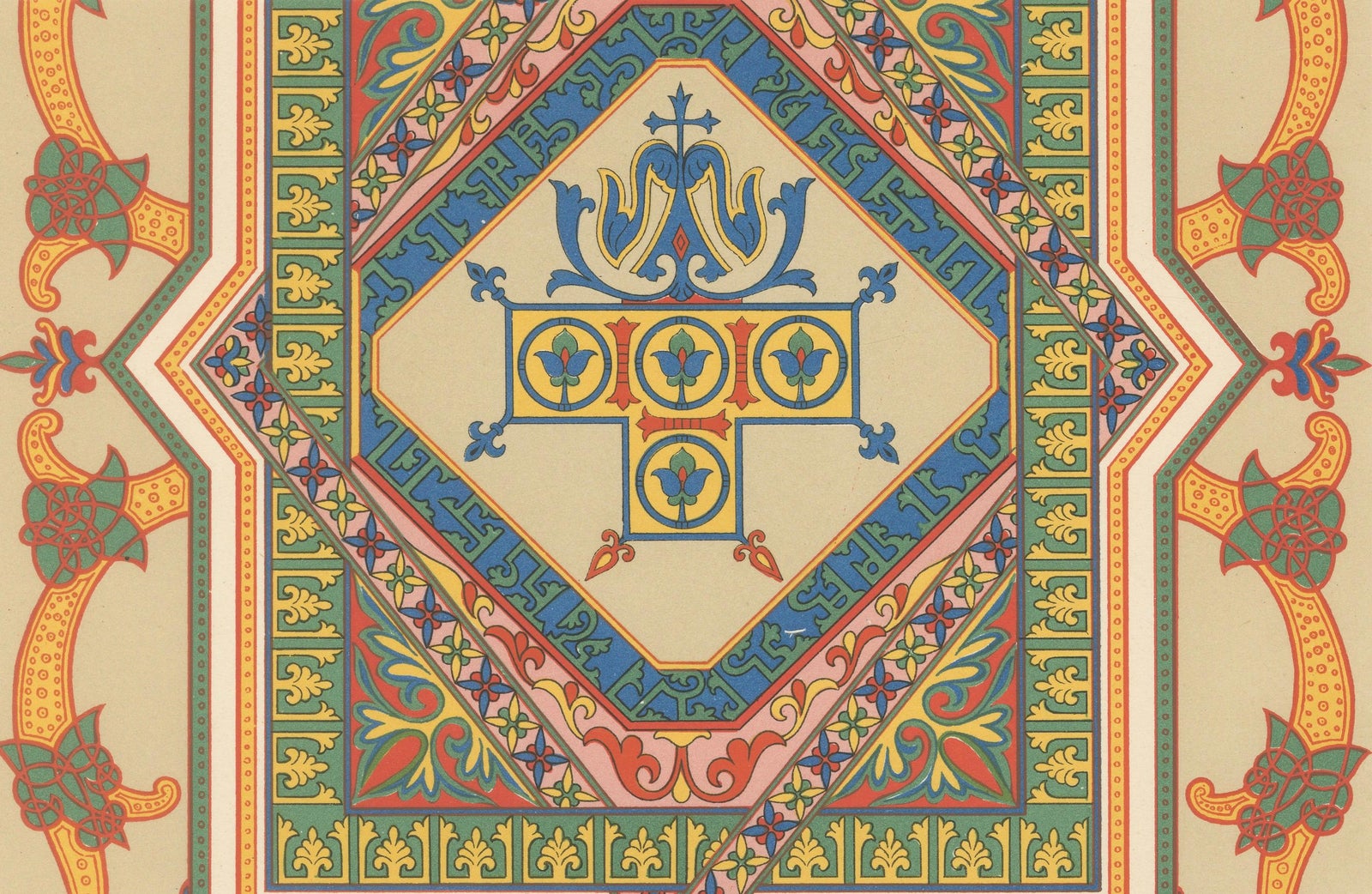
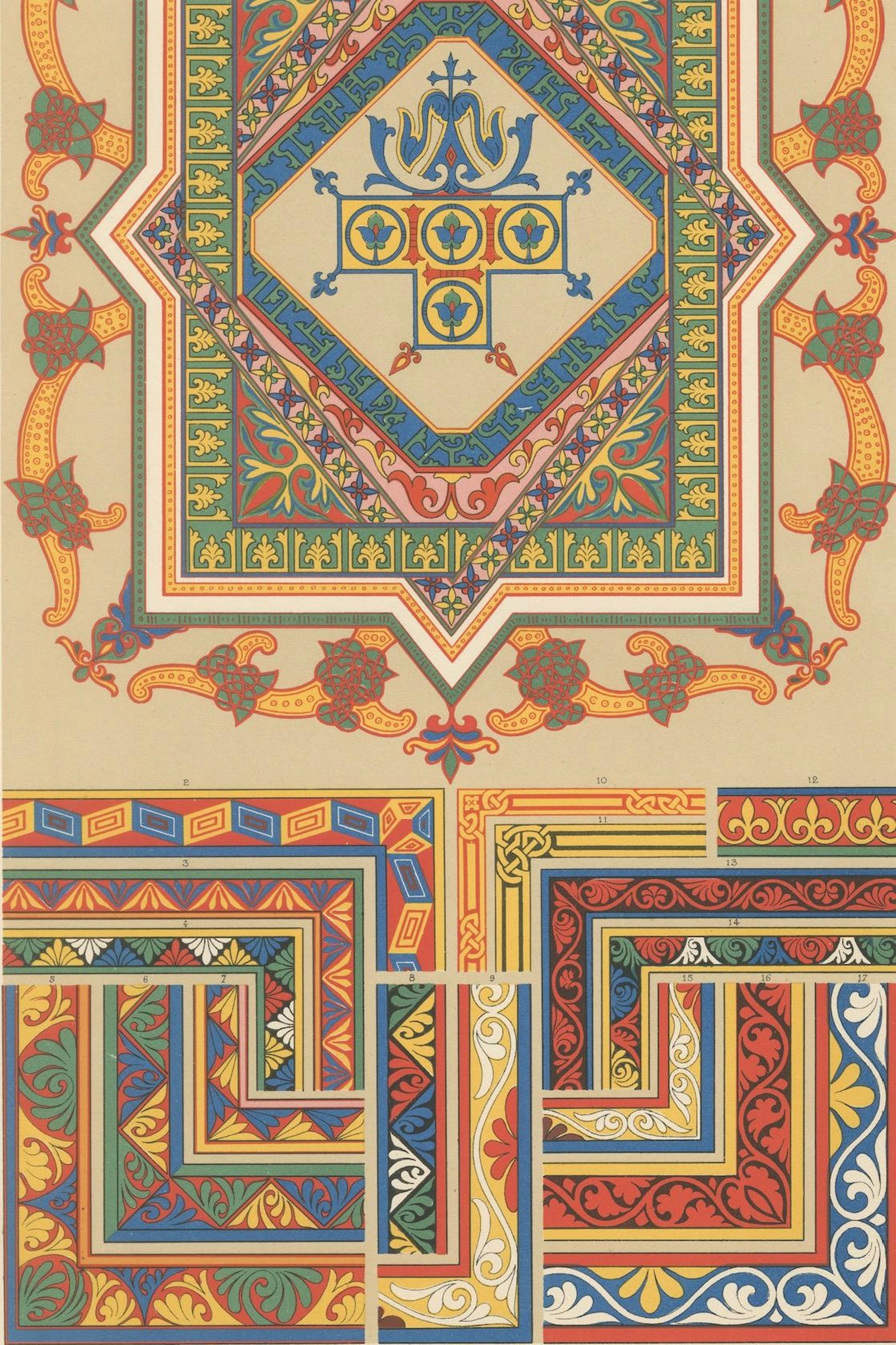
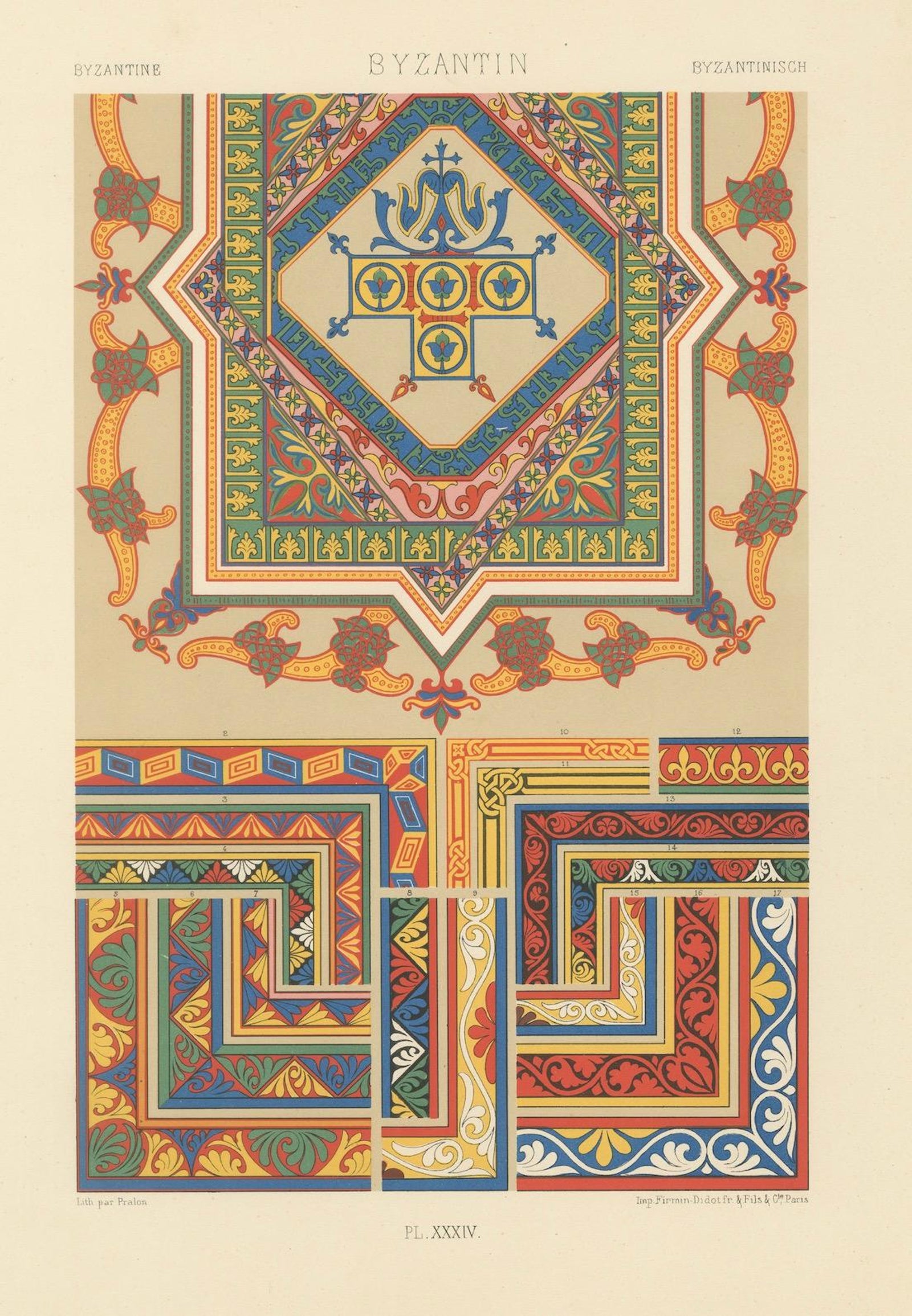
This vibrant chromolithograph titled "BYZANTIN" (Byzantine), Plate XXXIV, presents a series of elaborately decorated architectural and ornamental borders from the Byzantine artistic tradition. Carefully reproduced in the late 19th century by Firmin-Didot Frères of Paris, this sheet offers a window into the aesthetic richness of Eastern Roman decorative art, with its signature combination of geometry, symbolism, and vivid coloration.
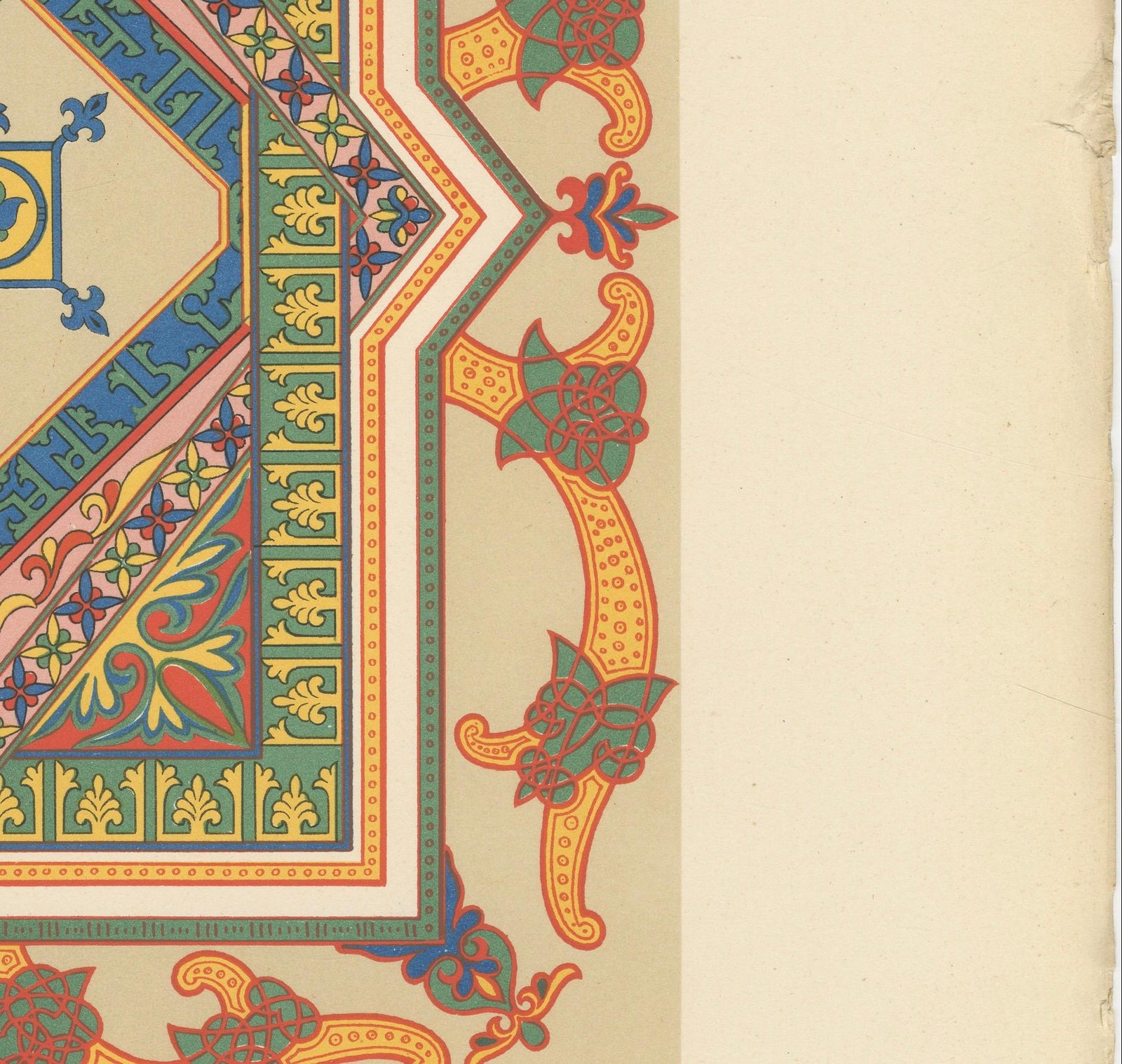
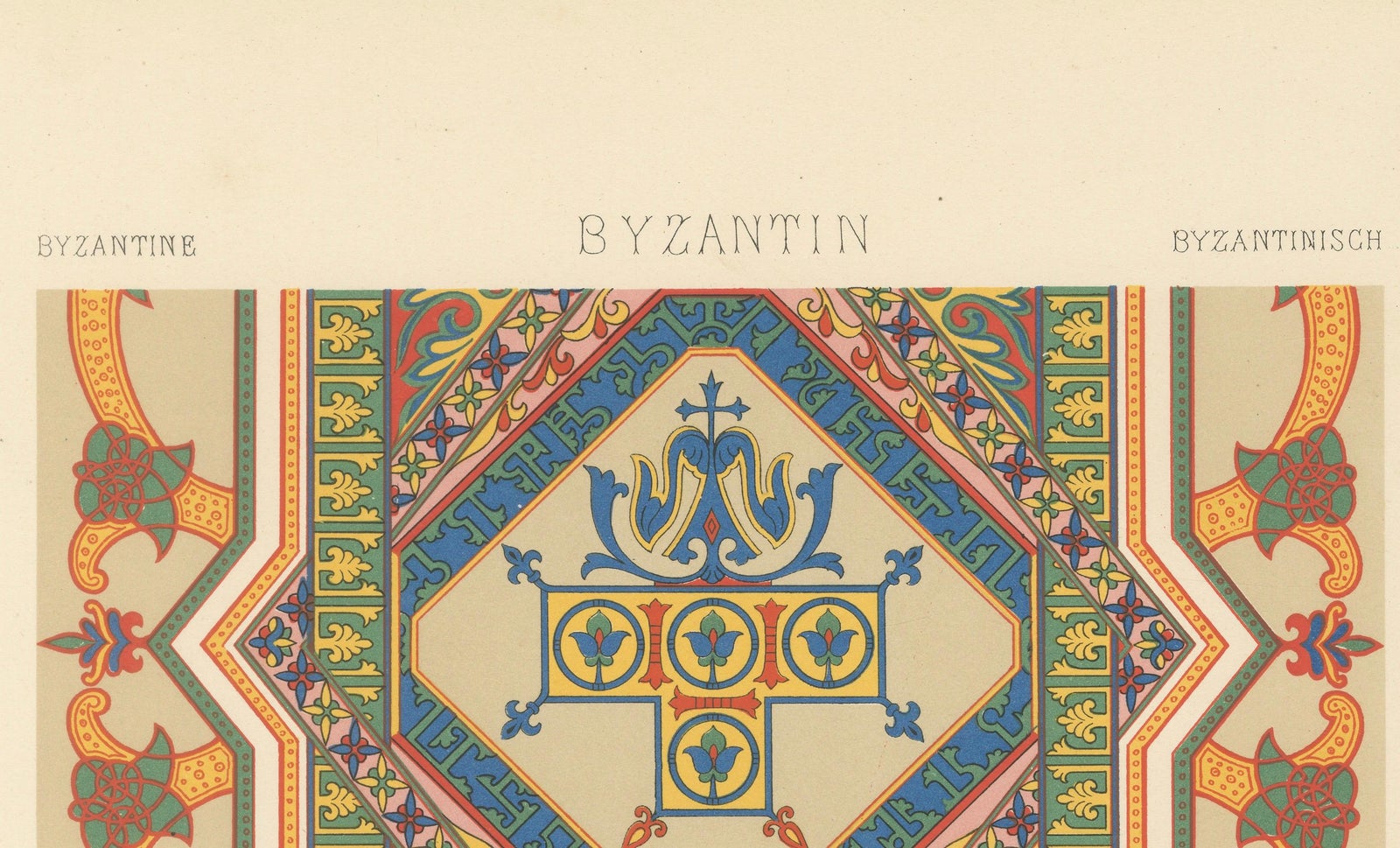
The upper portion of the plate features an ornate diamond-framed medallion surrounded by stylized vine scrolls, floral motifs, and intricate interlacing bands. At its center is a Christian symbol, likely a variation on the Chi Rho or monogram of Christ, framed by concentric layers of geometric and botanical patterns rendered in deep reds, greens, golds, and blues. The form and layout recall ornamental ceilings, mosaic pavements, or painted manuscript borders from Byzantine churches and palaces.
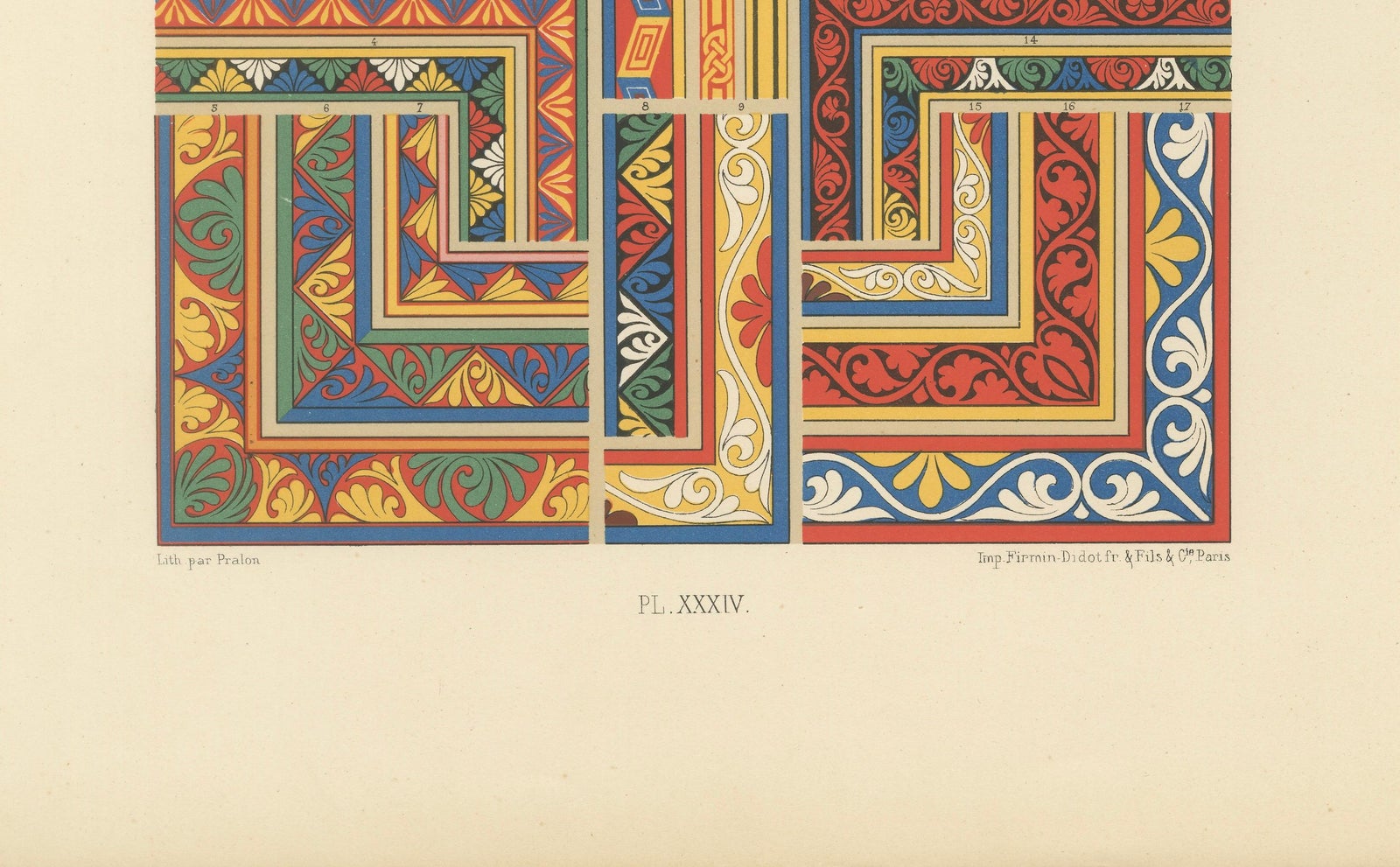
The lower section showcases twelve angular corner designs, each demonstrating variations of Byzantine border decoration. These include meanders, rosettes, stylized foliage, and multicolor chevrons, expertly arranged in L-shaped formations. The use of interlaced patterns and multiband framing was typical in Byzantine architectural design and liturgical objects, reflecting the period's obsession with divine order and spiritual symmetry.
Lithographed by Pralon and printed by Firmin-Didot Frères, Fils & Cie, this piece likely originates from *L’Ornement Polychrome* by Auguste Racinet or a comparable 19th-century design folio. These reference works were widely used by designers and architects during the historicist and Orientalist revivals of the Victorian era, which drew heavily on classical, medieval, and non-Western sources.
This print is a stunning example of the Byzantine decorative language, at once formal, symbolic, and exuberantly colorful. Its layered complexity and jewel-like palette make it a superb item for collectors of ecclesiastical art, design historians, or anyone seeking visual material tied to the Eastern Christian tradition.
Condition report:
Very good condition. Strong original colors with only minor toning at the sheet edges. No tears or foxing visible. Paper stable and clean.
Framing tips:
A bold gold or black frame will echo the opulence of Byzantine art. A double mat in ivory with a thin inner accent of crimson or cobalt blue can enhance the visual depth and elegance. Ideal for gallery walls, libraries, or interiors with classical or religious themes.
Technique: Chromolithograph
Maker: Lith. par Pralon; printed by Firmin-Didot Frères, Fils & Cie, Paris, circa 1880s