Close-ups
Framed and on the wall
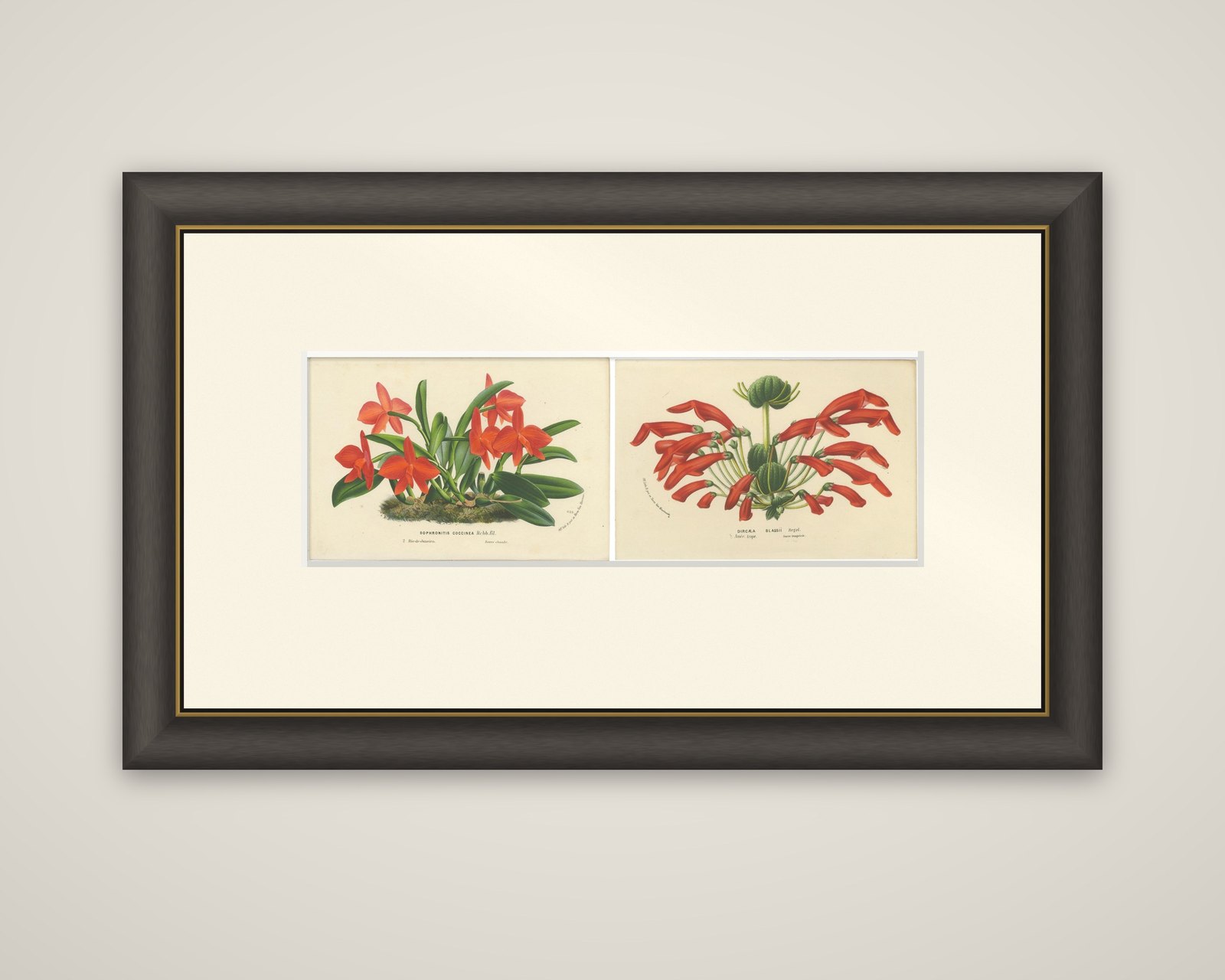


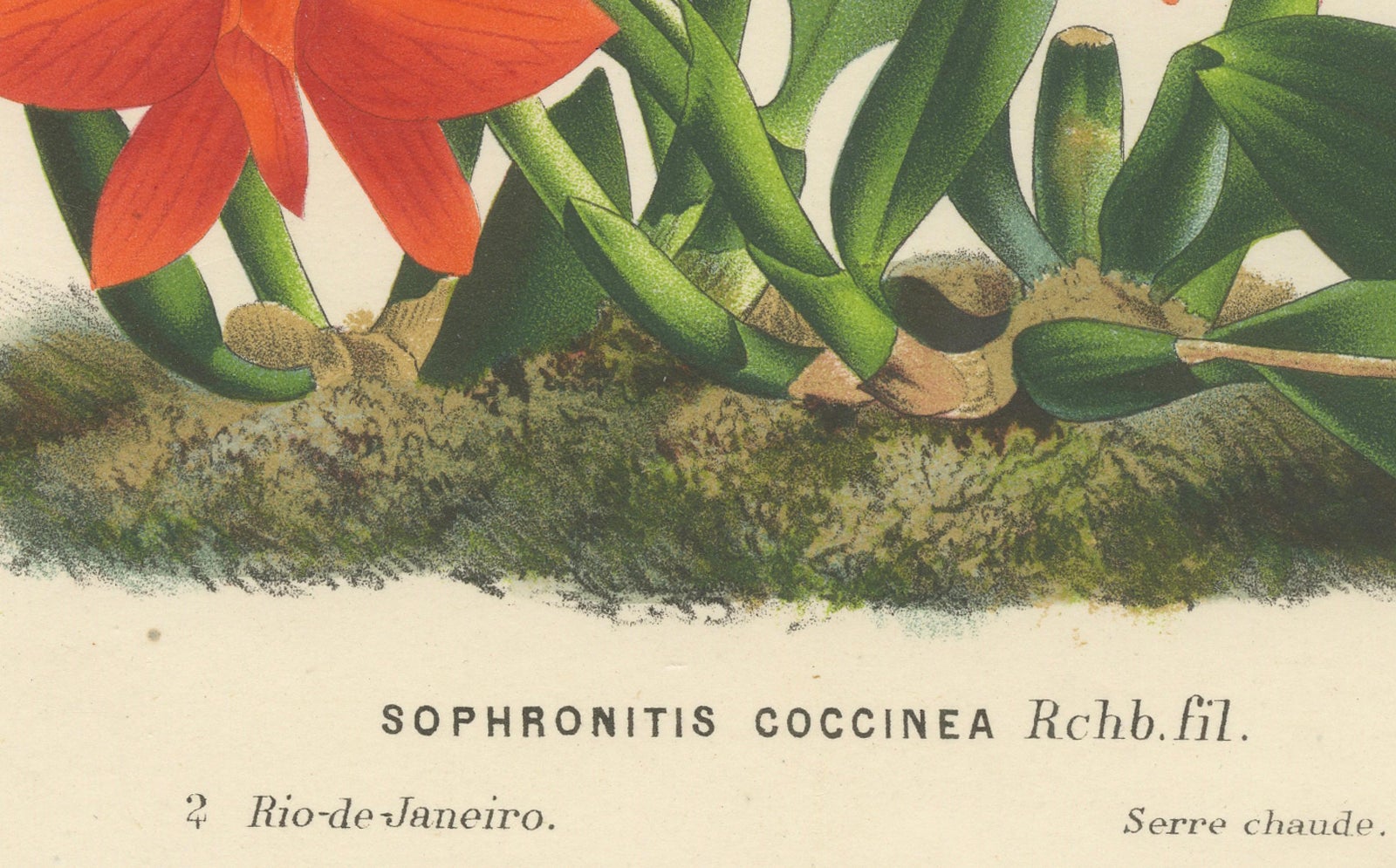
Frame and rooms are illustrations of how the print could look; the description says what is included.
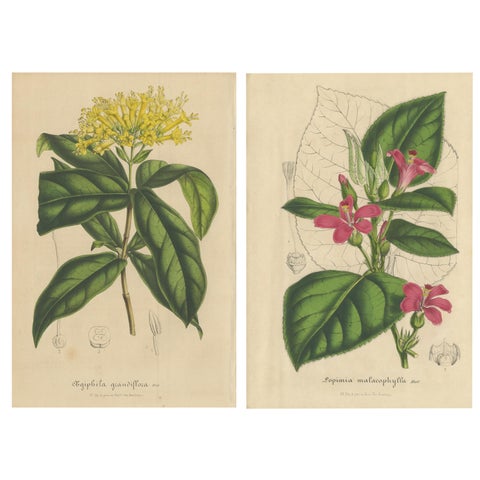
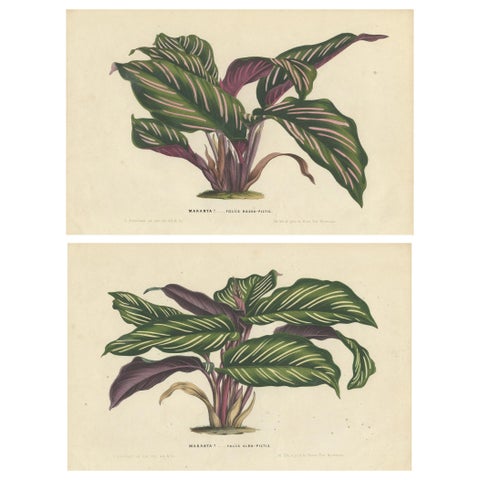
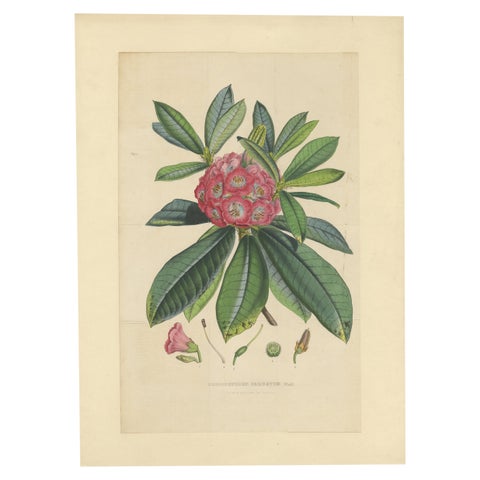
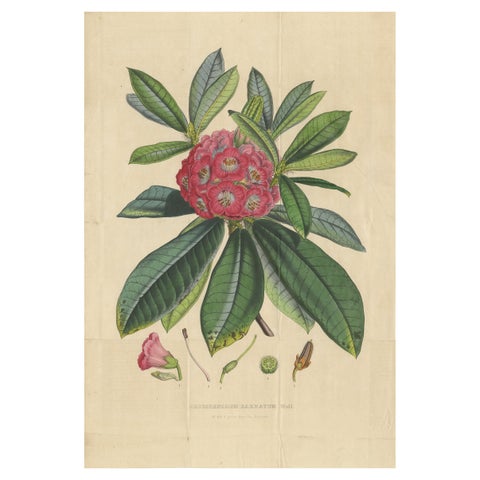
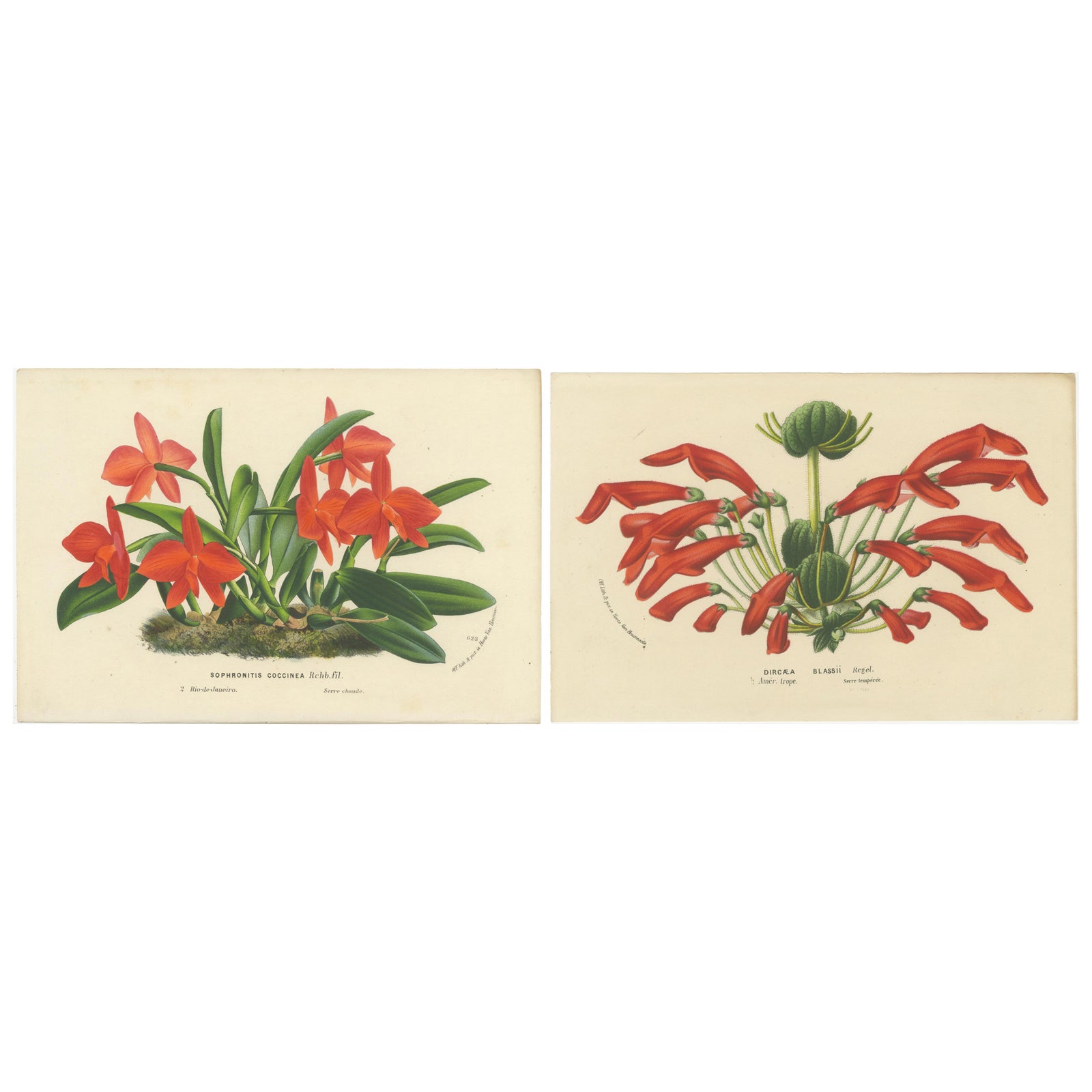
Botanical Vintage Prints of Scarlet Sophronitis and Tropical Bloom, c.1845
$270 (£205, €240)
Period original, not a reproduction.
Shipped from the Netherlands, flat, insured and tracked, worldwide. Returns accepted within 14 days.
- Date
- 1845
- Size
- 6.7 × 9.8 in (17 × 25 cm)
- Condition
- Very good, given age. General age-related toning and/or occasional minor defects from handling. Please study scan carefully.
- Period
- Early 19th century
- Artist or book
- Louis van Houtte
- Section
- Botanical
- Reference
- f_41416102
- Colour
- Printed colour
What the condition grades mean
- Excellent
- Bright and clean, with no faults worth mentioning.
- Very good
- Only light signs of age, such as faint toning.
- Good
- Normal signs of age for a sheet of this period: toning, some foxing, small marks or neat old repairs.
- Fair
- Clear faults such as staining, tears or repairs, priced to match.
Every fault we see is written in the condition note, and the whole sheet is shown uncropped in the photos.
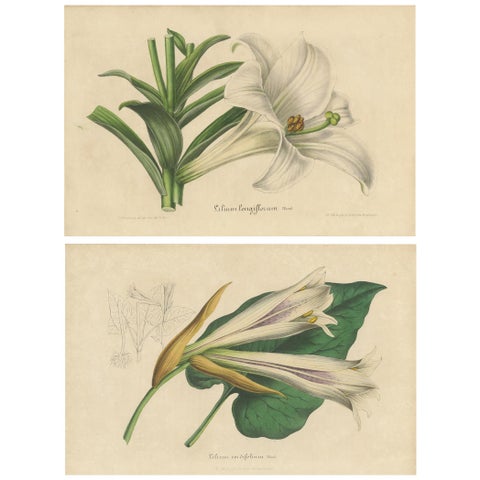
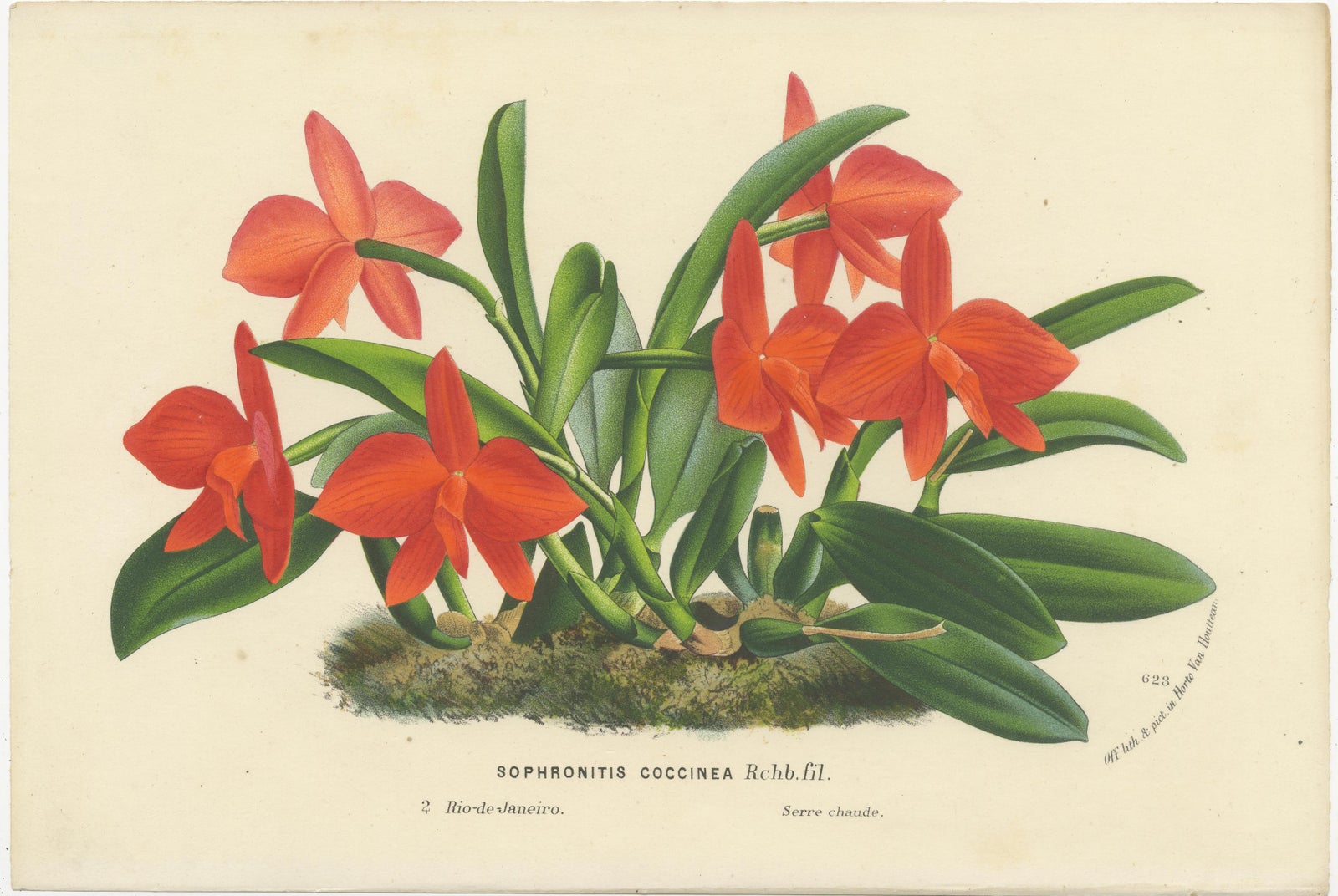
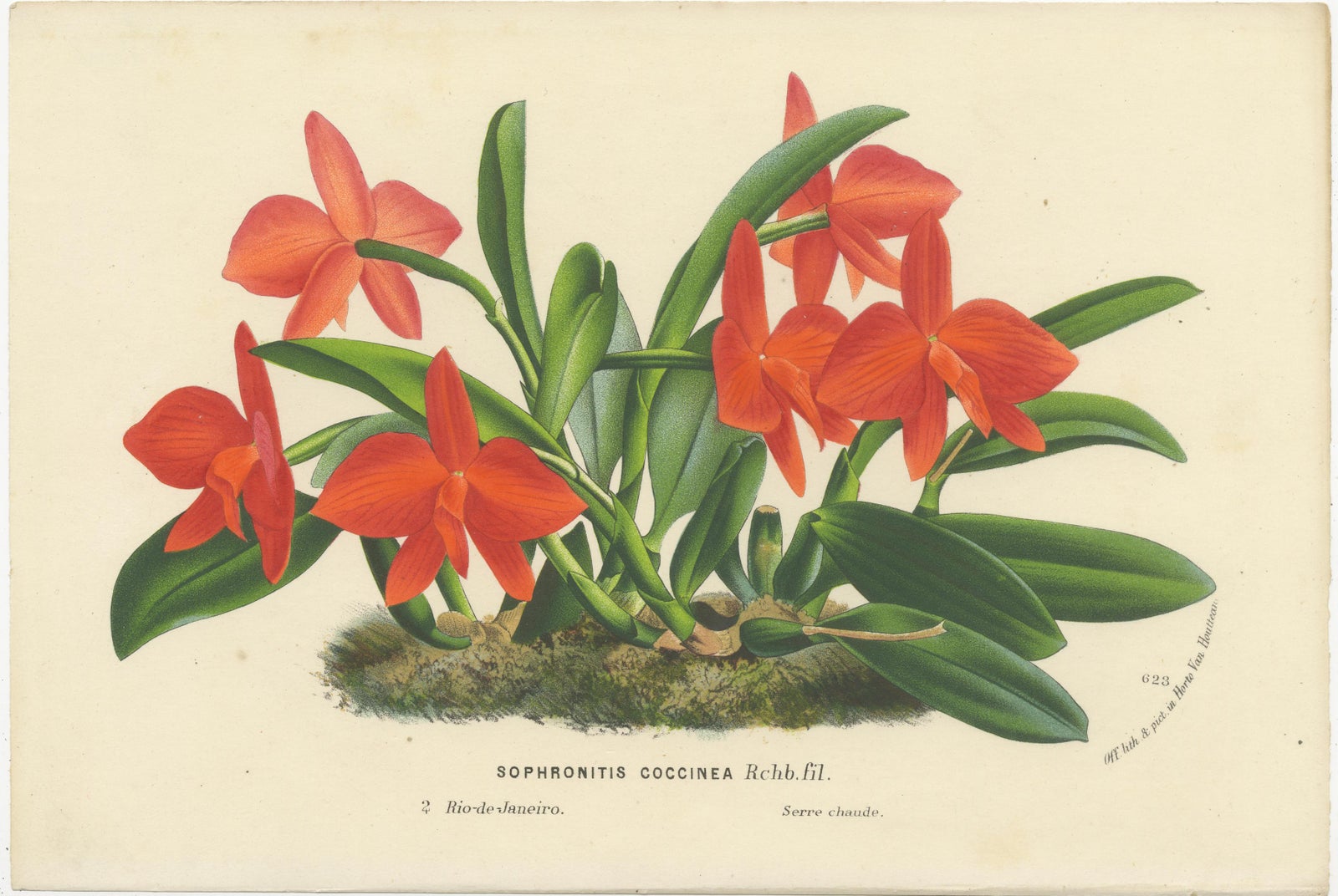
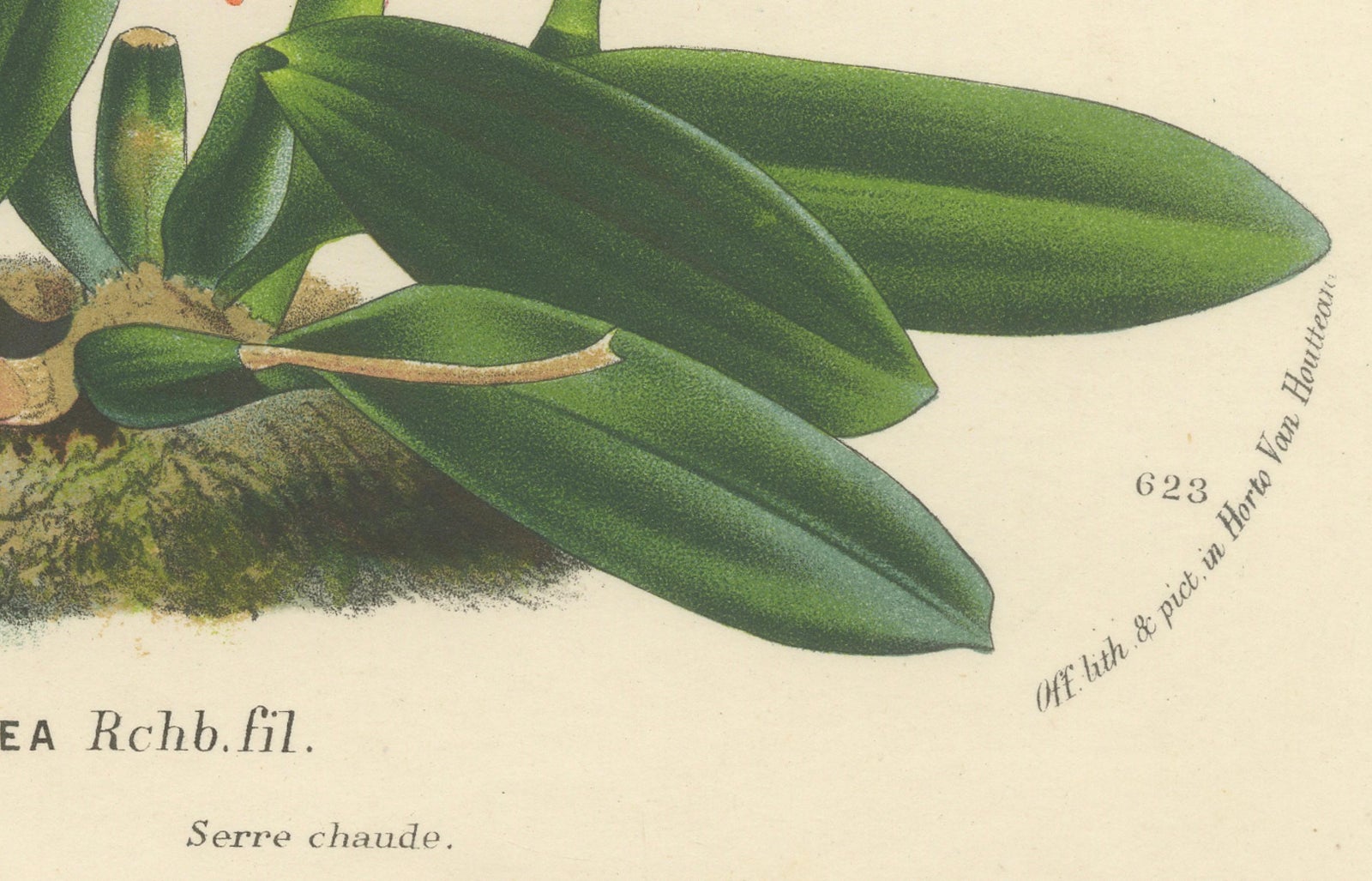
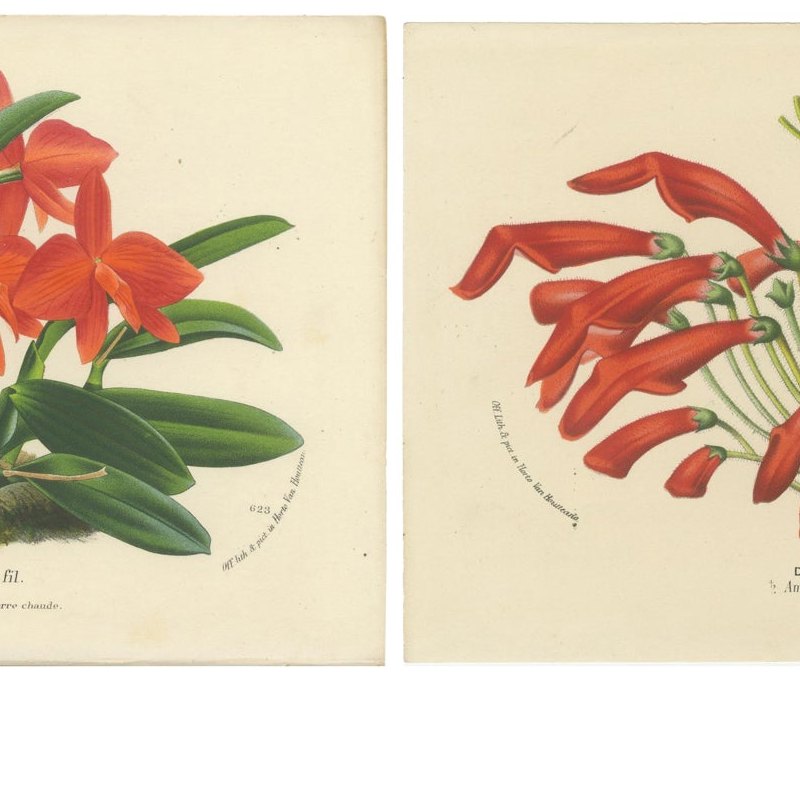
Two orchids and a tropical flower from Louis van Houtte's Flore des Serres et des Jardins de l'Europe, issued in Ghent about 1845, shown as two chromolithographs. The first is lettered "Sophronitis coccinea Rchb. fil.", with the origin "Rio-de-Janeiro" and the note "Serre chaude"; the second "Dircaea Blassii", with the origin "Amér. trop." and the note "Serre tempérée".
On the first sheet, a compact tuft of dark green leaves clings to a mossy base and carries a group of large, bright scarlet-orange flowers, their rounded petals open in all directions. On the second, a green central crown of seed-like buds sits at the top of a stem, with long, narrow, tubular scarlet flowers radiating around it in a fan, their tips curled back.
Van Houtte's series, with plates by Charles Lemaire and others, showed the new plants of the greenhouses of Ghent to European growers. The notes on each plate record where the plant came from and how it was to be grown: here Brazil and tropical America, in a warm and a temperate greenhouse.