Close-ups
Framed and on the wall


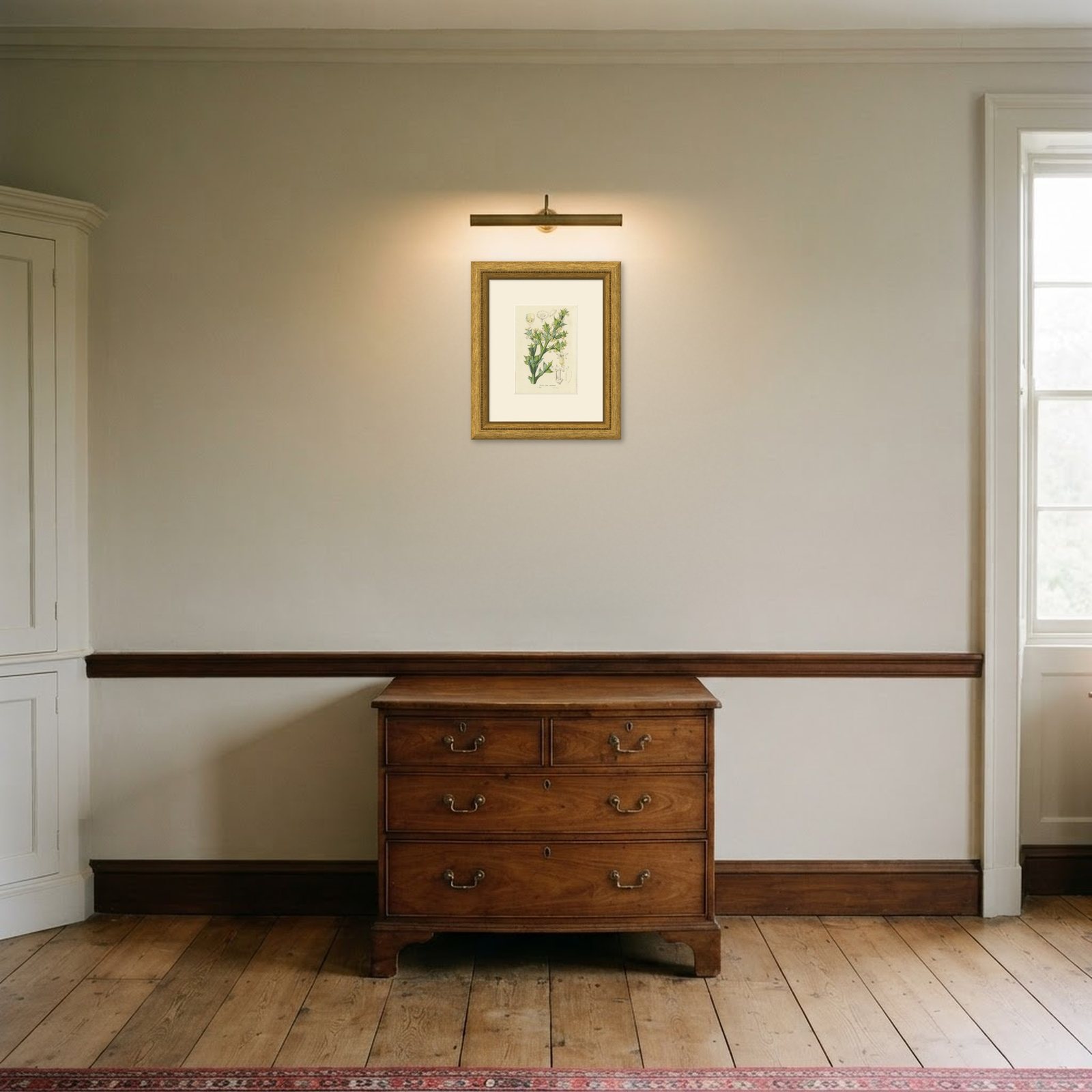
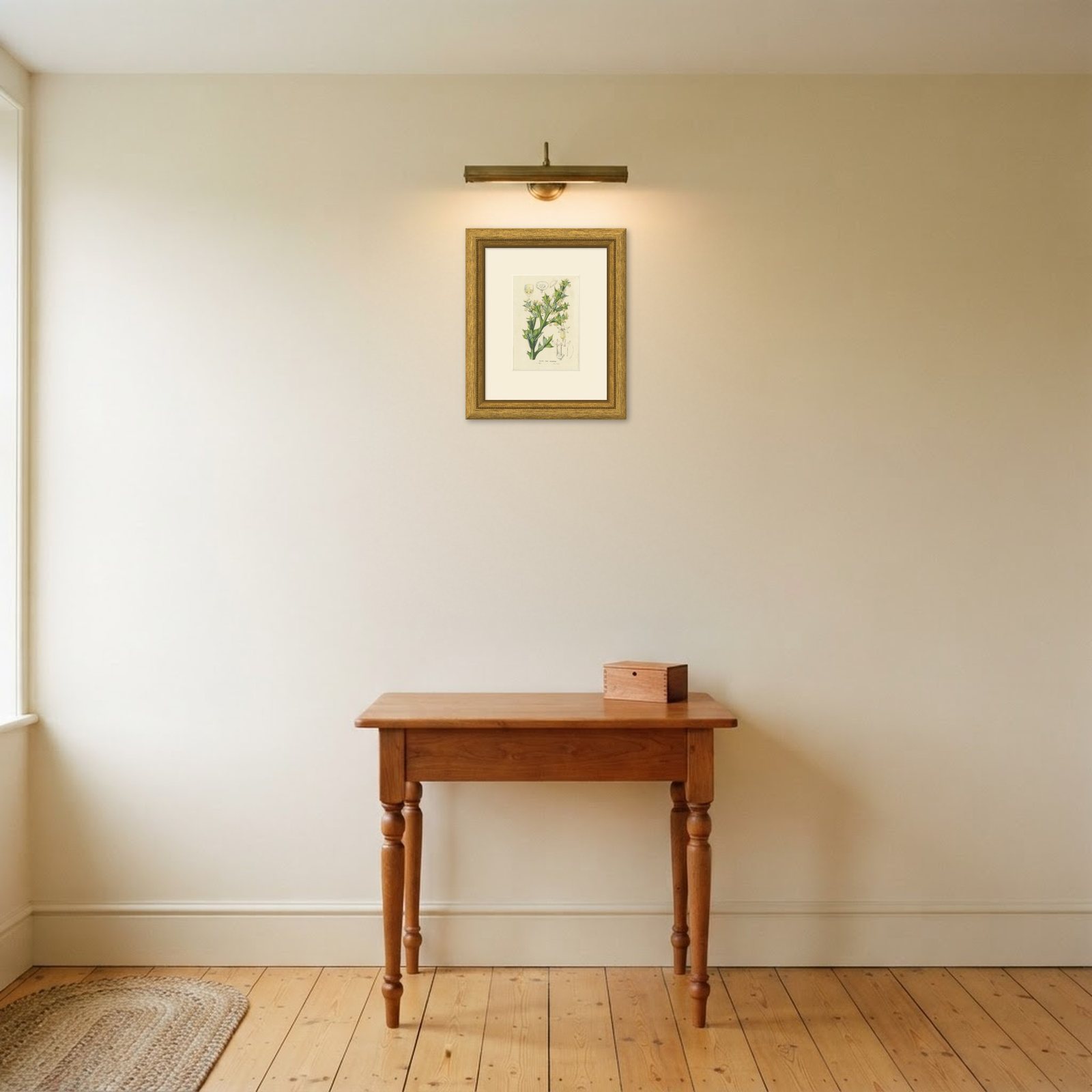
Frame and rooms are illustrations of how the print could look; the description says what is included.
Botanical Illustration of Colletia Ferox: Thorny Beauty from Chile, c.1855
€140€10525% off ($115, £90, €105)
Period original, not a reproduction.
Shipped from the Netherlands, flat or rolled, insured and tracked, worldwide. Returns accepted within 14 days.
- Date
- 1855
- Size
- 9.4 × 6.3 in (24 × 16 cm)
- Condition
- Good. The condition of this print is good, with vibrant colors and clear details that have been well-preserved over time. General age-related toning and/or occasional minor defects from handling. Study scans carefully.
- Period
- Late 19th century
- Artist or book
- Louis van Houtte
- Section
- Botanical
- Reference
- f_41294542
- Color
- Hand colored
What the condition grades mean
- Excellent
- Bright and clean, with no faults worth mentioning.
- Very good
- Only light signs of age, such as faint toning.
- Good
- Normal signs of age for a sheet of this period: toning, some foxing, small marks or neat old repairs.
- Fair
- Clear faults such as staining, tears or repairs, priced to match.
Every fault we see is written in the condition note, and the whole sheet is shown uncropped in the photos.
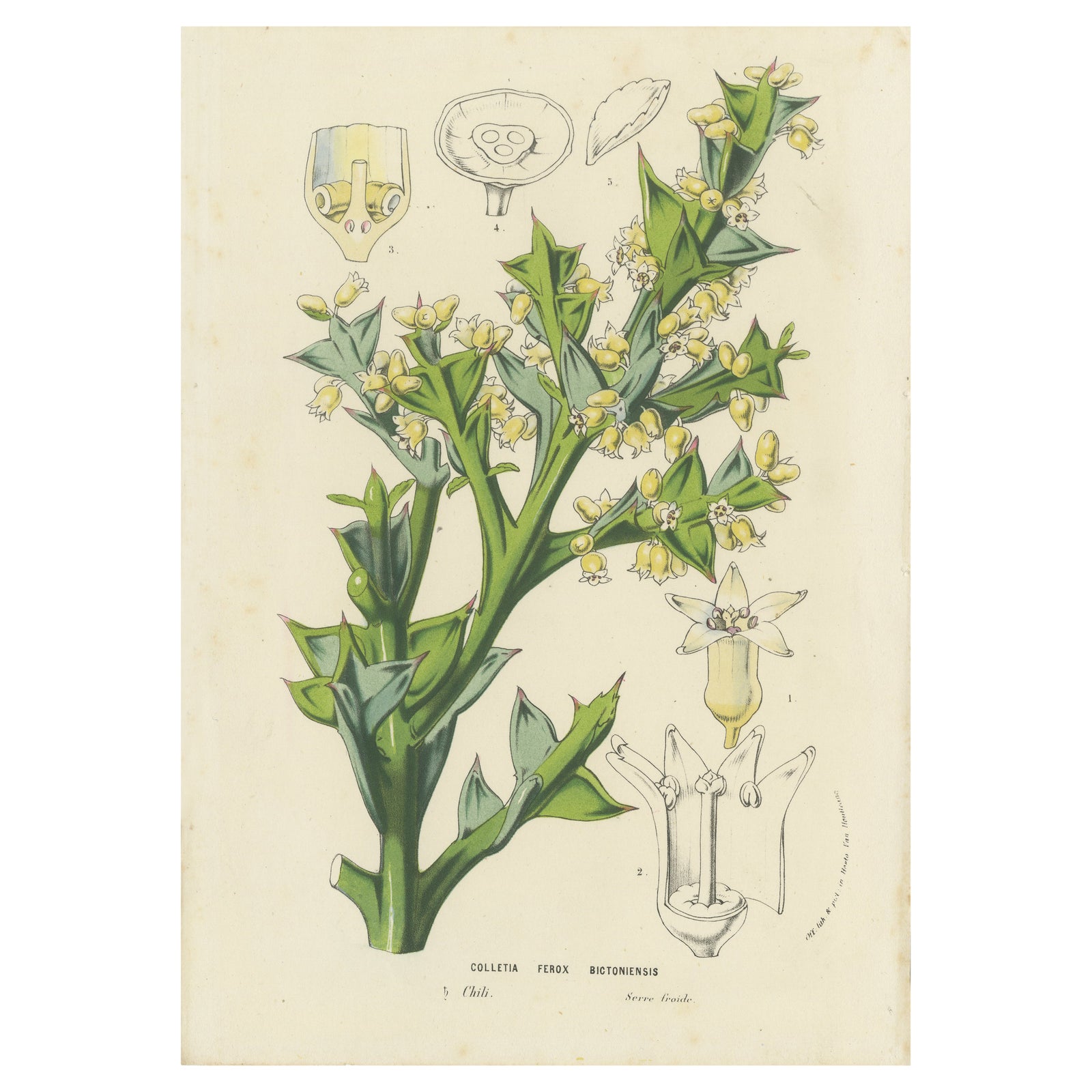
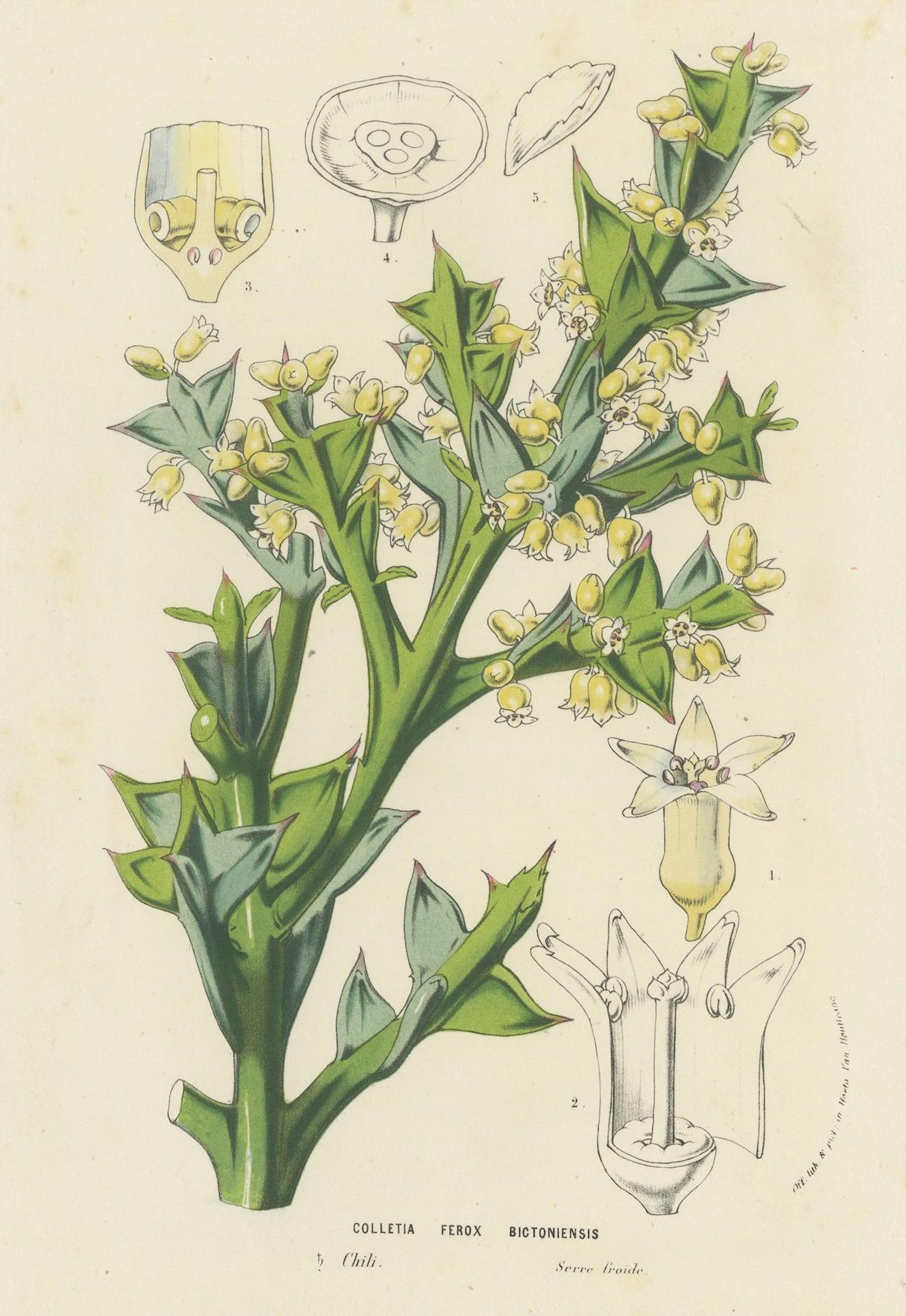
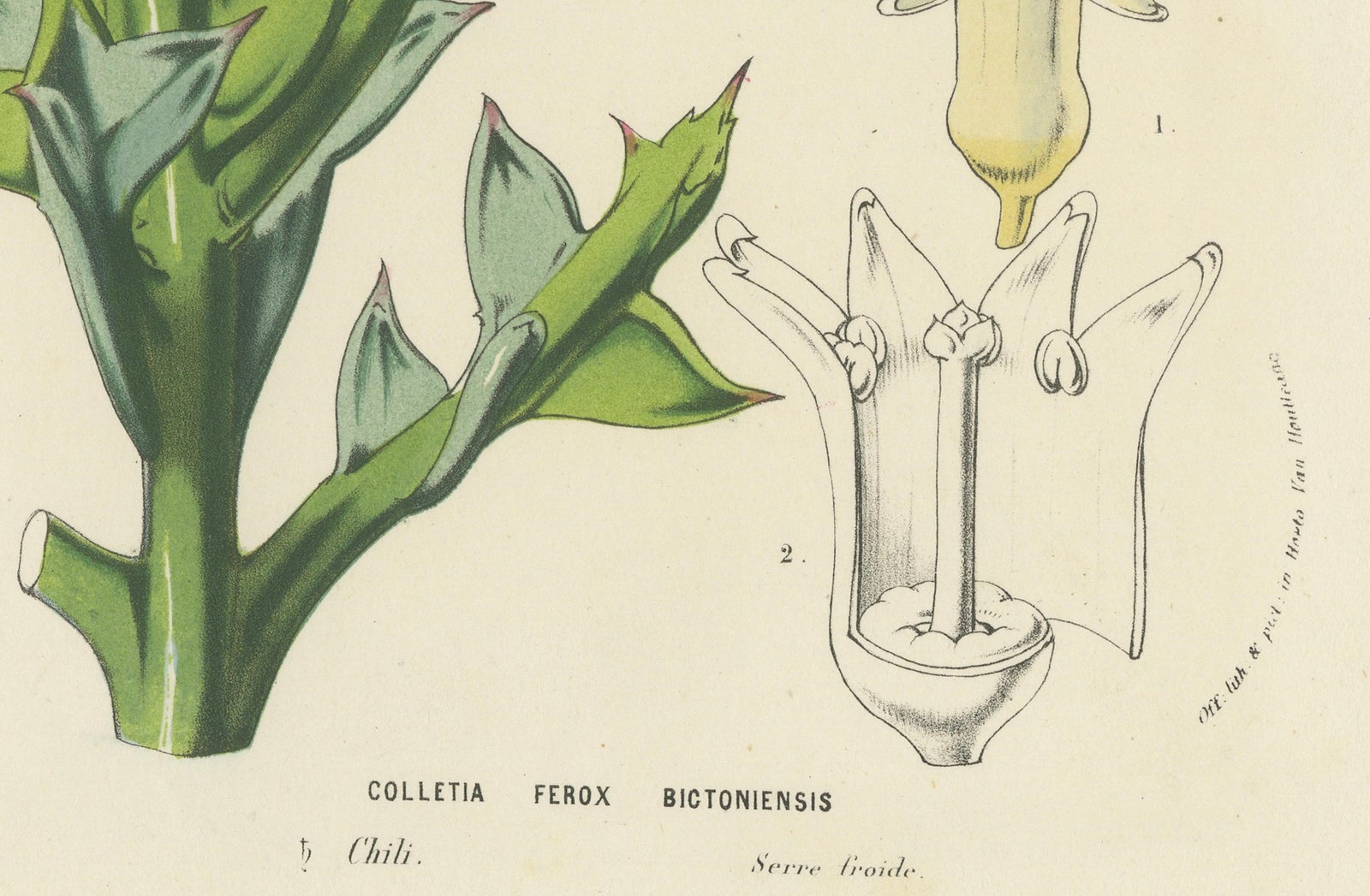
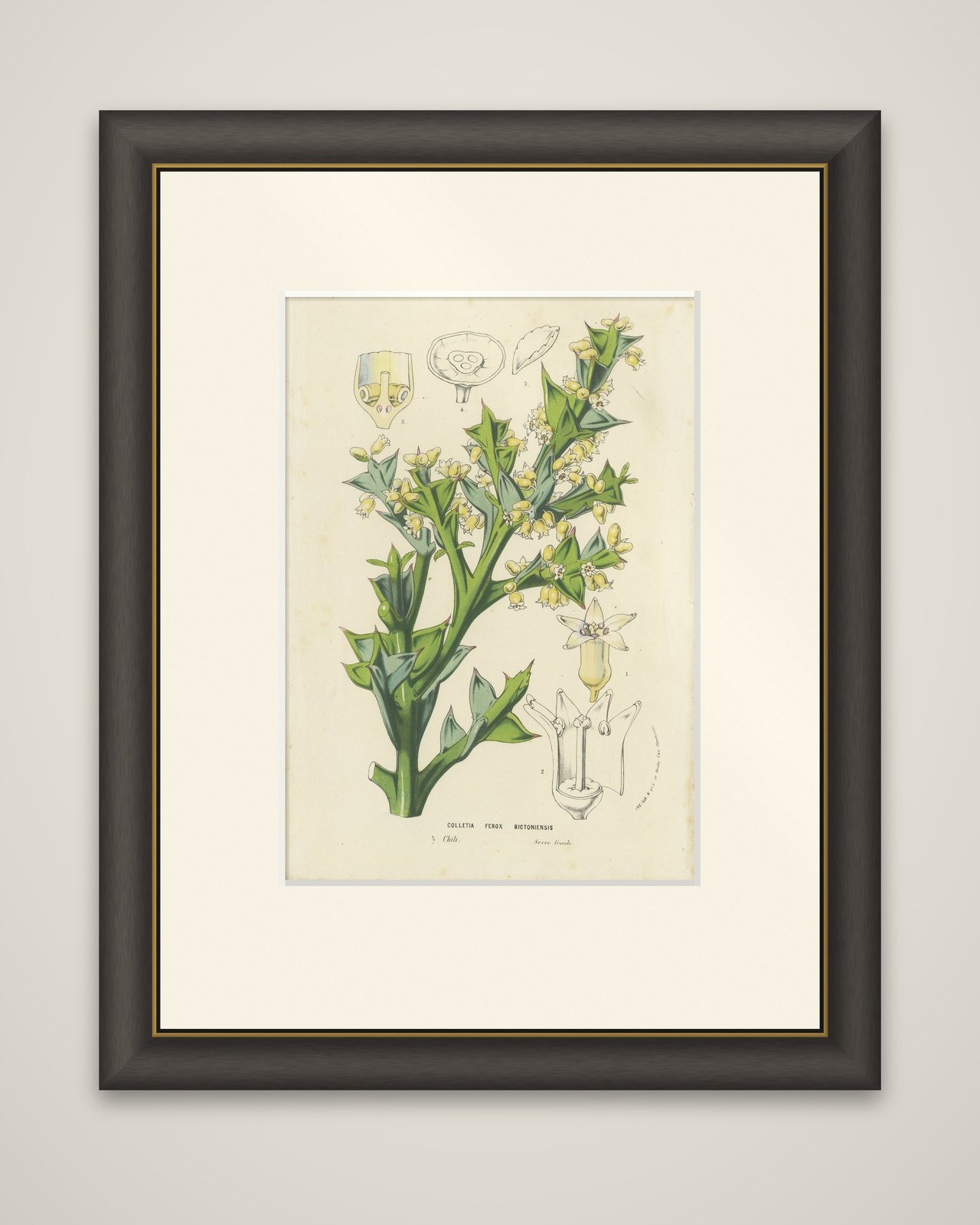
Colletia ferox bictoniensis, a lithograph from Louis van Houtte's Flore des Serres et des Jardins de l'Europe, issued in Ghent about 1855 with hand coloring. The sheet is lettered "Colletia ferox bictoniensis", with the origin "Chili" and the cultivation note "Serre froide" (cool greenhouse).
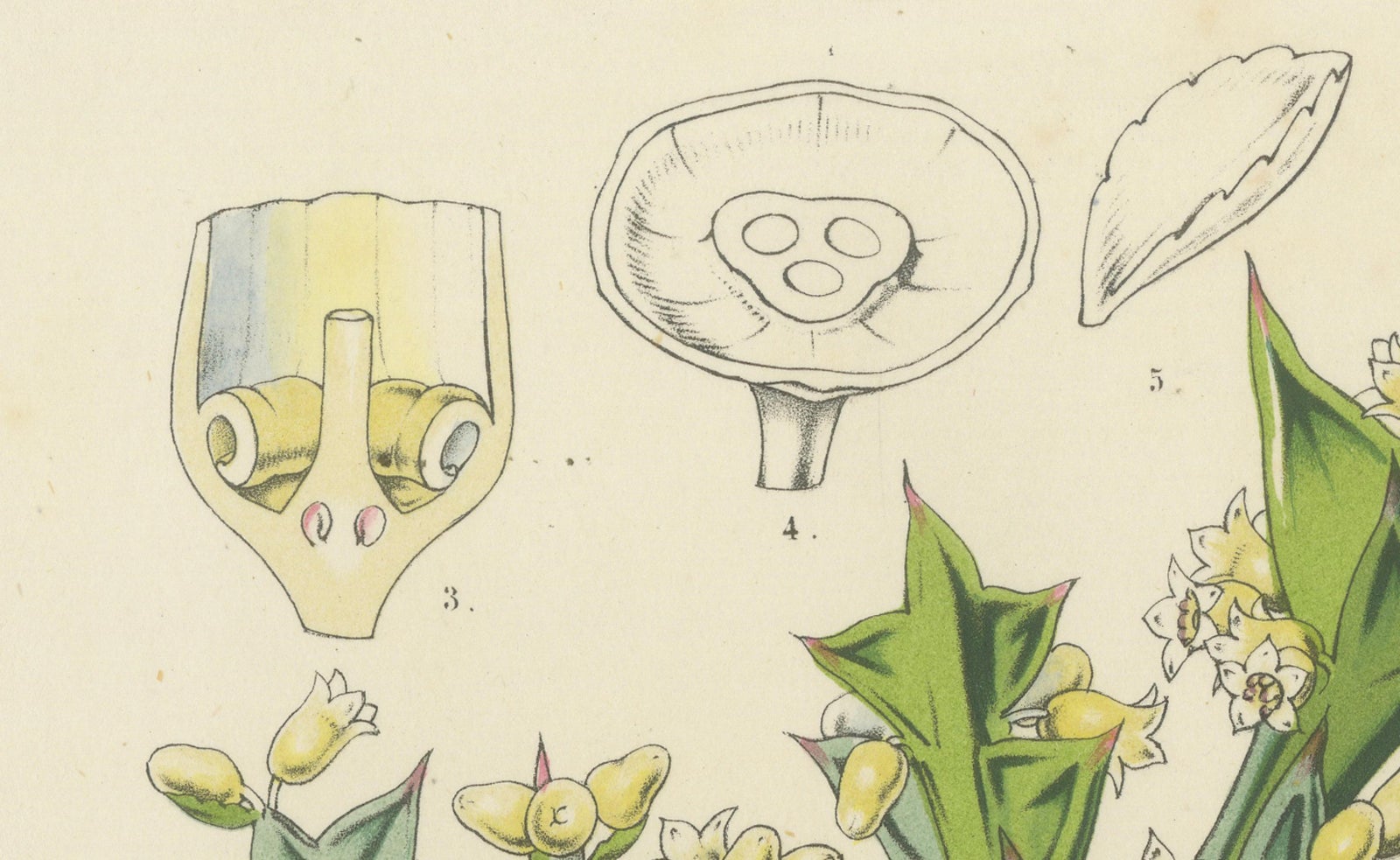
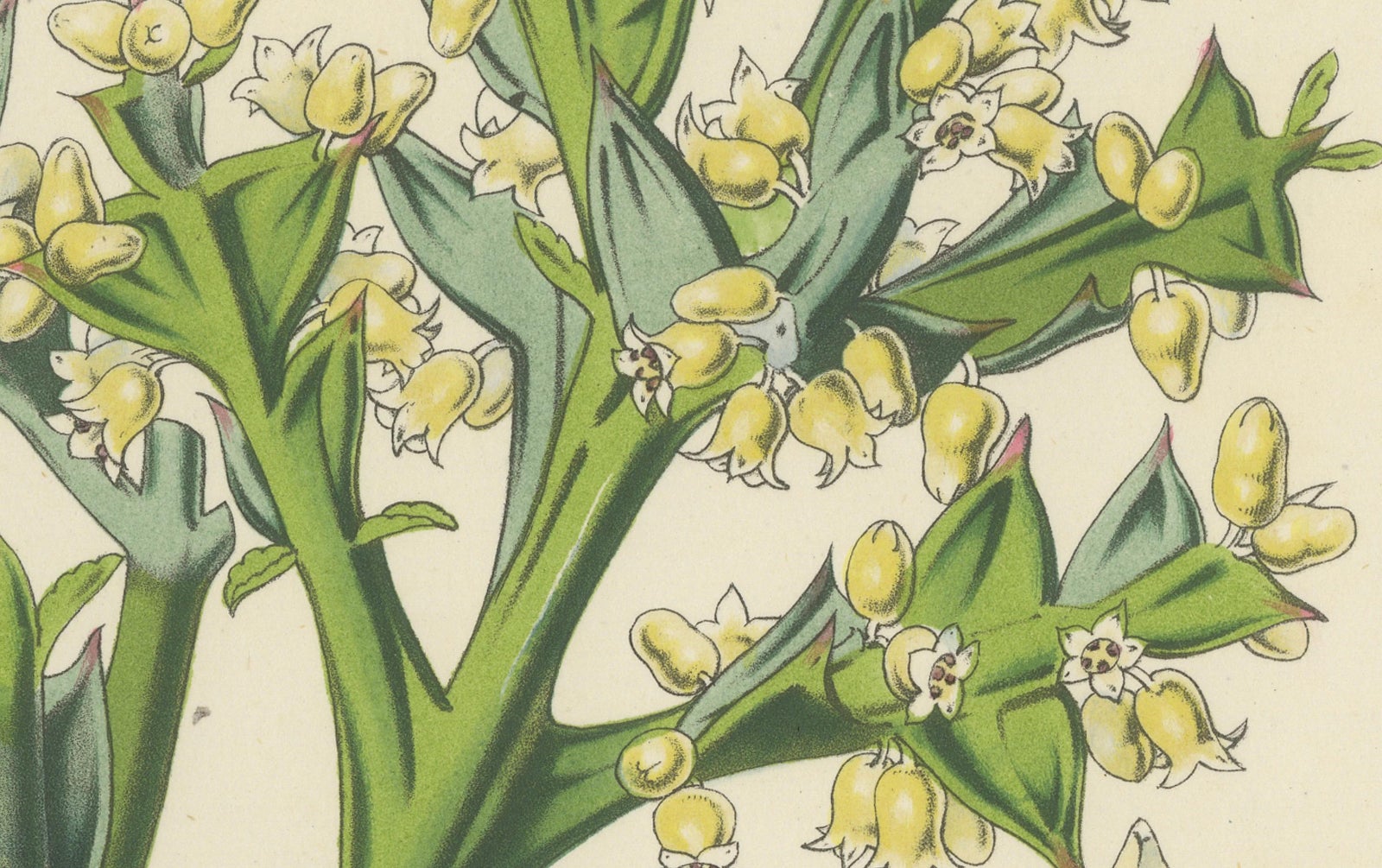
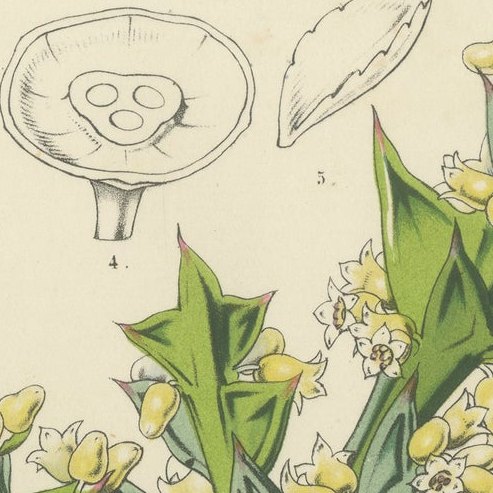
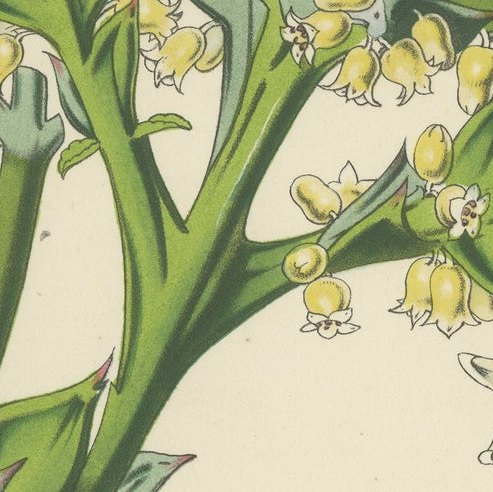
A spiny branch crosses the sheet diagonally. The plant has no true leaves; its stems are flattened into stiff, triangular green thorns, each ending in a reddish point, and small cream-white bell-shaped flowers cluster along the stem. At the right, one flower is shown open at larger scale, with a split-open drawing of its parts below, and further small dissections in outline at the top of the sheet.
The shrub is native to the Andes of Chile, and Van Houtte's series presented it as a curiosity for the cold greenhouse, a plant valued for its armored form as much as for its blossoms.