Close-ups
Framed and on the wall
Frame and rooms are illustrations of how the print could look; the description says what is included.
Botanical Classification Prints: Linnaean Flower Classes & Cryptogamia, 1867
$200 (£150, €180)
Period original, not a reproduction.
Shipped from the Netherlands, flat, insured and tracked, worldwide. Returns accepted within 14 days.
- Date
- 1867
- Size
- 11.2 × 8.7 in (28.5 × 22 cm)
- Condition
- Good. Good condition for their age, with slight overall toning and minor scattered foxing mainly in the margins. The paper remains strong with no tears or repairs, and the hand colouring is clear and fresh.
- Period
- Late 19th century
- Section
- Botanical
- Reference
- f_45798642
Botanical Classification Prints: Linnaean Flower Classes & Cryptogamia, Antique 1867
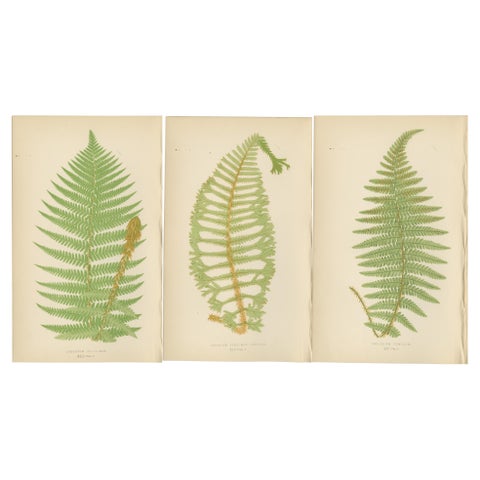
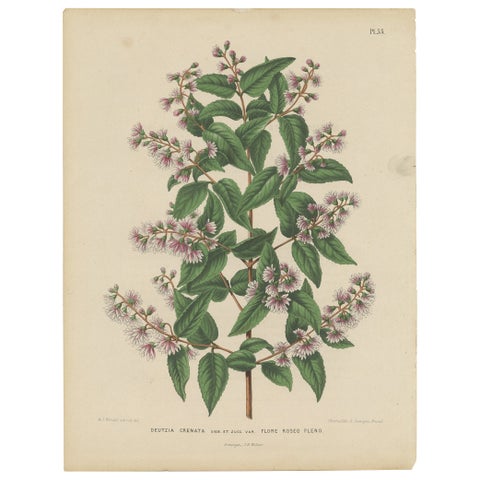
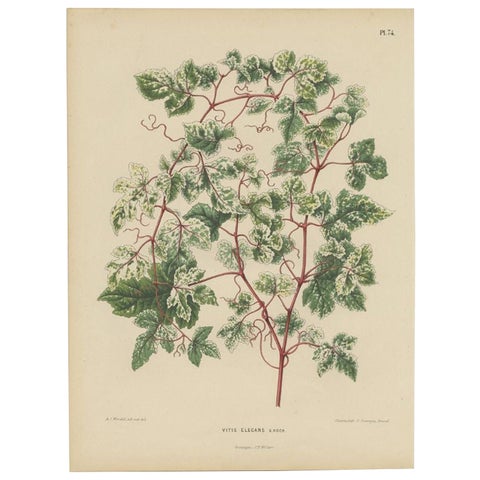
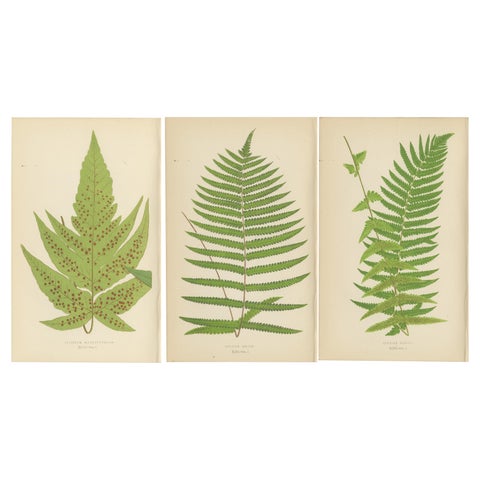
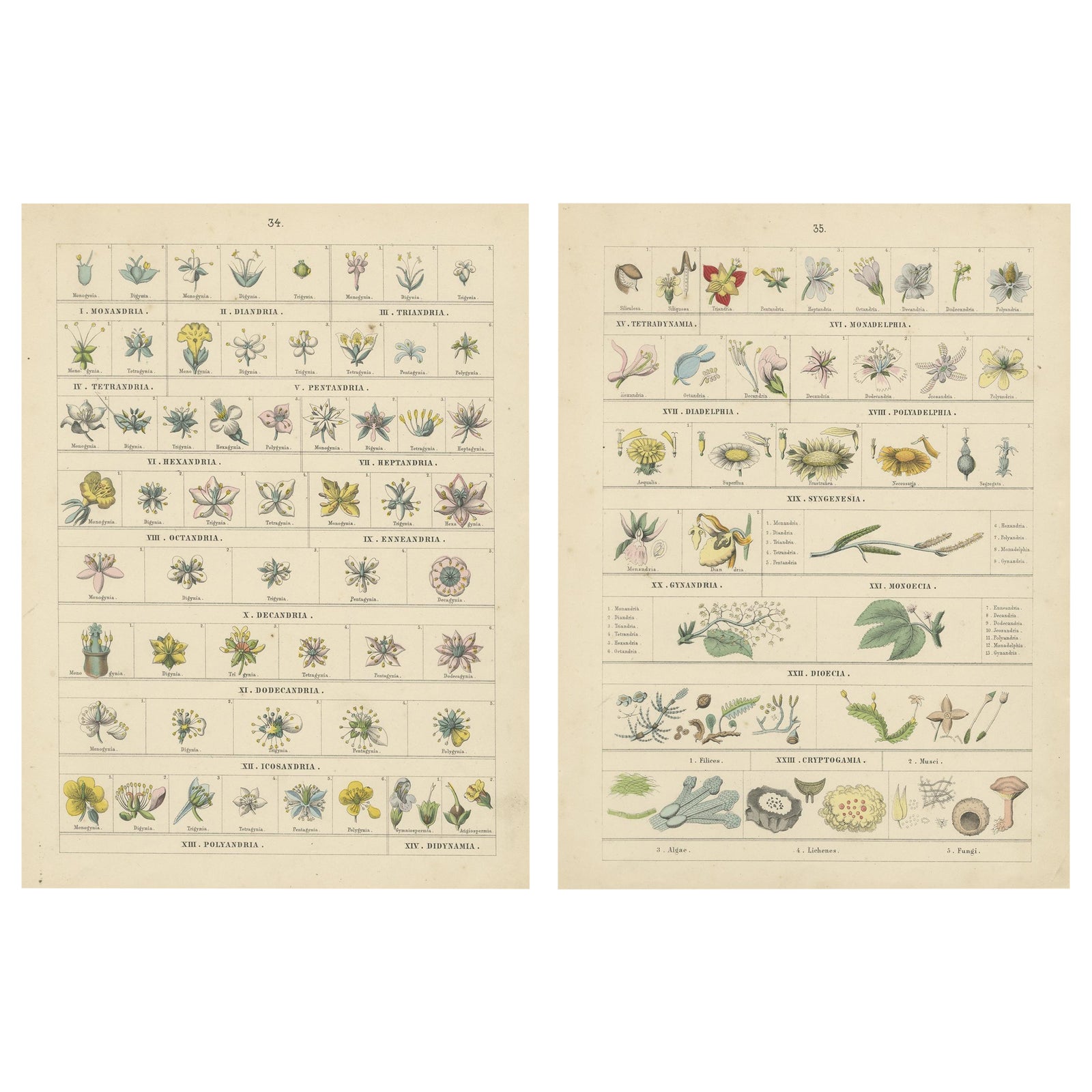
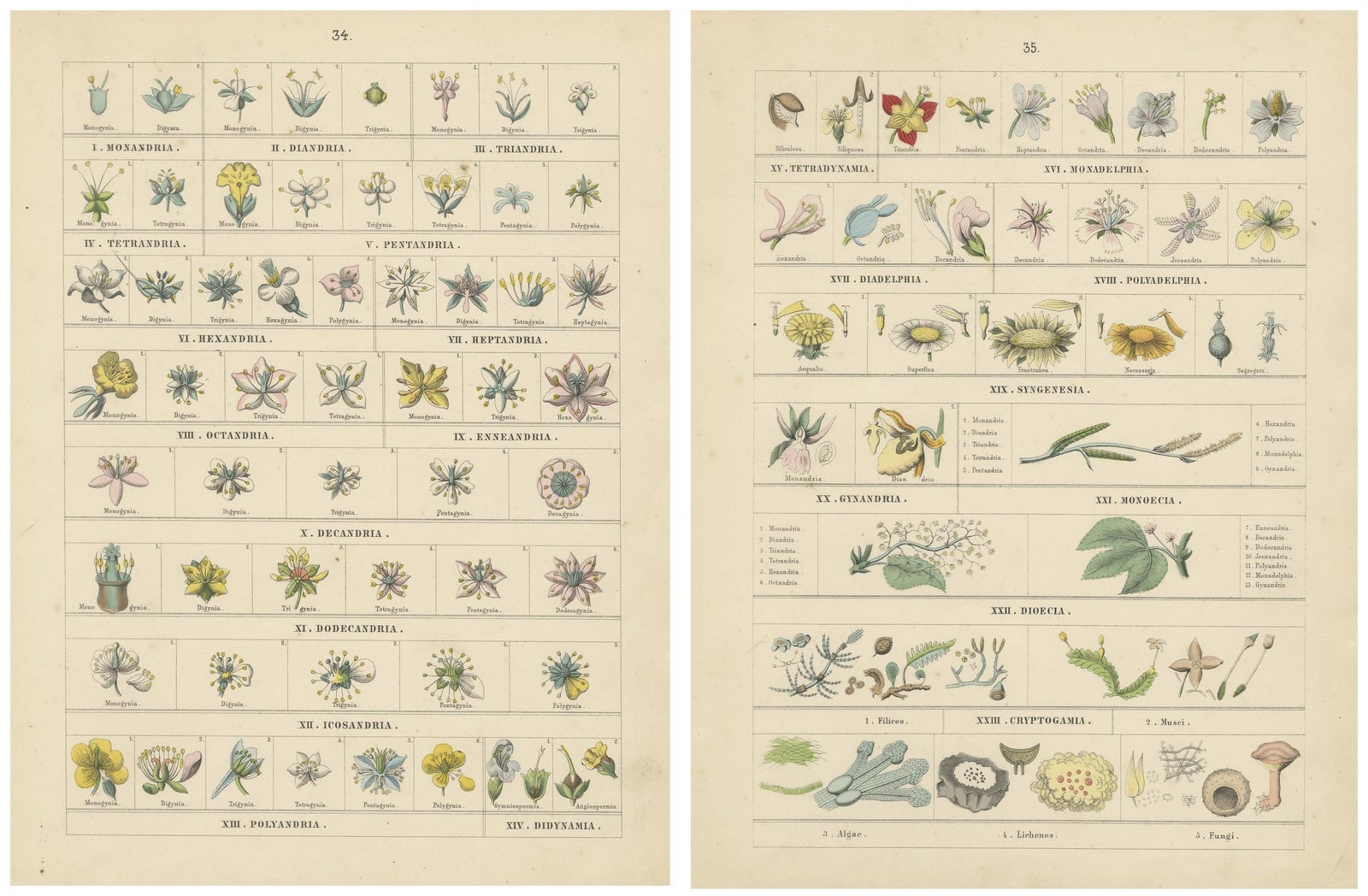
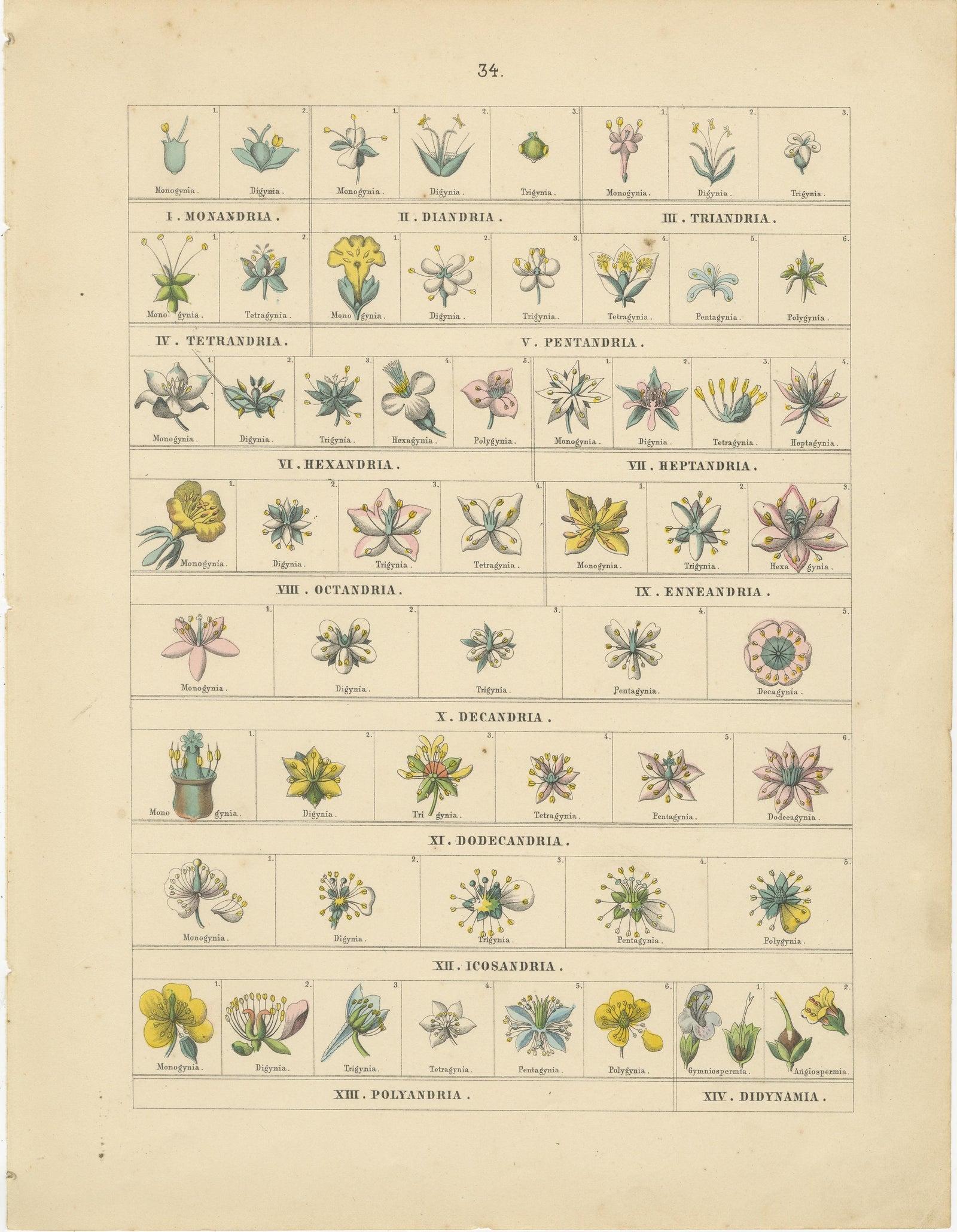
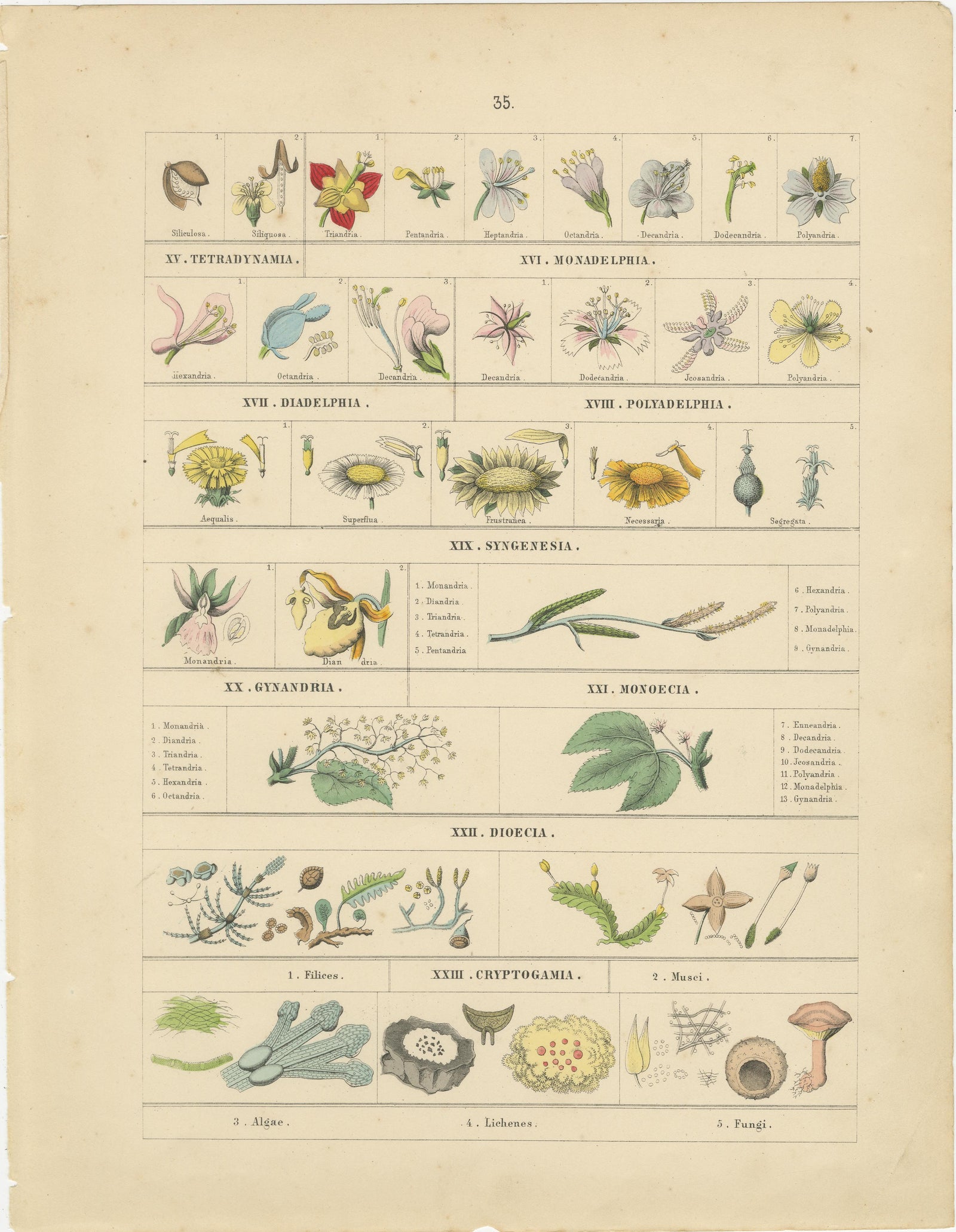
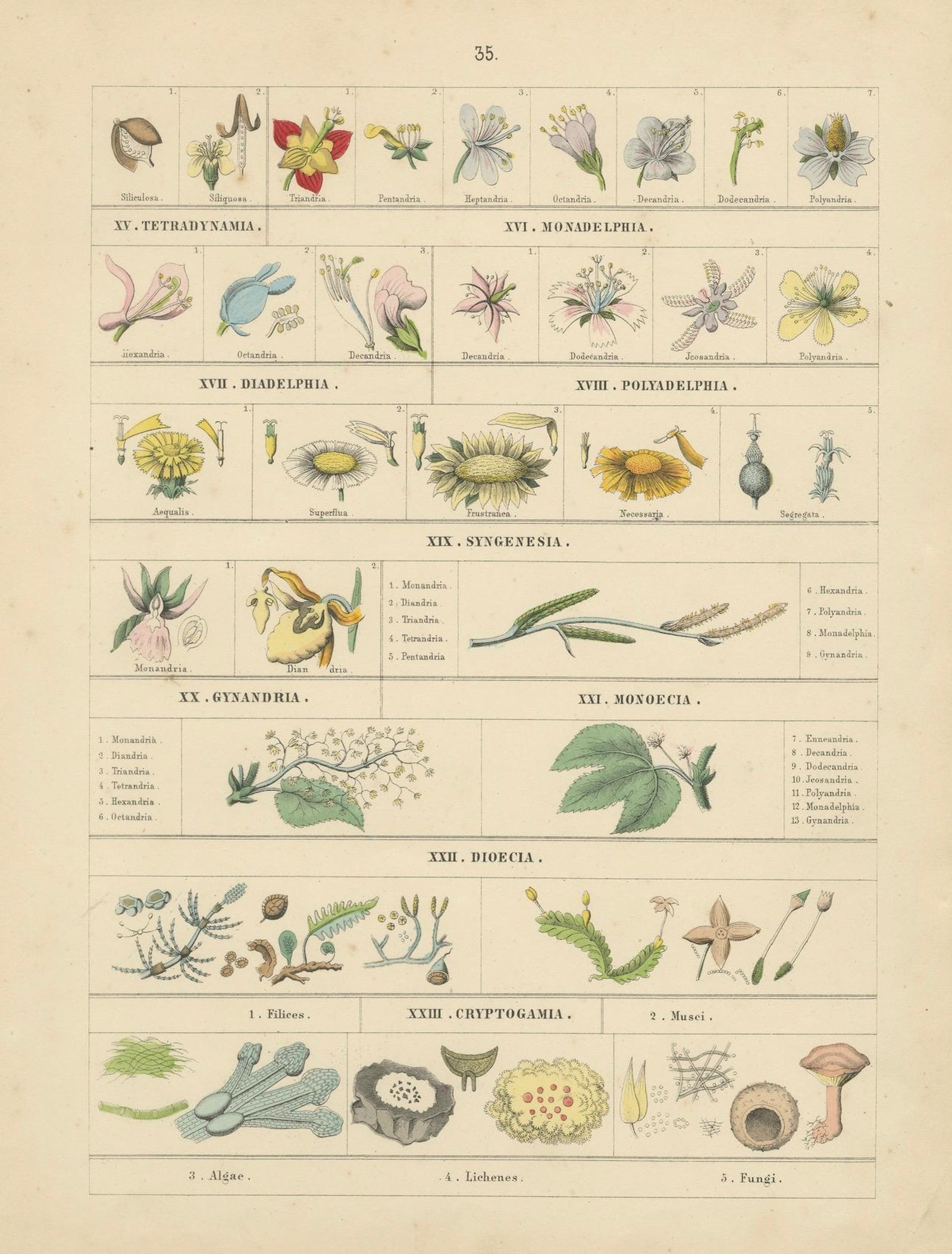
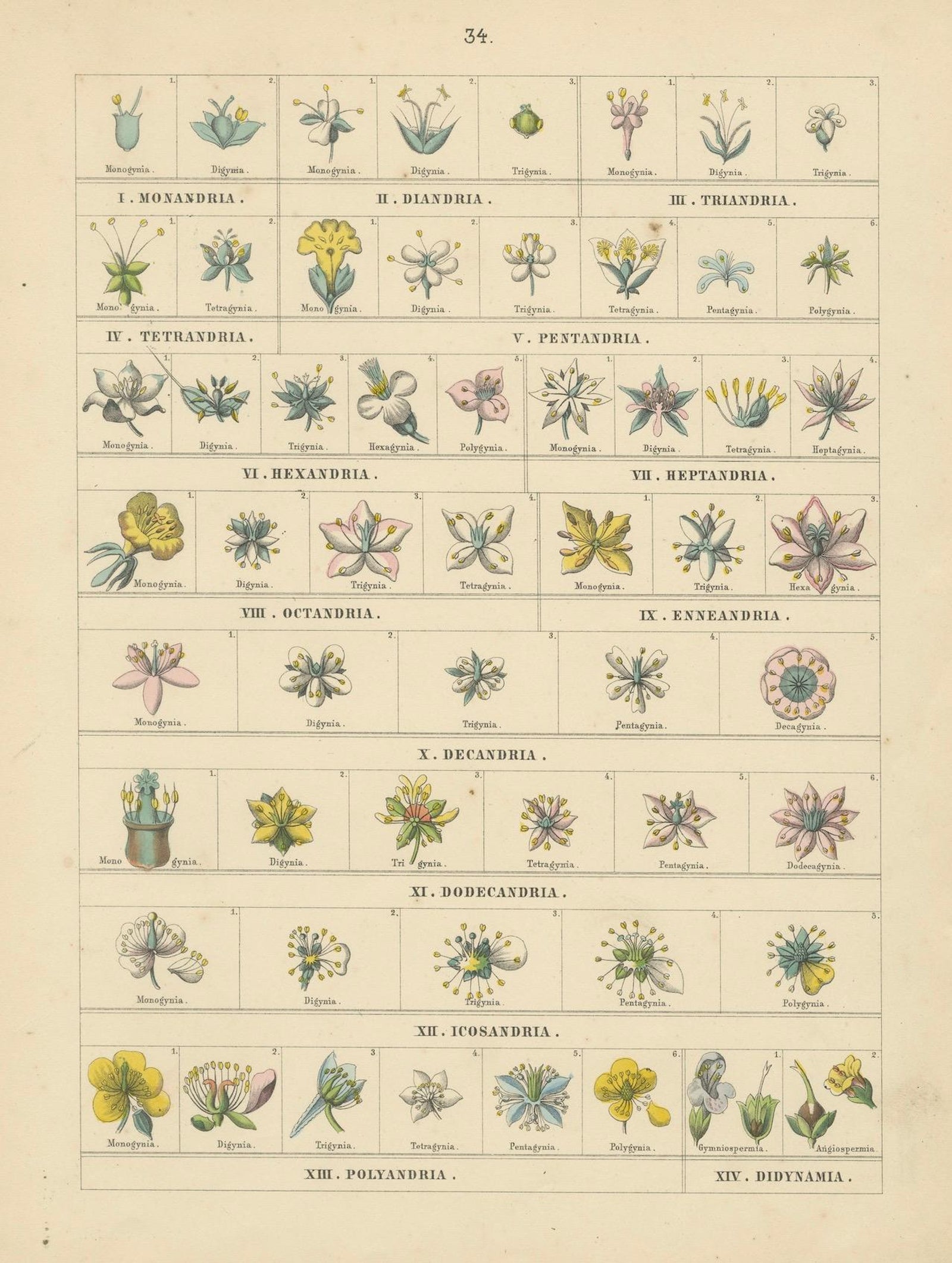
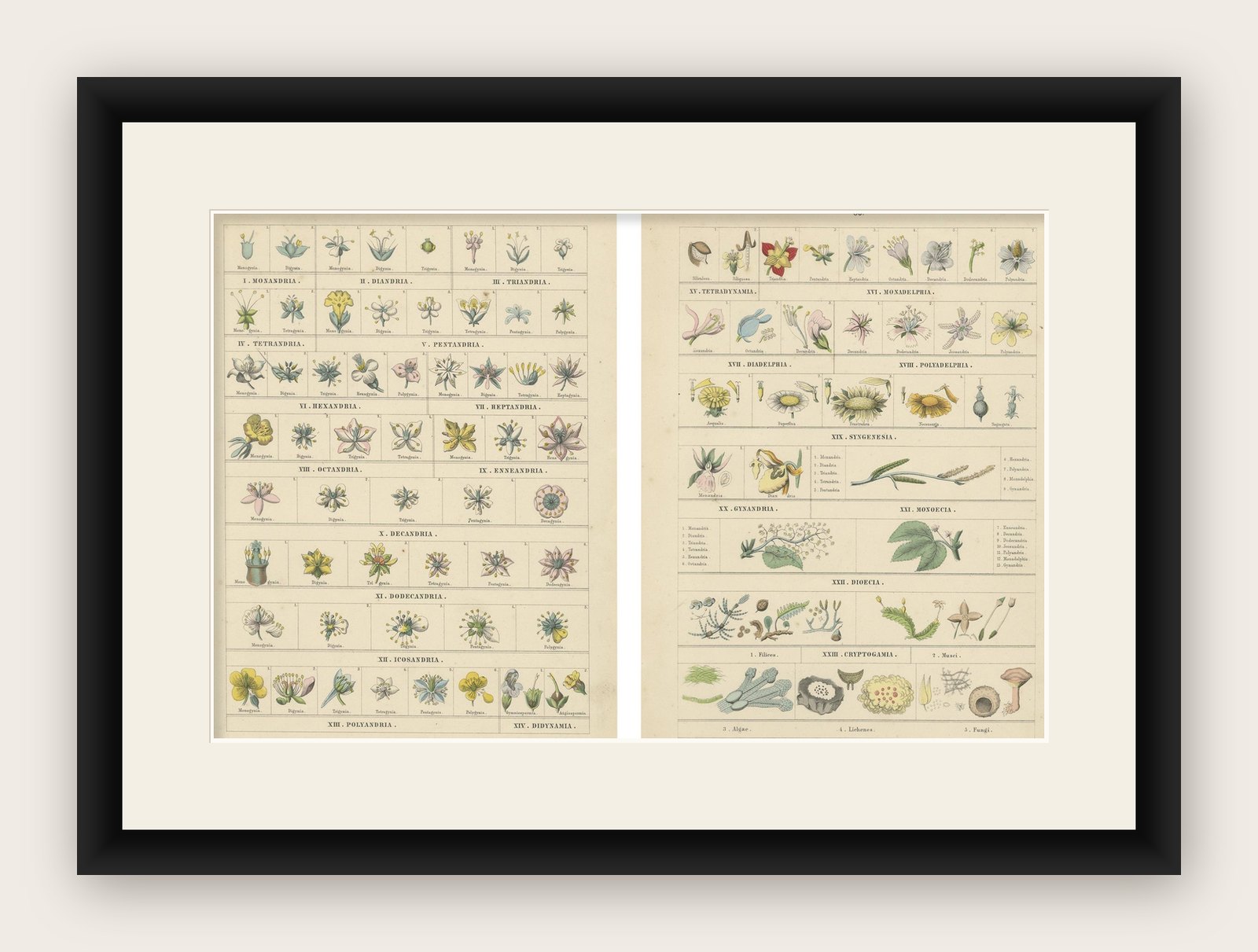
These detailed antique prints depict Linnaeus's classification system for plants, illustrating the flower structure and reproductive classes in fine hand-coloured engravings. They originate from the Atlas der Natuurlijke Geschiedenis voor scholen en huisgezinnen, adapted into Dutch by T.C. Winkler after Traugott Bromme, and published in Amsterdam by J.C. Loman in 1867. Designed for educational use, these plates introduced 19th-century students to systematic botany and plant morphology.
Plate 34 shows:
* Classes I to XIV: Monandria, Diandria, Triandria, Tetrandria, Pentandria, Hexandria, Heptandria, Octandria, Enneandria, Decandria, Dodecandria, Icosandria, Polyandria, Didynamia
Each class depicts flower samples with variations in the number and arrangement of stamens and pistils, labelled as Monogynia, Digynia, Trigynia, etc.
Plate 35 shows:
* Classes XV to XXIII: Tetradynamia, Monadelphia, Diadelphia, Polyadelphia, Syngenesia, Gynandria, Monoecia, Dioecia, Cryptogamia
Including algae, mosses, lichens, fungi, and ferns under Cryptogamia.
These educational botanical prints were essential for teaching plant classification before photographic or digital guides were available. The engravings capture structural differences with precision, from stamens and pistils to algal fronds and mushroom caps, arranged systematically for clear comparison.
Condition summary:
Good condition for their age, with slight overall toning and minor scattered foxing mainly in the margins. The paper remains strong with no tears or repairs, and the hand colouring is clear and fresh.
Framing tips:
Frame these botanical classification prints together or separately in black, dark wood, or walnut frames with cream or off-white mounts to enhance their scientific clarity and subtle floral colours. For traditional interiors, gold frames add antique warmth and academic elegance. UV-protective glass is recommended to preserve colours and prevent further toning. These antique natural history prints will enrich any botanical art collection, educational interior, or herbarium gallery with timeless scientific beauty and decorative charm.