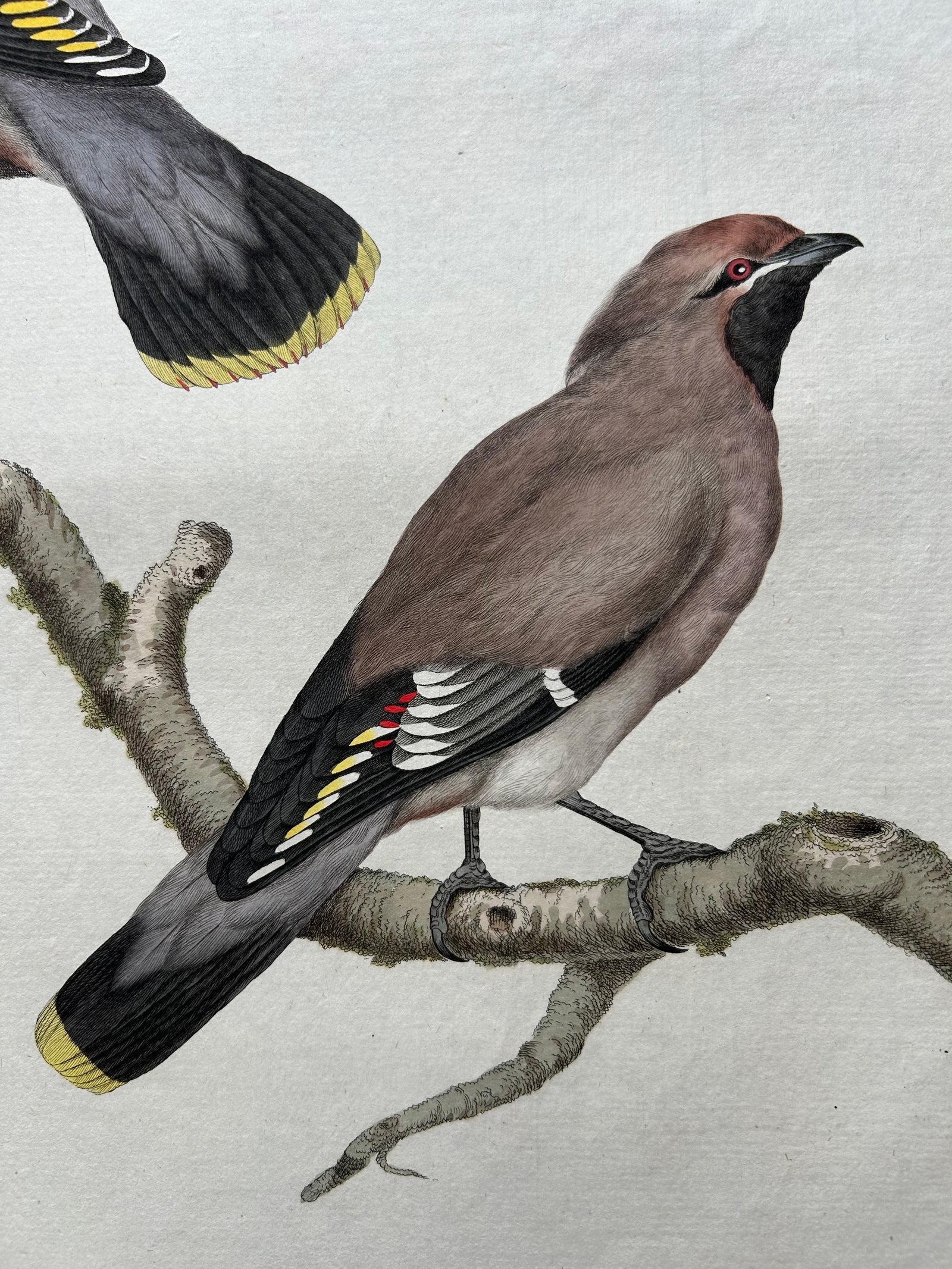
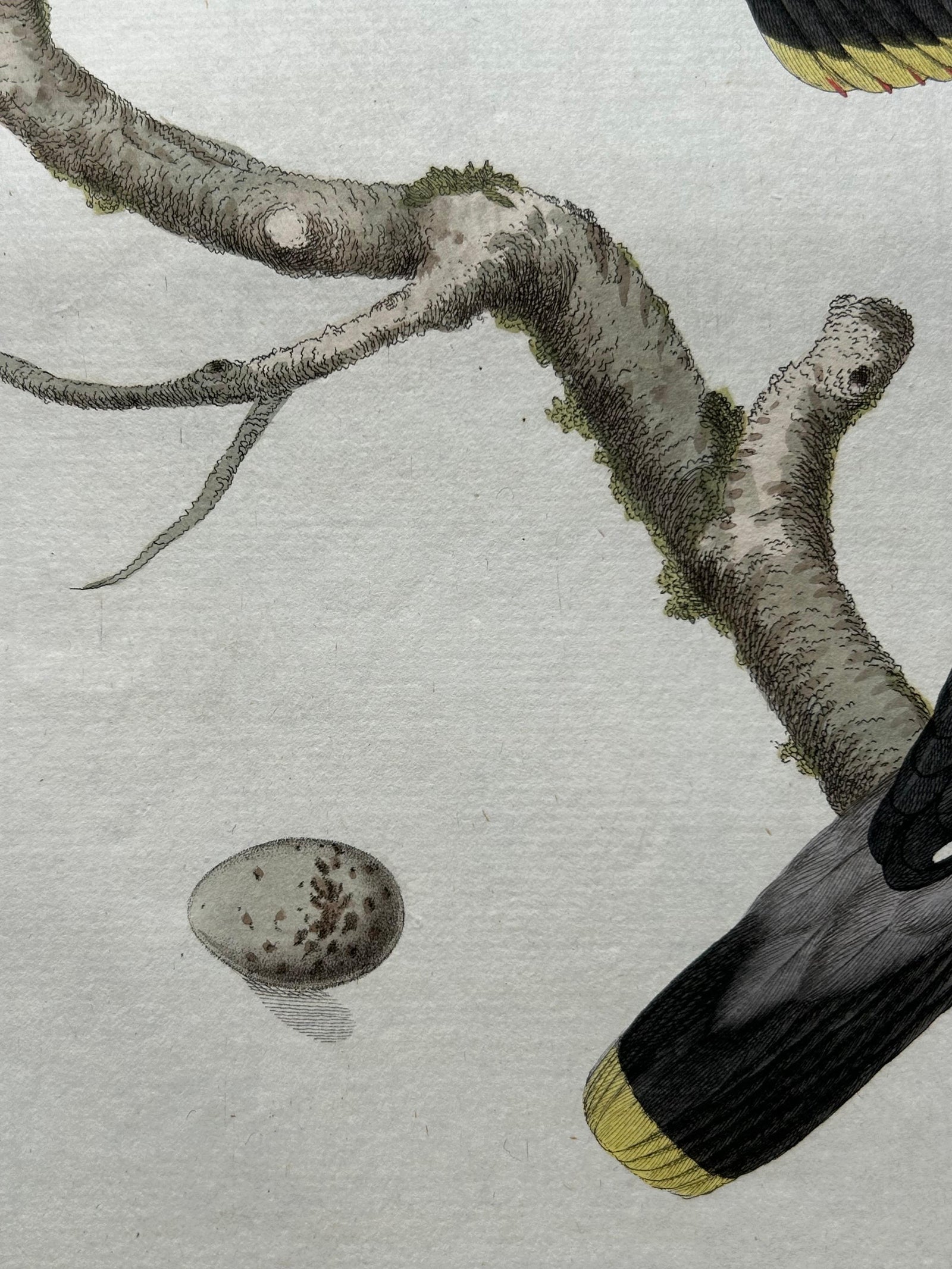
Close-ups
Framed and on the wall
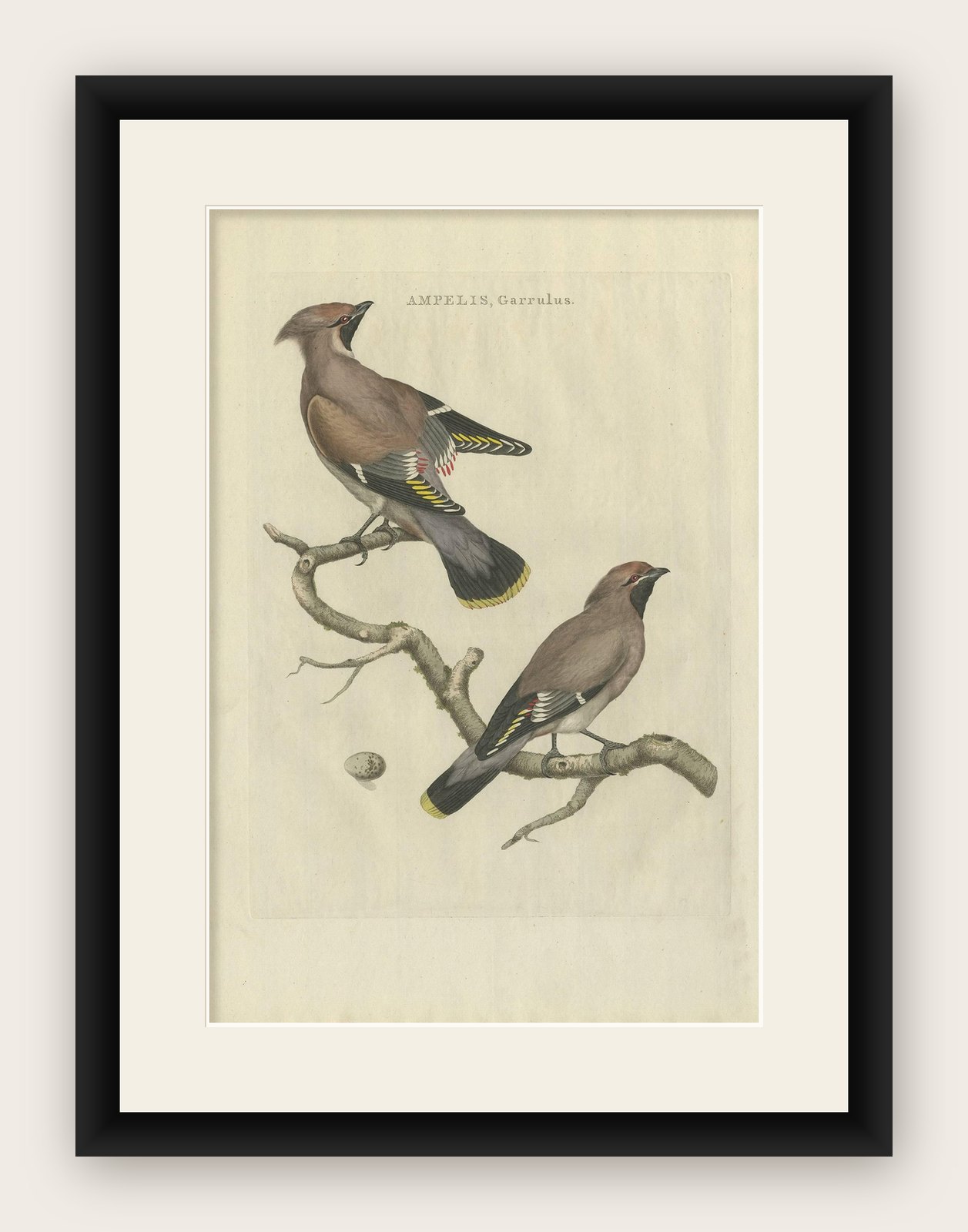
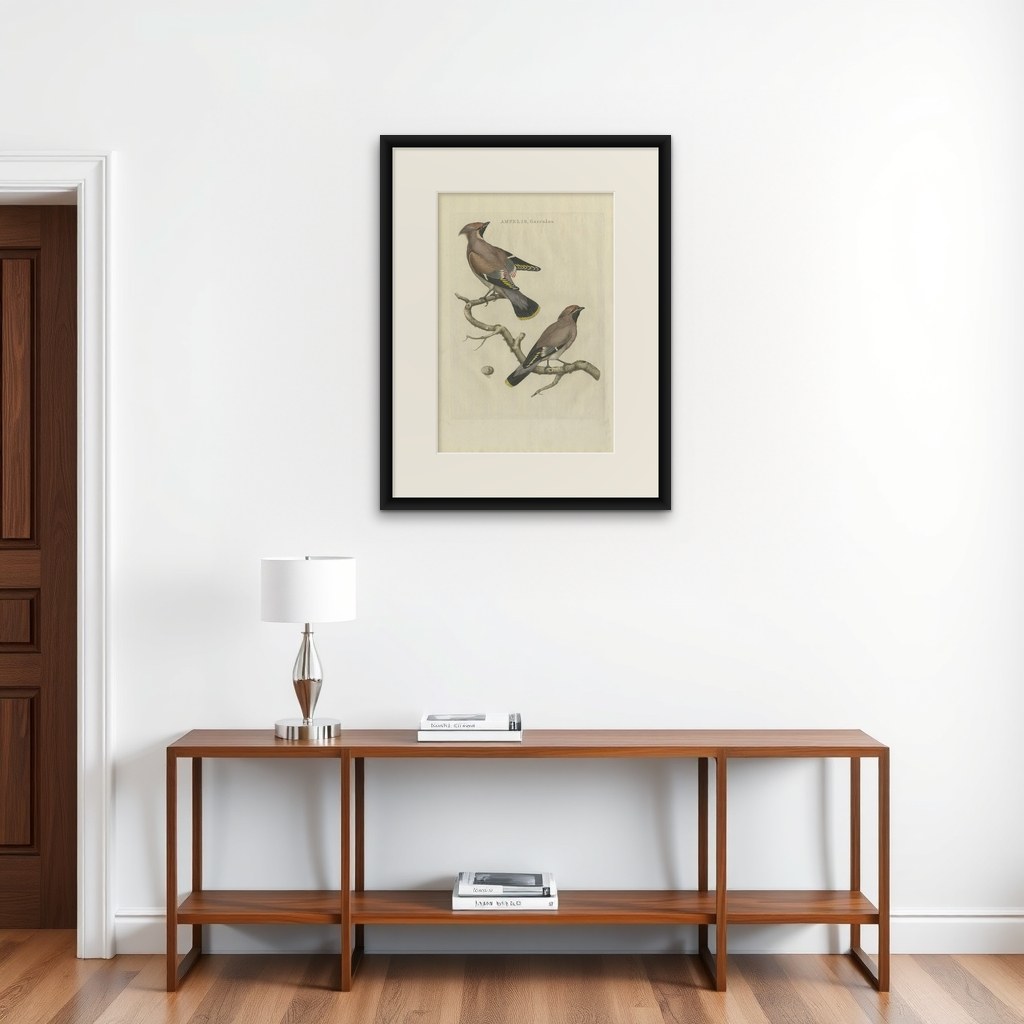
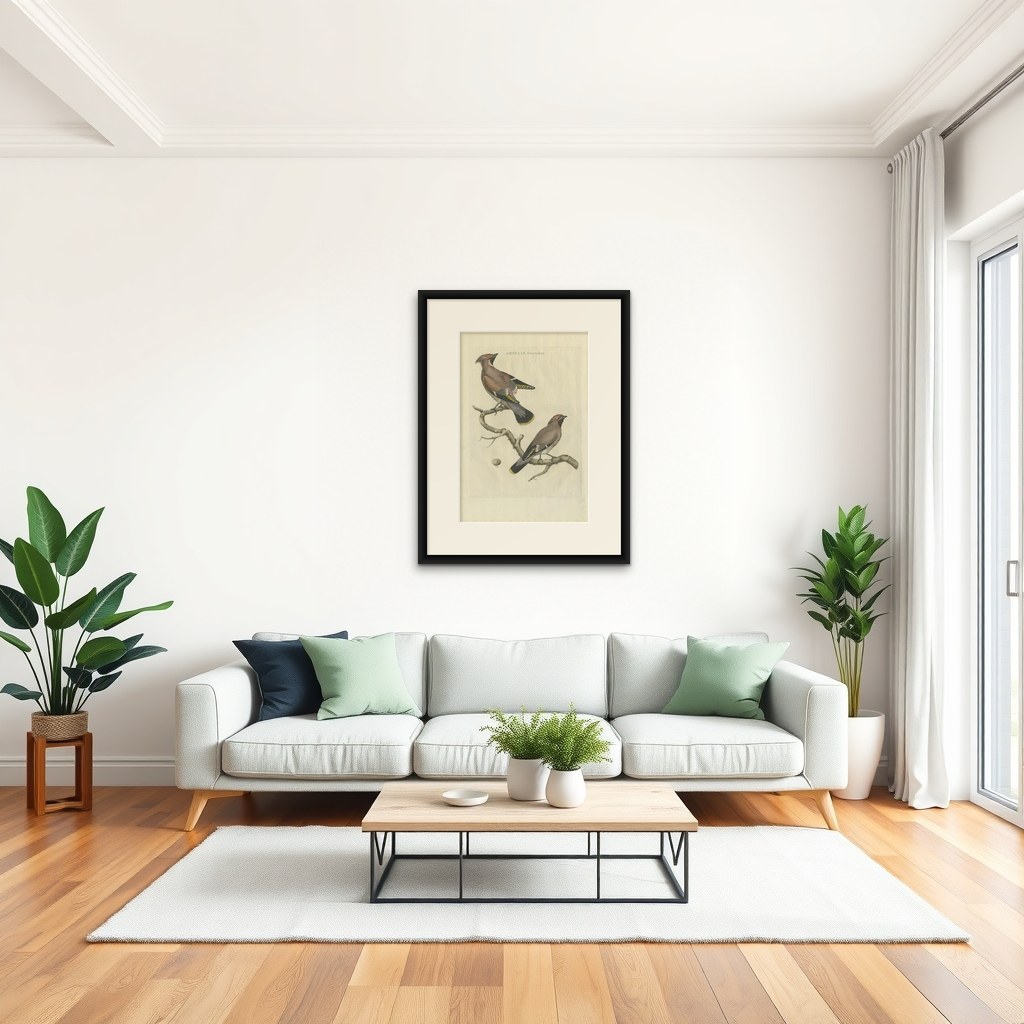
Frame and rooms are illustrations of how the print could look; the description says what is included.
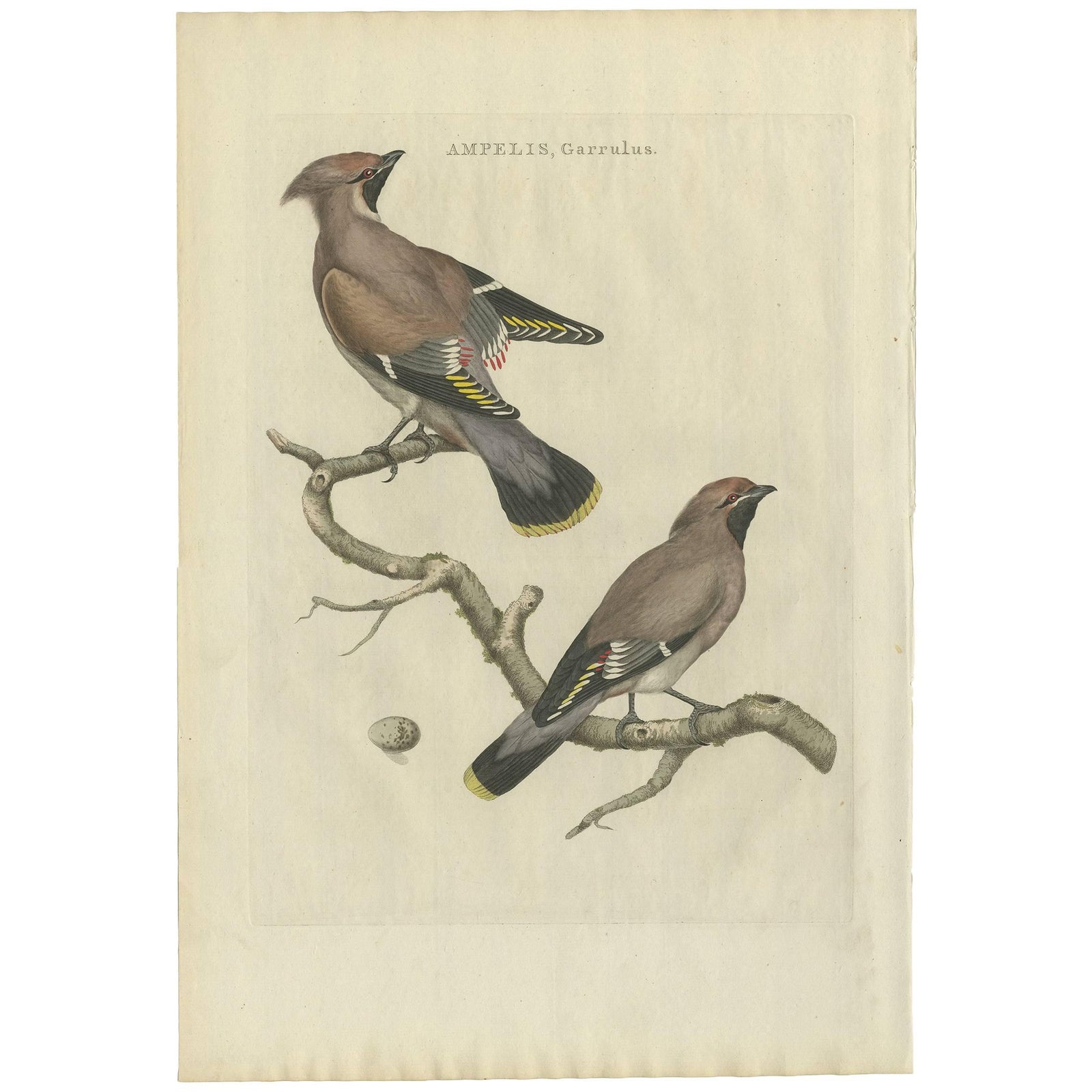
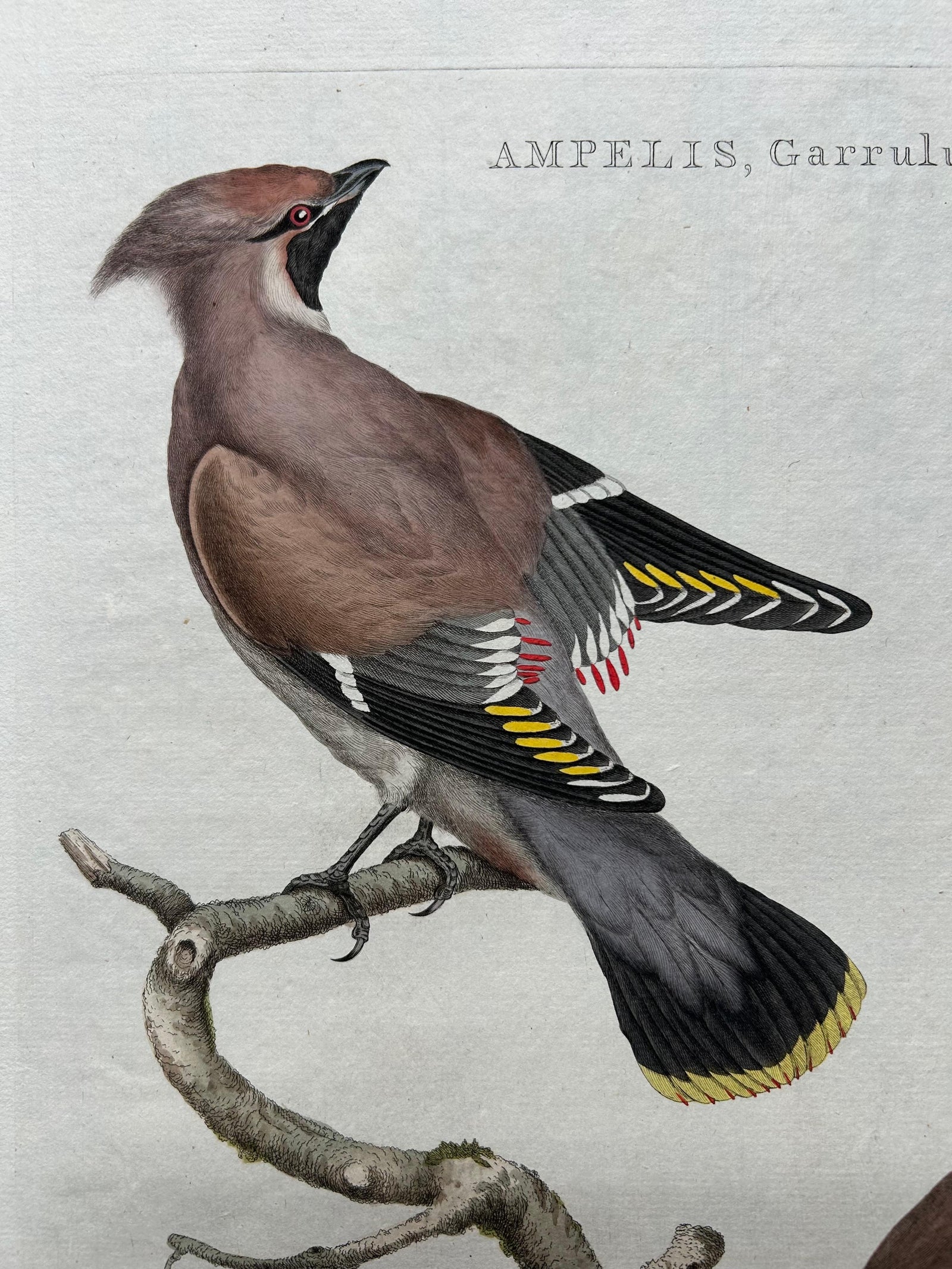
Bohemian Waxwing, Ampelis Garrulus from Nederlandsche Vogelen, 1797
€950 ($1,065, £805, €950)
Period original, not a reproduction.
Shipped from the Netherlands, flat, insured and tracked, worldwide. Returns accepted within 14 days.
- Date
- 1797
- Size
- 21.1 × 14.6 in (53.5 × 37 cm)
- Technique
- Engraved
- Condition
- Good. Excellent colours and strong impression. Minimal age-toning to margins, very light handling marks. Text pages crisp with sharp printing, few brown spots on the bottom and one small worm hole in the right margin. No tears, foxing, or repairs.
- Period
- 18th century
- Artist or book
- Nozeman and Sepp
- Section
- Birds
- Reference
- f_10880353
Bohemian Waxwing, Ampelis Garrulus from Nederlandsche Vogelen, 1797
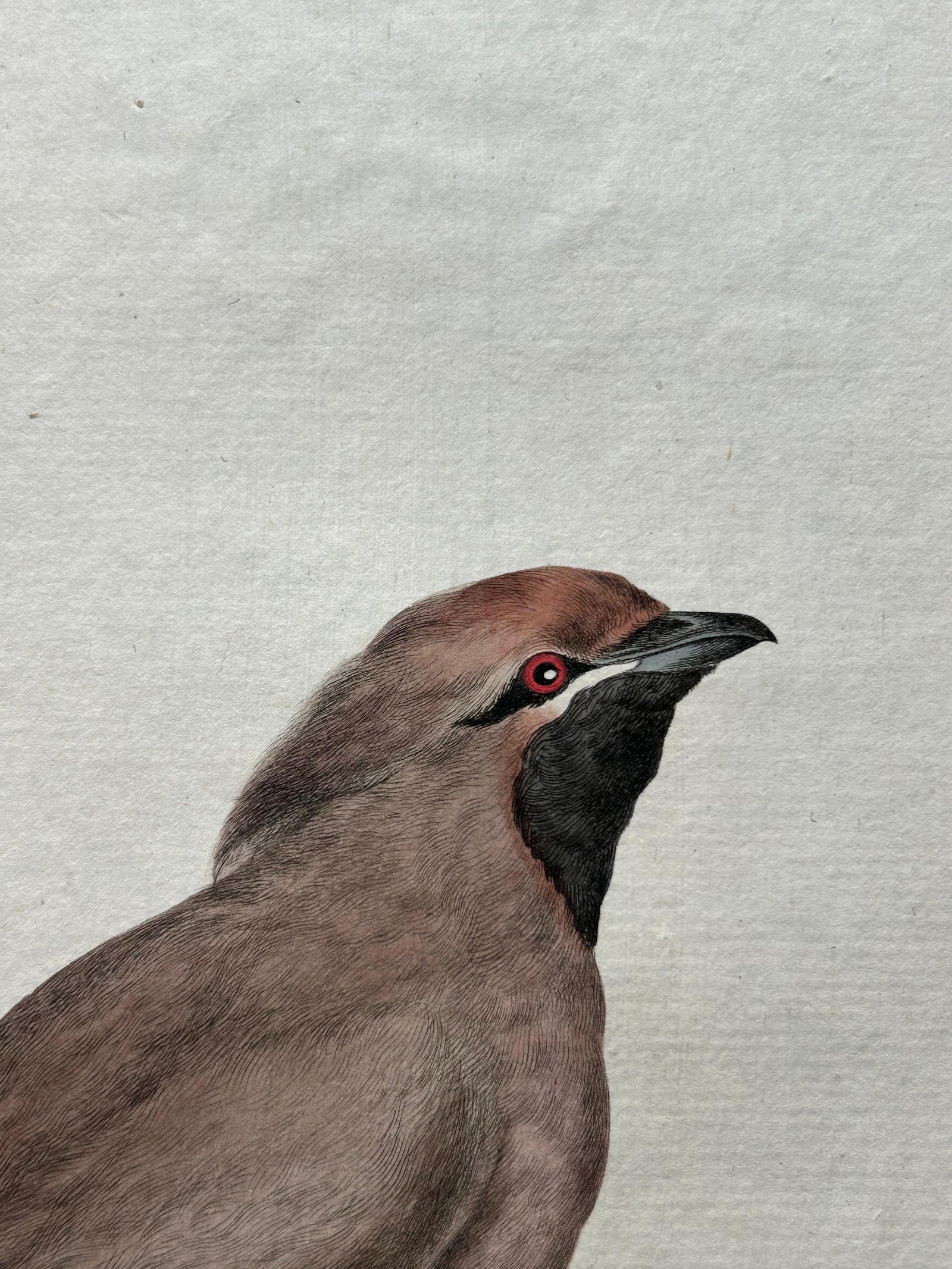
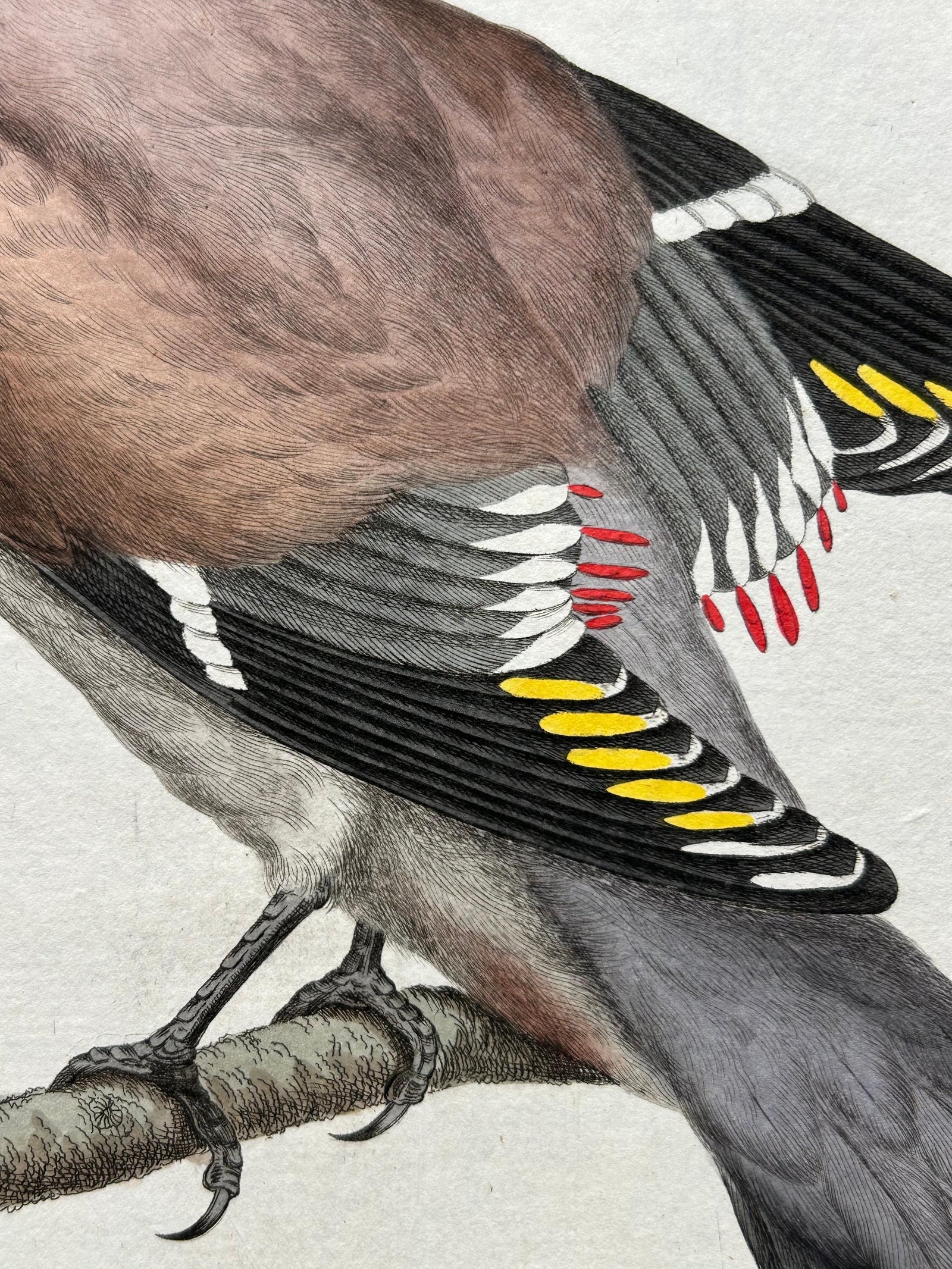
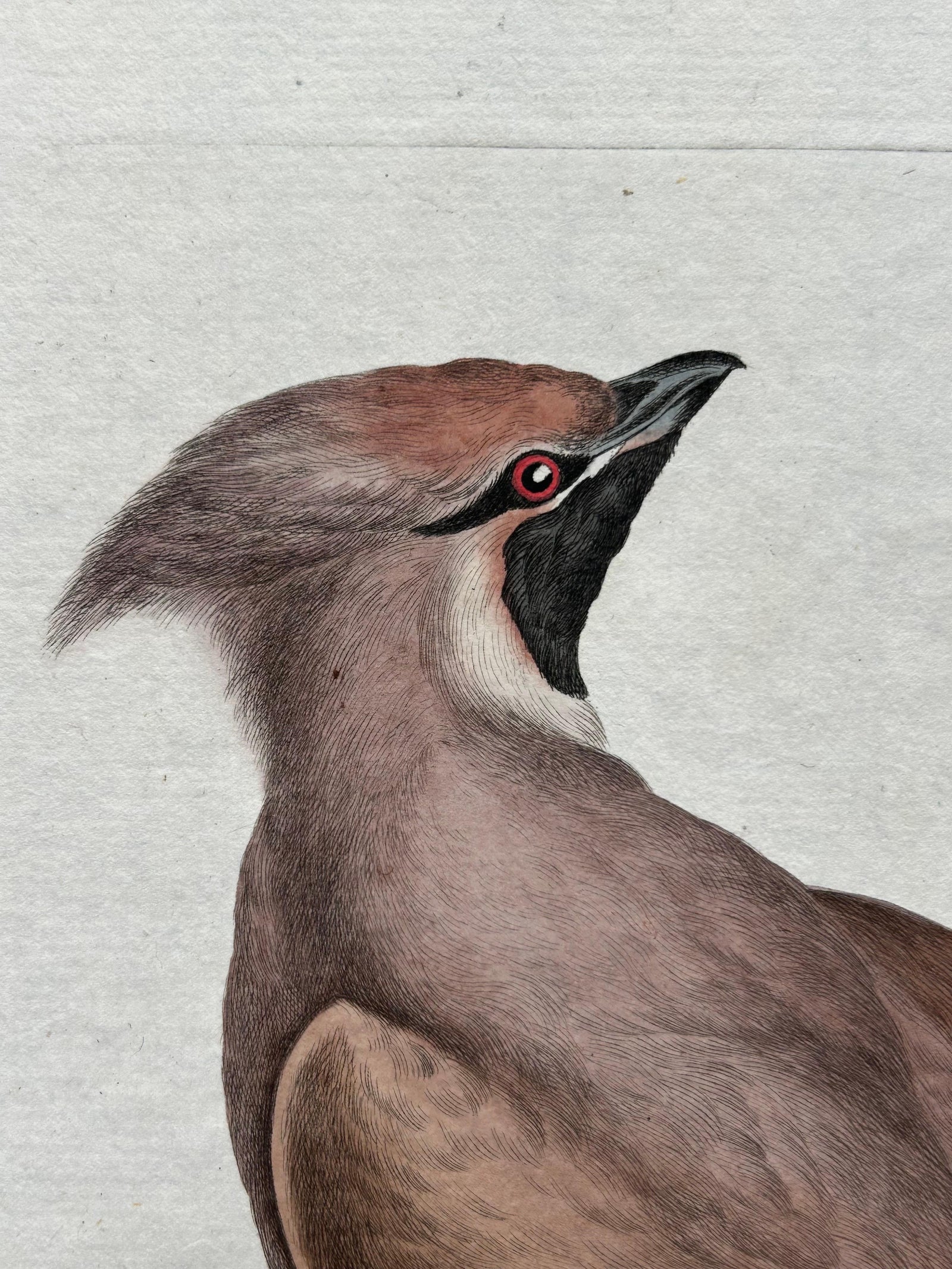
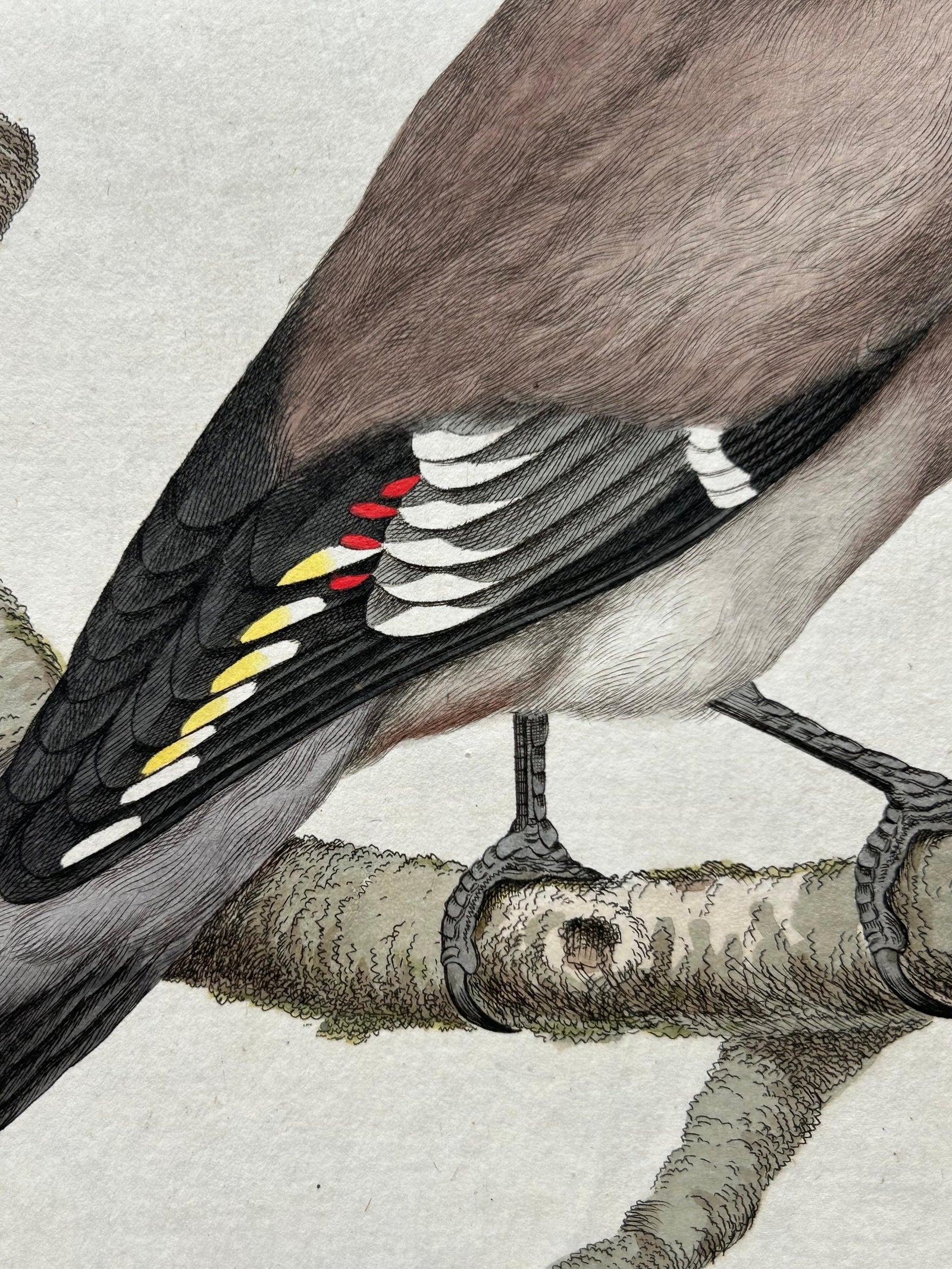
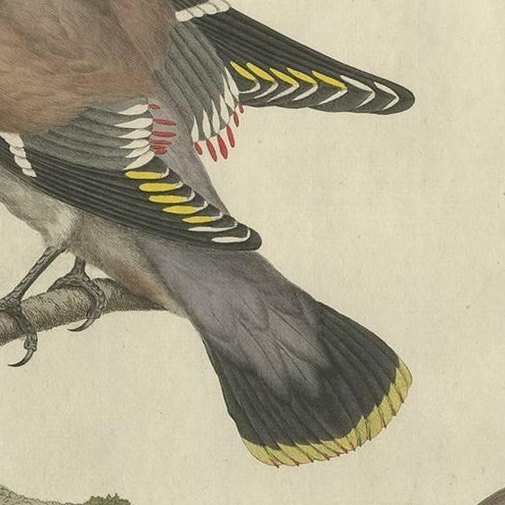
This fine hand-coloured engraving shows two Bohemian waxwings (Ampelis garrulus) perched on bare branches, with a single egg depicted below. The artist captures the species’ distinctive features: soft buff-grey plumage, a sleek black mask, a pointed crest, white wing patches, and bright yellow tail tips. On closer inspection, the red “waxy” tips on the secondary wing feathers, unique to waxwings, are visible, a trait that gives the species its English name. The composition, with the birds shown in different poses, provides a detailed study of their markings and proportions.
The Bohemian waxwing breeds in the boreal forests of northern Europe, Asia, and North America, migrating southwards in winter in search of berries. In the Netherlands, it is primarily a winter visitor, often appearing in flocks during irruption years when food is scarce further north. Its diet includes rowan berries, hawthorn, and mistletoe, as well as insects in the breeding season. The bird’s elegant colouring and graceful posture have made it a favourite subject for ornithological illustrators.
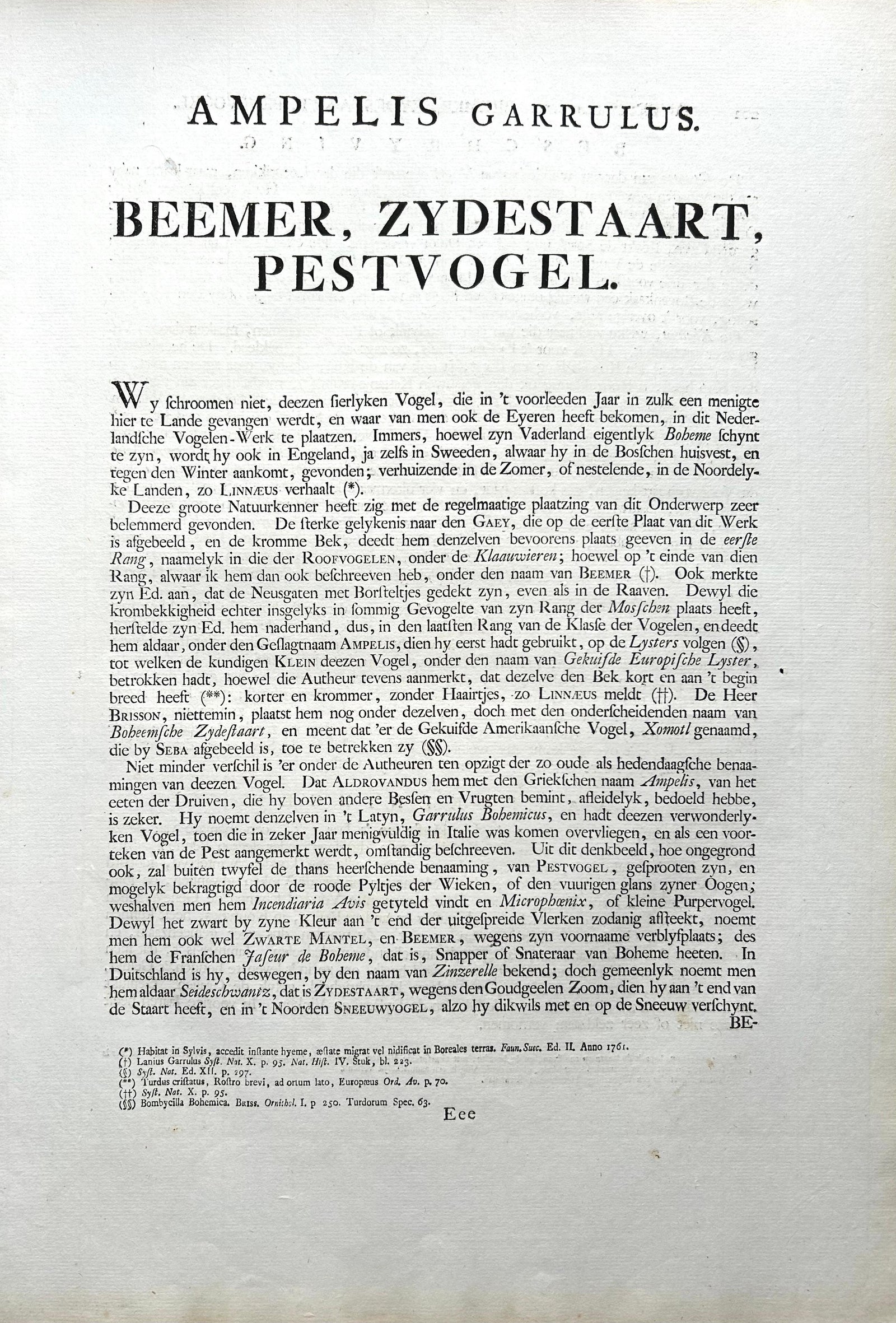
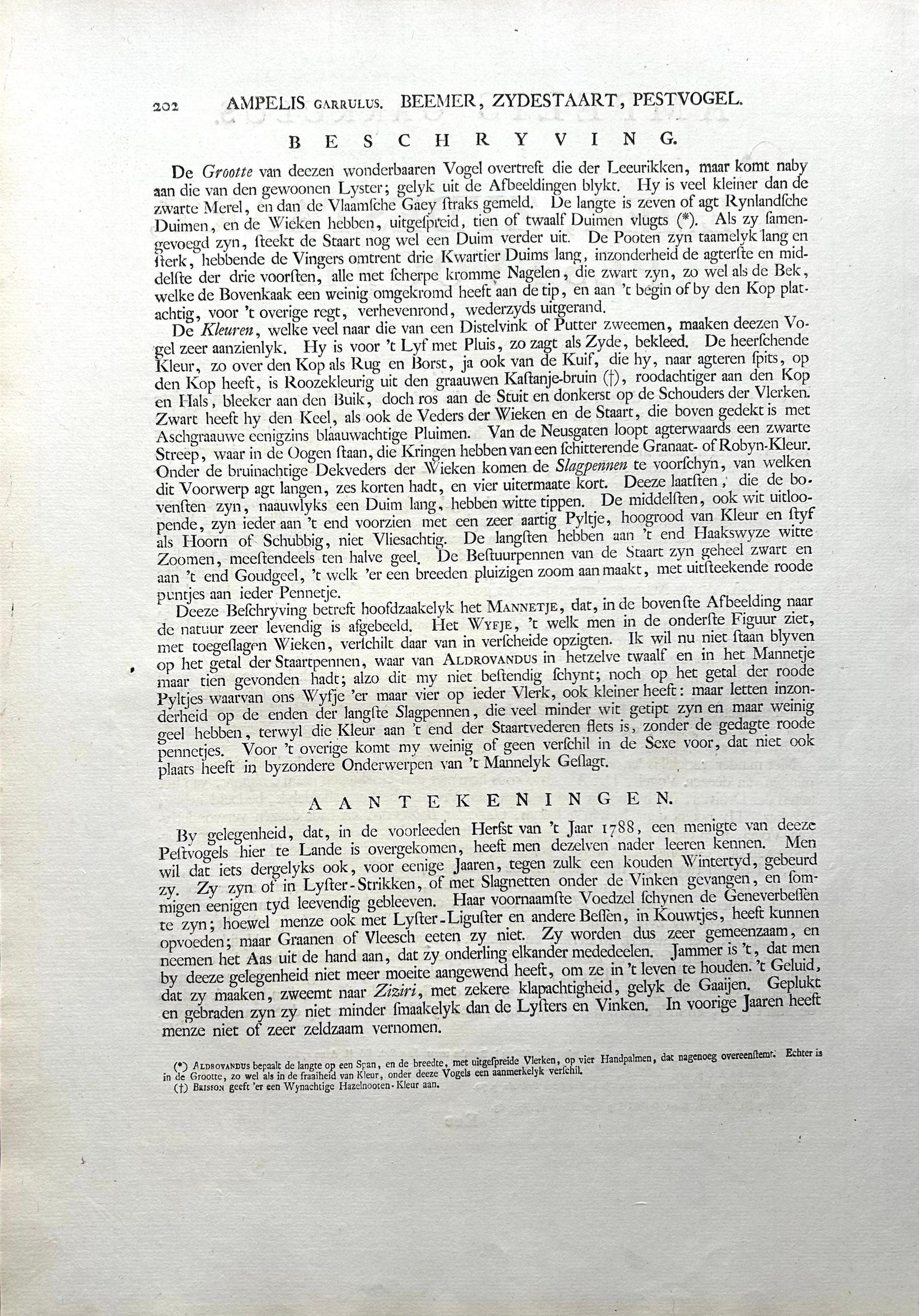
This engraving originates from Nederlandsche Vogelen; volgens hunne huisdouding, aert, en eigenschappen beschreeven, Amsterdam, 1770–1829, by Cornelius Nozeman, Martinus Houttuyn, and Jan Christiaan Sepp. This monumental work was the first comprehensive study of Dutch birdlife, depicting species close to life-size and often in their natural surroundings. The collaboration between scientists and artists resulted in some of the most accurate and beautiful ornithological plates of the 18th century.
Condition summary: Excellent colours and strong impression. Minimal age-toning to margins, very light handling marks. Text pages crisp with sharp printing, few brown spots on the bottom and one small worm hole in the right margin. No tears, foxing, or repairs.
Framing tips: A soft off-white or light cream mount will enhance the delicate grey-buff tones, while a simple dark wood or black frame with a thin gold inner slip will add elegance without overpowering the composition. UV-protective glass will preserve the vivid hand-colouring.