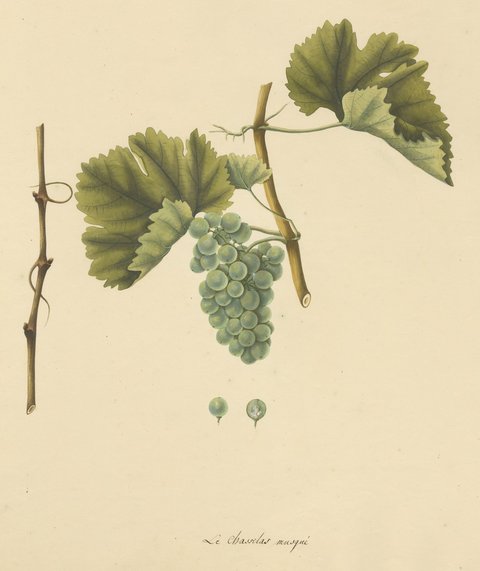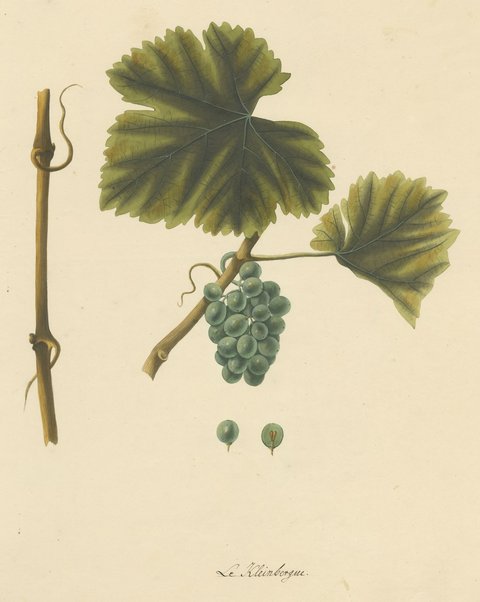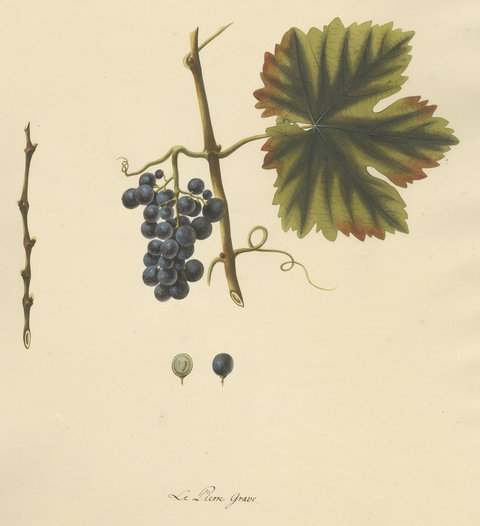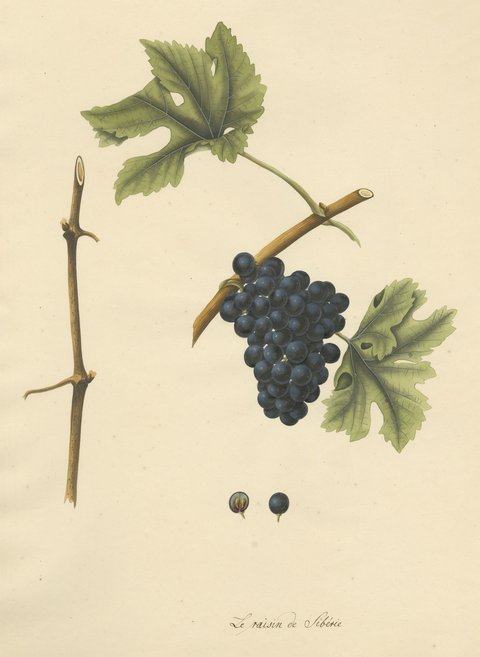
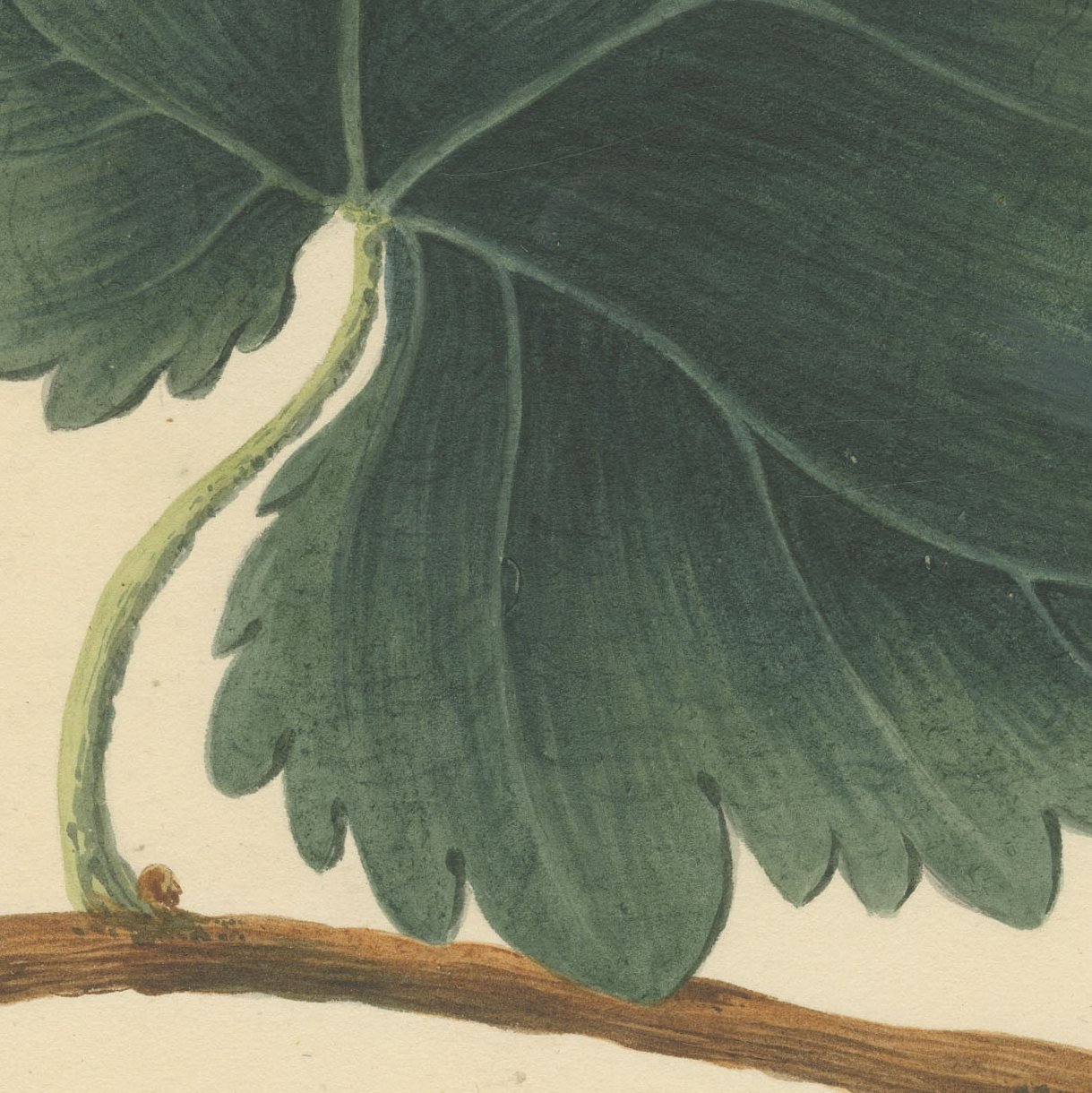
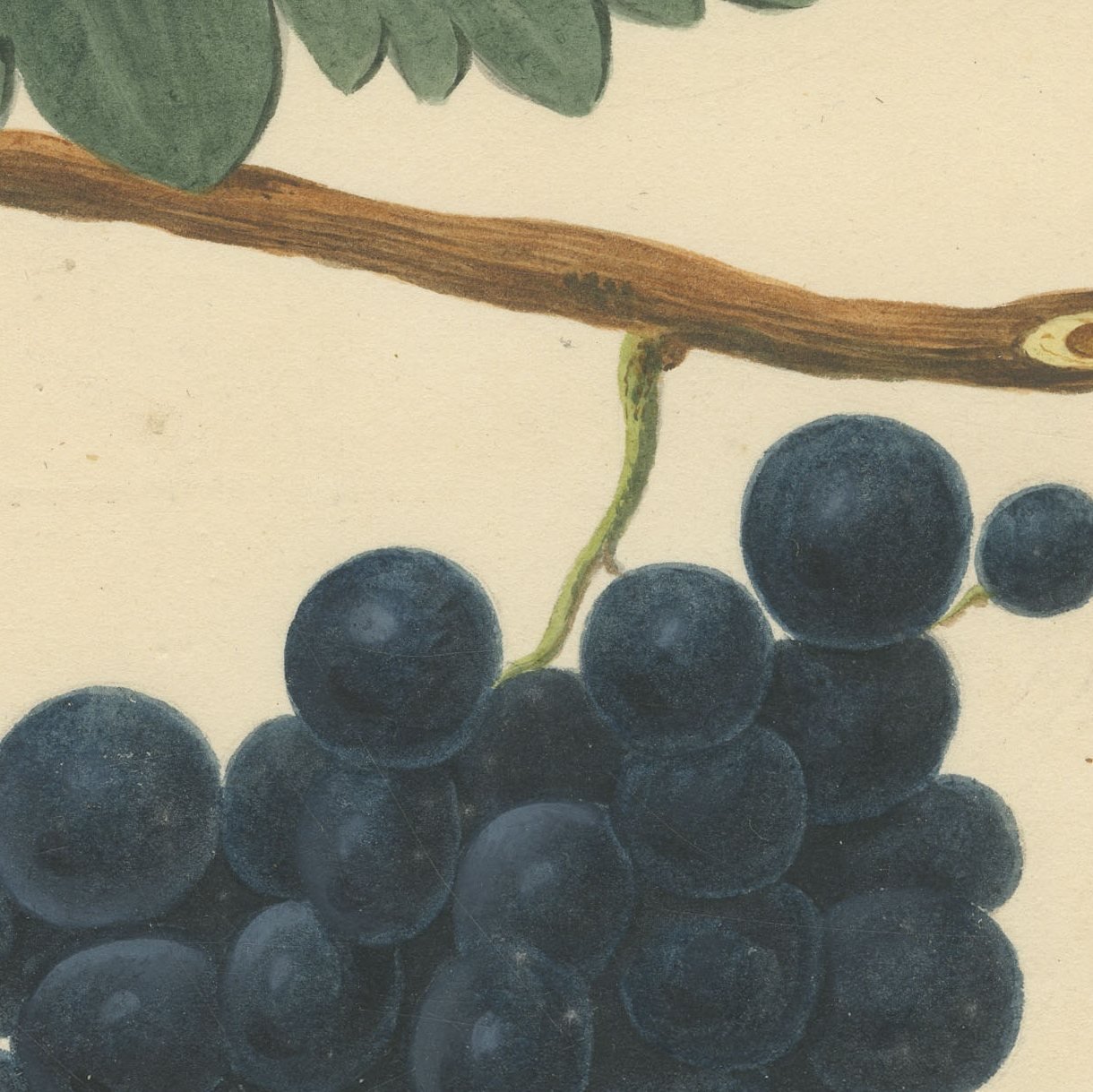
Close-ups
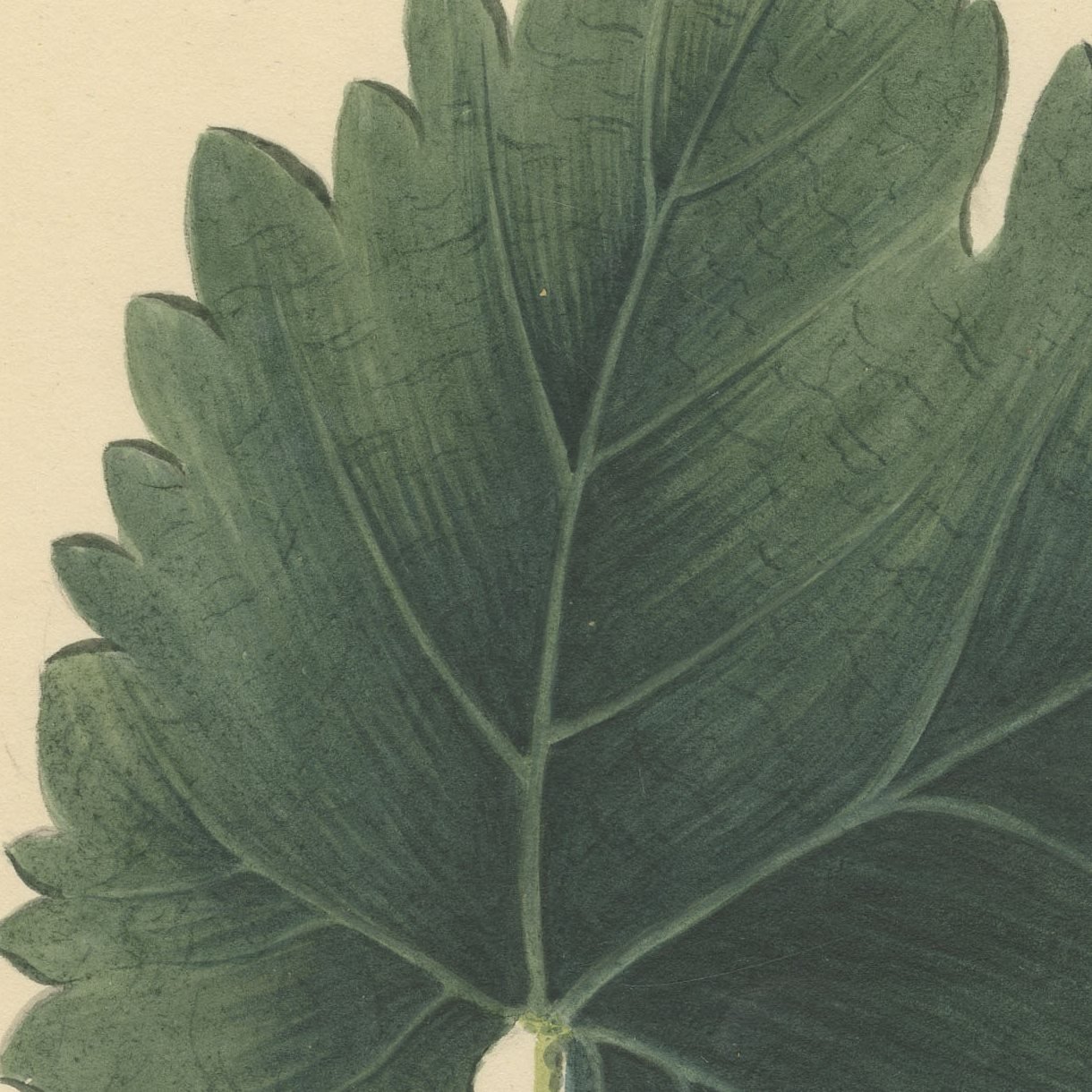
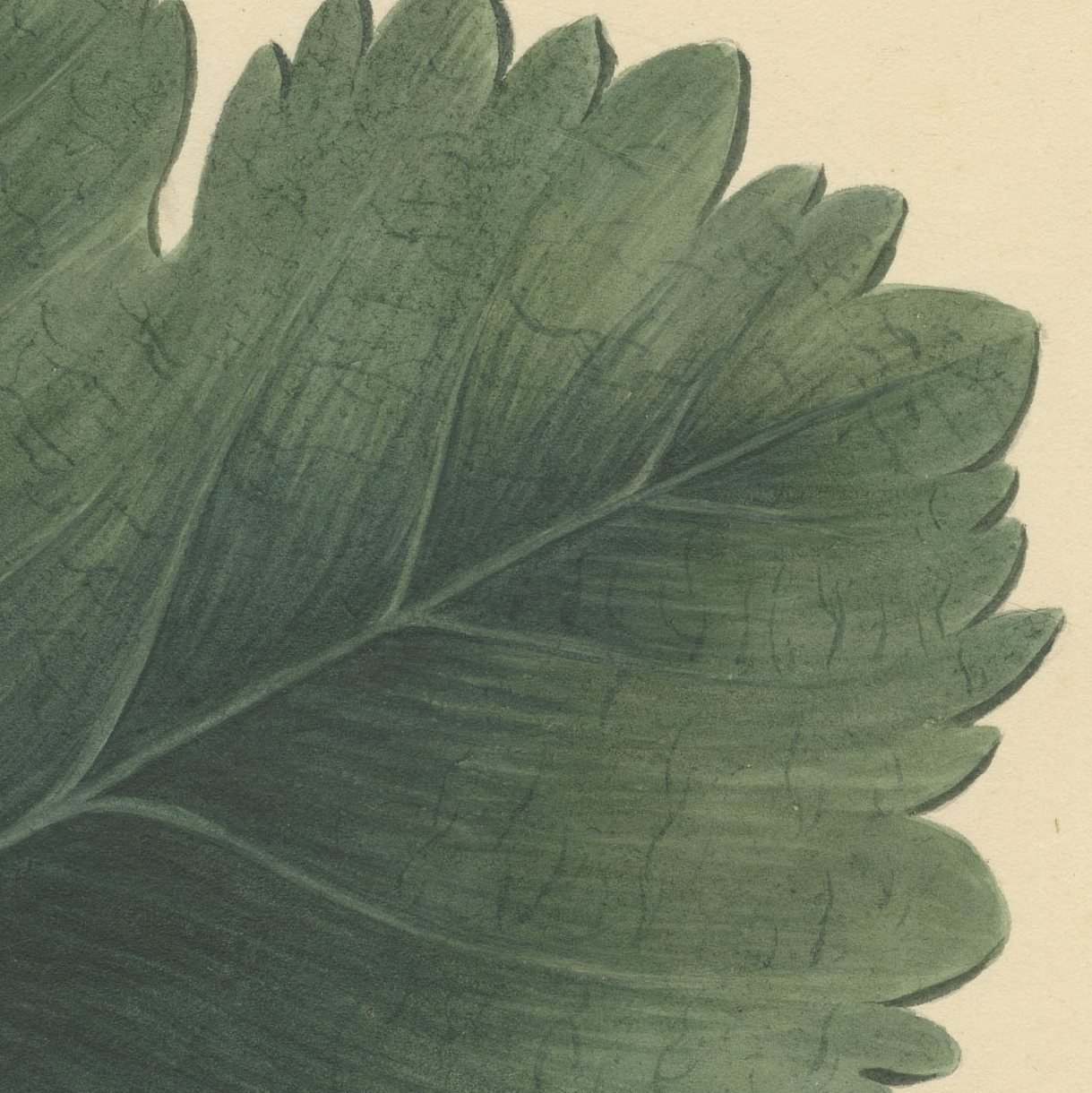
Framed and on the wall
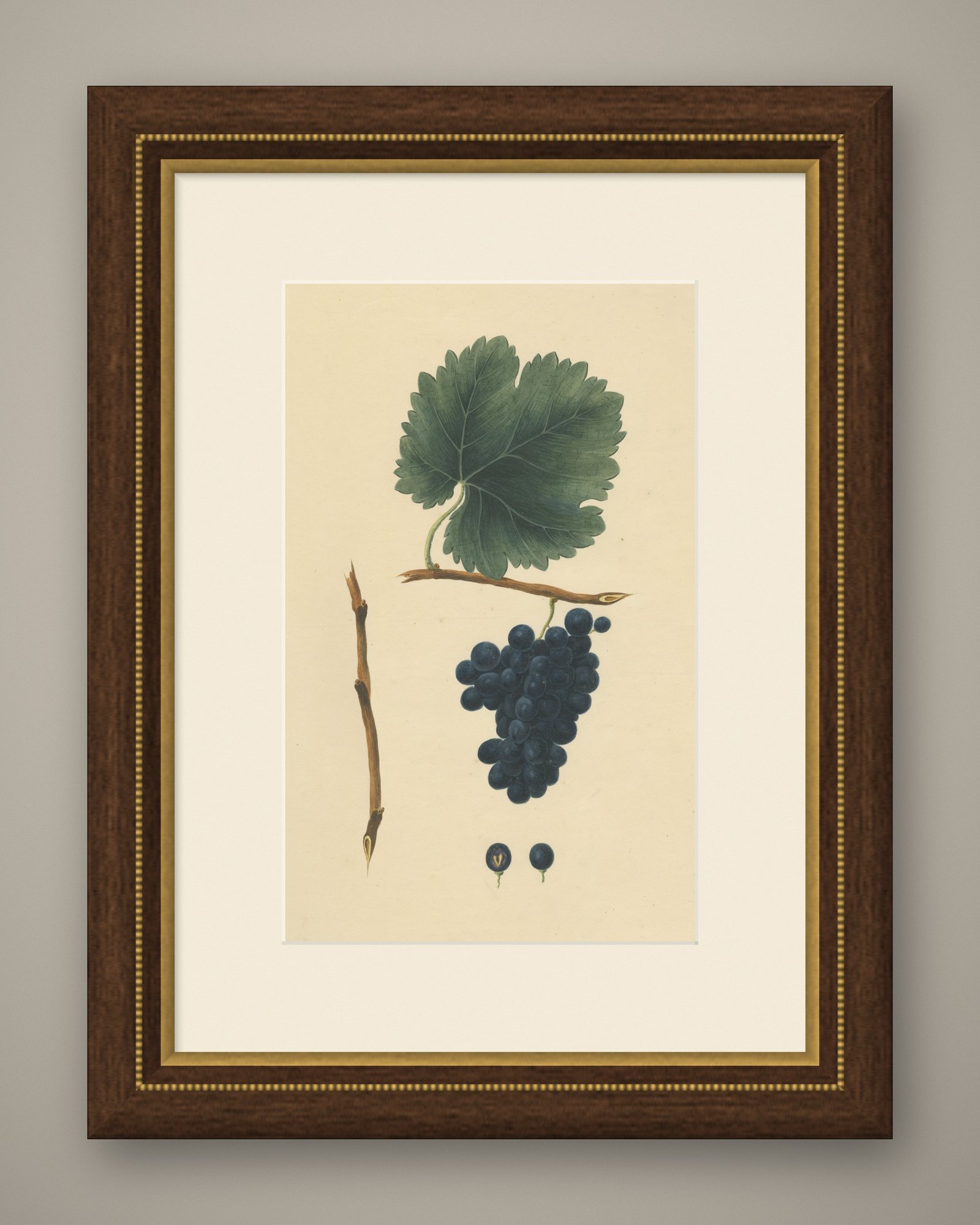
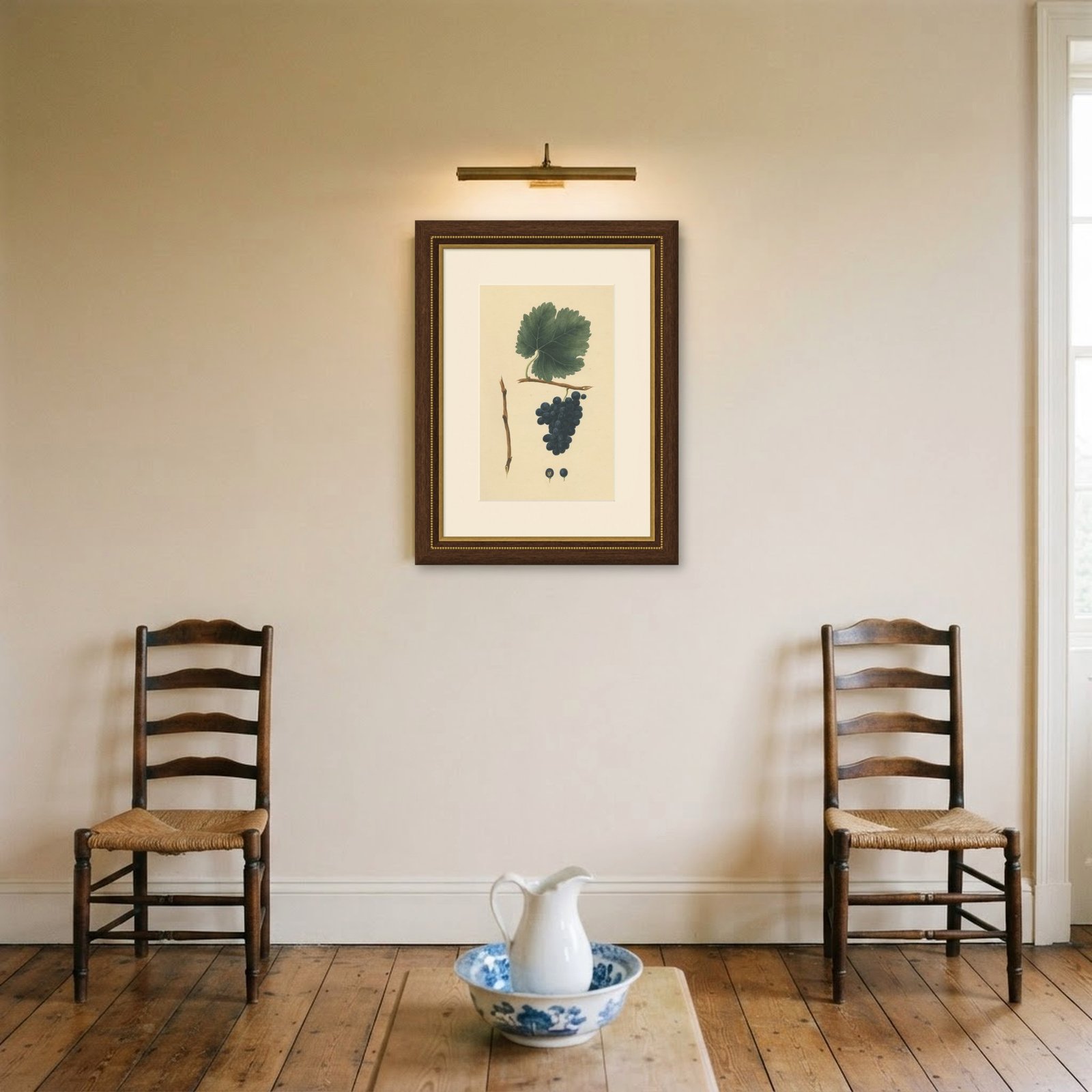
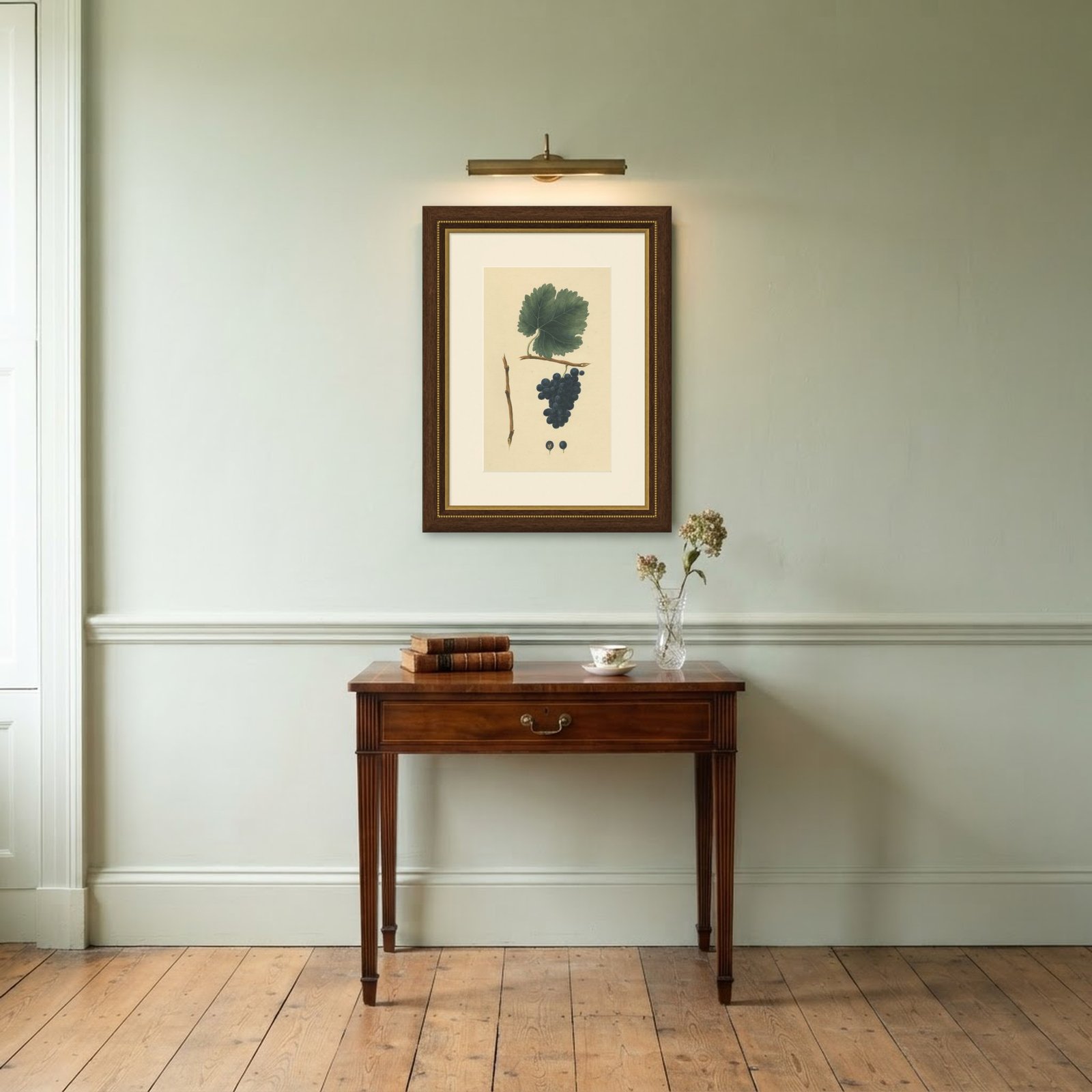
Frame and rooms are illustrations of how the print could look; the description says what is included.
Blue Grape Vine, Kerner Hand Colored Engraving, Le Raisin, circa 1811
€1,120 ($1,240, £935, €1,120)
Period original, not a reproduction.
Shipped from the Netherlands, flat or rolled, insured and tracked, worldwide. Returns accepted within 14 days.
- Date
- circa 1811
- Size
- 23.4 × 19 in (59.5 × 48.2 cm)
- Technique
- Stipple engraving
- Coloring
- Original hand color
- Condition
- Good. Even age toning. Handling soiling along the bottom, right and top edges. Scattered foxing in the margin. Slight wear at the top right corner. Minor edge wear, shallow nicks along the bottom, left and right.
- Period
- Early 19th century
- Section
- Botanical
- Reference
- BG-14458-6
What the condition grades mean
- Excellent
- Bright and clean, with no faults worth mentioning.
- Very good
- Only light signs of age, such as faint toning.
- Good
- Normal signs of age for a sheet of this period: toning, some foxing, small marks or neat old repairs.
- Fair
- Clear faults such as staining, tears or repairs, priced to match.
Every fault we see is written in the condition note, and the whole sheet is shown uncropped in the photos.
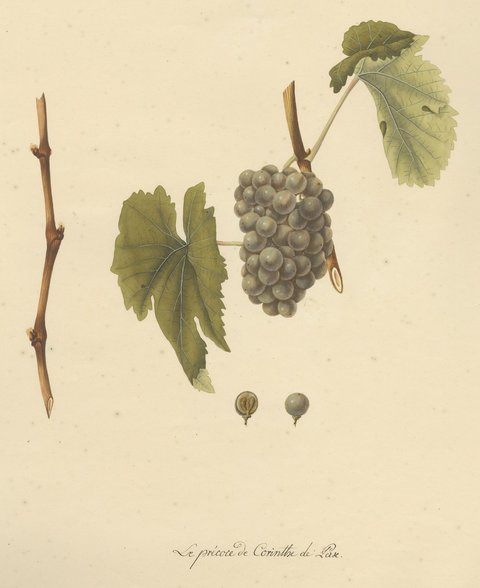
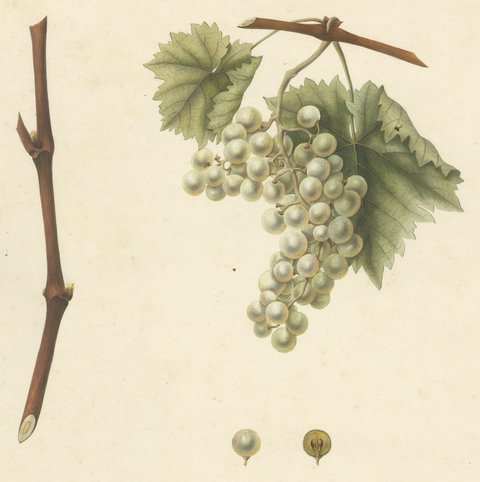
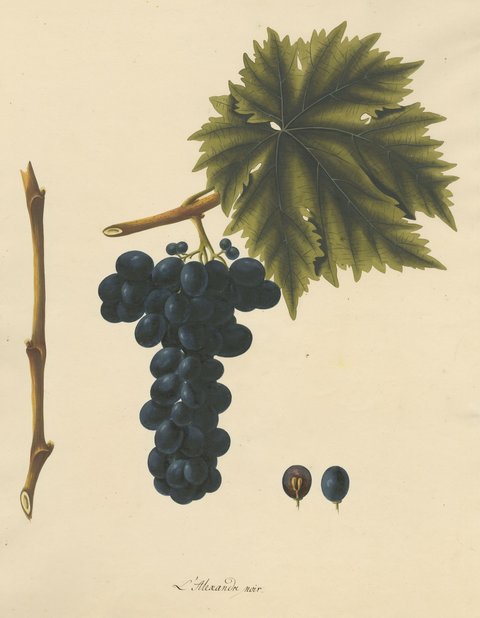
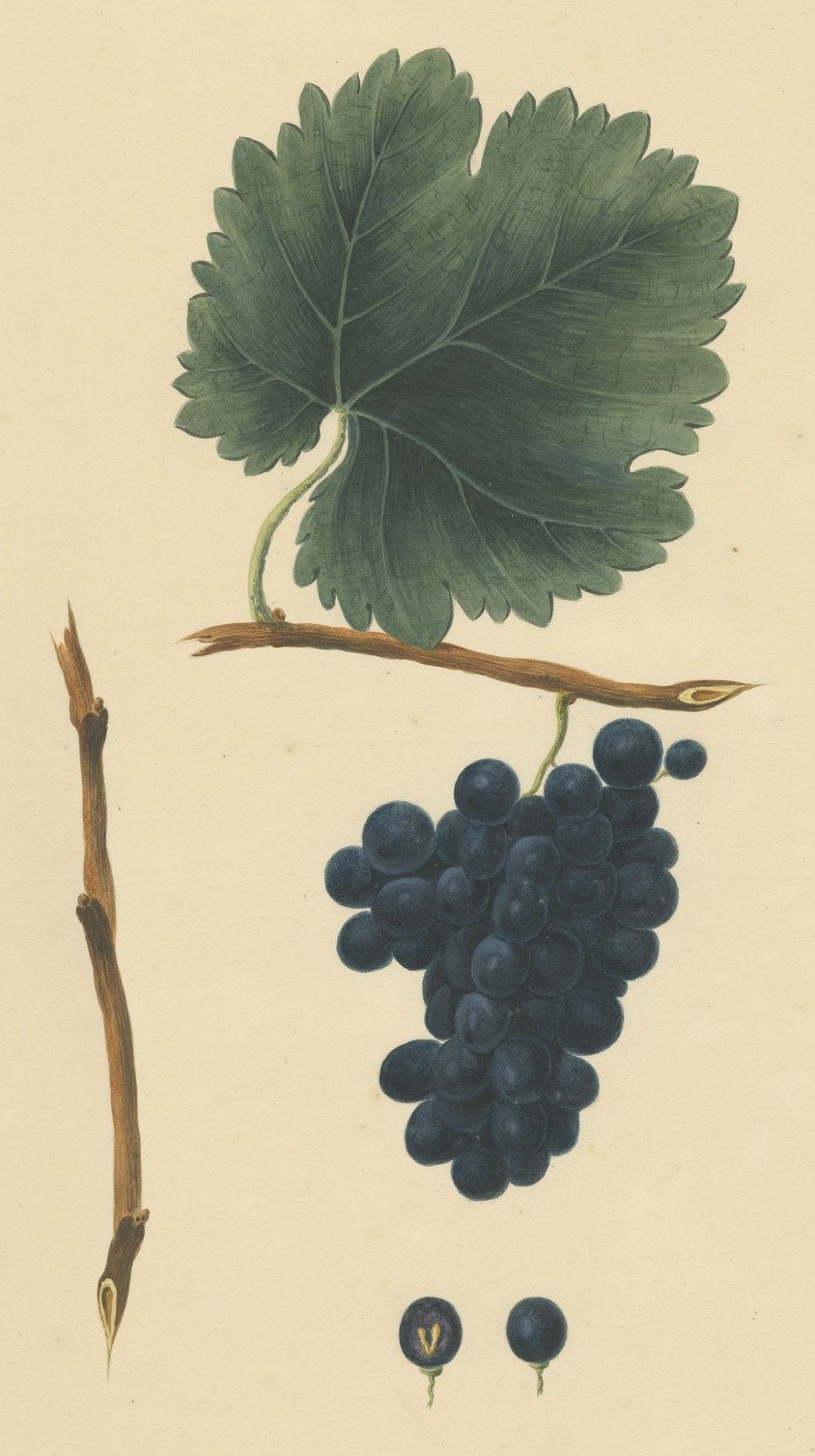
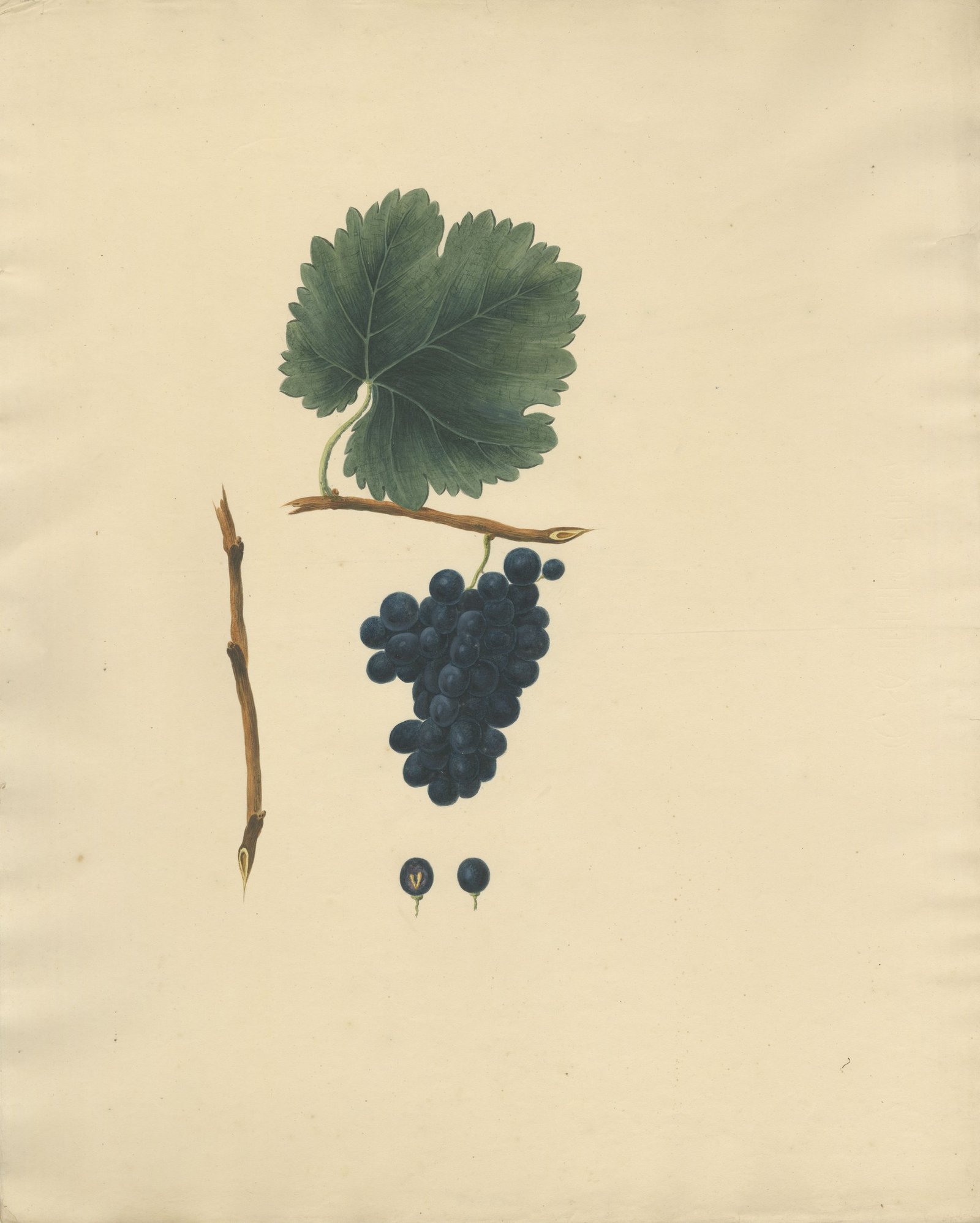
This antique stipple engraving, finished by hand in watercolor and body color, of a blue grape vine comes from Le Raisin, ses especes et varietes, dessinees et colorees d'apres nature (The Grape: Its Species and Varieties, Drawn and Colored from Nature), the vine work of the German botanist and artist Johann Simon von Kerner (1755 to 1830), made at Stuttgart between about 1803 and 1815. The sheet shows a single broad vine leaf, deeply veined with serrated lobes, carried on a short length of shoot, a dense bunch of blue black berries with a soft bloom hanging below it, and, standing apart at the left, a mature woody cane with its growth nodes and buds. Beneath the bunch two single berries are painted on their own, one whole and one cut open to show the seeds.
Le Raisin was conceived as a complete painted record of the vine varieties grown in Germany and beyond, and it is a landmark in the history of viticulture. Kerner gives every variety the same elements, the leaf, the cane, the bunch and the dissected berry, because these were the visual markers that growers and botanists of the early nineteenth century used to tell one European cultivar from another. The sheets date from about 1811, and the work is believed to have been completed in only two copies.
The medium is a stipple engraving on wove paper watermarked C and I Honig, finished by hand in watercolor and heightened in places with body color: the modeling of the leaf, the translucent skins and the bloom on the fruit is laid in wash with the precision of a trained botanical colorist. The sheet appeals equally to collectors of botanical art and to wine lovers. Float mounted in a wide plain mount behind glass and framed in a simple molding, it suits a dining room, a wine cellar or a library, and the open cream ground around the vine keeps it light on the wall.
Even age toning. Handling soiling along the bottom, right and top edges. Scattered foxing in the margin. Slight wear at the top right corner. Minor edge wear, shallow nicks along the bottom, left and right.
This is an original antique print, not a modern reproduction. This item is sold unframed.