Close-ups
Framed and on the wall
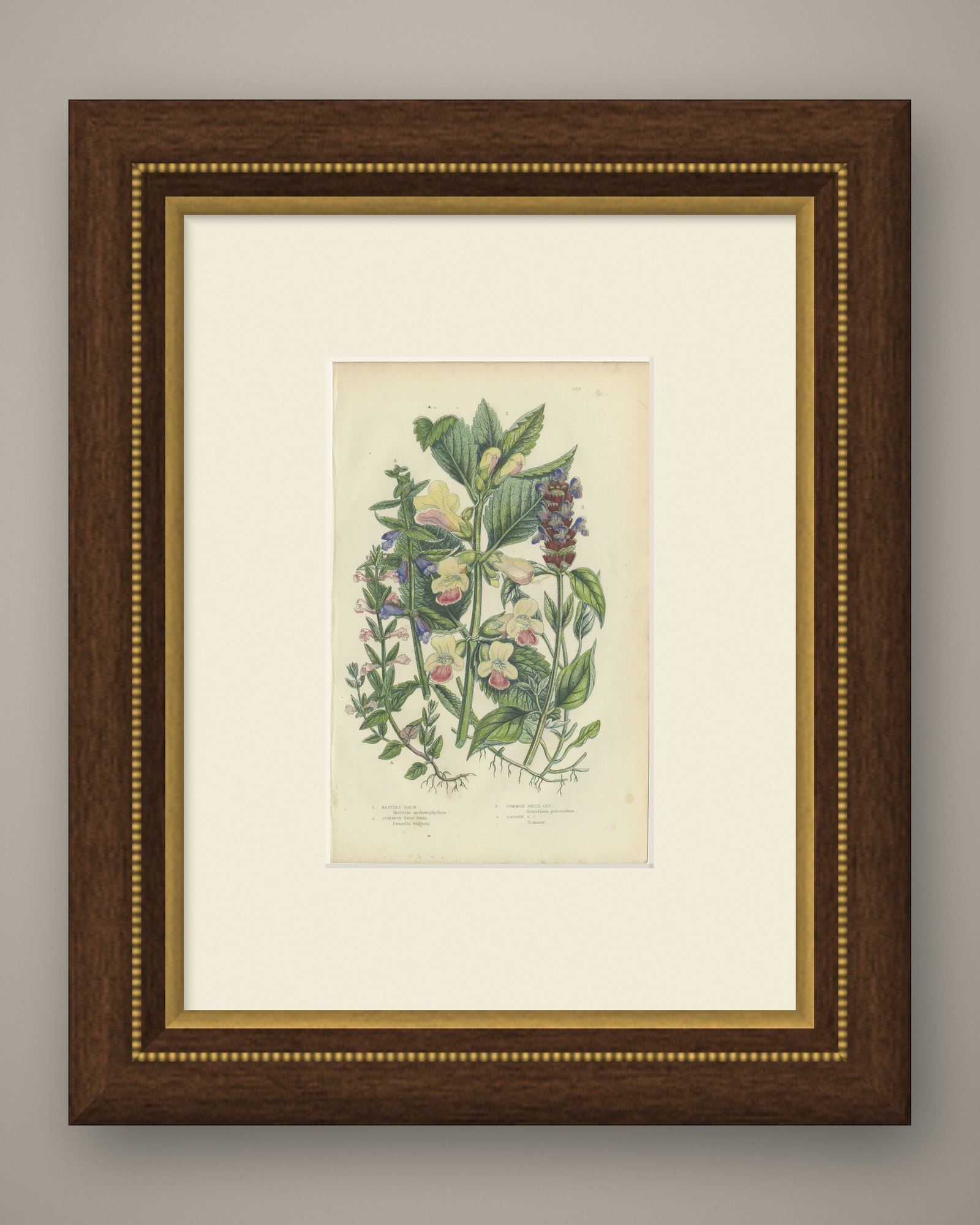
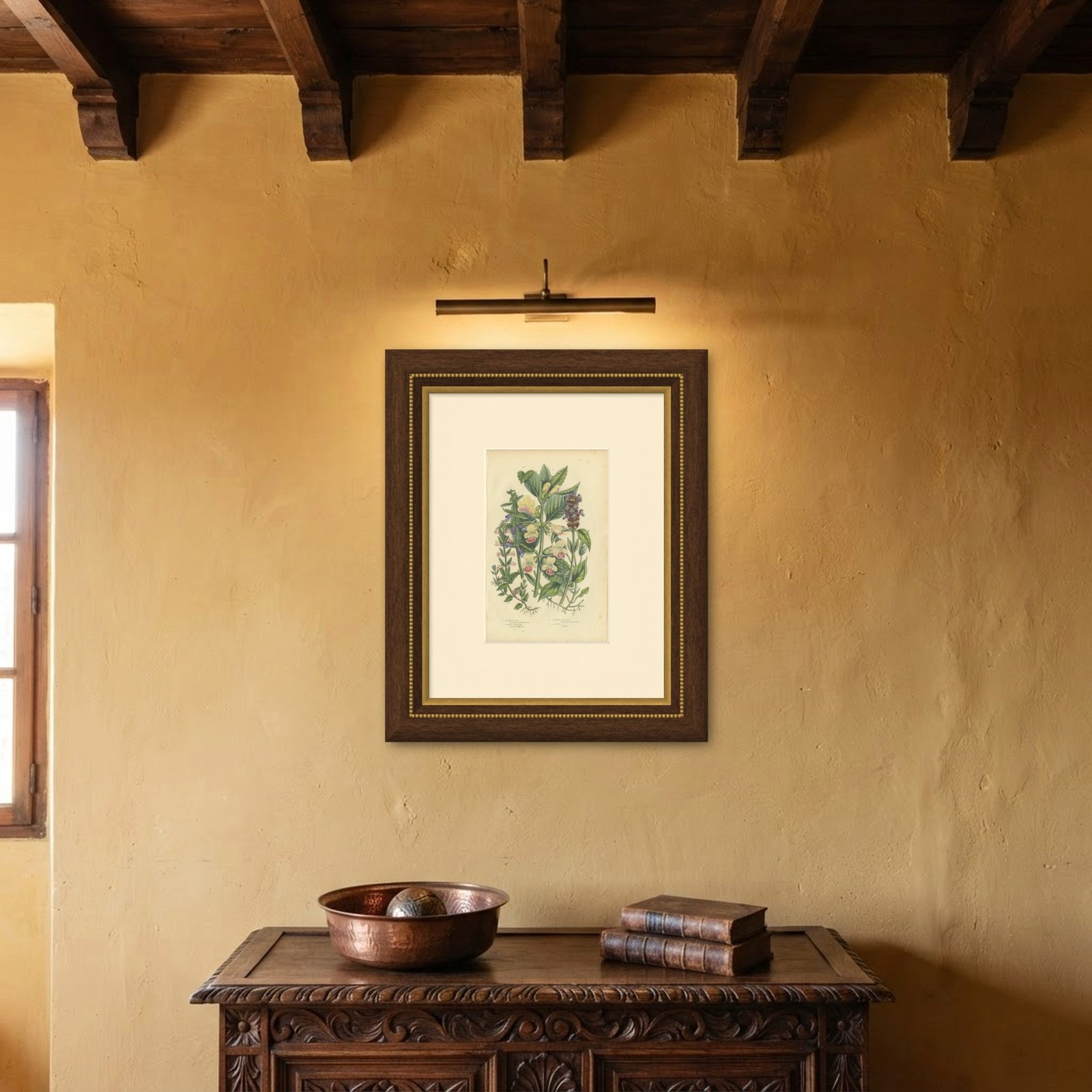
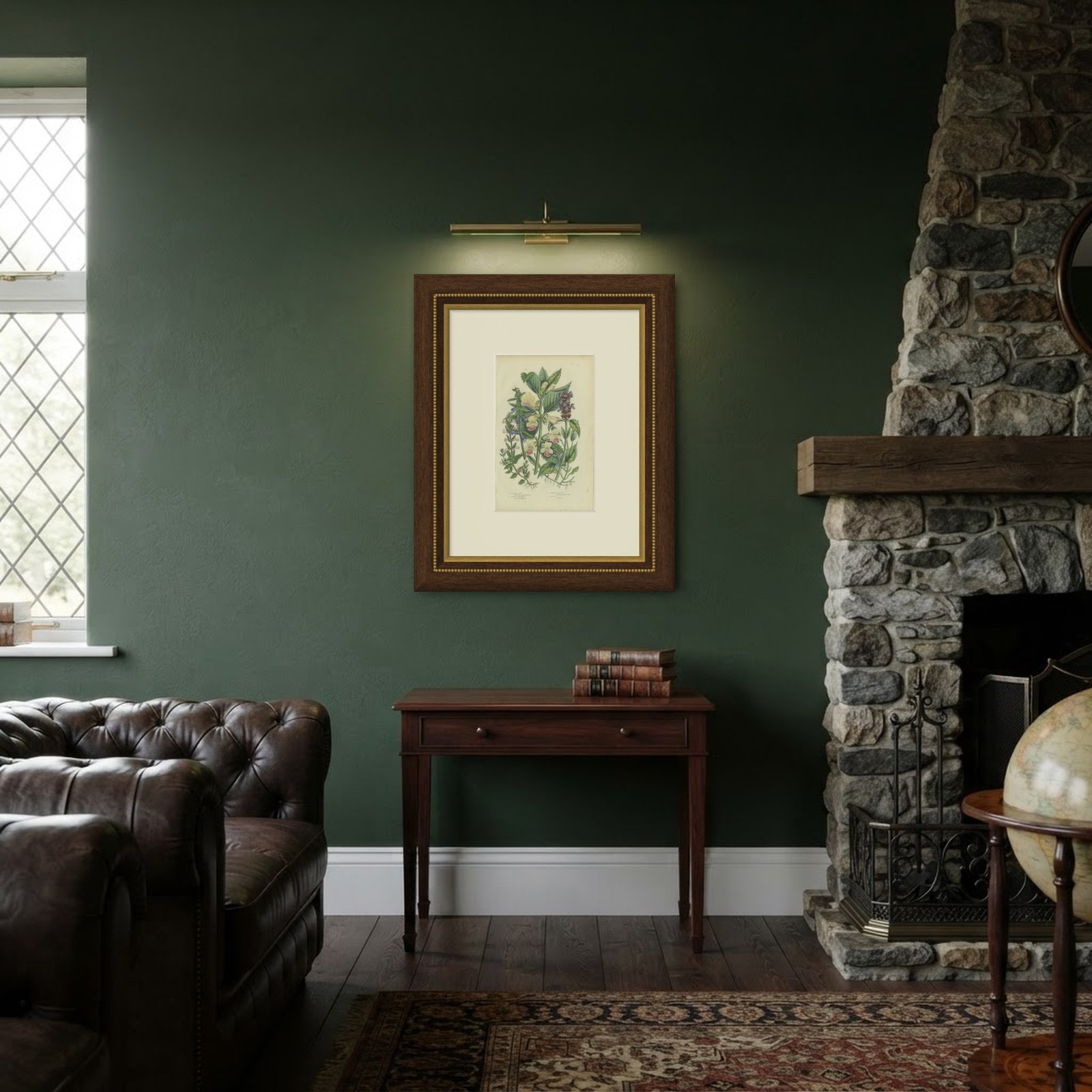
Frame and rooms are illustrations of how the print could look; the description says what is included.
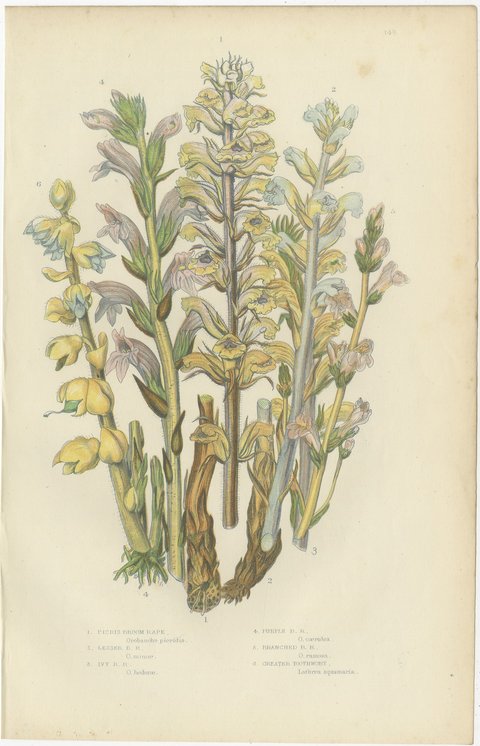
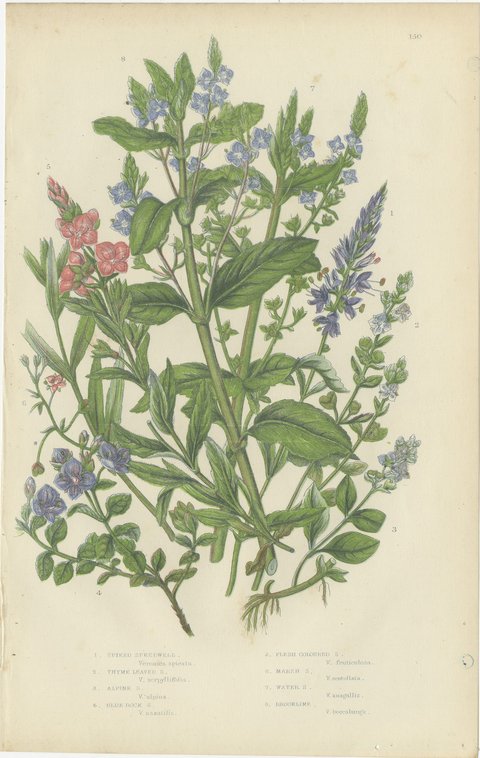
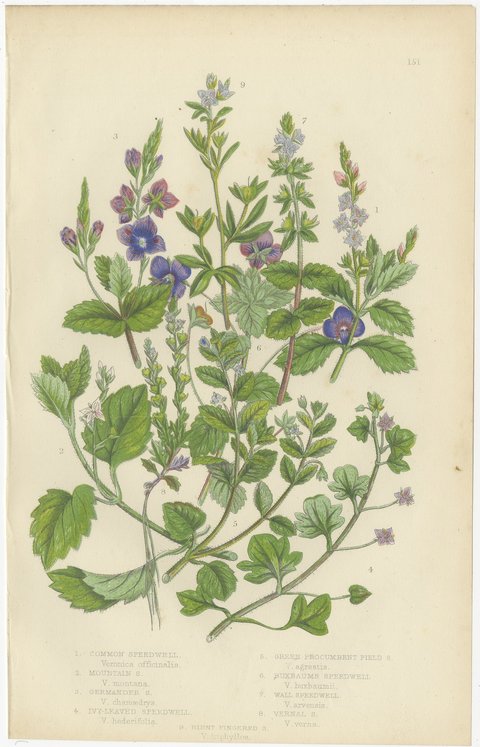
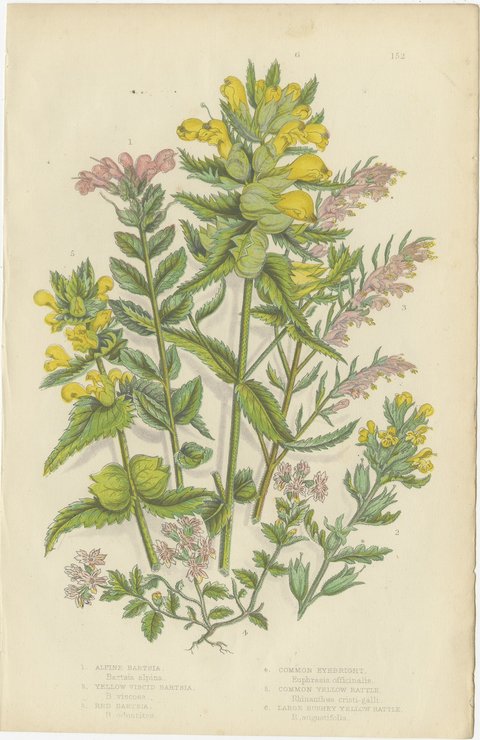
Bastard Balm and Self Heal, Antique Victorian Wild Flower Print, circa 1873
€185 ($205, £155, €185)
Period original, not a reproduction.
Shipped from the Netherlands, flat or rolled, insured and tracked, worldwide. Returns accepted within 14 days.
- Date
- circa 1873
- Size
- 9.4 × 6.1 in (24 × 15.5 cm)
- Technique
- Chromolithograph
- Coloring
- Printed color
- Condition
- Good. Even age toning. Marked handling soiling along the bottom, right and top edges. A few small foxing spots in the margin. Slight wear at the top left corner.
- Period
- Late 19th century
- Section
- Botanical
- Reference
- BG-14434-30
What the condition grades mean
- Excellent
- Bright and clean, with no faults worth mentioning.
- Very good
- Only light signs of age, such as faint toning.
- Good
- Normal signs of age for a sheet of this period: toning, some foxing, small marks or neat old repairs.
- Fair
- Clear faults such as staining, tears or repairs, priced to match.
Every fault we see is written in the condition note, and the whole sheet is shown uncropped in the photos.
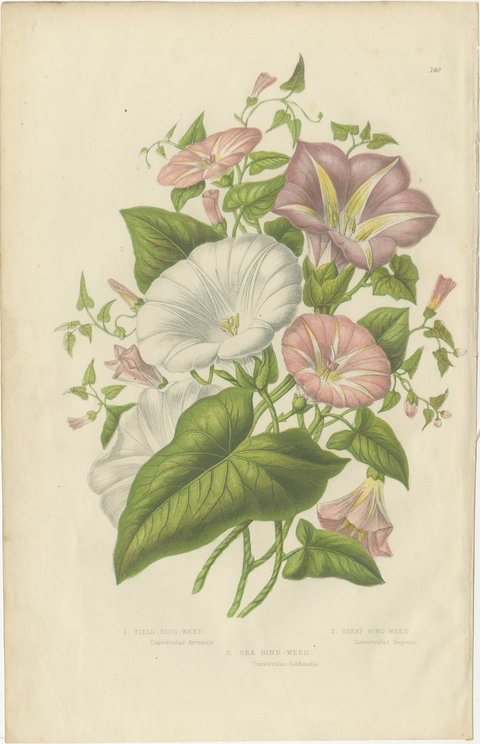
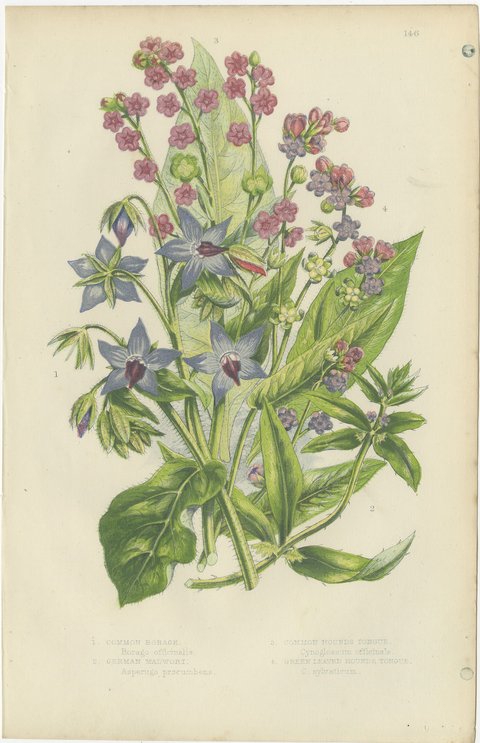
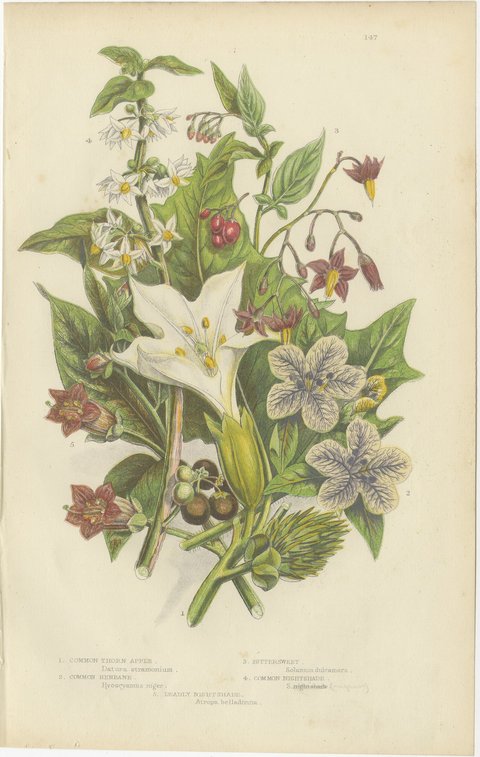
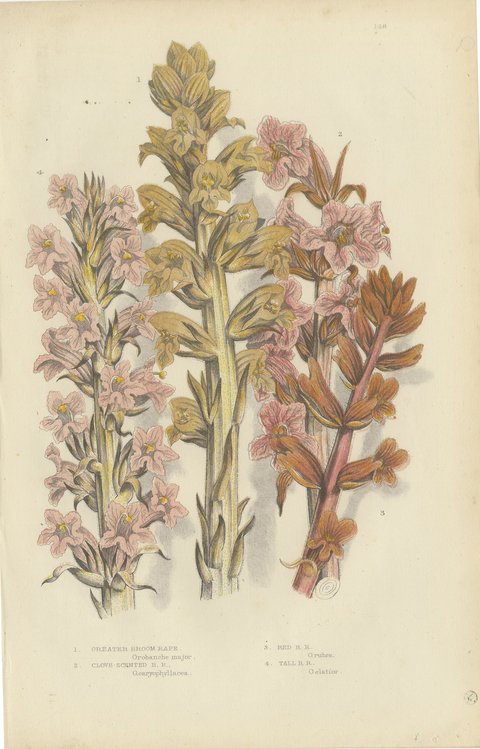
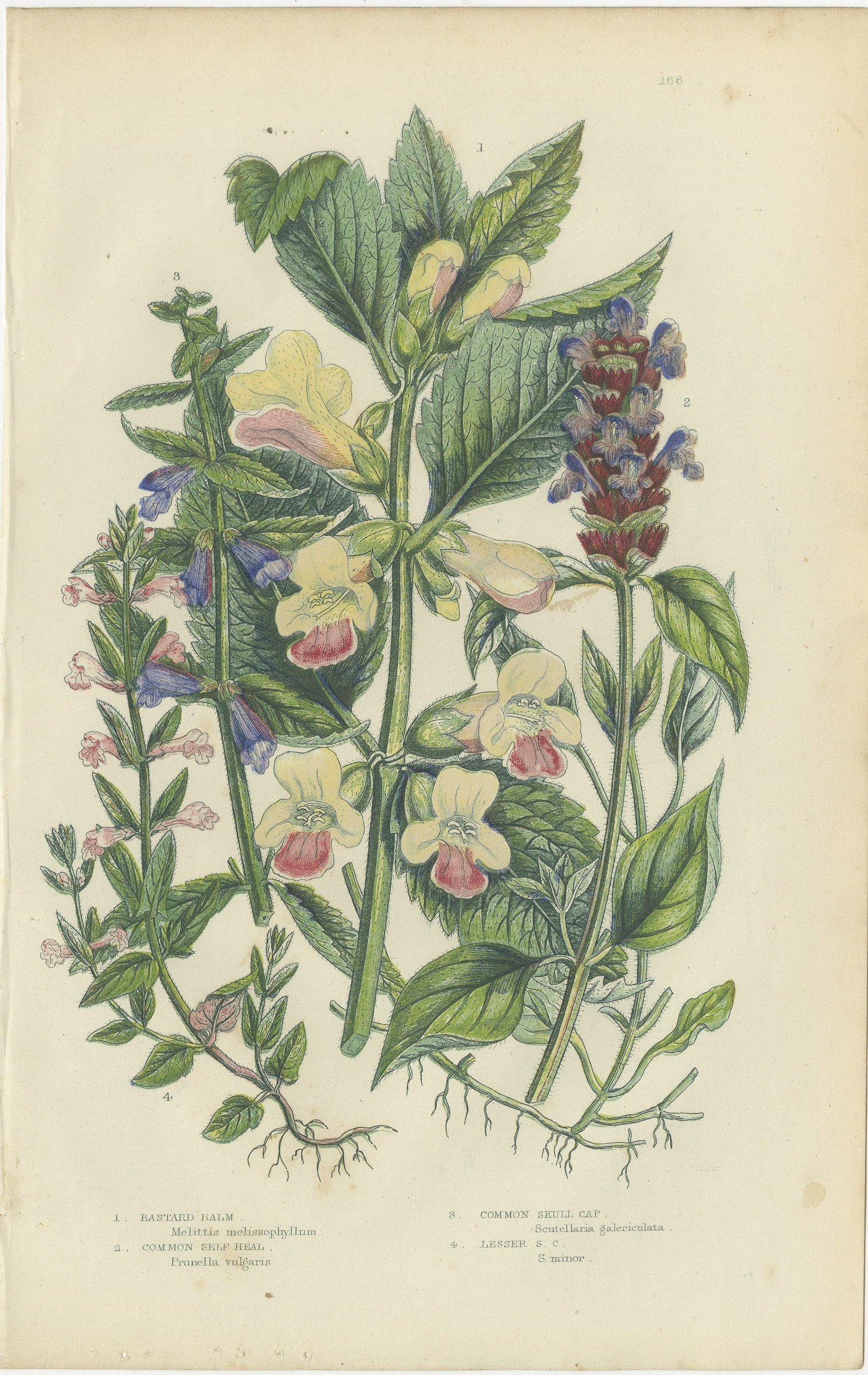
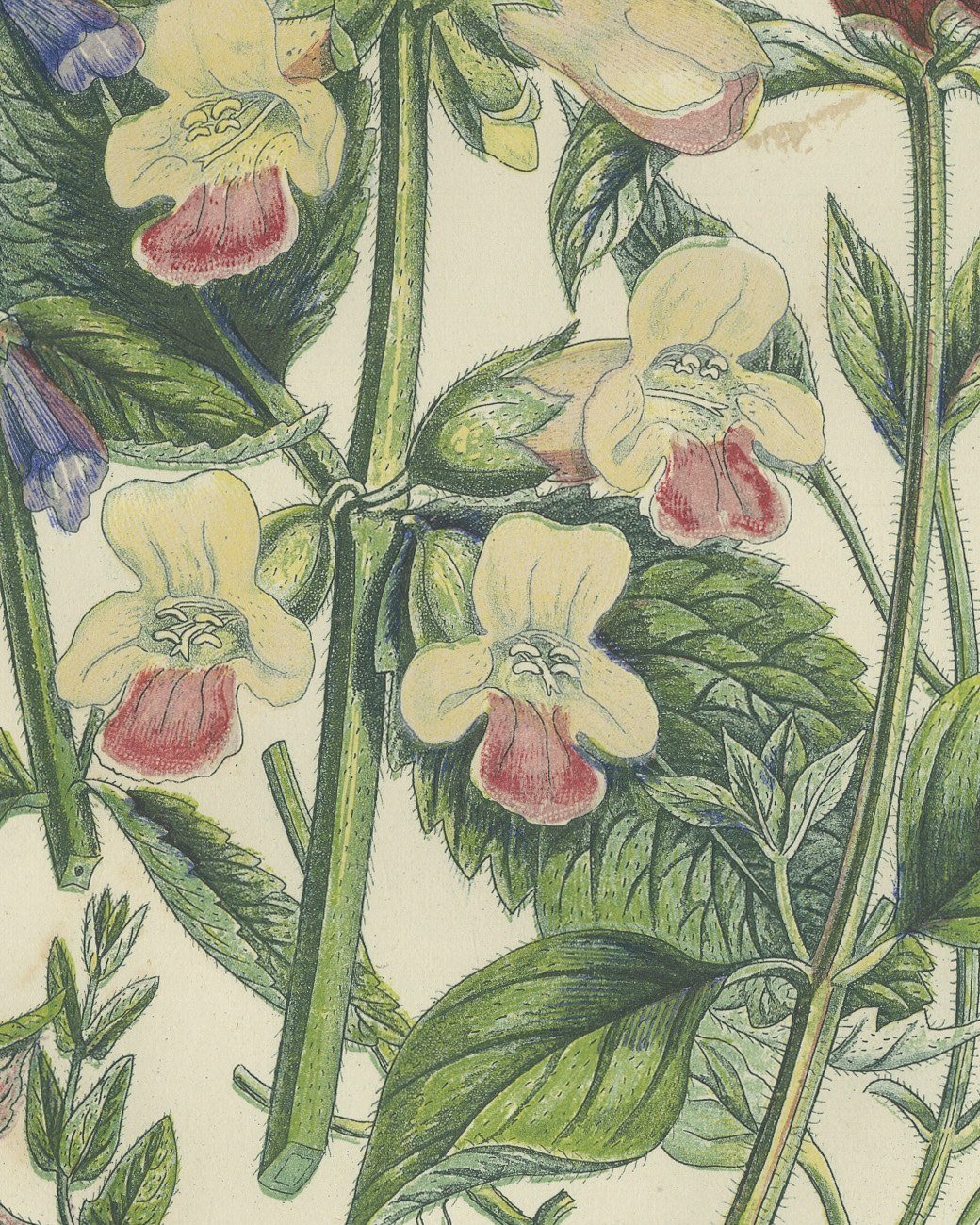
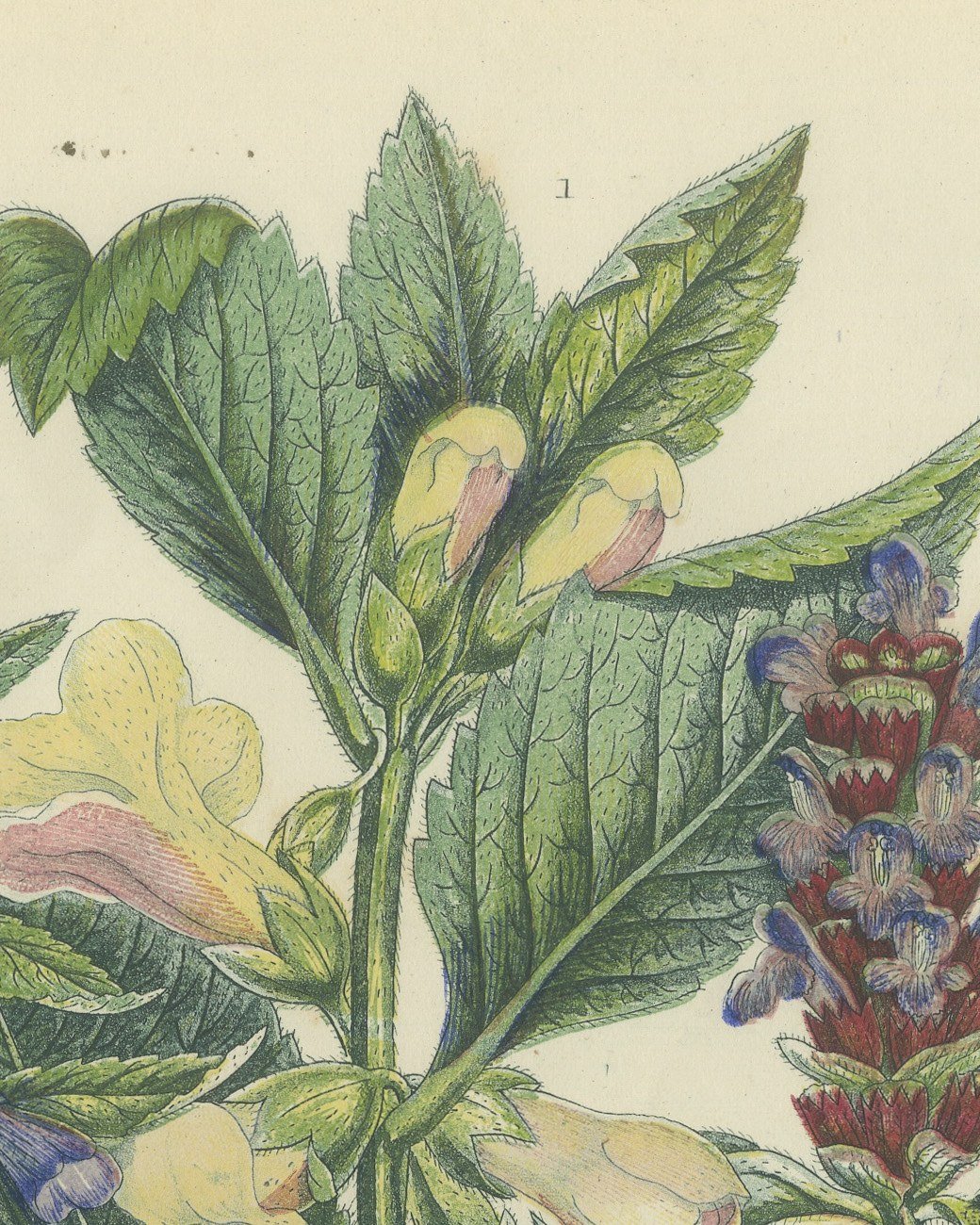
This antique botanical plate is Plate 166 of Anne Pratt's The Flowering Plants, Grasses, Sedges, and Ferns of Great Britain. It shows the bastard balm with the common self heal and the two skull caps. The large cream flowers of Melittis melissophyllum fill the center of the sheet, each one blotched with crimson on the lower lip, and they are the most striking thing on the page. A dark purple red spike of self heal stands at the right, the clear blue hooded flowers of the common skull cap and the small pink lesser skull cap rise at the left, and the creeping roots are drawn along the bottom edge.
Anne Pratt brought out The Flowering Plants, Grasses, Sedges, and Ferns of Great Britain through Frederick Warne and Co. of Bedford Street, Covent Garden, in six volumes covering more than fifteen hundred species. The plates were printed in color by William Dickes of London, a licensee of the Baxter color process, and this sheet comes from Volume IV, which the title page records as carrying 249 species in color.
A plate from this flora carries its period in every line: the close observation, the crowded but orderly arrangement, the soft printed color laid over careful outline. It sits as comfortably in a modern interior as in a Victorian one, and it has the advantage over a single flower study of giving several related plants together, which makes it rewarding to look at more than once.
Even age toning. Marked handling soiling along the bottom, right and top edges. A few small foxing spots in the margin. Slight wear at the top left corner.
This is an original antique print, not a modern reproduction. This item is sold unframed.