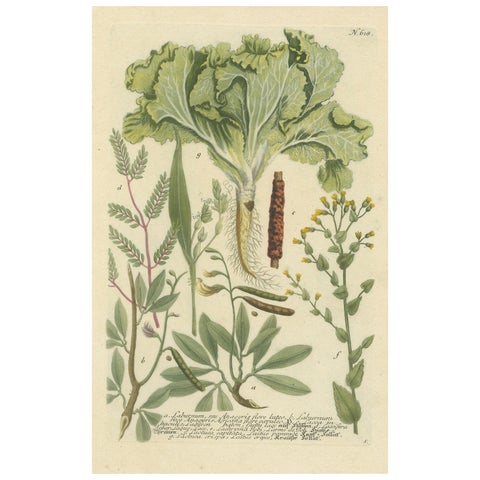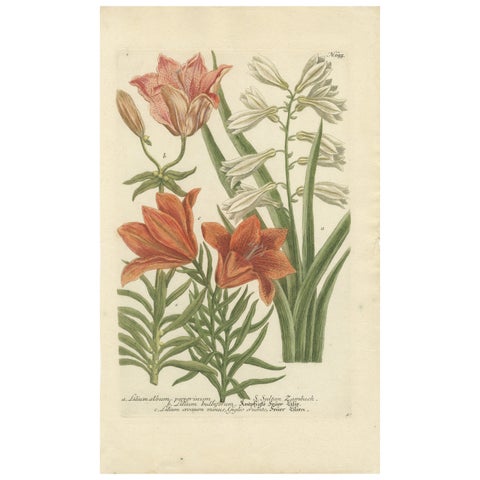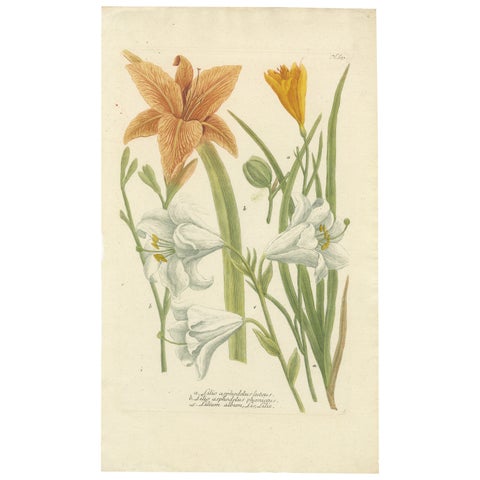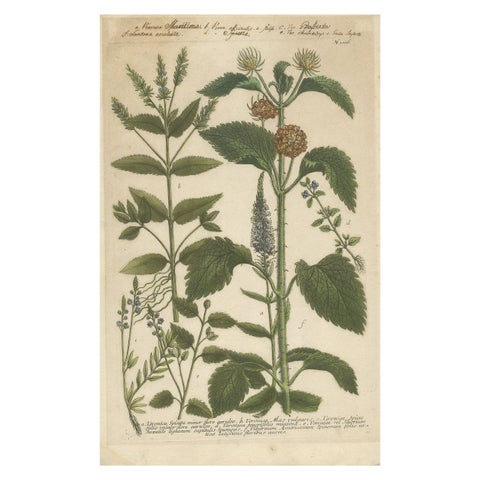
Close-ups
Framed and on the wall
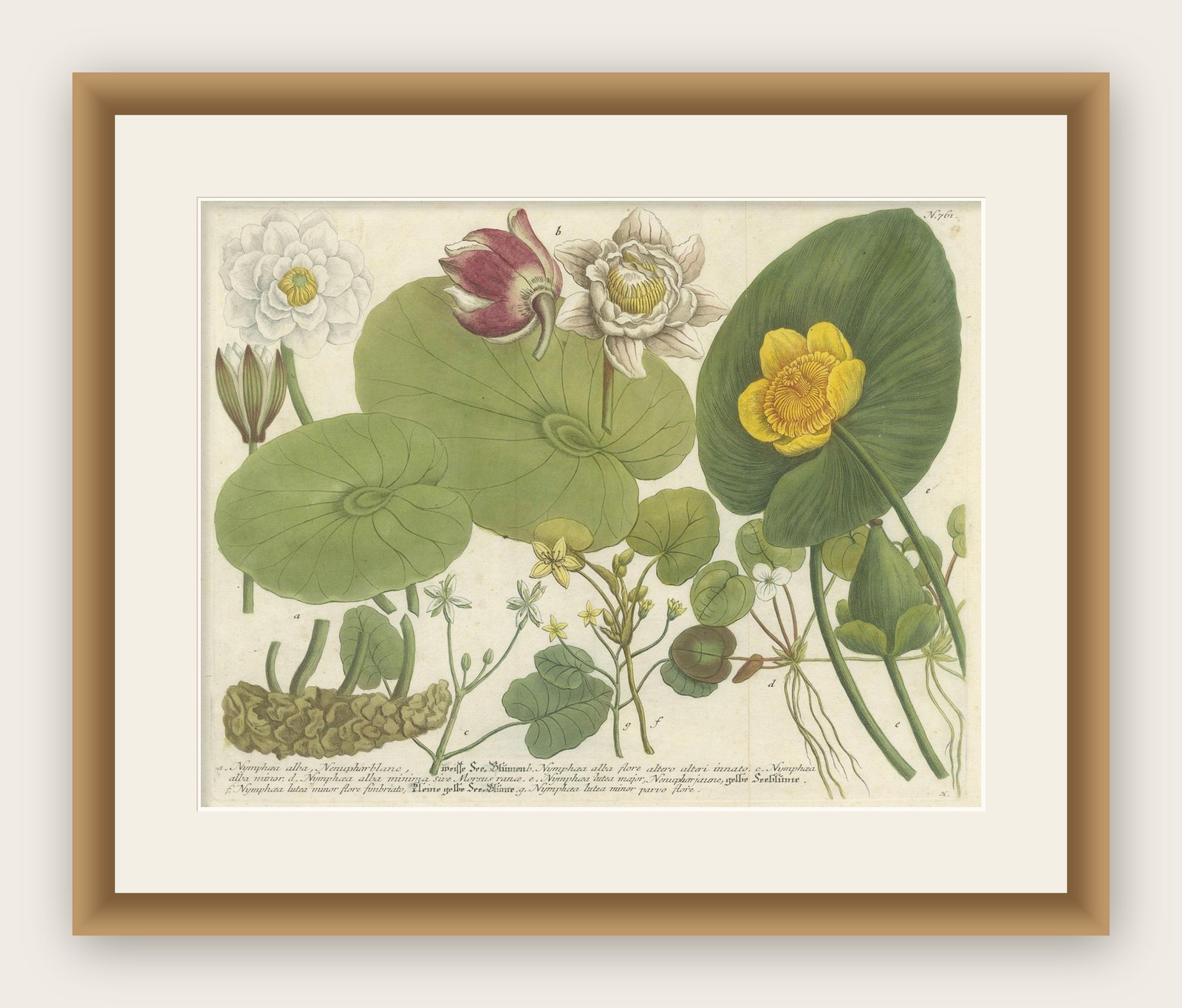
Frame and rooms are illustrations of how the print could look; the description says what is included.
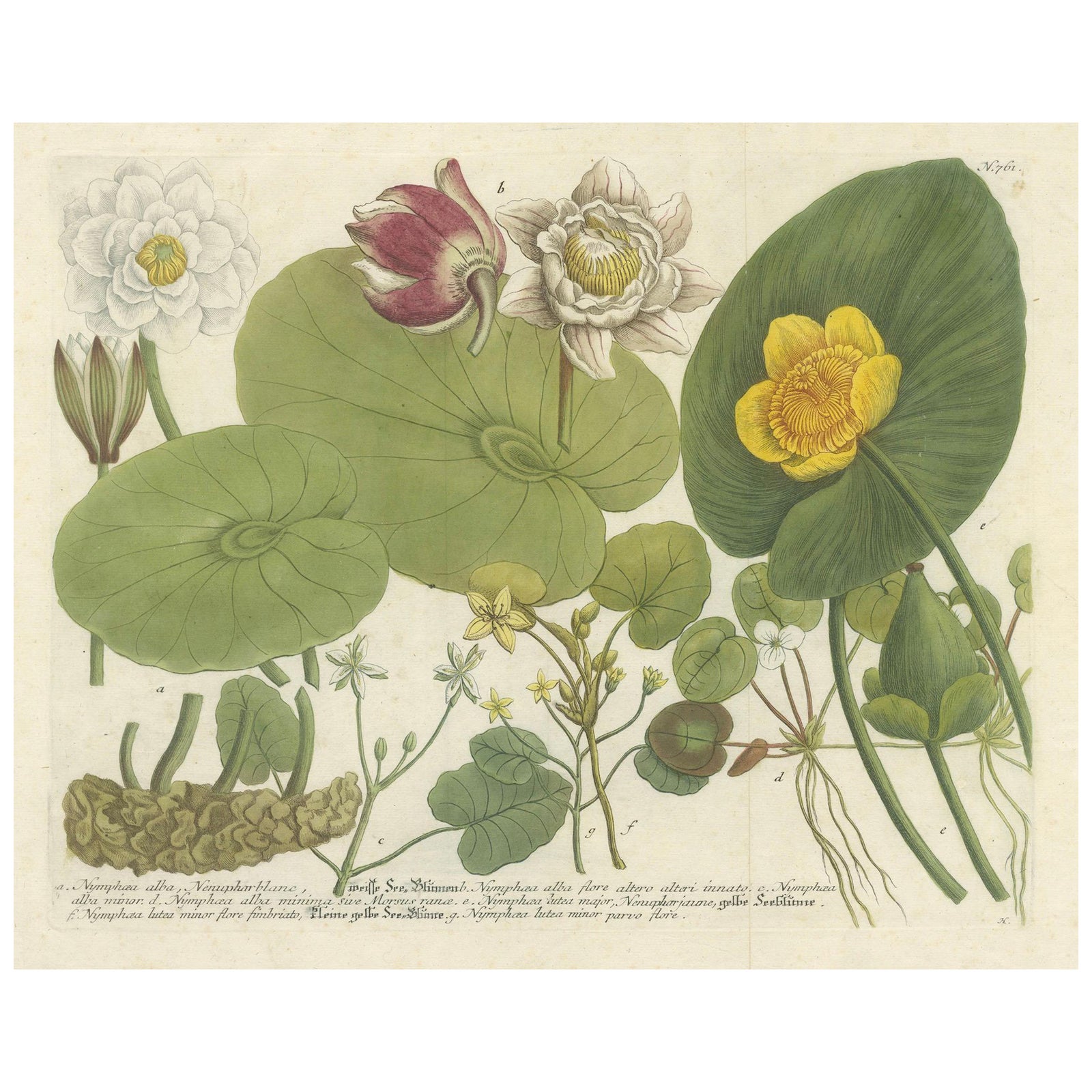
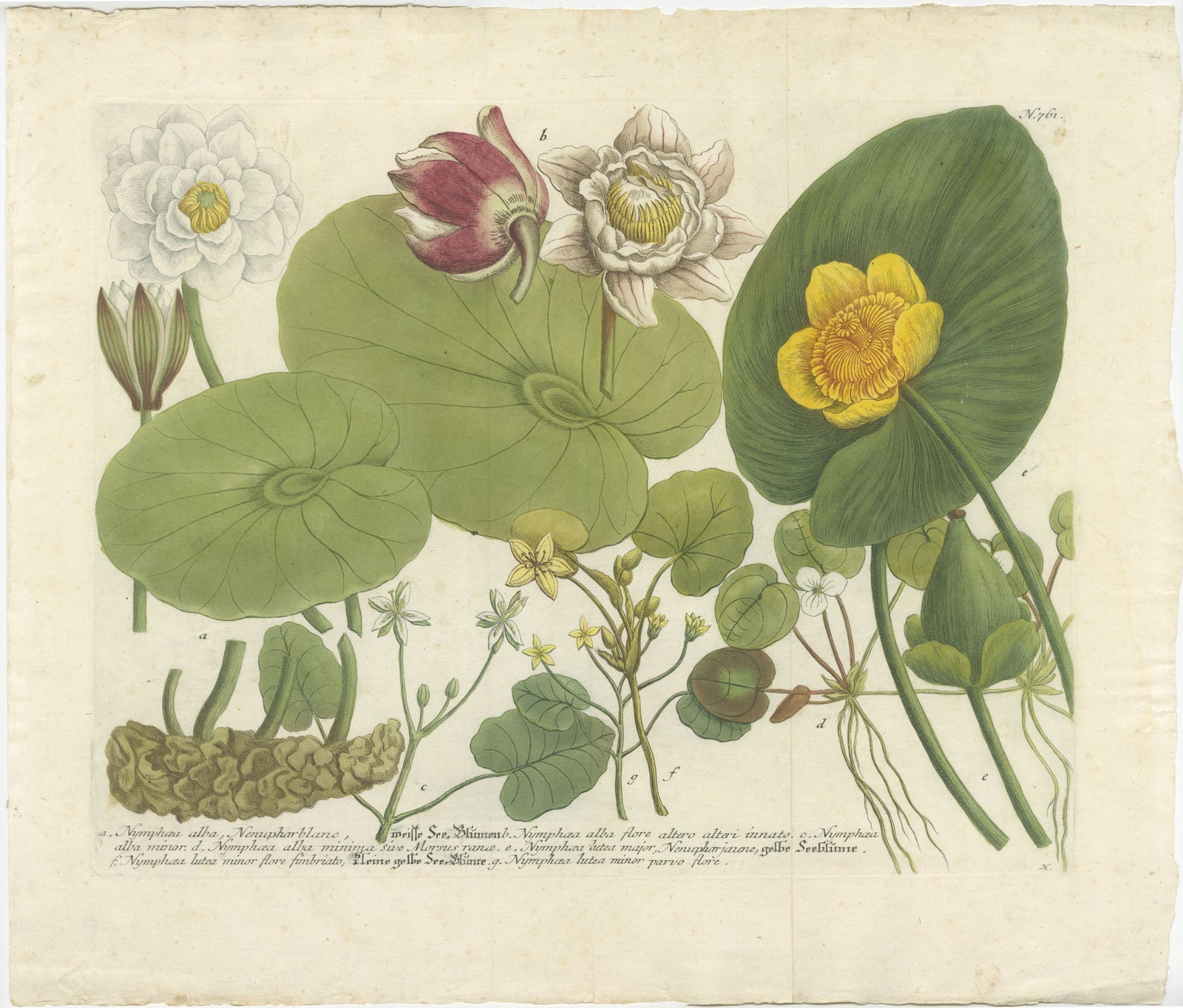
Aquatic Elegance: Water Lilies and Pond Plants in 18th Century Engraving, 1748
€660 ($740, £560, €660)
Period original, not a reproduction.
Shipped from the Netherlands, flat, insured and tracked, worldwide. Returns accepted within 14 days.
- Date
- 1748
- Size
- 16.9 × 19.9 in (43 × 50.5 cm)
- Condition
- Good. Good, considering age. Trifle foxed/ spotted. Folded as published. The print is slightly unevenly trimmed left blank margin (remaining width of blank margin still at least 1 cm.) Please study the images carefully.
- Period
- 18th century
- Artist or book
- Weinmann
- Section
- Botanical
- Reference
- f_38130022
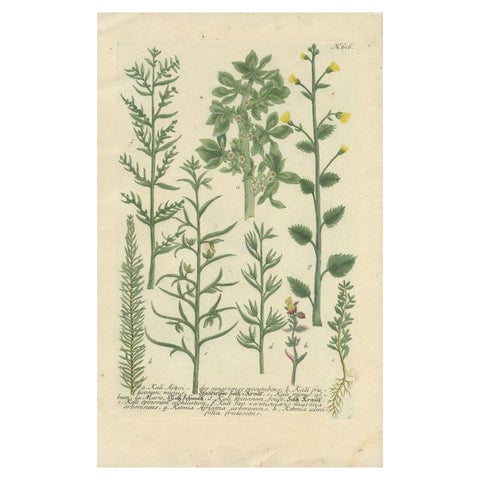
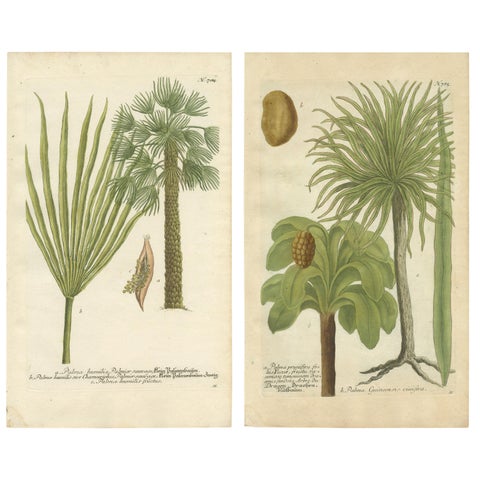
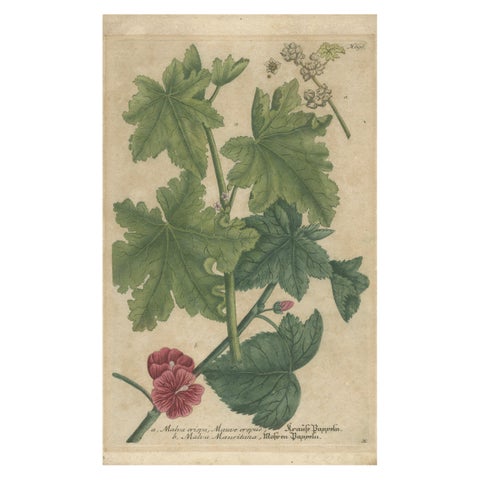
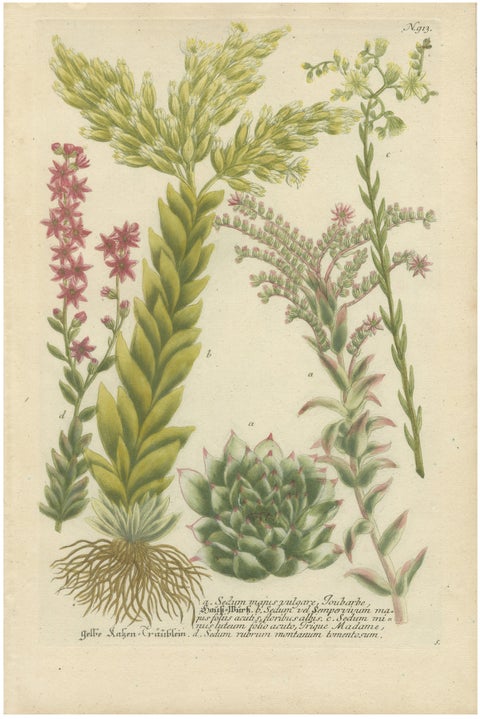
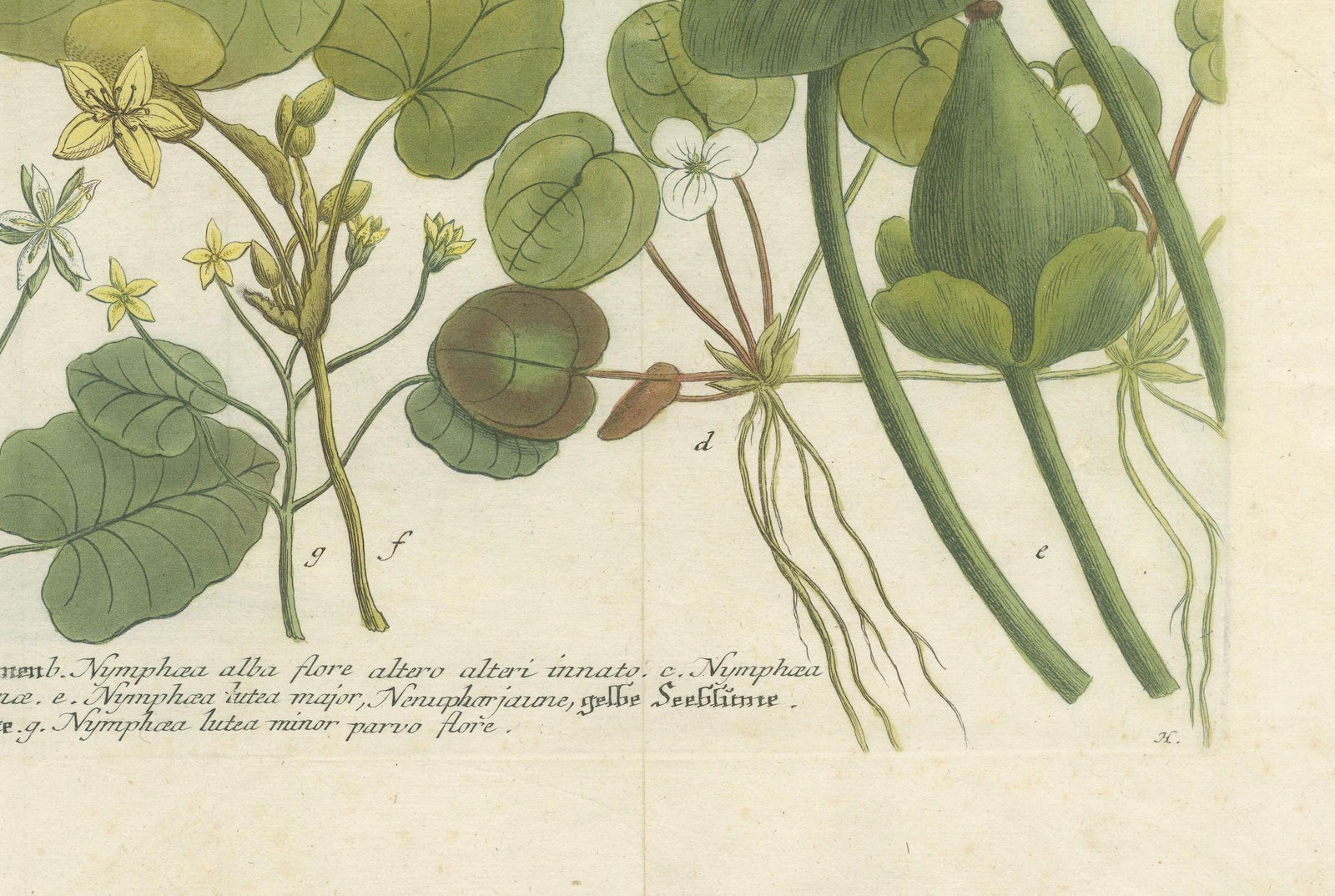
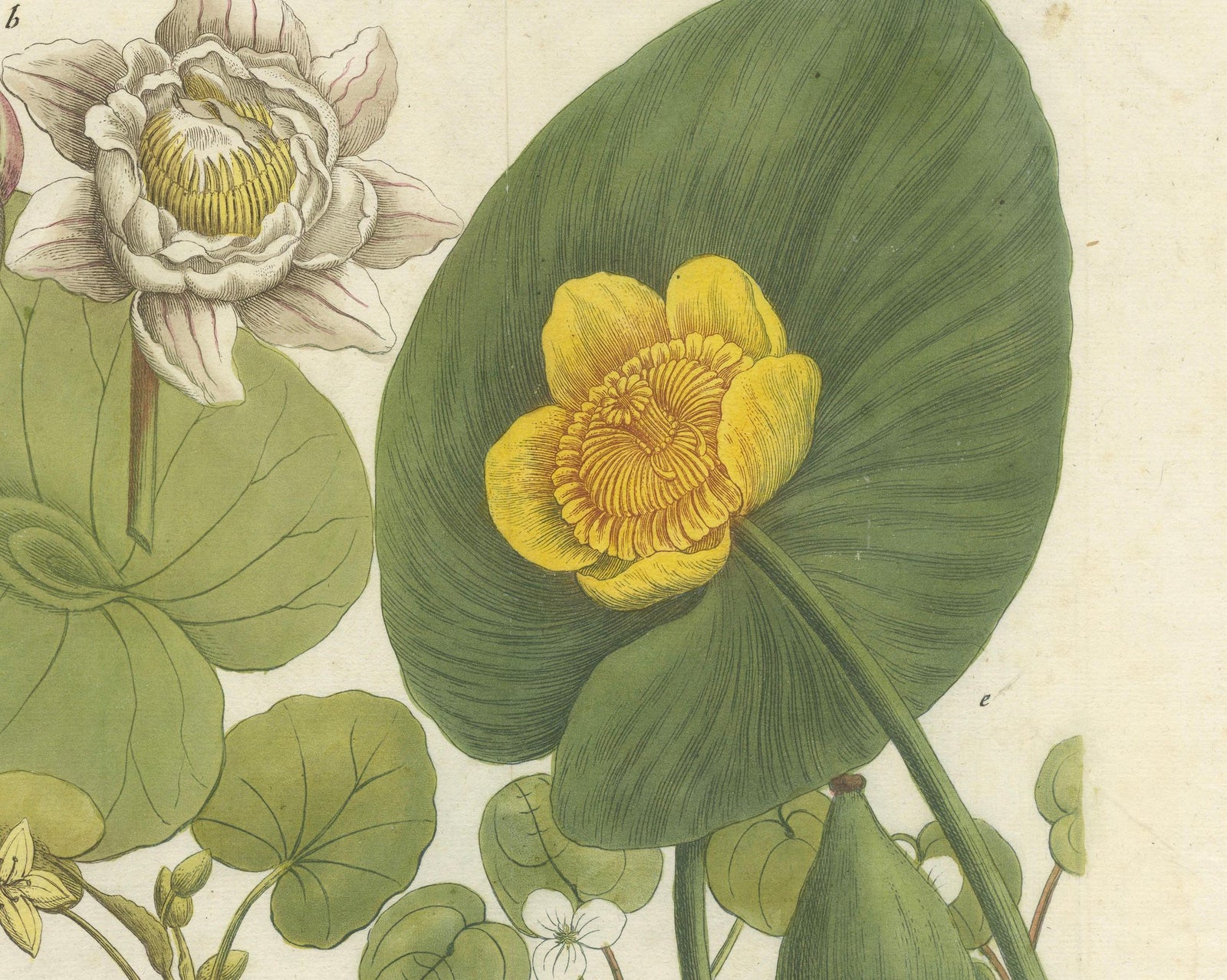
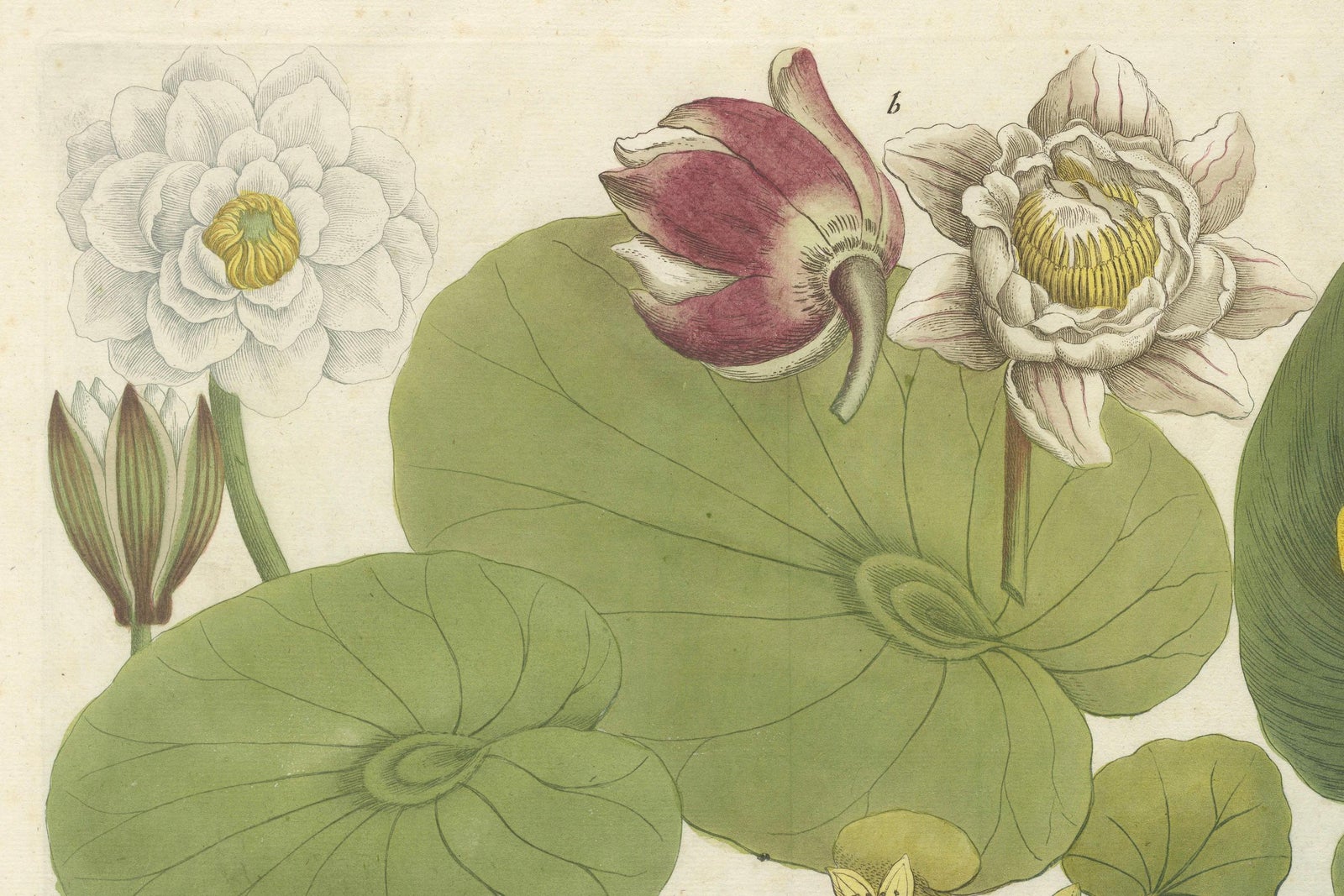
This image is an antique colored etching from a botanical work by J.W. Weinmann, titled "Duidelyke vertoning eeniger duizend in alle vier waerelds deelen wassende bomen, stammen, kruiden," published in Amsterdam in 1748. The etching is numbered "N.761" in the top corner.
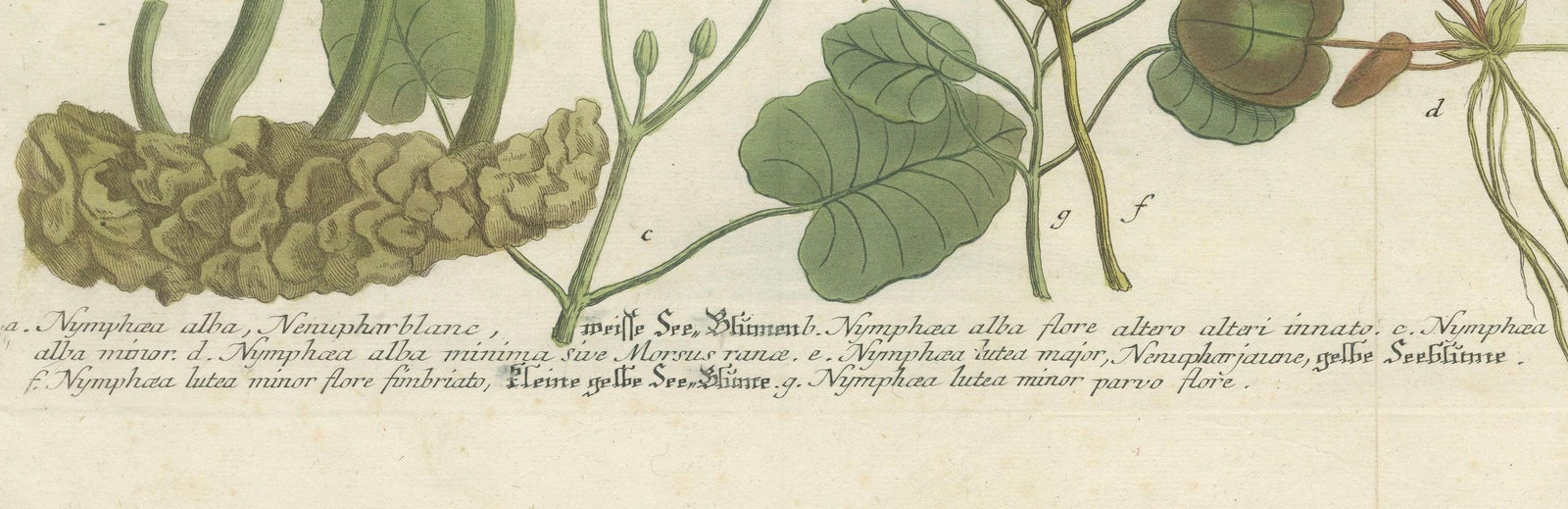
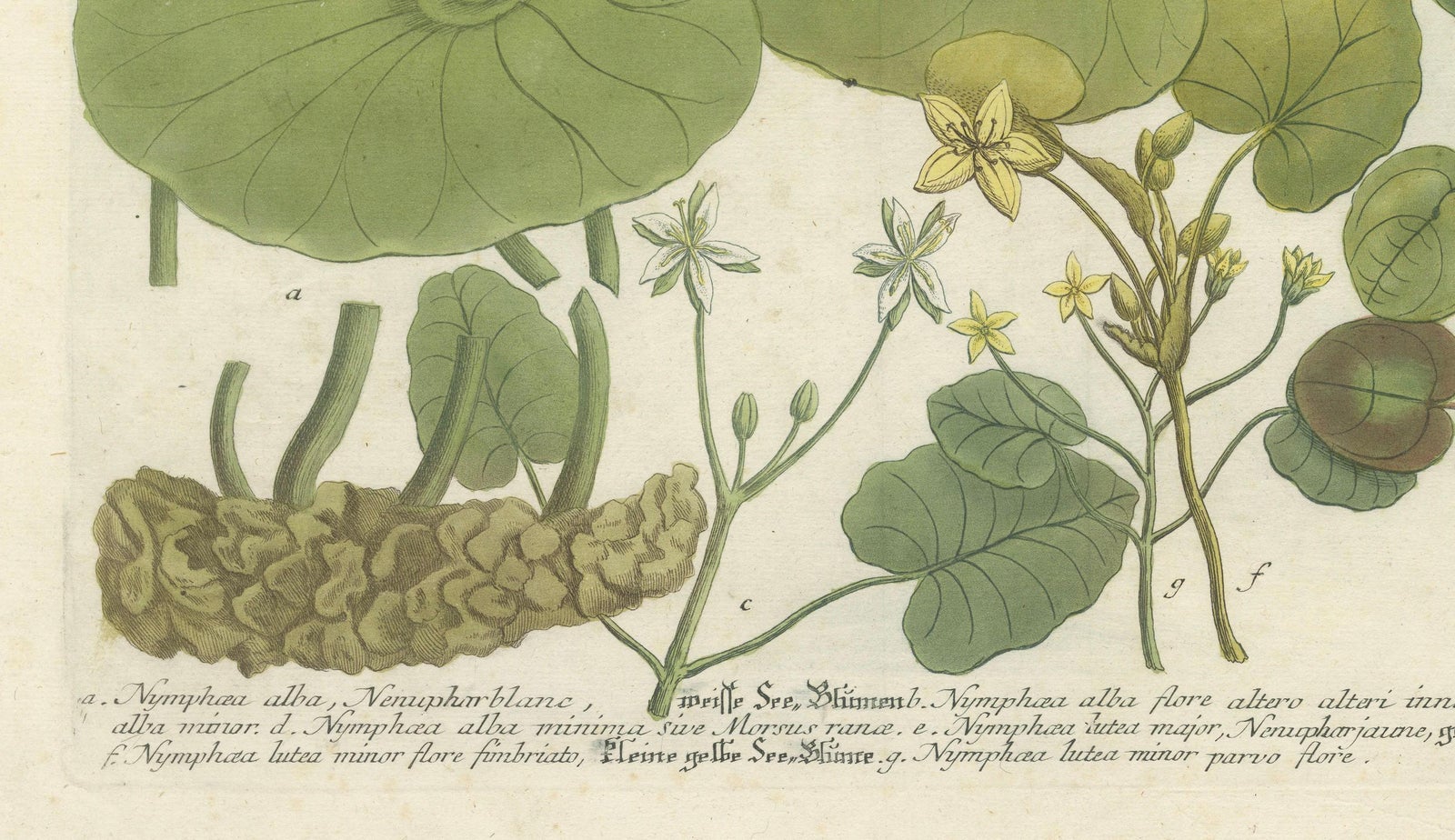
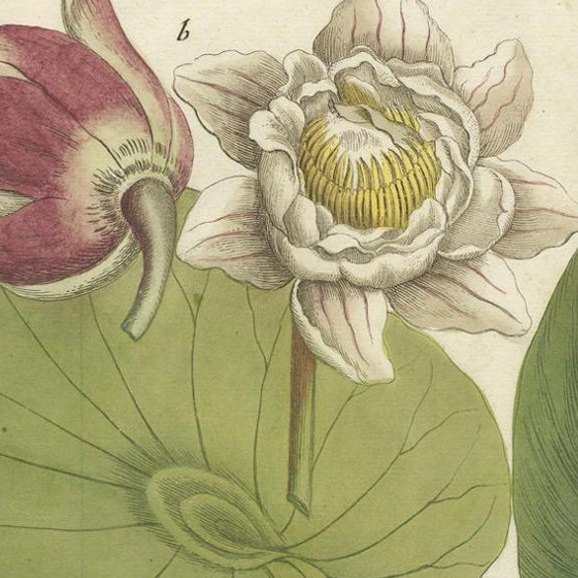
The engraving depicts several aquatic plants in great detail, which are identified in Latin and German as various types of water lilies and related species. The names mentioned are "Nymphaea alba" and the terms "weisse See-Blumen," "gelbe Seeblume," and "kleine gelbe See-Blume," which translate to "white water lily," "yellow water lily," and "small yellow water lily," respectively. These descriptions are typical of the era's botanical works, aiming to categorize and illustrate the diversity of plant life.
The botanical details are meticulously rendered, showcasing the characteristic features of each plant, such as the broad, round leaves of the water lilies, and the distinctive flower structures. The use of color in the etching is subtle yet effective in distinguishing the various plants and highlighting the differences between species.
Johann Wilhelm Weinmann was a notable figure in botanical art and his work was an important contribution to the field of botany, combining scientific accuracy with artistic beauty. This image is an excellent example of his legacy.