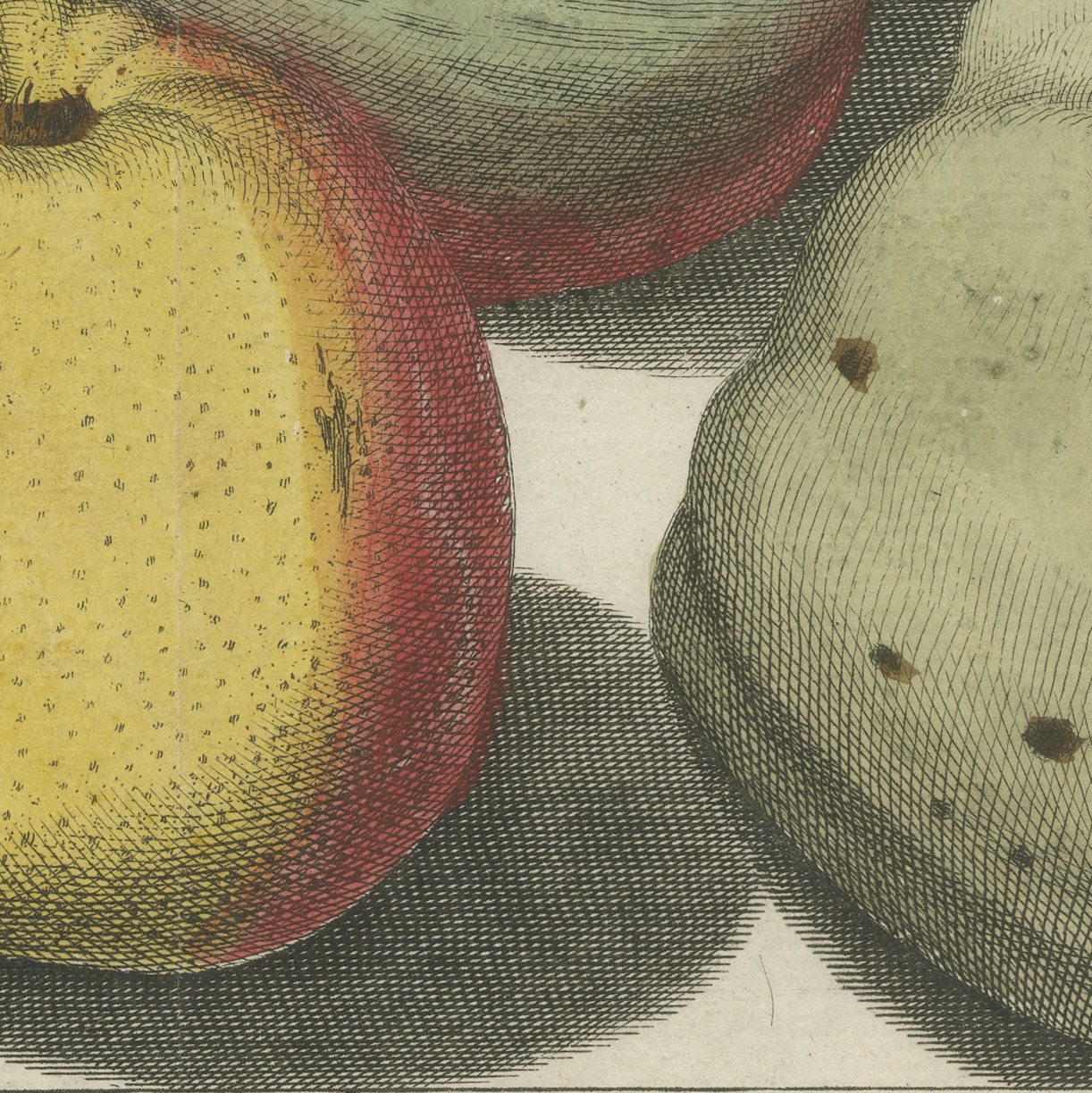
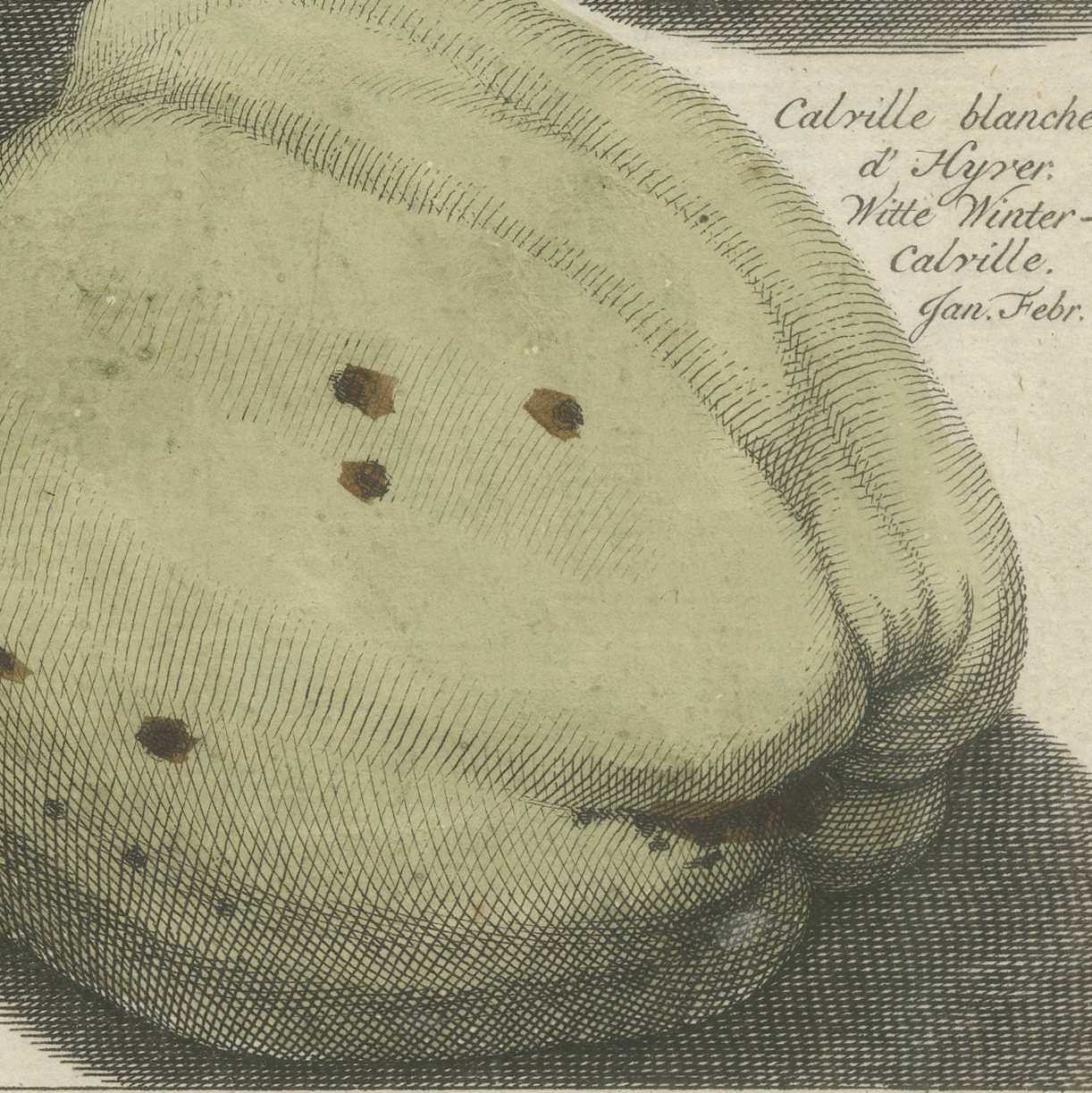
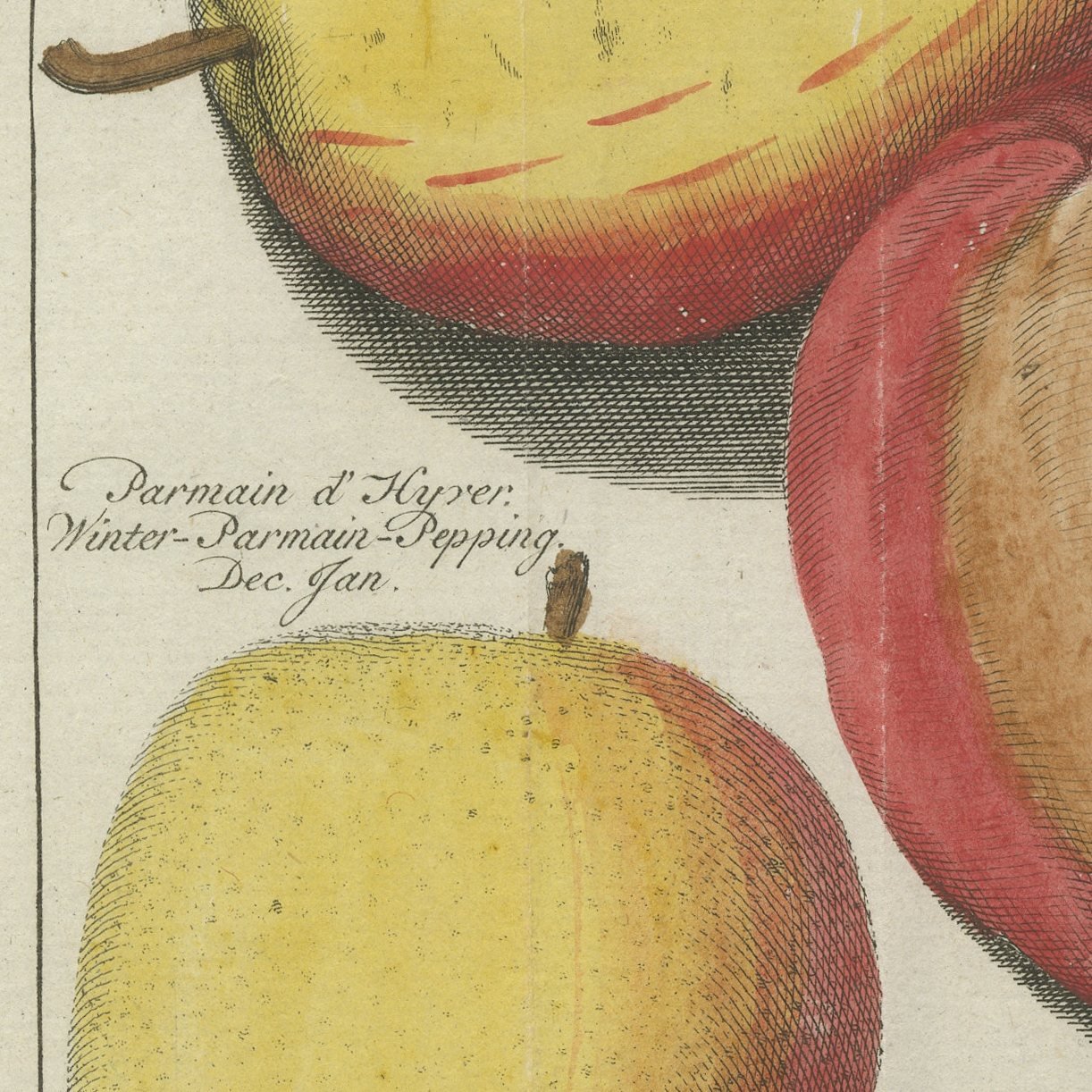
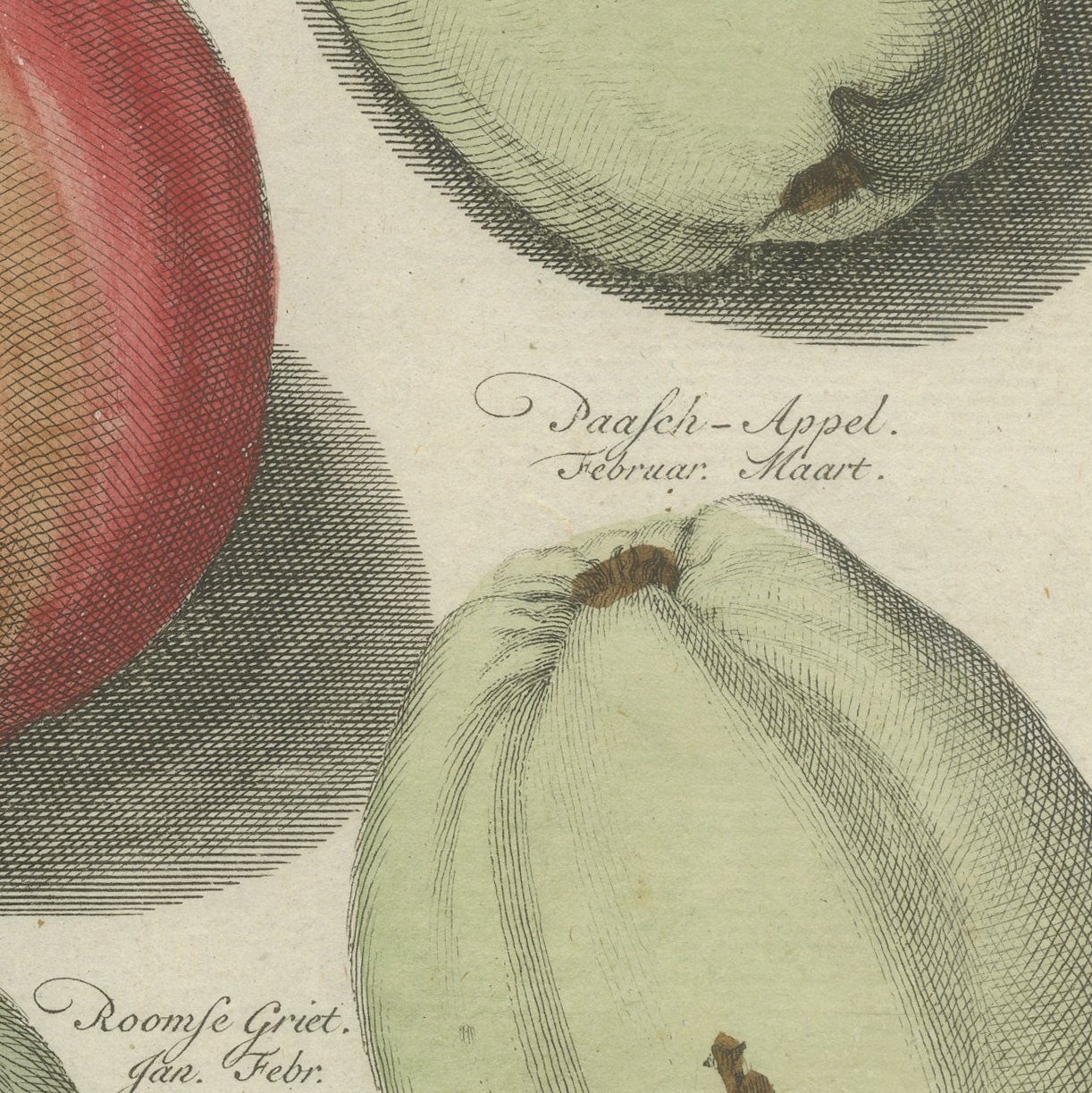
Close-ups
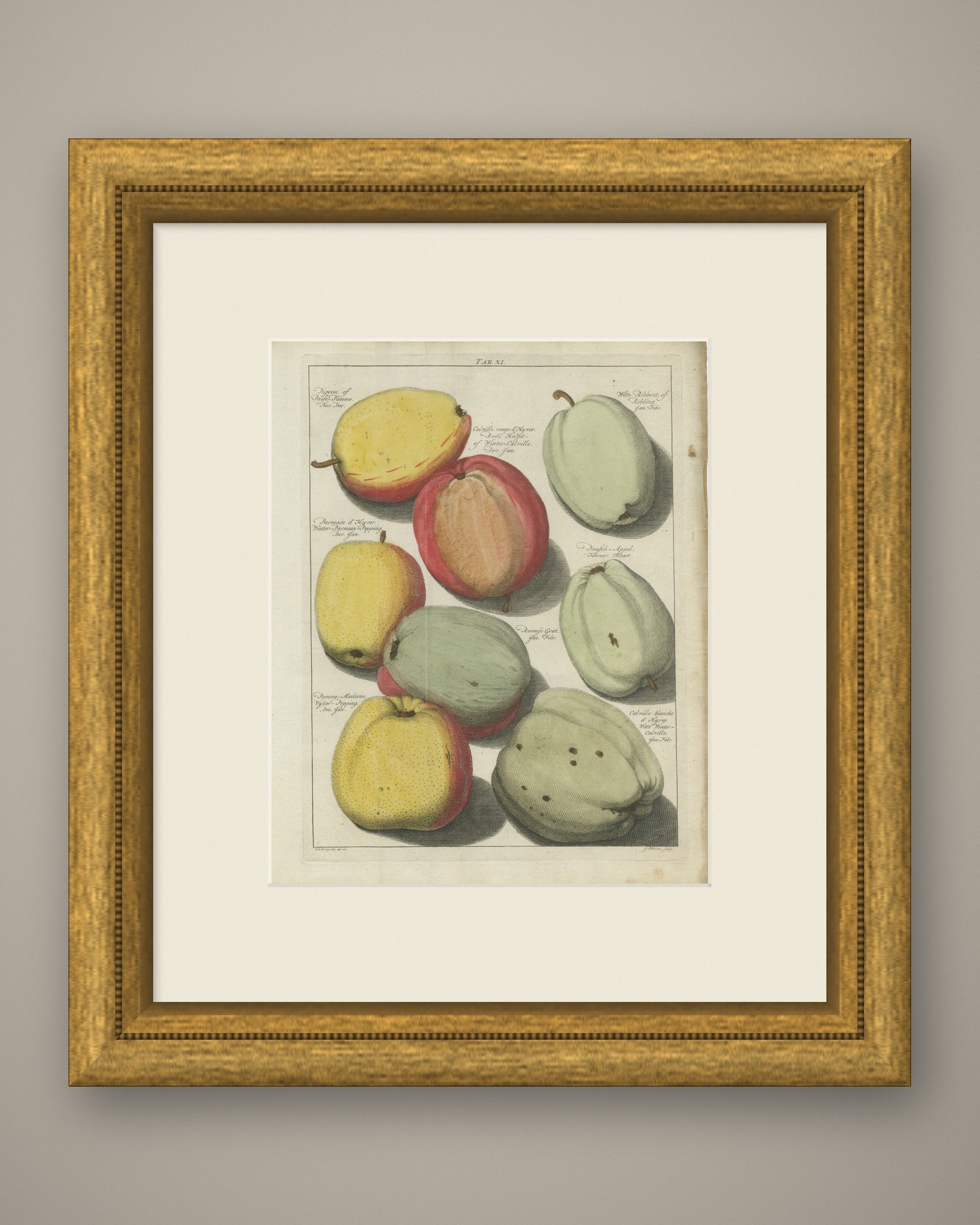
Framed and on the wall
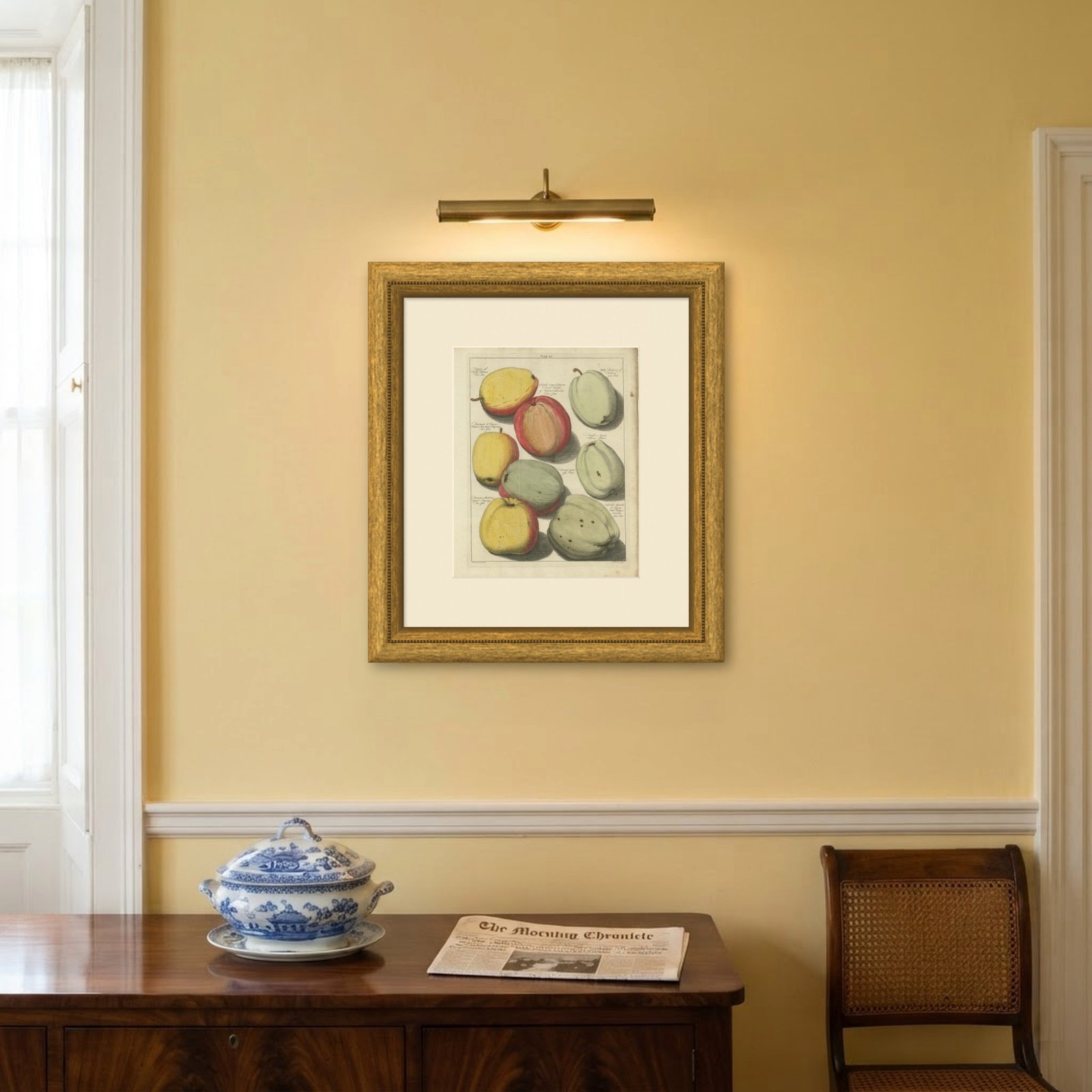
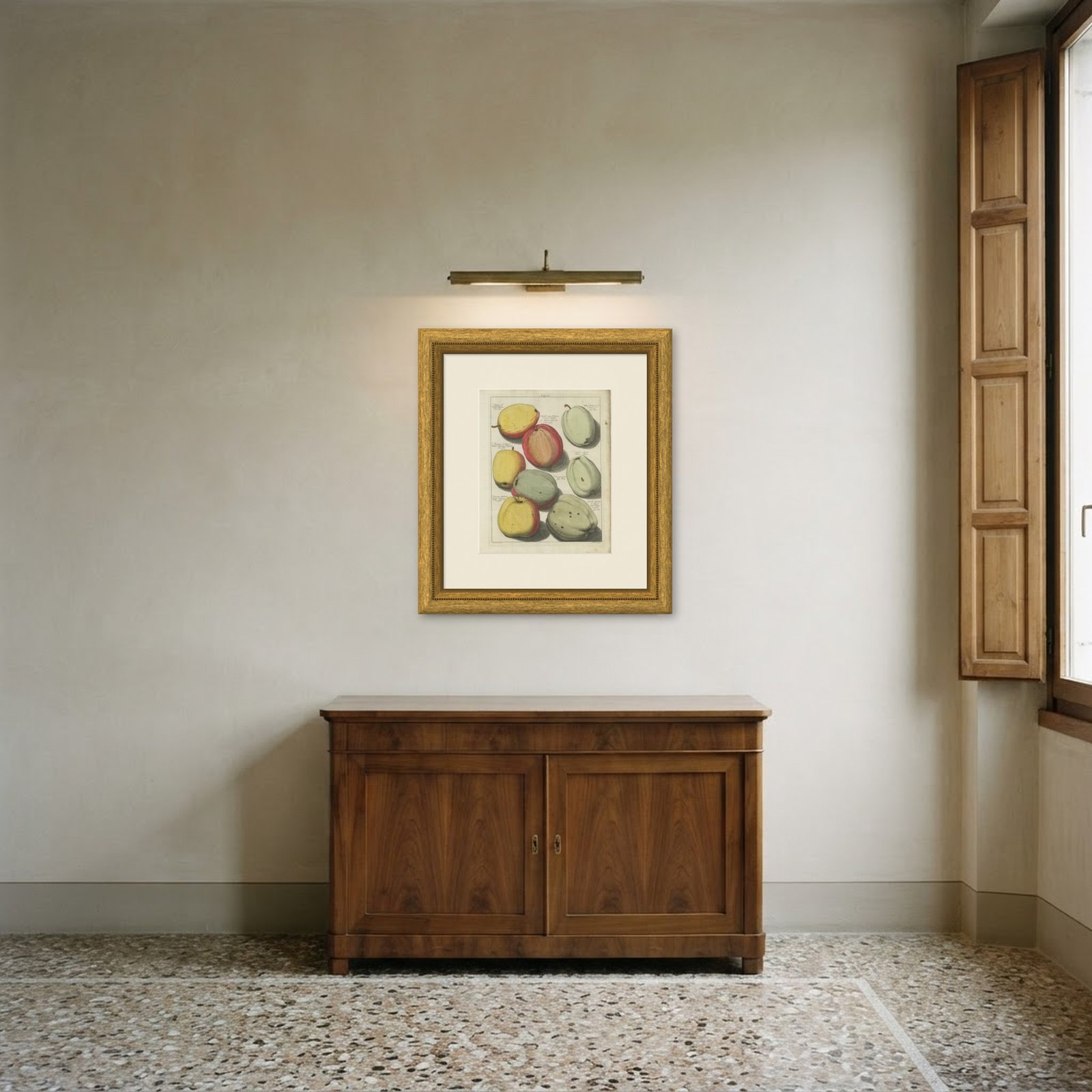
Frame and rooms are illustrations of how the print could look; the description says what is included.
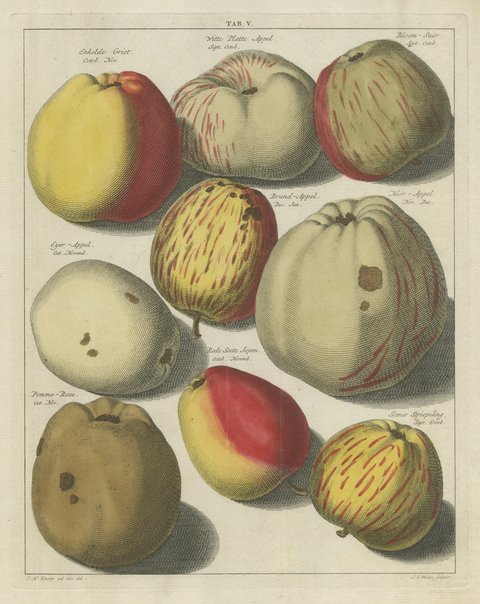
Antique Winter-Calville Apple Plate, Roomse Griet, Knoop, 1790
£245 ($325, €295)
Period original, not a reproduction.
Shipped from the Netherlands, flat or rolled, insured and tracked, worldwide. Returns accepted within 14 days.
- Date
- 1790
- Size
- 12.6 × 9.4 in (32 × 24 cm)
- Technique
- Copper Engraving
- Coloring
- Original hand color
- Condition
- Good. Light uneven toning, browner towards the edges. Marked handling soiling along the right and top edges. Scattered foxing in the margin. All four corners complete.
- Period
- 18th century
- Section
- Botanical
- Reference
- BG-05122-11
What the condition grades mean
- Excellent
- Bright and clean, with no faults worth mentioning.
- Very good
- Only light signs of age, such as faint toning.
- Good
- Normal signs of age for a sheet of this period: toning, some foxing, small marks or neat old repairs.
- Fair
- Clear faults such as staining, tears or repairs, priced to match.
Every fault we see is written in the condition note, and the whole sheet is shown uncropped in the photos.
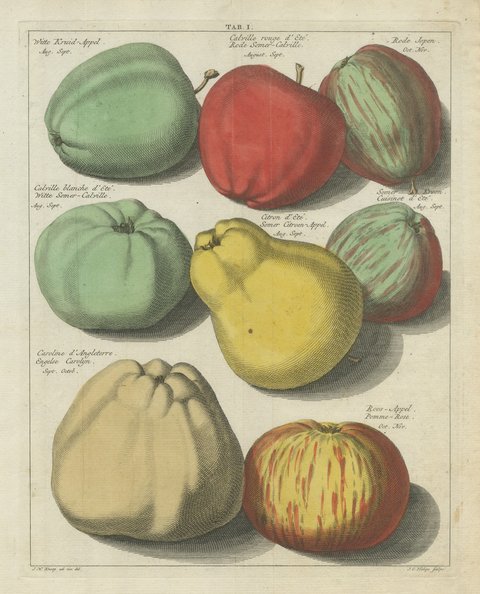
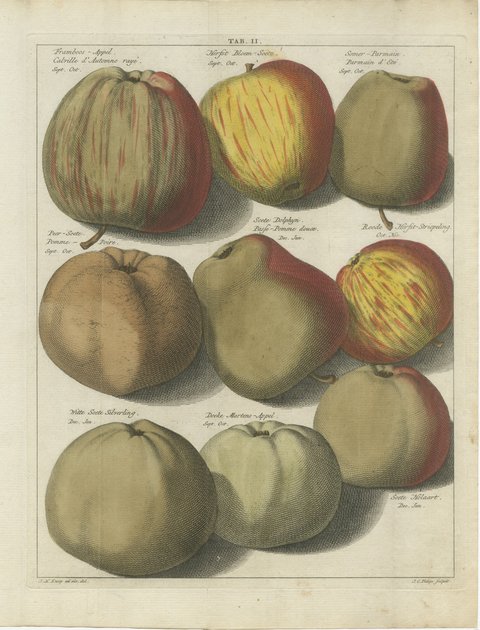
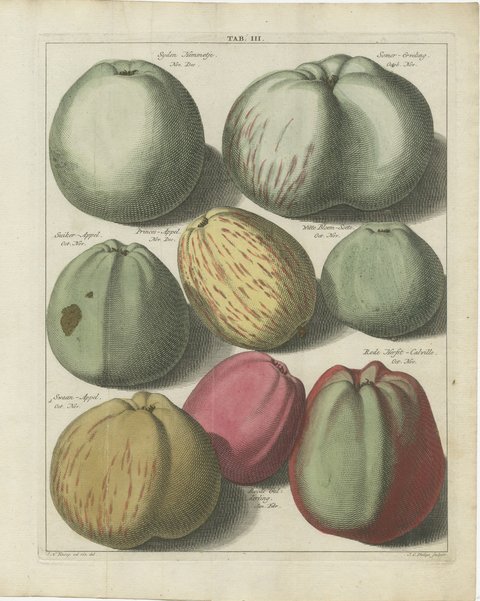
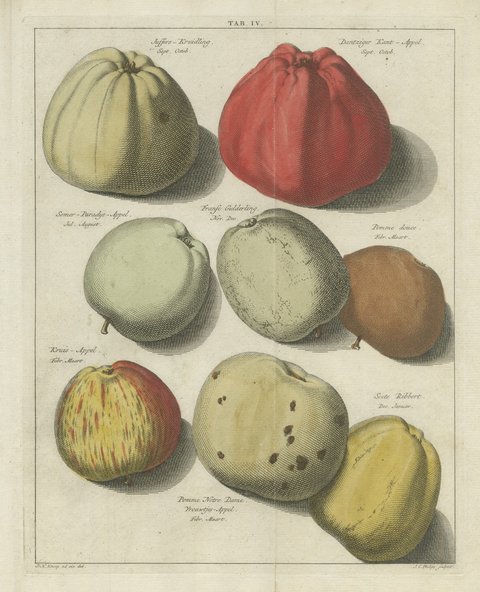
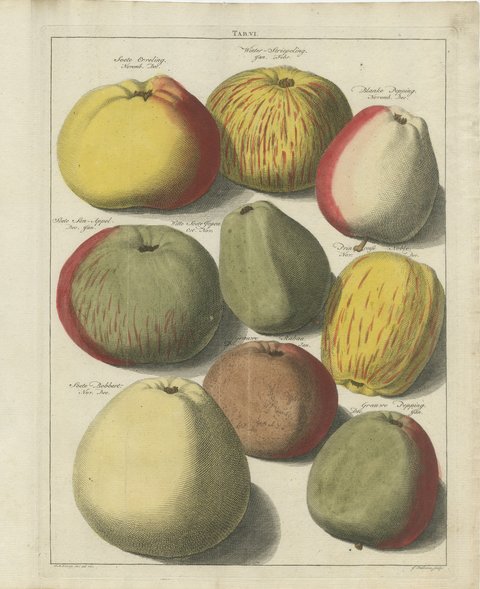
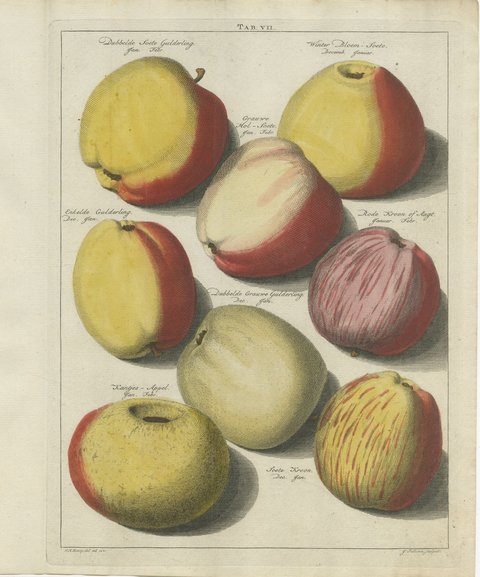
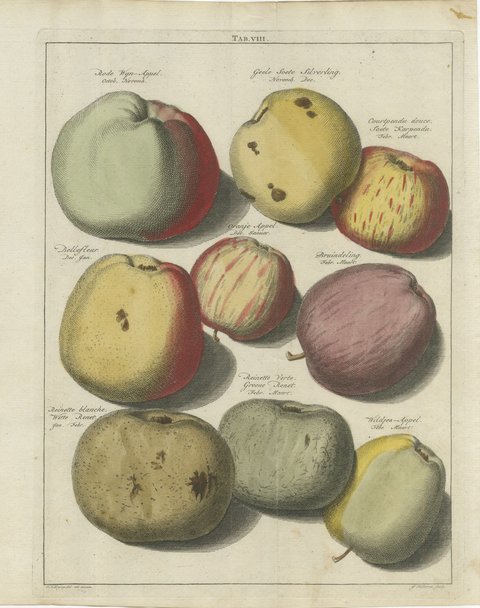
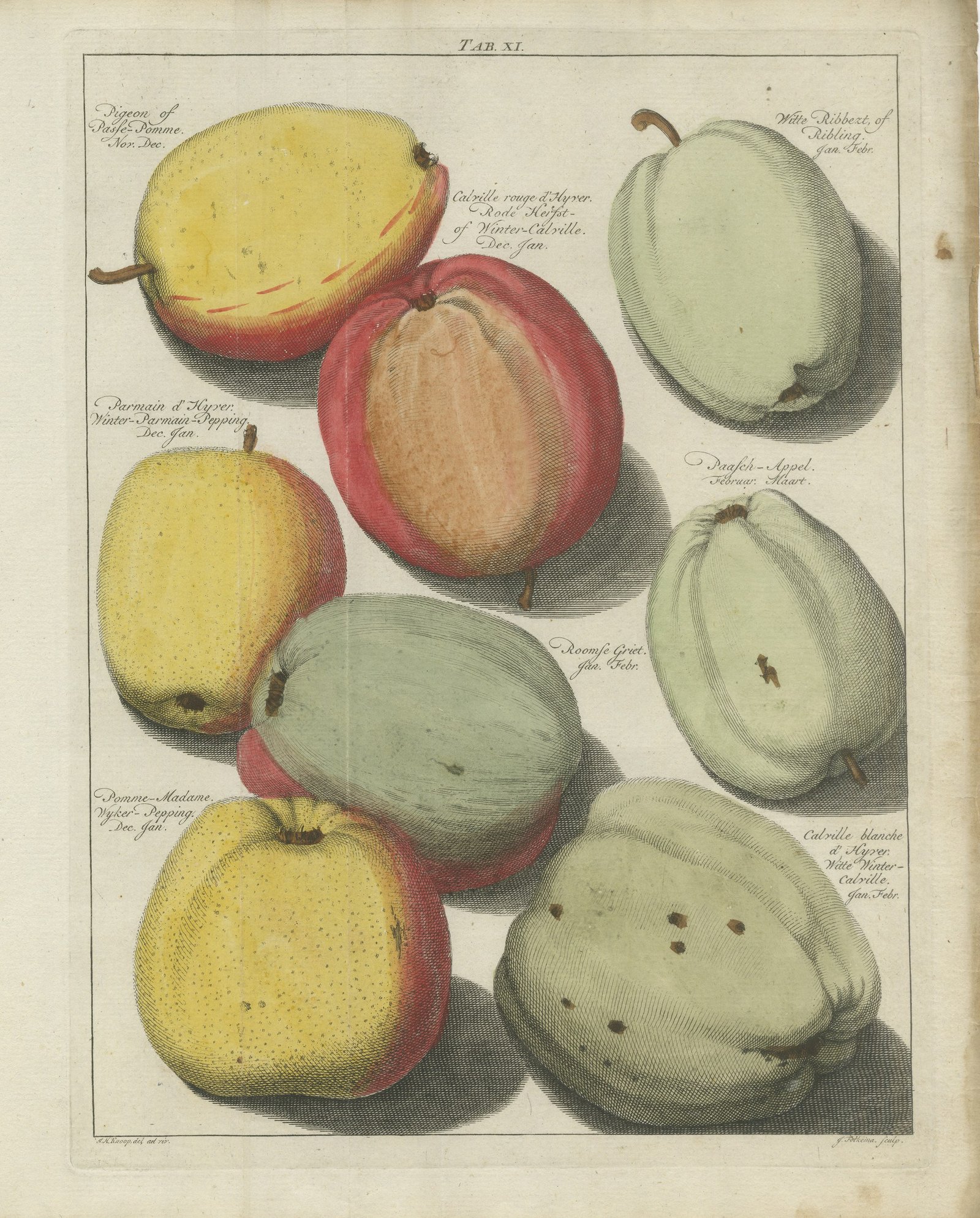
A hand-colored copper engraving of eight named apple varieties, each lettered with its name and the months of its ripening, and the great plate of the Calvilles: Calville rouge d'Hyver and Calville blanche d'Hyver stand here together with Pigeon of Passe-Pomme, Witte Ribbezt of Ribling, Parmain d'Hyver or Winter-Parmain-Pepping, Paasch-Appel, Roomse Griet and Pomme-Madame or Wyker-Pepping. The Calvilles are drawn to show their deeply ribbed, almost pentagonal shoulders, the feature that identifies them at a glance, while the Paasch-Appel, the Easter apple, is named for the season at which it was still good to eat. Original watercolor over the engraved hatching carries the crimson of the red Calville in built-up strokes and leaves the white one a pale yellow green, the brush crossing the outline here and there.
This sheet was published at Amsterdam and Dordrecht in 1790 by Allart, Holtrop, de Leeuw and Krap, in Johann Hermann Knoop's description and figures of the best sorts of apples and pears, introduced by Johannes Florentius Martinet. Knoop had charge of the Mariënburg garden at Leeuwarden and knew his fruit as a working gardener rather than a compiler, which is why his plates are still consulted on old Dutch varieties. Each is a copper engraving finished by hand in watercolor, the washes sitting over the engraved line and varying in strength from fruit to fruit as only hand color does.
The Calville is one of the oldest apple names still in use, and these two sorts of it, red and white, were the reference an eighteenth-century buyer needed before ordering grafts. Knoop's insistence on drawing from the living fruit rather than copying older books is what gives the ribbing and the coloring here their authority. The late ripening months lettered under the names, December through March, show how long a well-stored Dutch crop was expected to last. Hung in a kitchen or a pantry, or grouped with two or three of its companion plates along a dining room wall, the sheet carries both decorative warmth and a real pomological record.
Light uneven toning, browner towards the edges. Marked handling soiling along the right and top edges. Scattered foxing in the margin. All four corners complete.
This is an original antique plate, not a modern reproduction. This item is sold unframed.