Close-ups
Framed and on the wall


Frame and rooms are illustrations of how the print could look; the description says what is included.
Antique South American Horned Frog Engraving, Bertuch, c. 1807
£265 ($350, €310)
Period original, not a reproduction.
Shipped from the Netherlands, flat, insured and tracked, worldwide. Returns accepted within 14 days.
- Date
- 1807
- Size
- 11.8 × 9.4 in (30 × 24 cm)
- Condition
- Good. Wear consistent with age and use. Good antique condition with light overall age-related toning, scattered small spots and minor marks and imperfections consistent with its age. The original hand coloring remains particularly attractive, with green, violet, ochre and reddish tones.
- Period
- Early 19th century
- Artist or book
- Bertuch
- Section
- Reptiles and amphibians
- Reference
- f_51465702
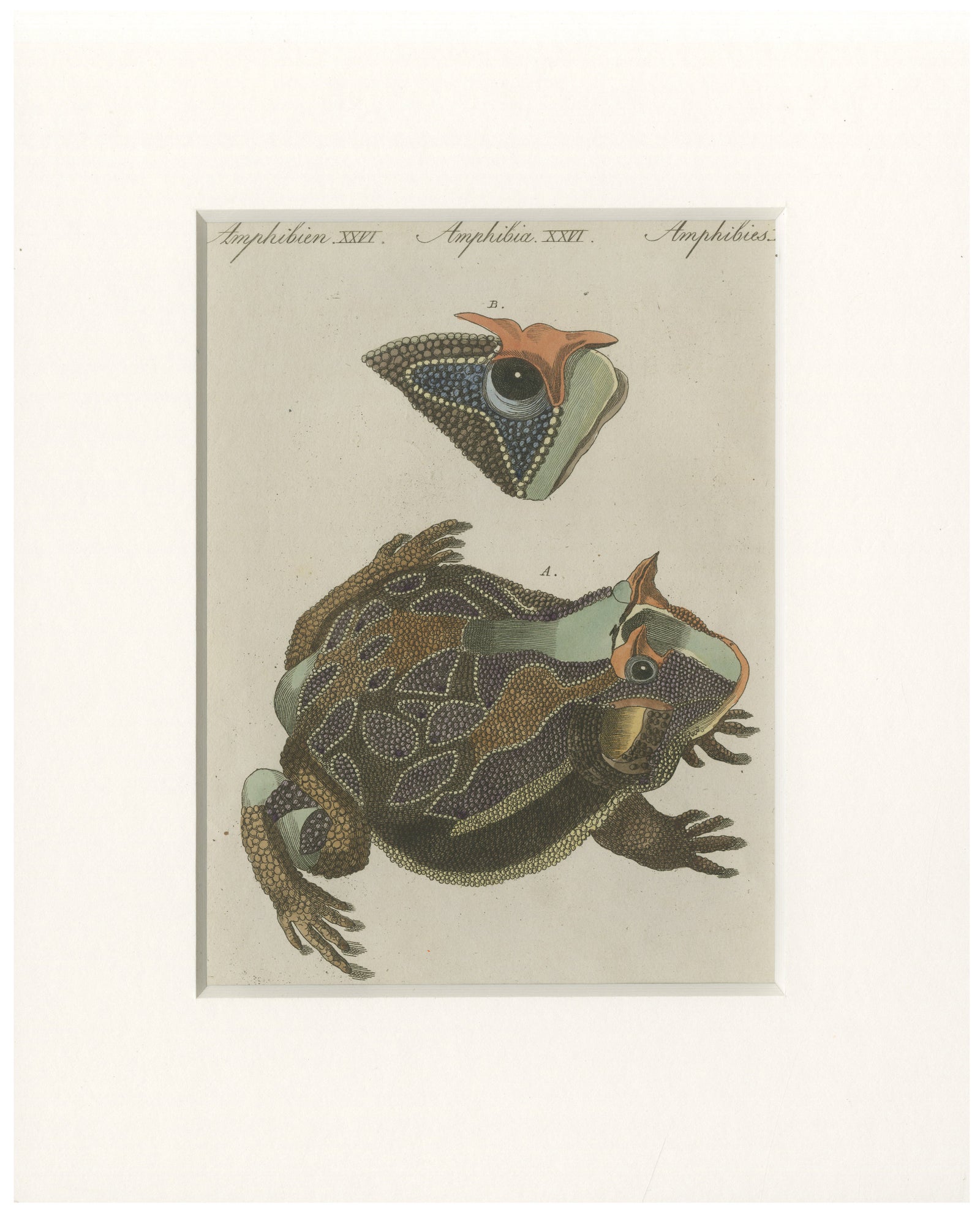
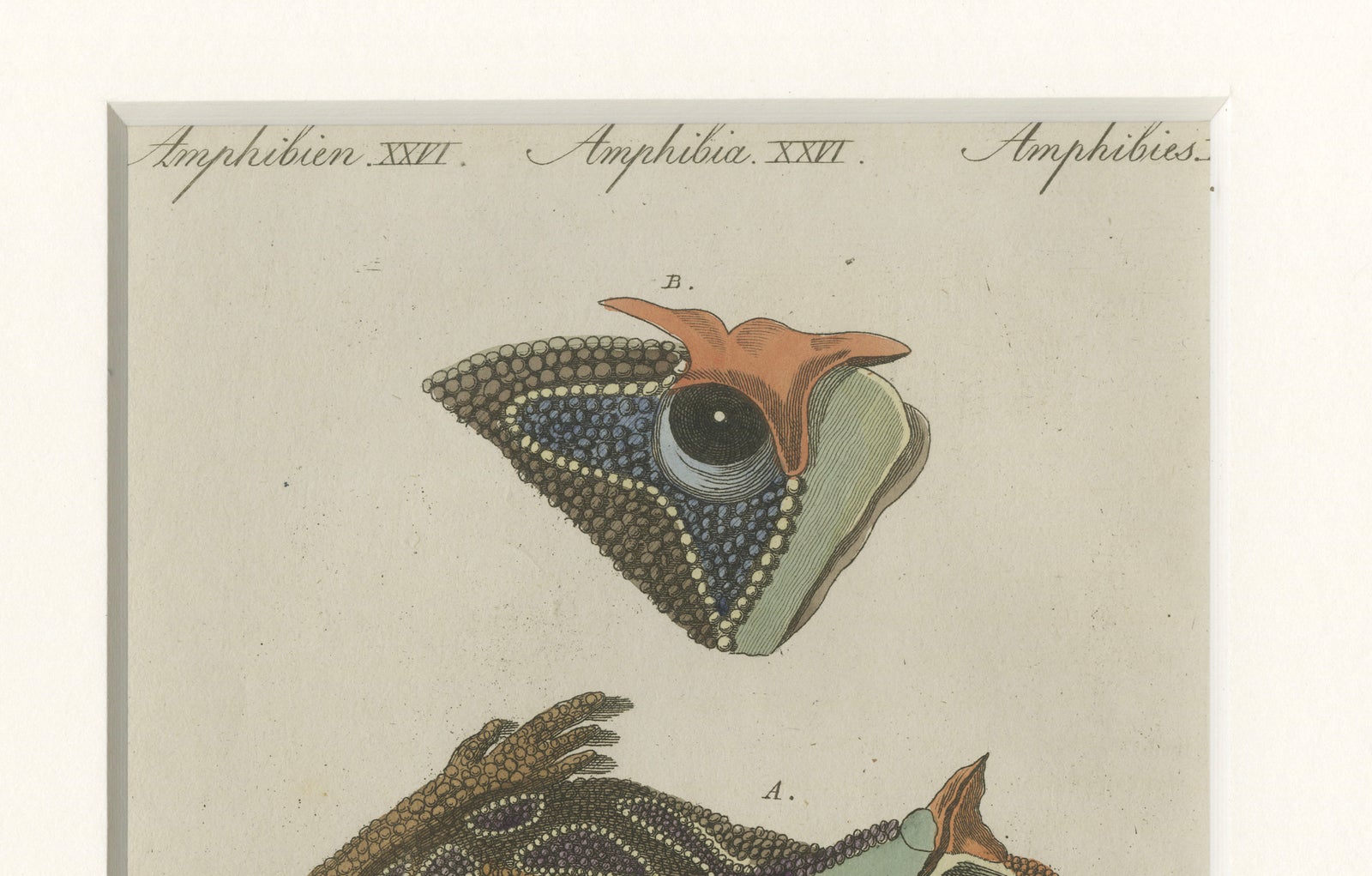
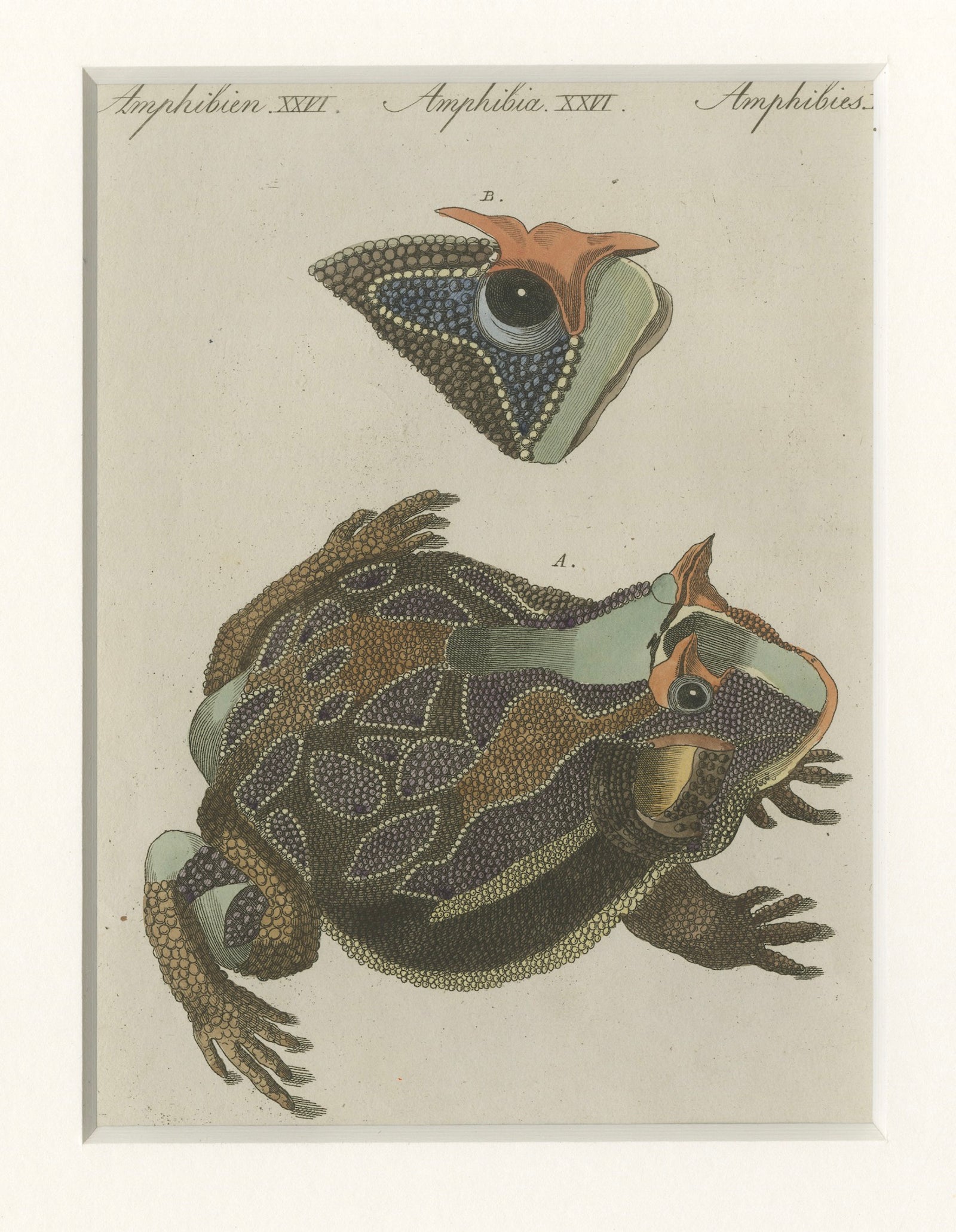
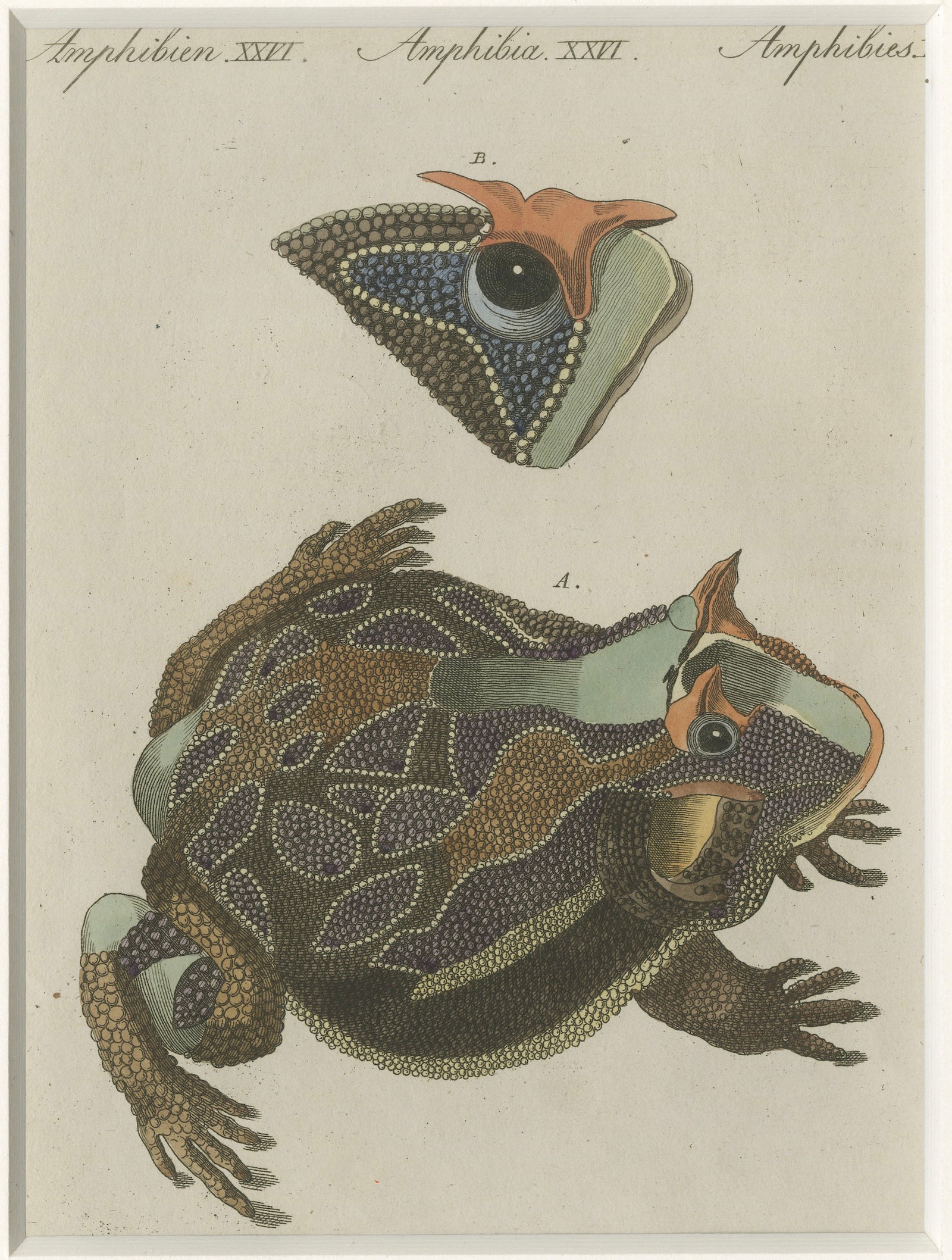
The horned frog of South America, an original hand-colored copper engraving from Friedrich Justin Bertuch's Bilderbuch für Kinder, published in Weimar around 1807. The plate heading reads "Amphibien XXVI", "Amphibia XXVI" and "Amphibies XXVI".
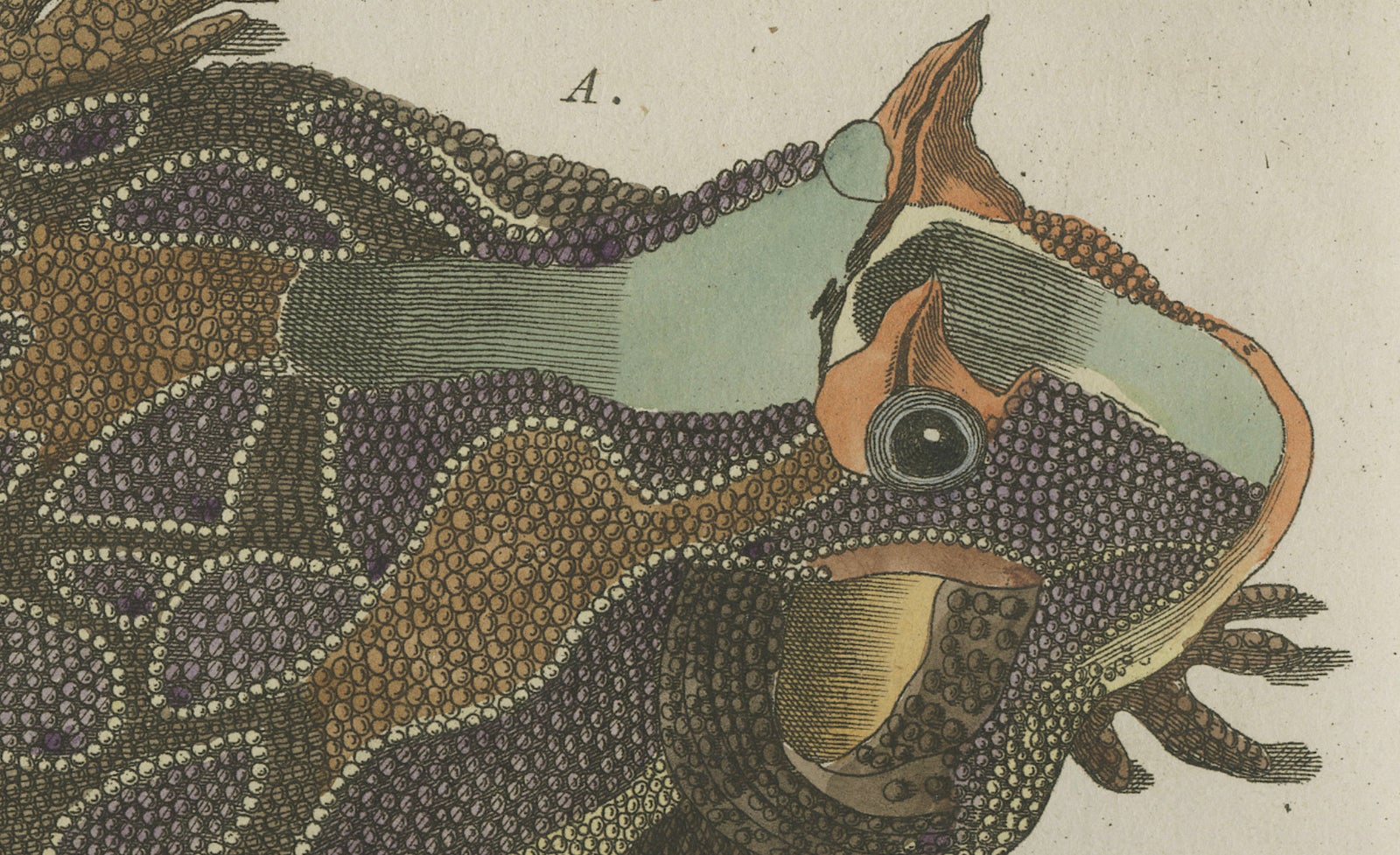
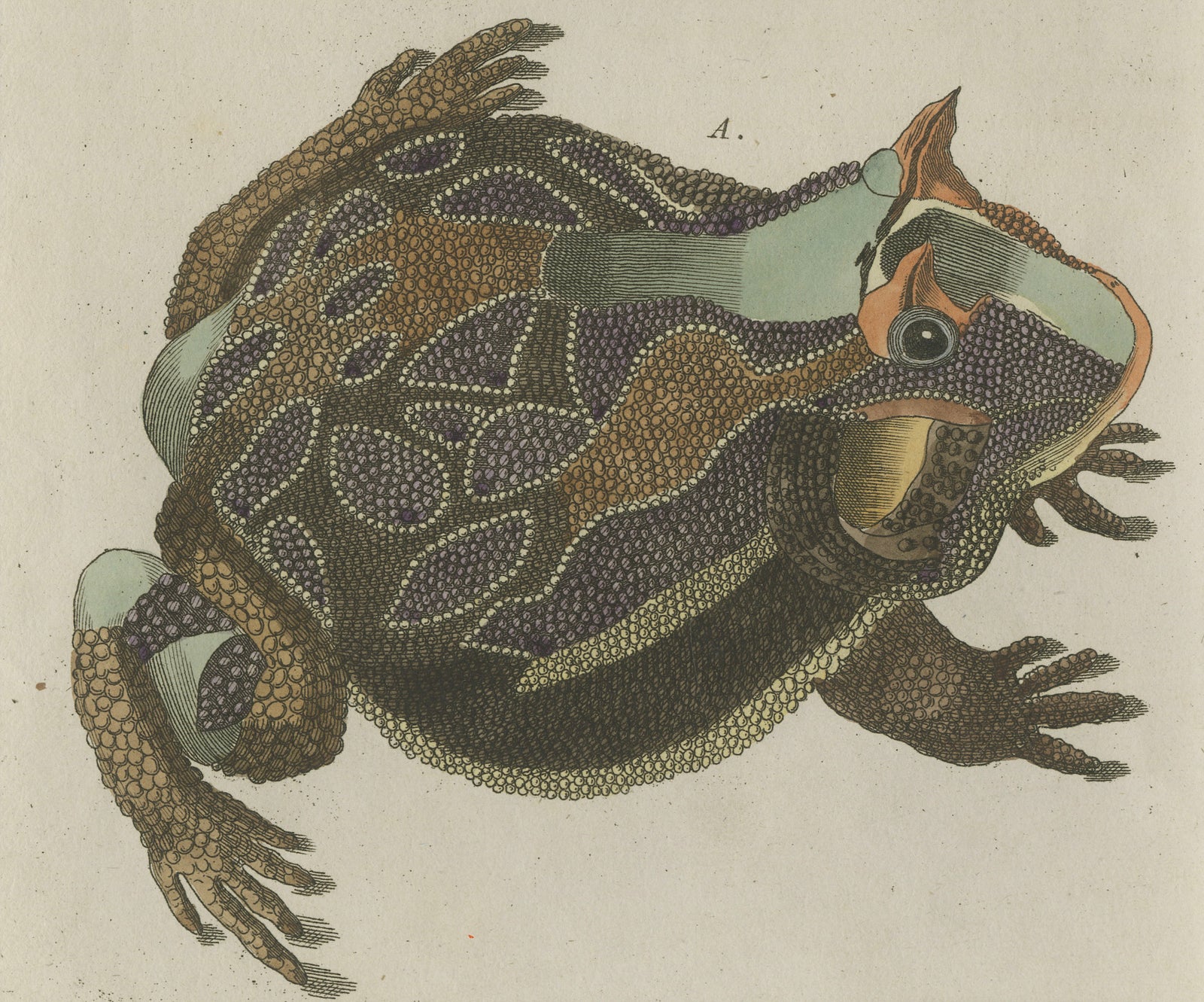
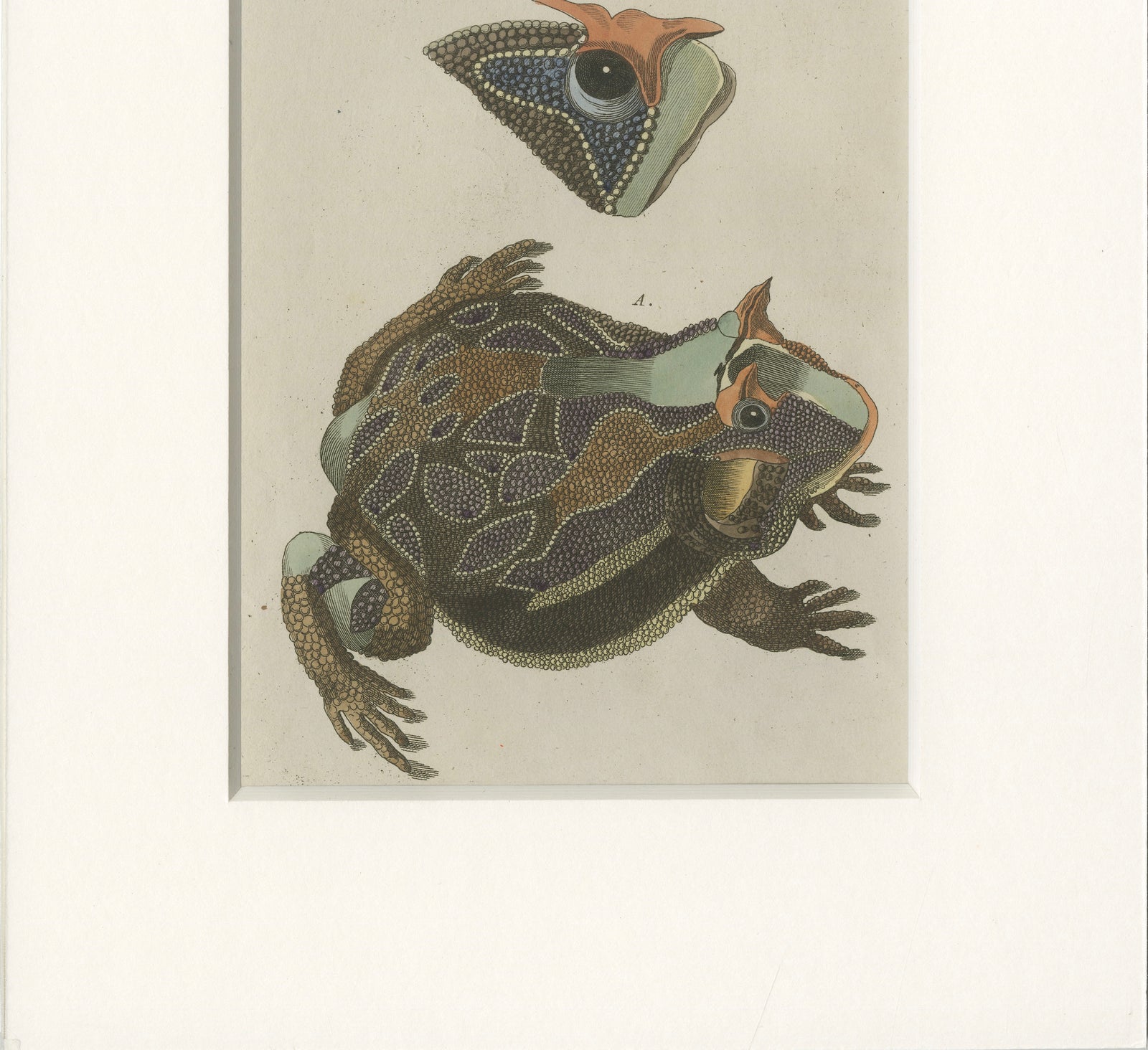
The animal fills the lower part of the sheet in a large, nearly overhead view, marked A: a broad, heavy-bodied frog with a yellowish-brown body covered in pointed warts and with violet-blue markings edged in white, pale green limbs and an orange, horn-like projection over each eye. Above it, marked B, a separate study shows the head at natural size, with its large dark eye, orange eyelid horn and dotted skin. Bertuch calls the animal "Die gehörnte Kröte", the horned toad, and records it from South America, including Brazil and the island of Santa Catarina, under the name Rana cornuta.
His text notes that earlier European pictures had been drawn from faded specimens kept in alcohol, and that this one was based on a study made from life by the naturalist Wilhelm Gottlieb Tilesius (1769 to 1857).