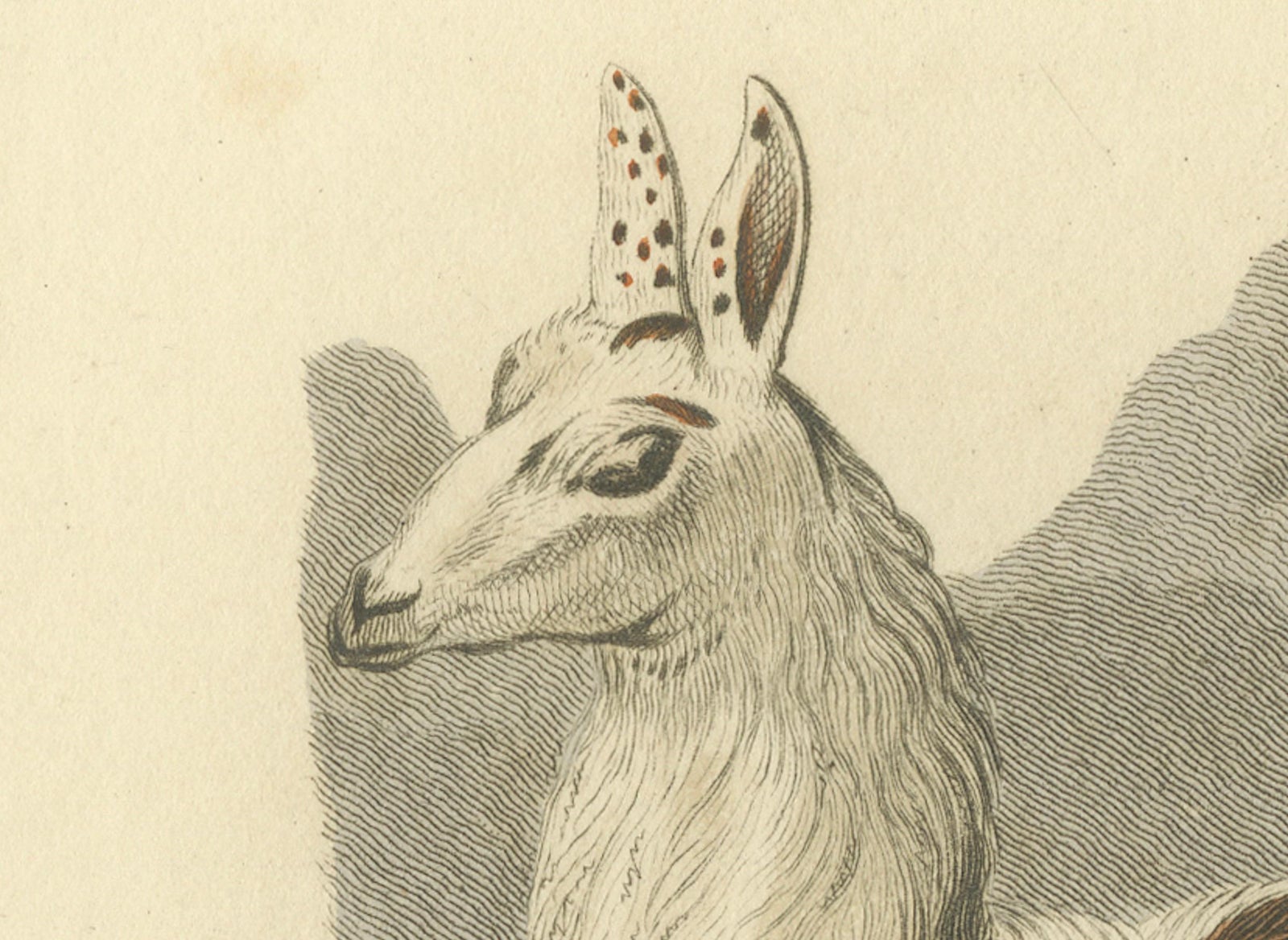
Close-ups
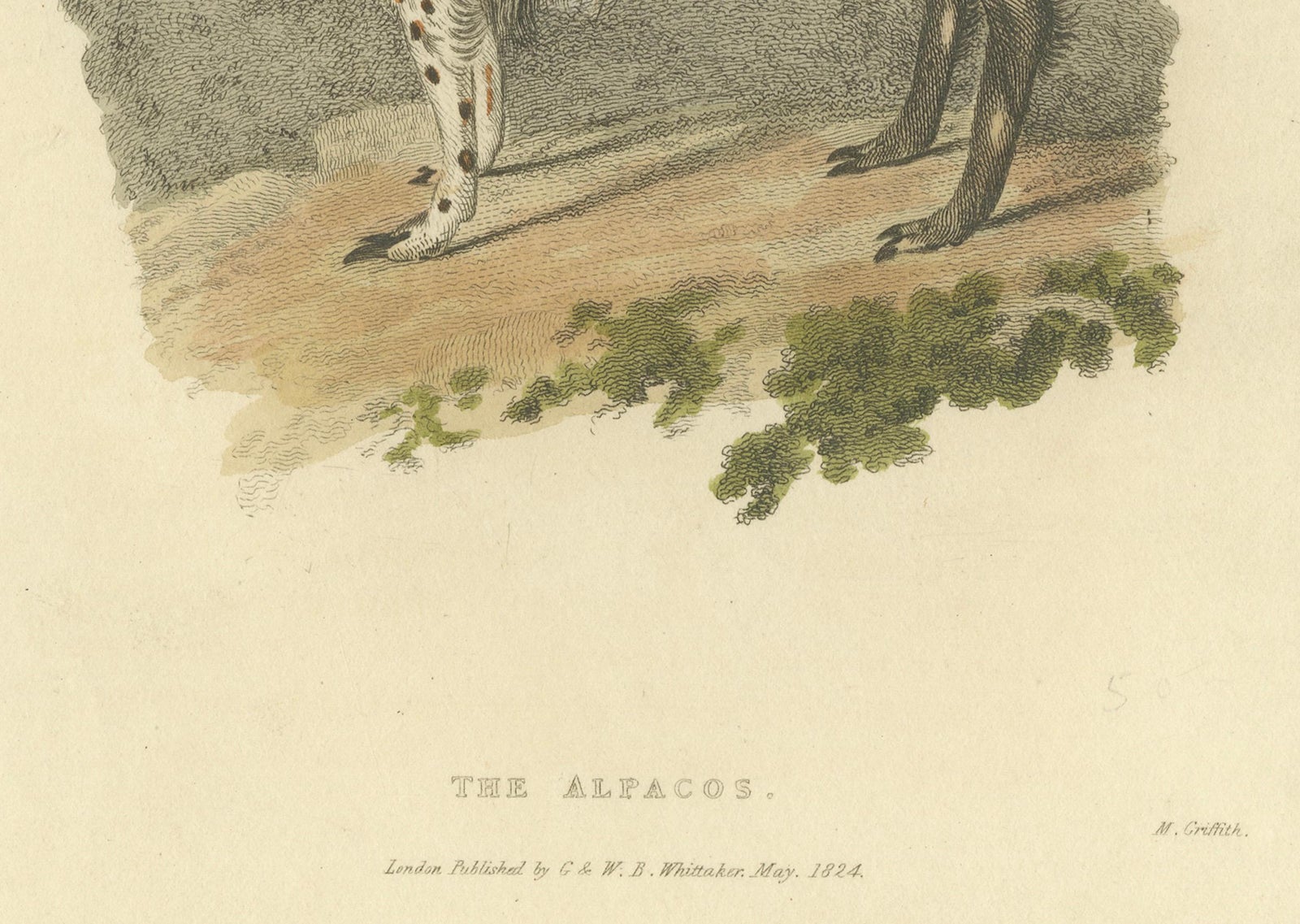
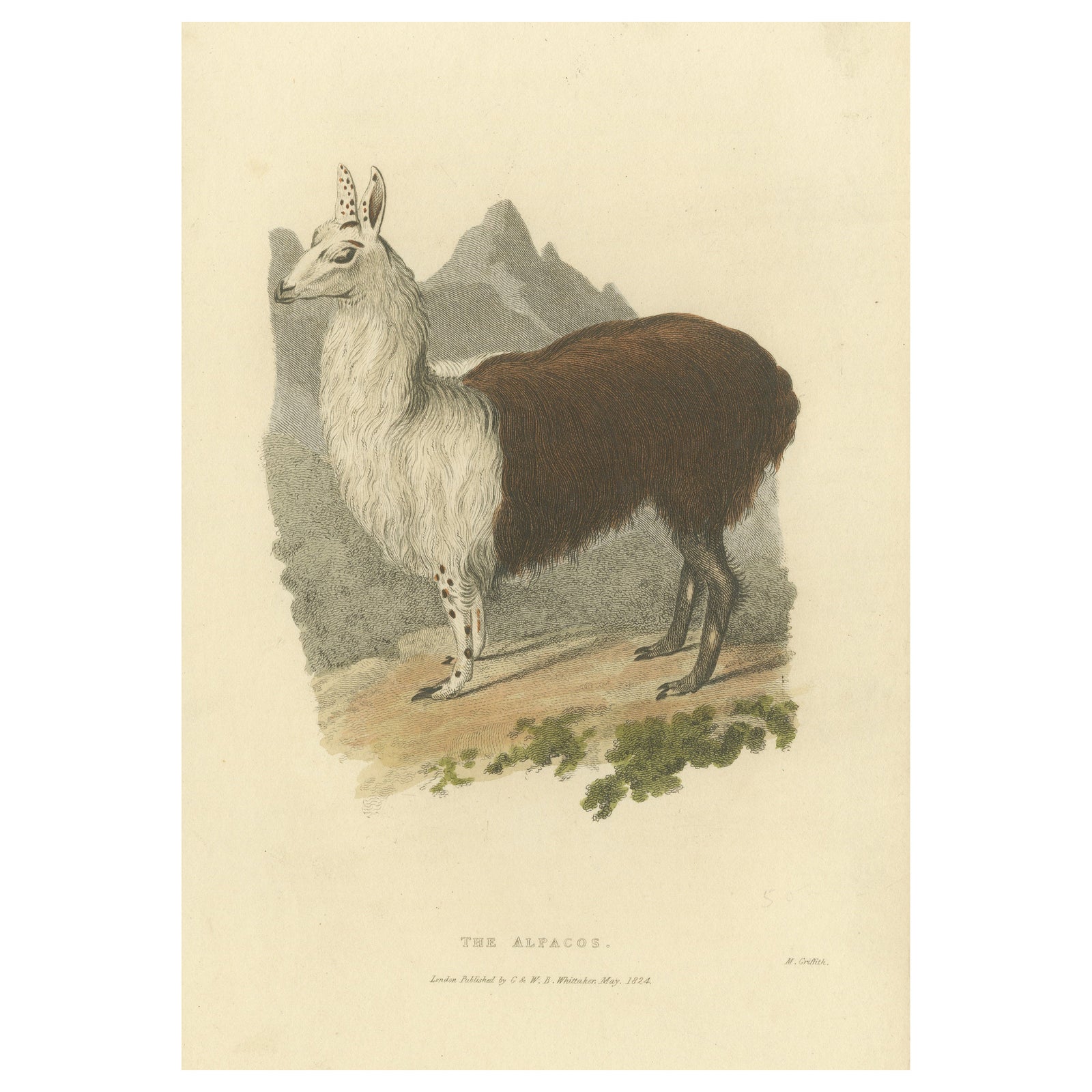
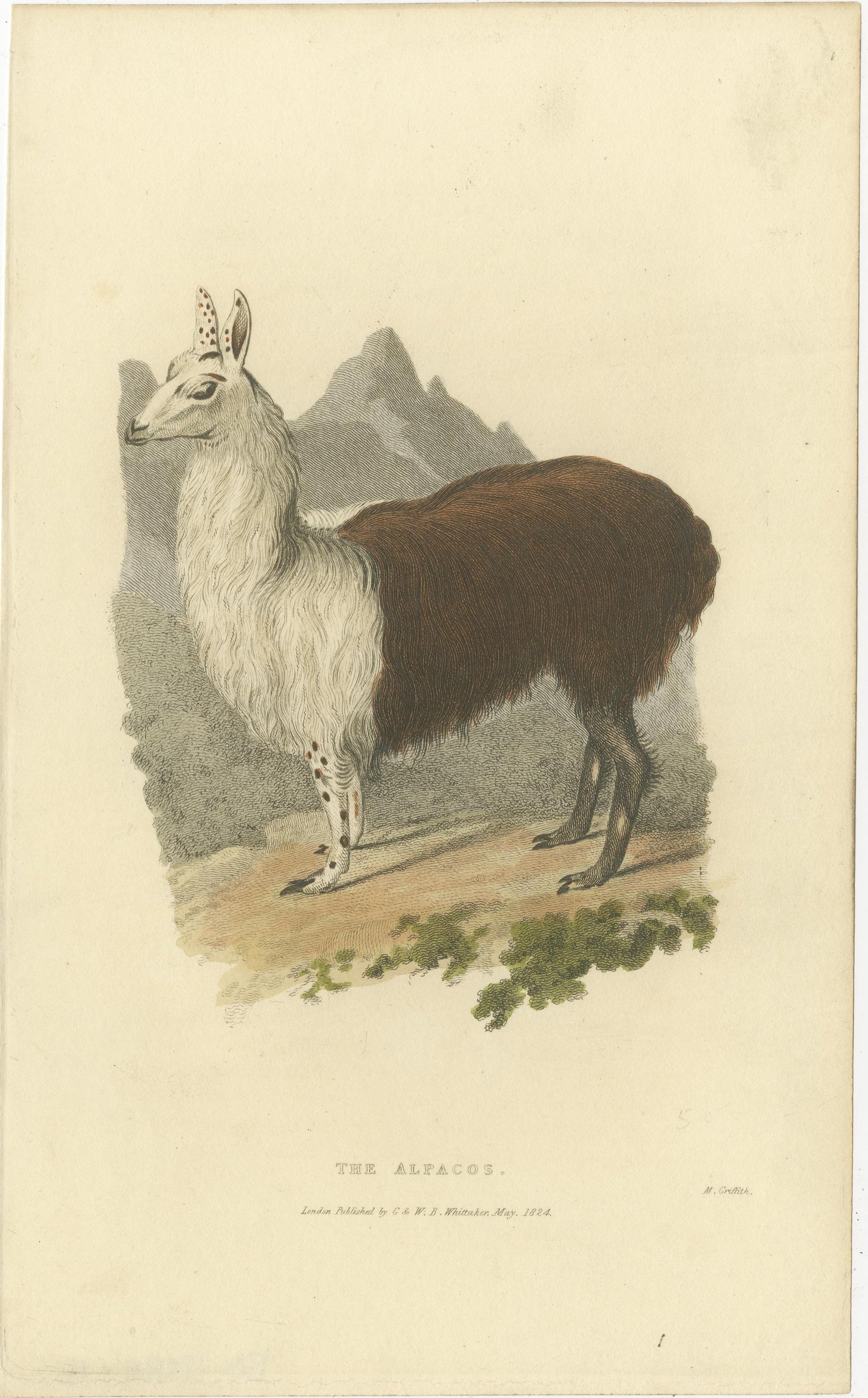
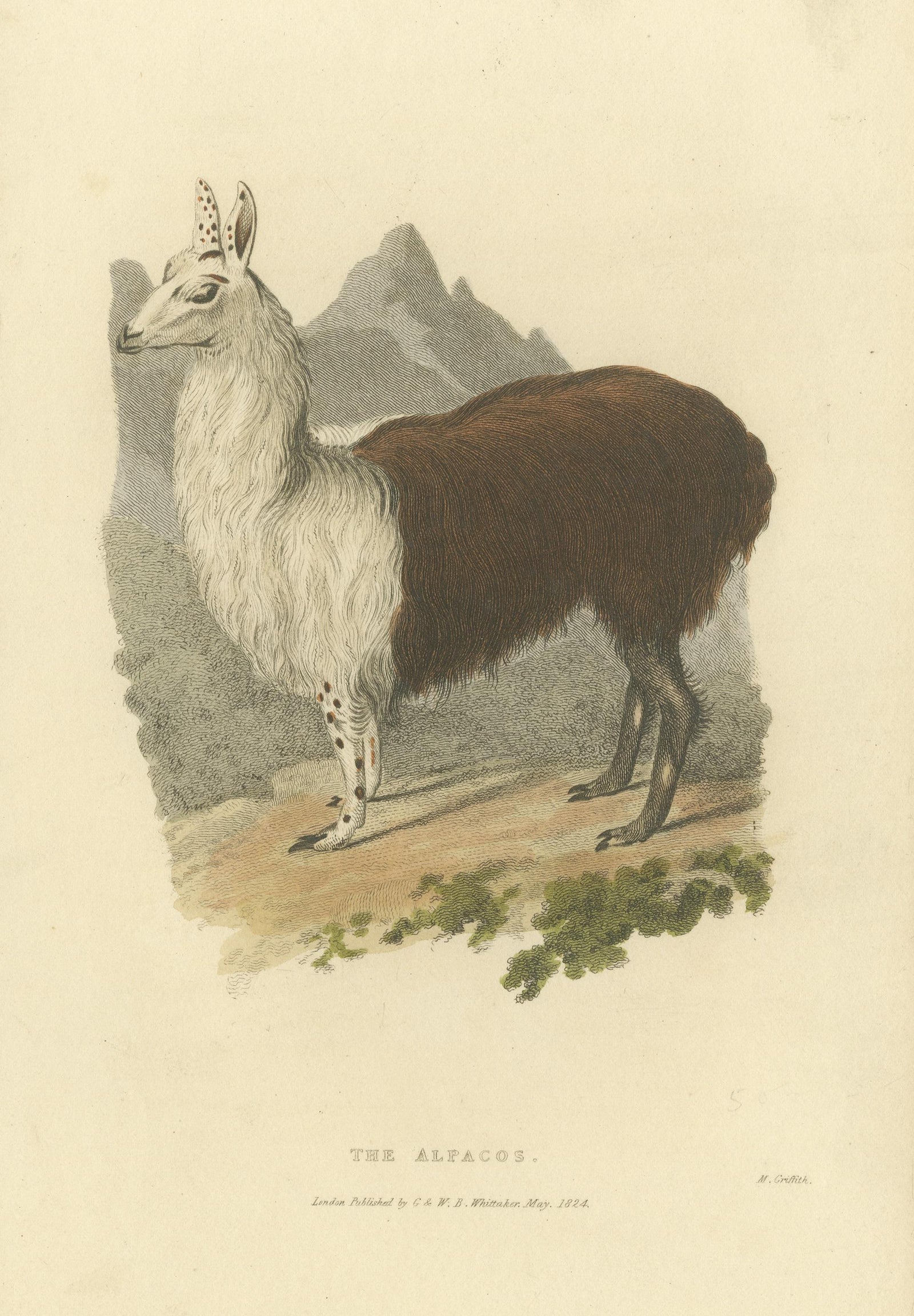
Antique Print with Hand Coloring of an Alpaca
€260 ($290, £220, €260)
Period original, not a reproduction.
Shipped from the Netherlands, flat, insured and tracked, worldwide. Returns accepted within 14 days.
- Date
- Not stated
- Size
- 9.6 × 5.8 in (24.3 × 14.7 cm)
- Condition
- Good. General age-related toning. Minor wear and soiling. Blank verso. Please study image carefully.
- Section
- Mammals
- Reference
- f_38932122
- Colour
- Hand coloured
What the condition grades mean
- Excellent
- Bright and clean, with no faults worth mentioning.
- Very good
- Only light signs of age, such as faint toning.
- Good
- Normal signs of age for a sheet of this period: toning, some foxing, small marks or neat old repairs.
- Fair
- Clear faults such as staining, tears or repairs, priced to match.
Every fault we see is written in the condition note, and the whole sheet is shown uncropped in the photos.
The print titled 'The Alpocos' is a historical depiction of an alpaca, created by the artist Charles Hamilton Smith. It was published by G.B. Whittaker around 1824, and consistent with the time when European audiences were becoming increasingly interested in the natural world, including species from the New World.
Charles Hamilton Smith was a noted military officer, naturalist, and illustrator whose detailed and accurate depictions of animals made a significant contribution to natural history during the early 19th century. His work was highly regarded for bringing scientific illustration to a wider audience.
G.B. Whittaker was a London-based publisher who produced texts and illustrations covering a wide range of subjects, including natural history. Publishing these detailed illustrations helped disseminate knowledge and satisfy public curiosity about animals from around the globe.
The alpaca, scientifically referred to as Lama pacos, is a species of South American camelid. It is closely related to the llama, guanaco, and vicuña, which are all native to the Andes mountain range. Alpacas have been domesticated for thousands of years and are valued for their fiber, which is used to make various textile products. They are smaller than llamas and have a finer fleece, which comes in a range of colors from white and light fawn to browns, grays, and blacks.
Alpacas have a gentle nature and a curious demeanor, making them popular not just in their native South America but also around the world where they are bred for their fiber. They play a crucial role in the culture and economy of the Andean peoples. The creation of such prints would have served to document the appearance and characteristics of the alpaca for a 19th-century audience that might never see one in person, as well as to support the classification and study of different species within the broader scientific community.