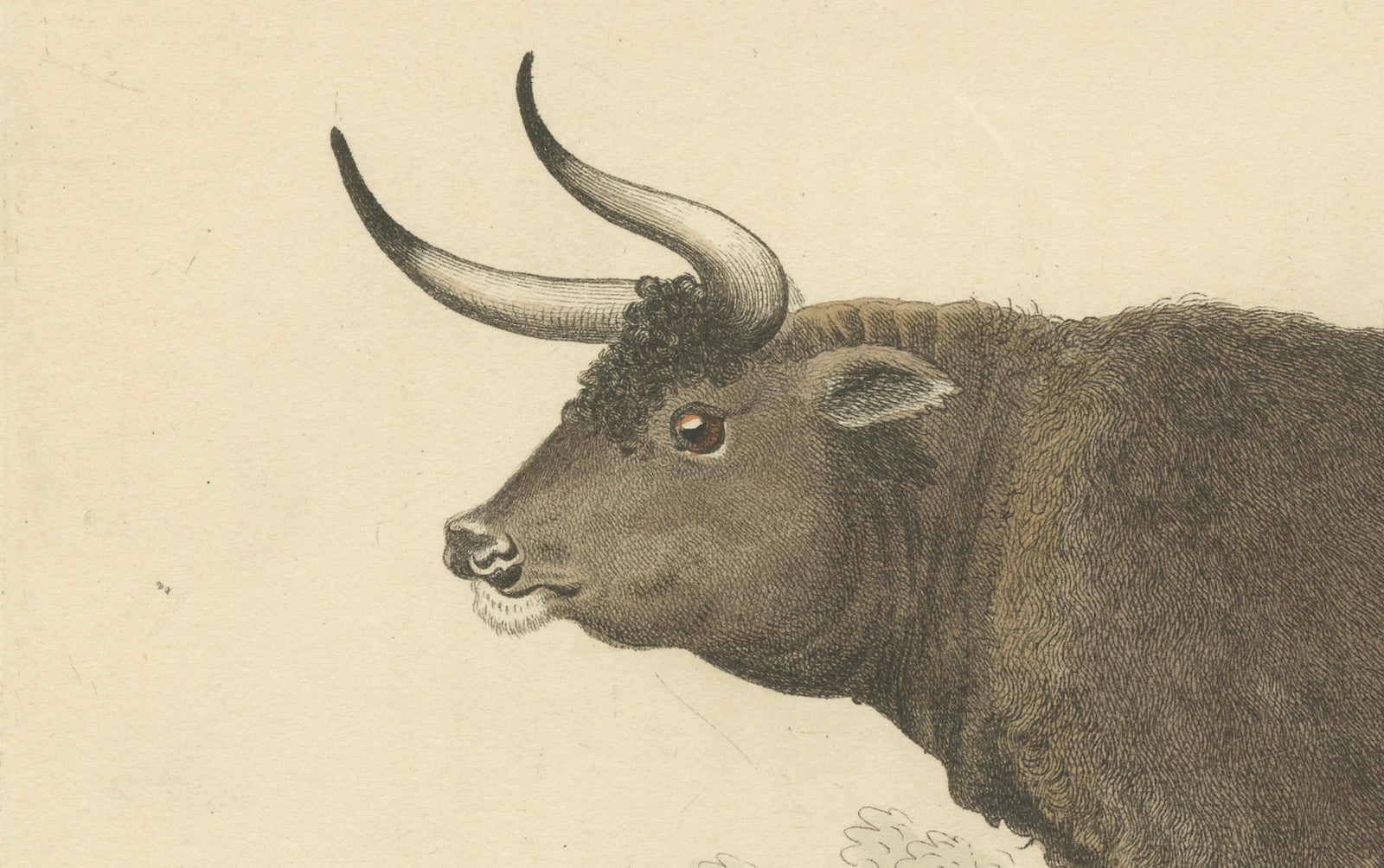
Close-ups
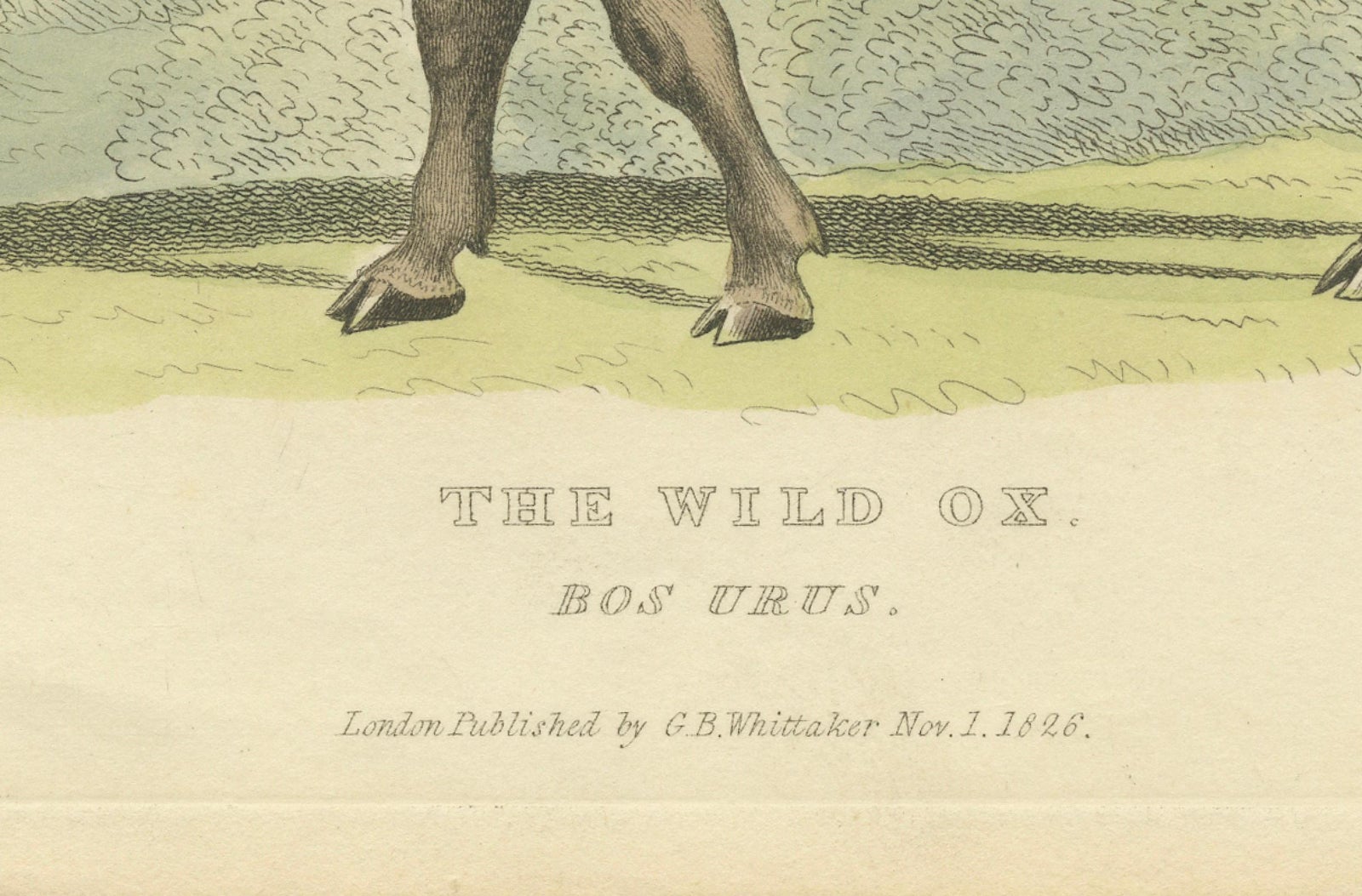
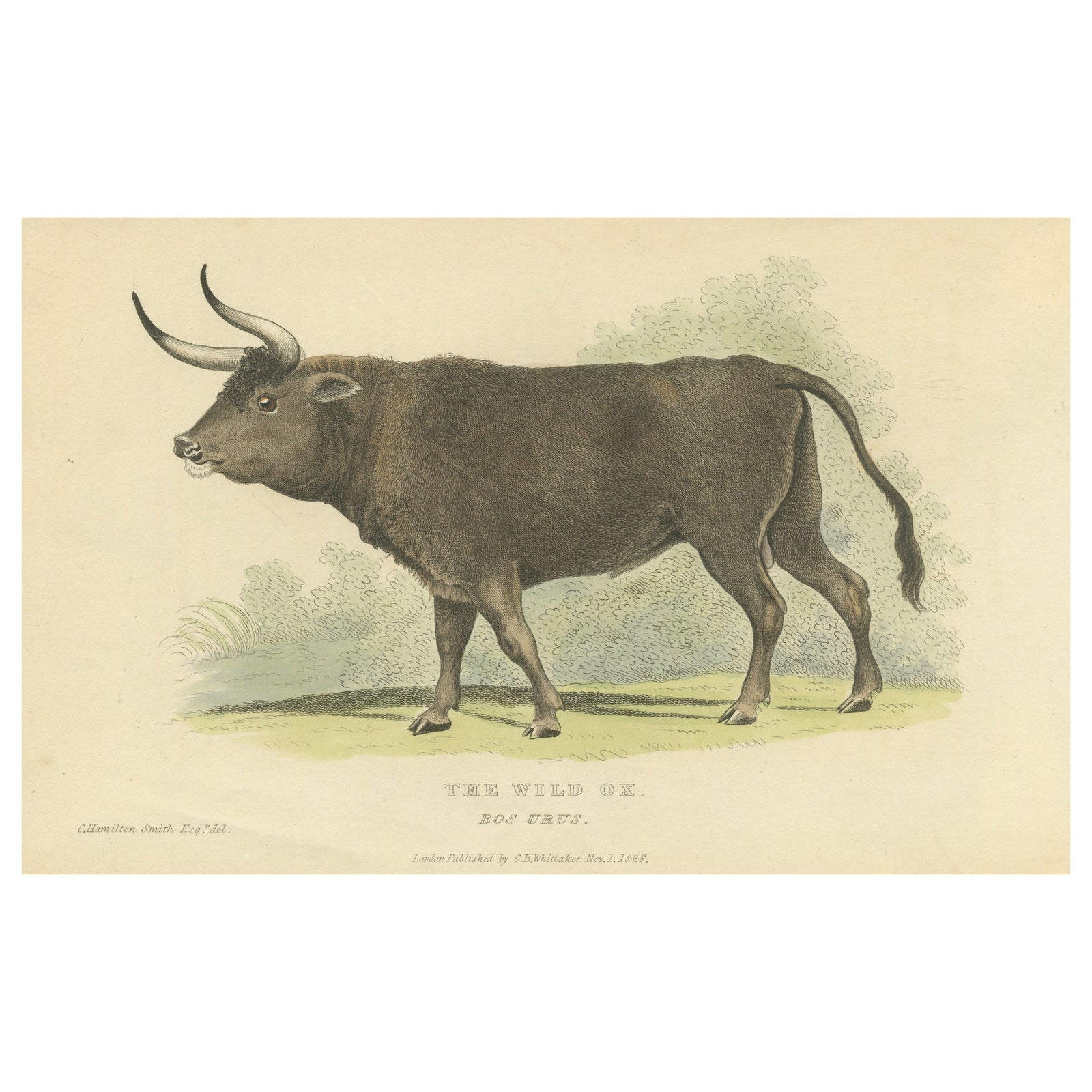
Antique Print with Hand Coloring of a Wild Ox
£220 ($290, €260)
Period original, not a reproduction.
Shipped from the Netherlands, flat, insured and tracked, worldwide. Returns accepted within 14 days.
- Date
- Not stated
- Size
- 5.8 × 9.6 in (14.7 × 24.3 cm)
- Condition
- Good. General age-related toning. Minor wear and soiling. Blank verso. Please study image carefully.
- Section
- Mammals
- Reference
- f_38930952
- Colour
- Hand coloured
What the condition grades mean
- Excellent
- Bright and clean, with no faults worth mentioning.
- Very good
- Only light signs of age, such as faint toning.
- Good
- Normal signs of age for a sheet of this period: toning, some foxing, small marks or neat old repairs.
- Fair
- Clear faults such as staining, tears or repairs, priced to match.
Every fault we see is written in the condition note, and the whole sheet is shown uncropped in the photos.
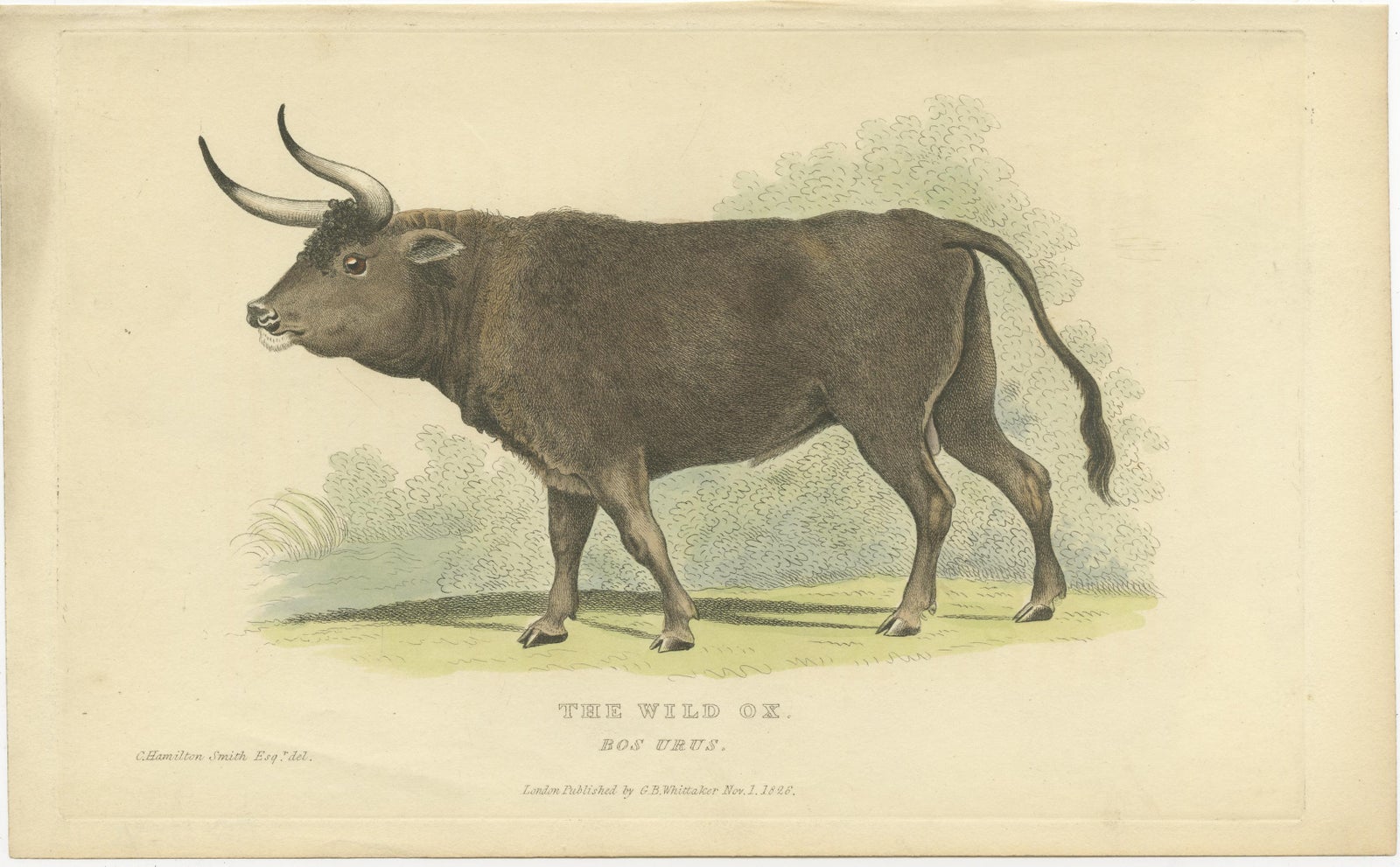
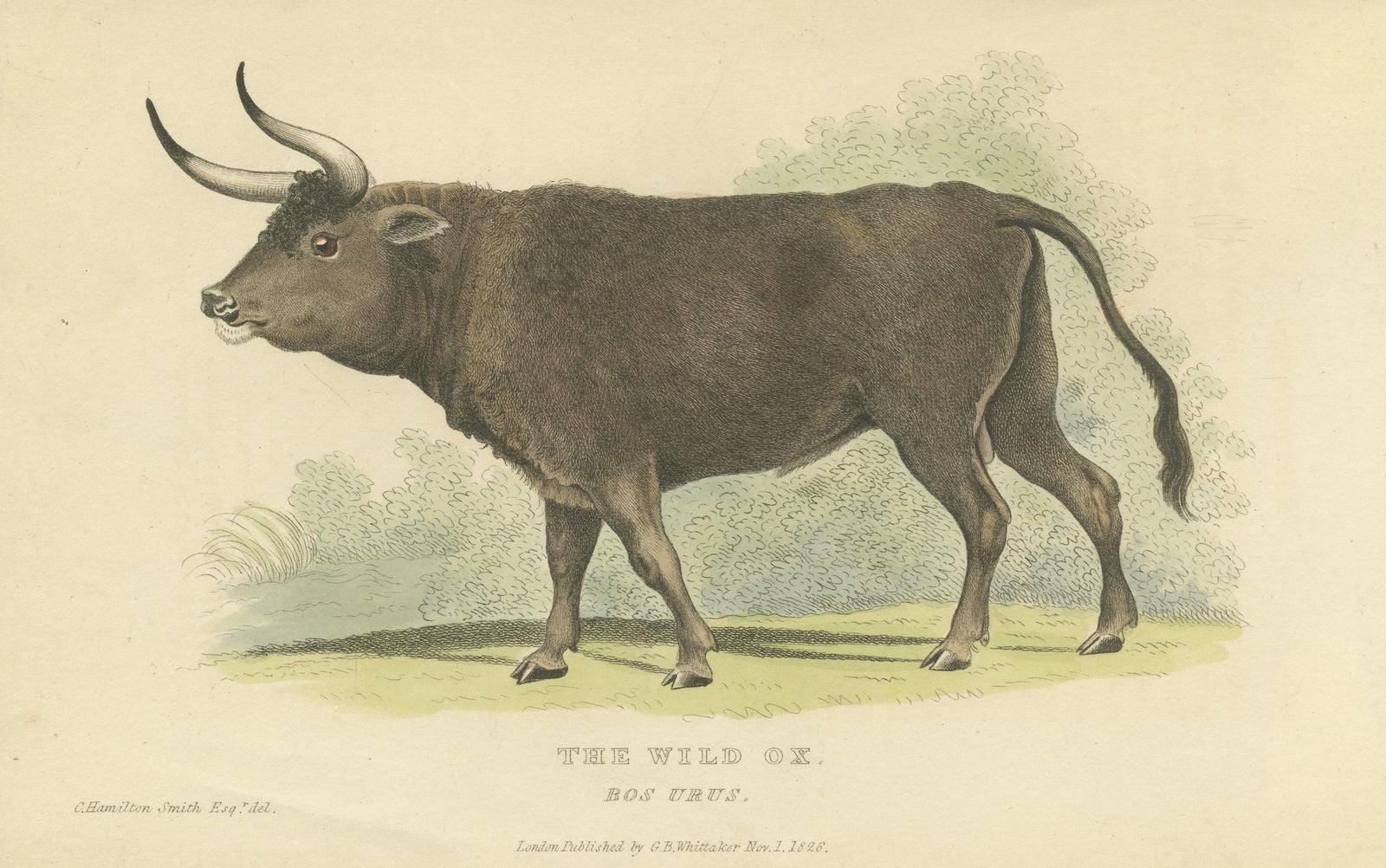
The image is an original historical print of a wild ox, titled 'The Wild Ox, Bos Urus', with hand coloring. The print was published by G.B. Whittaker based on an illustration by Charles Hamilton Smith around 1826. The animal depicted is known as the aurochs, the scientific name being Bos primigenius. This species of cattle is now extinct and is considered to be the ancestor of modern domestic cattle.
Charles Hamilton Smith was a military officer, naturalist, and illustrator. His works often included illustrations of animals and he was known for his attention to detail and accuracy. G.B. Whittaker was a publisher active in London during the early 19th century, known for publishing a variety of works, including those related to natural history.
The aurochs were once widespread across Europe, Asia, and North Africa but became extinct in the 17th century due to habitat loss, overhunting, and competition with domesticated breeds. They were large wild bovines and played a significant role in human history, being depicted in ancient cave paintings and mentioned in various historical texts. Conservation efforts such as breeding programs are attempting to recreate animals that closely resemble the physical characteristics of the aurochs through back-breeding from modern cattle that have retained some aurochs-like features.