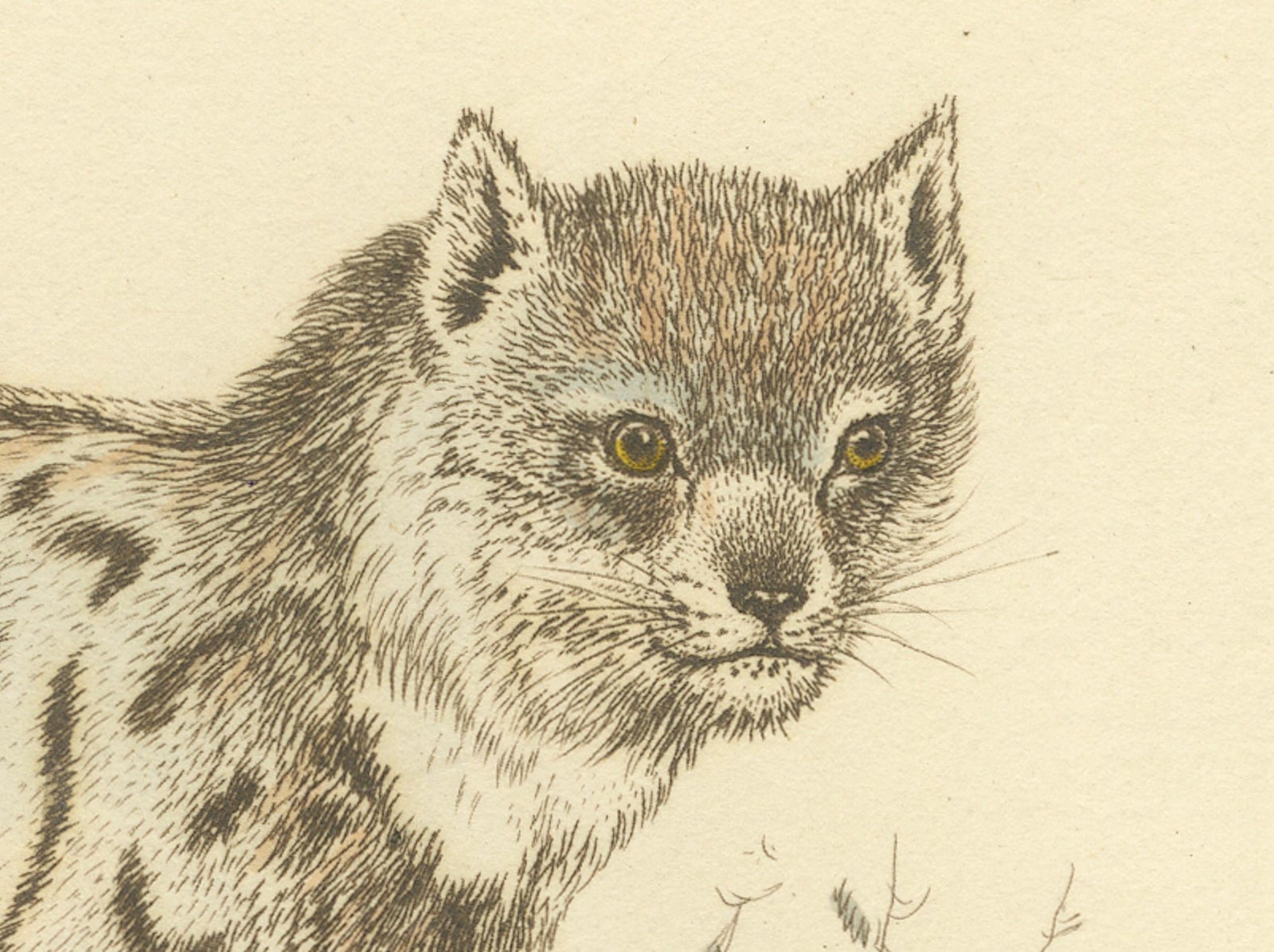
Close-ups
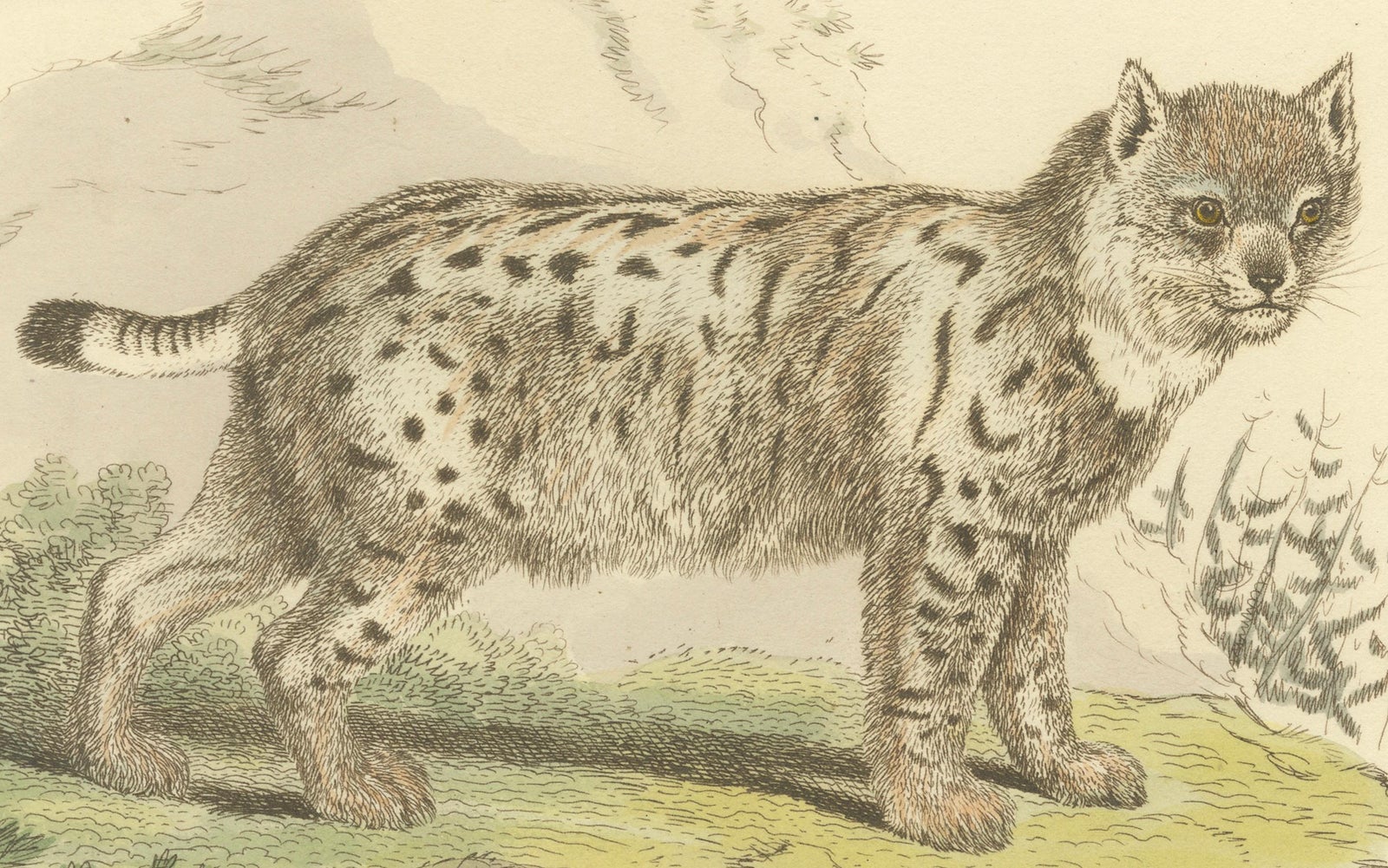
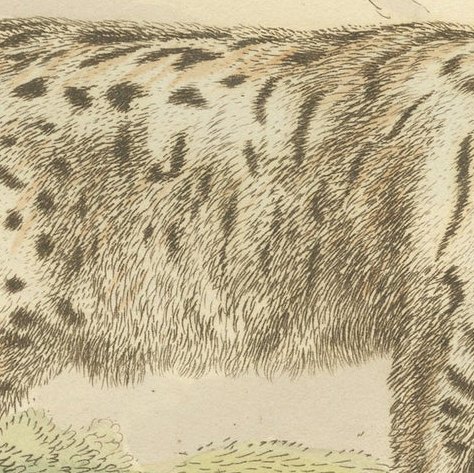
Framed and on the wall
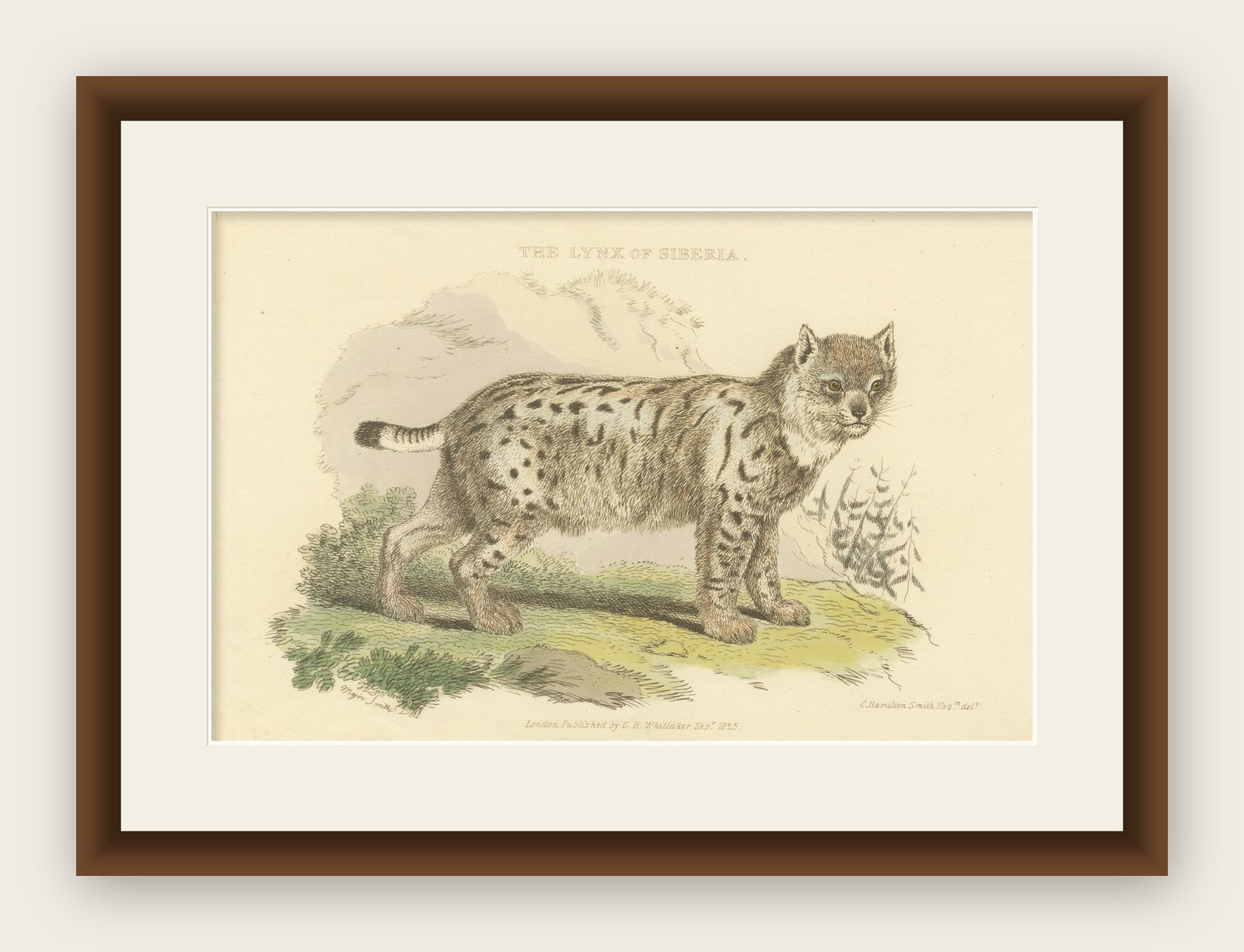


Frame and rooms are illustrations of how the print could look; the description says what is included.
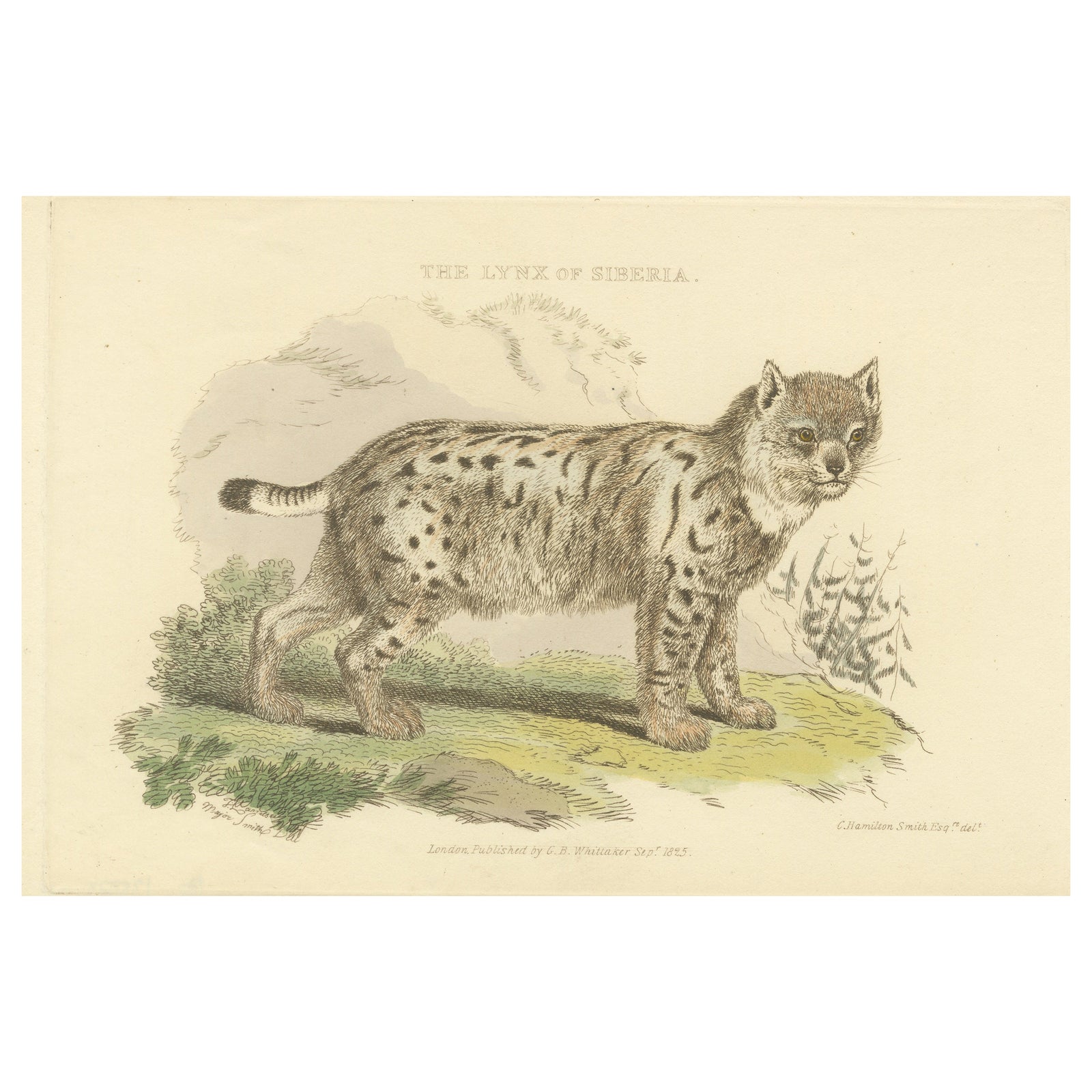
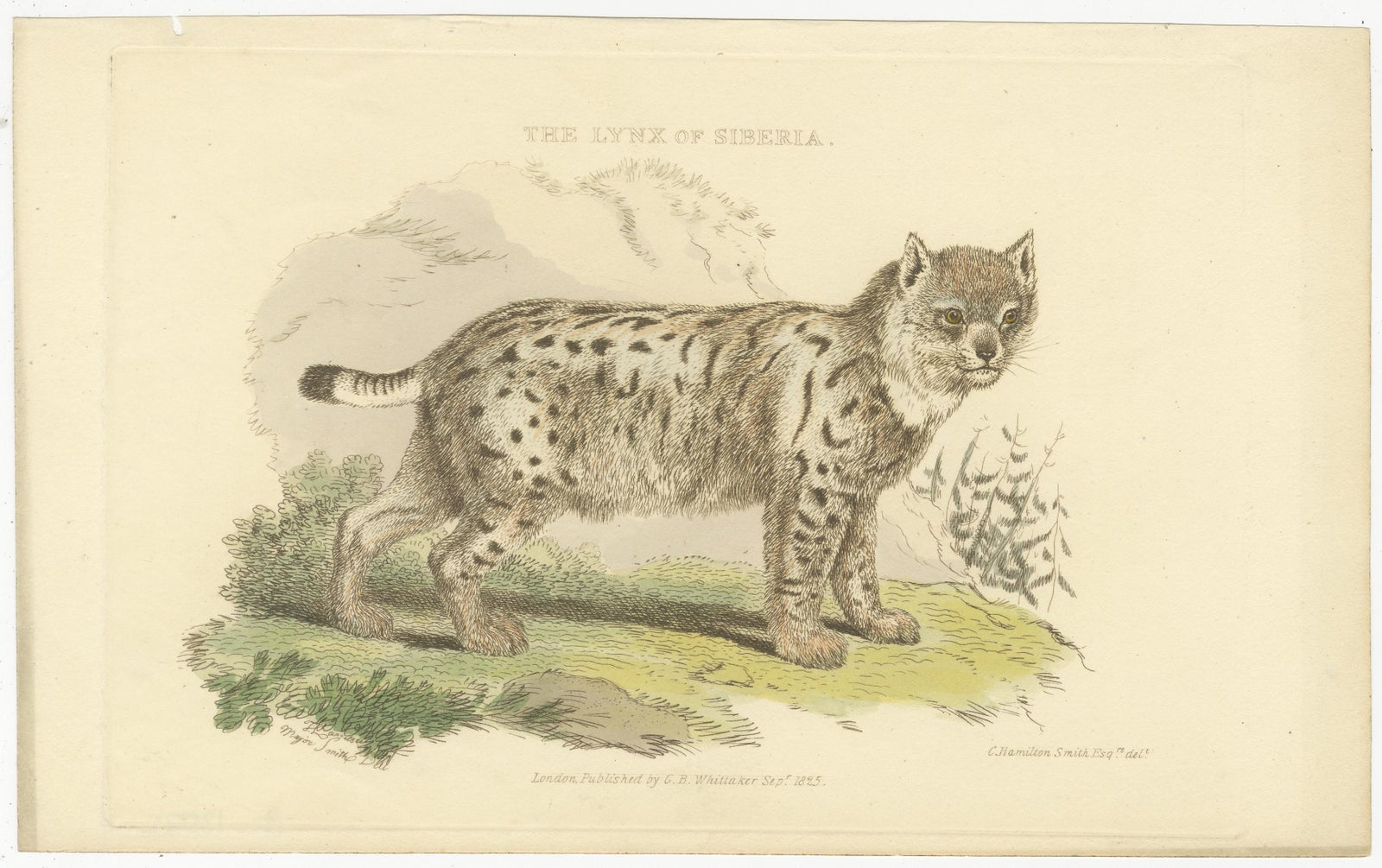
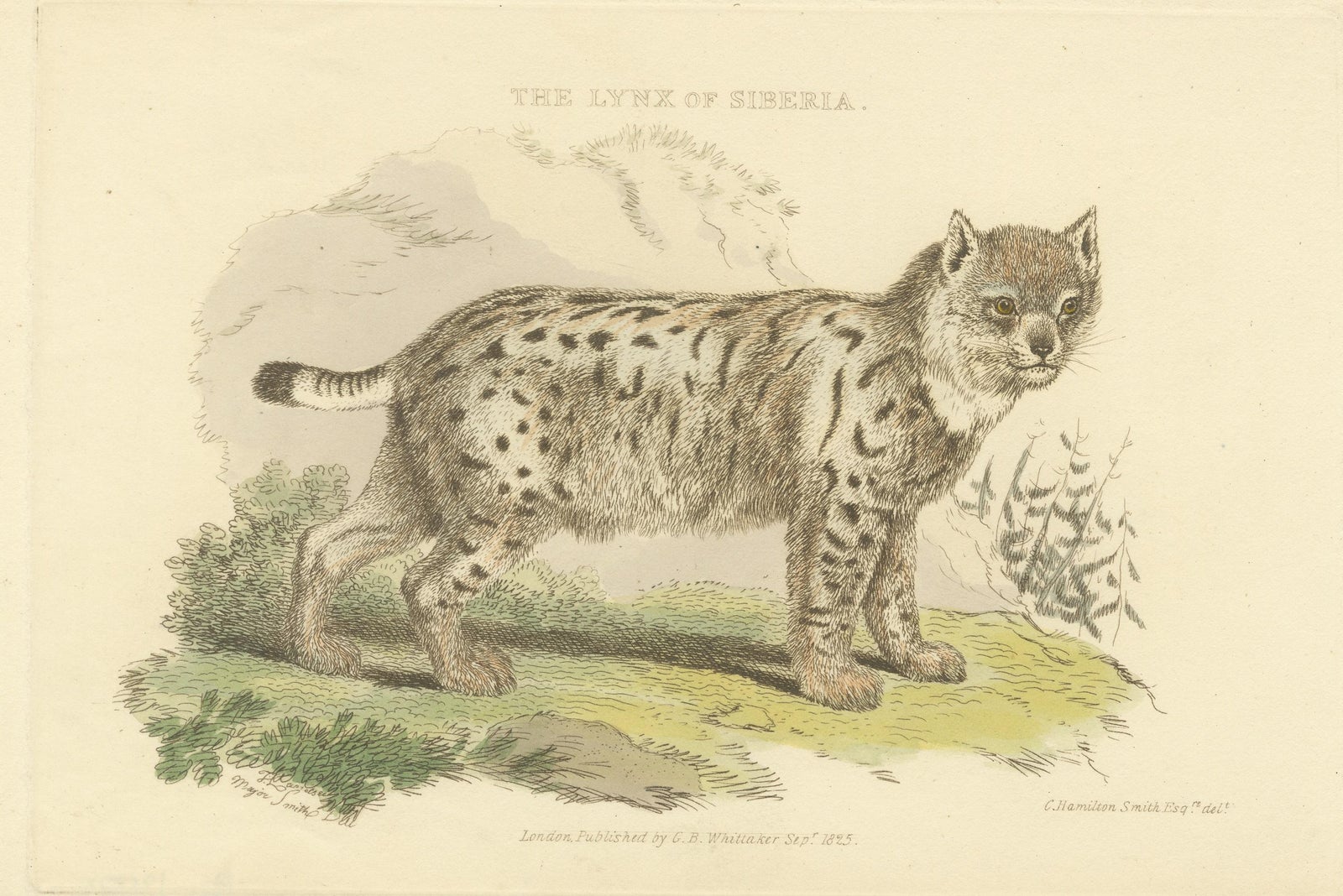
Antique Print with Hand Coloring of a Siberian Lynx
£220 ($290, €260)
Period original, not a reproduction.
Shipped from the Netherlands, flat, insured and tracked, worldwide. Returns accepted within 14 days.
- Date
- Not stated
- Size
- 5.8 × 9.6 in (14.7 × 24.3 cm)
- Condition
- Good. General age-related toning. Minor wear and soiling. Blank verso. Please study image carefully.
- Section
- Mammals
- Reference
- f_38931282
- Colour
- Hand coloured
What the condition grades mean
- Excellent
- Bright and clean, with no faults worth mentioning.
- Very good
- Only light signs of age, such as faint toning.
- Good
- Normal signs of age for a sheet of this period: toning, some foxing, small marks or neat old repairs.
- Fair
- Clear faults such as staining, tears or repairs, priced to match.
Every fault we see is written in the condition note, and the whole sheet is shown uncropped in the photos.
An original hand-coloured antique print featuring a Siberian lynx, which is a subspecies of the Eurasian lynx. This print, titled 'The Lynx of Siberia', would have been part of a work published by G.B. Whittaker and based on an illustration by Charles Hamilton Smith, around 1825.
Charles Hamilton Smith was a versatile figure of his time, not just an illustrator and naturalist, but also a scholar with a keen interest in various subjects including ethnology and military science. His depictions of animals were among the early scientific efforts to document wildlife in their natural habitats with an emphasis on both detail and aesthetics.
The publisher G.B. Whittaker was known for producing works of natural history, and his collaboration with Charles Hamilton Smith resulted in a number of beautifully illustrated prints that were not only scientifically valuable but also works of art.
The Siberian lynx, or Lynx lynx wrangeli, inhabits forested areas in the Russian Far East, including Siberia, and extends into northern regions of China (Manchuria and eastern Inner Mongolia), Korea, and Mongolia. These lynxes are characterized by their thick fur, which helps them survive the harsh winters of their habitat, prominent ear tufts, and a short tail with a black tip. They are solitary and secretive animals, making them difficult to study in the wild.
The Siberian lynx is adapted to life in the snow-covered forests, possessing large, padded paws that act like snowshoes and keen senses that help them hunt prey such as hares, rodents, and sometimes larger animals like deer. Conservation of their habitat is crucial for the survival of this subspecies, as they are dependent on large territories and are sensitive to human encroachment and habitat fragmentation. Their status in the wild often serves as an indicator of the health of their ecosystem, making them an important species for conservation efforts.