Close-ups
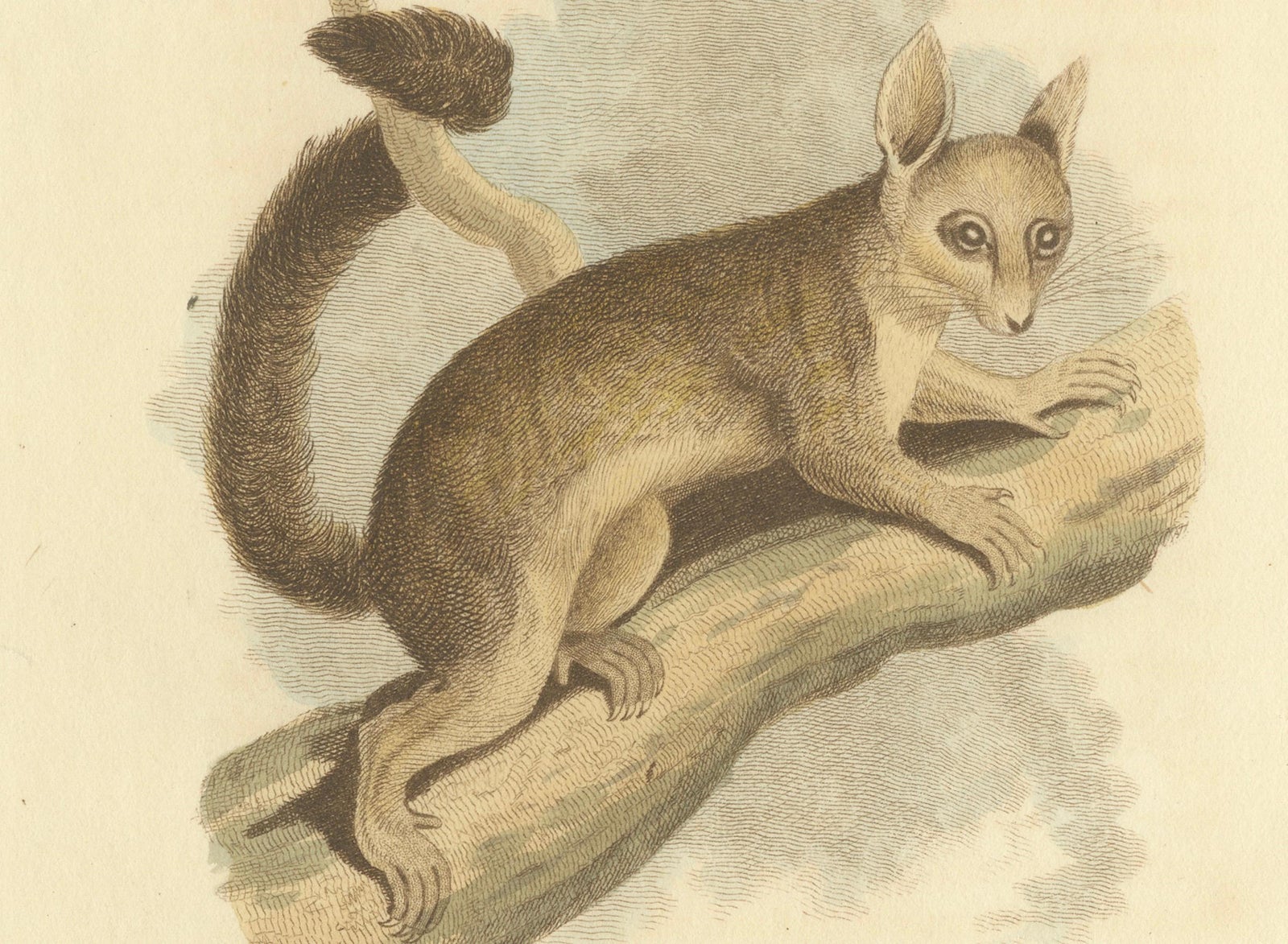
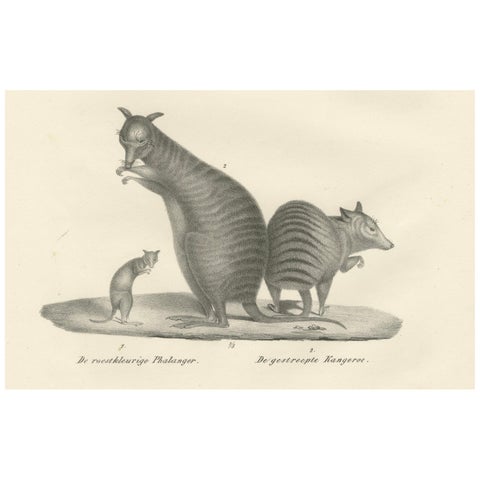
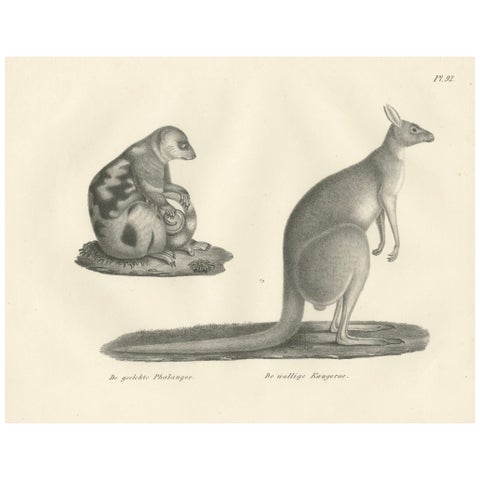
Antique Print with Hand Coloring of a Phalanger Species
$290 (£220, €260)
Period original, not a reproduction.
Shipped from the Netherlands, flat, insured and tracked, worldwide. Returns accepted within 14 days.
- Date
- Not stated
- Size
- 9.6 × 5.8 in (24.3 × 14.7 cm)
- Condition
- Good. General age-related toning. Minor wear and soiling. Some staining in upper margin. Blank verso. Please study image carefully.
- Section
- Mammals
- Reference
- f_38948572
- Colour
- Hand coloured
What the condition grades mean
- Excellent
- Bright and clean, with no faults worth mentioning.
- Very good
- Only light signs of age, such as faint toning.
- Good
- Normal signs of age for a sheet of this period: toning, some foxing, small marks or neat old repairs.
- Fair
- Clear faults such as staining, tears or repairs, priced to match.
Every fault we see is written in the condition note, and the whole sheet is shown uncropped in the photos.
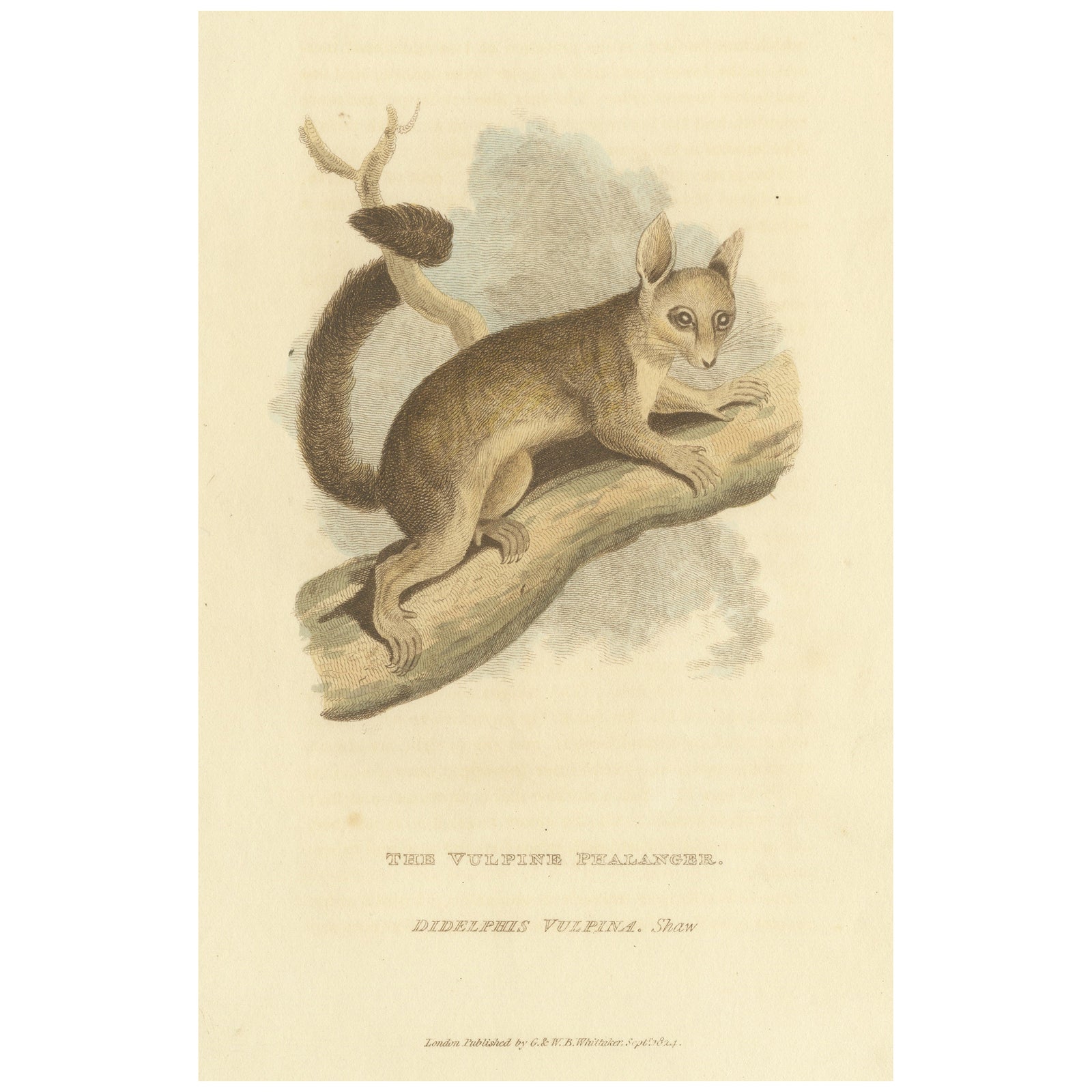
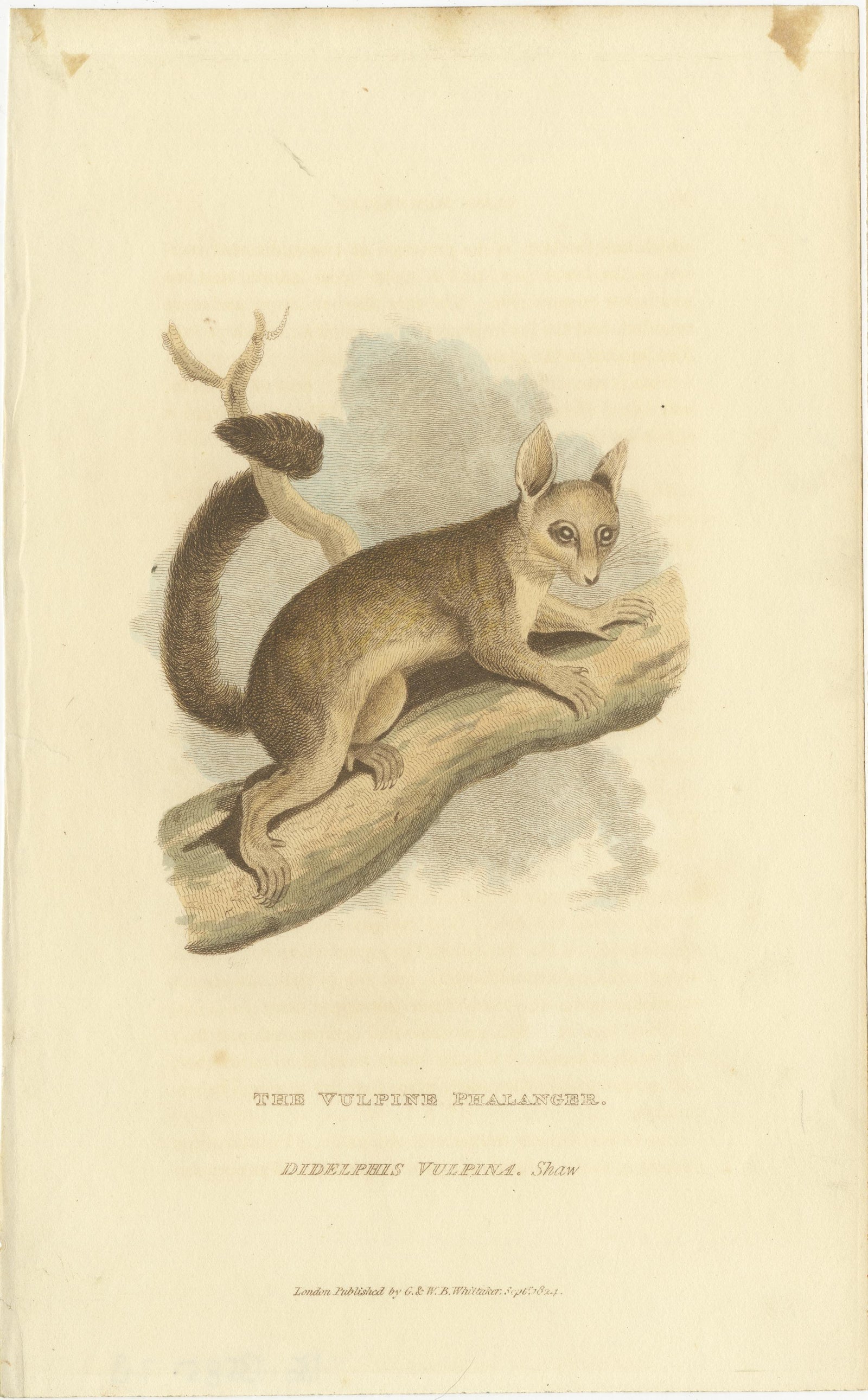
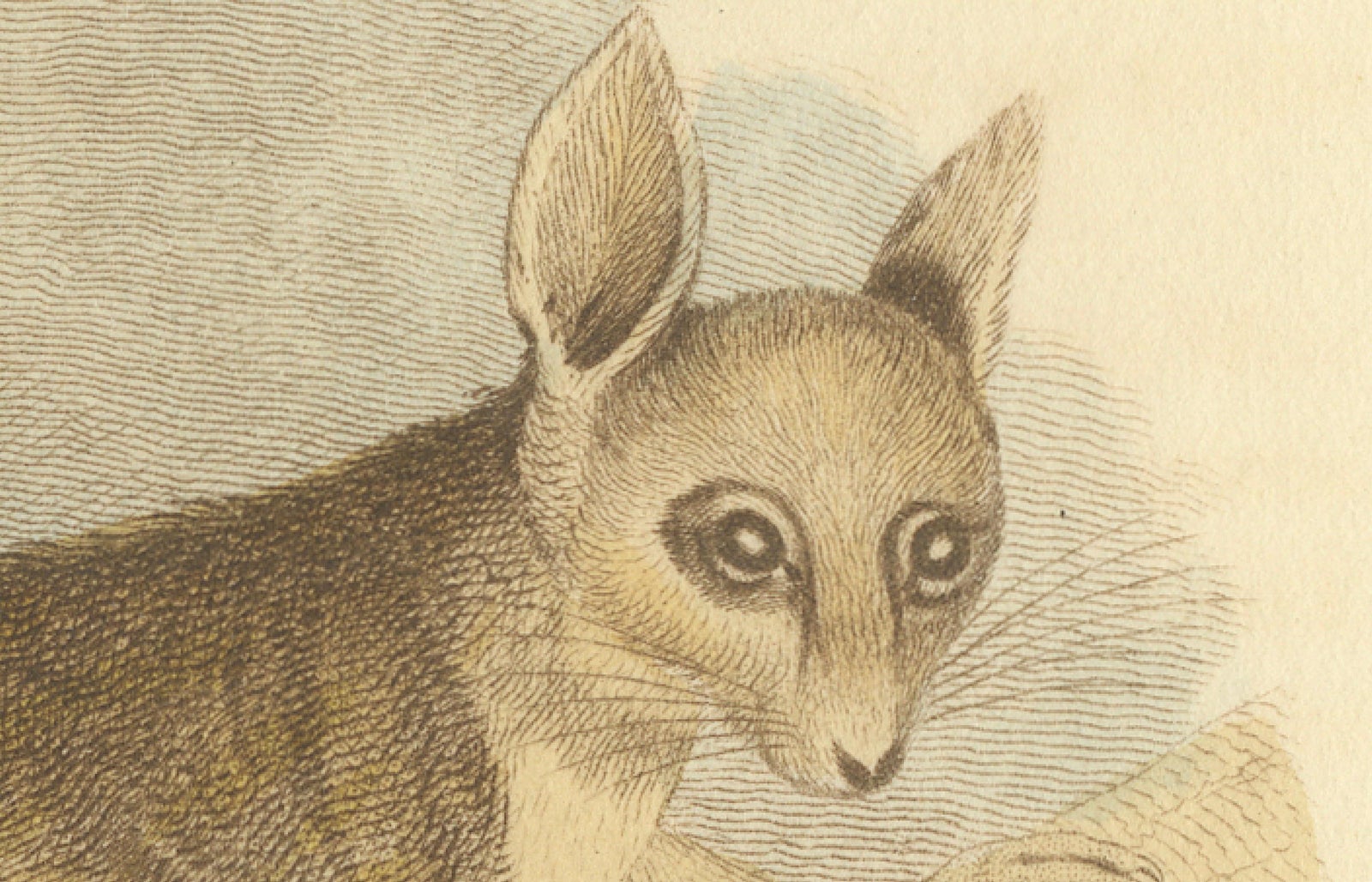
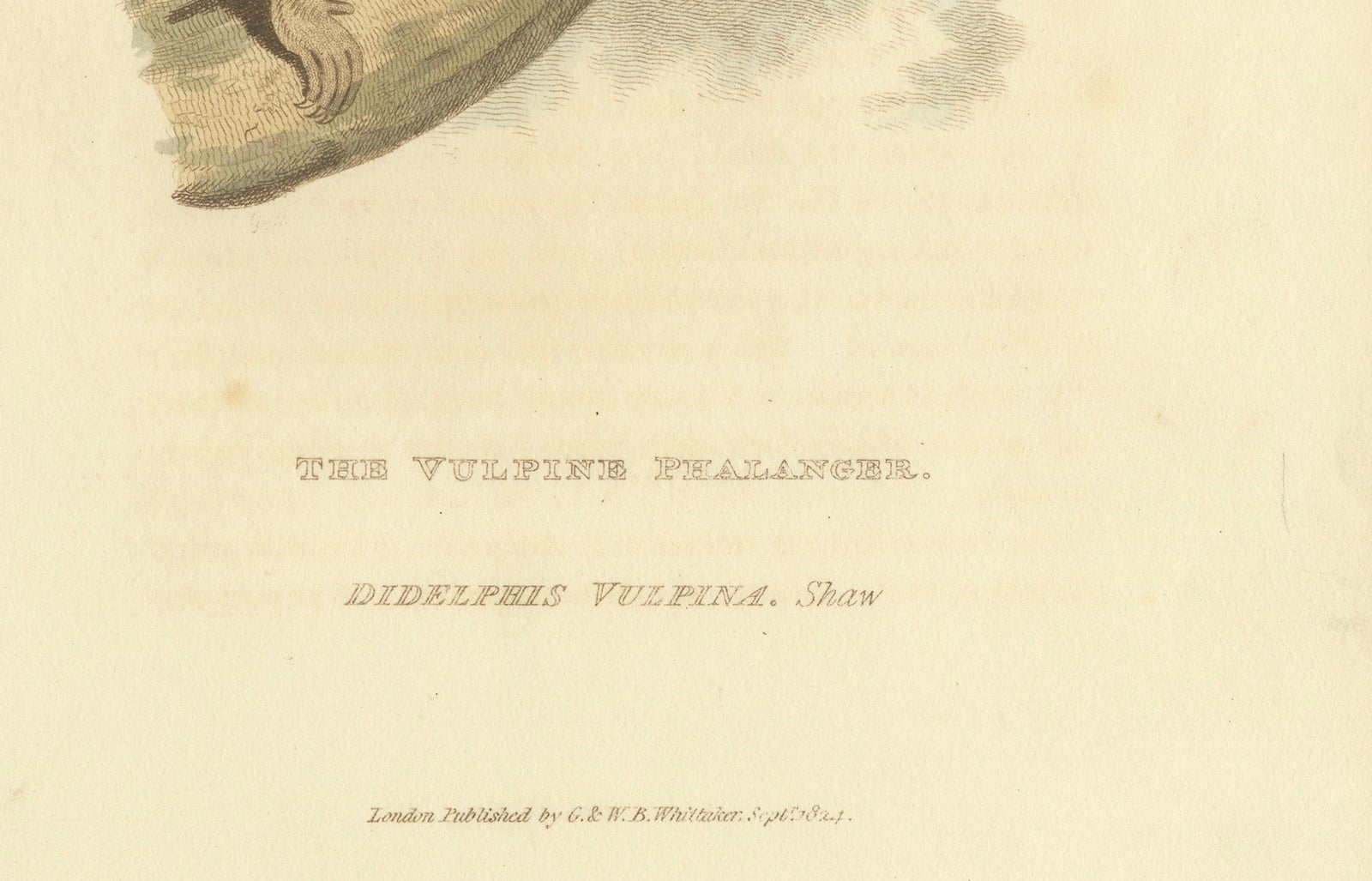
The image portrays an antique print of a creature identified as "The Vulpine Phalanger, Didelphis Vulpina". The term "vulpine" typically refers to fox-like characteristics, which could be an indication of the animal's pointed ears and facial features that may resemble those of a fox. This hand-colored print shows the animal perched on a branch in a somewhat dynamic pose, with its tail raised and its head turned to face the viewer.
Created by Charles Hamilton Smith and published by G.B. Whittaker around the year 1824, this piece of art likely served educational purposes or was part of a natural history collection aimed at depicting various species in their natural habitats.
The phalanger referred to in this print is a member of a genus of possums known for their diverse habitats in regions such as New Guinea, the Maluku Islands, other adjacent small islands, and the Cape York Peninsula of Australia. These animals are typically characterized by their ability to glide among trees and their nocturnal lifestyles. The detailed illustration, along with the hand coloring, suggests that this was produced at a time when such illustrations were critical for the study and documentation of wildlife, prior to the advent of color photography.