Close-ups
Framed and on the wall
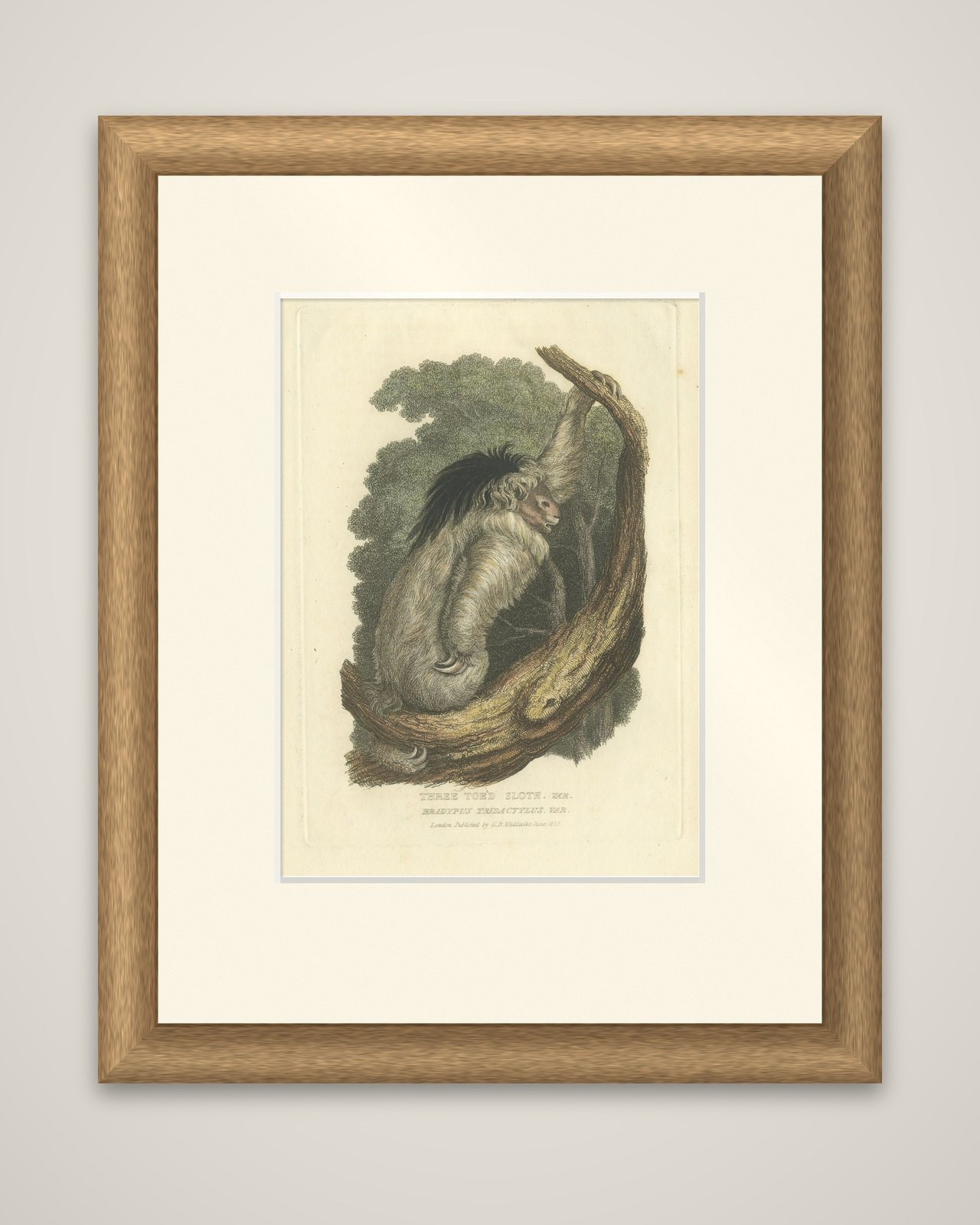
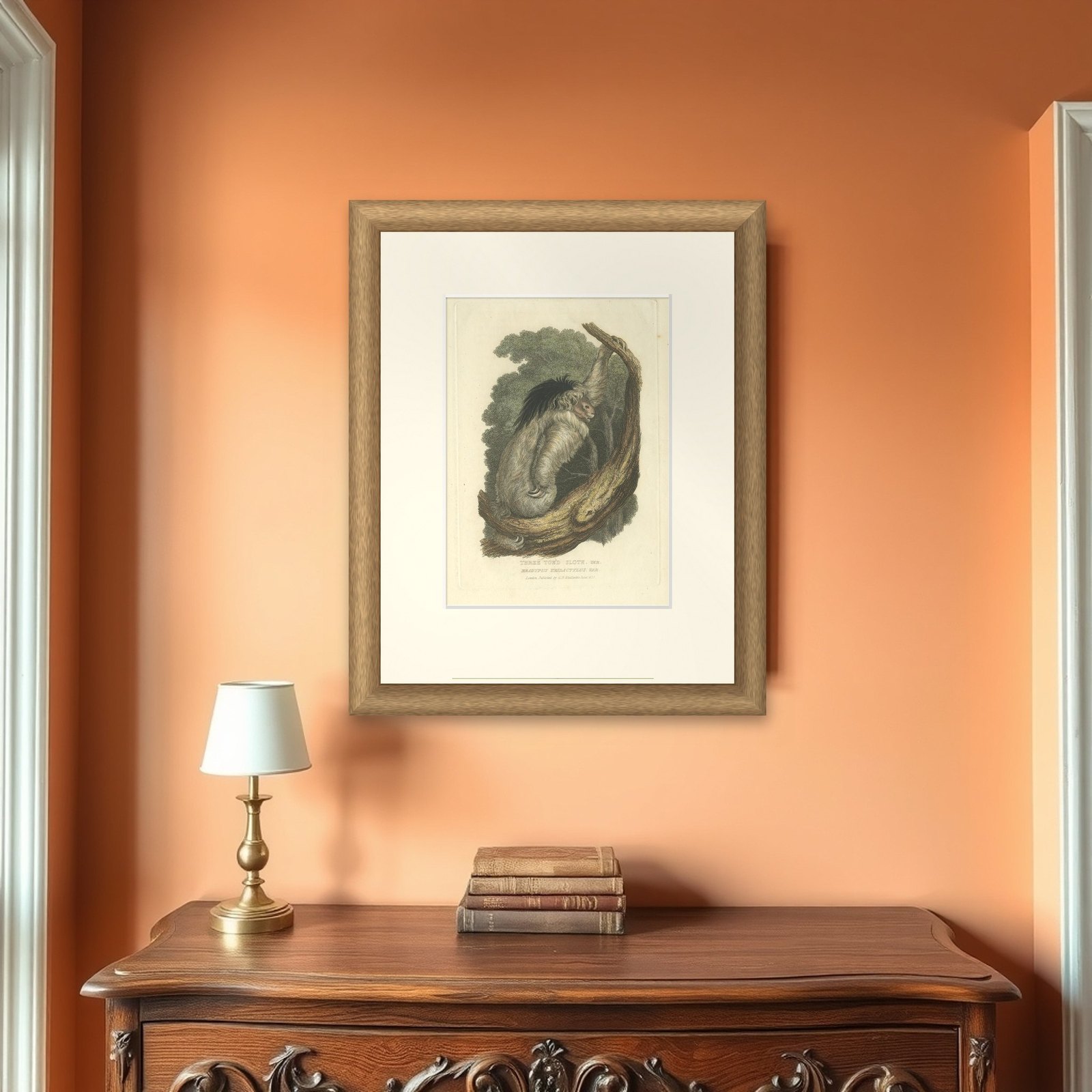
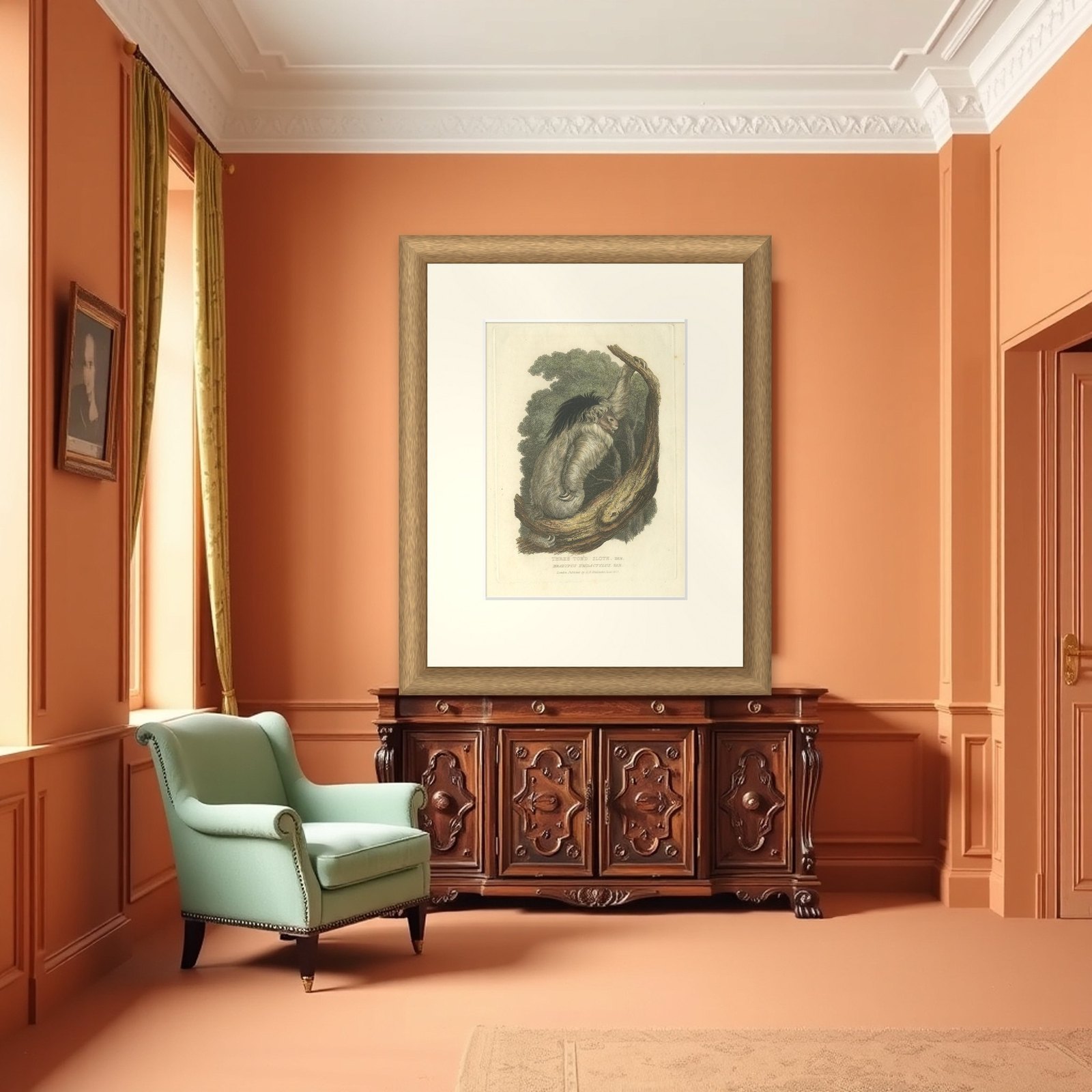
Frame and rooms are illustrations of how the print could look; the description says what is included.
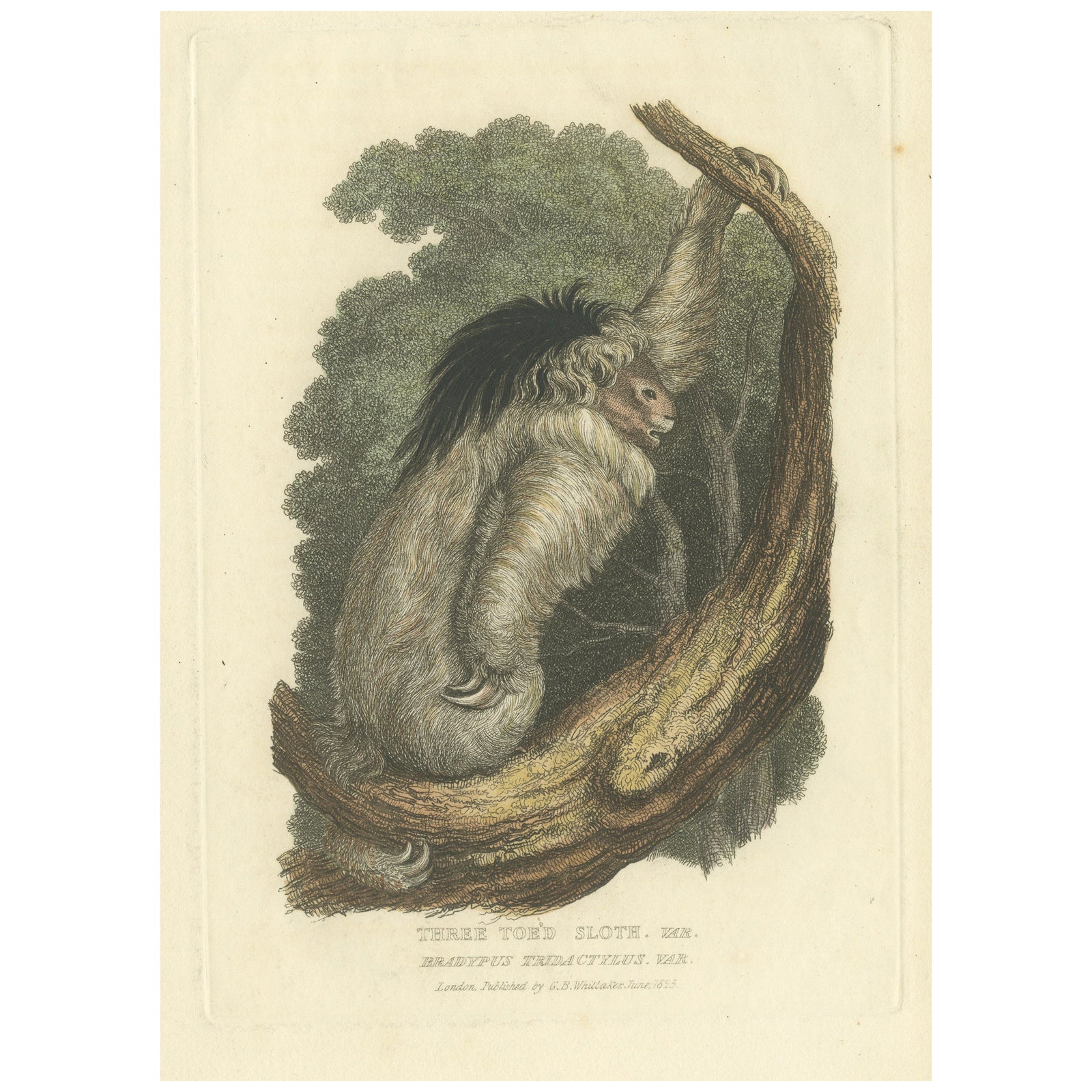
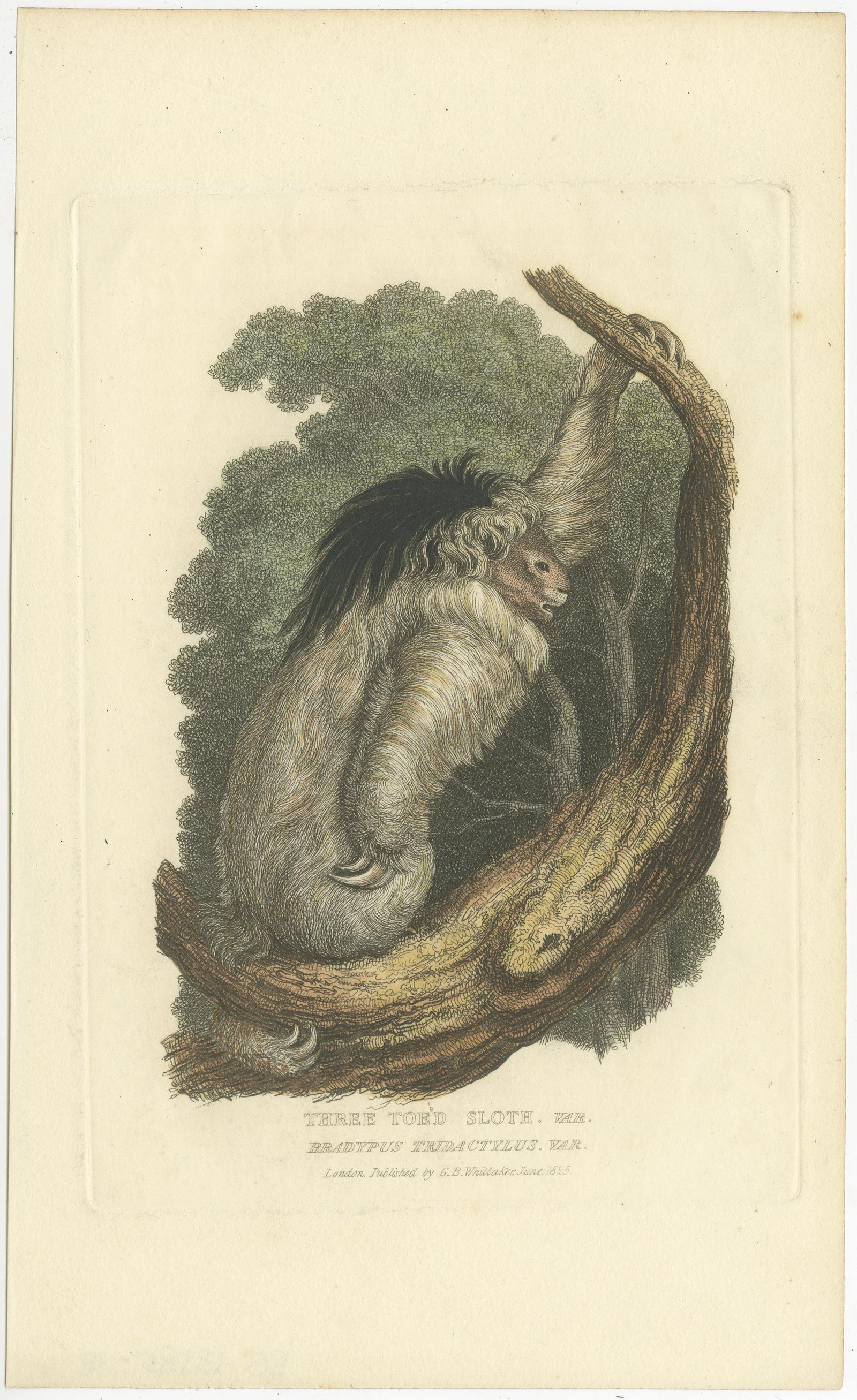
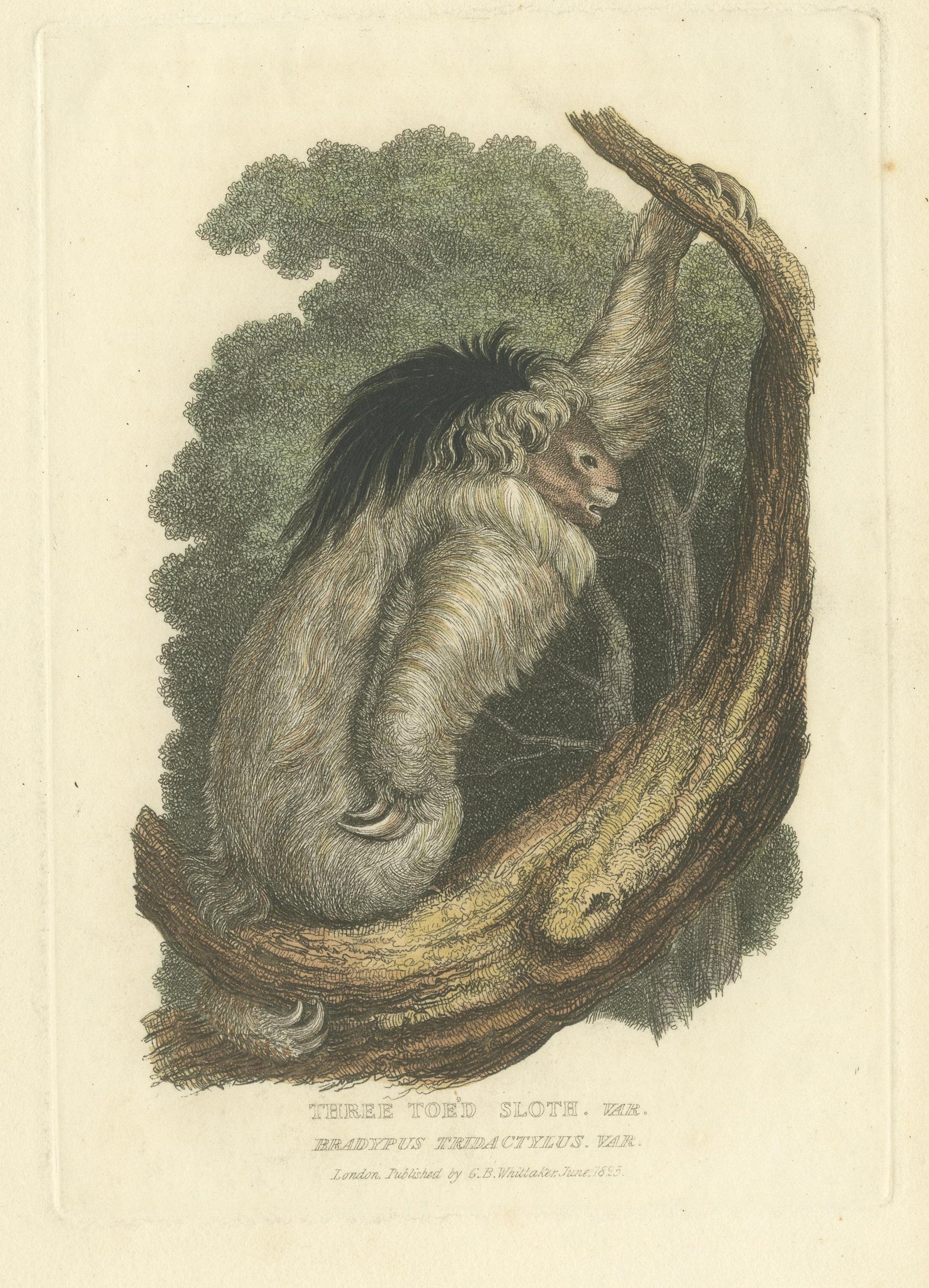
Antique Print with Hand Coloring of a Pale-Throated Sloth
€260 ($290, £220, €260)
Period original, not a reproduction.
Shipped from the Netherlands, flat, insured and tracked, worldwide. Returns accepted within 14 days.
- Date
- Not stated
- Size
- 9.6 × 5.8 in (24.3 × 14.7 cm)
- Condition
- Good. General age-related toning. Minor wear and soiling. Blank verso. Please study image carefully.
- Section
- Mammals
- Reference
- f_38946852
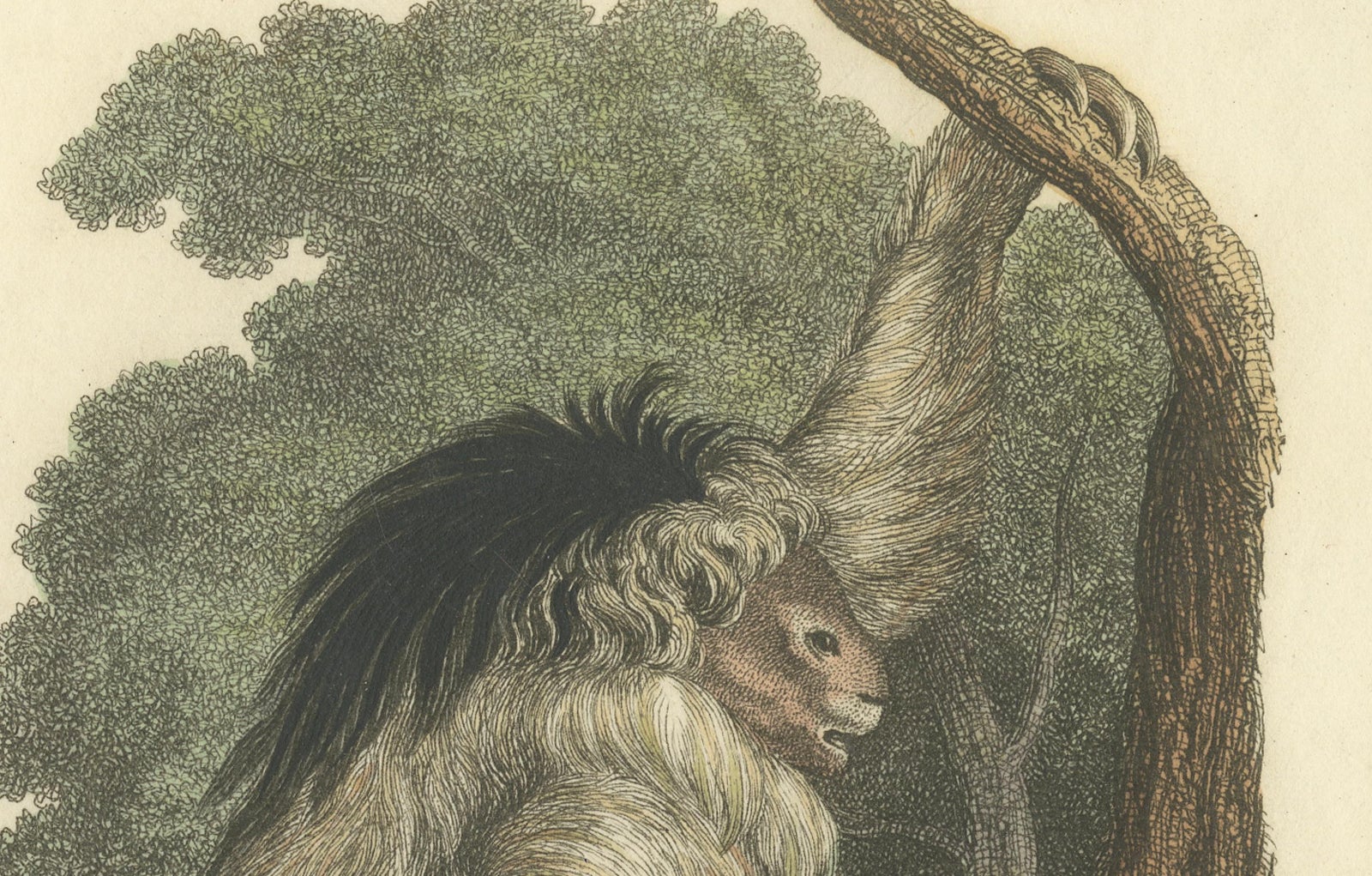
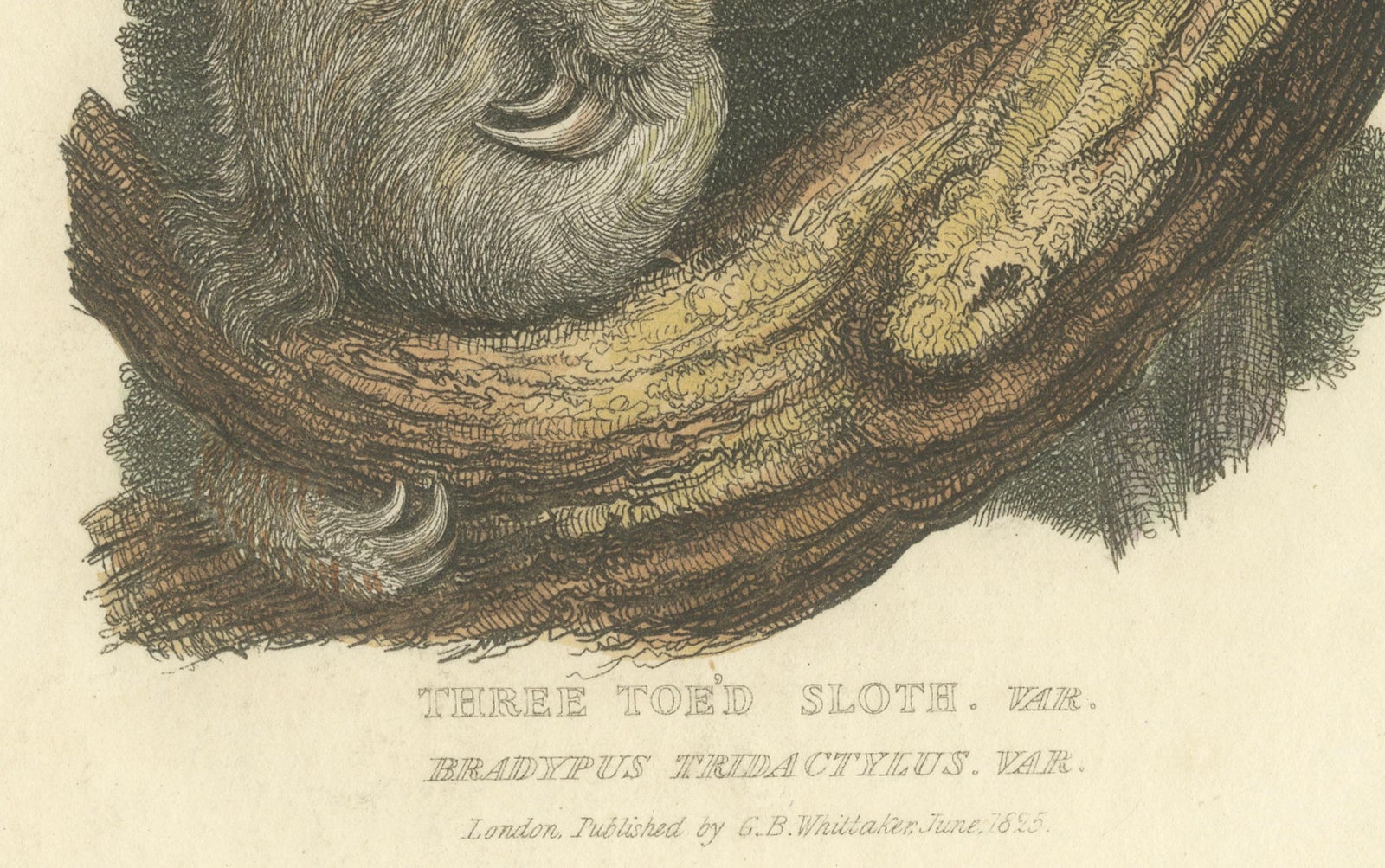
Three-toed sloth, a hand-colored engraving titled "Three Toed Sloth. Var.", with the Latin name "Bradypus Tridactylus. Var." beneath it, published in London by G.B. Whittaker in 1825. The imprint is engraved in small letters at the foot of the sheet.
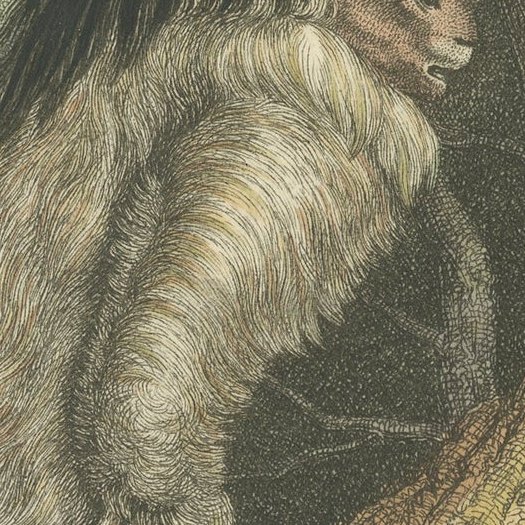
The sloth is shown from behind and the side, clinging to a thick curving branch with one long-clawed arm hooked over the top. Its long coat is drawn in fine pale and gray-brown hair with a dark mane across the shoulders, and the face looks back toward the viewer. A soft screen of green foliage fills the background.
The pale-throated sloth, Bradypus tridactylus, lives in the tropical forests of northern South America and spends nearly its whole life hanging from the branches of trees. George Byrom Whittaker was a London publisher active in the 1820s, and the plate was made as one of a series of natural history subjects.