Close-ups
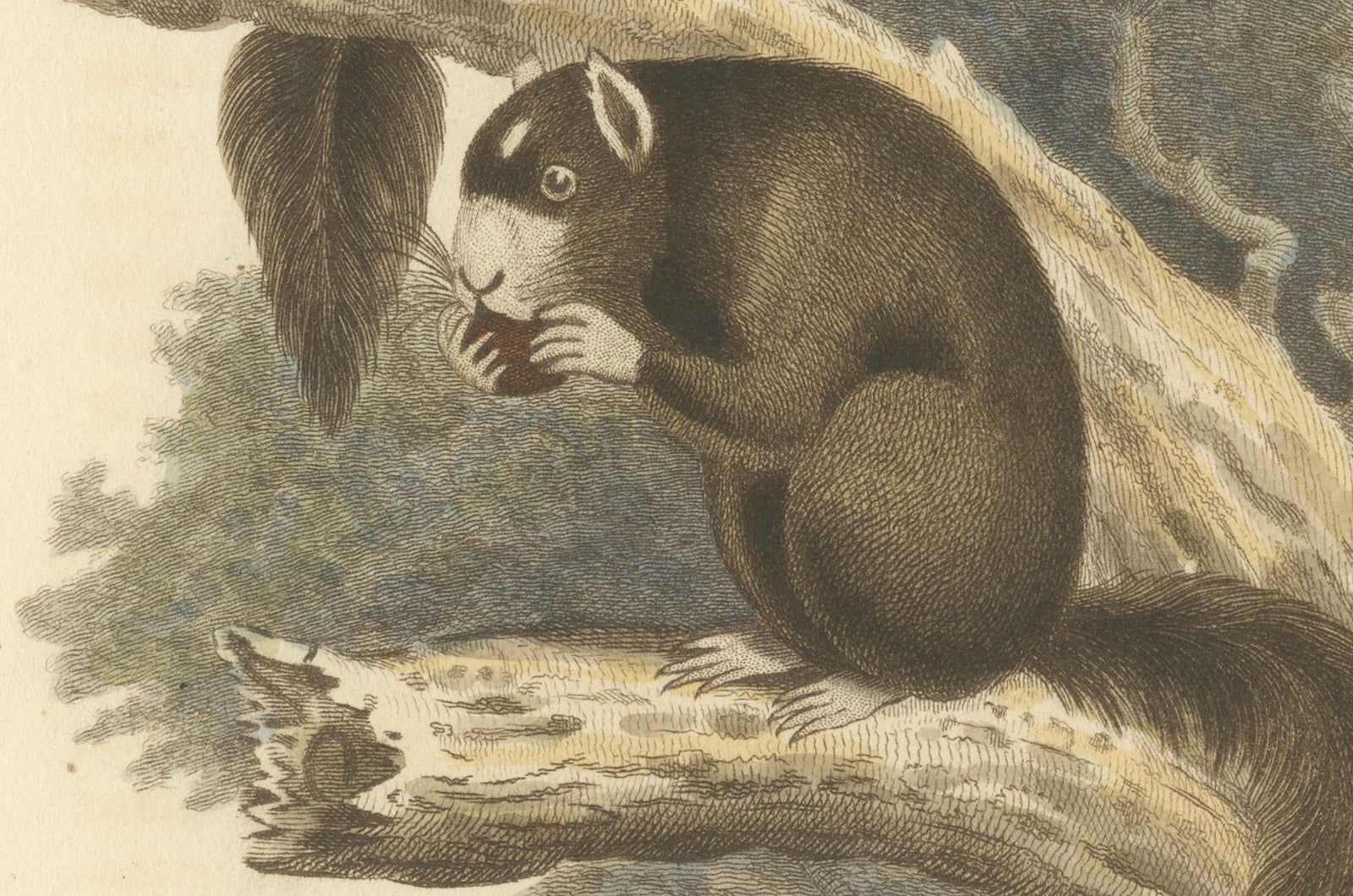
Framed and on the wall
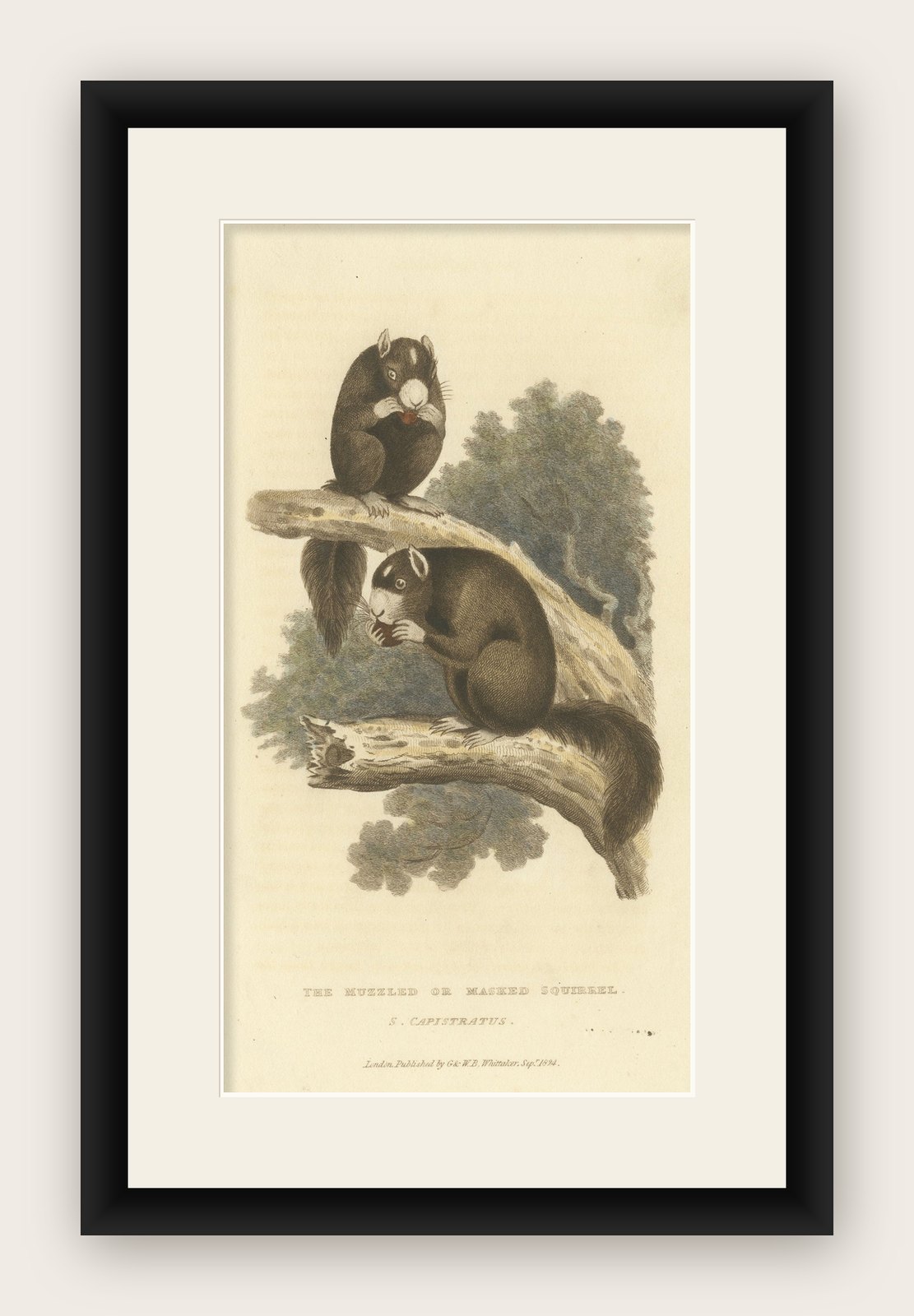


Frame and rooms are illustrations of how the print could look; the description says what is included.
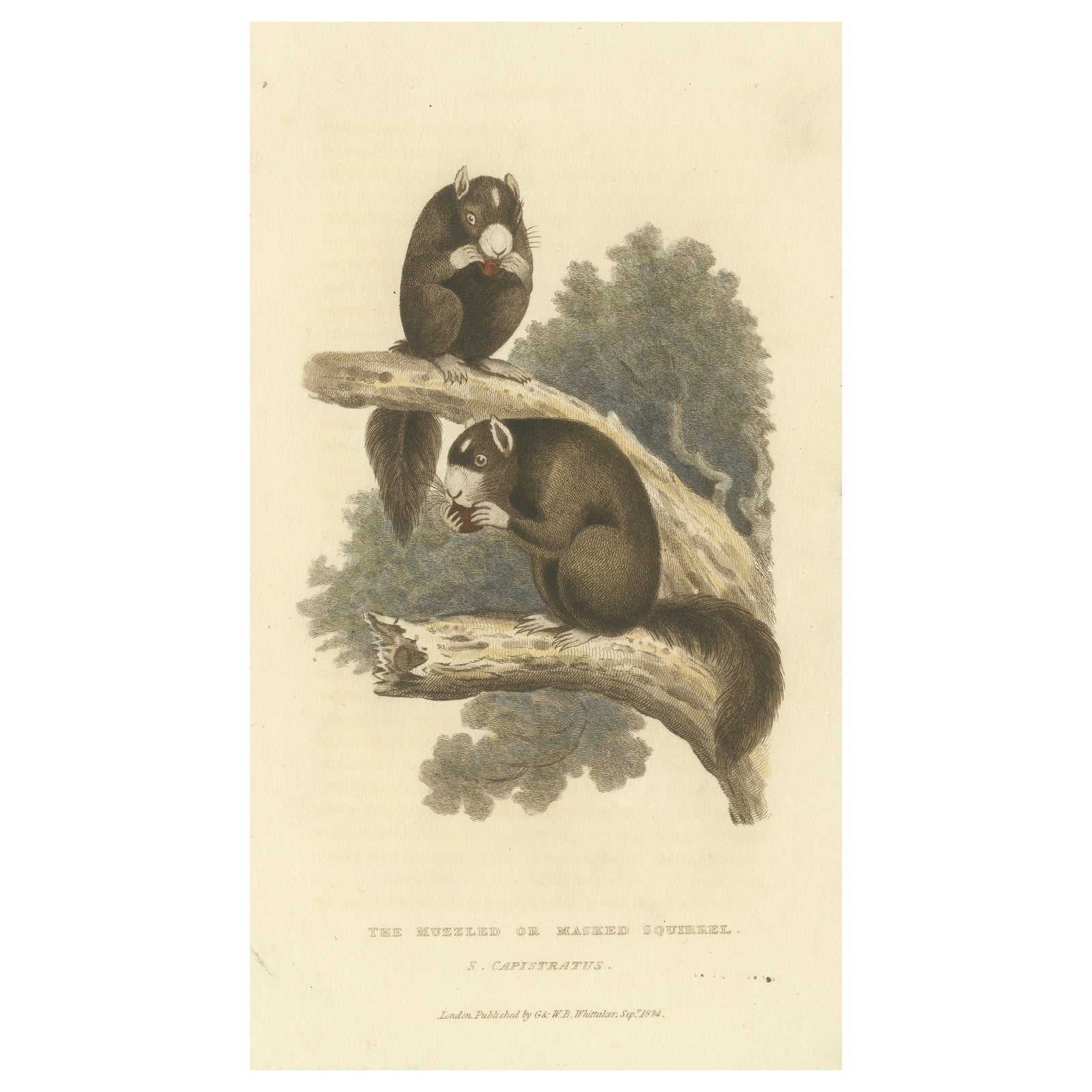
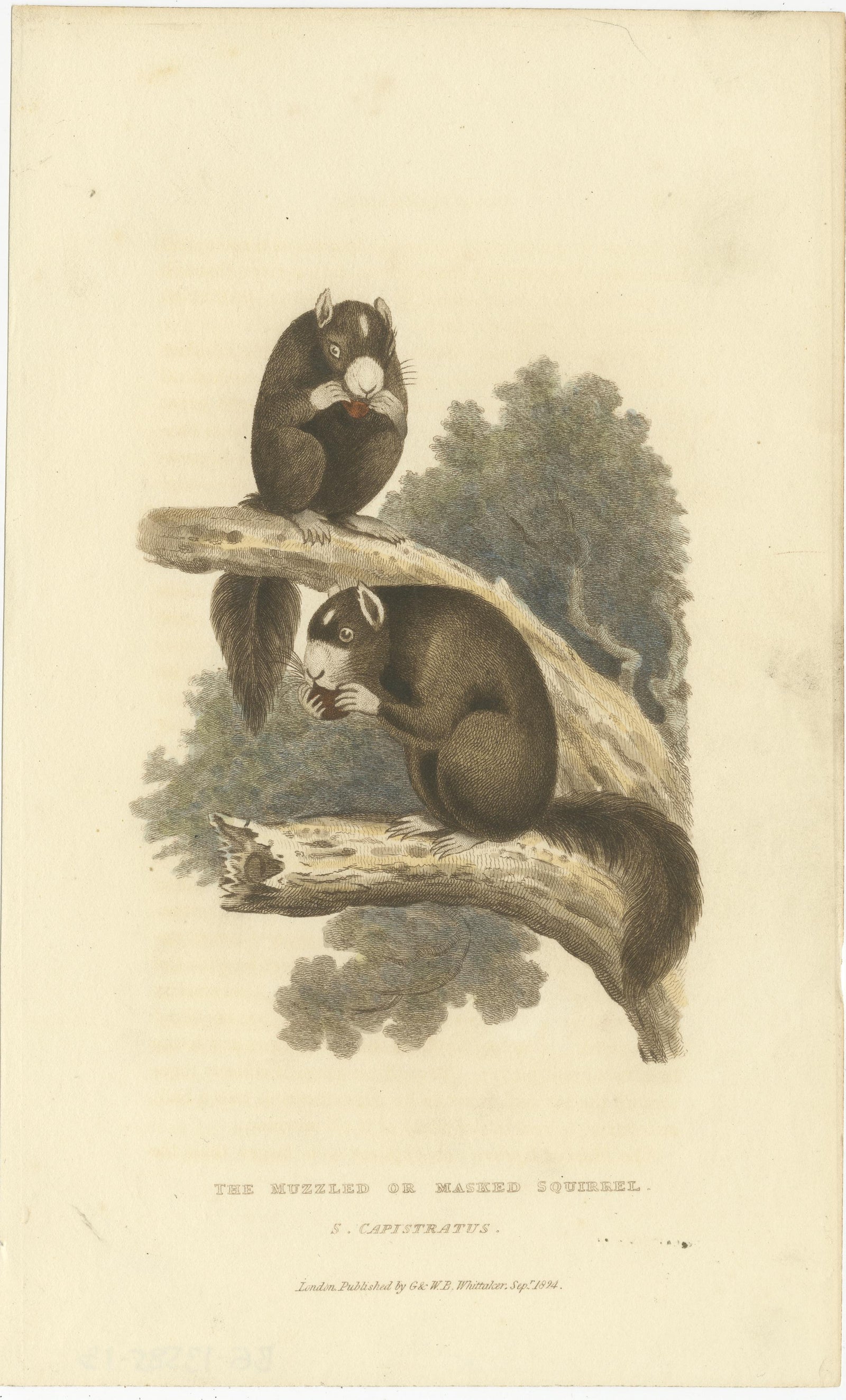
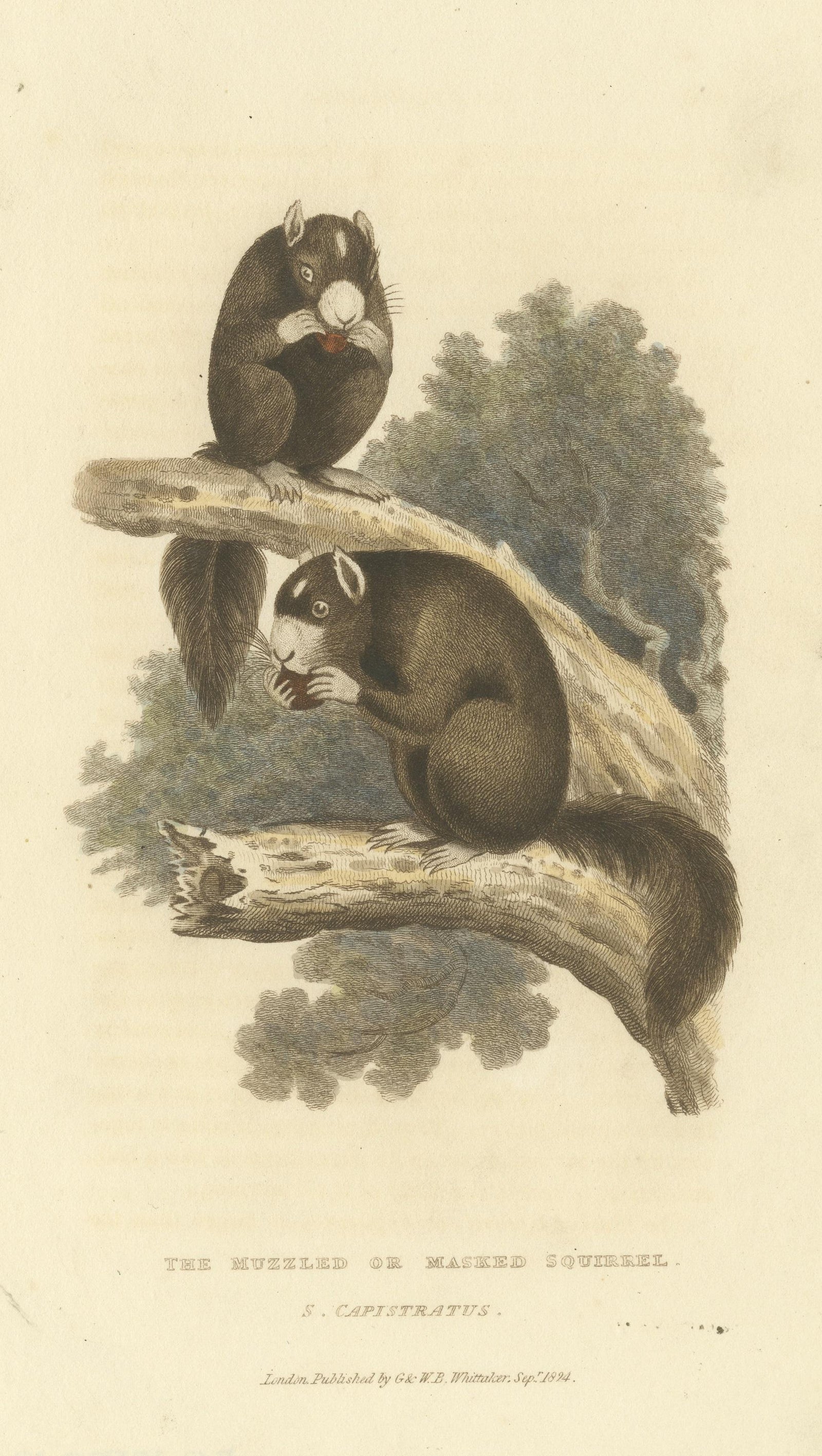
Antique Print with Hand Coloring of a Masked Squirrel
$295 (£220, €260)
Period original, not a reproduction.
Shipped from the Netherlands, flat, insured and tracked, worldwide. Returns accepted within 14 days.
- Date
- Not stated
- Size
- 9.6 × 5.8 in (24.3 × 14.7 cm)
- Condition
- Good. General age-related toning. Minor wear and soiling. Blank verso. Please study image carefully.
- Section
- Mammals
- Reference
- f_38931692
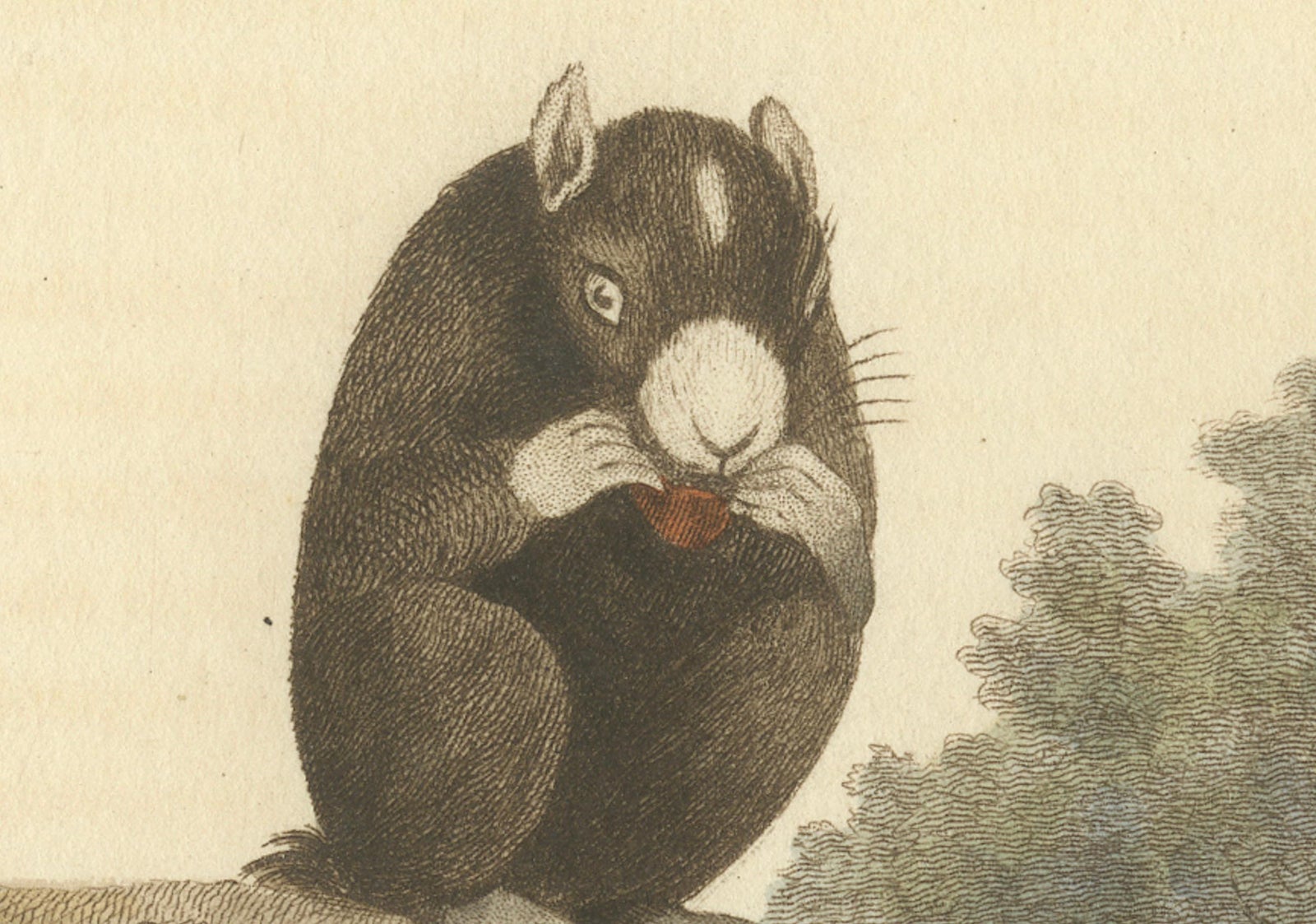
The original image is a historical print of masked squirrels, titled 'The muzzled or masked squirrel, S. Capistratus'. If it was published by G.B. Whittaker based on an illustration by Charles Hamilton Smith circa 1824, and part of a collection that aimed to document and share knowledge of various animal species.
Charles Hamilton Smith was an esteemed naturalist and illustrator, whose works are well-regarded for their scientific value as well as their artistic merit. He produced a wide range of animal illustrations, capturing the interest and imagination of the public and the scientific community alike.
G.B. Whittaker was a publisher operating in London, known for a broad catalog of publications, which included many significant contributions to the literature of natural history. His company facilitated the spread of naturalistic studies to a broader audience, significantly influencing public awareness and education.
The animal featured, referred to here as the 'masked squirrel', is not a commonly known species today. This could be due to a historical common name that has fallen out of use or been replaced by a more widely recognized term. The term 'masked squirrel' might refer to a specific characteristic of the animal depicted, possibly relating to the coloration or patterns on the face that resemble a mask. If this print is accurate to a real species, it would be part of the rich biodiversity that Charles Hamilton Smith and others like him aimed to catalog for both scientific record and public interest. This documentation would have played an essential role in the study and conservation of wildlife.
Without a current scientific name, it's challenging to provide detailed information about these specific animals. If these were actual species, they would belong to the family Sciuridae, which includes small or medium-size rodents. The family includes tree squirrels, which are the members most commonly referred to as "squirrels"; they are indigenous to the Americas, Eurasia, and Africa, and have been introduced to Australia. Squirrels are typically known for their bushy tails, agile movements, and ability to climb trees. They are mainly herbivorous, subsisting on seeds and nuts, but many will eat insects and even small animals when available.