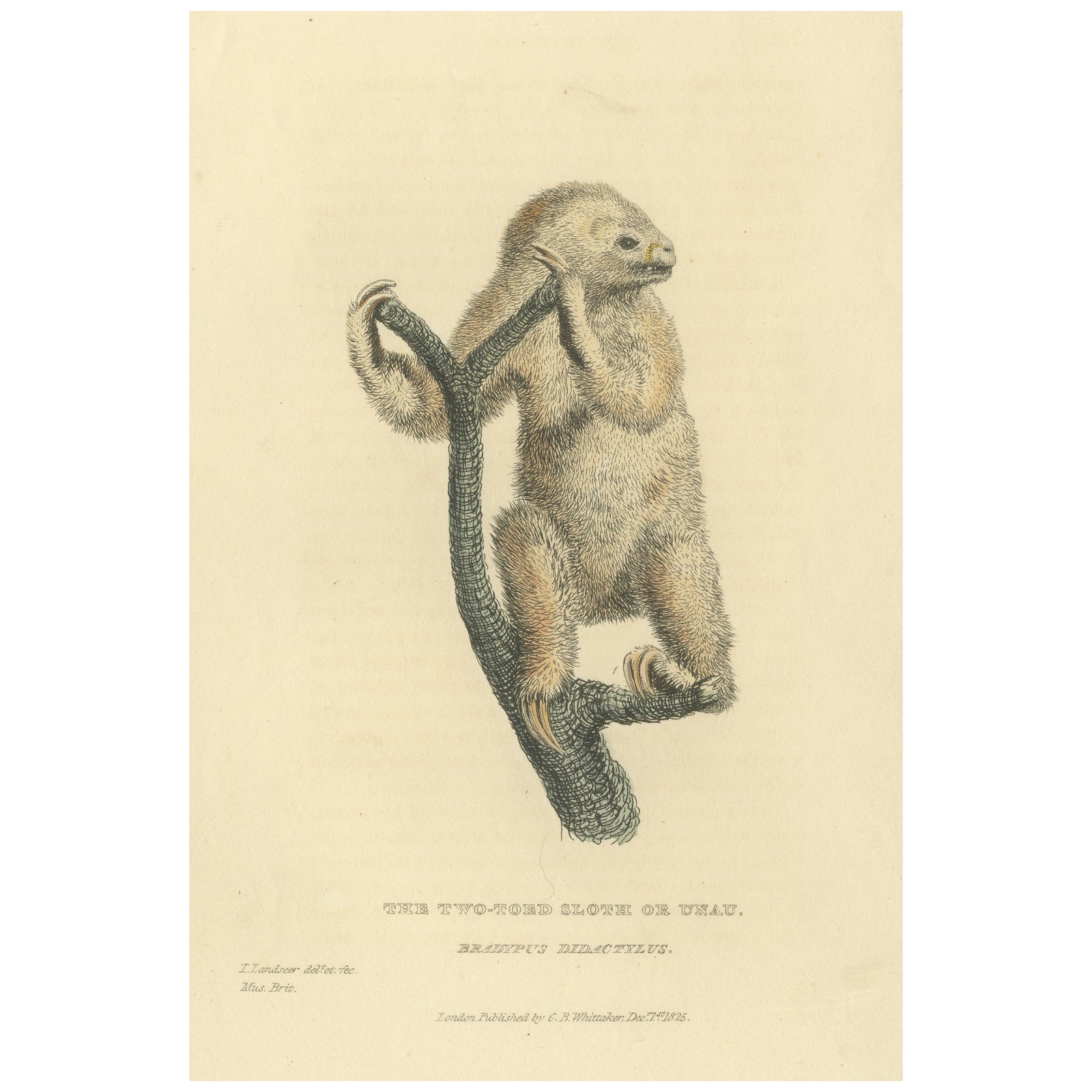
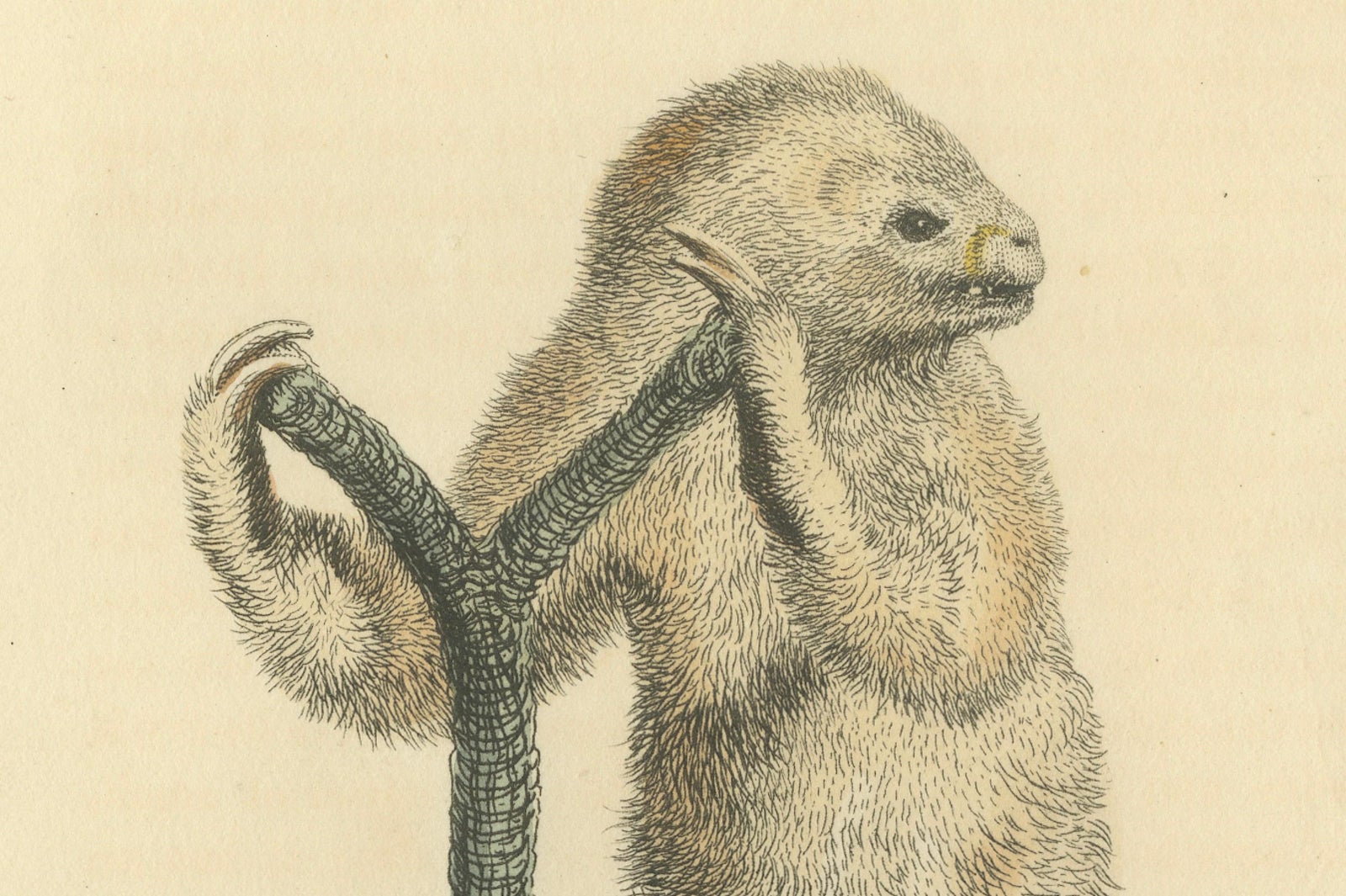
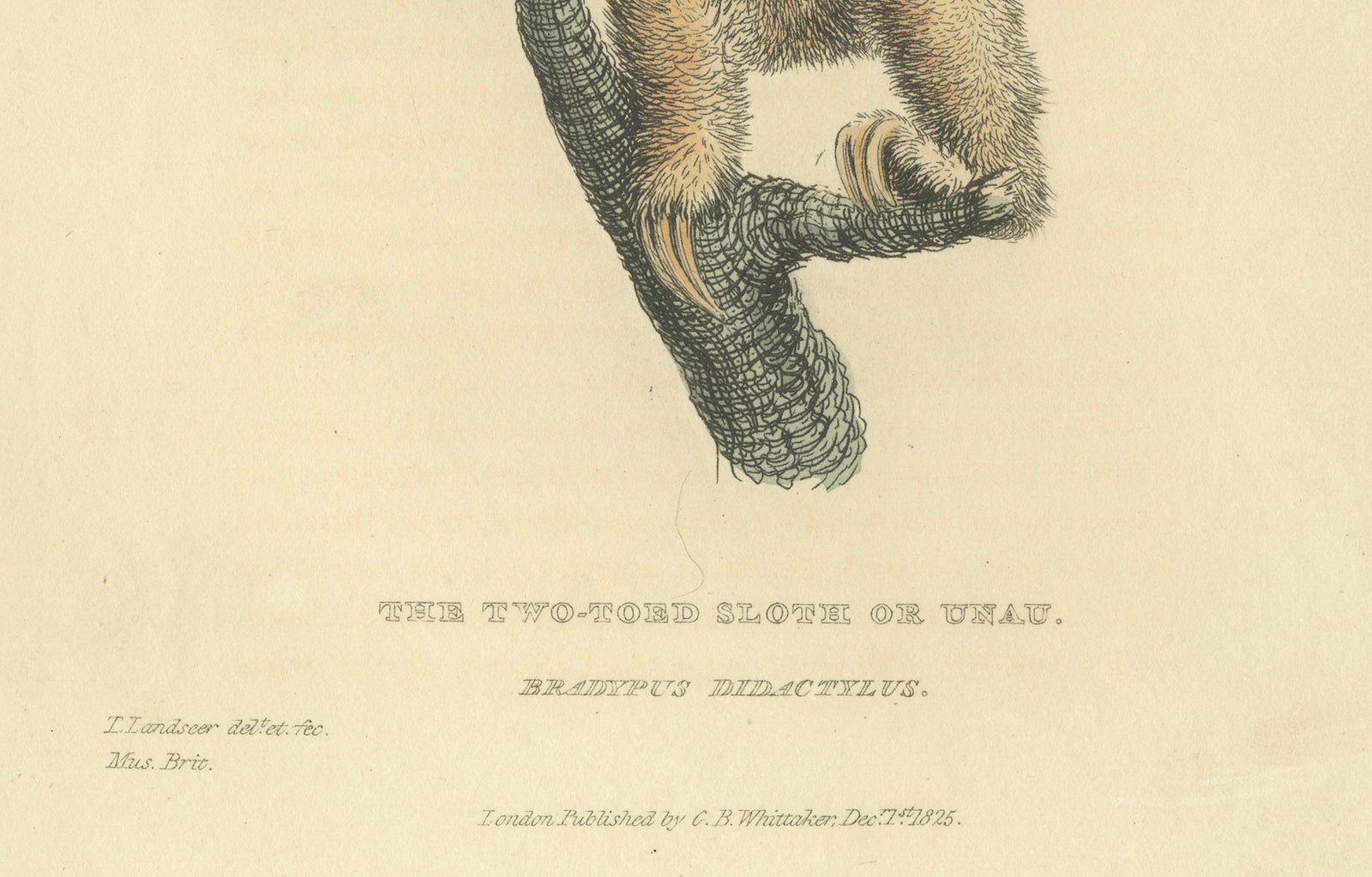
Close-ups
Framed and on the wall
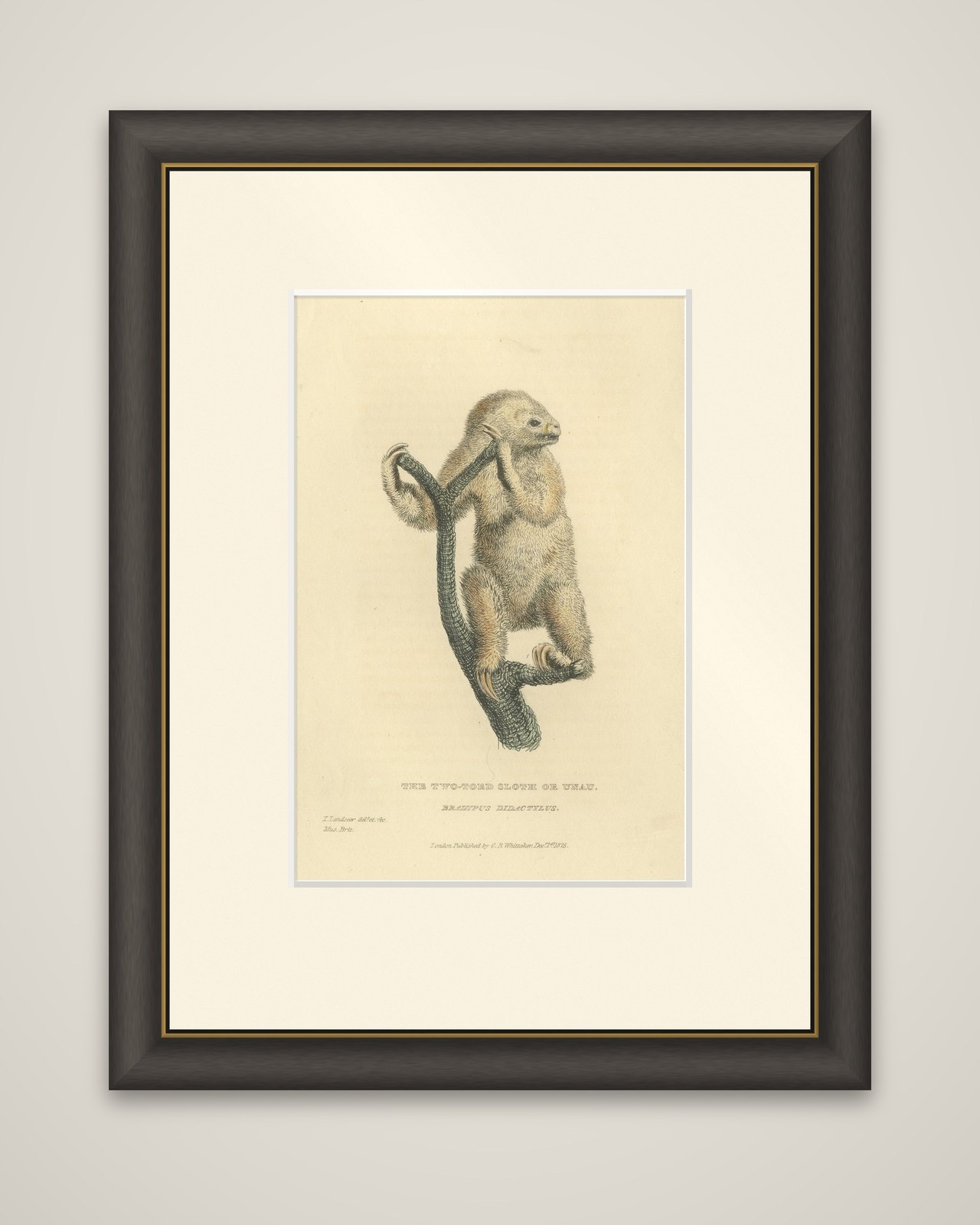


Frame and rooms are illustrations of how the print could look; the description says what is included.
Antique Print with Hand Coloring of a Linnaeus's Two-Toed Sloth, ca.1825
€260 ($295, £220, €260)
Period original, not a reproduction.
Shipped from the Netherlands, flat, insured and tracked, worldwide. Returns accepted within 14 days.
- Date
- 1825
- Size
- 9.6 × 5.8 in (24.3 × 14.7 cm)
- Condition
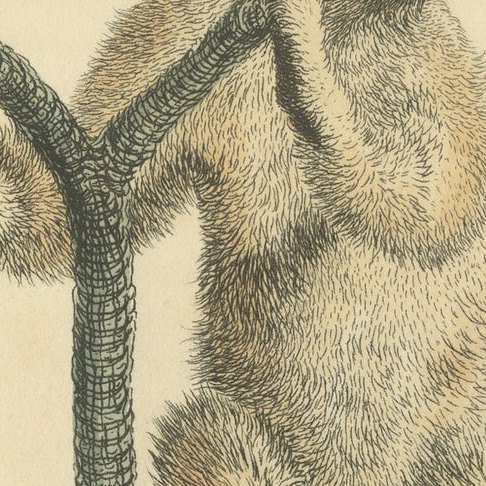
- Good. General age-related toning. Minor wear and soiling. Blank verso. Please study image carefully.
- Period
- Early 19th century
- Section
- Mammals
- Reference
- f_38948442
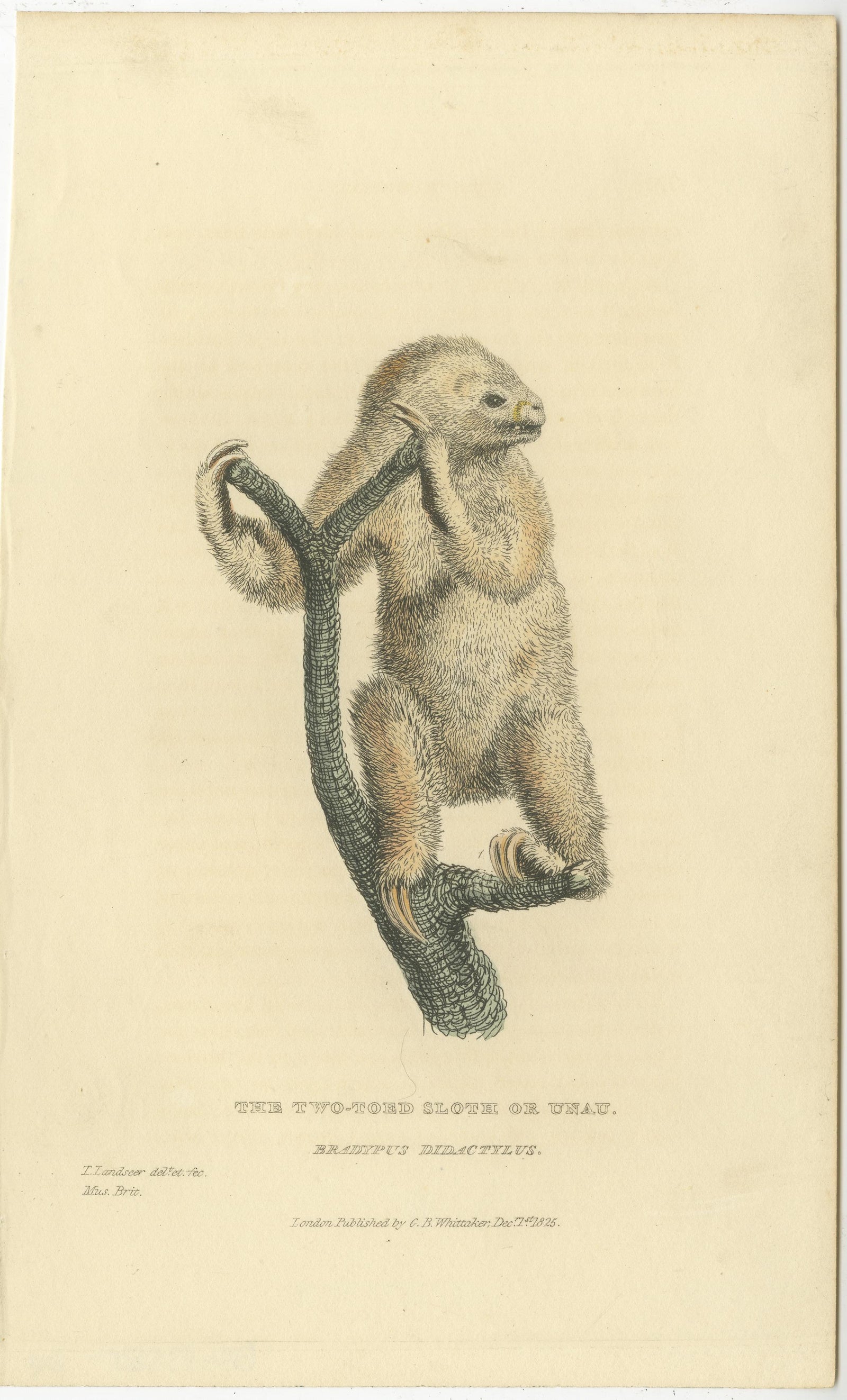
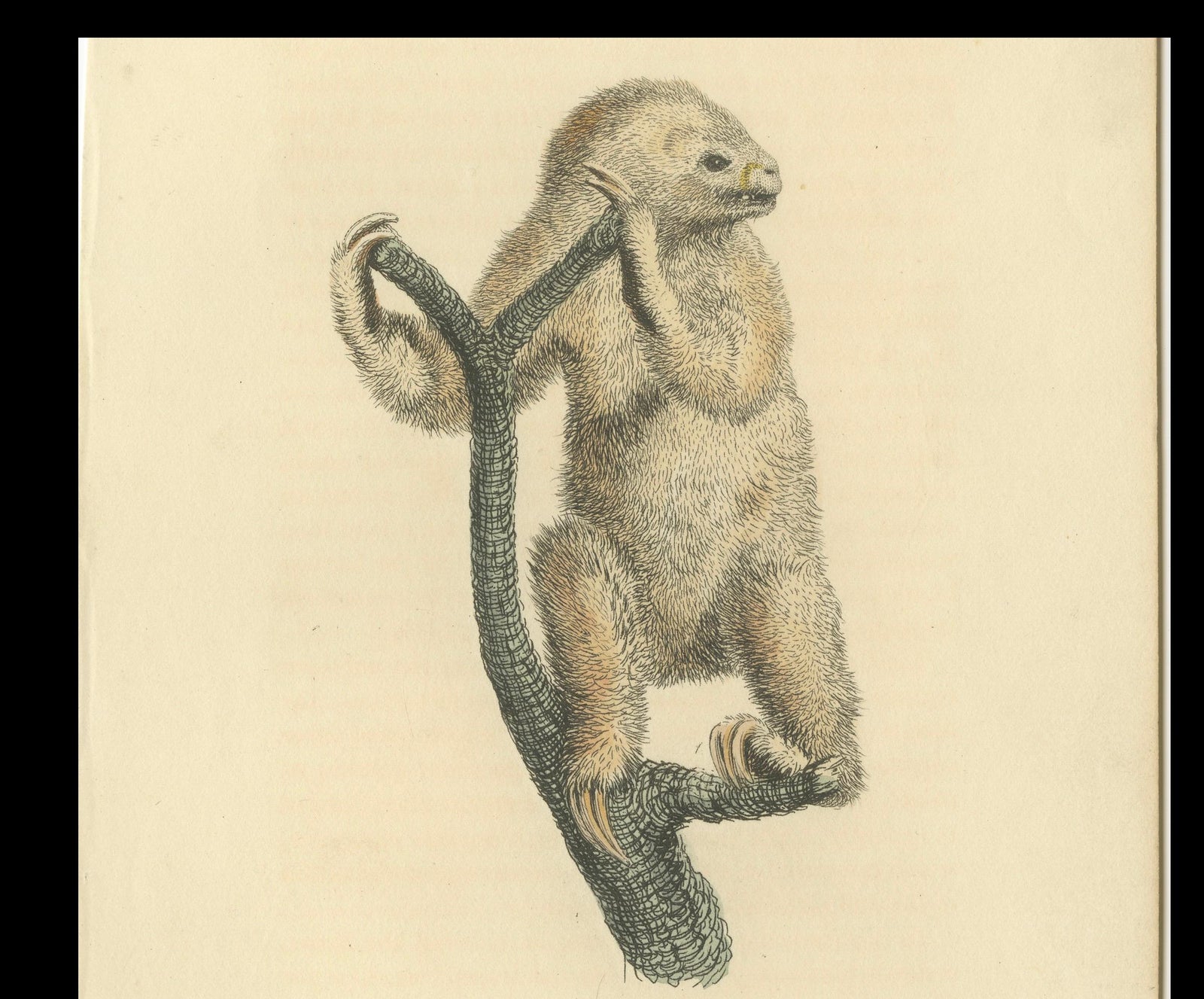
The two-toed sloth or unau, a hand-colored engraving published in London by G.B. Whittaker on December 1, 1825. The caption reads "The Two-Toed Sloth or Unau." with the Latin name "Bradypus Didactylus." beneath it, and the credits at lower left read "T. Landseer del. et sc." and "Mus. Brit.", indicating that it was drawn and engraved by Thomas Landseer from a specimen in the British Museum.
The sloth hangs from a forked branch, one arm hooked over the fork and one foot gripping the lower limb, with its pale cream coat shaded in warm tints. The face is turned toward the right, with a short snout and small dark eyes. The sheet has no background, so the animal and its branch stand out clearly against the paper.
Linnaeus's two-toed sloth, now called Choloepus didactylus, lives in the forests of northern South America and is the larger of the two sloth genera.