Close-ups
Framed and on the wall
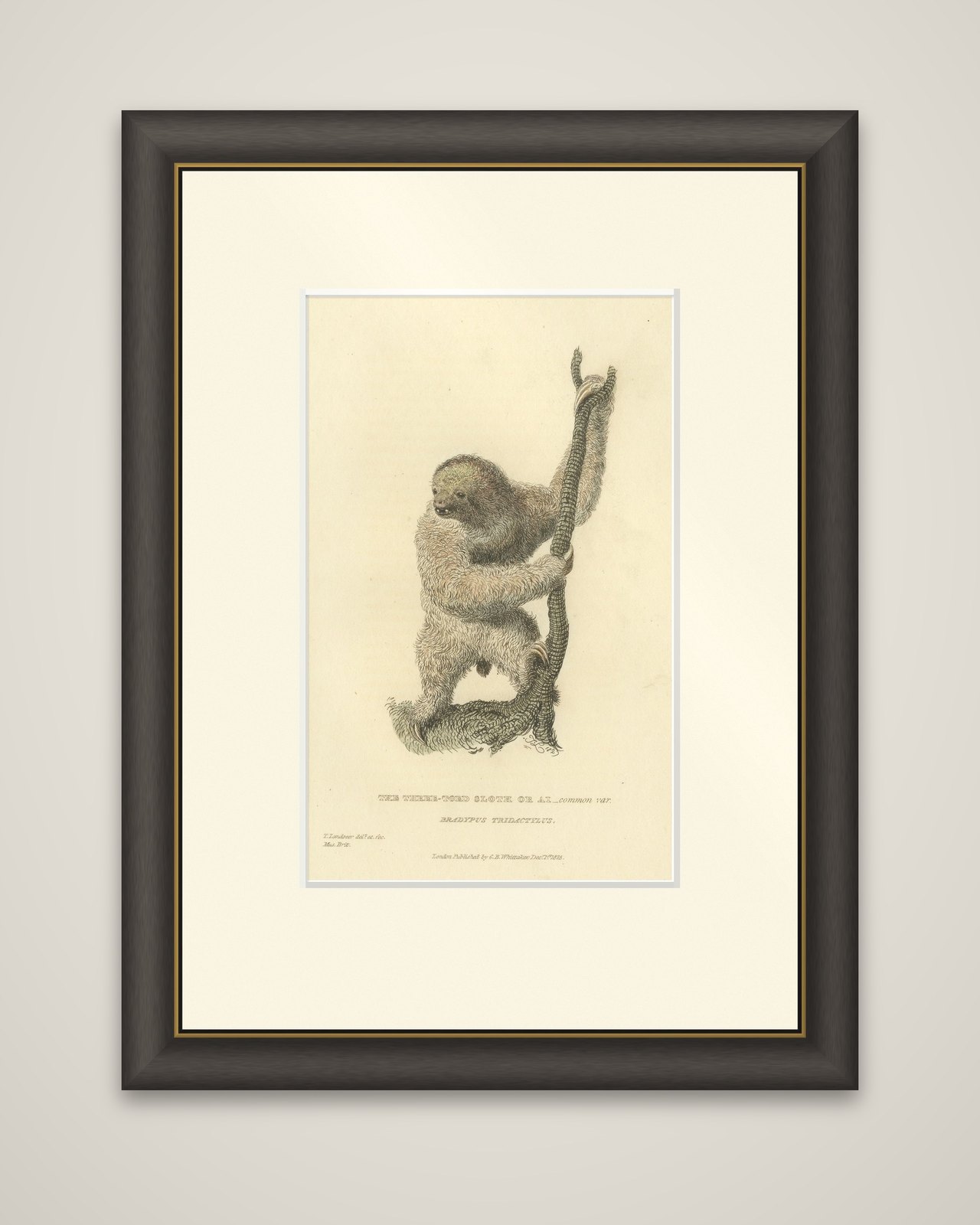



Frame and rooms are illustrations of how the print could look; the description says what is included.
Antique Print with Hand Coloring of a Common Pale-Throated Sloth
$285$20030% off (£150, €182)
Period original, not a reproduction.
Shipped from the Netherlands, flat or rolled, insured and tracked, worldwide. Returns accepted within 14 days.
- Date
- Not stated
- Size
- 9.6 × 5.8 in (24.3 × 14.7 cm)
- Condition
- Good. General age-related toning. Minor wear and soiling. Blank verso. Please study image carefully.
- Section
- Mammals
- Reference
- f_38946902
- Color
- Hand colored
What the condition grades mean
- Excellent
- Bright and clean, with no faults worth mentioning.
- Very good
- Only light signs of age, such as faint toning.
- Good
- Normal signs of age for a sheet of this period: toning, some foxing, small marks or neat old repairs.
- Fair
- Clear faults such as staining, tears or repairs, priced to match.
Every fault we see is written in the condition note, and the whole sheet is shown uncropped in the photos.
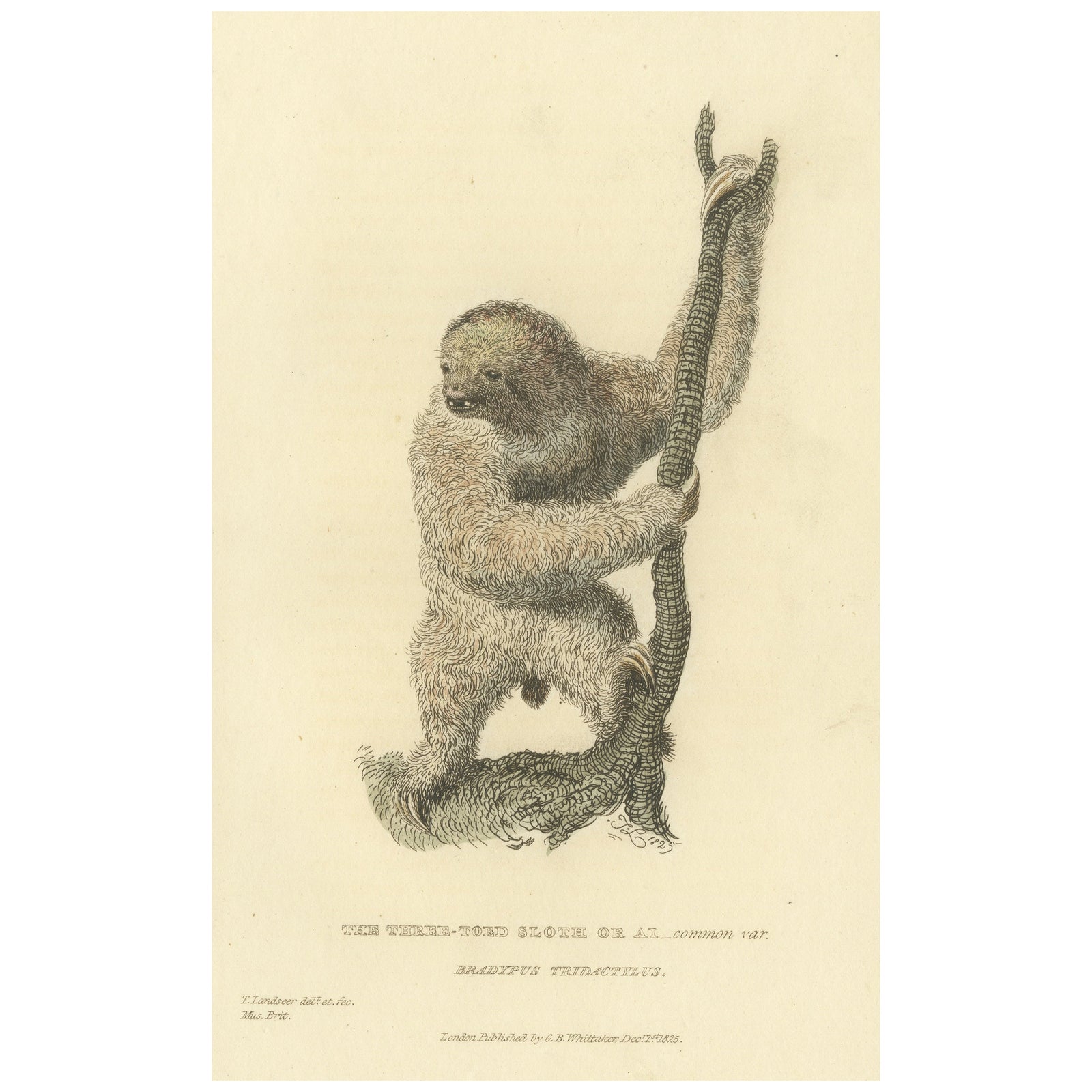
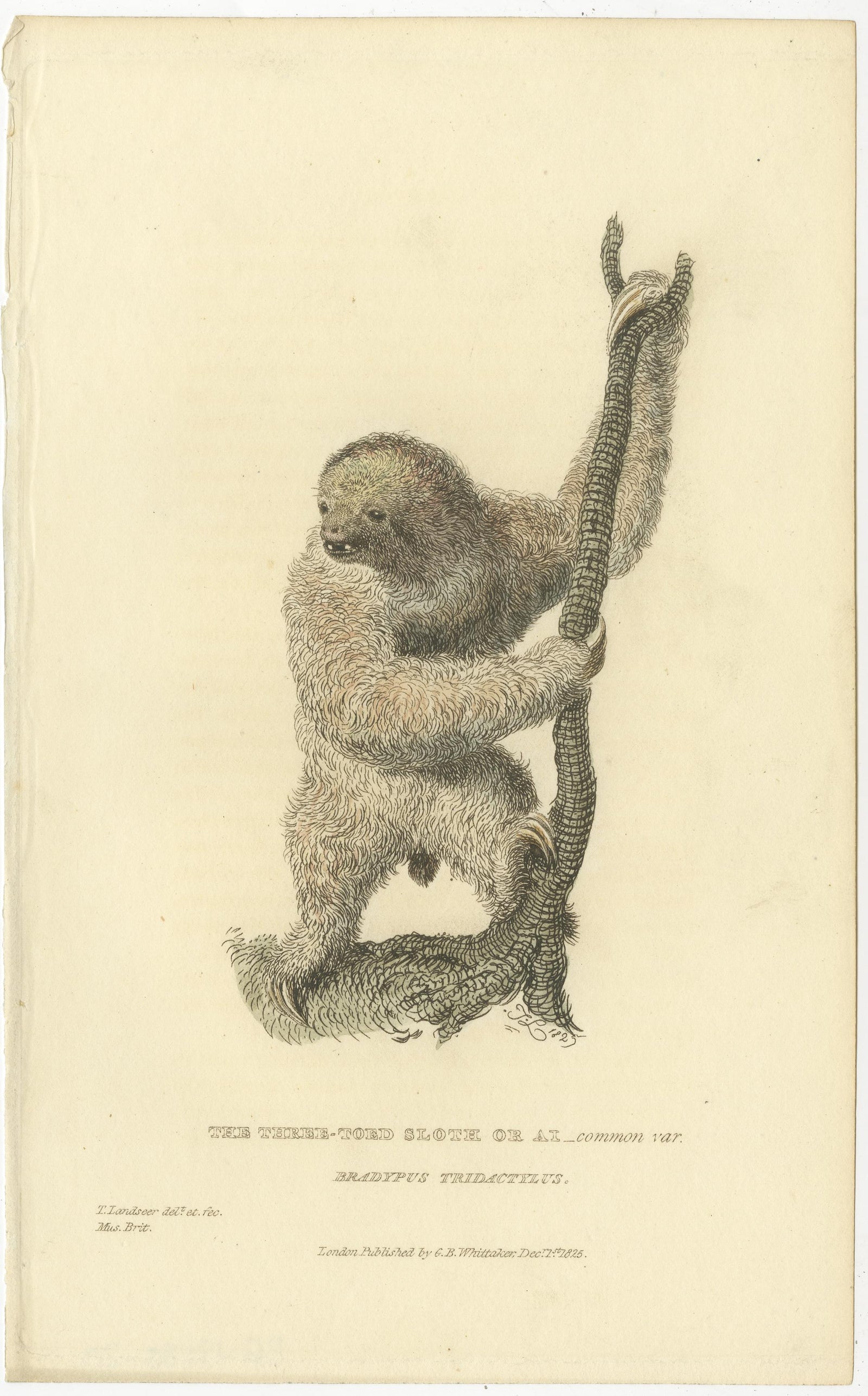
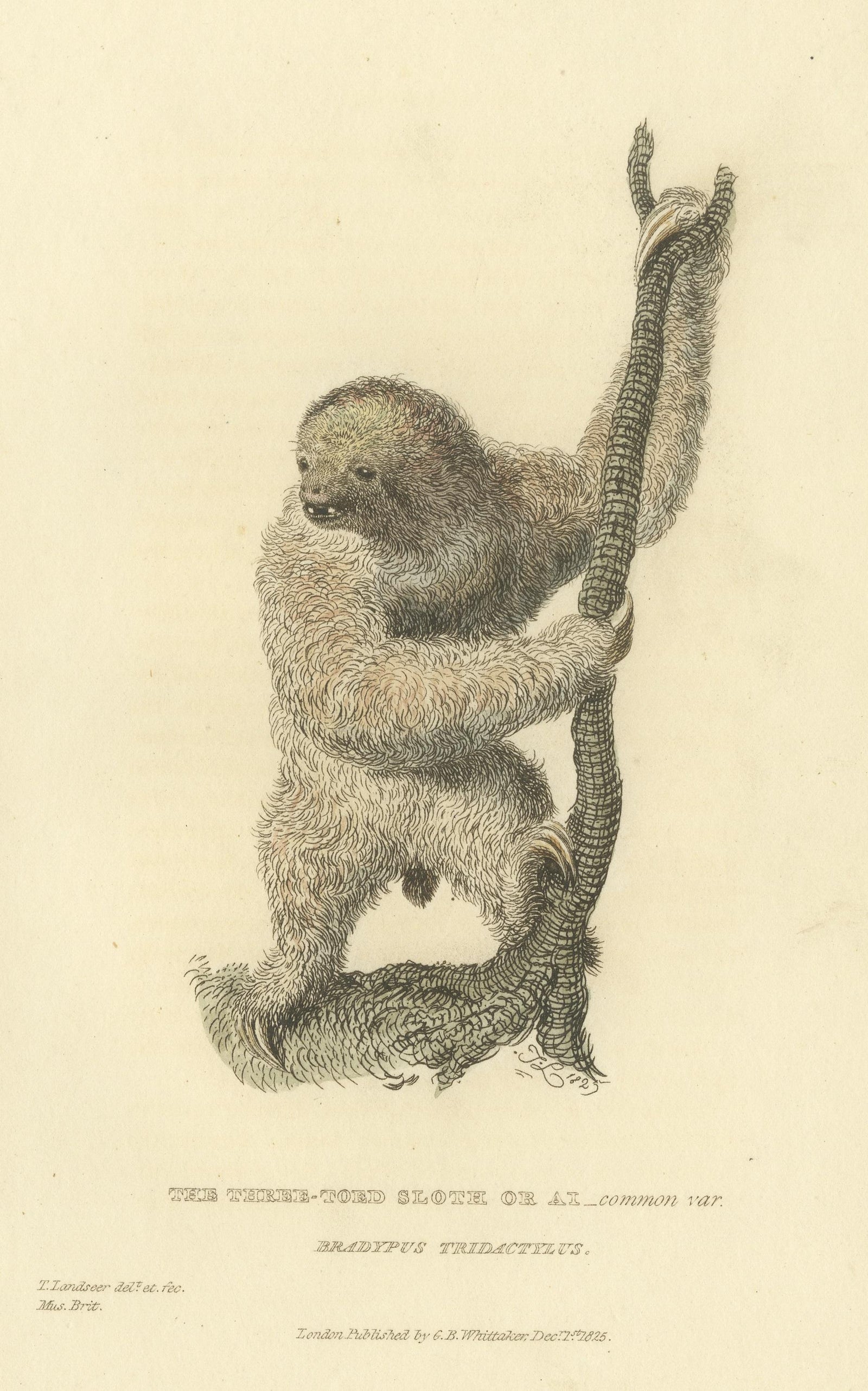
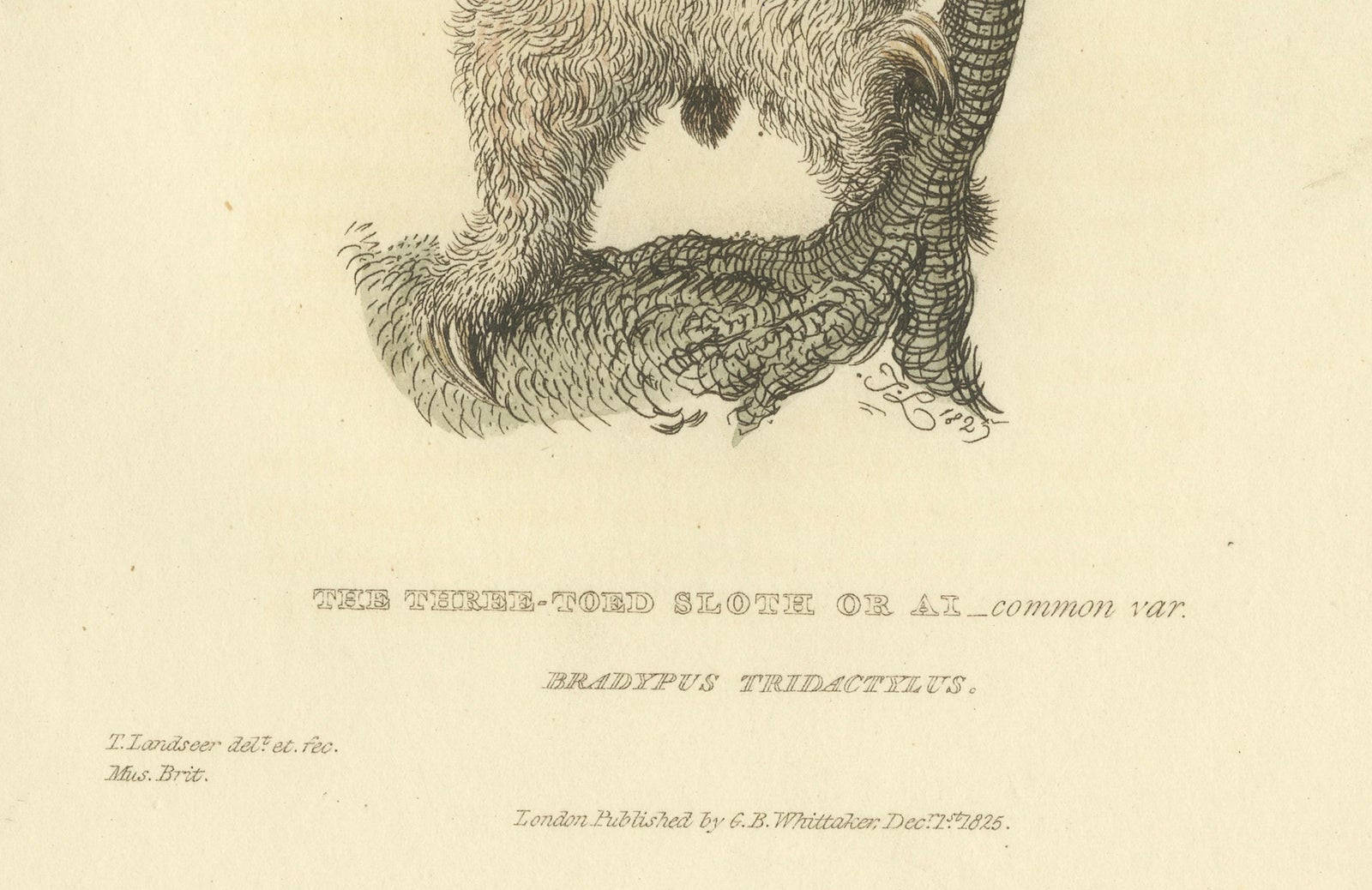
The three-toed sloth or ai, a hand-colored engraving published in London by G.B. Whittaker on December 1, 1825. The caption reads "The Three-Toed Sloth or Ai. common var." with the Latin name "Bradypus Tridactylus." beneath it, and the credits at lower left read "T. Landseer del. et sc." and "Mus. Brit.", indicating that it was drawn and engraved by Thomas Landseer from a specimen in the British Museum.
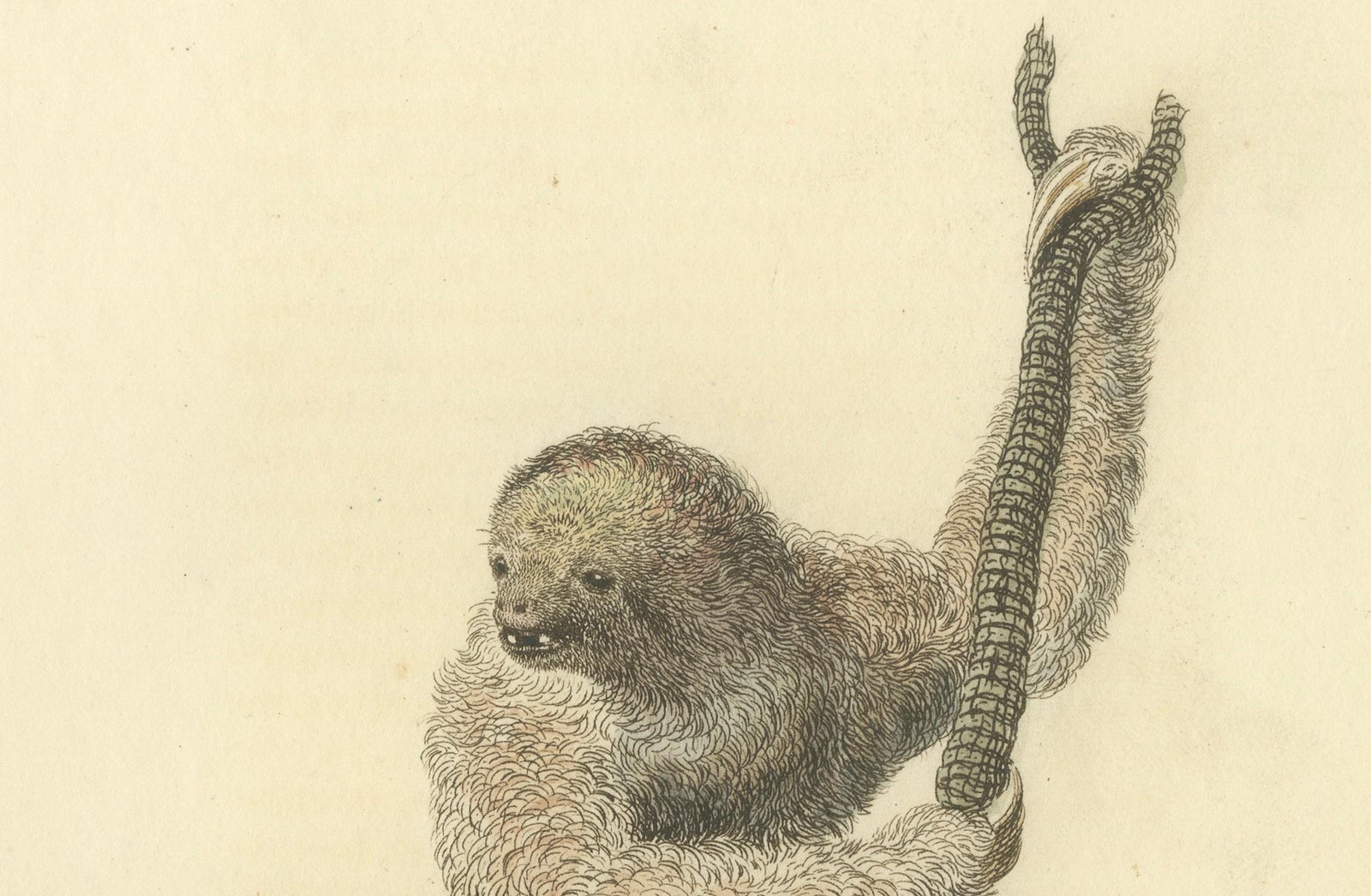
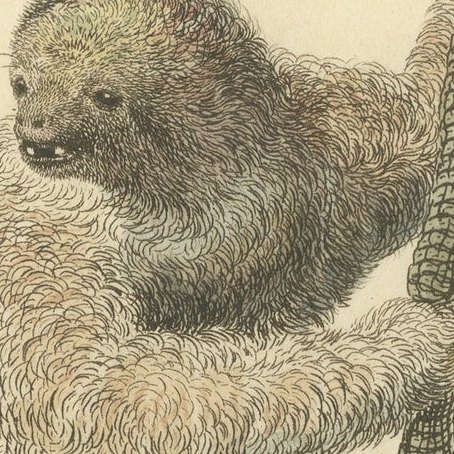
The sloth is drawn upright, gripping a long, scaly vine or branch with both arms and one foot. Its coat is shaggy and gray-brown with a paler face and dark eye patches, and its mouth is open slightly. The ground is left blank except for a patch of moss at the base of the branch.
The three-toed sloth, Bradypus tridactylus, lives in the forests of northern South America. The sheet belongs to a series of animal plates made in London in the 1820s, and the specimen drawn in the British Museum gives it a documentary basis.