Close-ups
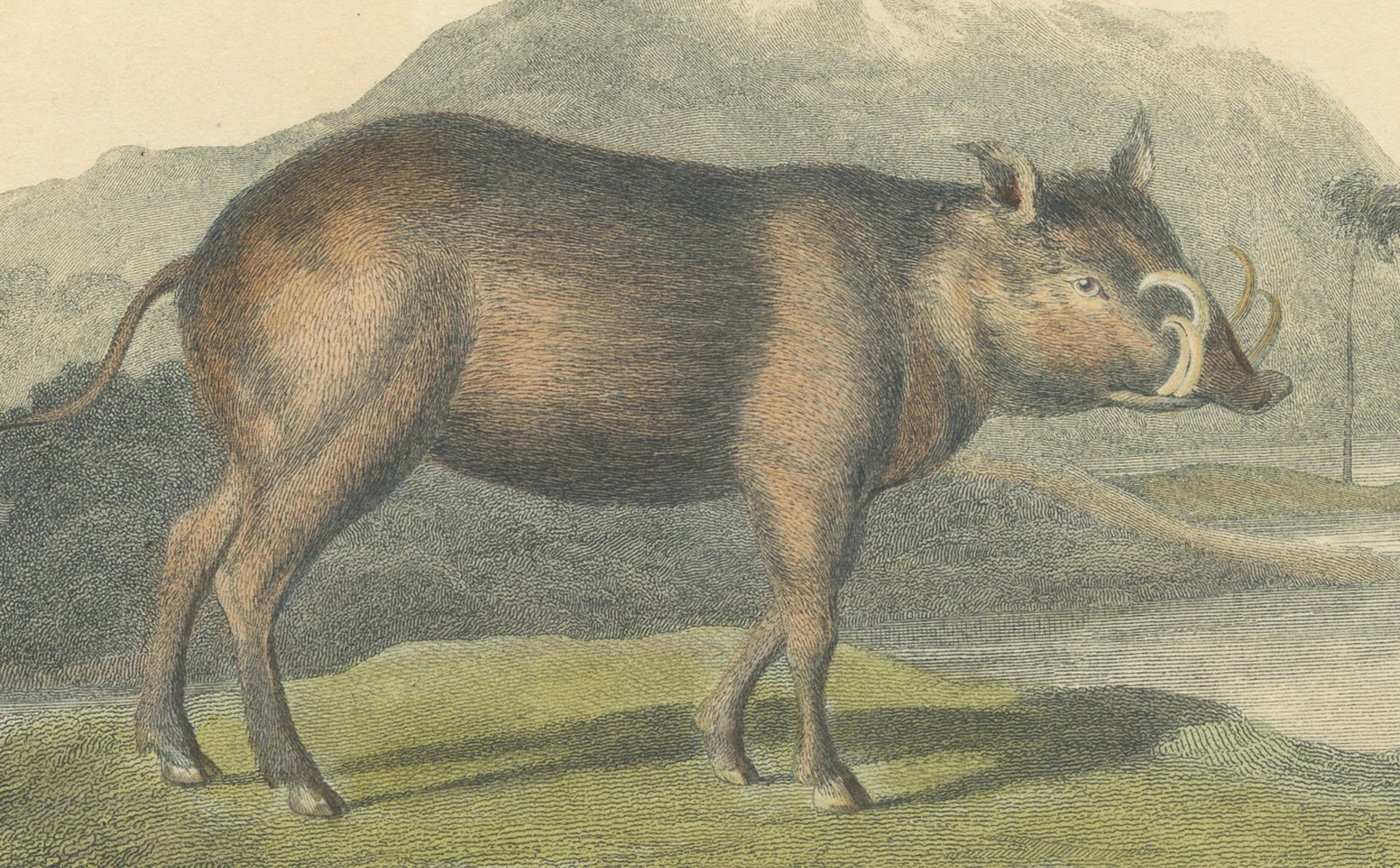
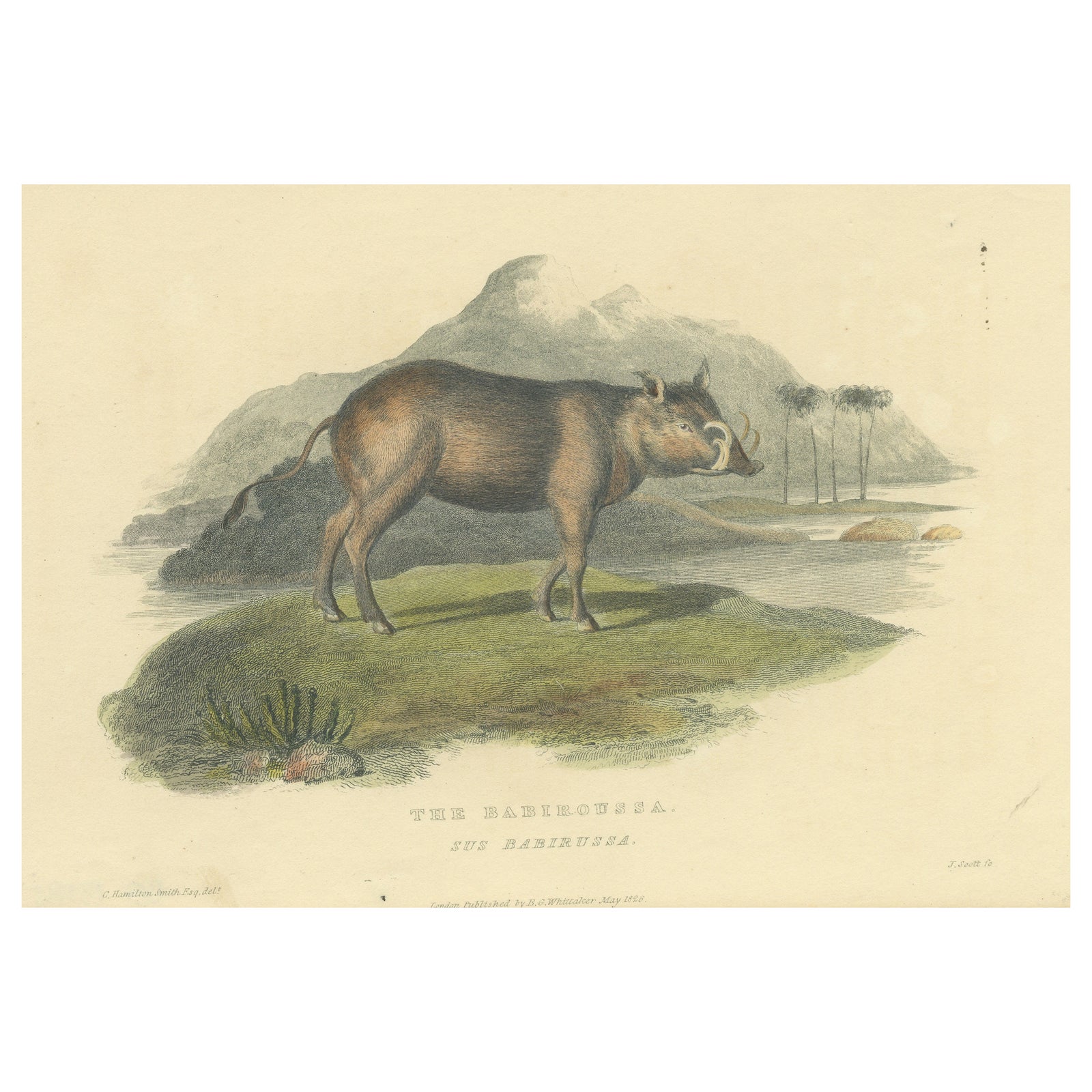
Antique Print with Hand Coloring of a Babirusa
$290 (£220, €260)
Period original, not a reproduction.
Shipped from the Netherlands, flat, insured and tracked, worldwide. Returns accepted within 14 days.
- Date
- Not stated
- Size
- 5.8 × 9.6 in (14.7 × 24.3 cm)
- Condition
- Good. General age-related toning. Minor wear and soiling. Blank verso. Please study image carefully.
- Section
- Mammals
- Reference
- f_38931162
- Colour
- Hand coloured
What the condition grades mean
- Excellent
- Bright and clean, with no faults worth mentioning.
- Very good
- Only light signs of age, such as faint toning.
- Good
- Normal signs of age for a sheet of this period: toning, some foxing, small marks or neat old repairs.
- Fair
- Clear faults such as staining, tears or repairs, priced to match.
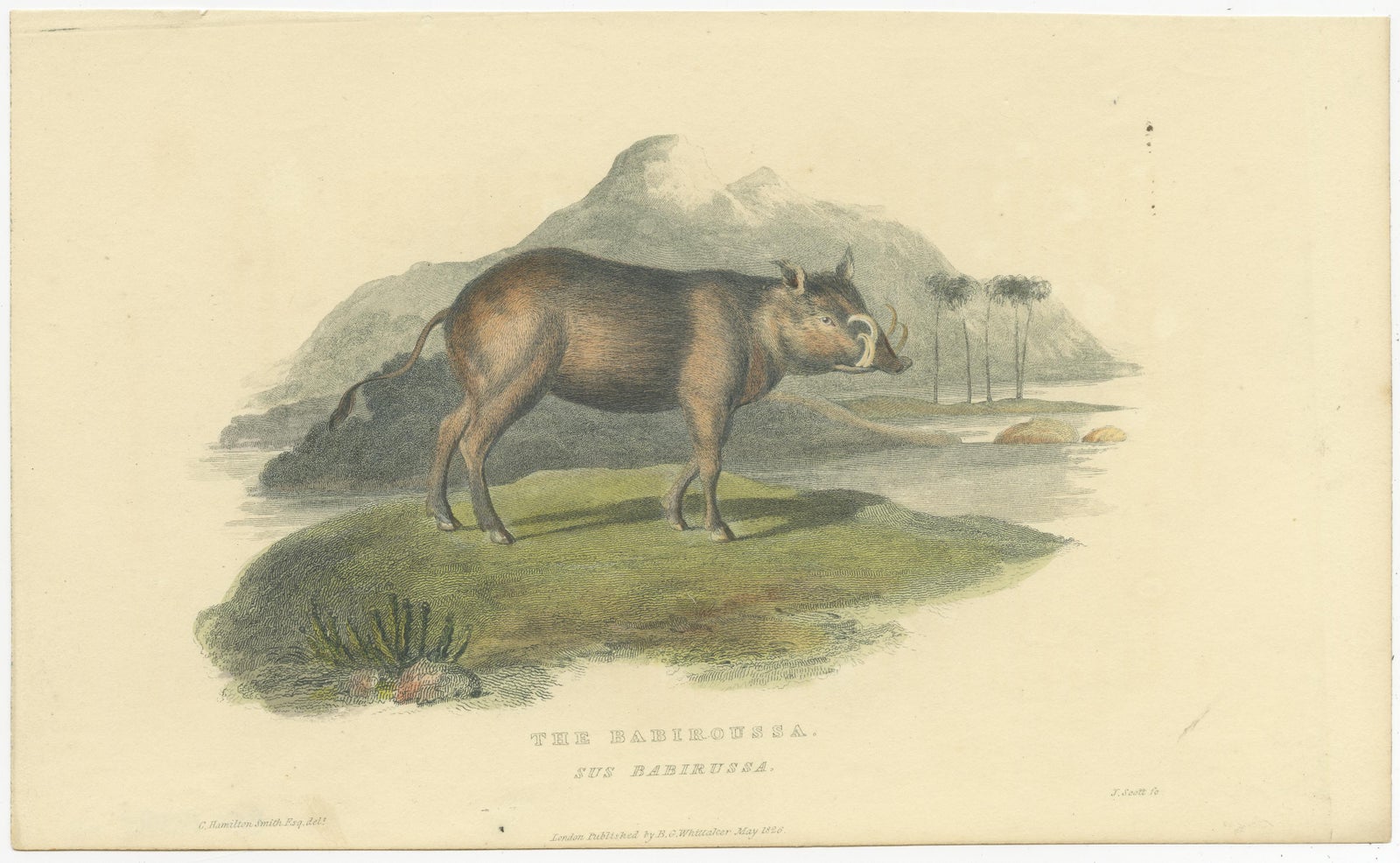
Every fault we see is written in the condition note, and the whole sheet is shown uncropped in the photos.
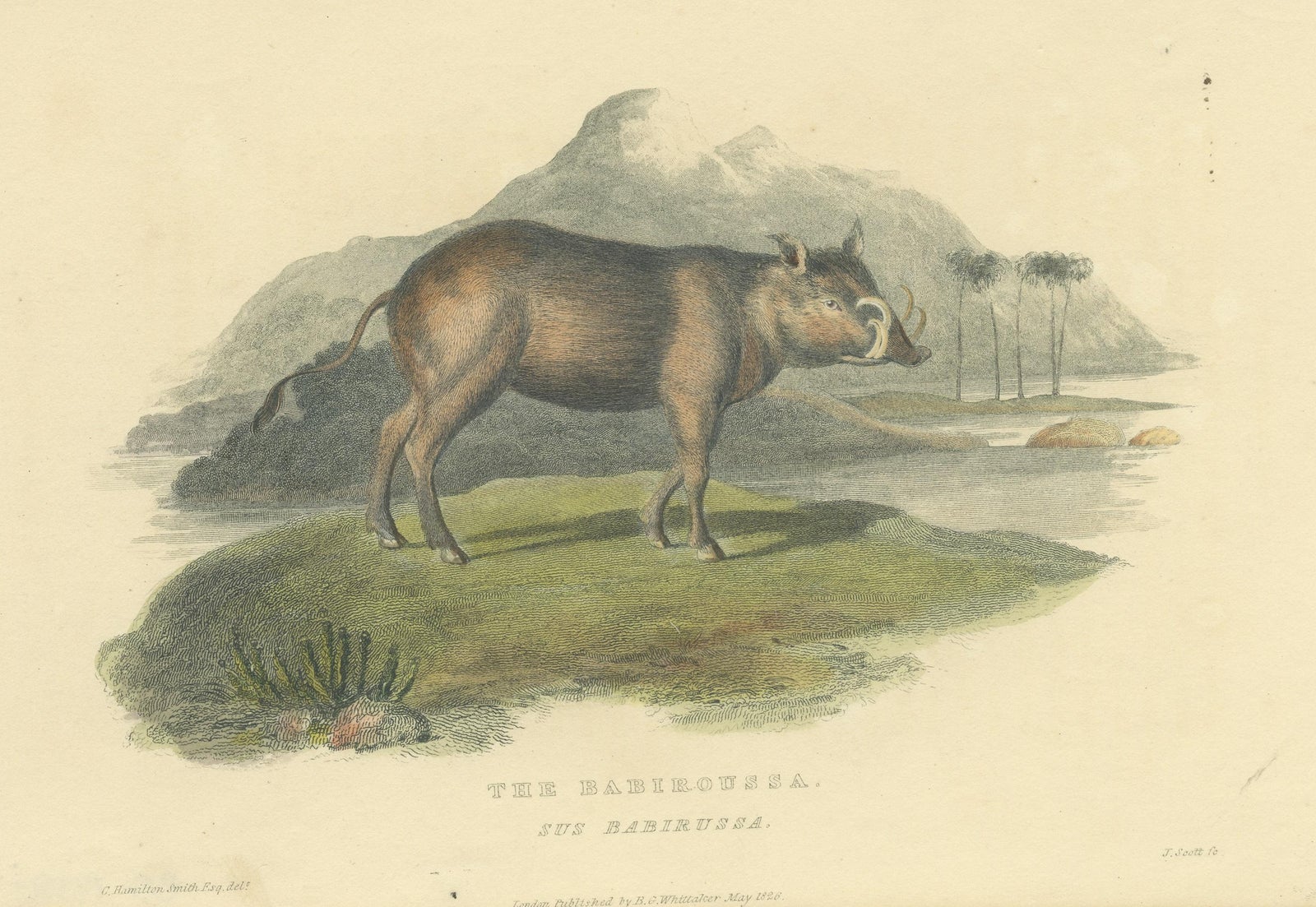
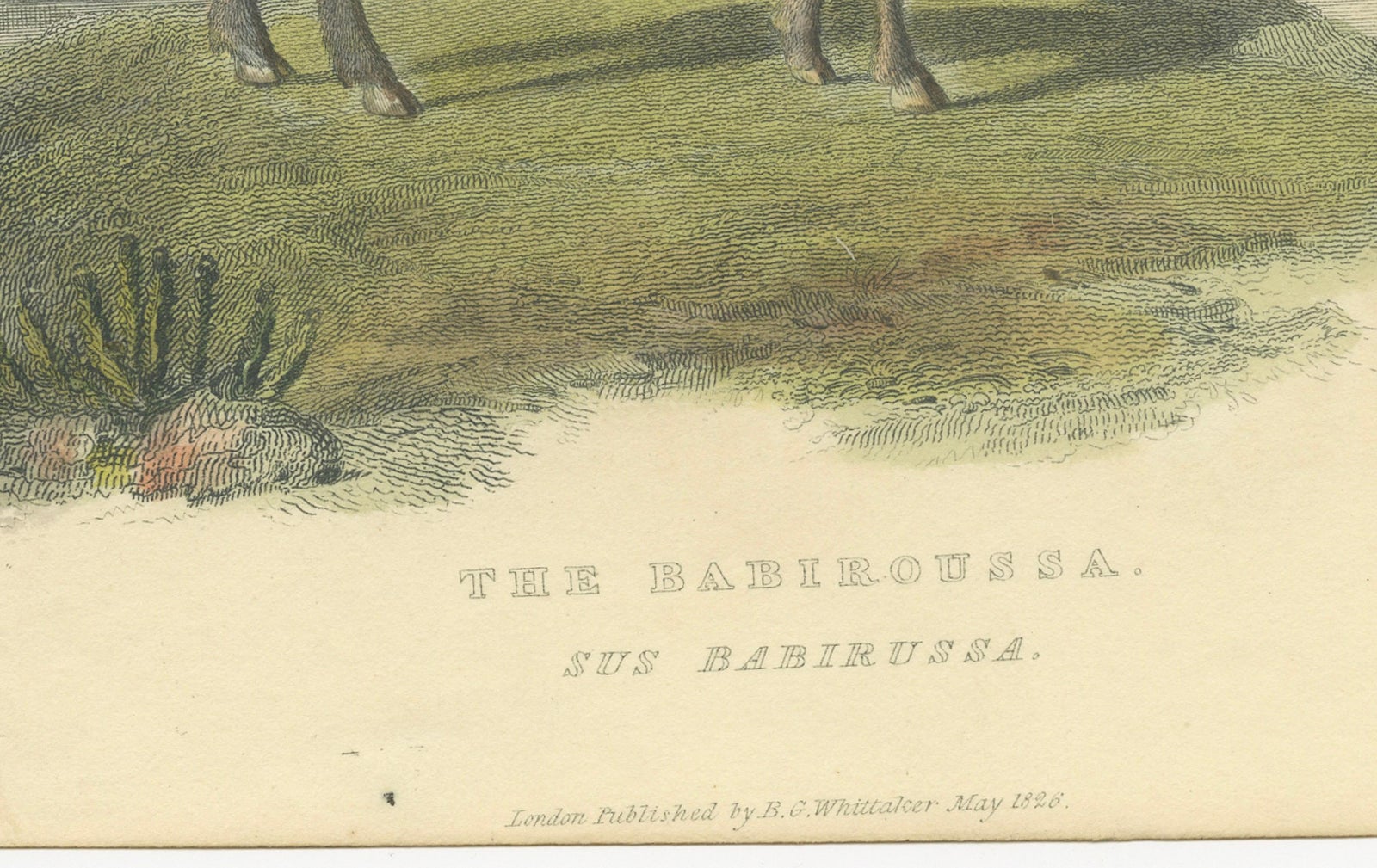
Antique print of a babirusa, titled 'The Babiroussa, Sus Babirussa'. This print was published by G.B. Whittaker, and the illustration was created by Charles Hamilton Smith, approximately around the year 1826. The babirusa is an unusual member of the pig family (Suidae), endemic to several Indonesian islands, including Sulawesi, Togian, Sula, and Buru.
Charles Hamilton Smith was a distinguished naturalist and illustrator, whose illustrations were sought after for their scientific value and artistic quality. The publisher G.B. Whittaker was involved in distributing various works during the 19th century, contributing to the dissemination of knowledge about natural history through prints such as these.
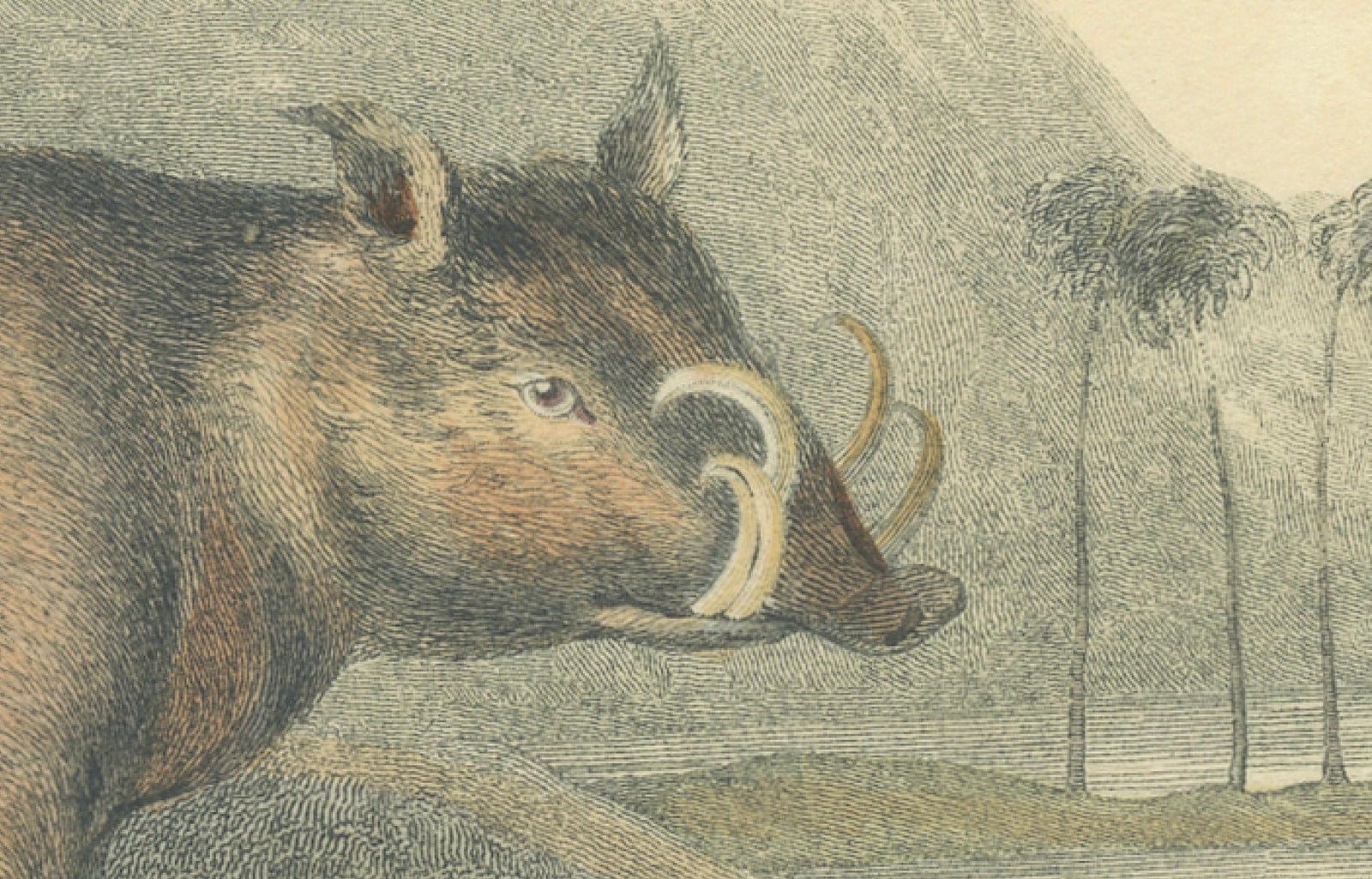
Babirusas are known for their distinctive tusks, which in males can grow upwards, curving back toward the forehead. They are called 'deer-pigs' because of these prominent tusks and their slender, deer-like legs. The genus Babyrousa is notable not only for its physical appearance but also for its rarity and the conservation concerns surrounding it. Babirusas are protected animals due to their vulnerability to hunting and habitat destruction. They are also a subject of interest in the field of conservation biology because of their limited distribution and unique ecological niches.