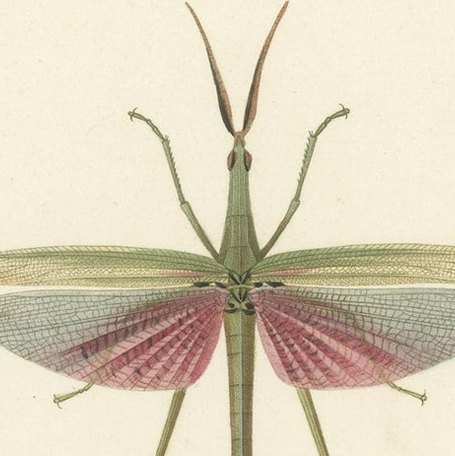
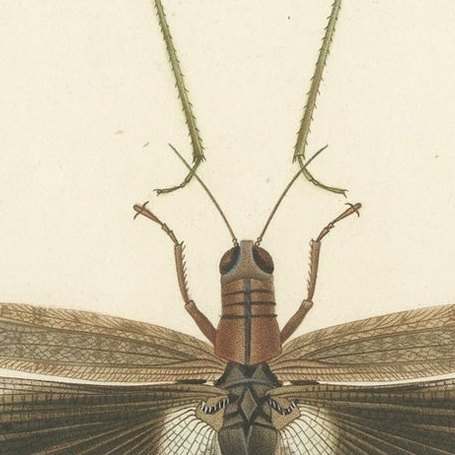
Close-ups
Framed and on the wall
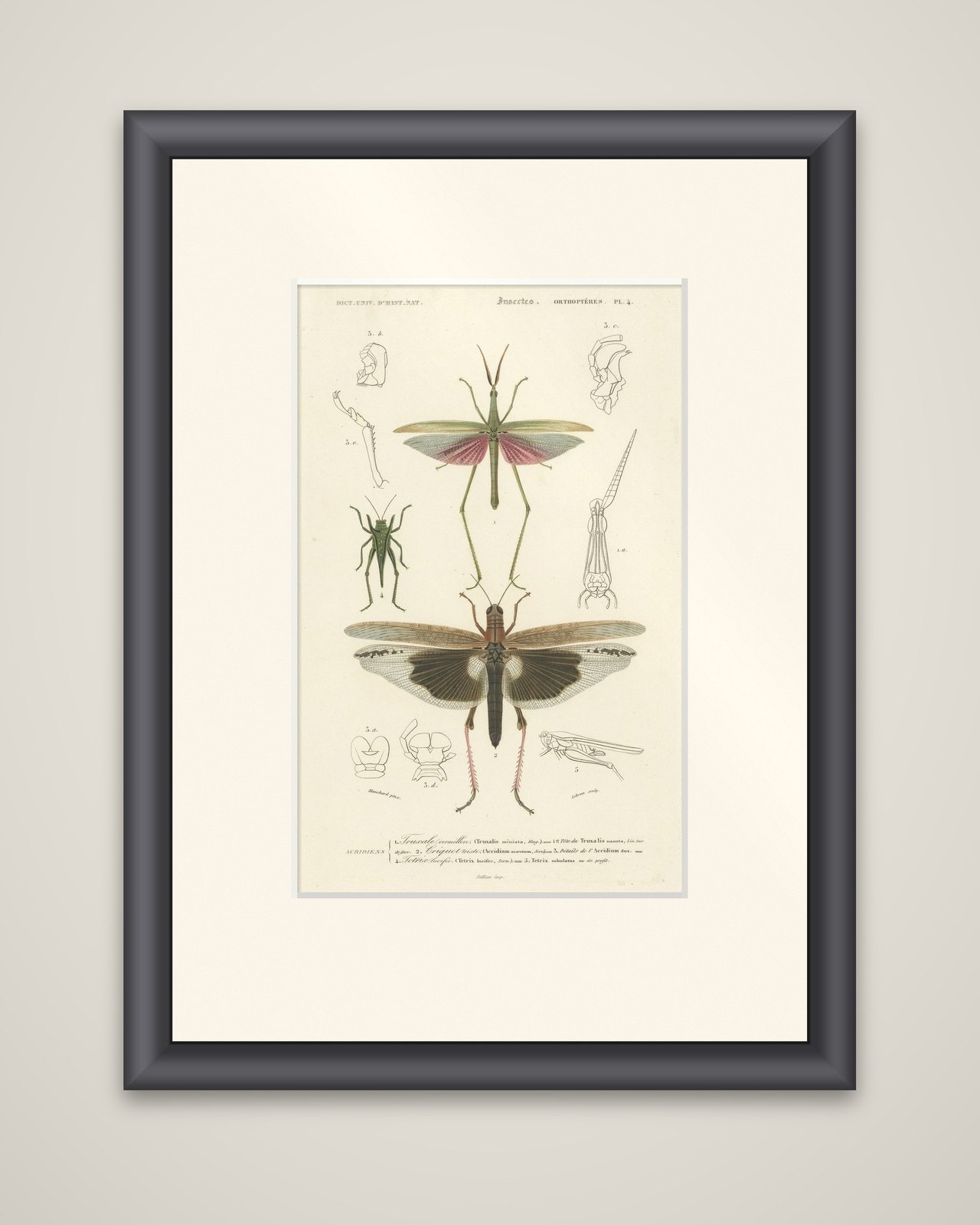

Frame and rooms are illustrations of how the print could look; the description says what is included.
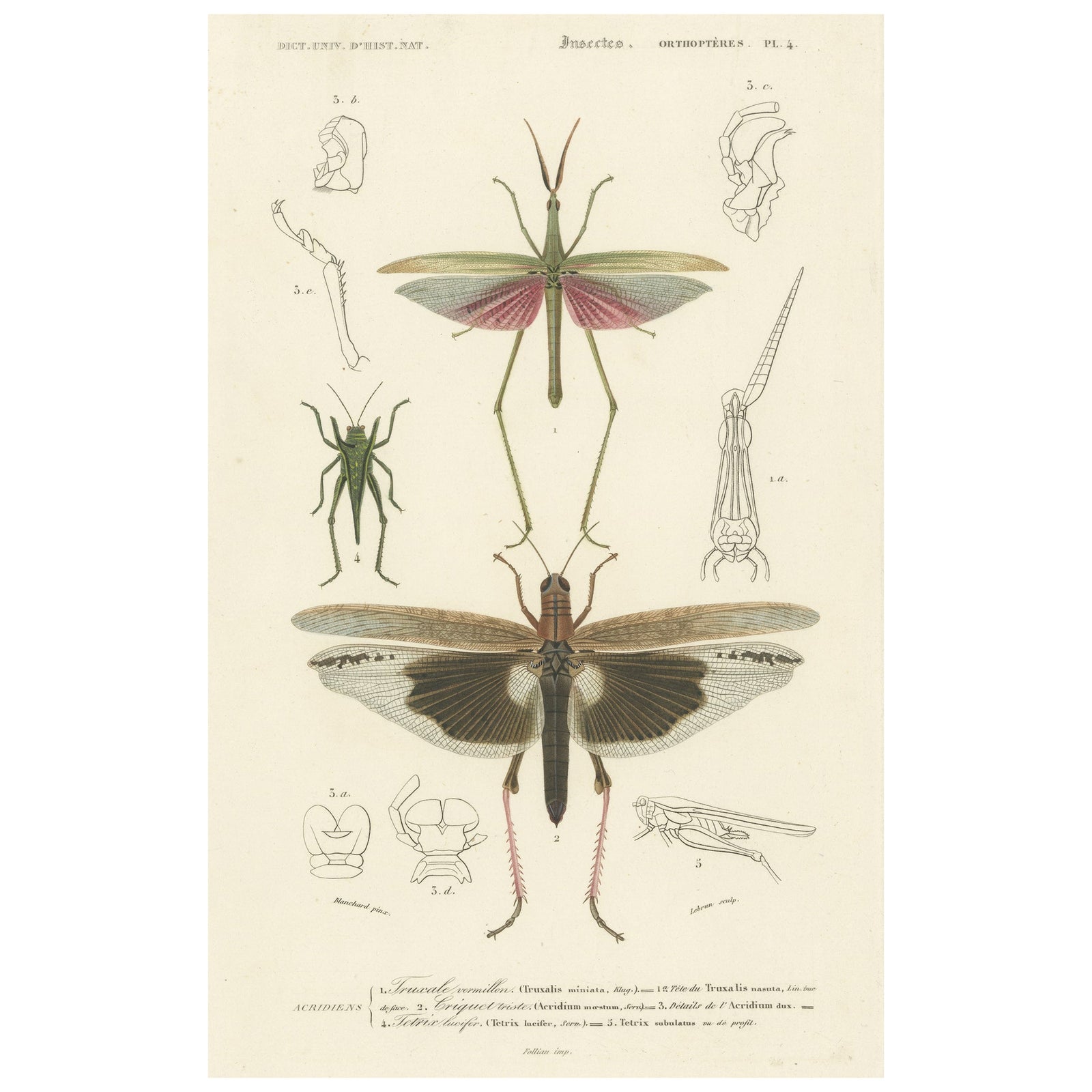
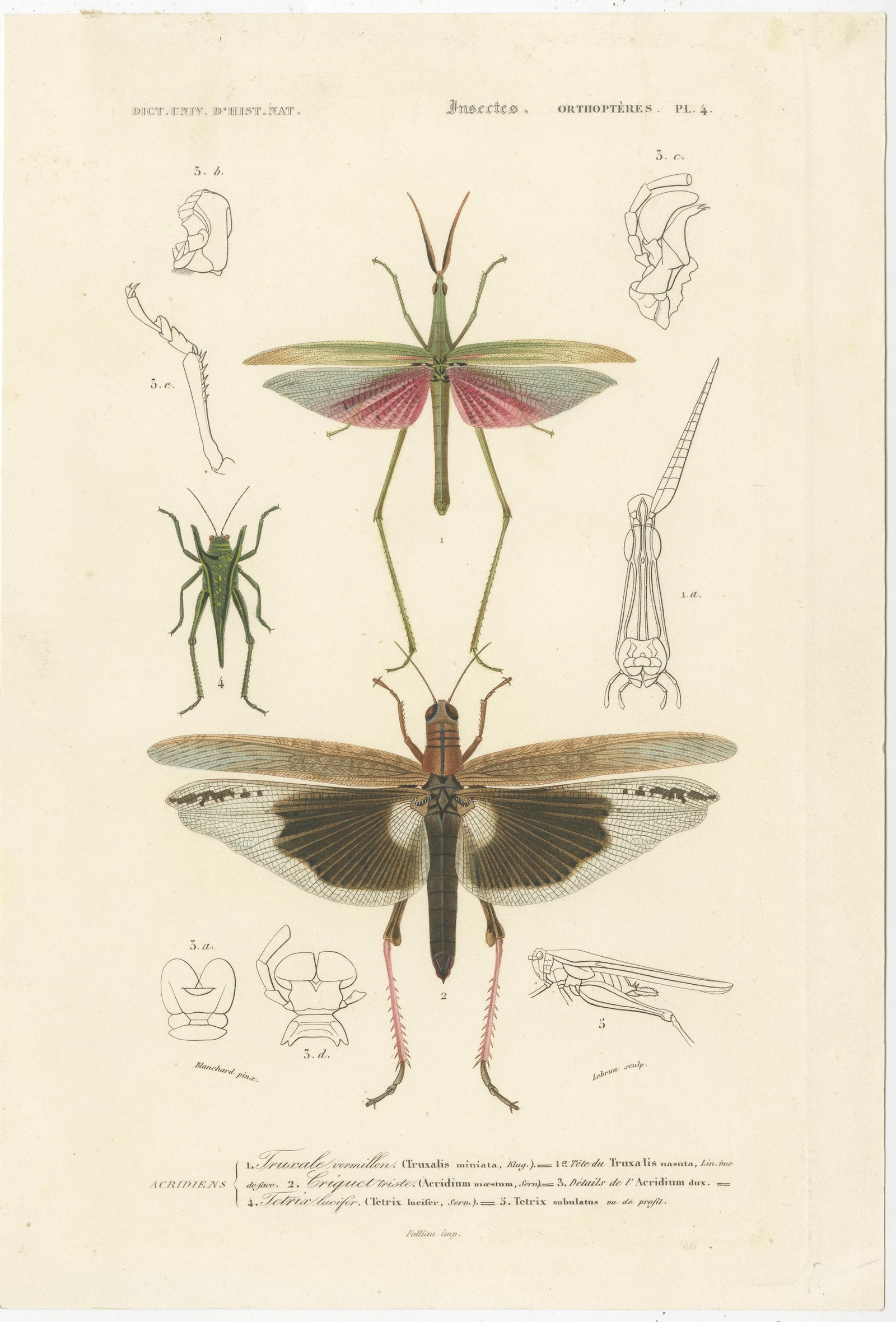
Antique Print of Various Insects Including a Grasshopper
$245 (£185, €220)
Period original, not a reproduction.
Shipped from the Netherlands, flat, insured and tracked, worldwide. Returns accepted within 14 days.
- Date
- Not stated
- Size
- 9.8 × 6.7 in (25 × 17 cm)
- Condition
- Good. Wear consistent with age and use. General age-related toning. Minor wear and soiling, blank verso. Please study image carefully.
- Section
- Insects and butterflies
- Reference
- f_31089072
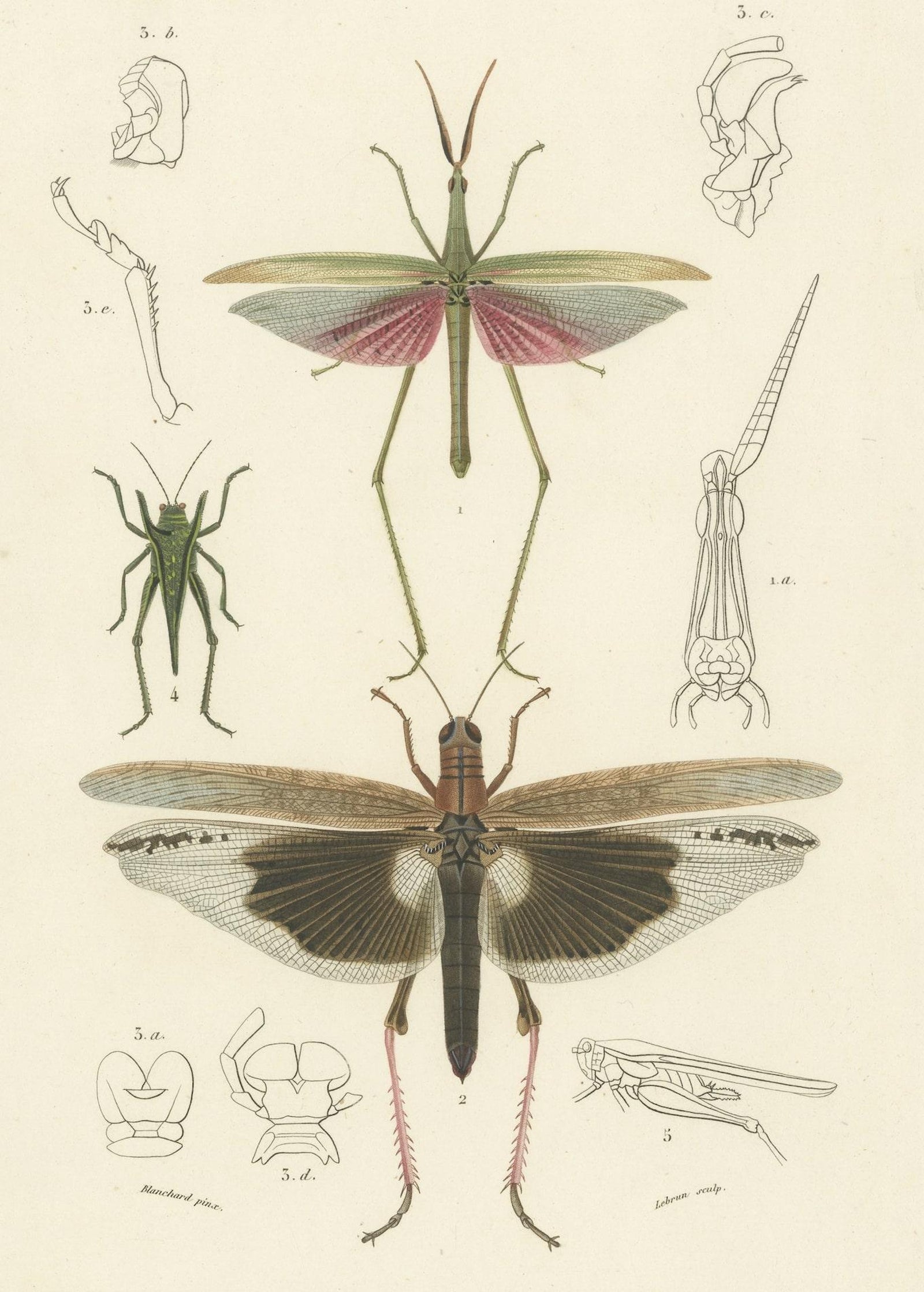
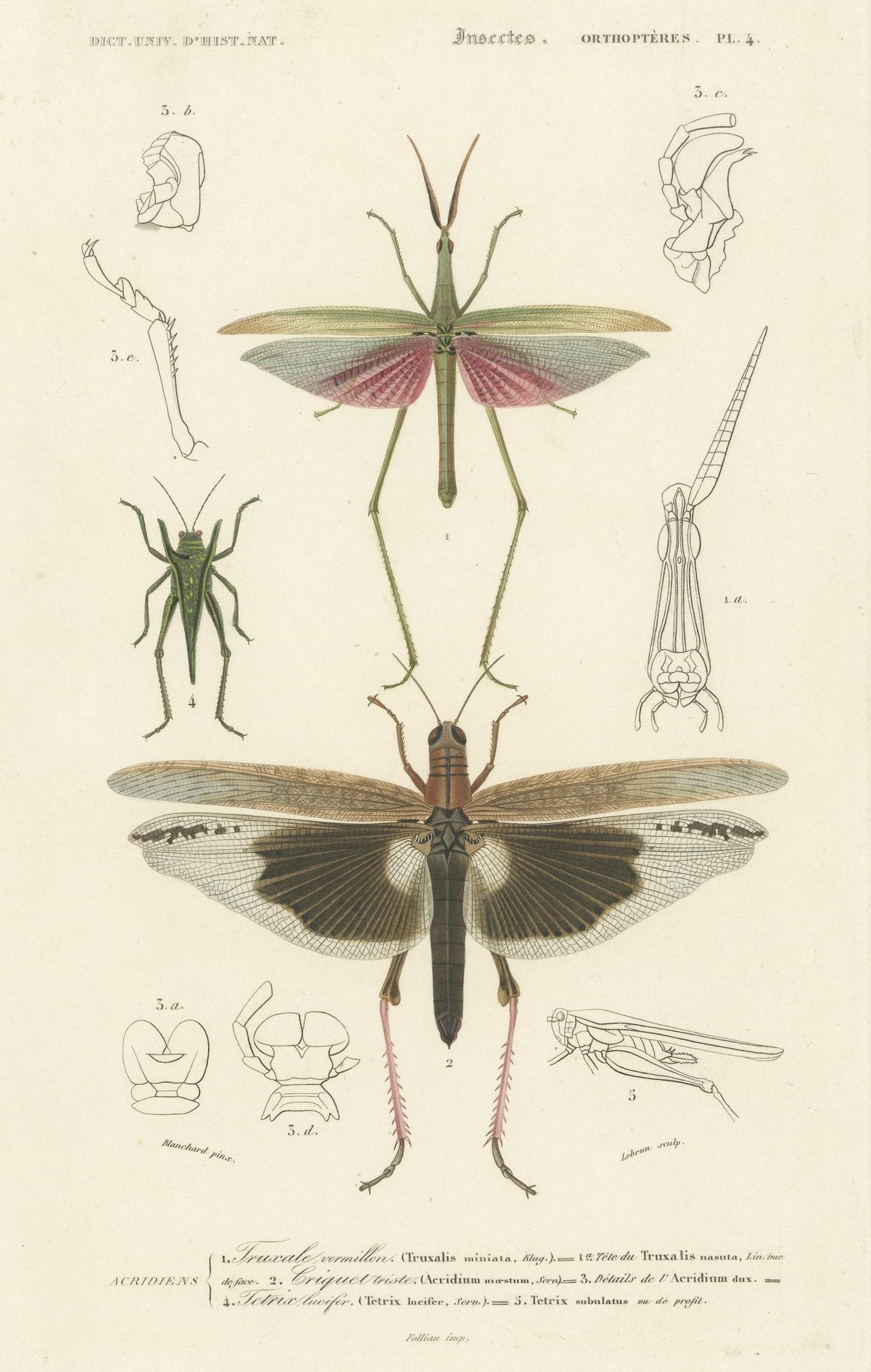
Three grasshoppers and locusts on a single plate, an original antique engraving with hand color from the Dictionnaire Universel d'Histoire Naturelle, edited by Charles Henry Dessalines d'Orbigny and published in sixteen volumes between 1841 and 1849. The plate is headed "Insectes, Orthopteres", with the lettering "Acridiens" in the caption.
Three species are numbered and named in the caption: figure 1 the Truxalis miniata, a long-bodied green grasshopper with pink-flushed hindwings and tall pointed head, figure 2 the Acridium moestum, a large tree locust with dark brown wings, and figure 4 the Tetrix lucifer, a small green species. Around them are anatomical details of heads, legs and mouthparts, drawn in outline. The engraver's credits, "Marchand pinx." and "Schmid sculp.", appear below the figures.
The Dictionnaire was edited by Charles d'Orbigny (1806 to 1876), a French botanist and geologist who specialized in the Tertiary of France. He was the younger brother of the naturalist and South American explorer Alcide d'Orbigny, and at the Museum of Natural History in Paris he identified many of the flowering plants returned from his brother's collecting journeys through South America.