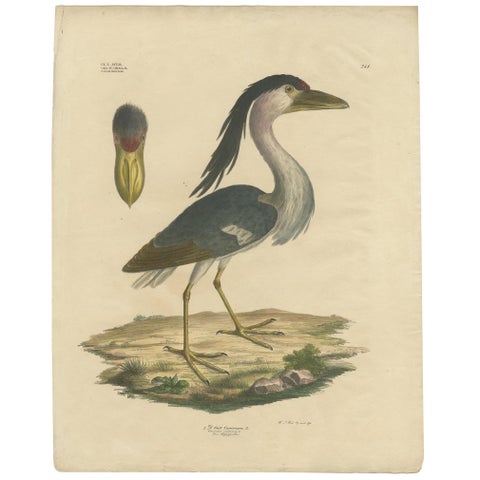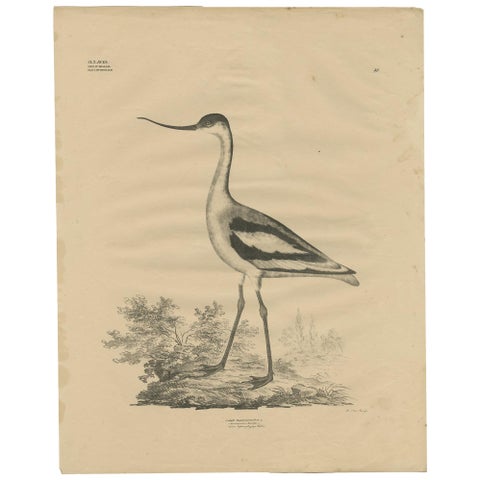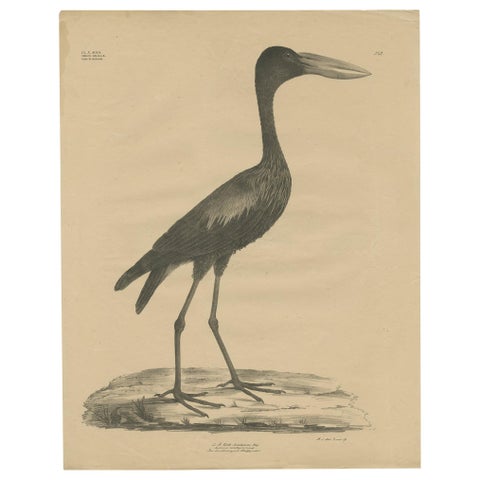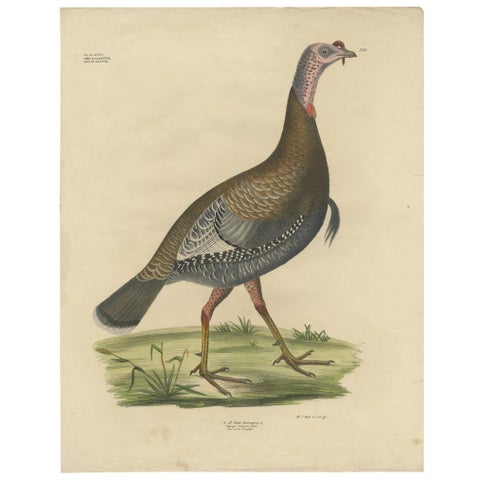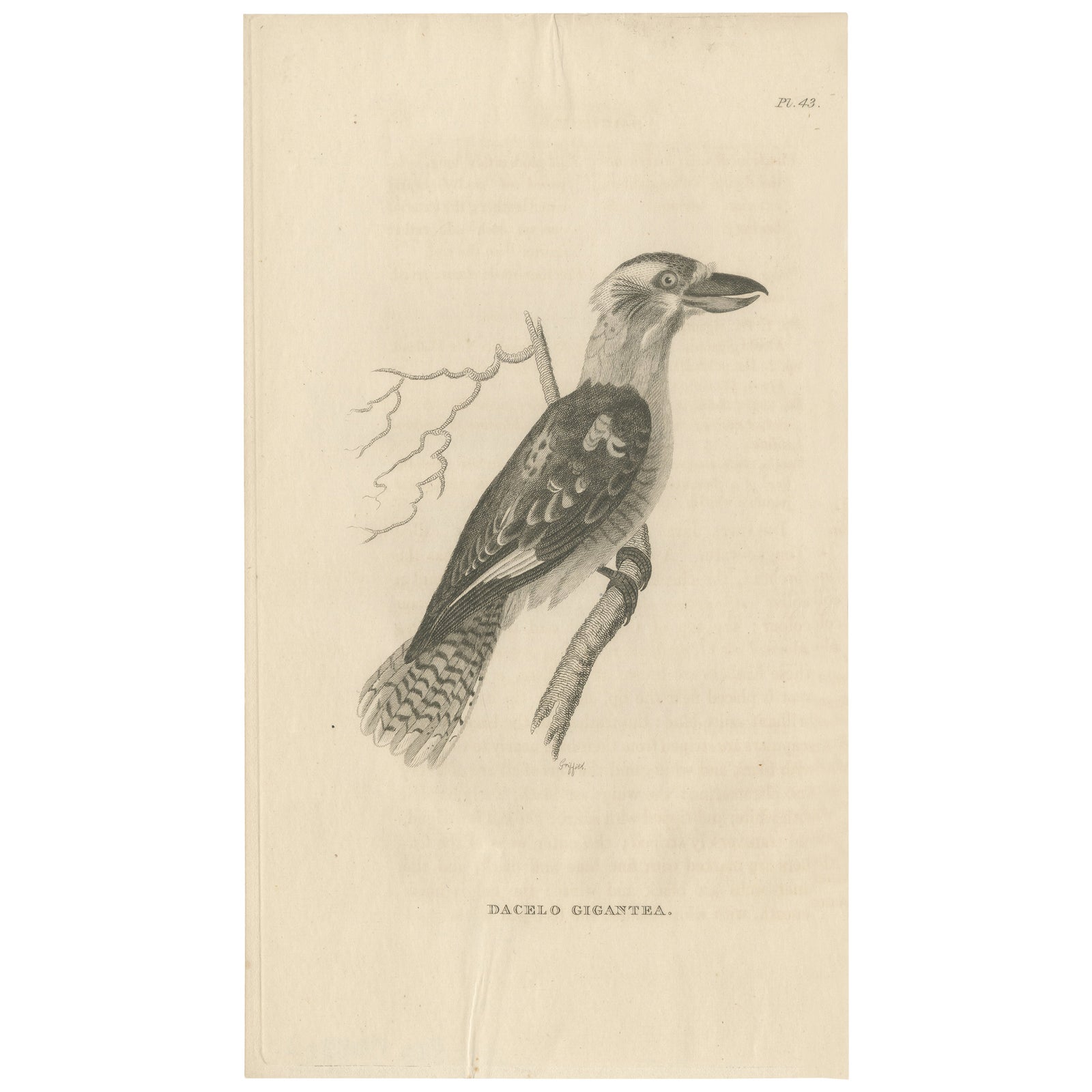
Antique Print of the Laughing Kookaburra of Australia, 1825
€120 ($135, £100, €120)
Period original, not a reproduction.
Shipped from the Netherlands, flat, insured and tracked, worldwide. Returns accepted within 14 days.
- Date
- 1825
- Size
- 8.7 × 4.9 in (22 × 12.5 cm)
- Condition
- Good. GoodWear consistent with age and use.
- Period
- Early 19th century
- Section
- Birds
- Reference
- f_26299632
What the condition grades mean
- Excellent
- Bright and clean, with no faults worth mentioning.
- Very good
- Only light signs of age, such as faint toning.
- Good
- Normal signs of age for a sheet of this period: toning, some foxing, small marks or neat old repairs.
- Fair
- Clear faults such as staining, tears or repairs, priced to match.
Every fault we see is written in the condition note, and the whole sheet is shown uncropped in the photos.
Title: Dacelo Gigantea
Better know as the Laughing Kookaburra, by Shaw 1825.
In eastern Australia, the raucous cackle of the Laughing Kookaburra is an essential feature of the dawn chorus. They can be heard laughing from the tip of Cape York south to Wilsons Promontory. The species’ occurrence in other parts of Australia, however, is no laughing matter. Kookaburras were widely introduced into Tasmania and Western Australia where they breed in tree hollows that would usually be used by parrots and owls, and they prey on small reptiles, mammals and nestlings, thus placing undue pressure on those creatures.
The Laughing kookaburra, Dacelo novaeguineae (Gigantic dacelo, Dacelo gigantea). from volume XIII (Aves) Part 2, of 'General Zoology or Systematic Natural History' by British naturalist George Shaw (1751-1813).
Griffith, Mrs., engraver. Heath, Charles, 1785-1848, engraver. Stephens, James Francis, 1792-1853 Published in London in 1825 by G. Kearsley
Good condition, with clean image. Upper and lower part of the sheet a few slight creases, not affecting the image. Trifle yellowed. Lower part slight cut shorter than top. Please study image carefully.