Close-ups
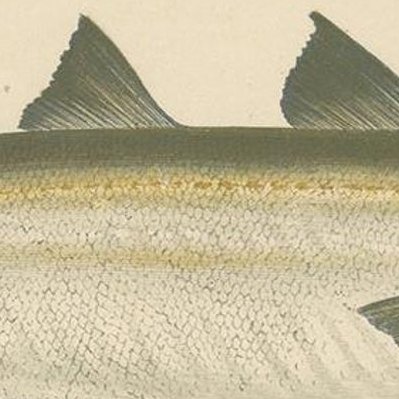
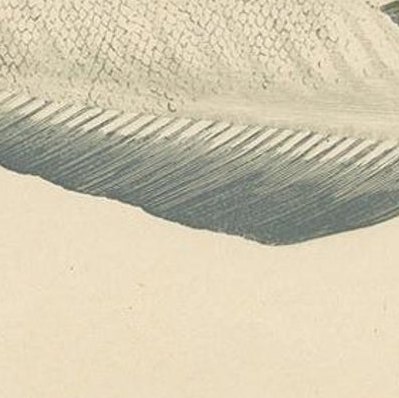
Framed and on the wall
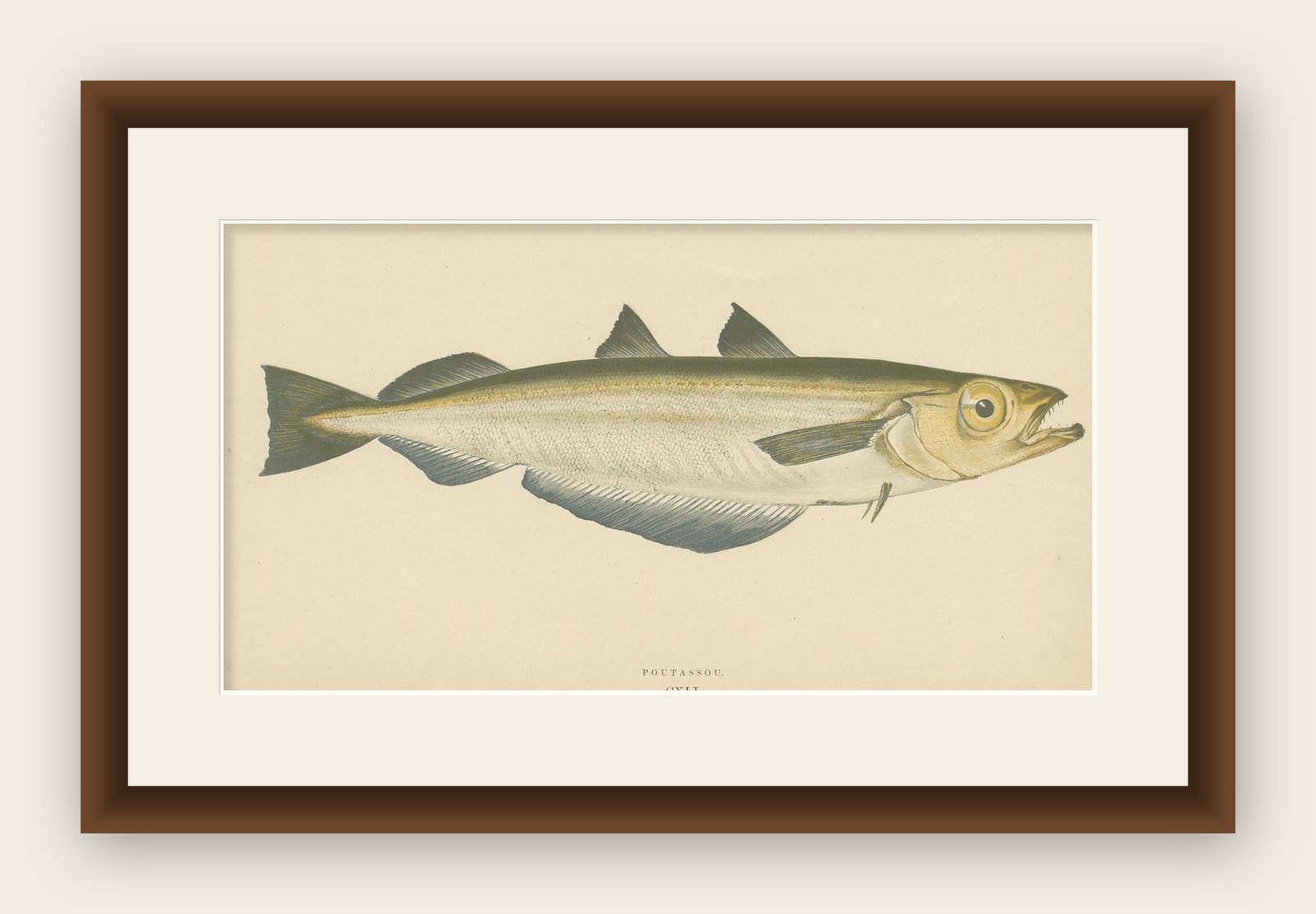

Frame and rooms are illustrations of how the print could look; the description says what is included.
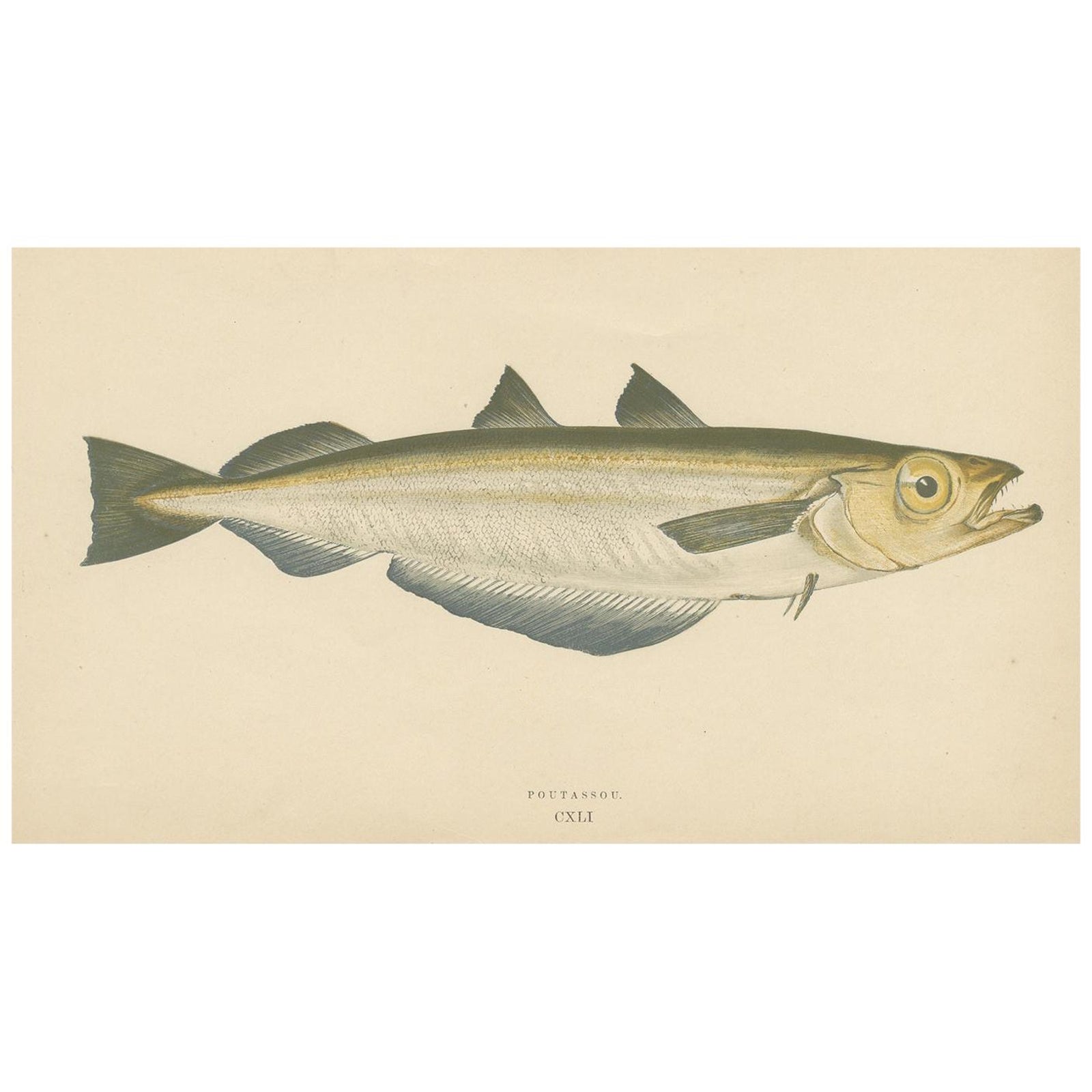
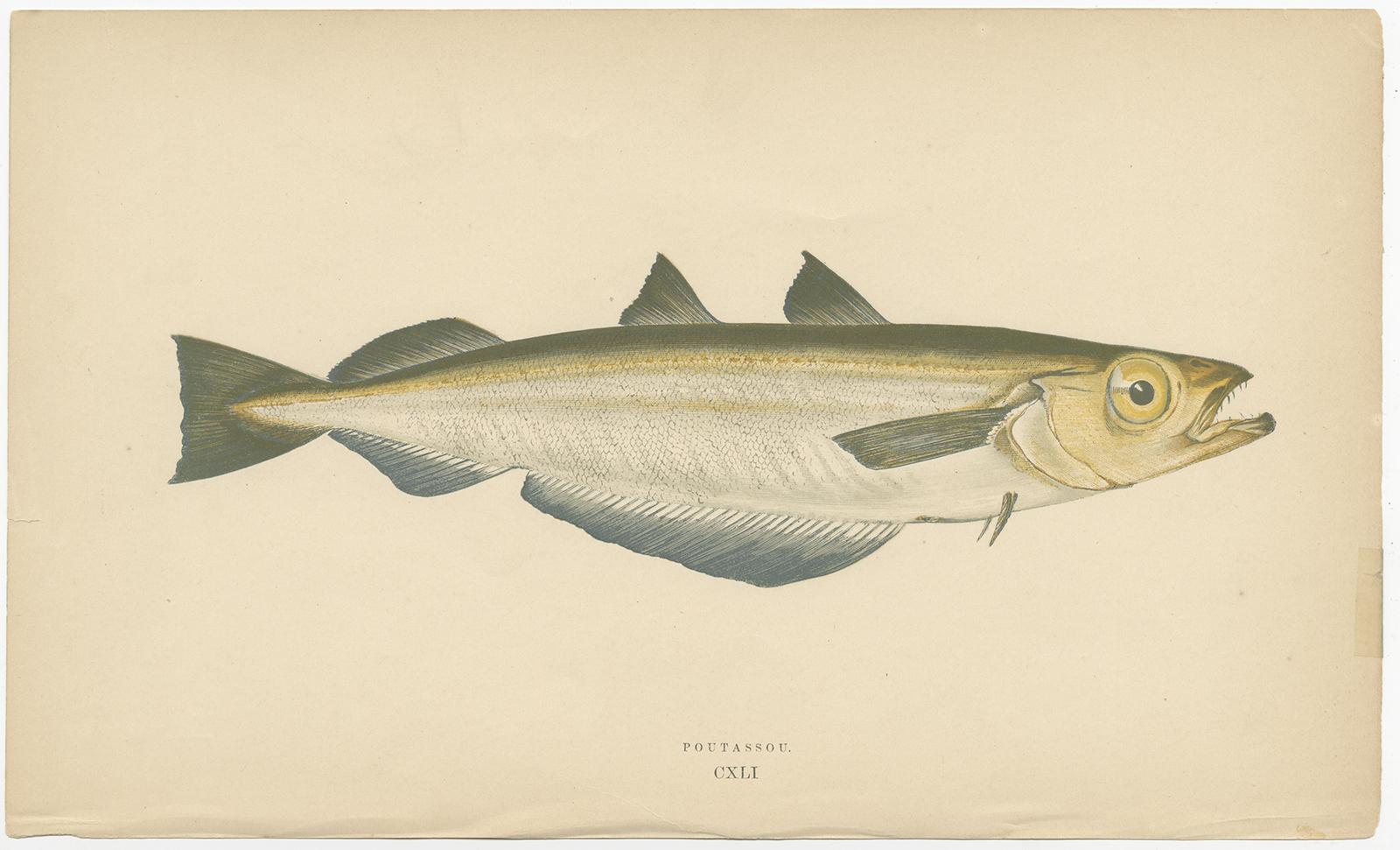
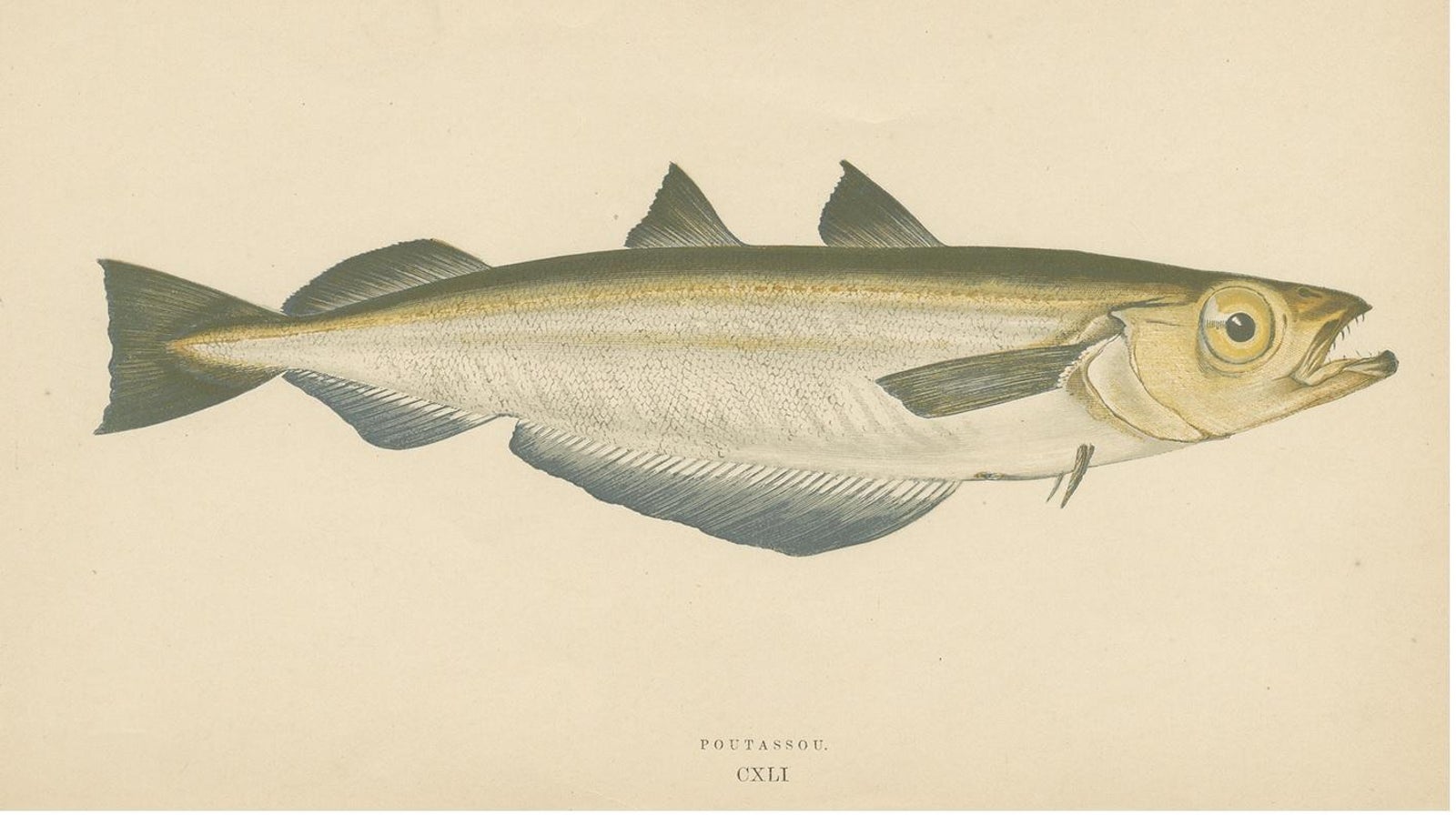
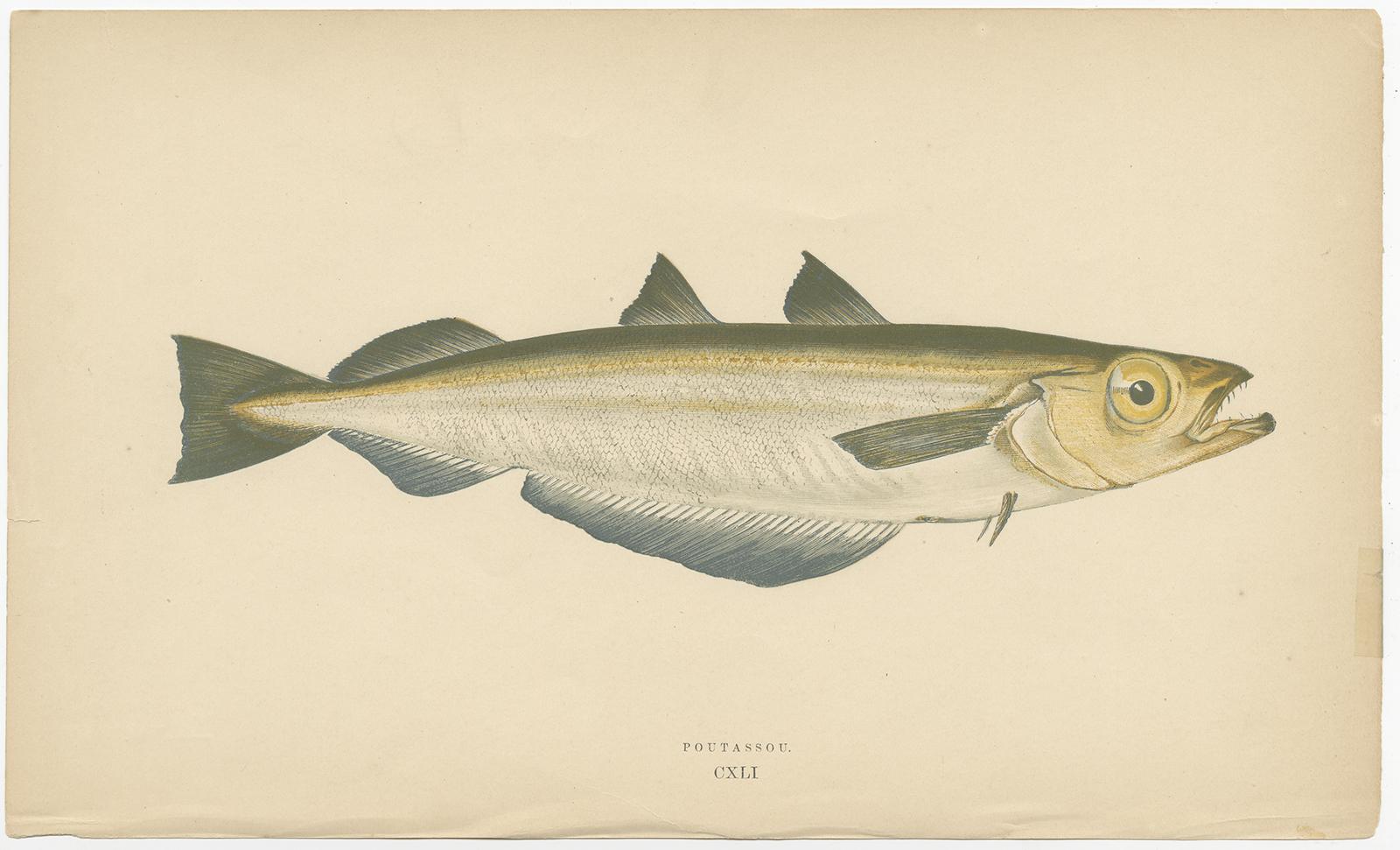
Antique Print of the Blue Whiting Fish by J. Couch, circa 1870
$135 (£100, €120)
Period original, not a reproduction.
Shipped from the Netherlands, flat, insured and tracked, worldwide. Returns accepted within 14 days.
- Date
- 1870
- Size
- 5.9 × 9.8 in (15 × 25 cm)
- Condition
- Good. General age-related toning, please study images carefully.
- Period
- Late 19th century
- Section
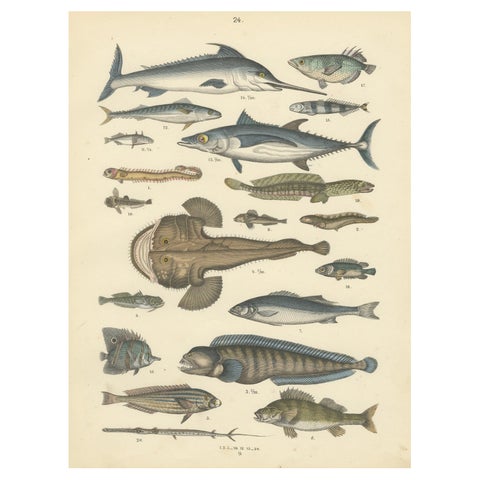
- Fish and shells
- Reference
- f_16325012
The image is an antique fish print titled "Poutassou," which is an old name for the fish species also known as blue whiting or Micromesistius poutassou. The illustration is likely from Jonathan Couch's "Fishes of the British Islands," a work by a significant figure in the field of 19th-century natural history.
The fish is depicted in a side profile, showcasing its streamlined body, which is typical of species that are adept at swift and long-distance swimming. The coloration of the fish is captured with a gradient from darker shades on the back to lighter shades on the belly, which is an example of counter-shading, a common coloration pattern in marine animals that helps with camouflage in the water.
It has a large eye, which would be indicative of a species that either inhabits deep water or is active in low-light conditions. The mouth is slightly open, revealing what appear to be small, sharp teeth, suggesting that this fish might be a predator feeding on smaller fish or invertebrates.
The fins are well-defined in the illustration, with the dorsal and anal fins being long and almost mirror images of each other in shape, while the tail fin is deeply forked, which would contribute to the fish's swimming capabilities. The pectoral fins are small and set high on the body, and the ventral fins are located closer to the head than the tail, which is characteristic of many fish species.
This print is a fine example of Couch's work, who was known for his detailed and accurate depictures of British fish. As a natural historian, Couch's illustrations were both scientifically valuable and artistically notable, capturing the beauty and diversity of aquatic life around the British Isles. This print would have been used as a reference for both scientific study and general education about marine biology during the Victorian era.