Close-ups
Framed and on the wall
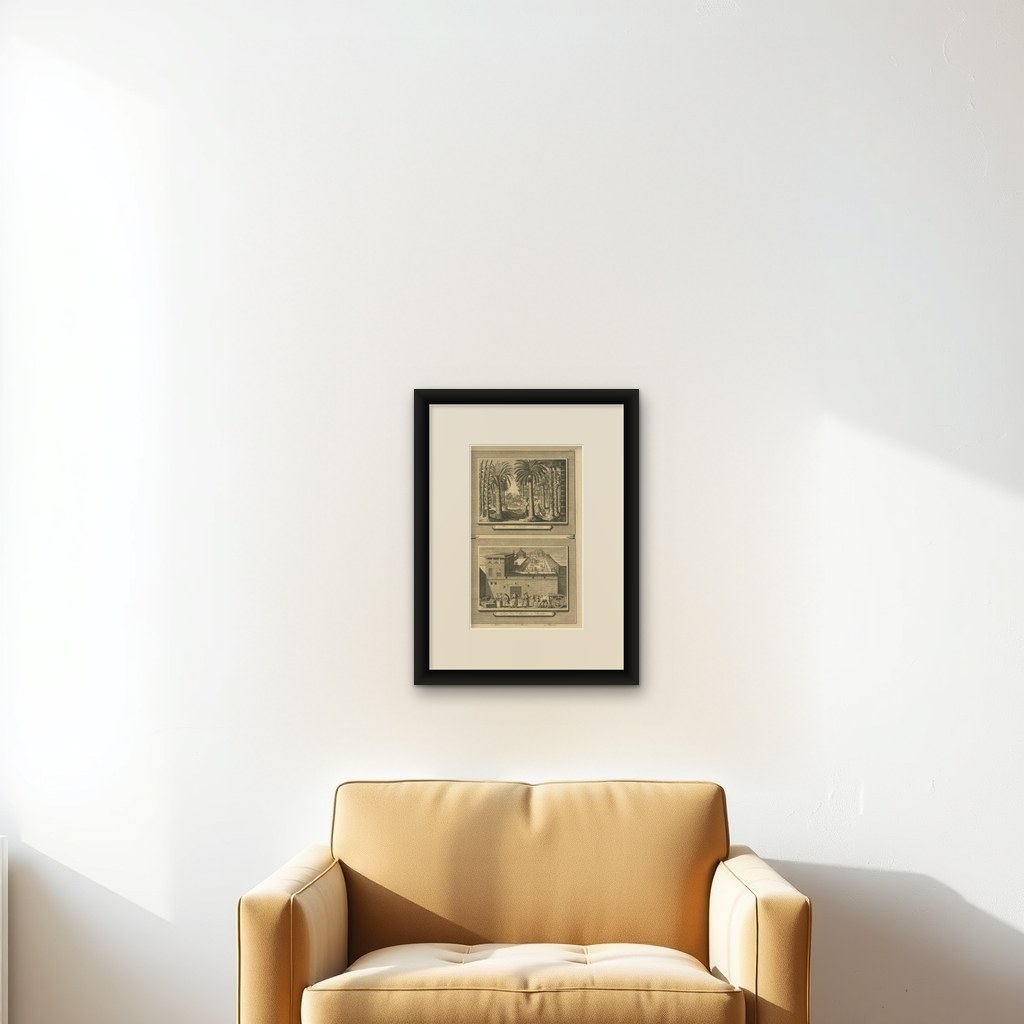

Frame and rooms are illustrations of how the print could look; the description says what is included.
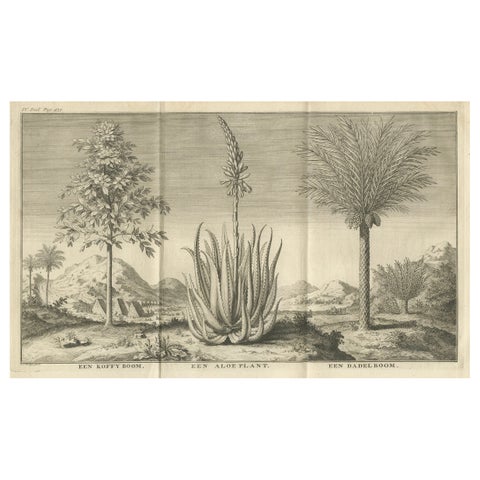
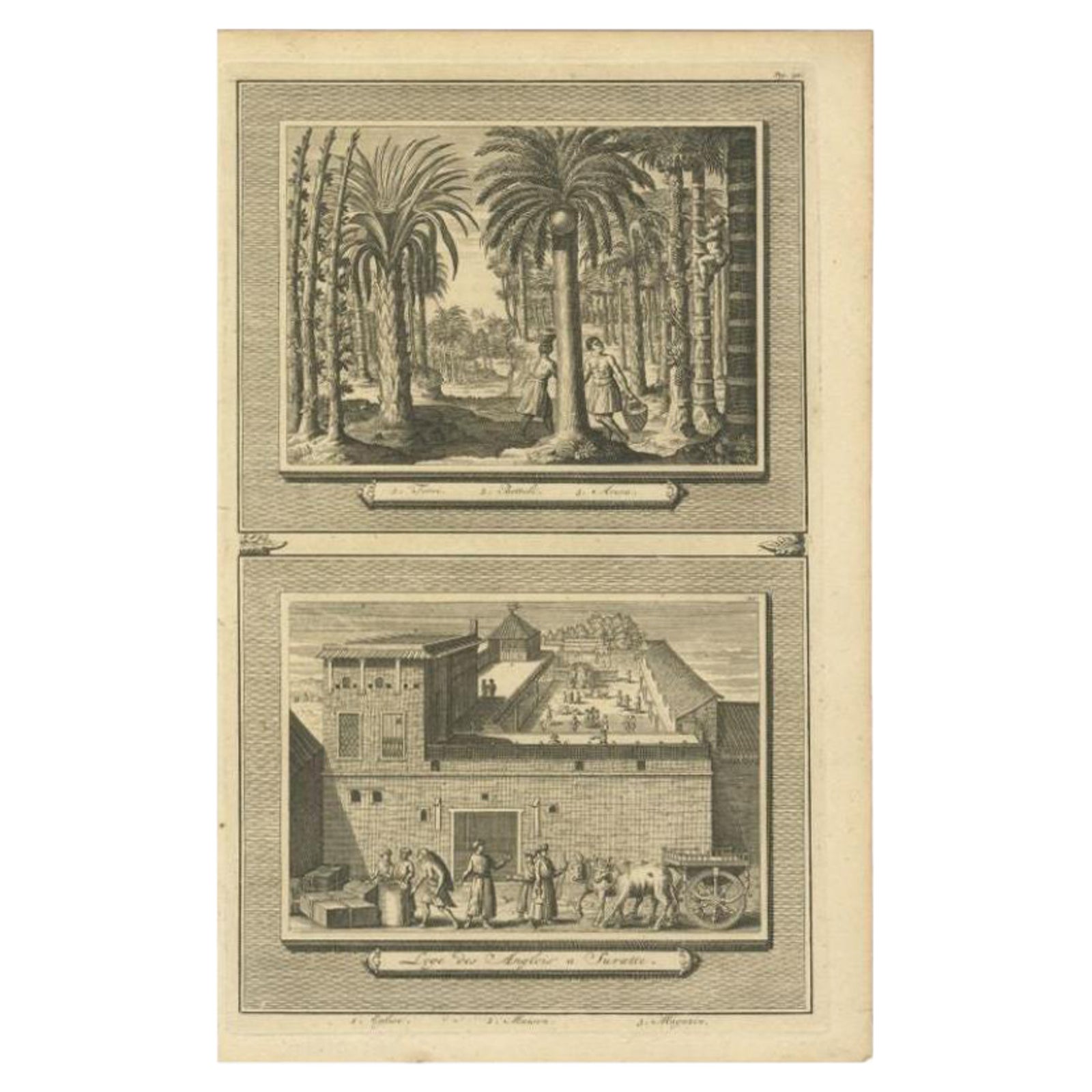
Antique Print of Palm Trees and the Factory in Suratte in India, 1719
$245 (£185, €220)
Period original, not a reproduction.
Shipped from the Netherlands, flat, insured and tracked, worldwide. Returns accepted within 14 days.
- Date
- 1719
- Size
- 12 × 7.5 in (30.5 × 19 cm)
- Condition
- Good. Good, general age-related toning. Blank verso, please study image carefully.
- Period
- 18th century
- Section
- Botanical
- Reference
- f_29238962
Antique print titled 'Loge des Anglois a Suratte'. Antique print with two engravings depicting various palm trees and the factory (logie) of the Dutch East India Company (VOC) in Suratte as seen in 1638. Suratte or Soeratte was a famous trading city on the north coast of what is now India, in the modern state of Gujarat, lying on the river Tapti. This print originates from ‘Les Voyages du sieur Albert de Mandelslo’ published by Pierre van der Aa.
Artists and Engravers: Made by an anonymous engraver after Albert de Mandelslo. Johan Albrecht de Mandelslo (1616–1644) was a seventeenth-century German adventurer, who wrote about his travels through Persia and India.
Condition: Good, general age-related toning. Blank verso, please study image carefully.
Date: 1719
Overall size: 19 x 30.5 cm.
Image size: 16.5 x 27.5 cm.
Antique prints have long been appreciated for both their aesthetic and investment value. They were the product of engraved, etched or lithographed plates. These plates were handmade out of wood or metal, which required an incredible level of skill, patience and craftsmanship. Whether you have a house with Victorian furniture or more contemporary decor an old engraving can enhance your living space.