Close-ups
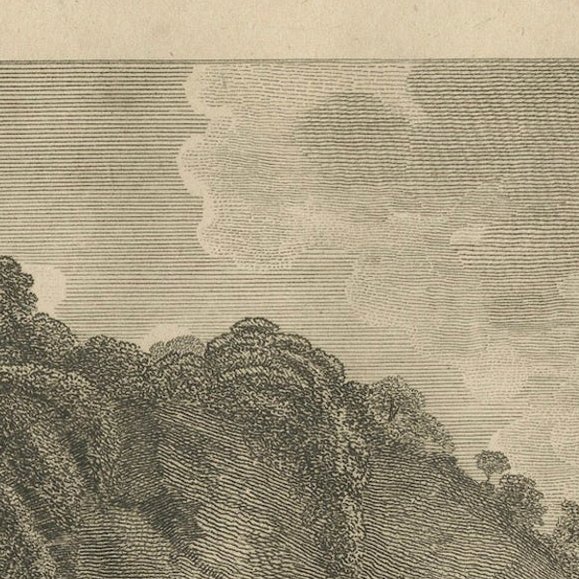
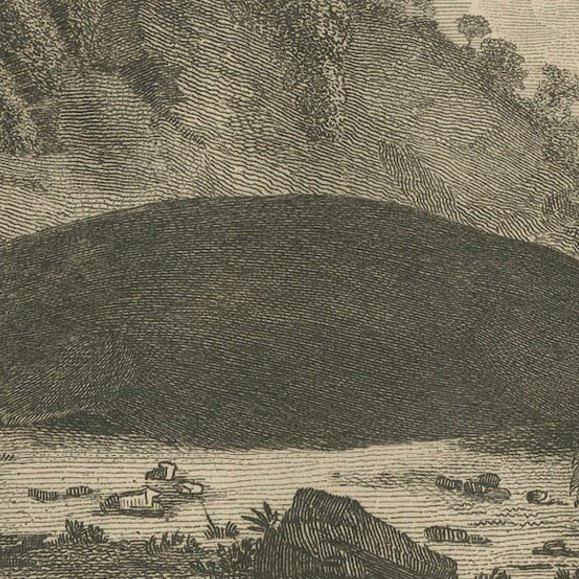
Framed and on the wall
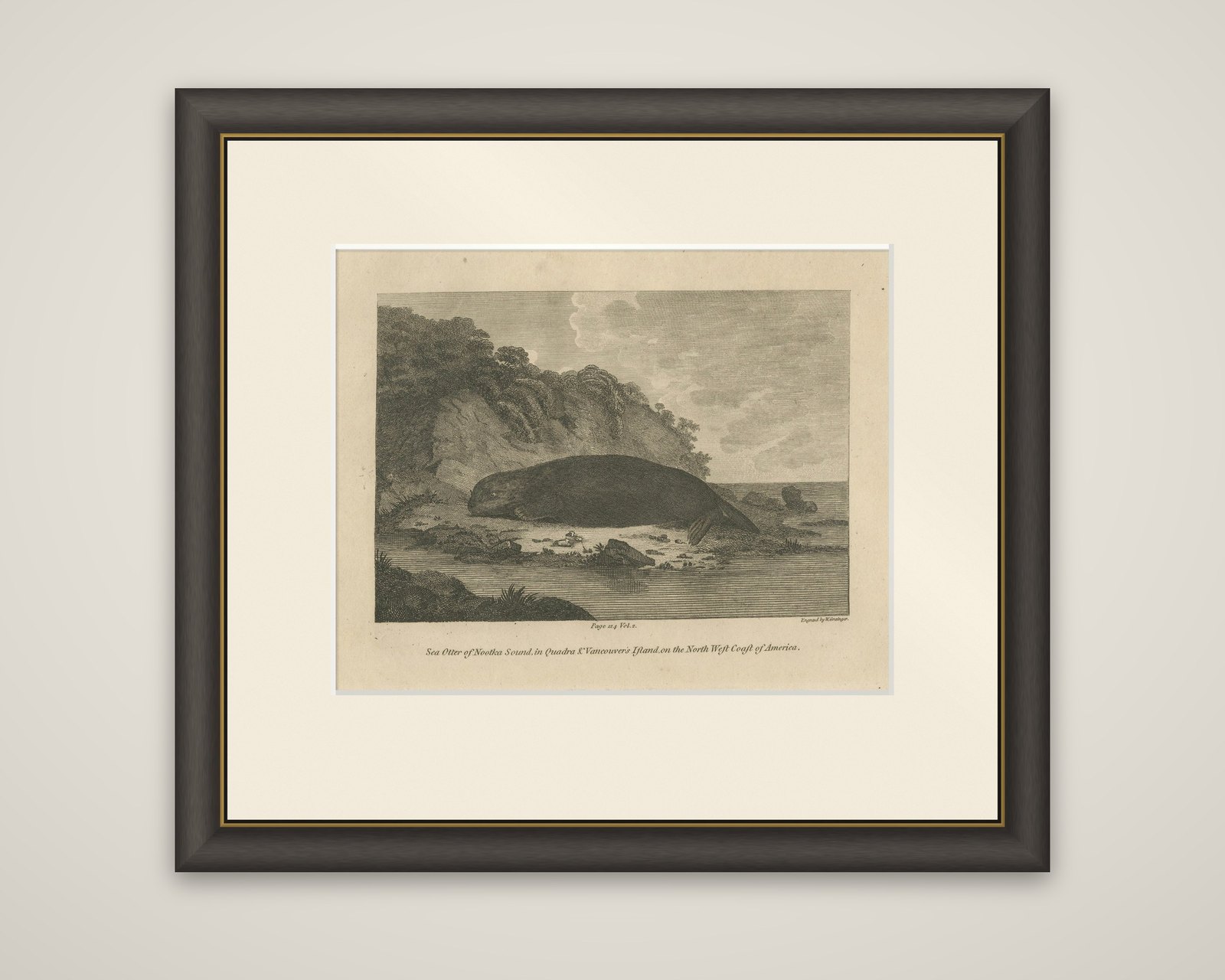

Frame and rooms are illustrations of how the print could look; the description says what is included.
Antique Print of a Sea Otter of Nootka Sound in British Columbia, Canada, 1801
£205 ($270, €240)
Period original, not a reproduction.
Shipped from the Netherlands, flat, insured and tracked, worldwide. Returns accepted within 14 days.
- Date
- 1801
- Size
- 7.9 × 10.4 in (20 × 26.5 cm)
- Condition
- Good. Good condition on strong paper. Very mild foxing and no damage. A few small dampstains and three needle holes in the outer top, outside the plate mark. This is not a reproduction but an original engraving. Study the image carefully.
- Period
- Early 19th century
- Section
- Mammals
- Reference
- f_37823552
What the condition grades mean
- Excellent
- Bright and clean, with no faults worth mentioning.
- Very good
- Only light signs of age, such as faint toning.
- Good
- Normal signs of age for a sheet of this period: toning, some foxing, small marks or neat old repairs.
- Fair
- Clear faults such as staining, tears or repairs, priced to match.
Every fault we see is written in the condition note, and the whole sheet is shown uncropped in the photos.
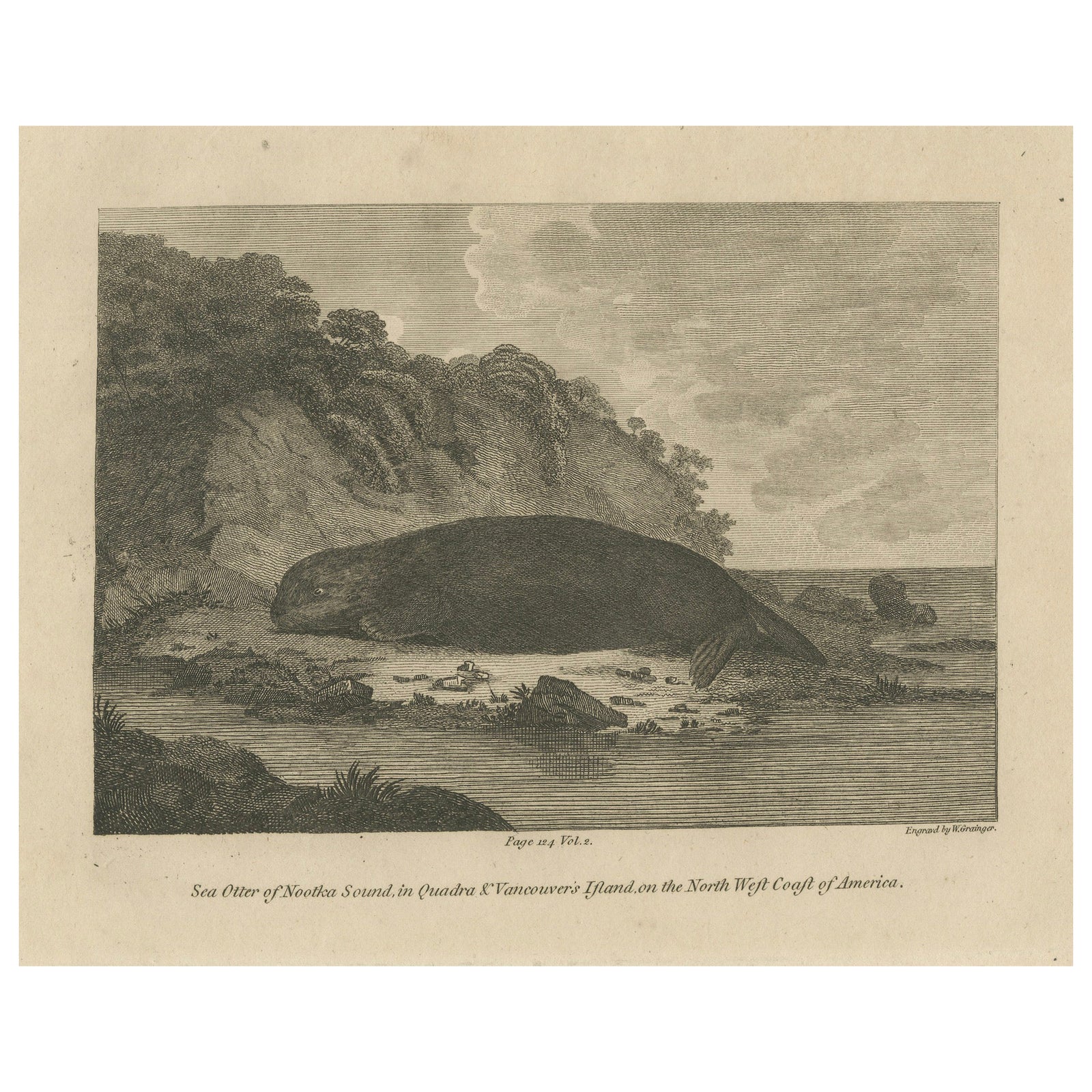
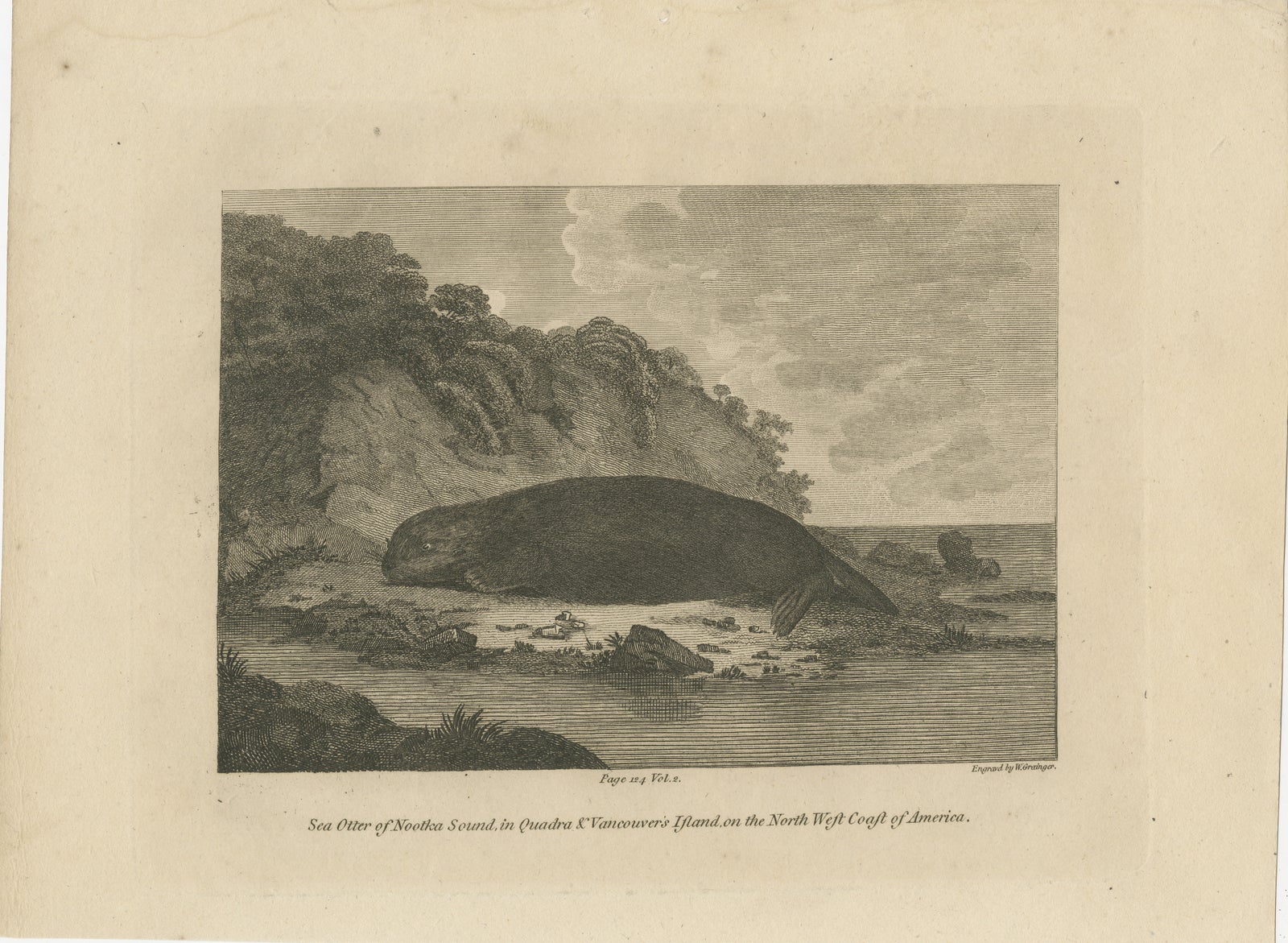
A sea otter of Nootka Sound, an original copper engraving by W. Grainger after a drawing from Cook's third voyage, published in 1801. The plate title reads "Sea Otter of Nootka Sound, in Quadra & Vancouver's Island, on the North West Coast of America", with "Page 114, Vol. 2" at the lower left and "Engraved by W. Grainger" at the right. It comes from George Alexander Cooke's Universal Geography.
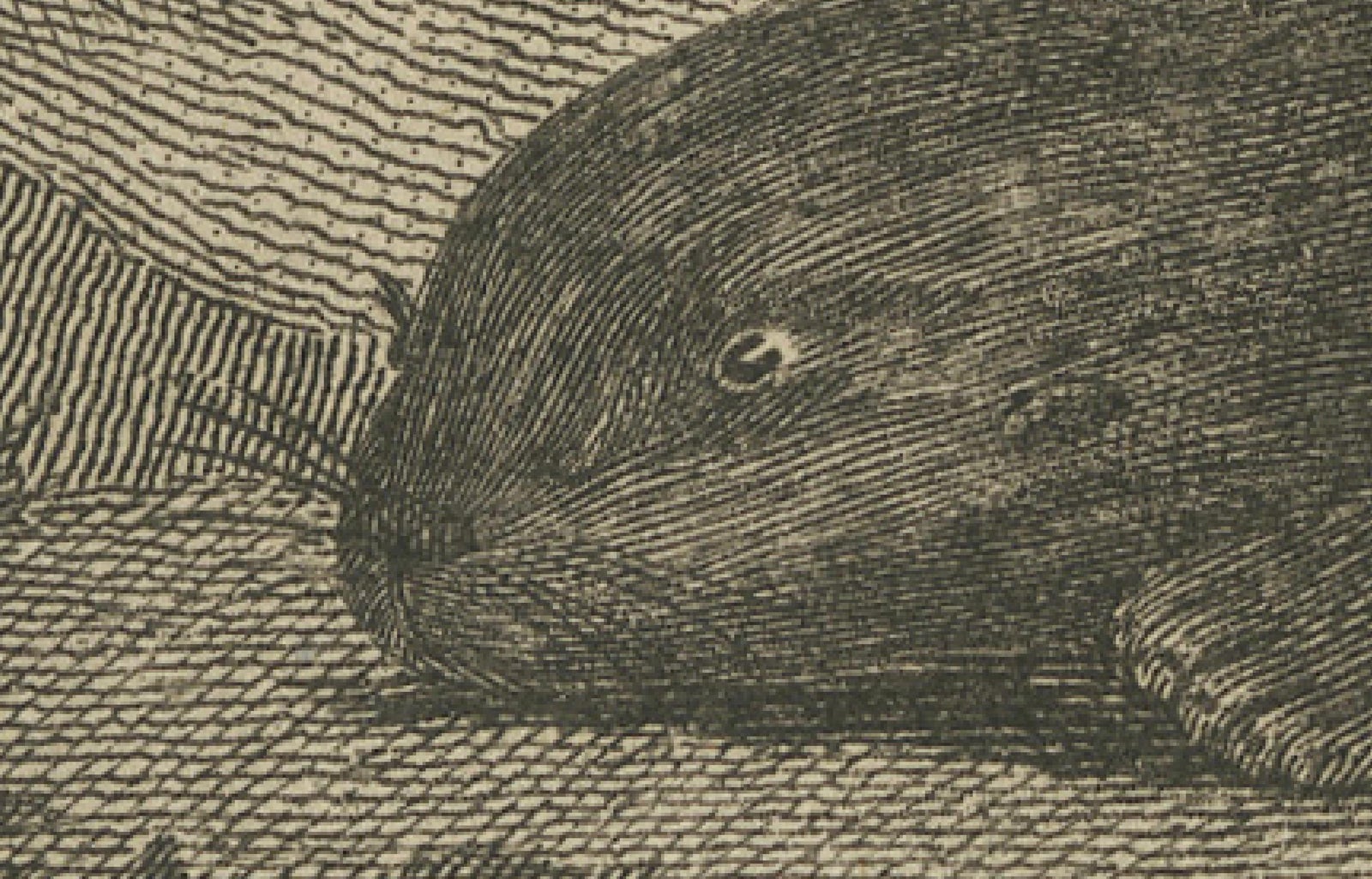
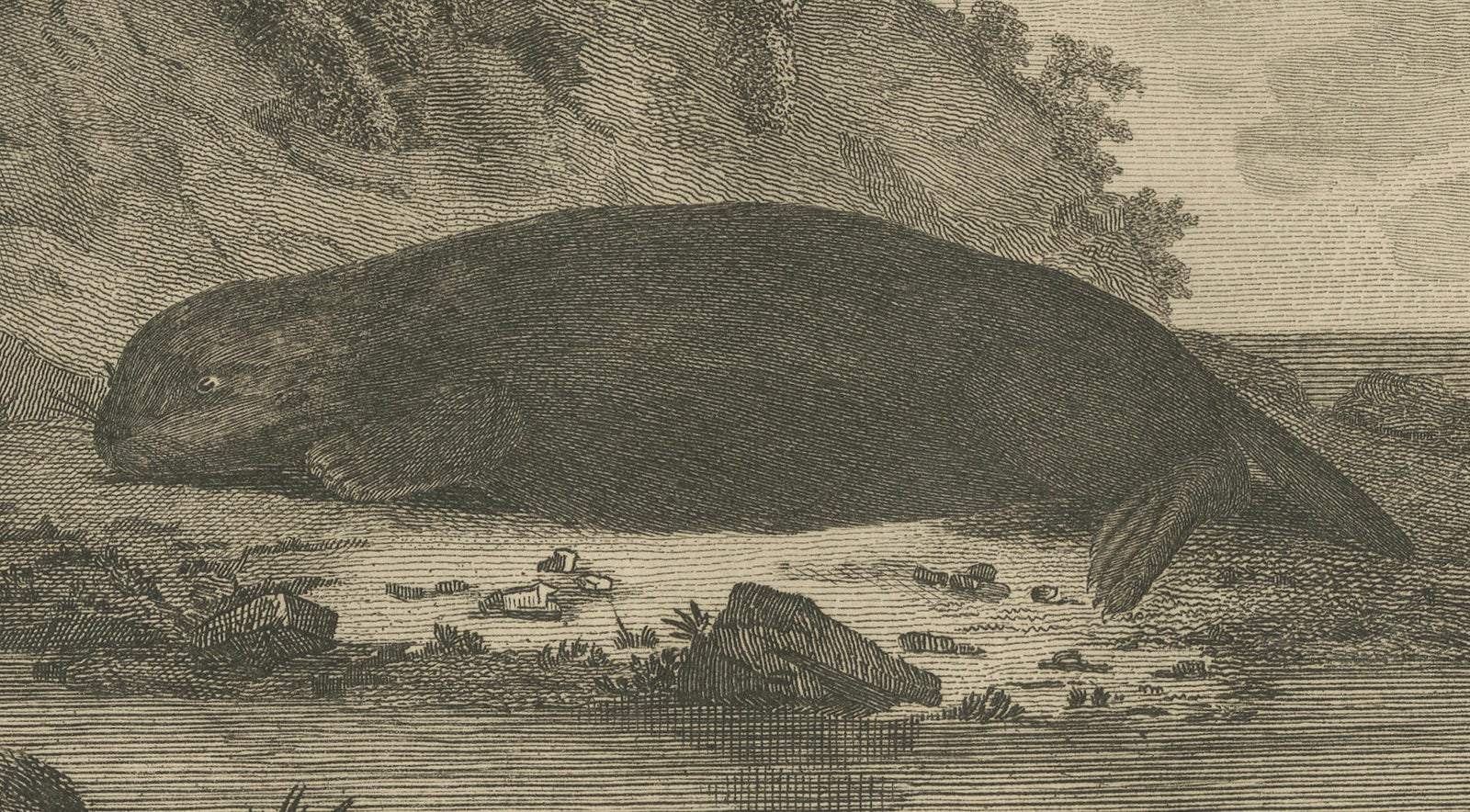
The animal lies on a rocky shore at the edge of a pool, its head turned to the left, with a steep wooded bank behind it and a stretch of open water and cloudy sky beyond. The engraving is printed in black.
Nootka Sound, on the west coast of Vancouver Island, was where Cook anchored in 1778, and the sea otter pelts that crews gathered there set off the maritime fur trade of the North Pacific coast. The sheet records that early encounter with one of the region's most valued animals.