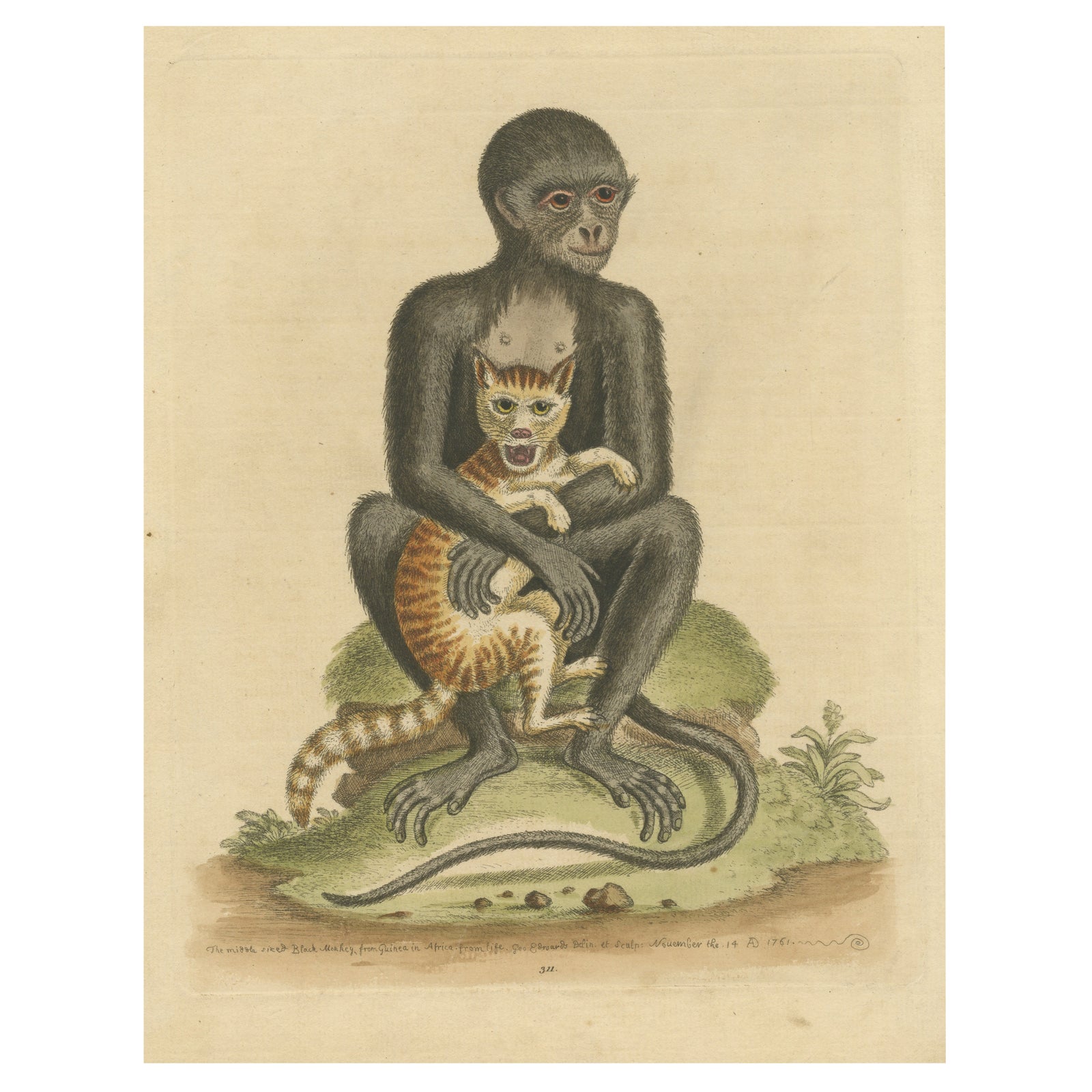
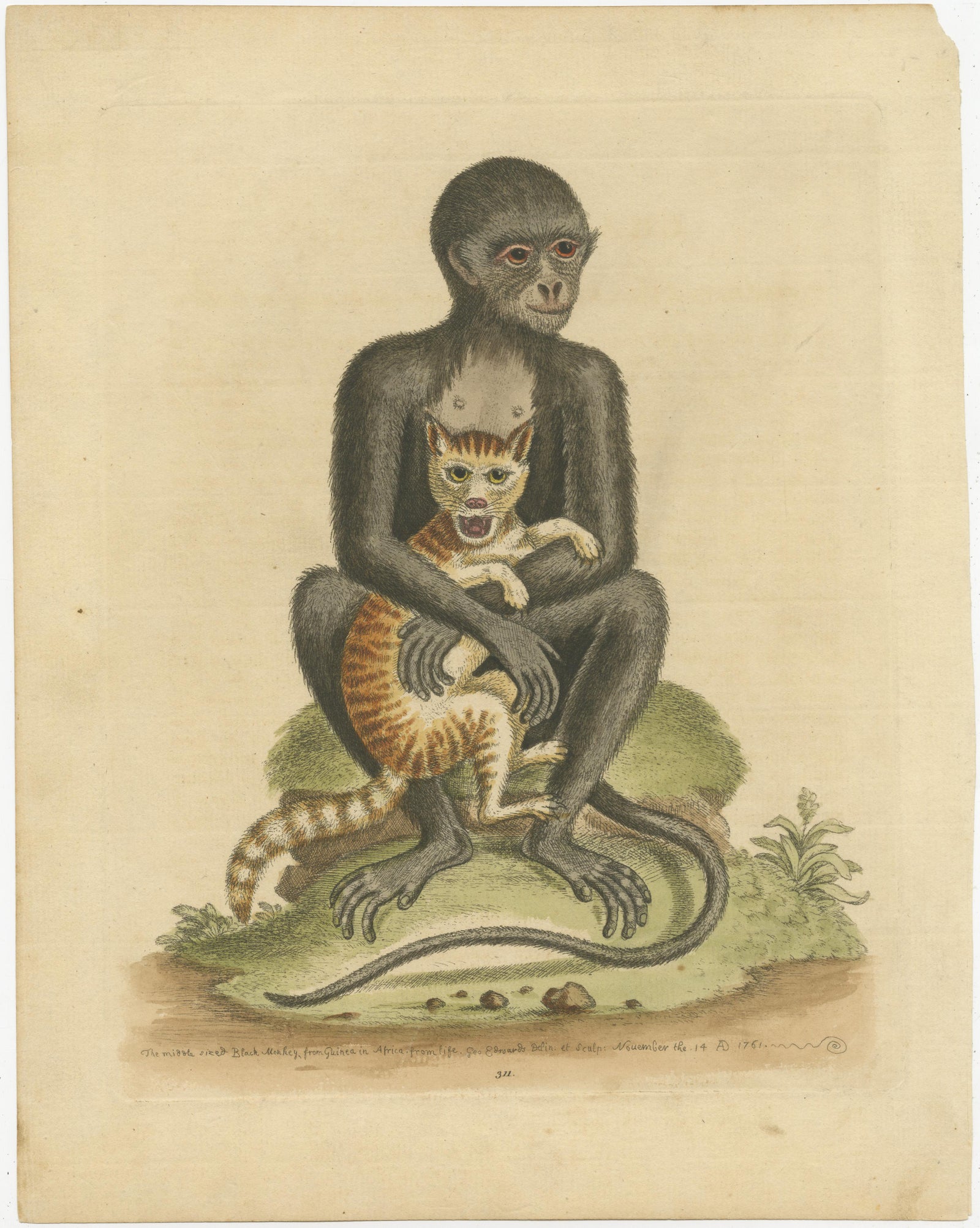
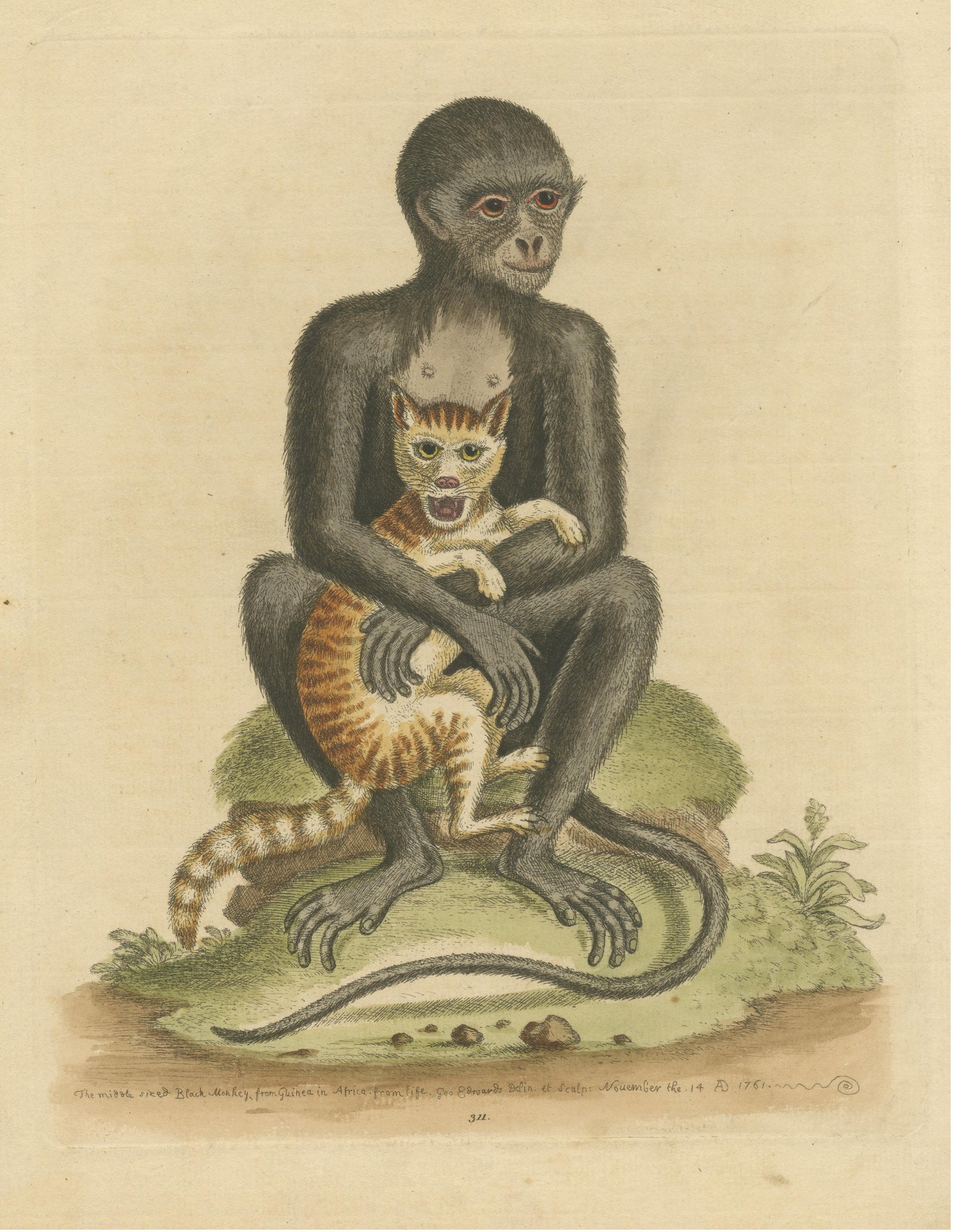
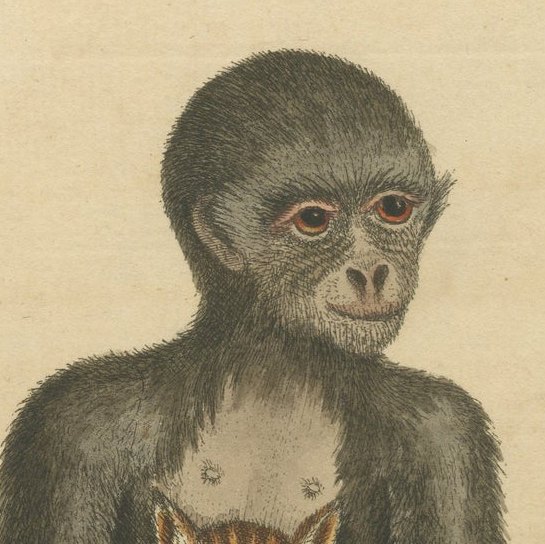
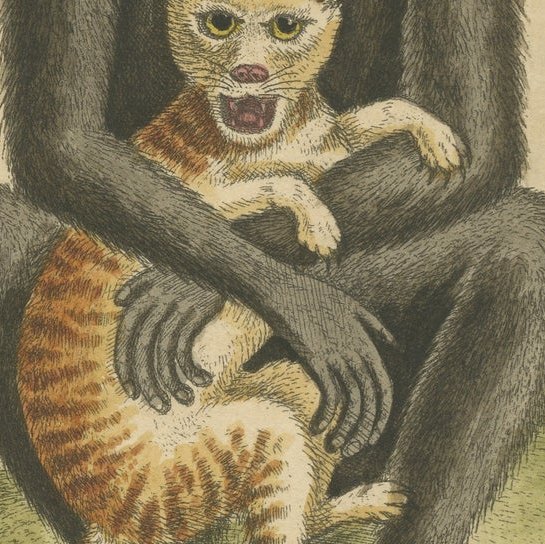
Close-ups
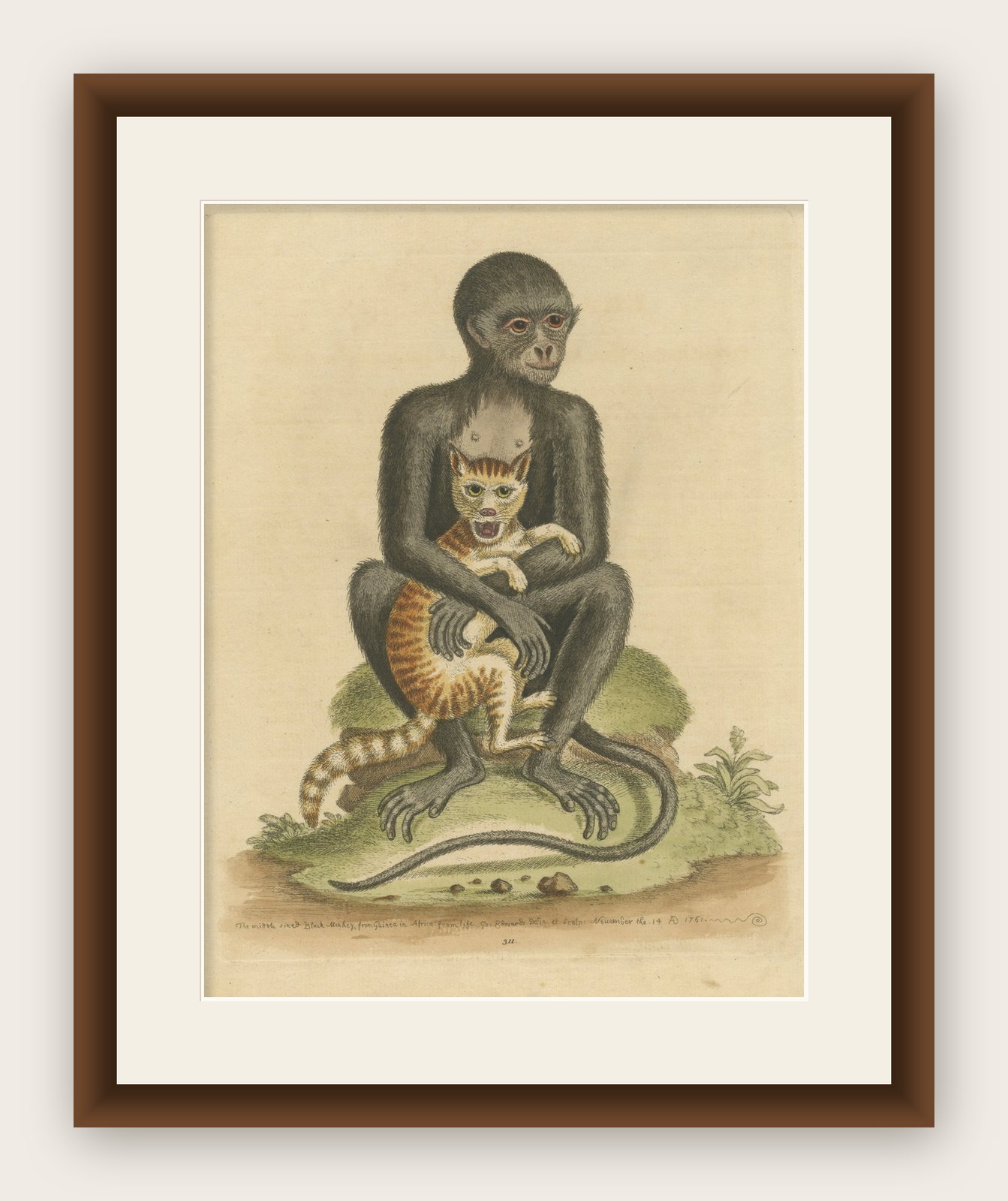
Framed and on the wall

Frame and rooms are illustrations of how the print could look; the description says what is included.
Antique Print of a middle-sized Black Monkey
£405 ($540, €480)
Period original, not a reproduction.
Shipped from the Netherlands, flat, insured and tracked, worldwide. Returns accepted within 14 days.
- Date
- Not stated
- Size
- 11.3 × 8.9 in (28.7 × 22.7 cm)
- Condition
- Good. General age-related toning. Small defect top right corner outside image. Minor wear and soiling, blank verso. Please study image carefully.
- Section
- Mammals
- Reference
- f_35182022
Zoological study of an unidentified monkey, shown sitting on a grassy hillock and holding a domestic cat. Plate 311 from chapter 101 of Gleanings of natural history, exhibiting figures of quadrupeds, birds, insects, plants, &c..., by George Edwards, volume 3 (London, for the author, 1764). The plate is inscribed: "The middle sized Black Monkey, from Guinea in Africa form life. Geo Edwards Delin: et Sculp: November the 14 AD 1761."
George Edwards FRS (3 April 1694, 23 July 1773) was an English naturalist and ornithologist, known as the "father of British ornithology". Edwards began studying natural history, especially birds, after an unsuccessful career as a businessman, ‘applying himself to drawing and colouring such animals as fell under his notice’, including foreign specimens brought into the Port of London by ship. Edwards’ chief aim was to ‘achieve a natural and accurate portrayal’, though often from stuffed specimens; with no clear idea of suitable backgrounds he would perch smaller birds on a lichen-covered branch, or give them a general backdrop of water (for the water birds) or vegetation.