Close-ups
Framed and on the wall
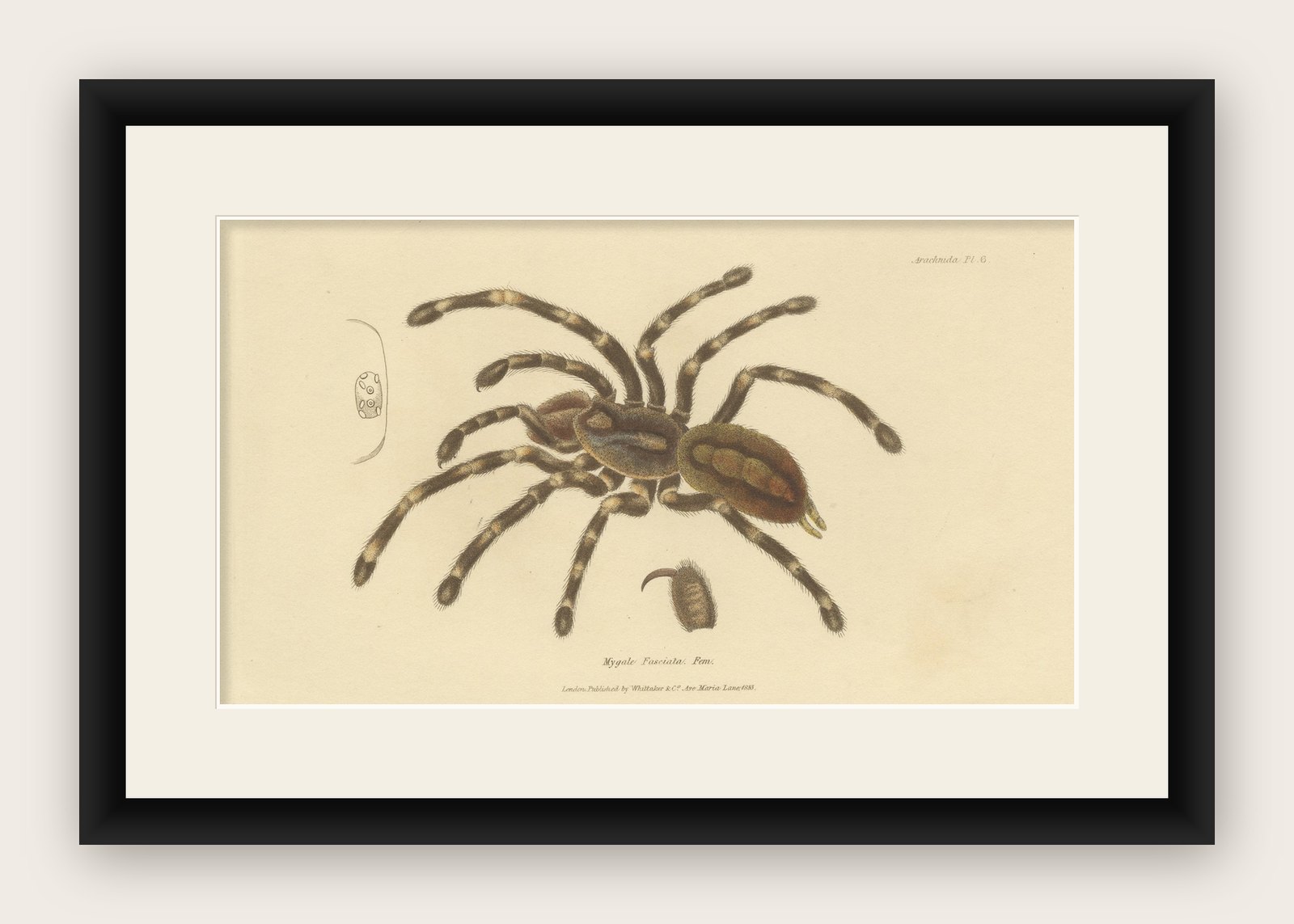


Frame and rooms are illustrations of how the print could look; the description says what is included.
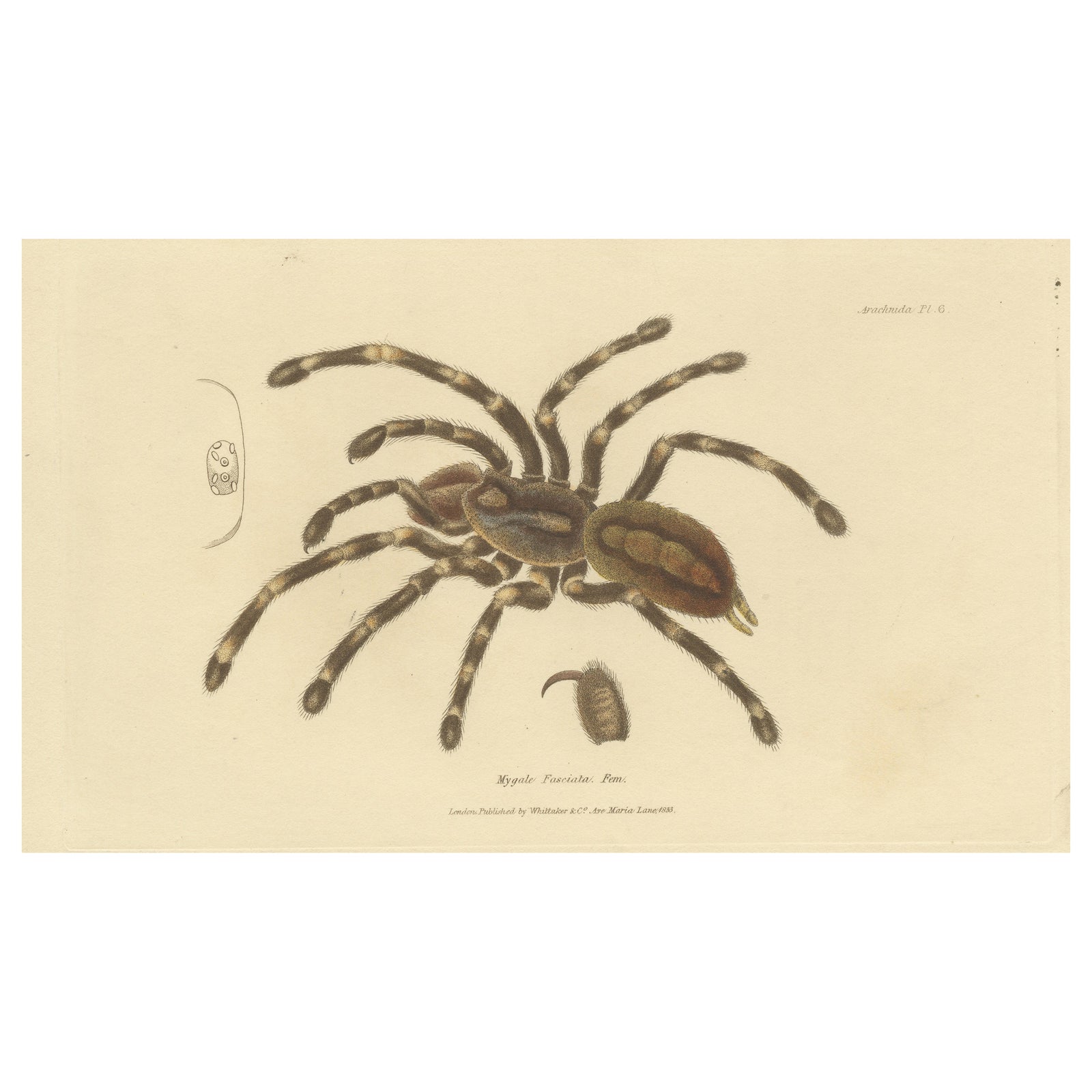
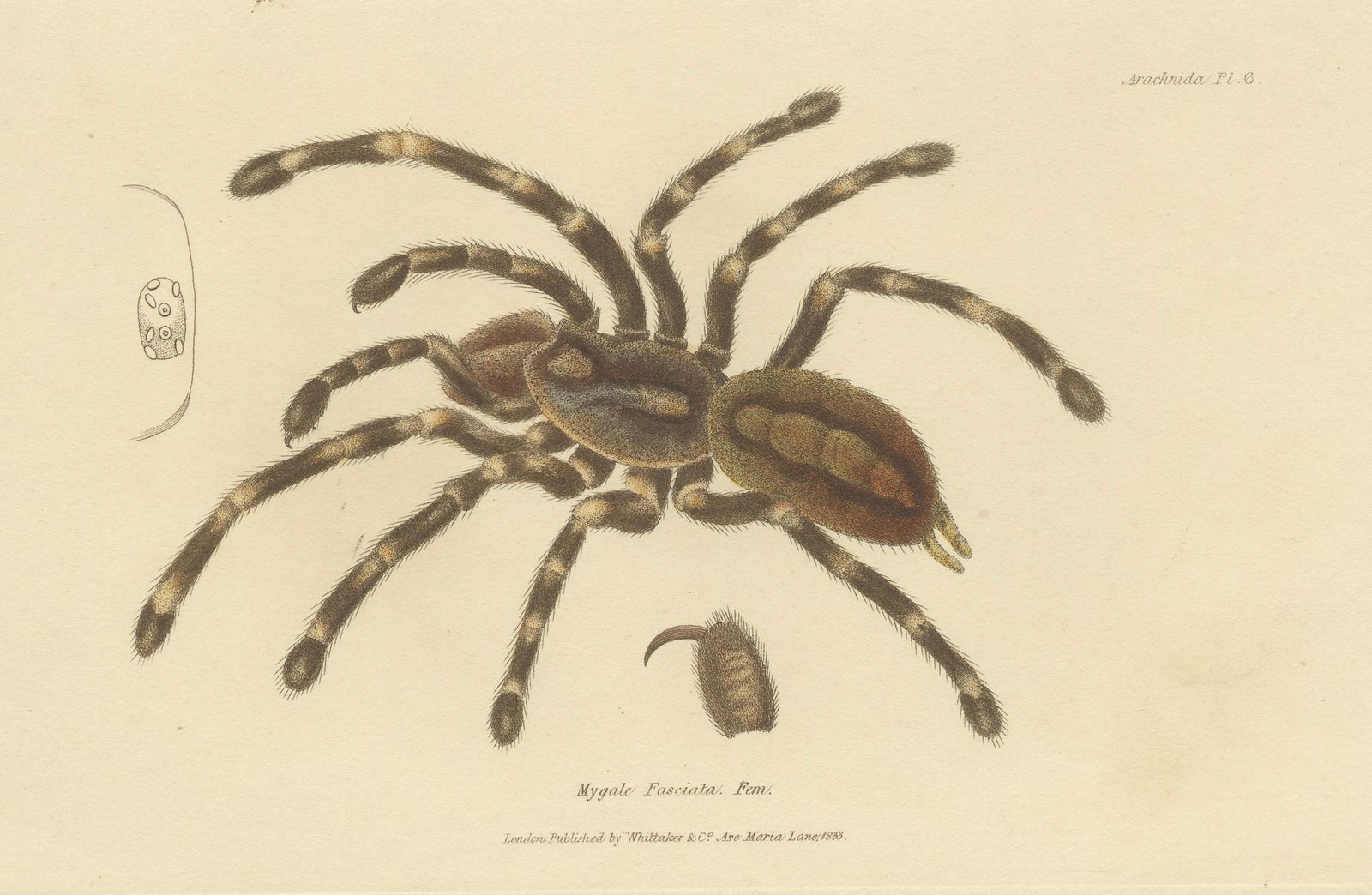
Antique Print of a Female Sri Lanka Ornamental Tiger Spider or Tarantula, 1833
£290 ($380, €340)
Period original, not a reproduction.
Shipped from the Netherlands, flat, insured and tracked, worldwide. Returns accepted within 14 days.
- Date
- 1833
- Size
- 5.6 × 9.5 in (14.2 × 24.2 cm)
- Condition
- Good. General age-related toning. Minor wear and soiling, blank verso. Please study image carefully.
- Period
- Early 19th century
- Section
- Insects and butterflies
- Reference
- f_38713322
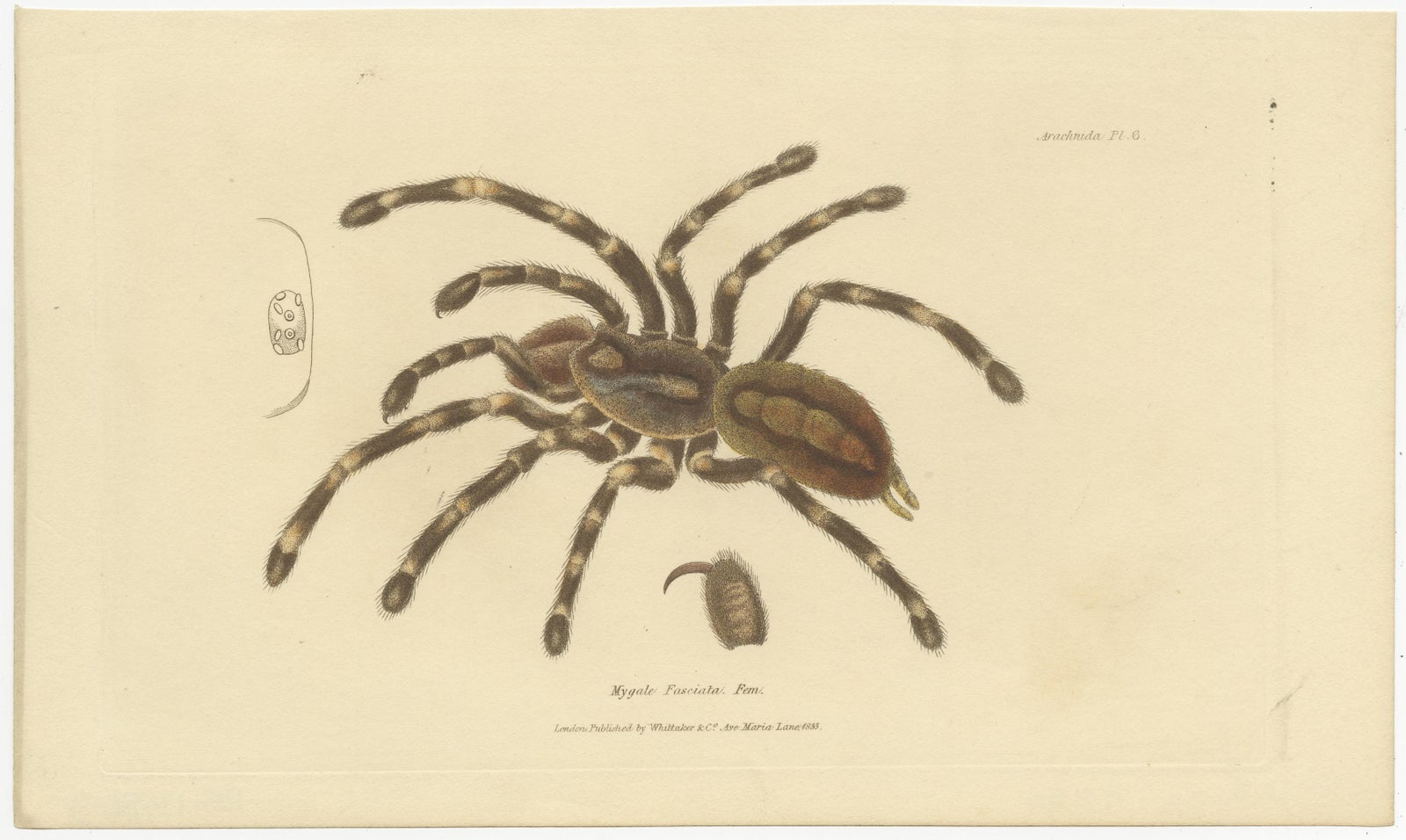
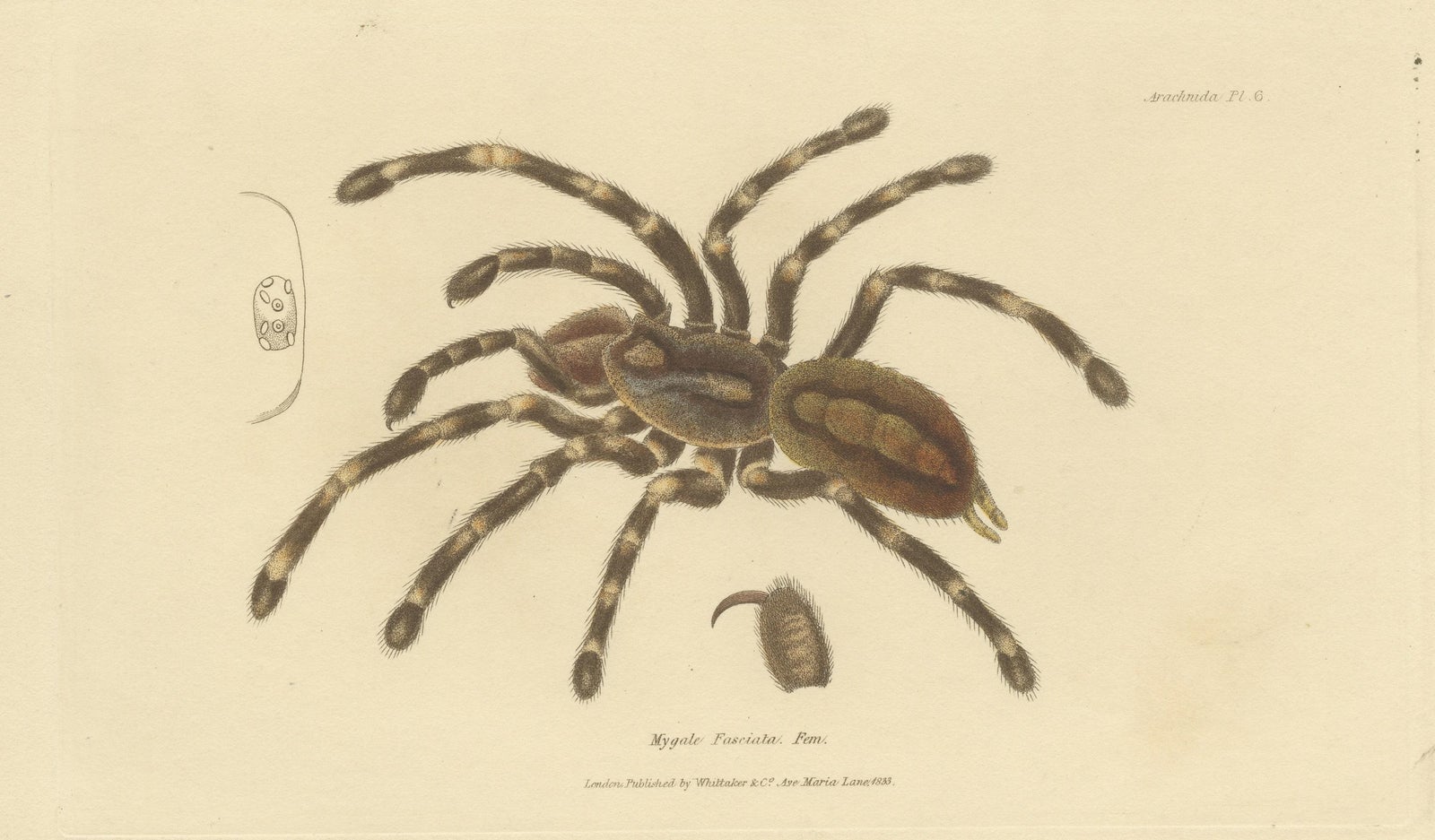
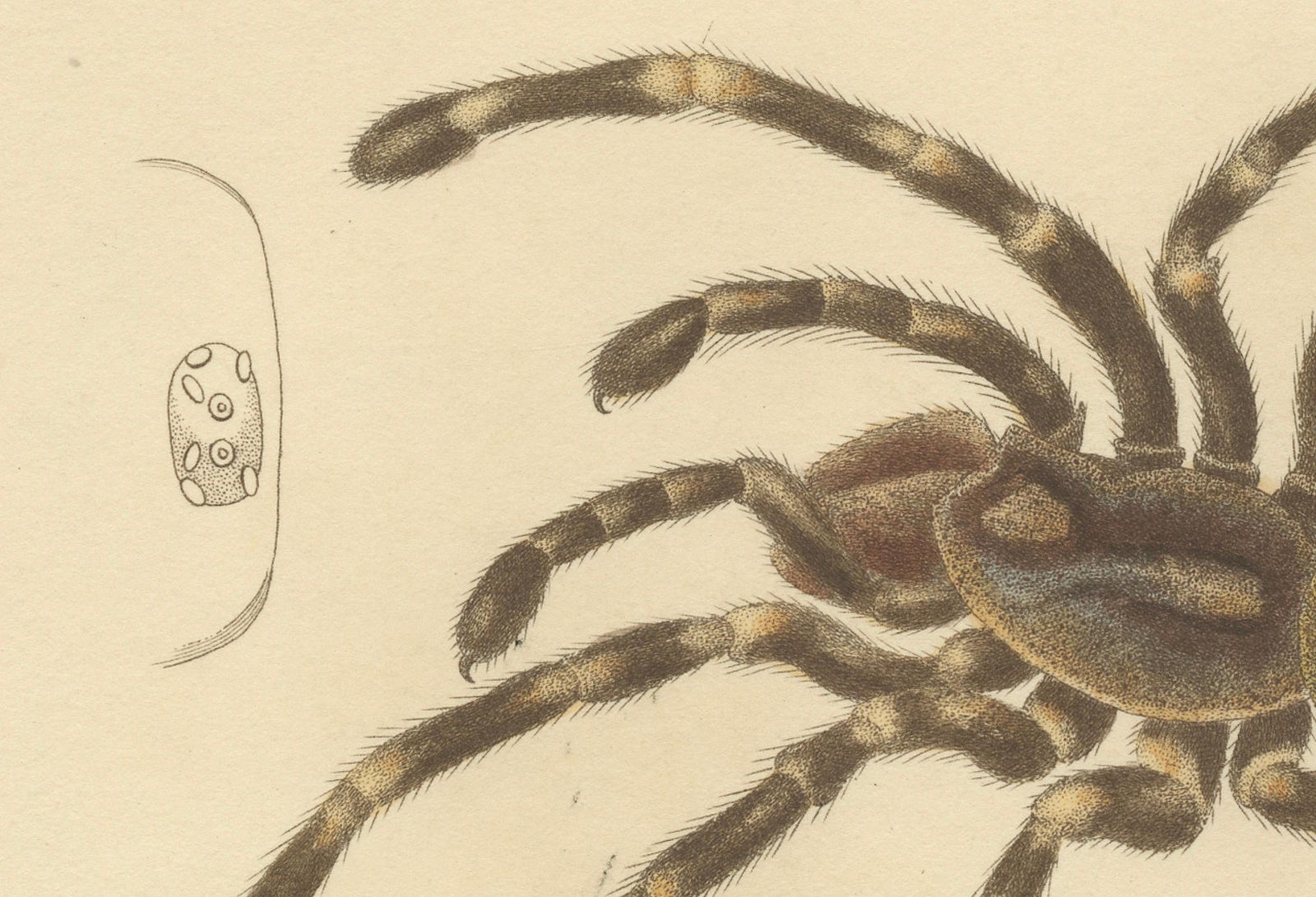
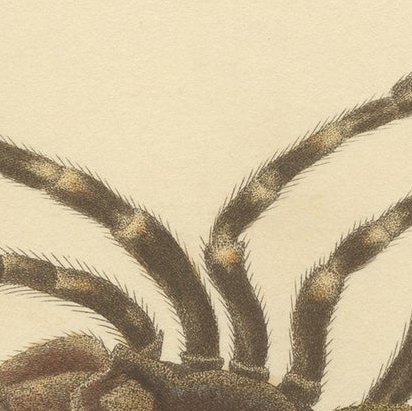
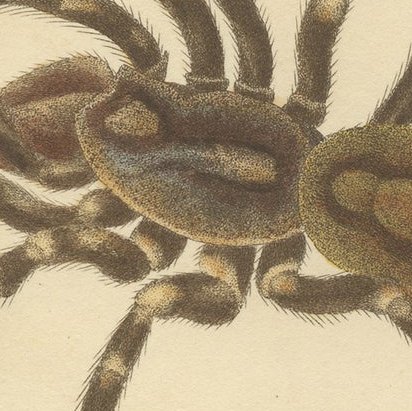
This antique engraving depicts the "Mygale Fasciata," known today as Poecilotheria fasciata, commonly referred to as the Sri Lankan ornamental tarantula or the Sri Lanka ornamental tiger spider. This is an original old print that has been hand-colored, which was a common practice in the 19th century to add detail and realism to prints.
The spider is indeed endemic to central Sri Lanka, and it is an arboreal species, meaning that it lives primarily in trees. These tarantulas are known for their striking patterns and colors, which contribute to their common name of 'tiger spider.' The patterns serve as camouflage in their natural habitat and can also be a warning to potential predators.
This print also has scientific value because it is from a period when many species were being discovered, described, and cataloged by naturalists around the world. The publication by Whittaker & Co. in 1833 places it in an era of significant scientific exploration and documentation. These old prints are often sought after by collectors and can be valuable both for their artistic merit and historical significance.
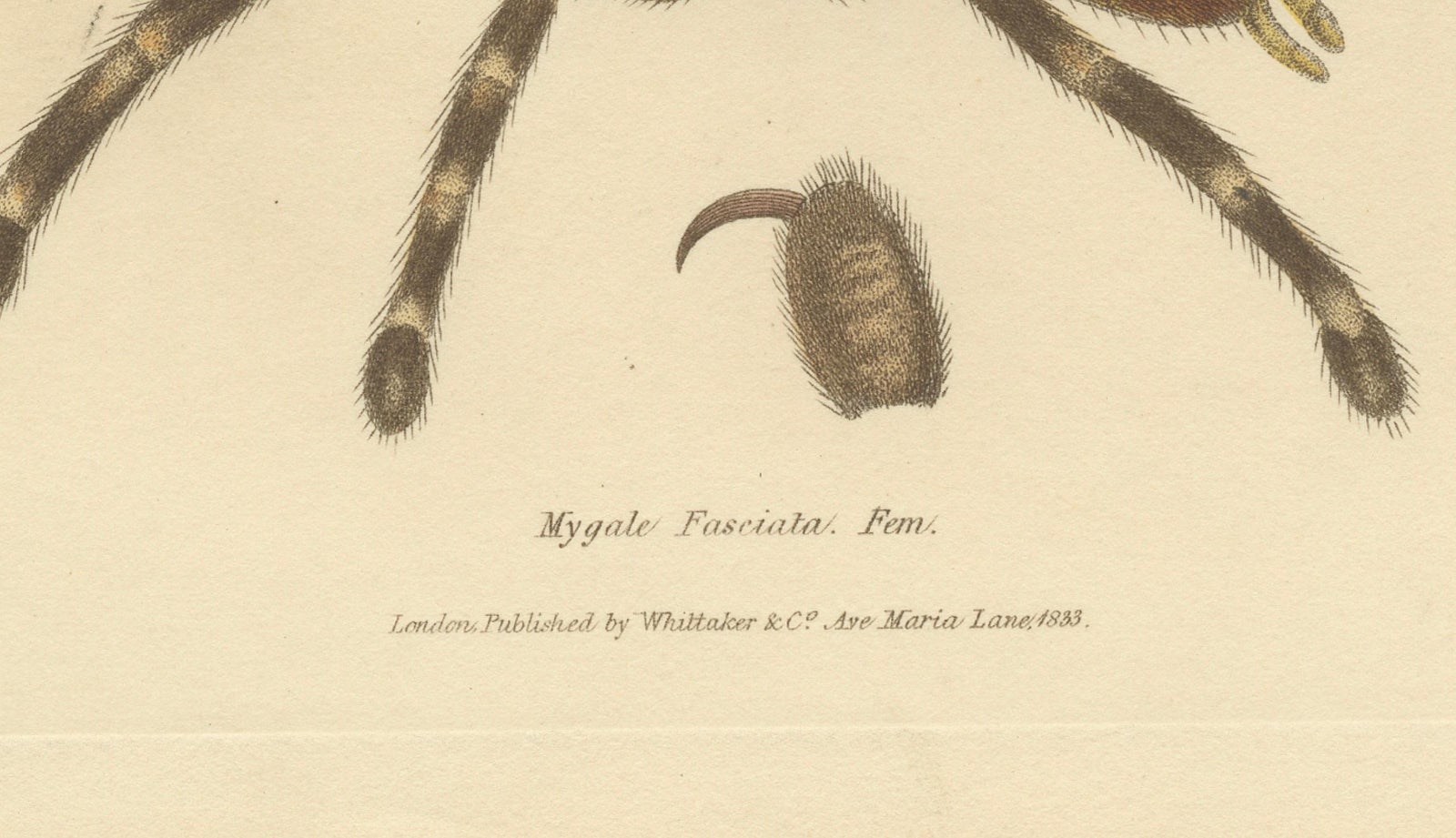
The presence of the publisher's information ("London Published by Whittaker & Co.") and the approximate date of publication (1833) further authenticate the engraving as a product of the early Victorian period in England, which was a time of considerable interest in natural history and exotic species from different parts of the British Empire and beyond.