Close-ups
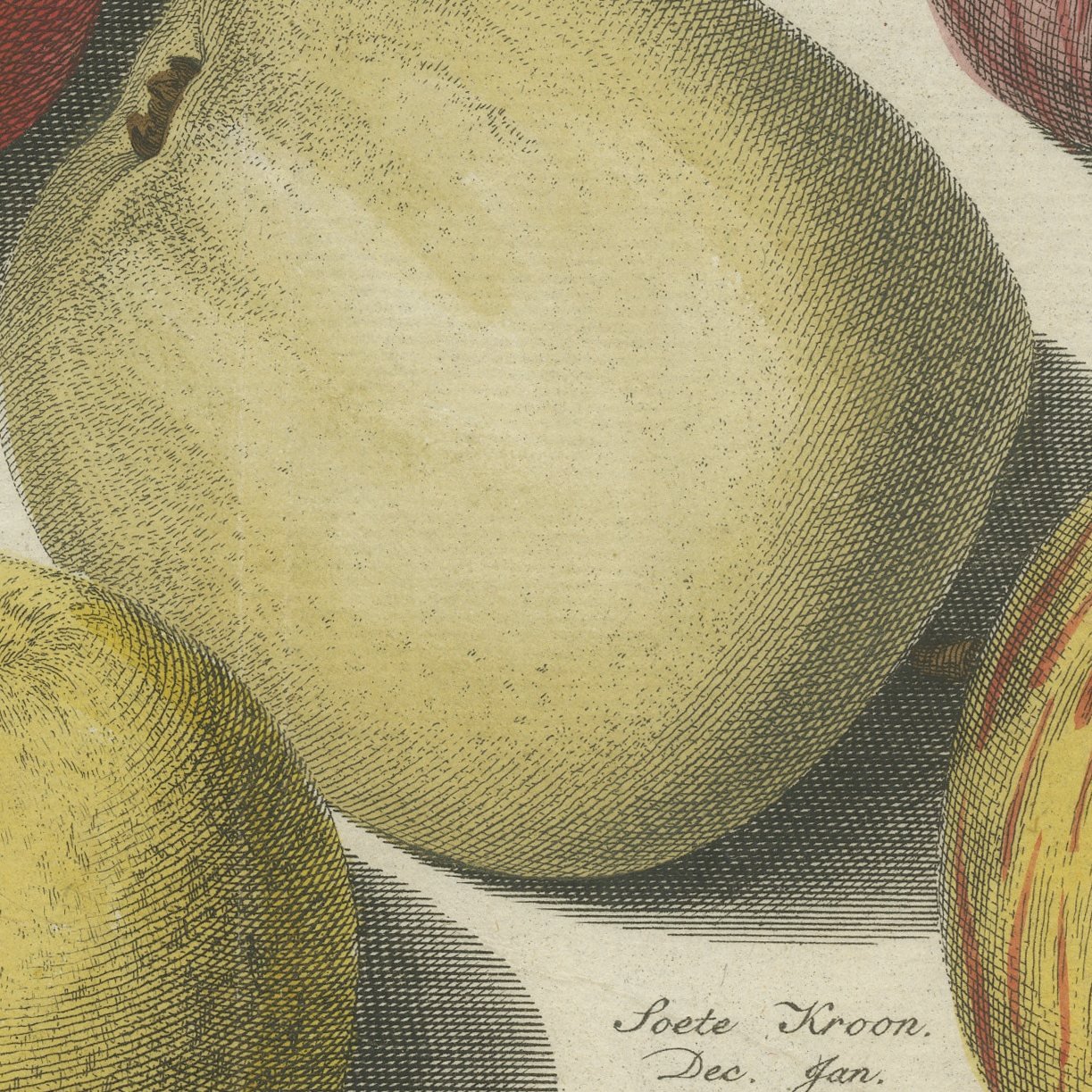
Framed and on the wall
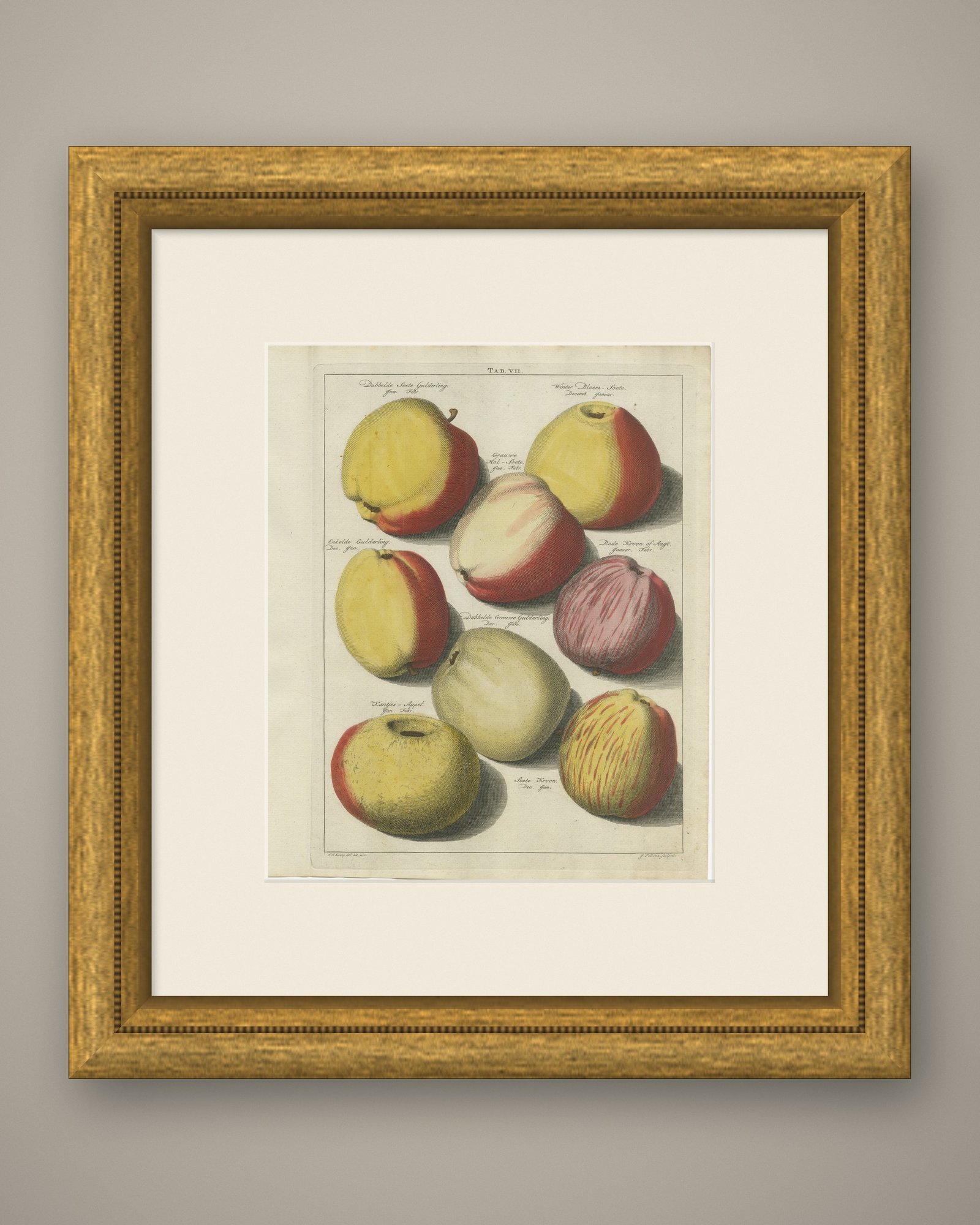
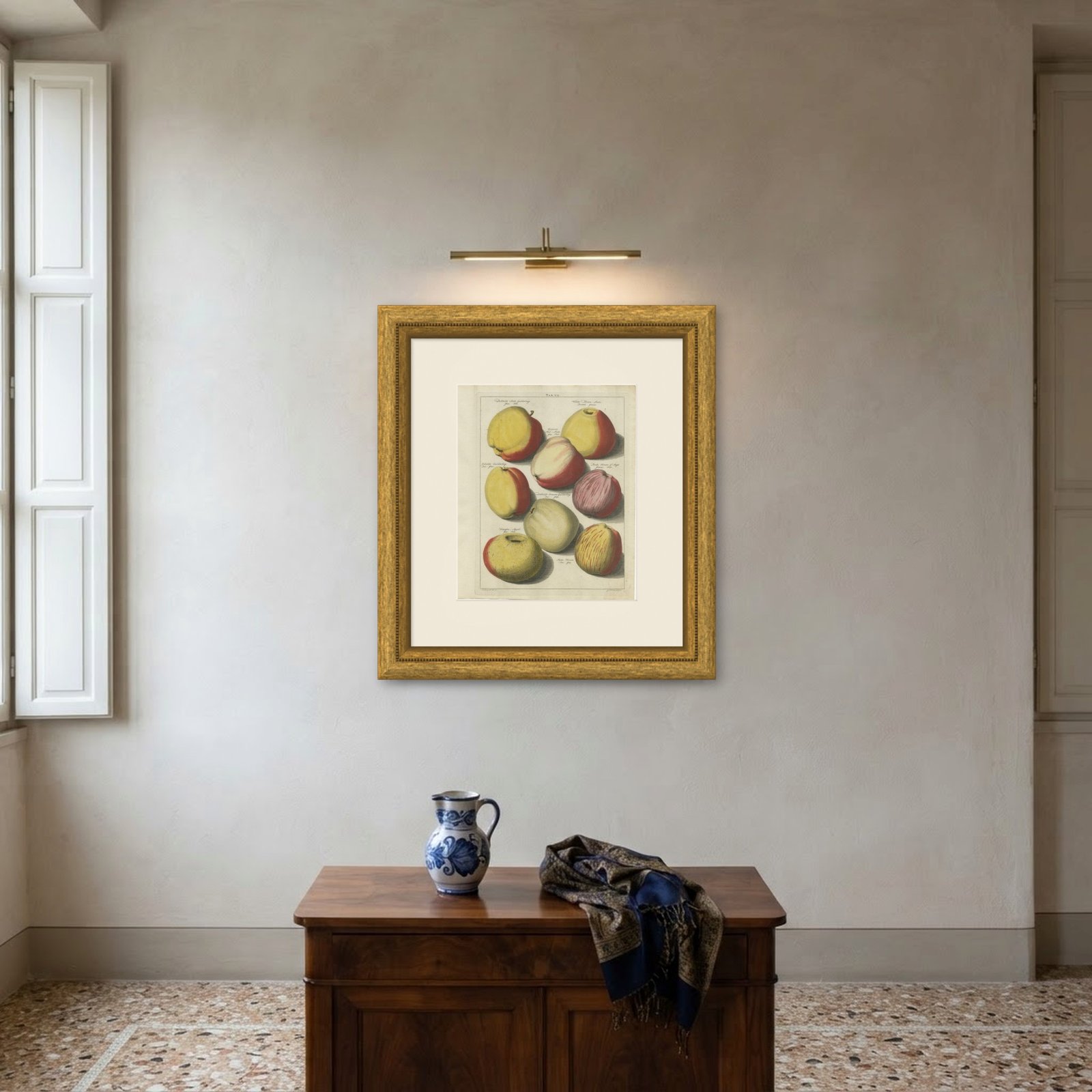
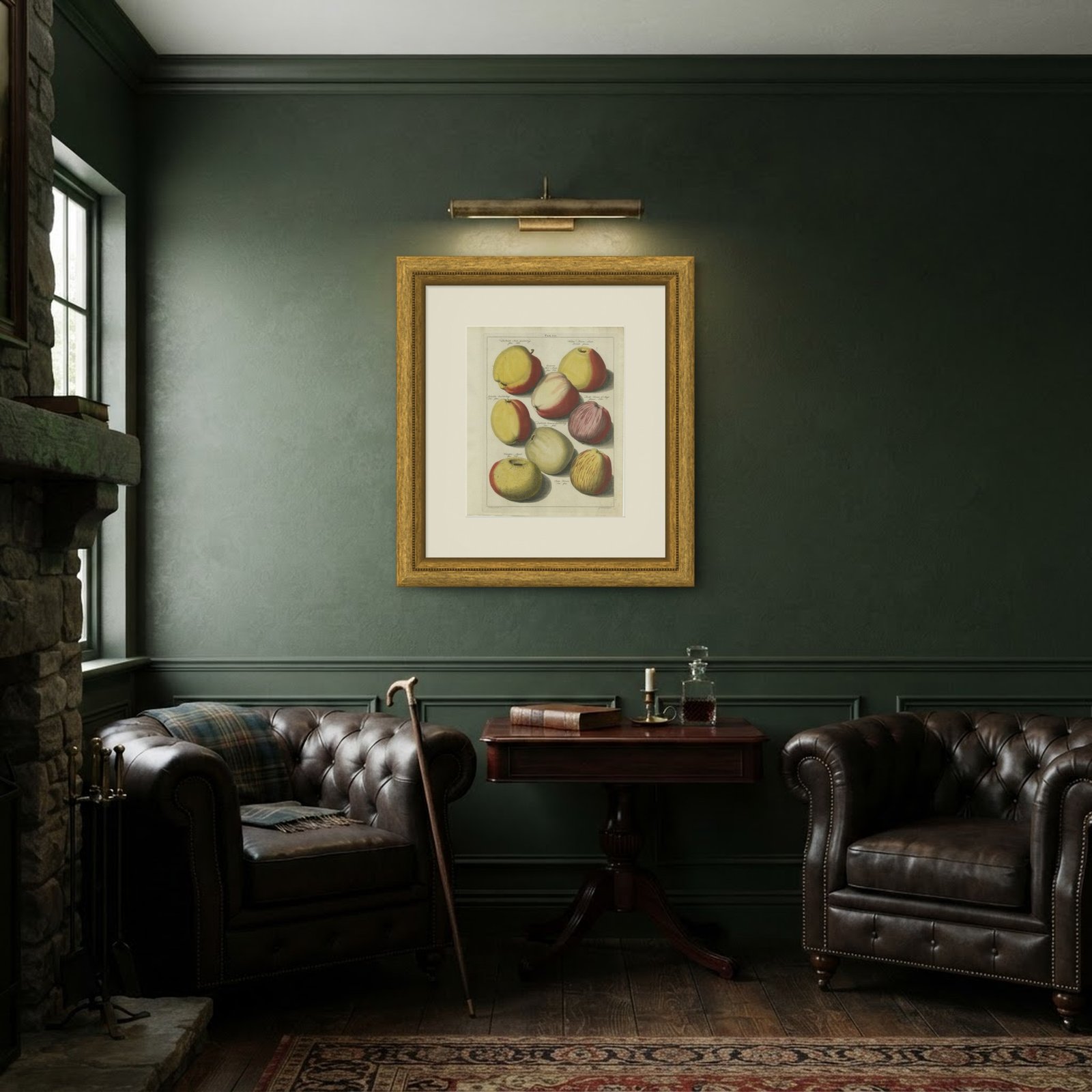
Frame and rooms are illustrations of how the print could look; the description says what is included.
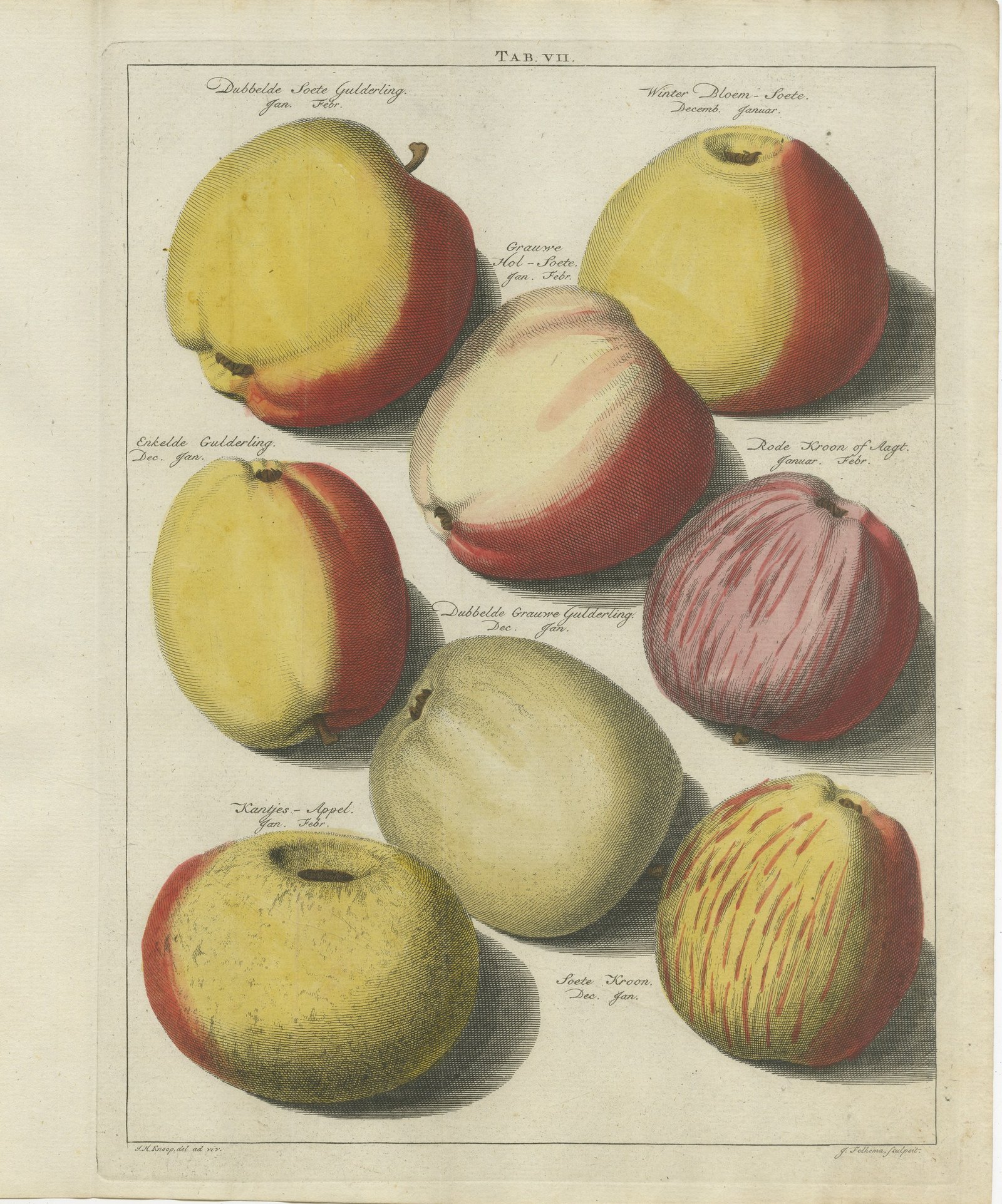
Antique Plate of Gulderling Apples, Soete Kroon, Knoop, 1790
£240 ($315, €285)
Period original, not a reproduction.
Shipped from the Netherlands, flat or rolled, insured and tracked, worldwide. Returns accepted within 14 days.
- Date
- 1790
- Size
- 12.6 × 9.4 in (32 × 24 cm)
- Technique
- Copper Engraving
- Coloring
- Original hand color
- Condition
- Good. Light uneven toning, browner towards the edges. Handling soiling along the bottom and top edges. Scattered light foxing in the margin. Slight wear at the bottom right corner.
- Period
- 18th century
- Section
- Botanical
- Reference
- BG-05122-7
What the condition grades mean
- Excellent
- Bright and clean, with no faults worth mentioning.
- Very good
- Only light signs of age, such as faint toning.
- Good
- Normal signs of age for a sheet of this period: toning, some foxing, small marks or neat old repairs.
- Fair
- Clear faults such as staining, tears or repairs, priced to match.
Every fault we see is written in the condition note, and the whole sheet is shown uncropped in the photos.
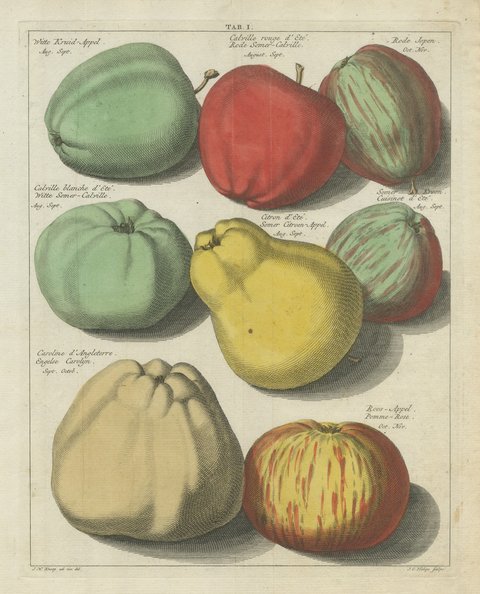
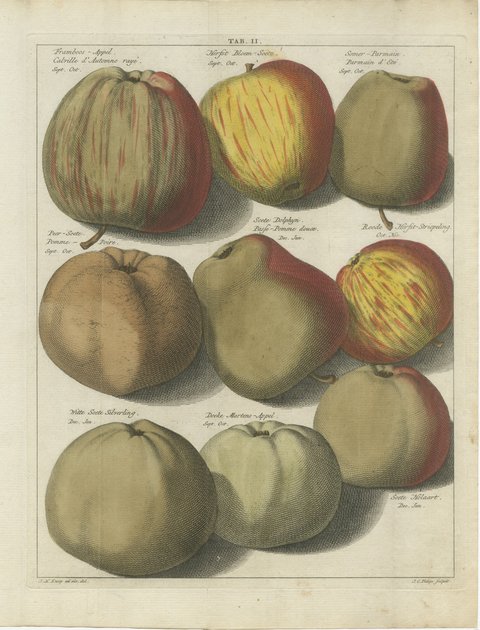
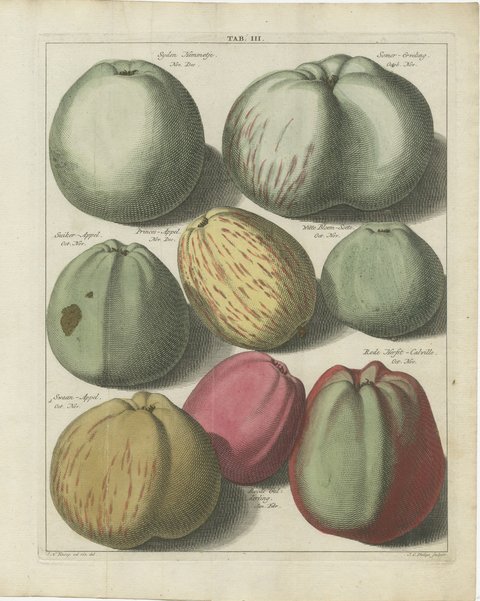
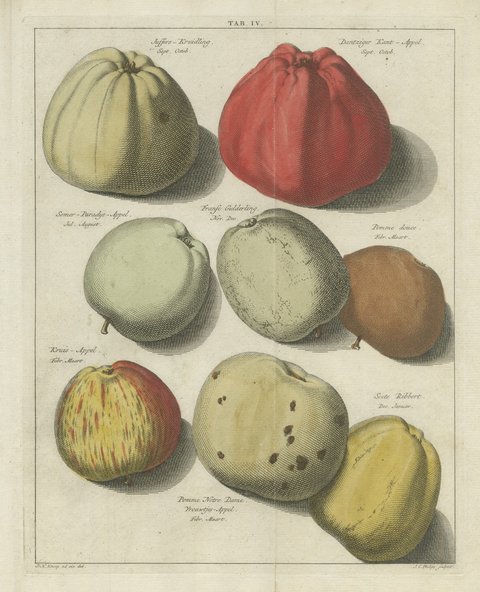
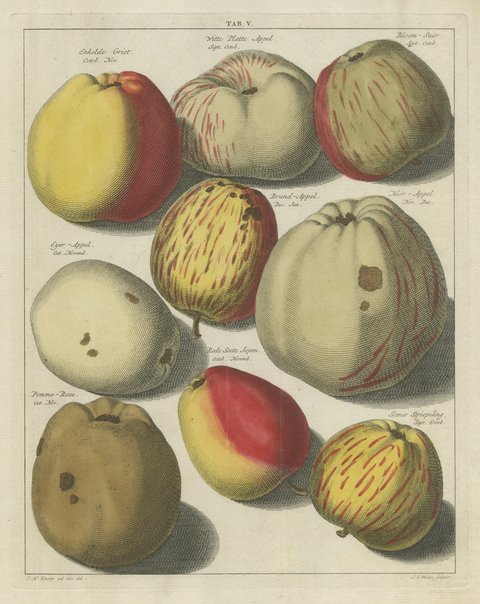
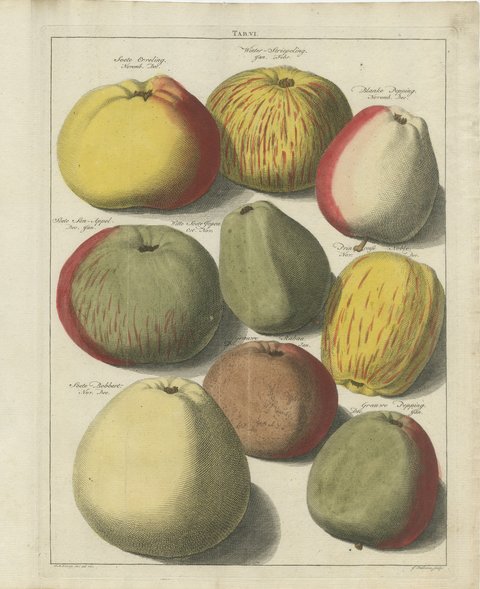
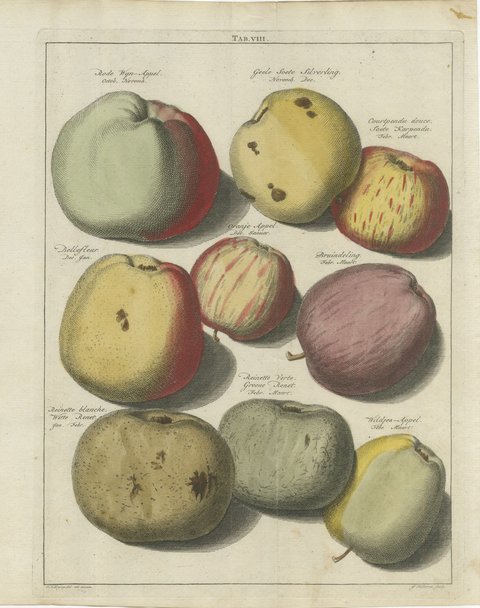
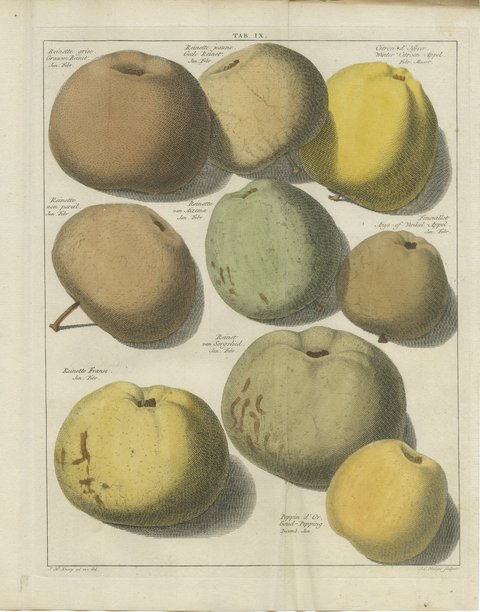
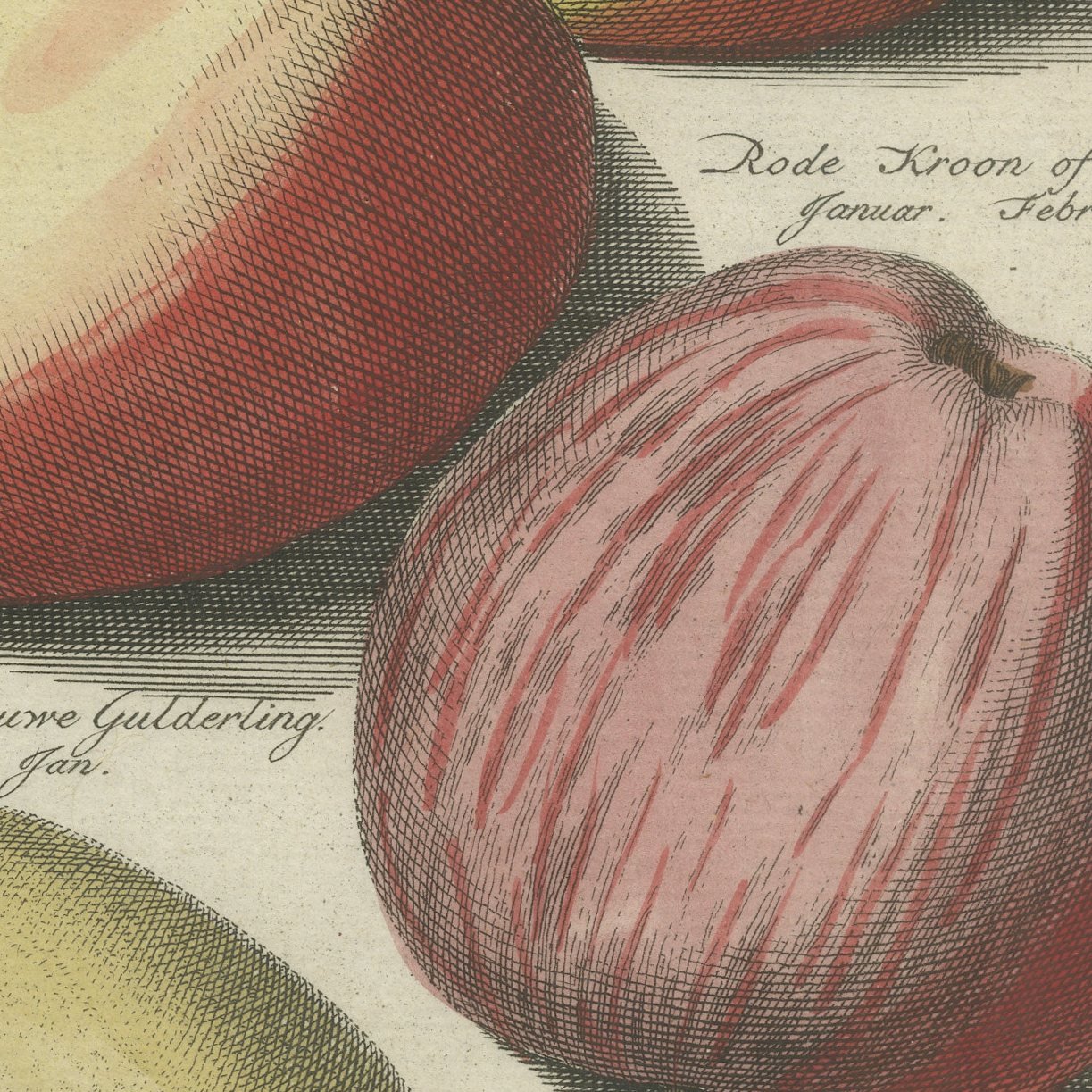
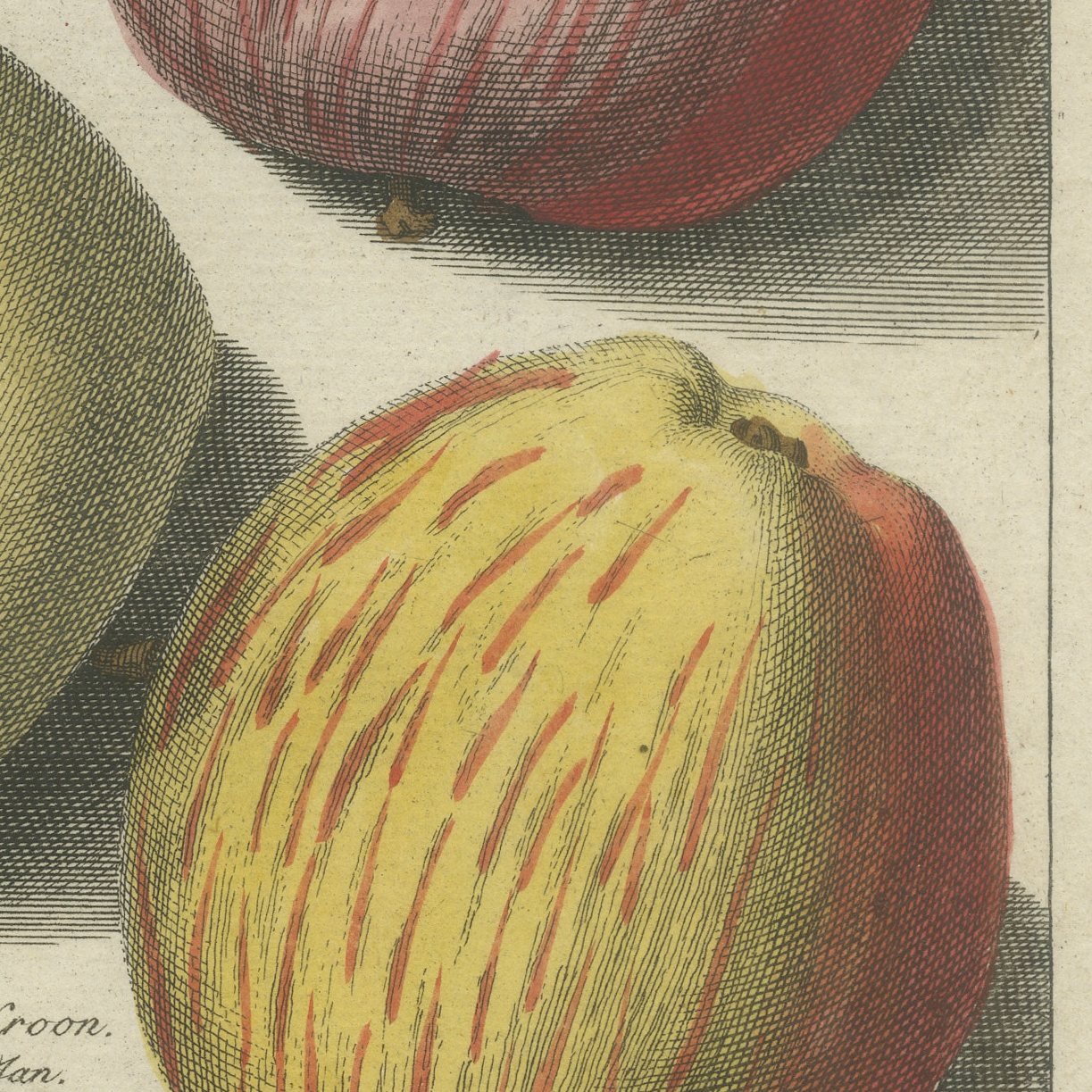
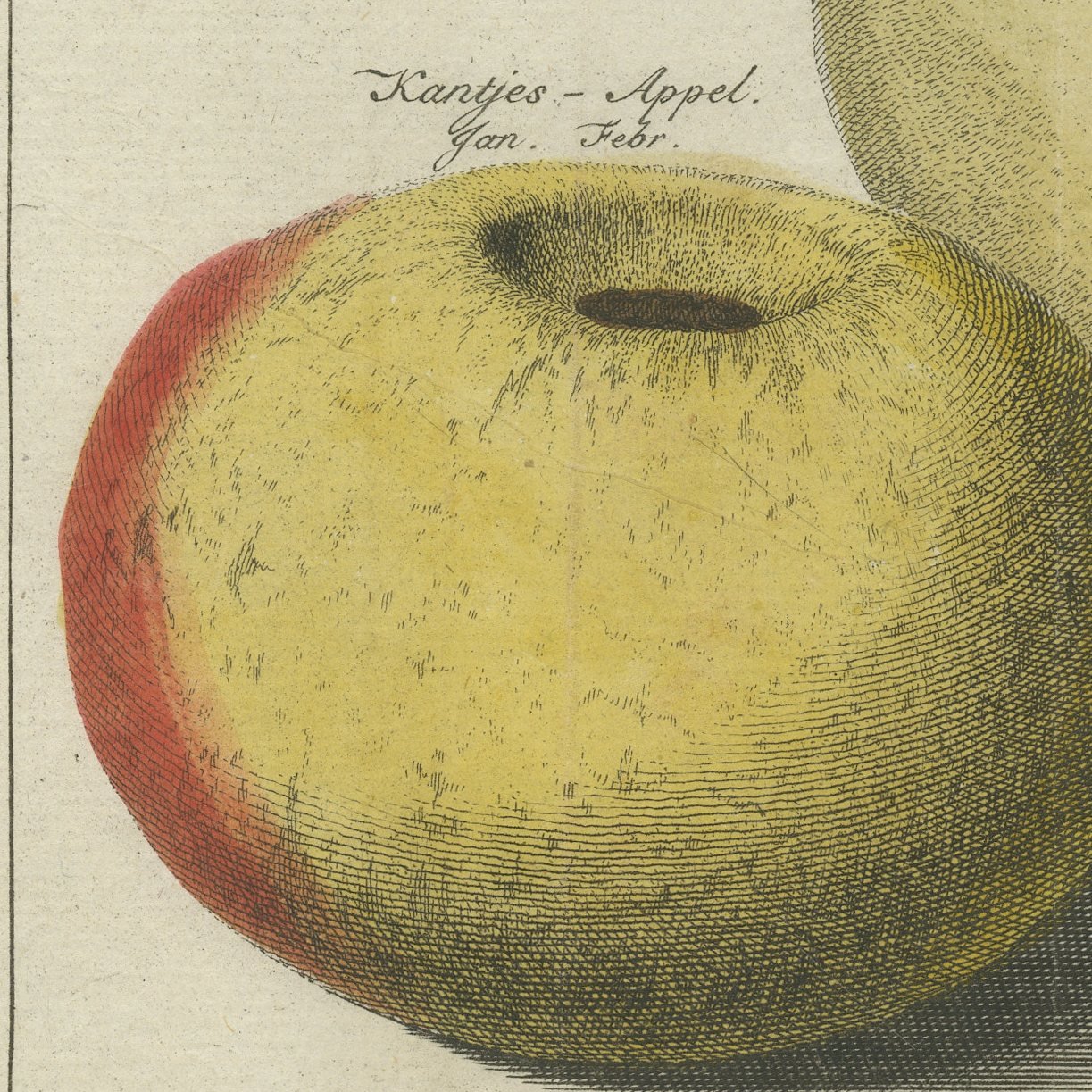
This original hand-colored copper engraving shows eight named Dutch apple varieties with their ripening months engraved beneath them, and it is the Gulderling plate: Dubbelde Soete Gulderling, Enkelde Gulderling and Dubbelde Grauwe Gulderling appear together, alongside Winter Bloem-Soete, Grauwe Hol-Soete, Rode Kroon of Magt, Kantjes-Appel and Soete Kroon. Every fruit on the sheet ripens between December and February, a run of true winter apples. Setting the three Gulderlings side by side is exactly the comparison an orchardist needed, and Knoop drew each from the living specimen, so the differences in size, ribbing and flush are real rather than schematic. Hand-applied watercolor sits over the engraving in uneven strength, the reds built up in two passes on some cheeks and left almost bare on others.
The plate comes from Johann Hermann Knoop's Beschrijving en Afbeeldingen van de beste soorten van Appelen en Peeren, published at Amsterdam and Dordrecht by Allart, Holtrop, de Leeuw and Krap in 1790, with a preface by the Zutphen minister and naturalist Johannes Florentius Martinet. Knoop was gardener to the widow of the Frisian stadtholder at Leeuwarden and the first systematic Dutch pomologist. He drew every fruit from the living specimen, and the plates are lettered ad vivum to say so. The engraving is on copper and the color is original hand color in watercolor, laid over the engraved hatching.
The point of this sheet is comparison. Dutch fruit names of the period were local and overlapping, and a gardener buying trees could easily be sold the wrong Gulderling; Knoop's plates were the remedy, fixing name, shape and season together in one authoritative image. That makes the plate a working document of eighteenth-century nursery practice as well as an attractive one. Collectors of pomological prints value the apple grids above all the other sheets in the volume. A single plate framed and propped on a kitchen shelf or hung beside a dresser brings warmth and a little scholarship to a room without dominating it.
Light uneven toning, browner towards the edges. Handling soiling along the bottom and top edges. Scattered light foxing in the margin. Slight wear at the bottom right corner.
This is an original antique plate, not a modern reproduction. This item is sold unframed.