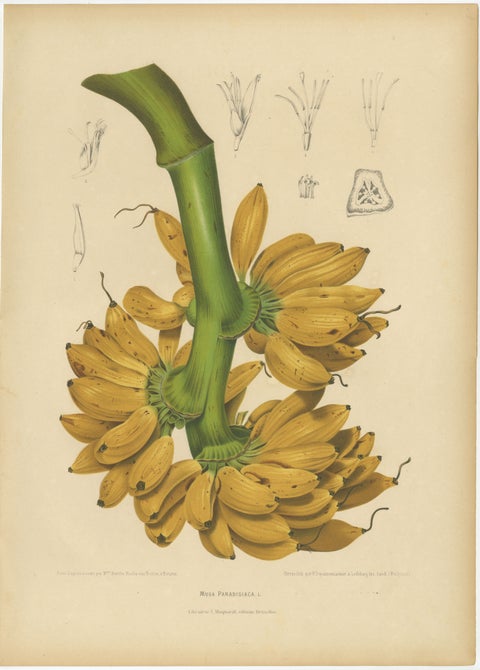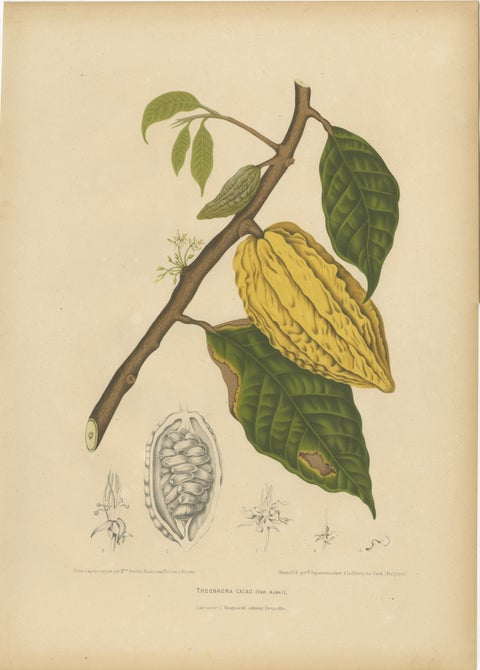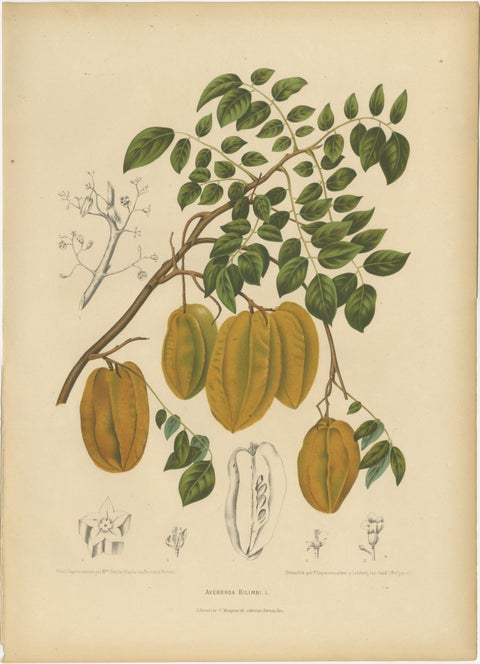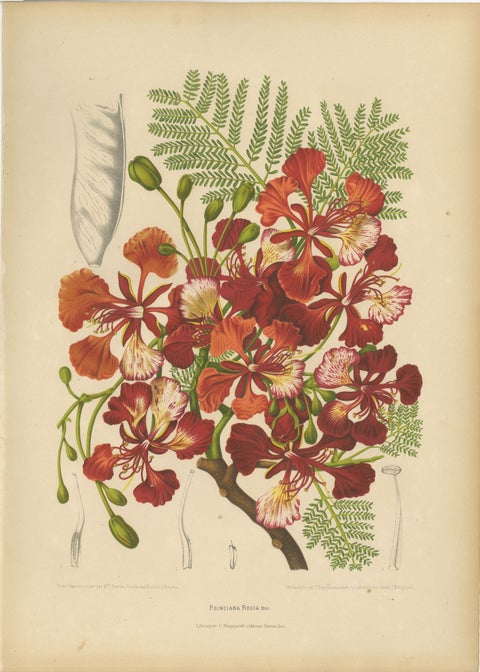
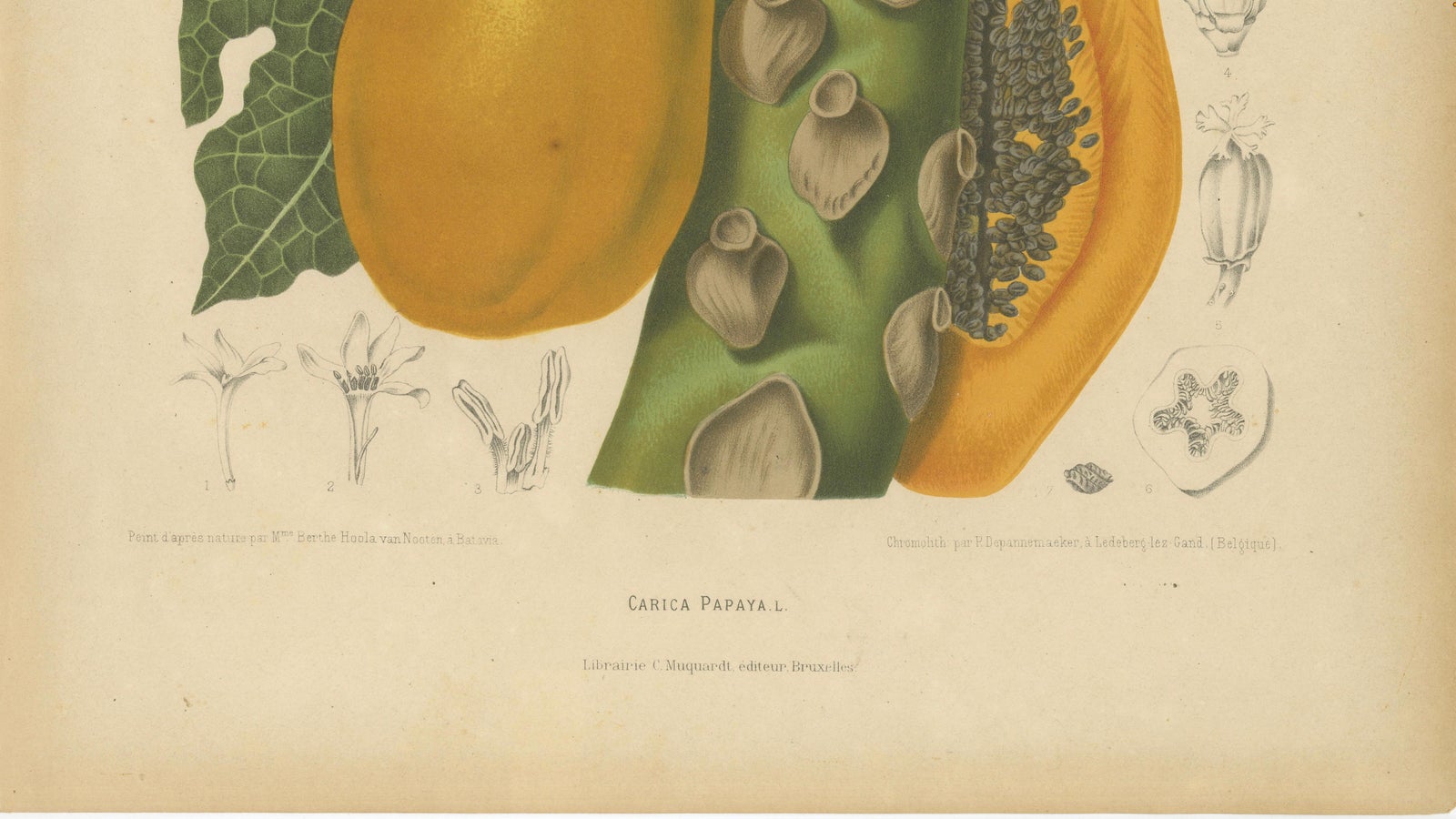
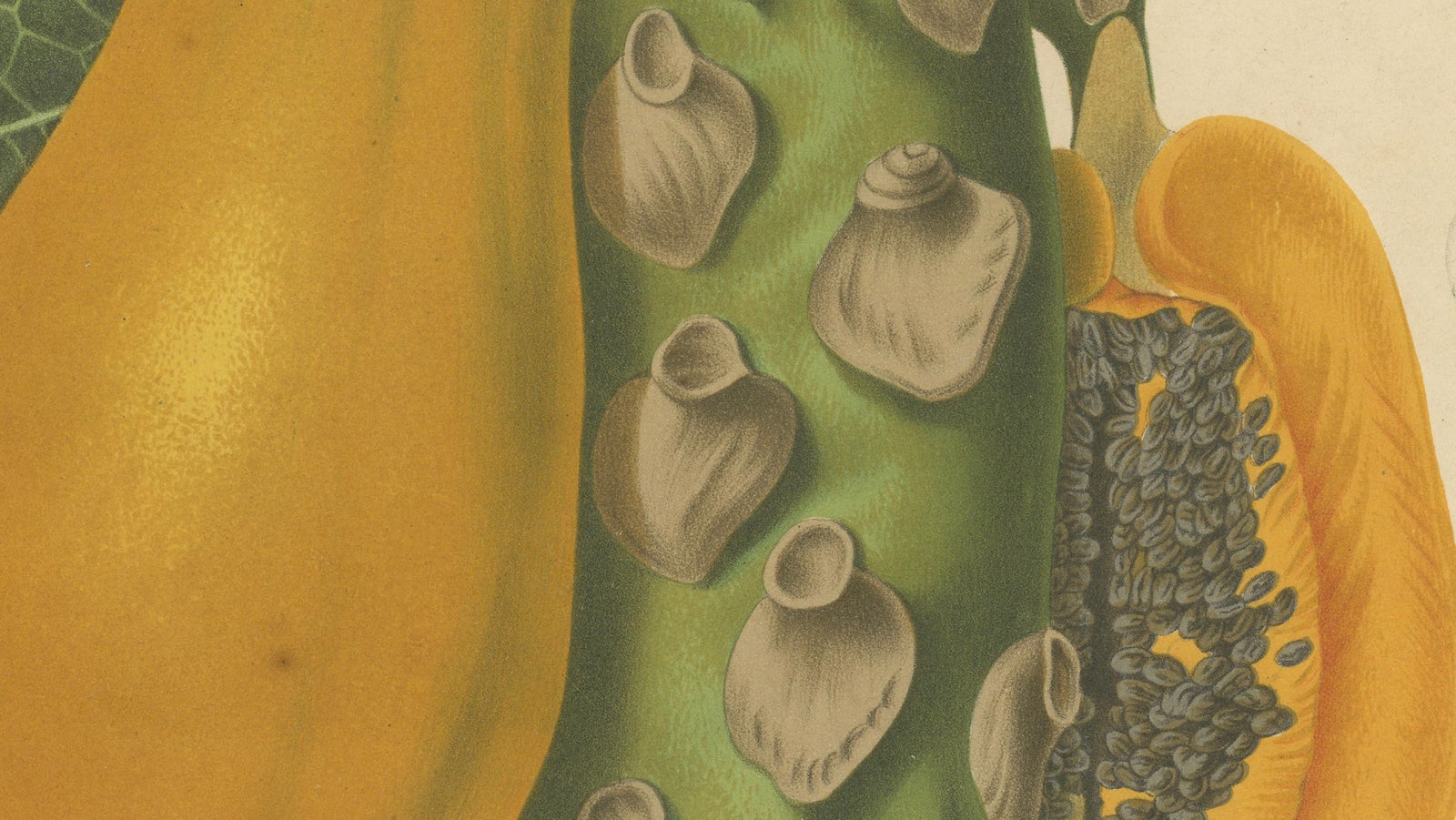
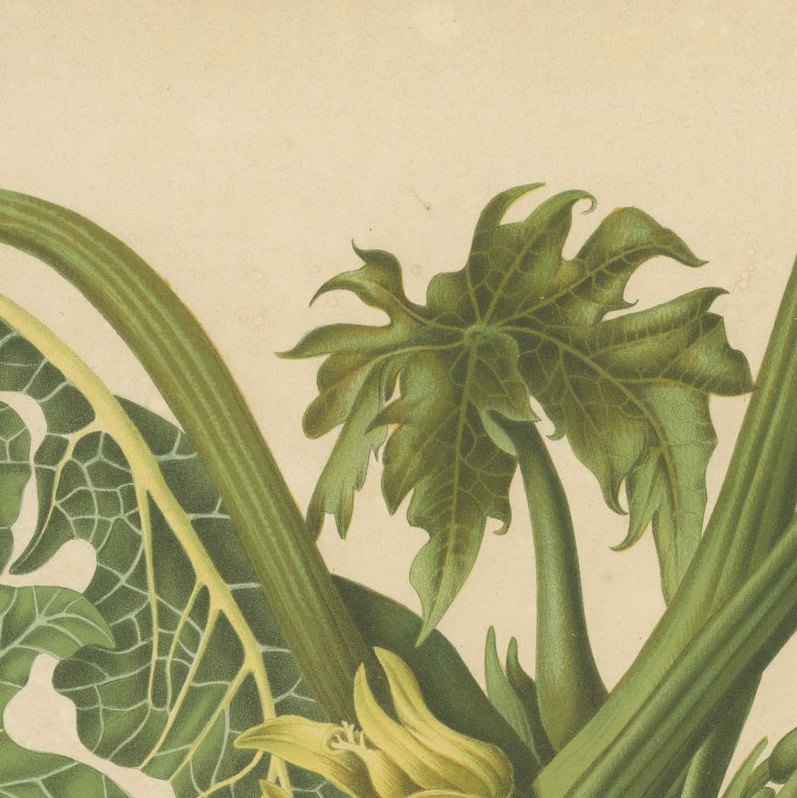
Close-ups
Framed and on the wall
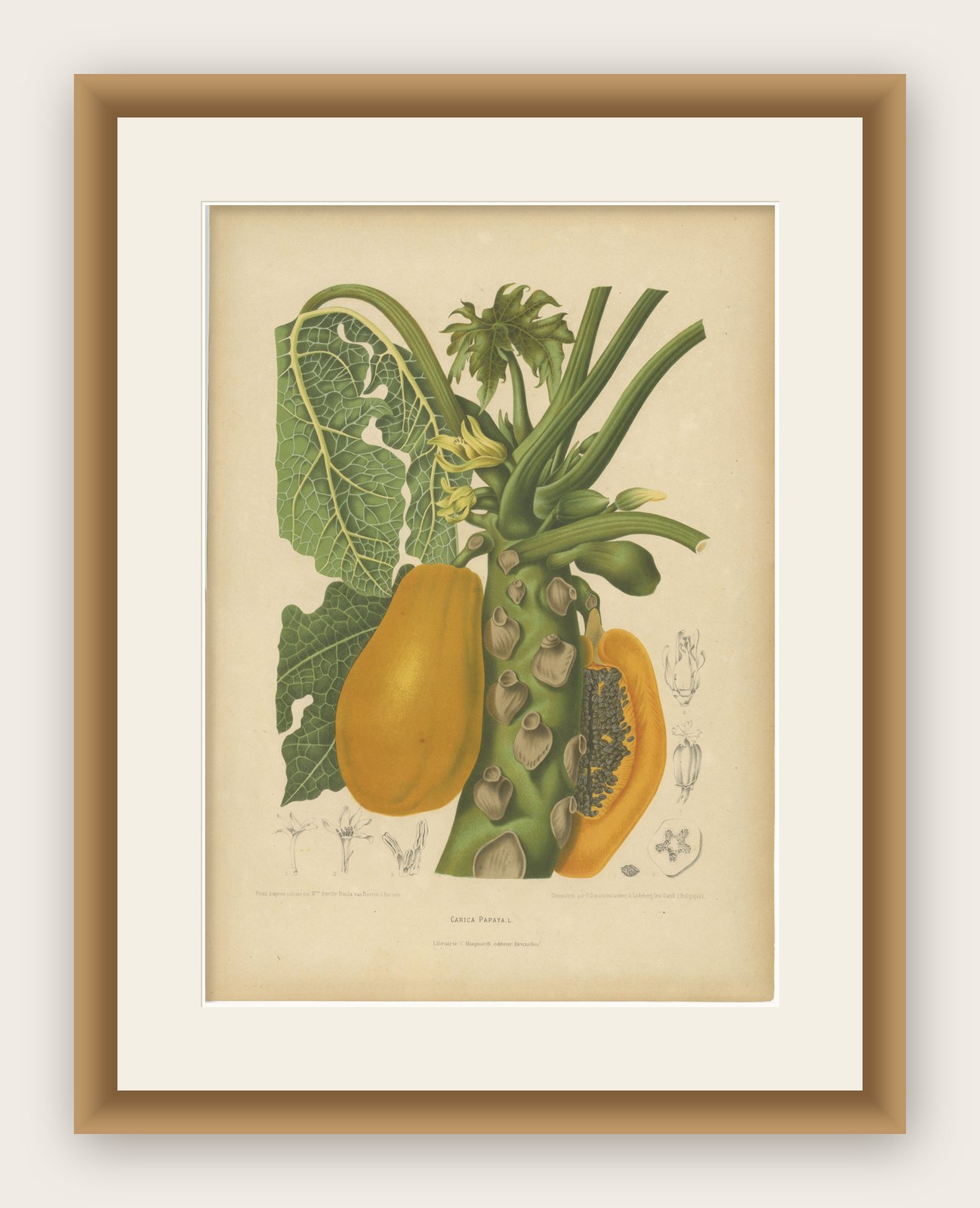
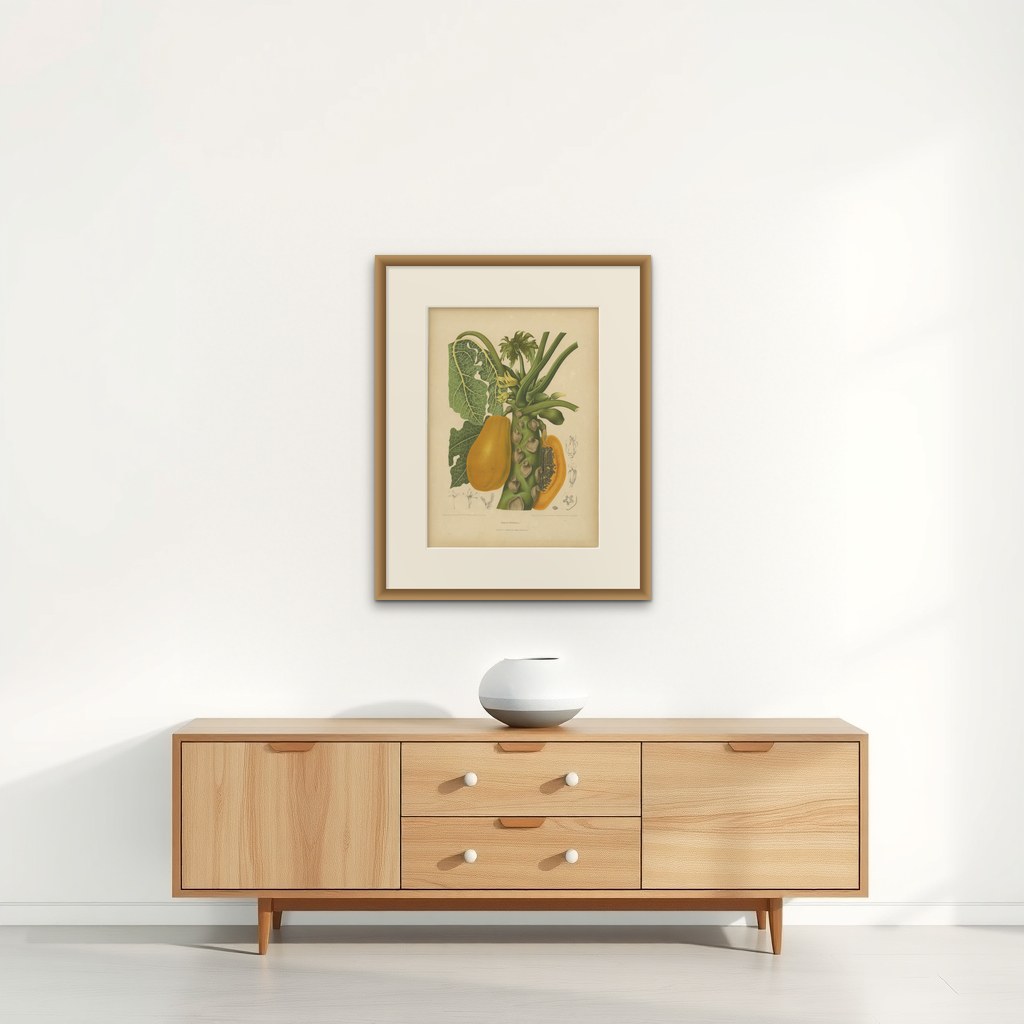
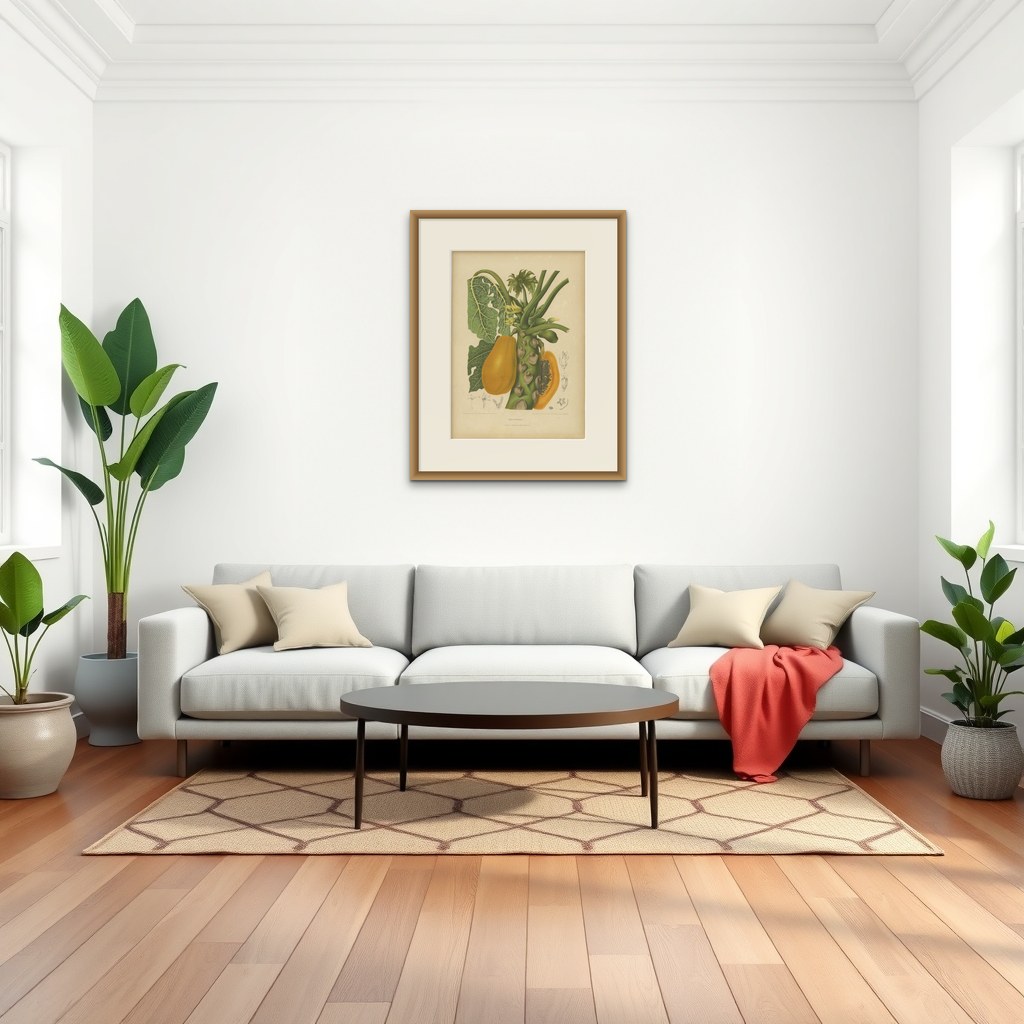
Frame and rooms are illustrations of how the print could look; the description says what is included.
Antique Papaya Botanical Chromolithograph by Hoola van Nooten, c. 1880
€1,290 ($1,455, £1,095, €1,290)
Period original, not a reproduction.
Shipped from the Netherlands, flat, insured and tracked, worldwide. Returns accepted within 14 days.
- Date
- 1880
- Size
- 21.9 × 15.7 in (55.5 × 40 cm)
- Condition
- Good. Good antique condition with age-related toning, occasional foxing and light handling wear consistent with age. Please examine all photographs carefully, as they form part of the description.
- Period
- Late 19th century
- Section
- Botanical
- Reference
- f_51121562
Title: Antique Papaya Botanical Chromolithograph by Hoola van Nooten, c. 1880
Description:
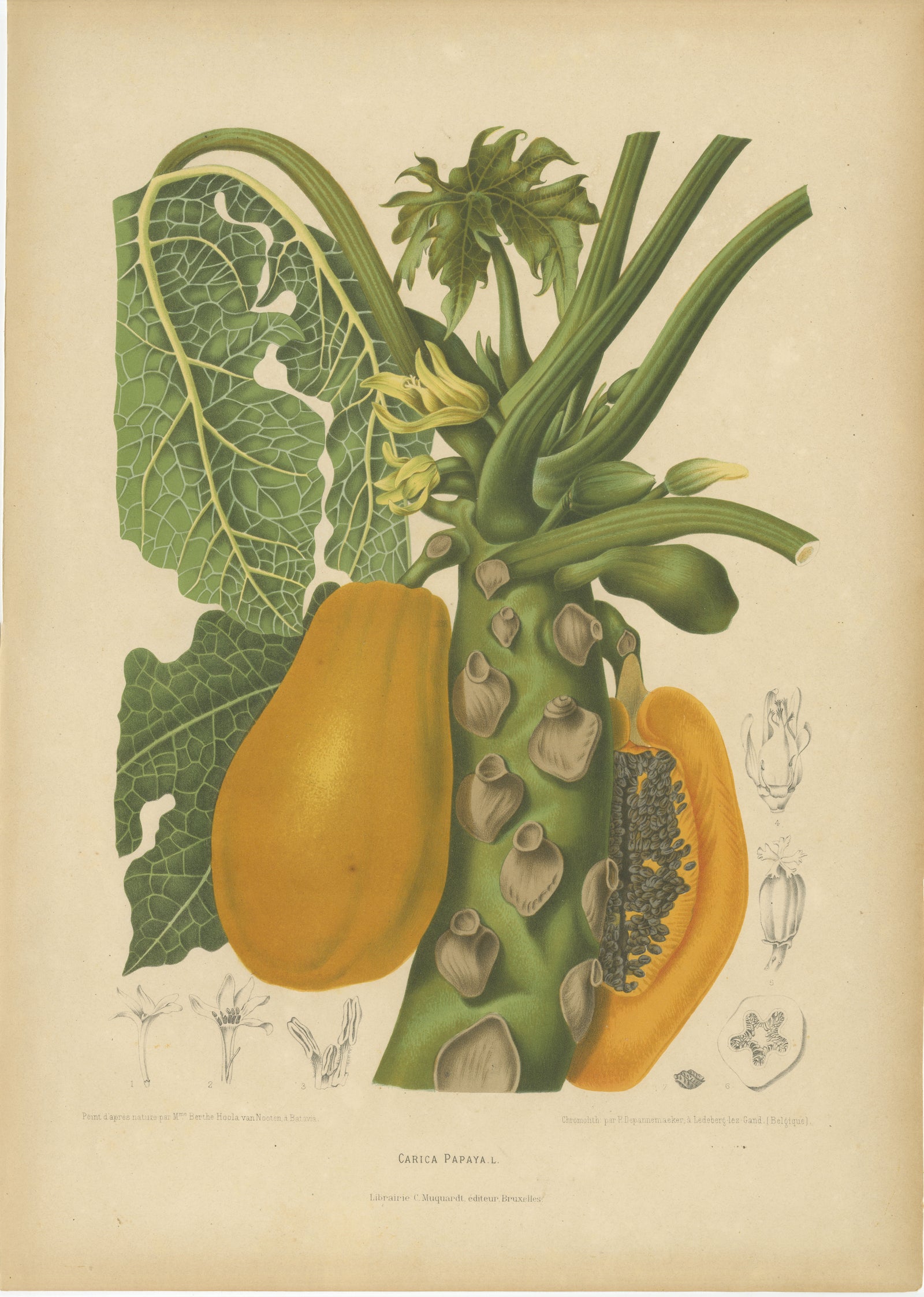
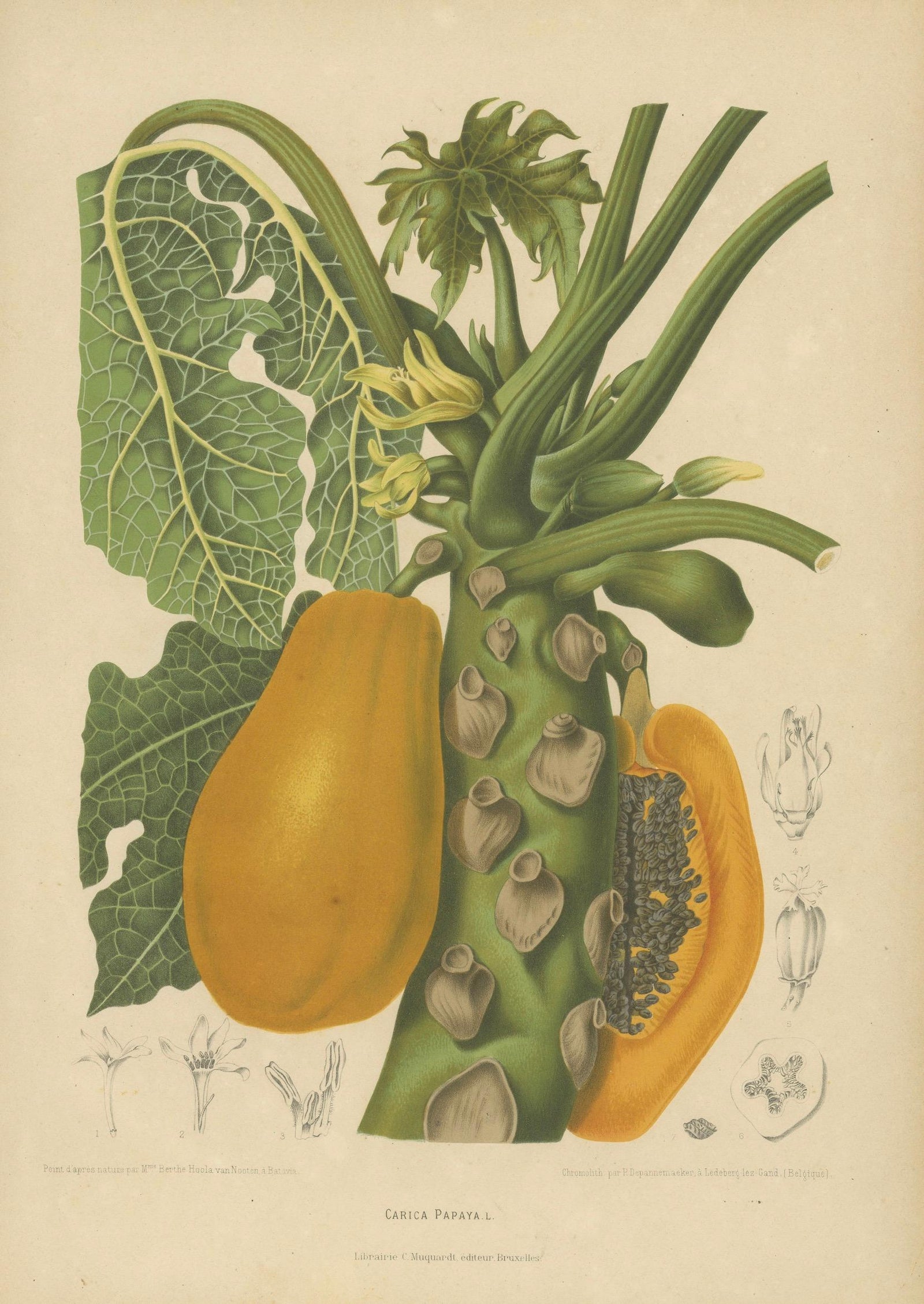
A magnificent original antique botanical chromolithograph depicting Carica papaya L., commonly known as the Papaya or Pawpaw. One of the world's most important tropical fruit trees, the papaya is admired for its sweet golden-orange flesh, striking architectural form, and exceptional nutritional value. Native to tropical America, it was introduced to Southeast Asia during the sixteenth century and became firmly established throughout Indonesia and the Dutch East Indies.
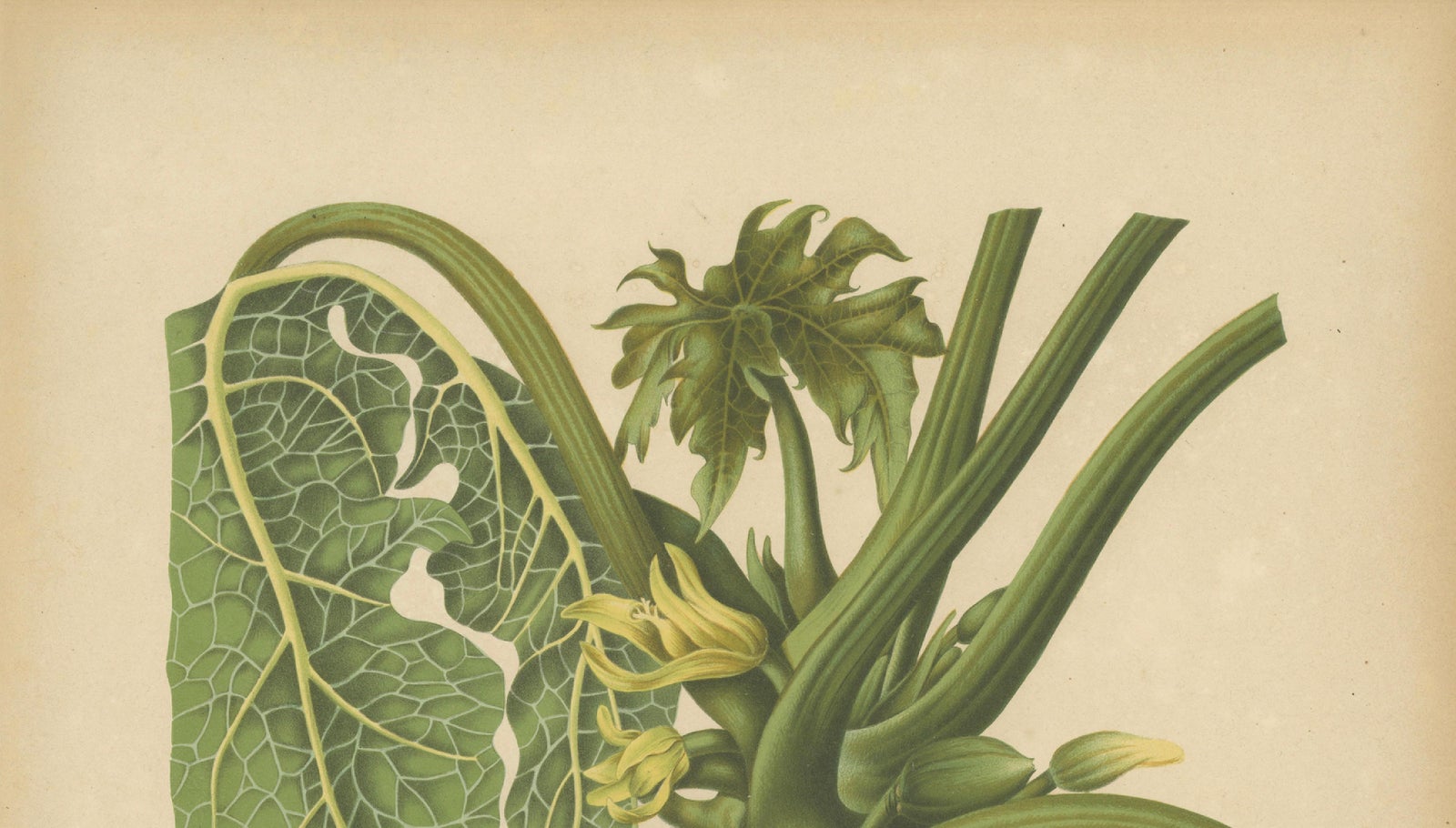
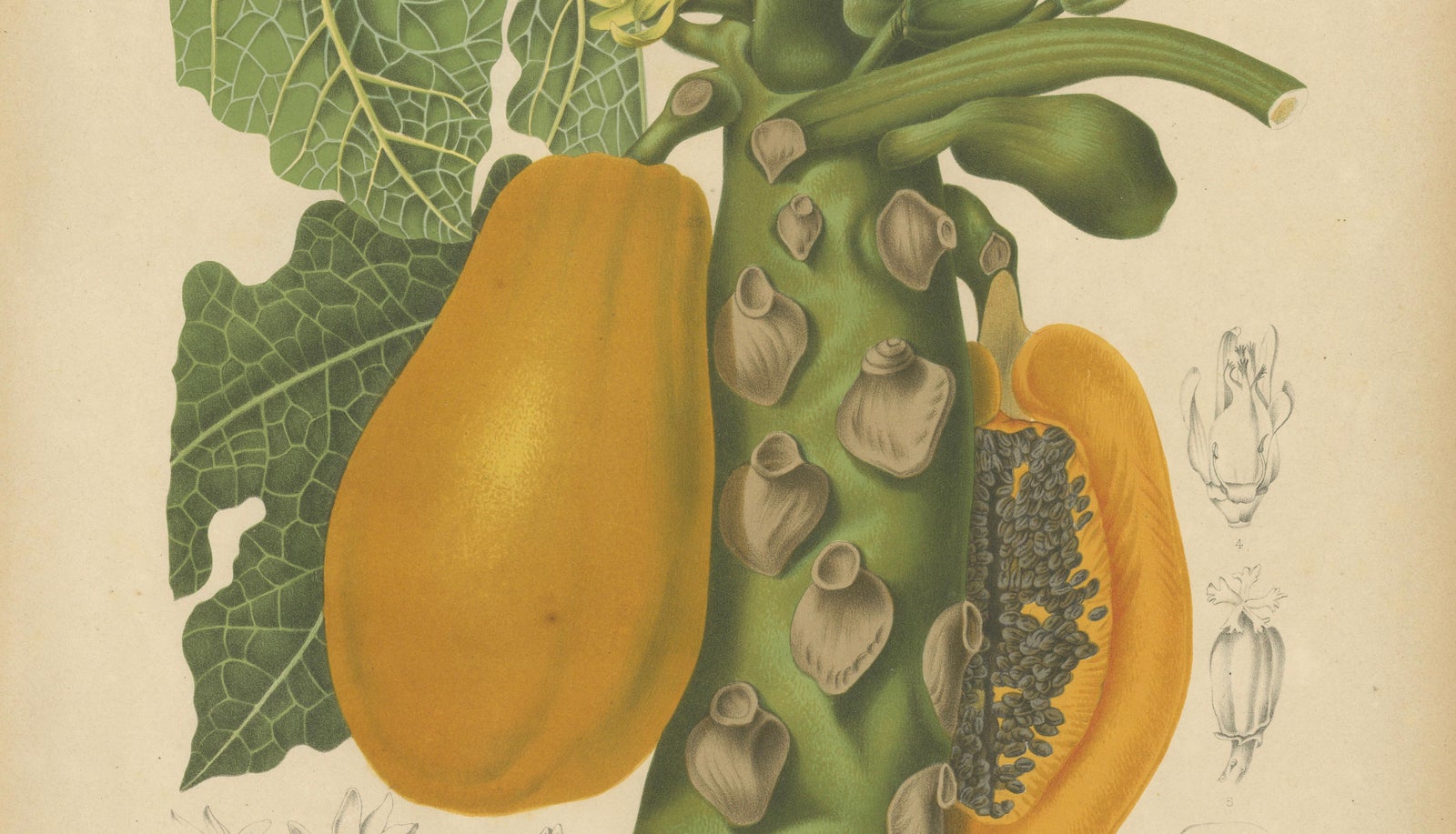
The composition beautifully illustrates a fruiting papaya trunk bearing mature fruit alongside flowers, foliage, and detailed botanical studies. One fruit is shown in section, revealing the distinctive cavity filled with glossy black seeds. The dramatic composition, combining the sculptural trunk, broad tropical leaves, and vibrant fruit, makes this one of the most visually striking plates from Berthe Hoola van Nooten's celebrated botanical masterpiece.
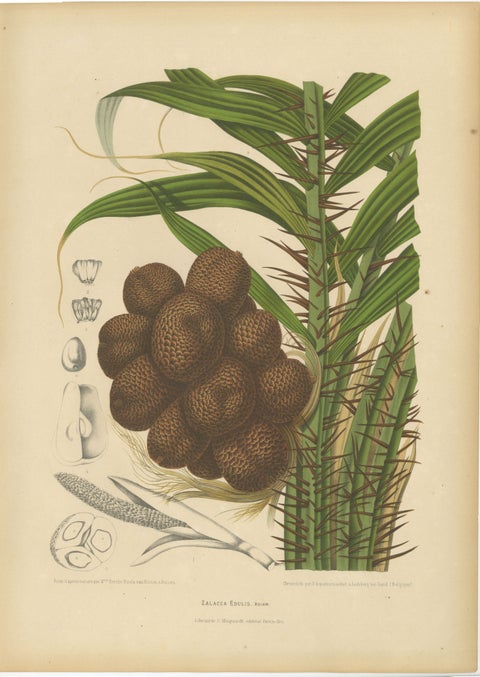
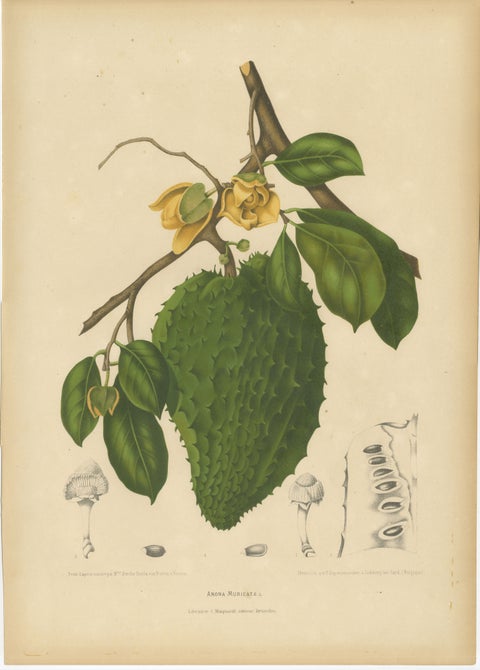
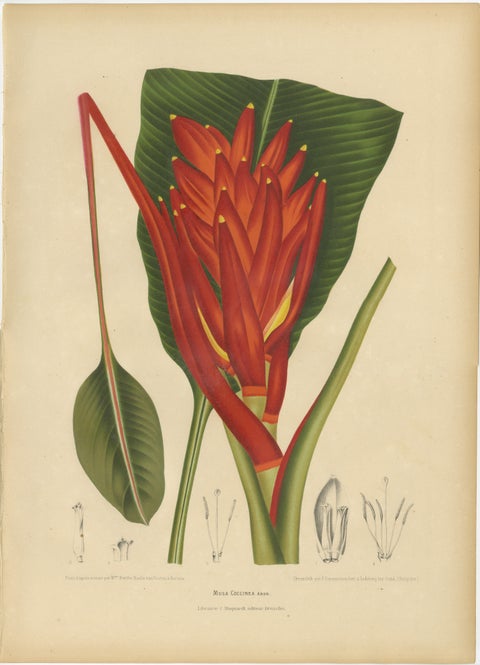
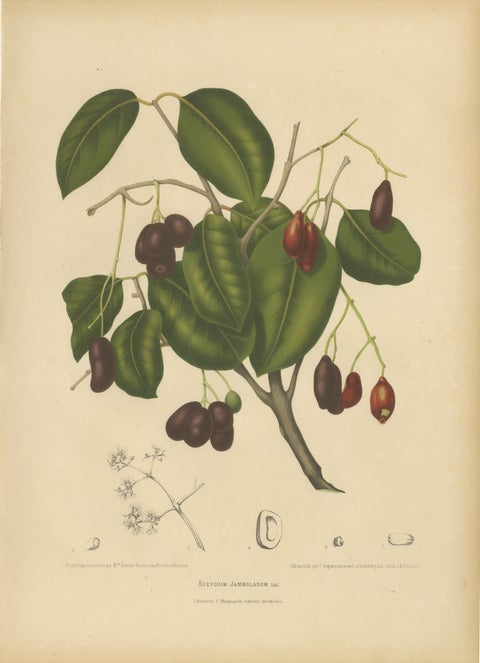
The artwork was painted from life on the island of Java by the distinguished Dutch botanical artist Berthe Hoola van Nooten (1817–1892). It was published in her masterpiece, Fleurs, Fruits et Feuillages Choisis de l'Ile de Java, widely regarded as one of the finest nineteenth-century botanical publications devoted to the flora of the Dutch East Indies. Printed in rich chromolithography by P. De Pannemaeker of Ghent, this plate was issued in the third edition published in Brussels by Librairie Européenne C. Muquardt around 1880.
Today, the papaya is cultivated throughout the tropical world and remains one of the most recognizable fruits of Southeast Asia. This original antique print combines scientific importance with exceptional decorative appeal and is among the strongest fruit subjects in the Hoola van Nooten series.
This is an original antique print, printed circa 1880, and not a modern reproduction or later copy.
Artist:
Berthe Hoola van Nooten (1817–1892)
Publication:
Fleurs, Fruits et Feuillages Choisis de l'Ile de Java
Publisher:
Librairie Européenne C. Muquardt, Brussels
Printer:
P. De Pannemaeker, Ghent
Date:
Circa 1880
Medium:
Original chromolithograph on wove paper.
Condition:
Good antique condition with age-related toning, occasional foxing and light handling wear consistent with age. Please examine all photographs carefully, as they form part of the description.
Please note that any framed images are for display inspiration only. The print is sold unframed. Framed mock-ups are not always shown to exact scale and are intended solely to illustrate how the artwork may look when displayed.
Keywords:
original antique print, original chromolithograph, botanical print, Carica papaya, papaya, pawpaw, tropical fruit, papaya tree, exotic fruit, Indonesian botanical art, Java, Southeast Asian flora, Dutch East Indies, Berthe Hoola van Nooten, Victorian botanical illustration, nineteenth century botanical print, antique botanical wall art, natural history print, scientific illustration, P. De Pannemaeker, Muquardt Brussels, museum quality botanical art, rare botanical print, collectible botanical print, circa 1880
The papaya is one of the most recognizable tropical fruits in the world, and this plate is among the most decorative in the series thanks to its bold composition, vivid color palette, and detailed cross-section of the fruit. Its international appeal and strong visual impact justify positioning it in the premium tier of the Hoola van Nooten series alongside Mango, Cashew, Durian, Buddha's Hand Citron, and Cacao.