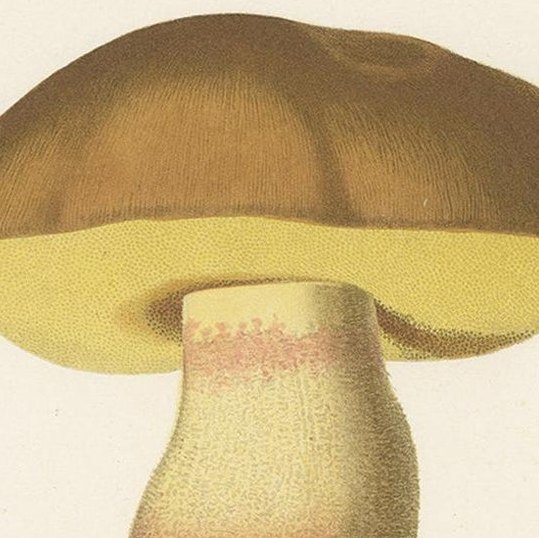
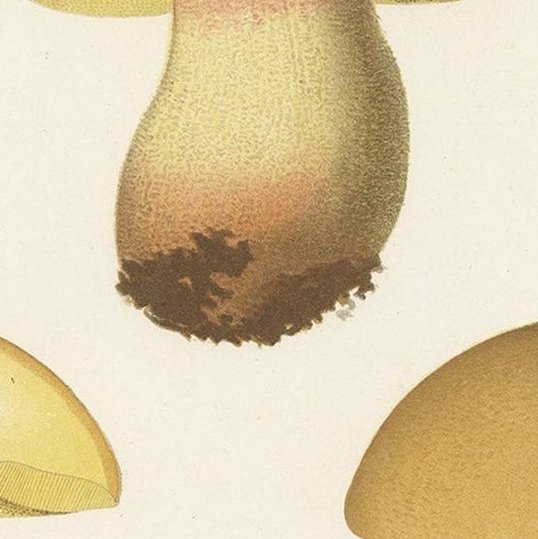
Close-ups
Framed and on the wall
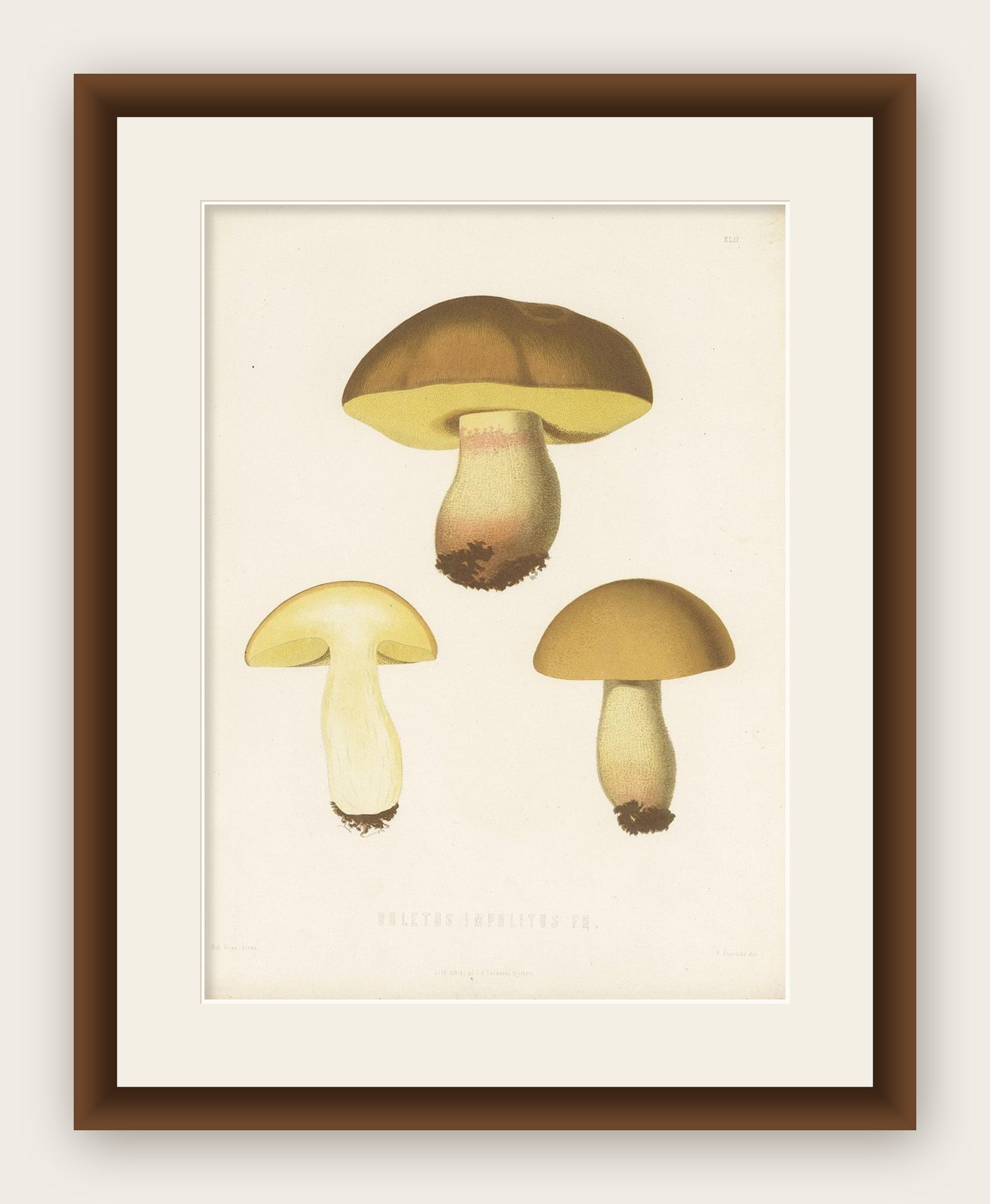


Frame and rooms are illustrations of how the print could look; the description says what is included.
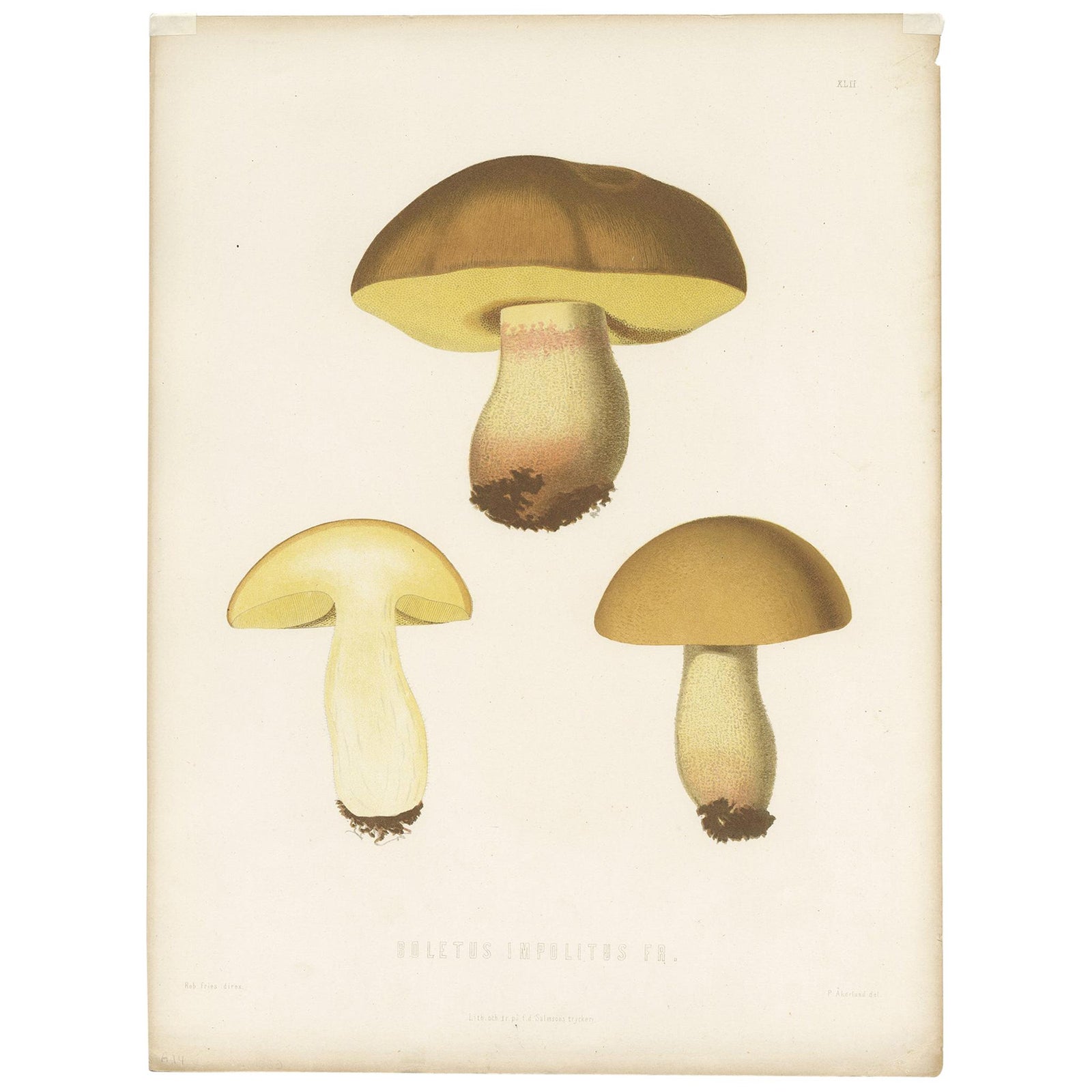
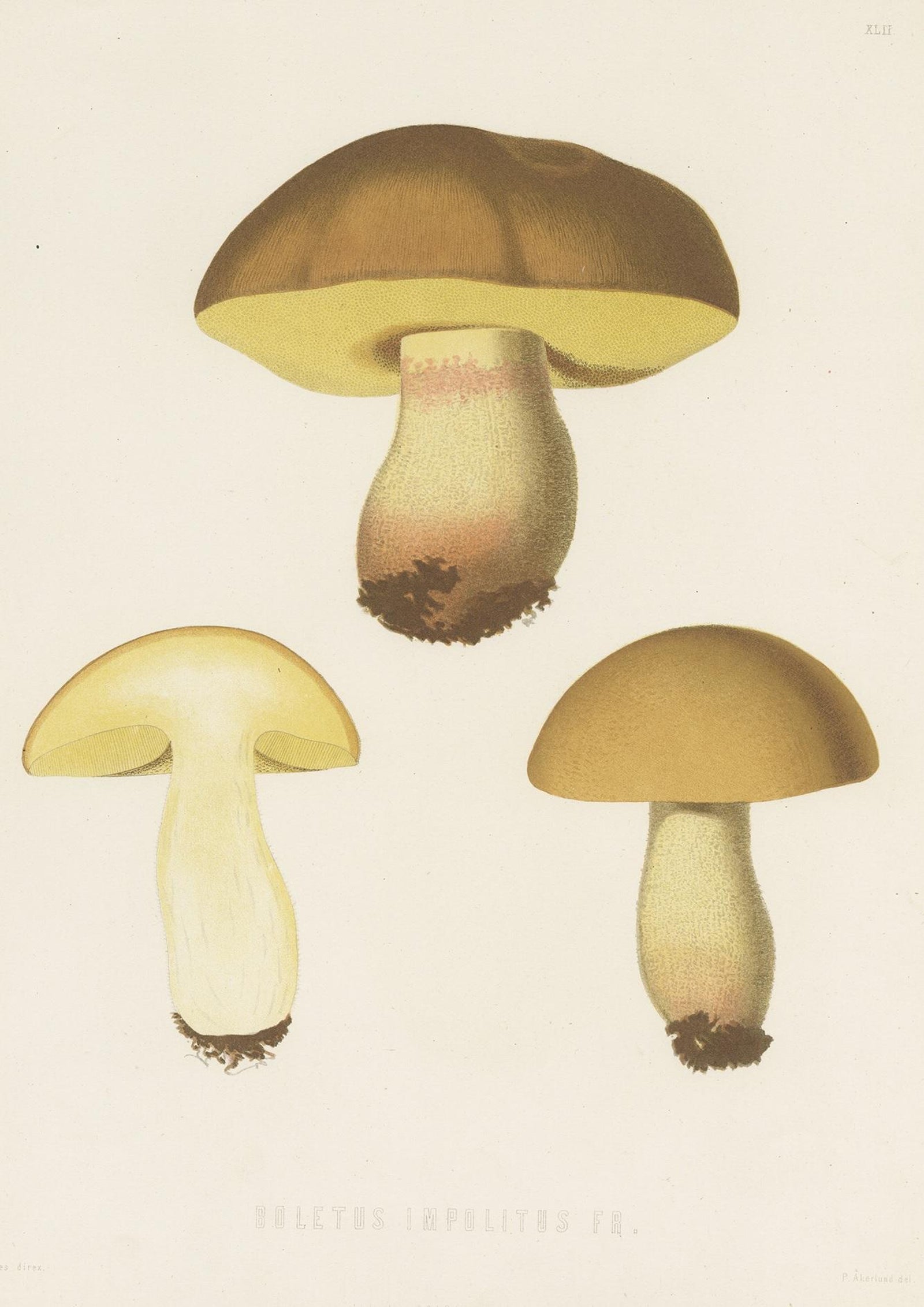
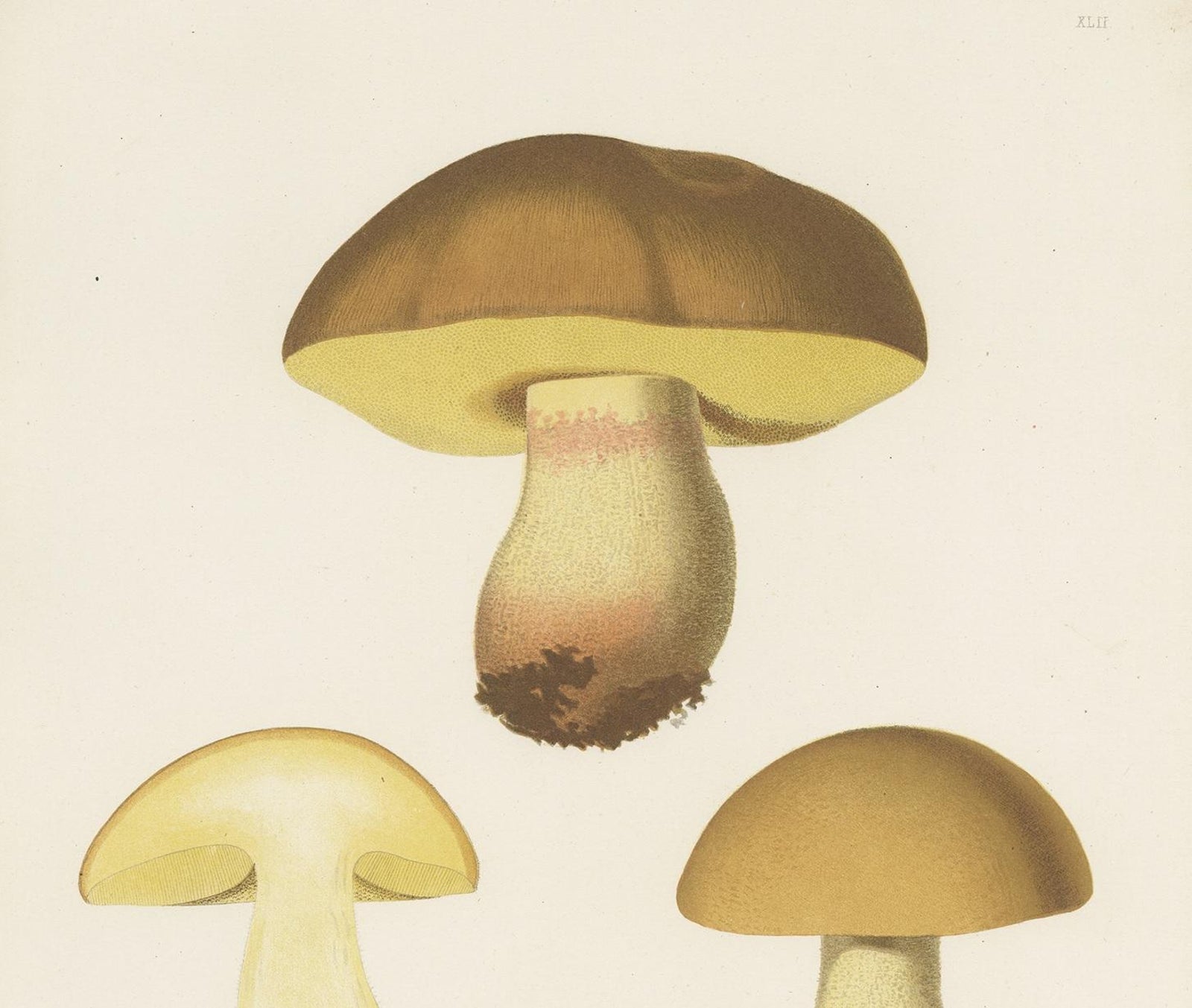
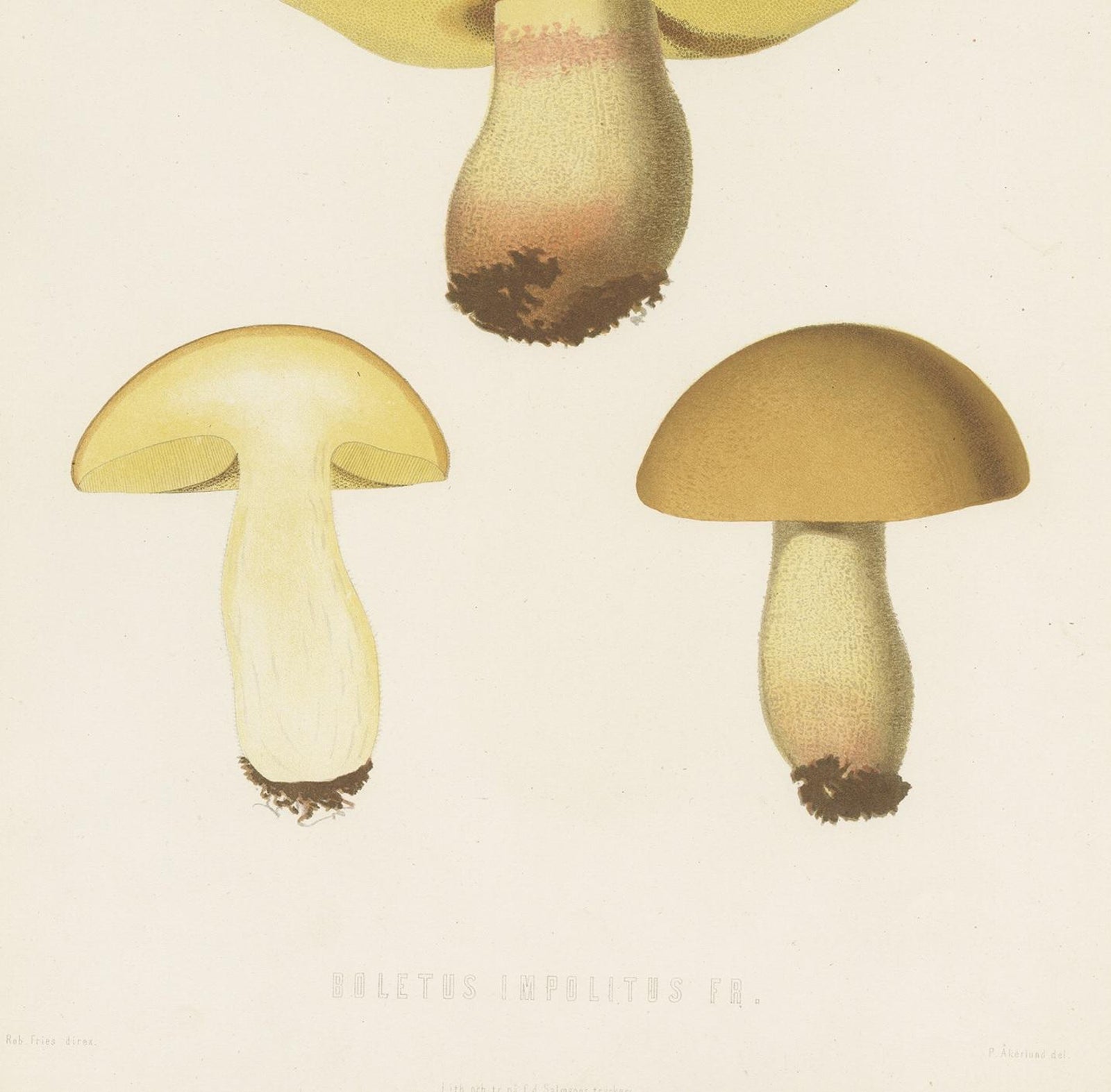
Antique Mycology Print of Hemileccinum Impolitum by E.M. Fries, circa 1860
€140 ($155, £120, €140)
Period original, not a reproduction.
Shipped from the Netherlands, flat, insured and tracked, worldwide. Returns accepted within 14 days.
- Date
- 1860
- Size
- 14.9 × 11.2 in (37.9 × 28.4 cm)
- Condition
- Good. General age-related toning, tape on upper corners. Please study images carefully.
- Period
- Late 19th century
- Section
- Botanical
- Reference
- f_15678351
What the condition grades mean
- Excellent
- Bright and clean, with no faults worth mentioning.
- Very good
- Only light signs of age, such as faint toning.
- Good
- Normal signs of age for a sheet of this period: toning, some foxing, small marks or neat old repairs.
- Fair
- Clear faults such as staining, tears or repairs, priced to match.
Every fault we see is written in the condition note, and the whole sheet is shown uncropped in the photos.
Antique mycology print titled 'Boletus Impolitus Fr.'. Impolitum is Latin, meaning "unpolished", "matte", "unsmoothed", or "unfinished", and may be a reference to the hammered look of some specimens. It was first described as Boletus impolitus by Elias Magnus Fries.
This print originates from 'Sveriges ätliga och giftiga svampar tecknade efter naturen'. Published in Stockholm, circa 1860.