Close-ups
Framed and on the wall
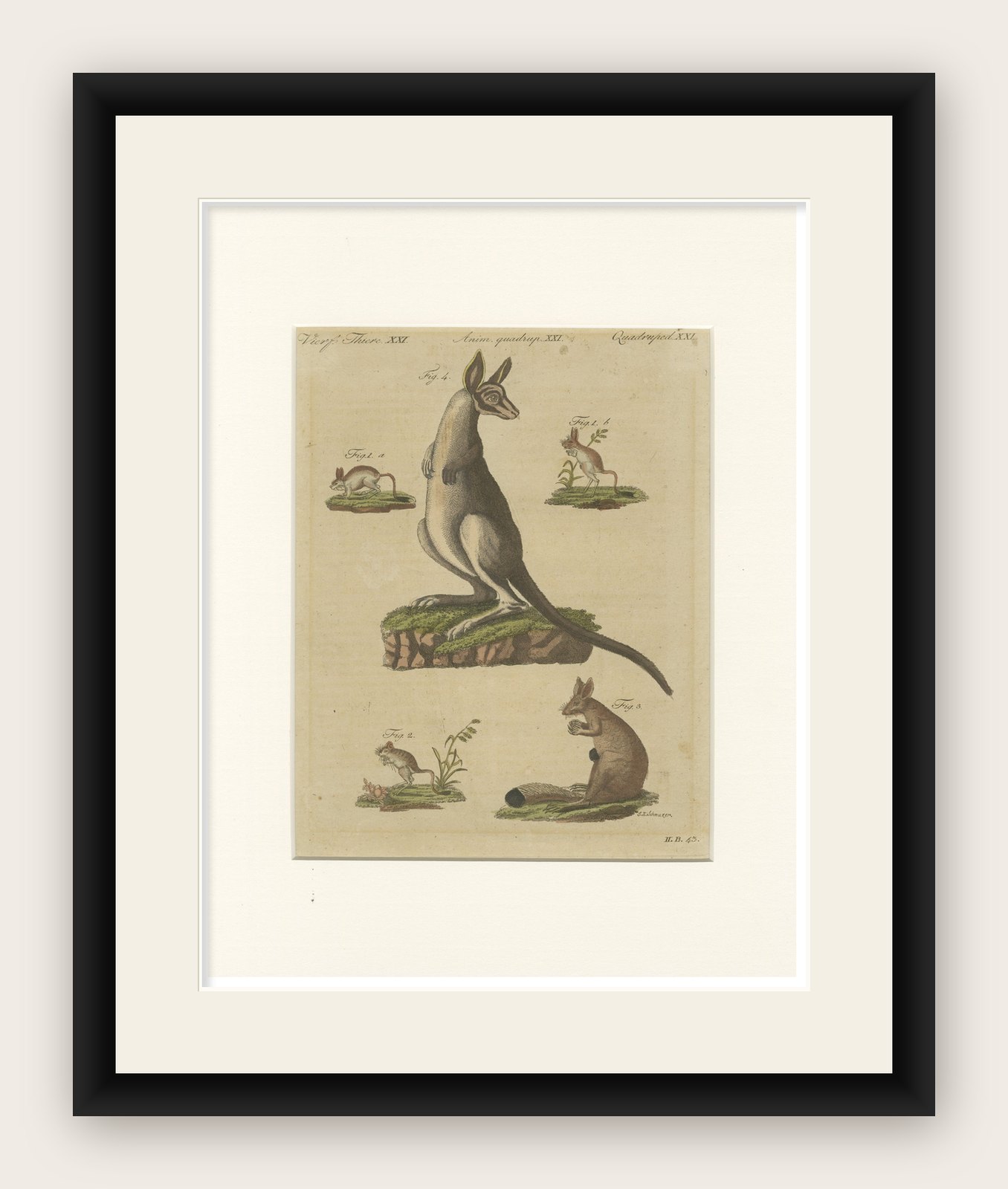


Frame and rooms are illustrations of how the print could look; the description says what is included.
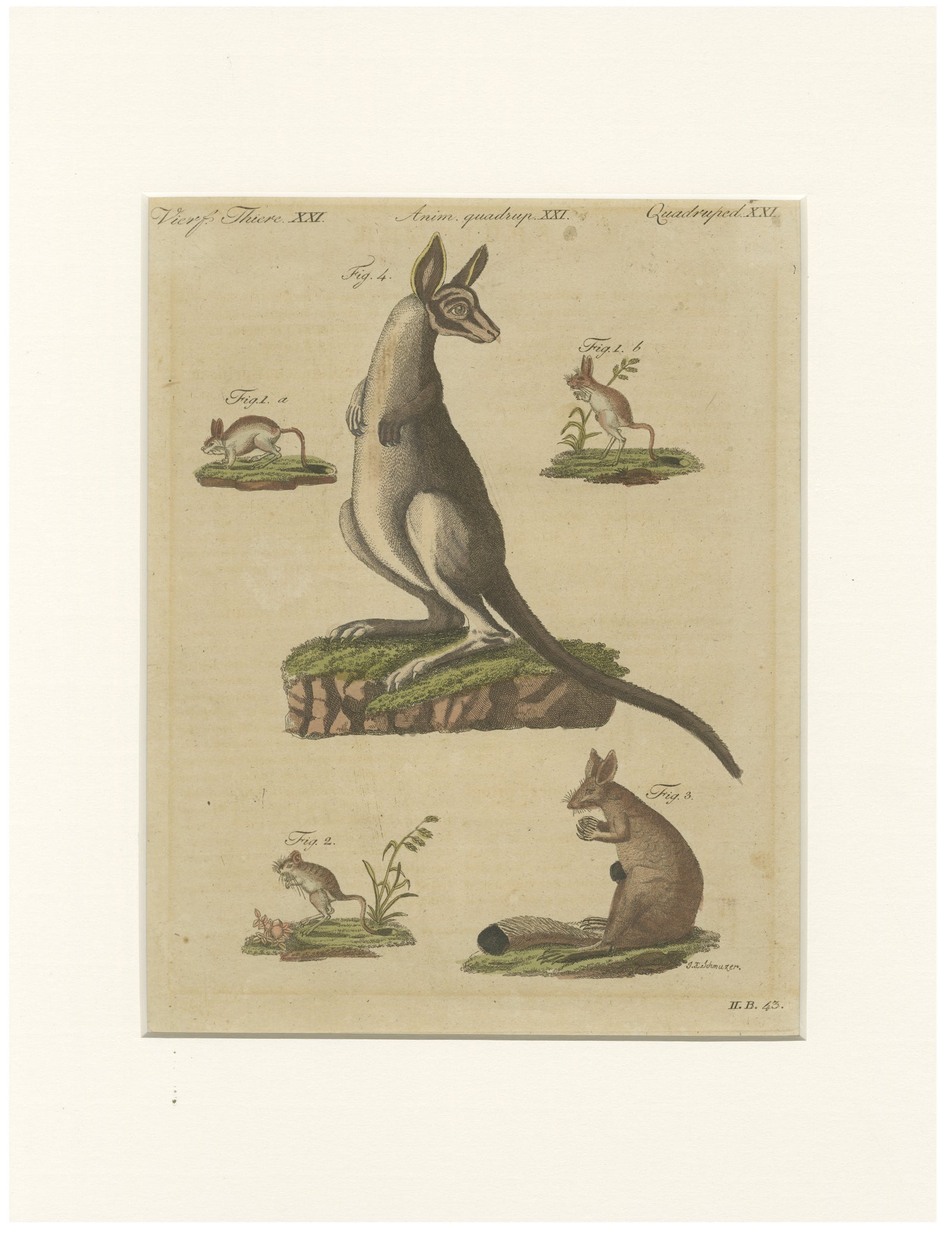
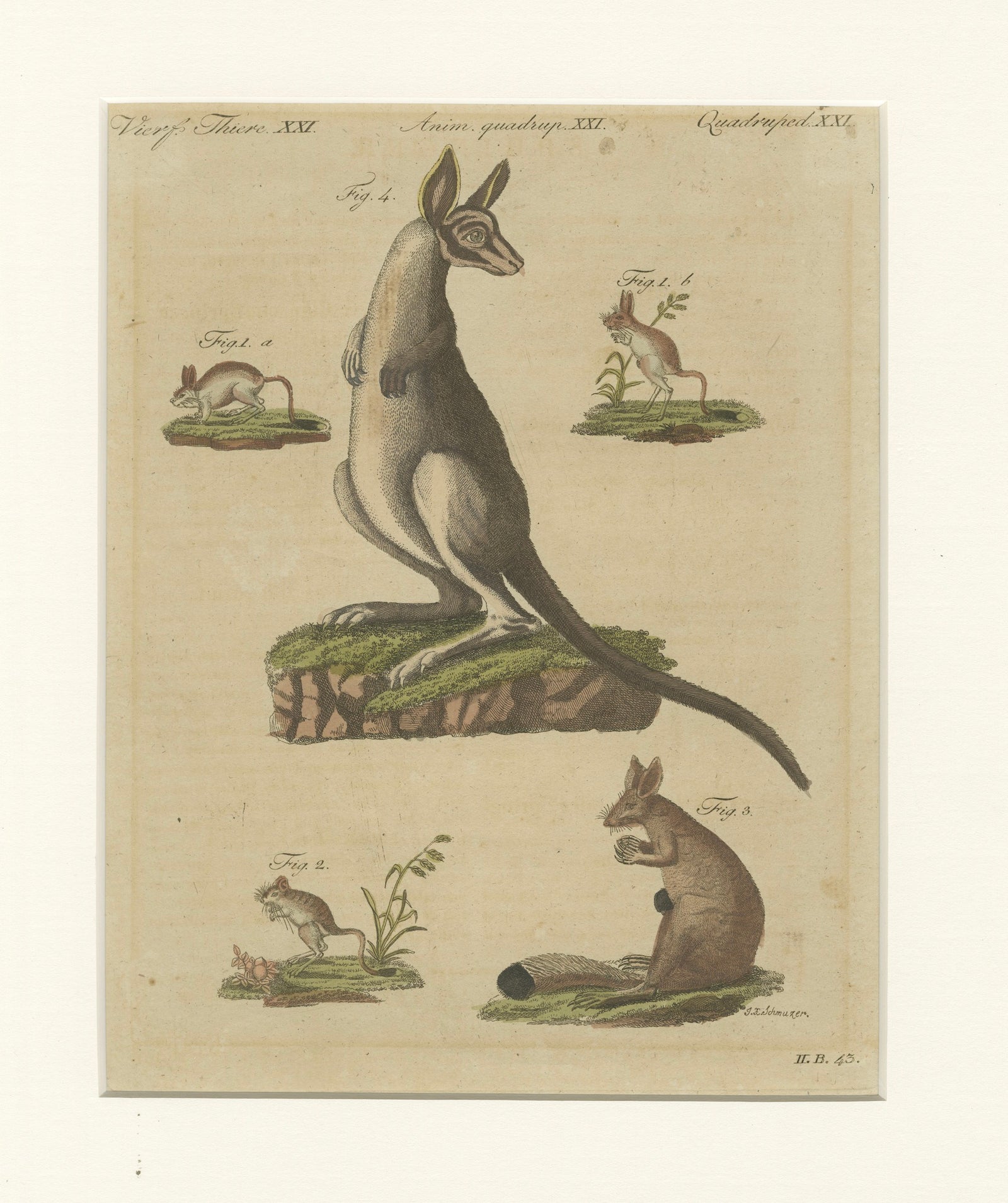
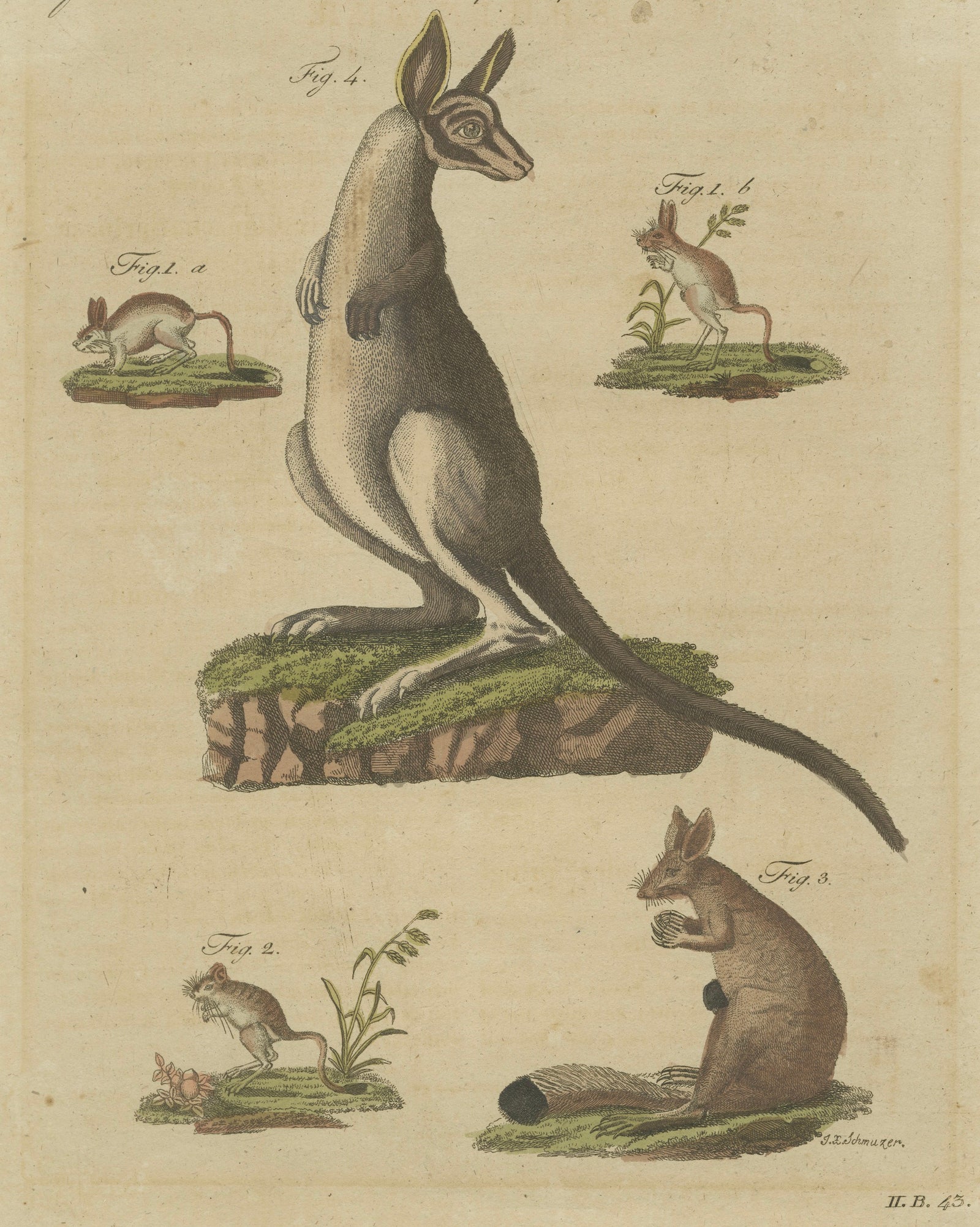
Antique Kangaroo, Wallaby & Hopping Mammals Engraving, Bertuch, c. 1795
€290 ($325, £245, €290)
Period original, not a reproduction.
Shipped from the Netherlands, flat, insured and tracked, worldwide. Returns accepted within 14 days.
- Date
- 1795
- Size
- 13.4 × 10.2 in (34 × 26 cm)
- Condition
- Good. Wear consistent with age and use. Good antique condition with overall age-related toning, scattered foxing and spotting and some visible show-through or offsetting from printed text. Minor marks and imperfections are present consistent with an original engraving more than 200 years.Seller Locati
- Period
- 18th century
- Artist or book
- Bertuch
- Section
- Mammals
- Reference
- f_51479642
Title: Antique Kangaroo, Wallaby & Hopping Mammals Engraving, Bertuch, c. 1795
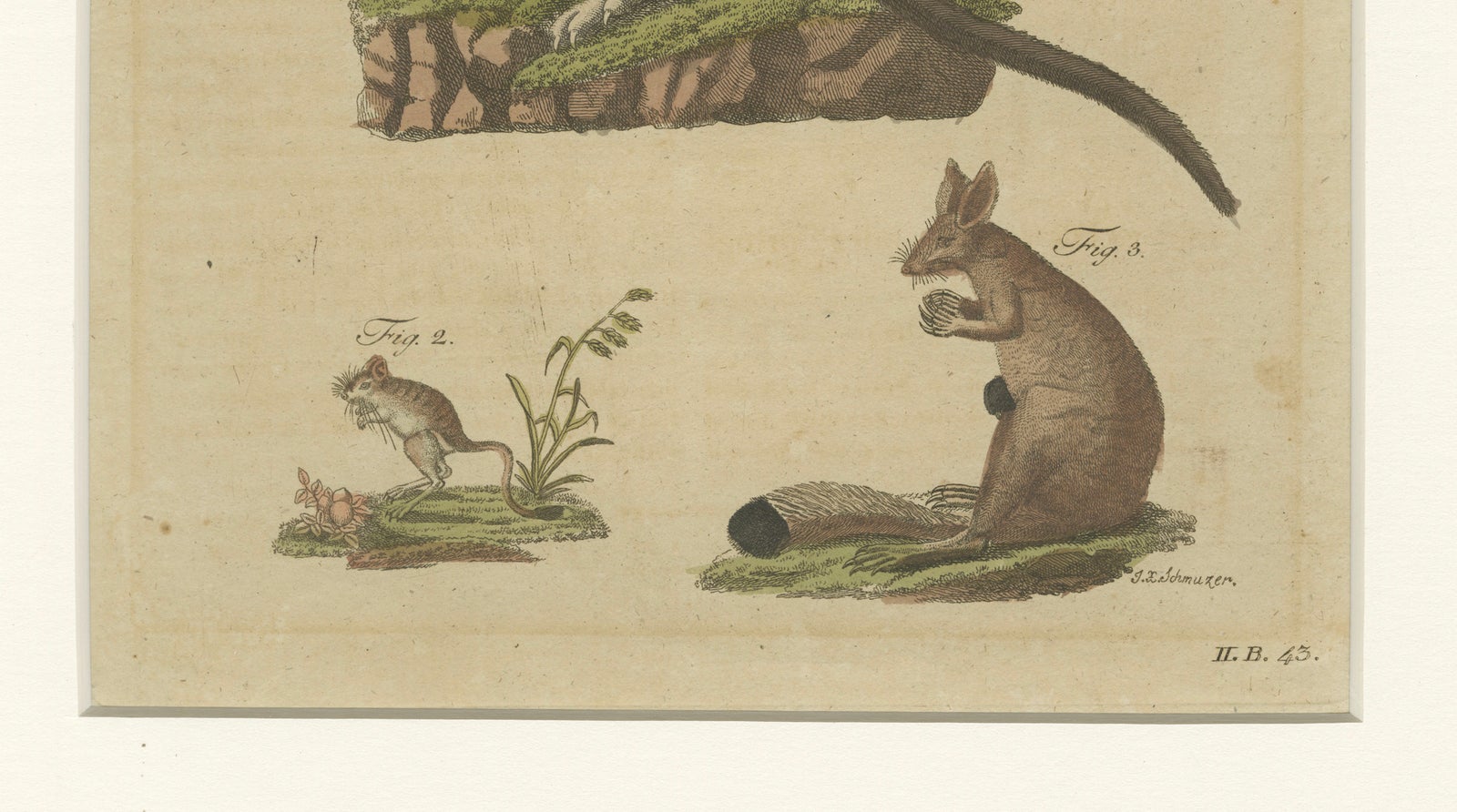
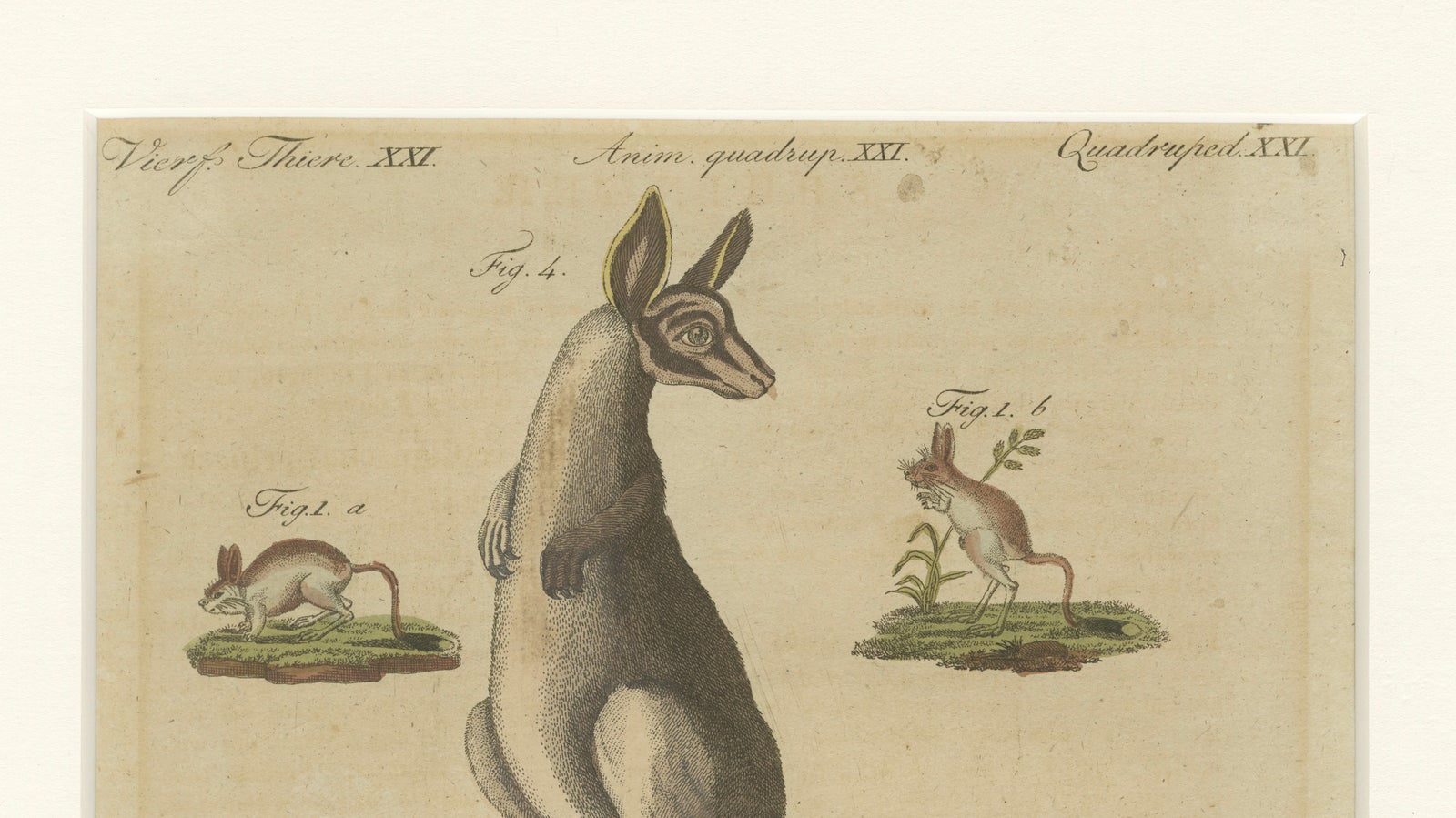
Original antique hand-colored copper engraving depicting a remarkable group of kangaroos and small hopping mammals, published in Friedrich Justin Bertuch’s celebrated “Bilderbuch für Kinder” in Weimar at the end of the 18th century.
The plate is headed “Vierfüßige Thiere XXI / Anim. quadrup. XXI / Quadrupèdes XXI” and is dominated by an impressive early European representation of a kangaroo.
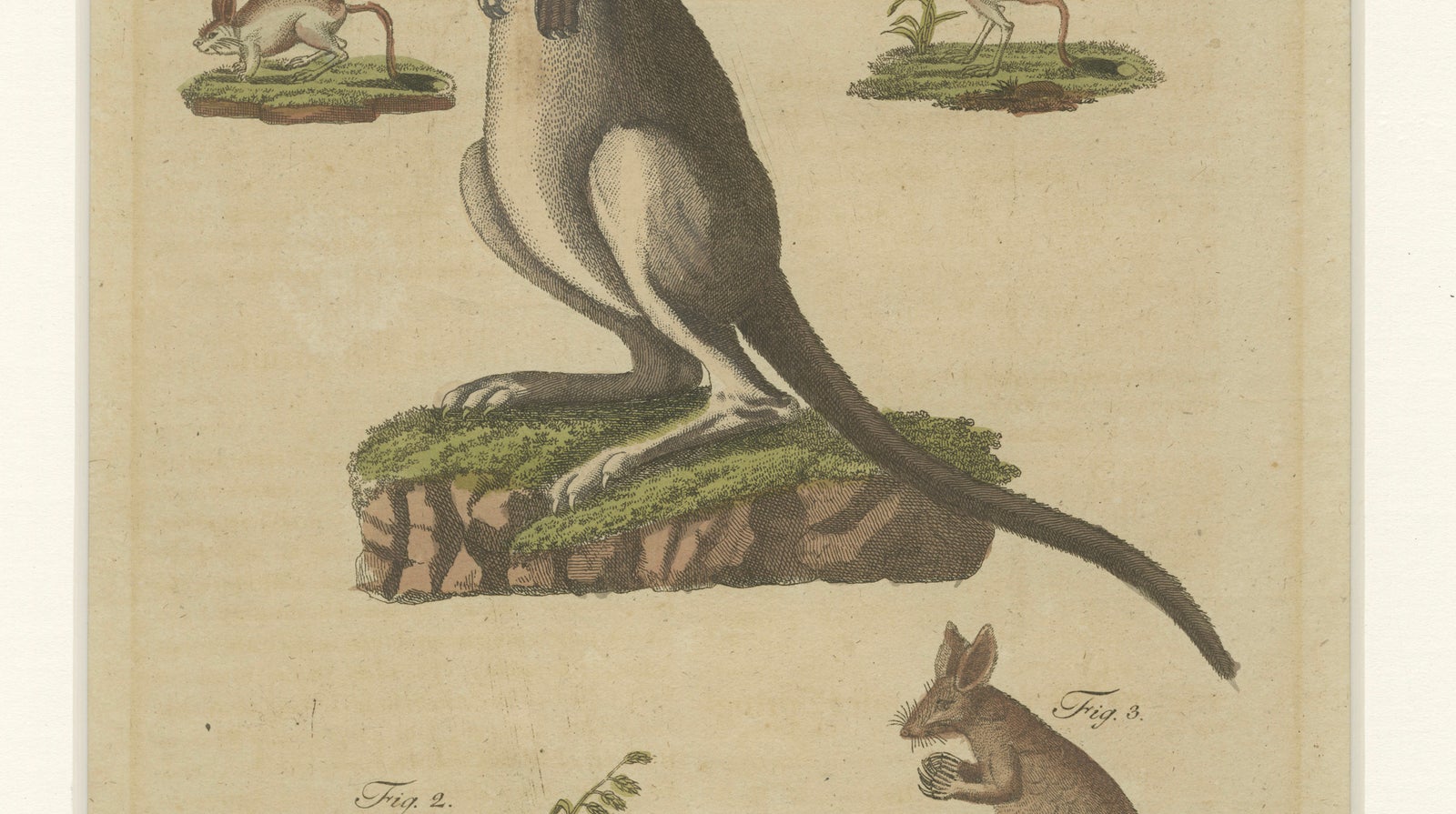
Fig. 4, Kangaroo
The magnificent central animal is a kangaroo, represented upright on its immensely powerful hind legs with its exceptionally long tail extending across the composition.
Kangaroos were among the most extraordinary animals encountered by Europeans during the exploration of Australia. Following the voyages of Captain James Cook and the establishment of increasing contact with Australia during the late 18th century, images and descriptions of kangaroos generated enormous curiosity in Europe.
To European audiences, their method of locomotion, powerful hindquarters, tiny forelimbs and the females’ remarkable pouch seemed unlike almost any familiar mammal.
Early illustrations such as this are particularly interesting because European artists and naturalists were still learning how to represent these newly documented Australian animals.
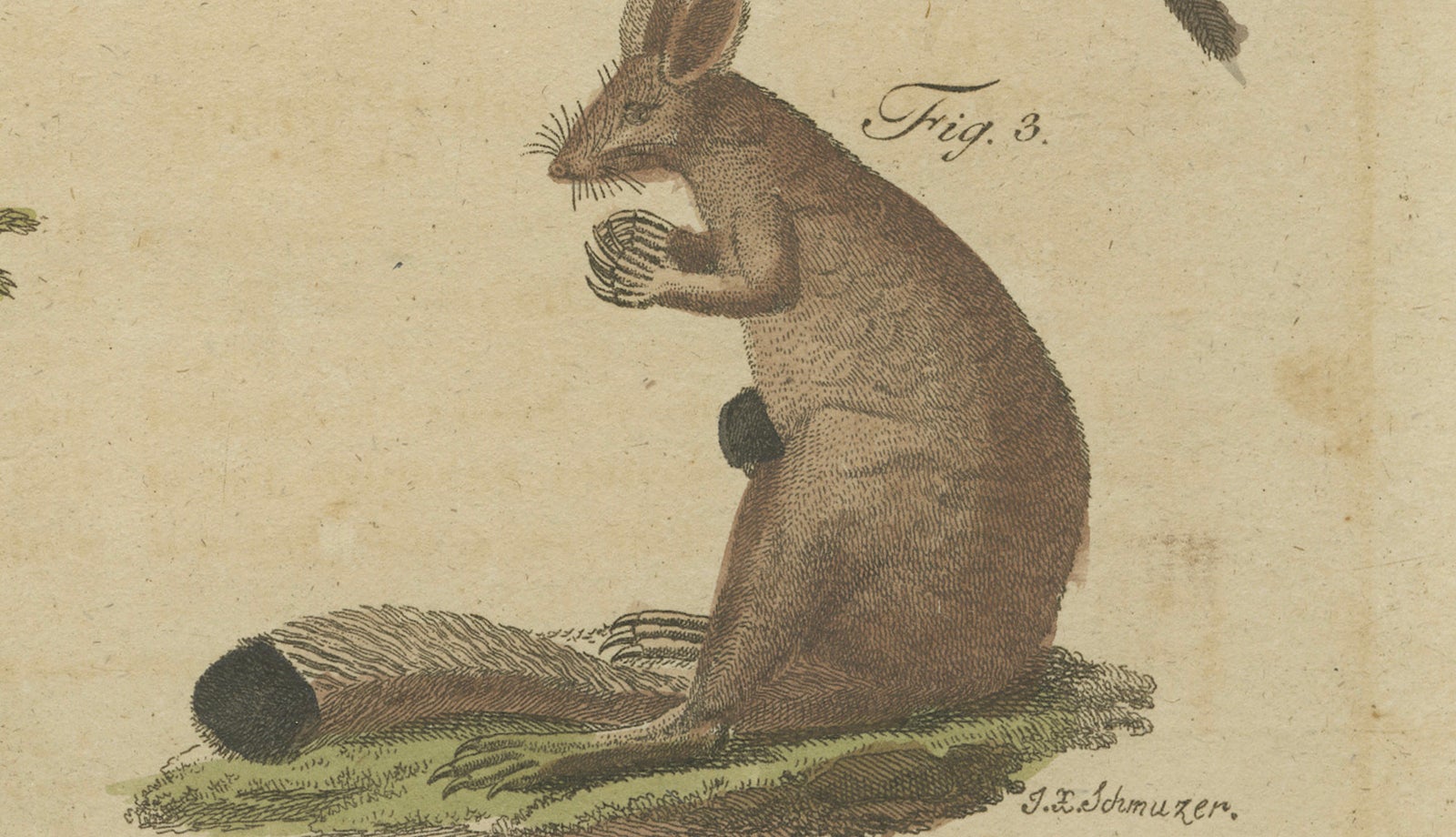
Fig. 3, Smaller Kangaroo / Wallaby-Type Marsupial
The lower-right animal represents a smaller kangaroo or wallaby-type mammal.
It is shown sitting upright, using its forepaws while supported by the powerful hindquarters and substantial tail characteristic of kangaroo relatives.
The kangaroo family, Macropodidae, includes kangaroos, wallabies and several smaller related marsupials native principally to Australia and New Guinea.
Figs. 1a & 1b, Small Hopping Mammal
The two small figures at upper left and upper right show a tiny long-tailed hopping mammal in different positions.
Fig. 2, Small Hopping Mammal / Jerboa-Type Animal
Another tiny long-tailed mammal appears at lower left.
These smaller animals demonstrate the fascination of 18th-century naturalists with mammals that moved primarily by hopping. Historical zoological classifications sometimes brought together superficially similar animals that modern zoology places in very different families.
For this reason, the smaller figures are described conservatively rather than assigning modern species names that cannot be established securely from the engraving alone.
The Kangaroo and the European Discovery of Australia
The kangaroo became one of the defining symbols of the newly explored Australian continent.
European awareness of kangaroos increased dramatically following James Cook’s first Pacific voyage of 1768–1771. During the expedition’s stay on the eastern Australian coast in 1770, members of the expedition encountered and collected kangaroos.
The celebrated naturalist Joseph Banks and other members of Cook’s expedition helped introduce European scientific circles to Australia’s extraordinary flora and fauna.
Within only a few decades, kangaroos began appearing in European natural-history books, private menageries and collections.
Bertuch’s engraving belongs to this fascinating early period when Australian wildlife was still exotic and astonishing to most European readers.
Friedrich Justin Bertuch
Friedrich Justin Bertuch (1747–1822) was a German publisher, writer and patron of the arts. His monumental “Bilderbuch für Kinder” (Picture Book for Children), first published in Weimar in 1790, became one of the great illustrated educational encyclopedias of the late 18th and early 19th centuries.
Its hundreds of engraved and hand-colored plates introduced readers to animals, birds, insects, plants, marine life, geography, science, technology, antiquity and cultures from around the world.
The engraving bears the name Schmuzer at lower right and is marked II.B.45.
This is an especially decorative and historically interesting Bertuch animal plate. The monumental kangaroo occupies almost the entire center of the composition, surrounded by four much smaller hopping mammals, creating a wonderfully unusual early zoological image.
Technique: Original hand-colored copper engraving
Publisher: Friedrich Justin Bertuch / Industrie-Comptoir
Publication: Bilderbuch für Kinder
Place: Weimar, Germany
Date: Late 18th century, circa 1795
Plate: Vierfüßige Thiere XXI / Anim. quadrup. XXI / Quadrupèdes XXI
Artist / Engraver: Schmuzer
Plate reference: II.B.45
Subjects: Kangaroo, Wallaby-Type Marsupial and Small Hopping Mammals
Geographical association: Australia / Australasia
Condition:
Good antique condition with overall age-related toning, scattered foxing and spotting and some visible show-through or offsetting from printed text. Minor marks and imperfections are present consistent with an original engraving more than 200 years old. The original hand coloring remains attractive, with restrained brown, grey, green and ochre...