Close-ups
Framed and on the wall
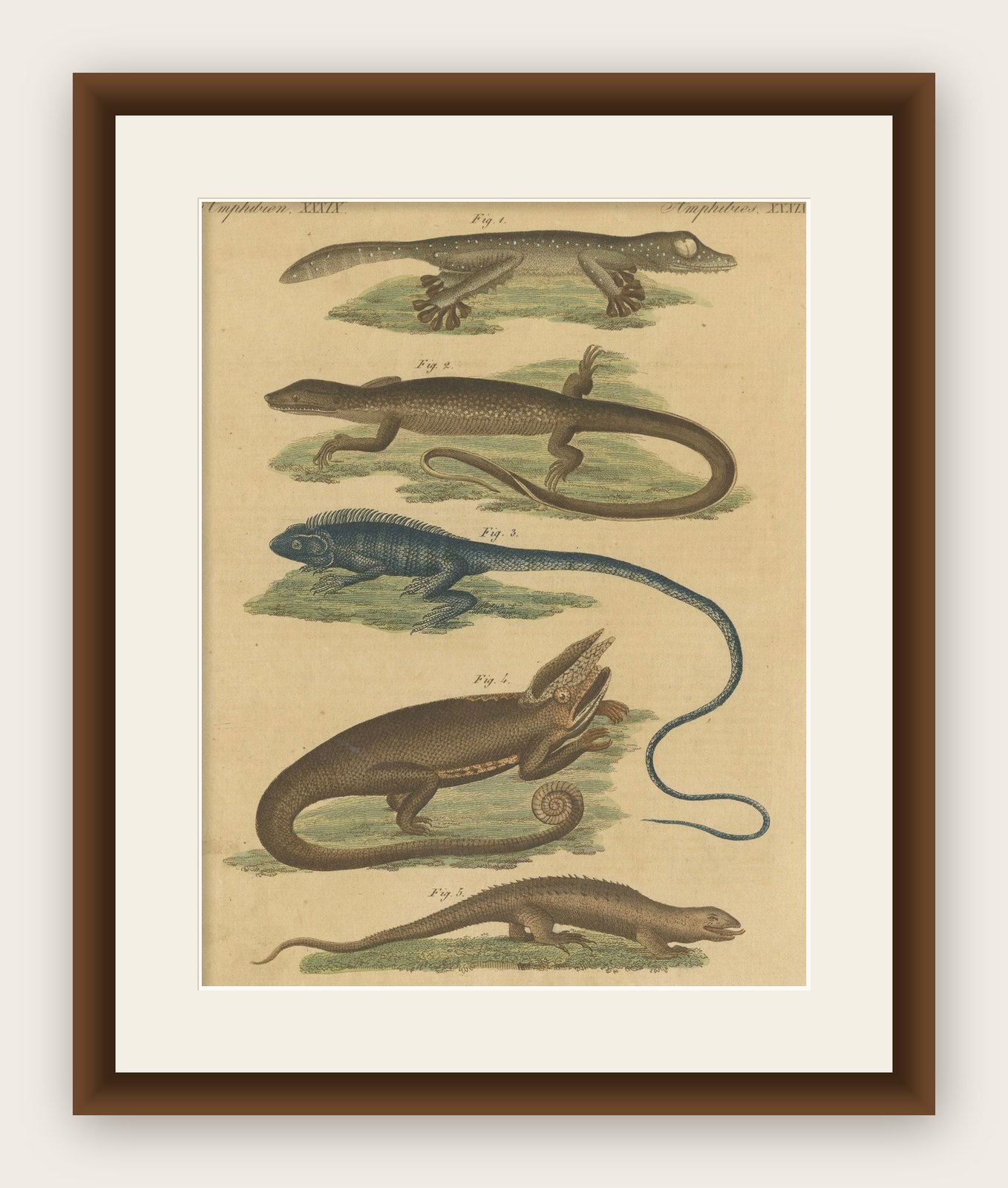


Frame and rooms are illustrations of how the print could look; the description says what is included.
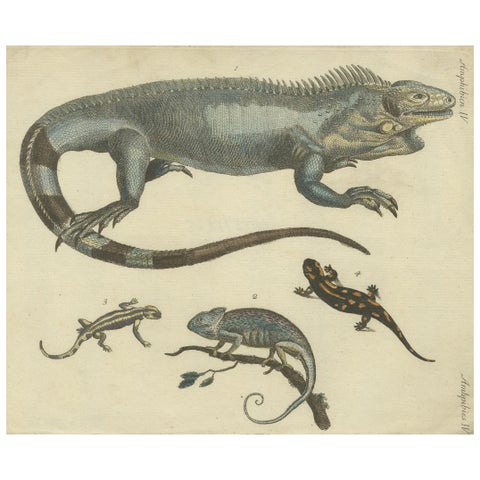
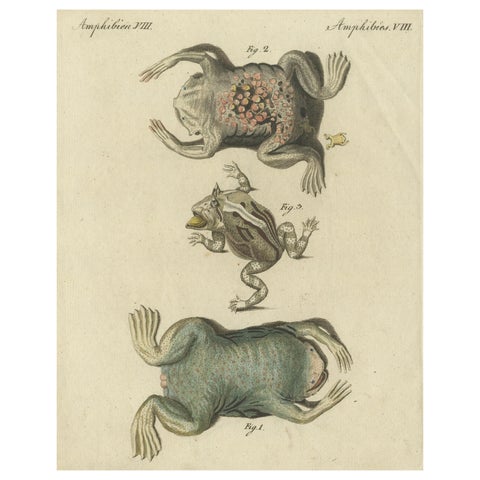
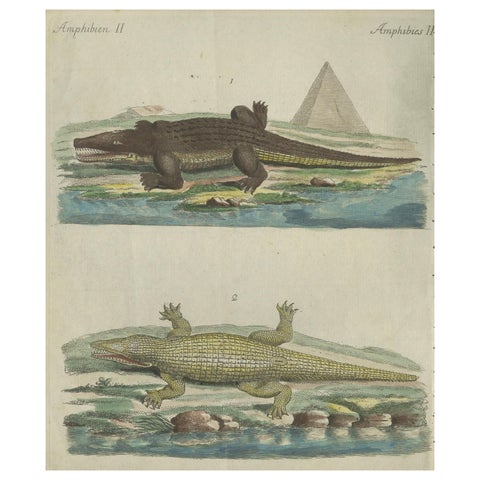
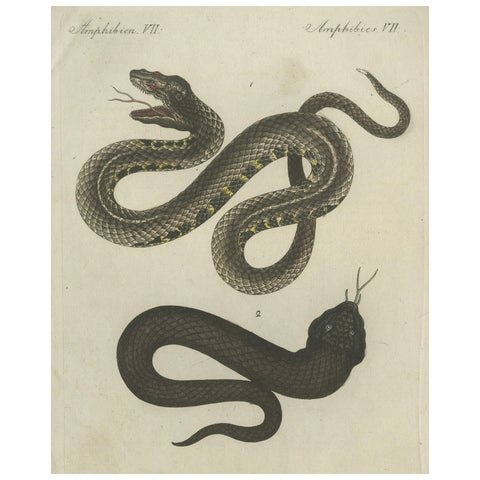
Antique Handcolored Engraving of Lizards and Amphibians, c.1800
$135 (£100, €120)
Period original, not a reproduction.
Shipped from the Netherlands, flat, insured and tracked, worldwide. Returns accepted within 14 days.
- Date
- 1800
- Size
- 9.3 × 7.7 in (23.5 × 19.5 cm)
- Condition
- Good. Good condition. Age-related toning, minor edge wear, especially the right border, no text on verso. Colors remain vibrant and well preserved. Please review images carefully.
- Period
- Early 19th century
- Artist or book
- Bertuch
- Section
- Reptiles and amphibians
- Reference
- f_42559642
- Colour
- Hand coloured
What the condition grades mean
- Excellent
- Bright and clean, with no faults worth mentioning.
- Very good
- Only light signs of age, such as faint toning.
- Good
- Normal signs of age for a sheet of this period: toning, some foxing, small marks or neat old repairs.
- Fair
- Clear faults such as staining, tears or repairs, priced to match.
Every fault we see is written in the condition note, and the whole sheet is shown uncropped in the photos.
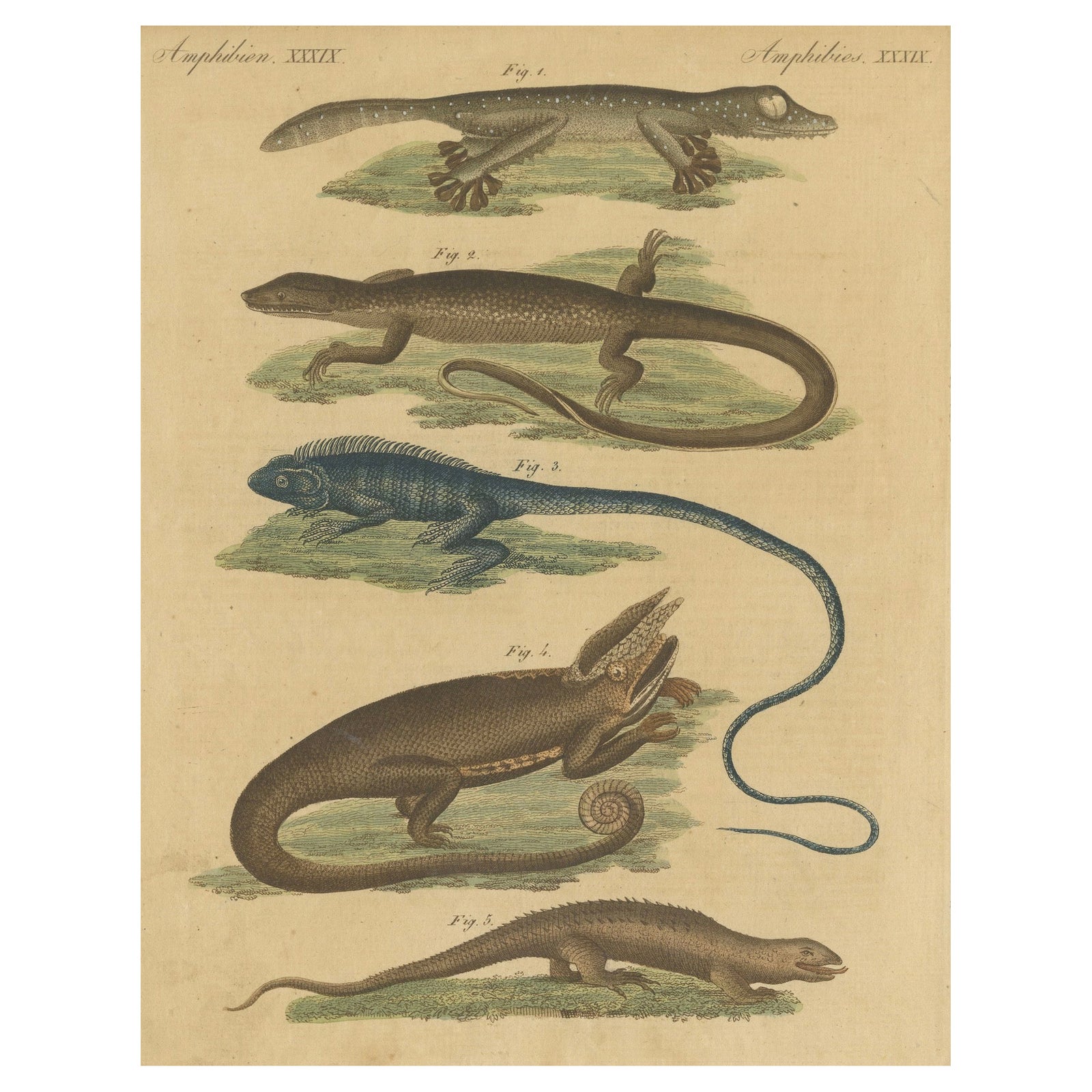
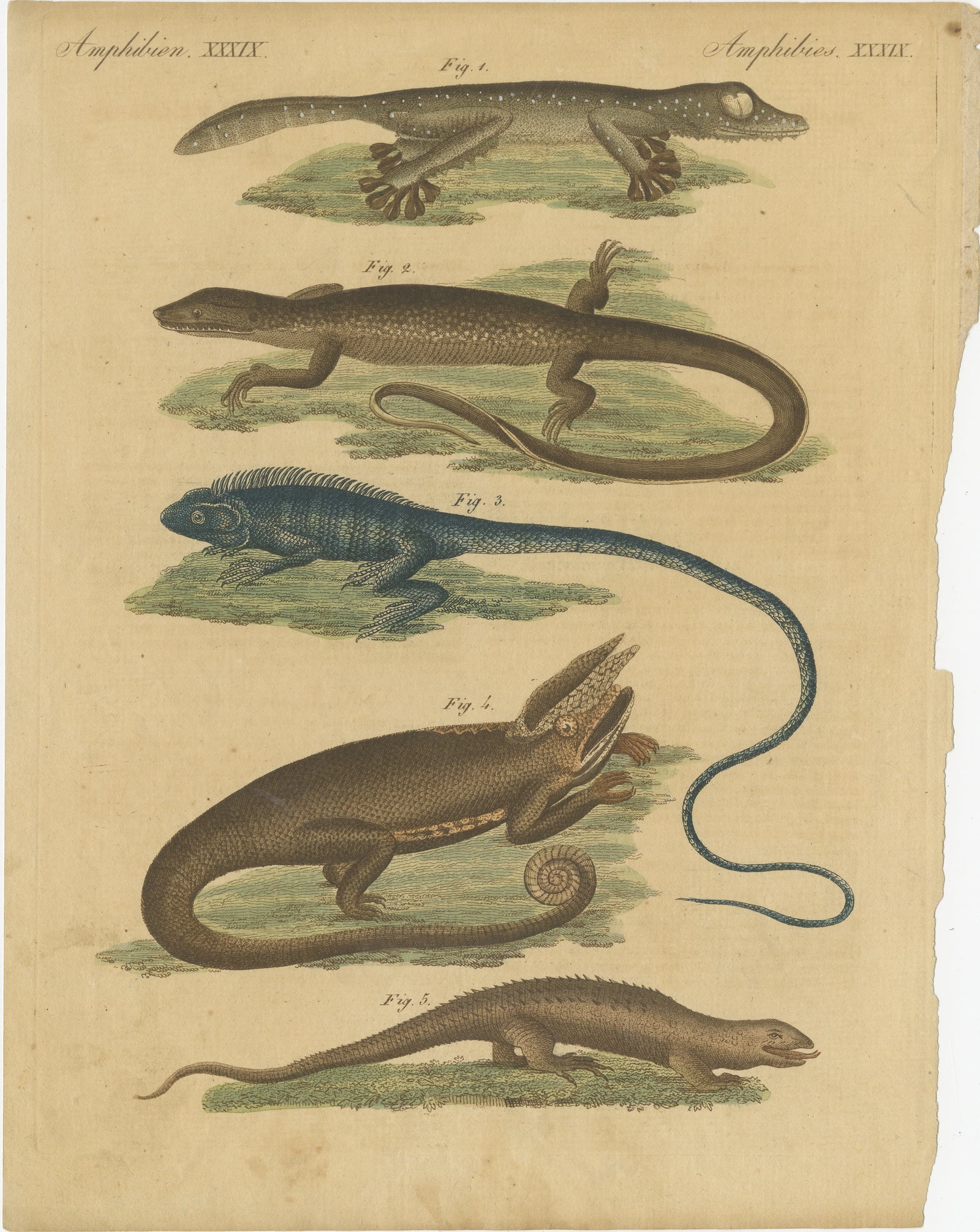
Antique Handcolored Engraving of Lizards and Amphibians, Amphibien XXXIX, c.1800
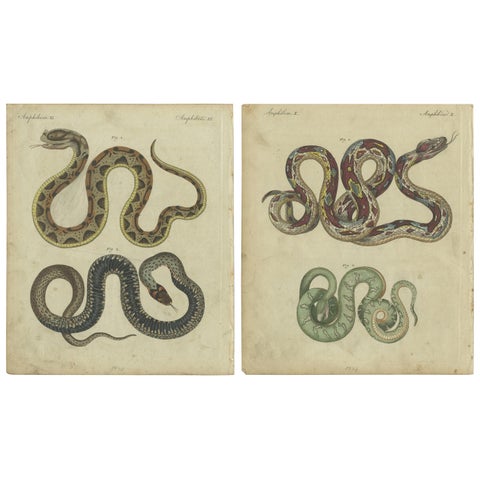
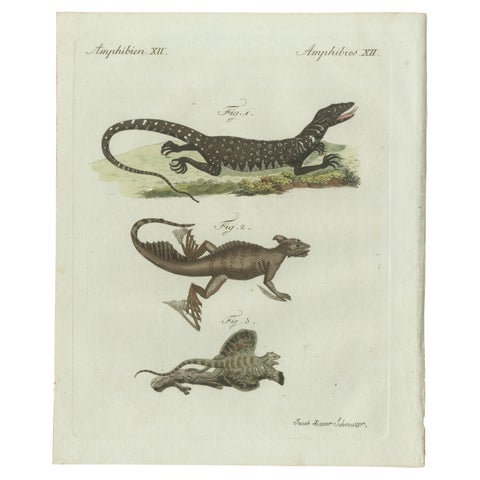
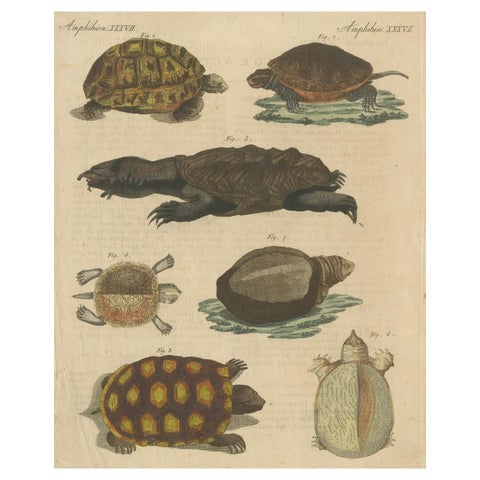
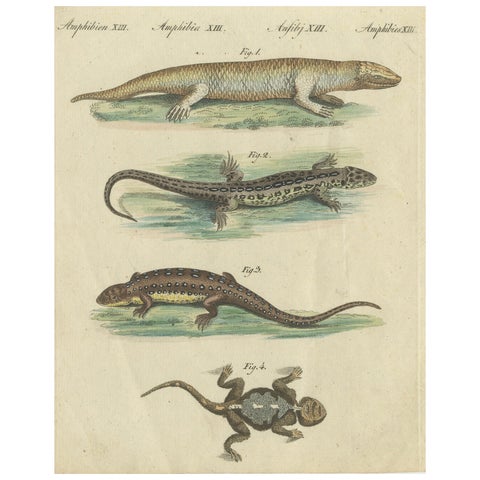
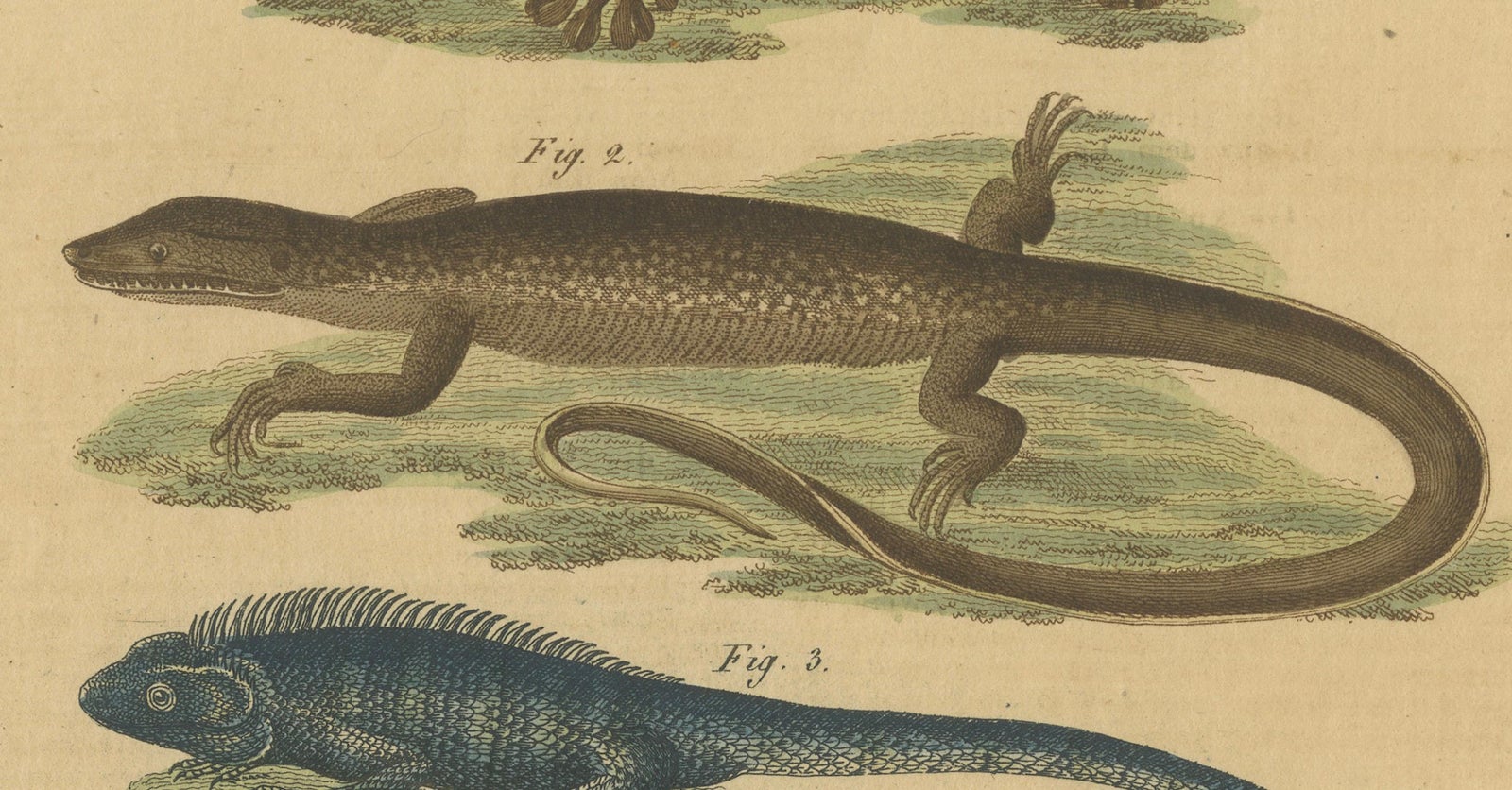
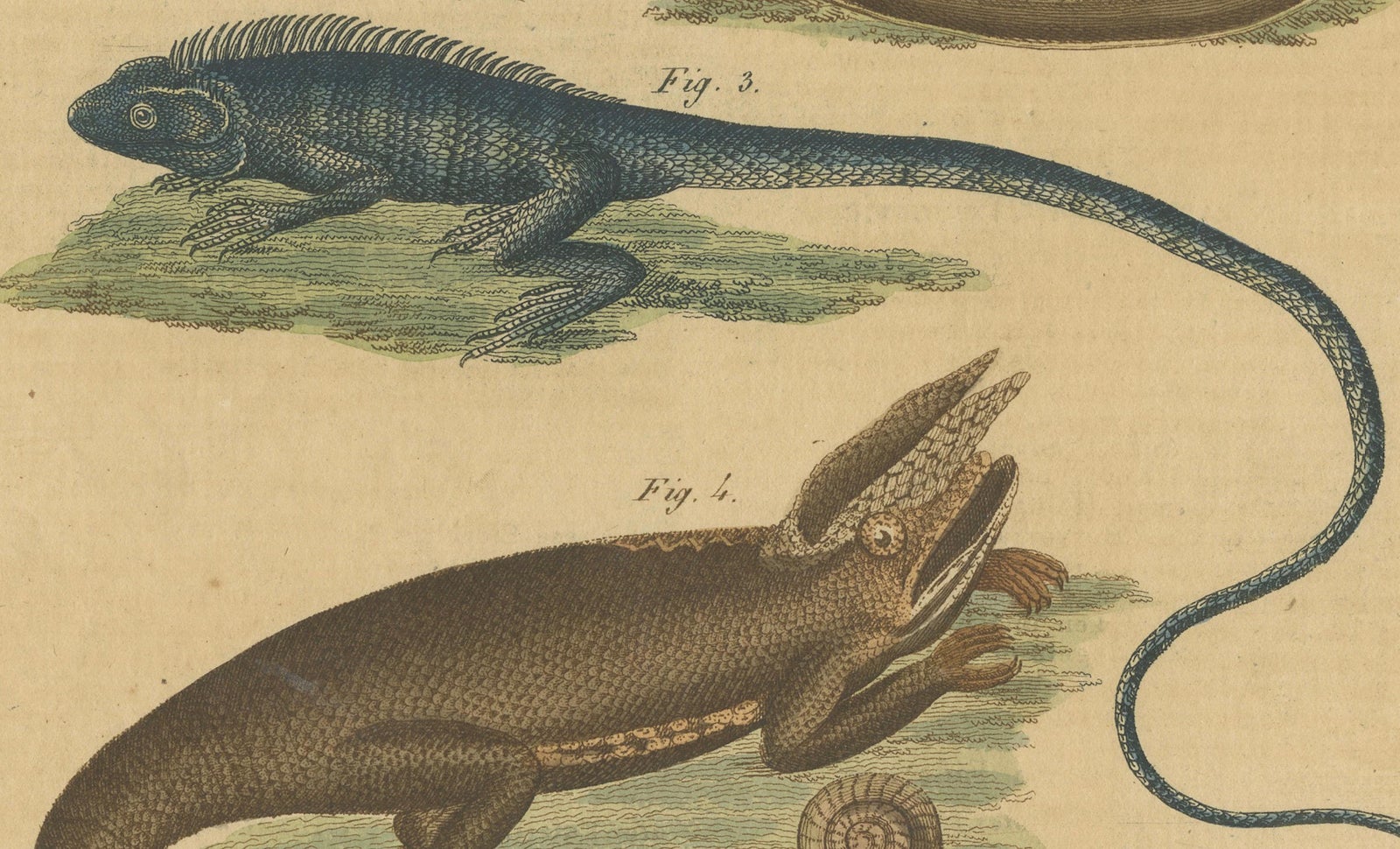
This original handcolored copperplate engraving features a variety of lizards and amphibians, showcasing their unique physical characteristics and ecological adaptations. The plate originates from Friedrich Johann Bertuch’s *Bilderbuch für Kinder* (Picture Book for Children), a celebrated 12-volume natural history encyclopedia published between 1790 and 1830, valued for its scientific precision and artistic detail.
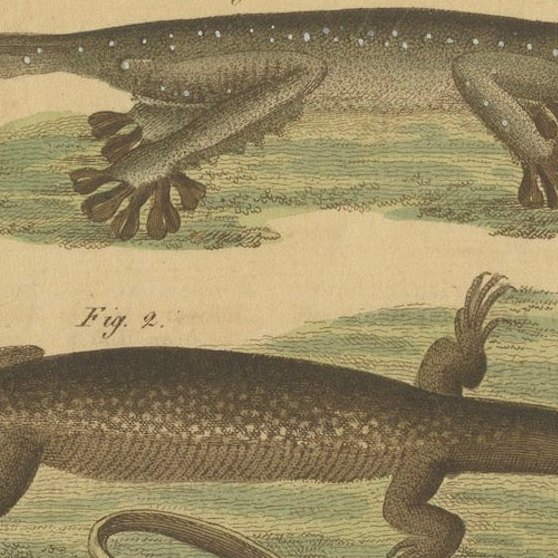
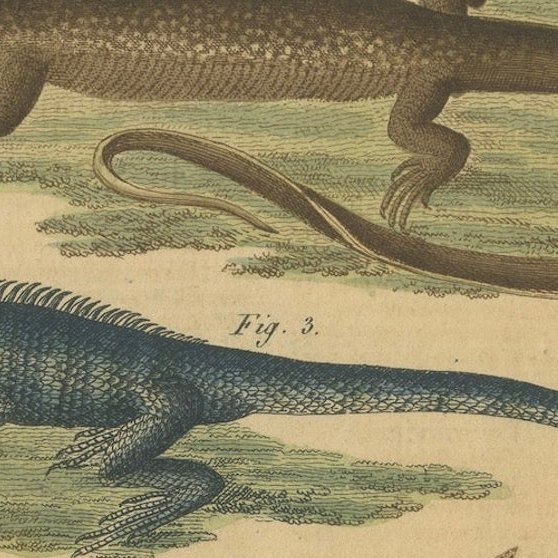
The engraving includes:
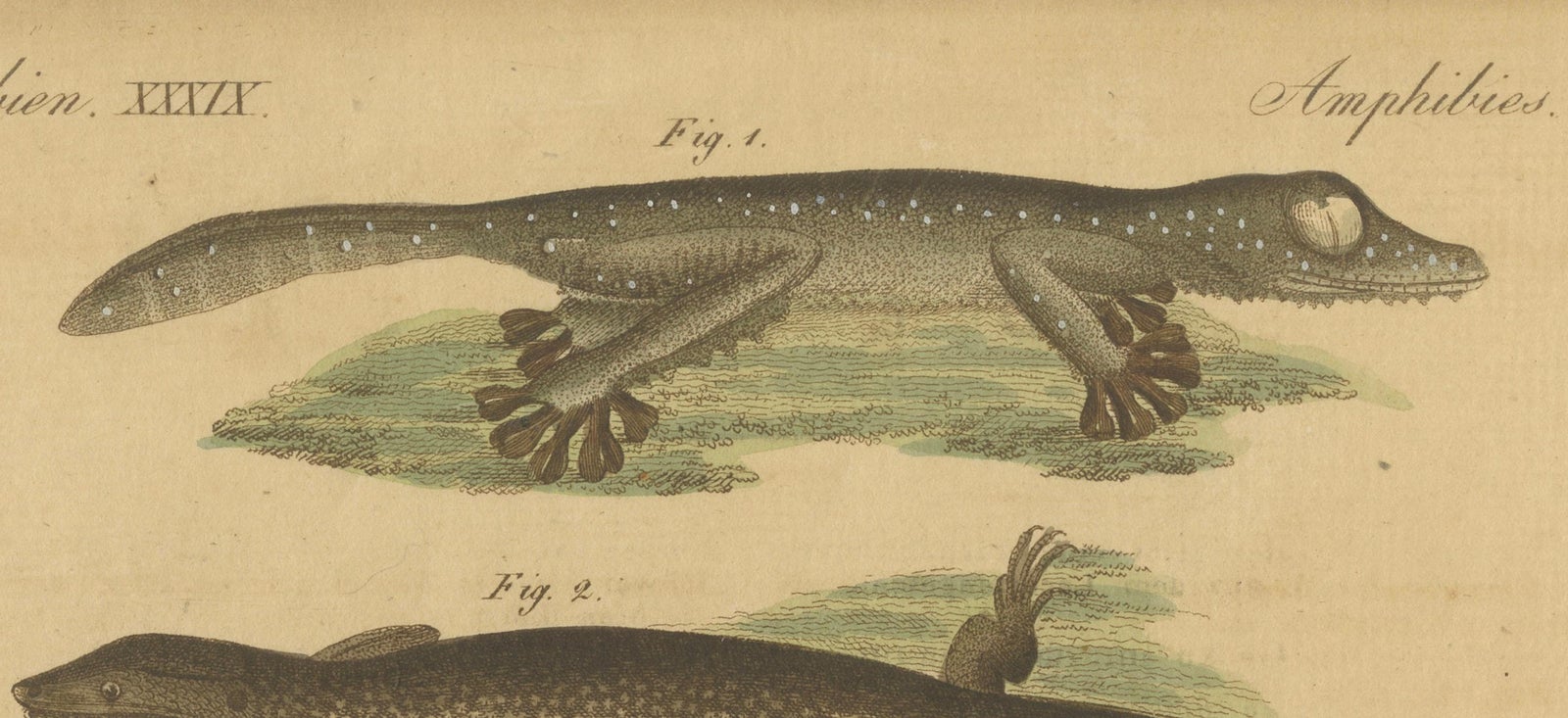
1. A salamander (*Salamandra salamandra*), depicted with its smooth skin and short limbs (Fig. 1).
2. A newt (*Triturus spp.*), illustrated with its slender body and distinct tail (Fig. 2).
3. An iguana (*Iguana iguana*), highlighted by its dorsal crest and elongated tail (Fig. 3).
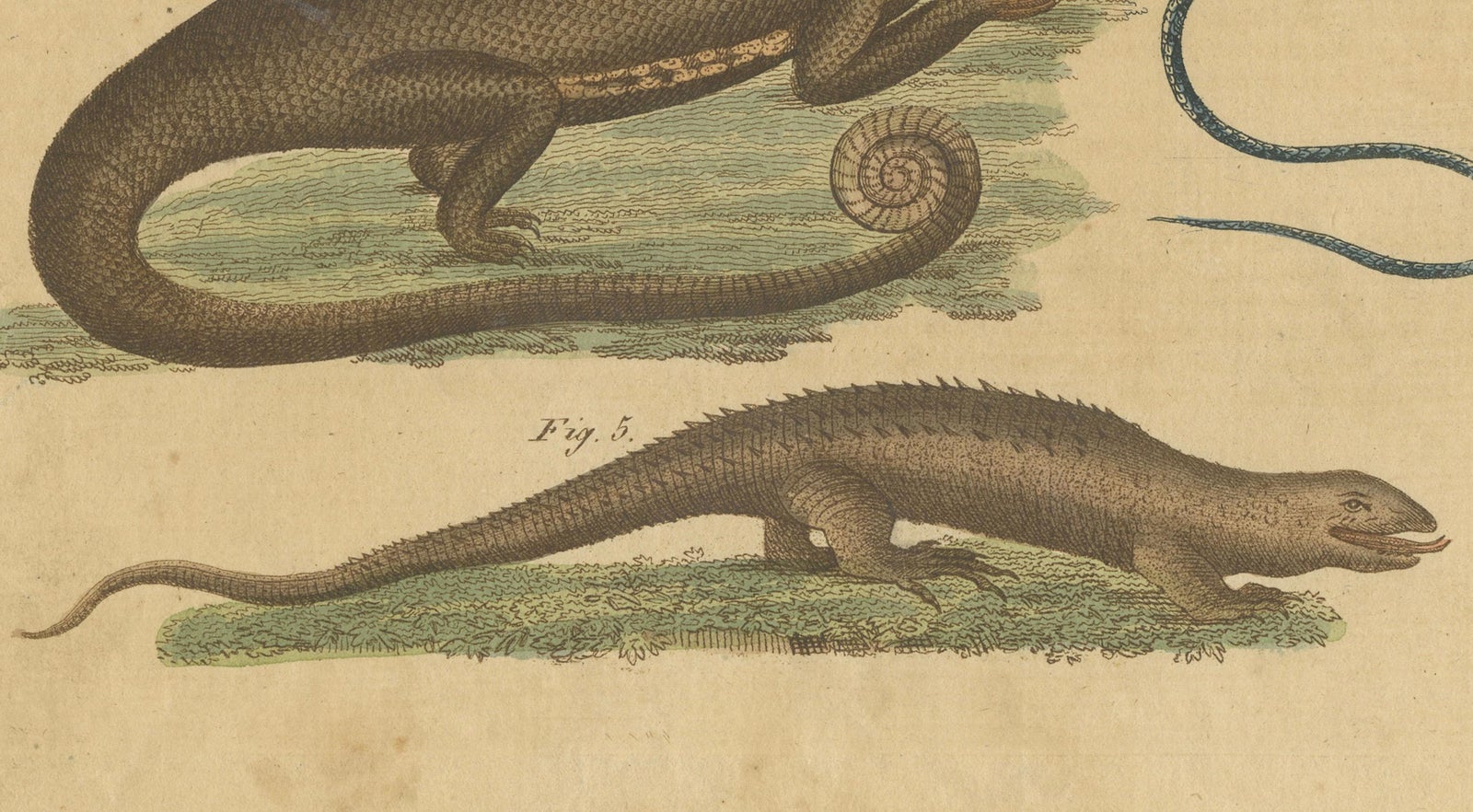
4. A chameleon (*Chamaeleonidae*), shown with its coiled tail and distinct facial features, emphasizing its adaptability (Fig. 4).
5. A crocodile skink (*Tribolonotus spp.*), noted for its armored appearance (Fig. 5).
This detailed engraving provides an educational glimpse into early zoological depictions of reptiles and amphibians. It is a valuable addition to collections of natural history art, antique prints, or zoological illustrations.
Condition Report:
Good condition. General age-related toning, minor edge wear, no text on verso. Vibrant hand coloring is well preserved. Please review images carefully.