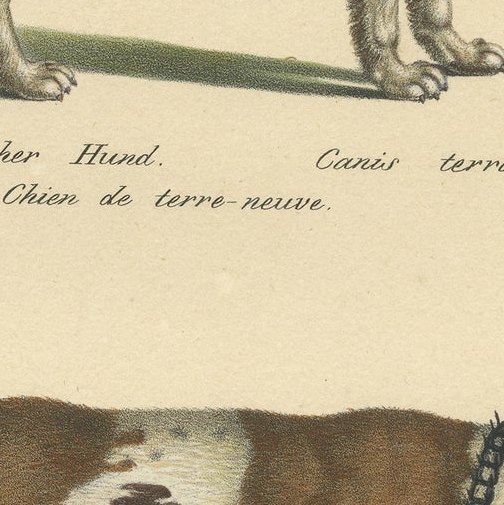
Close-ups
Framed and on the wall
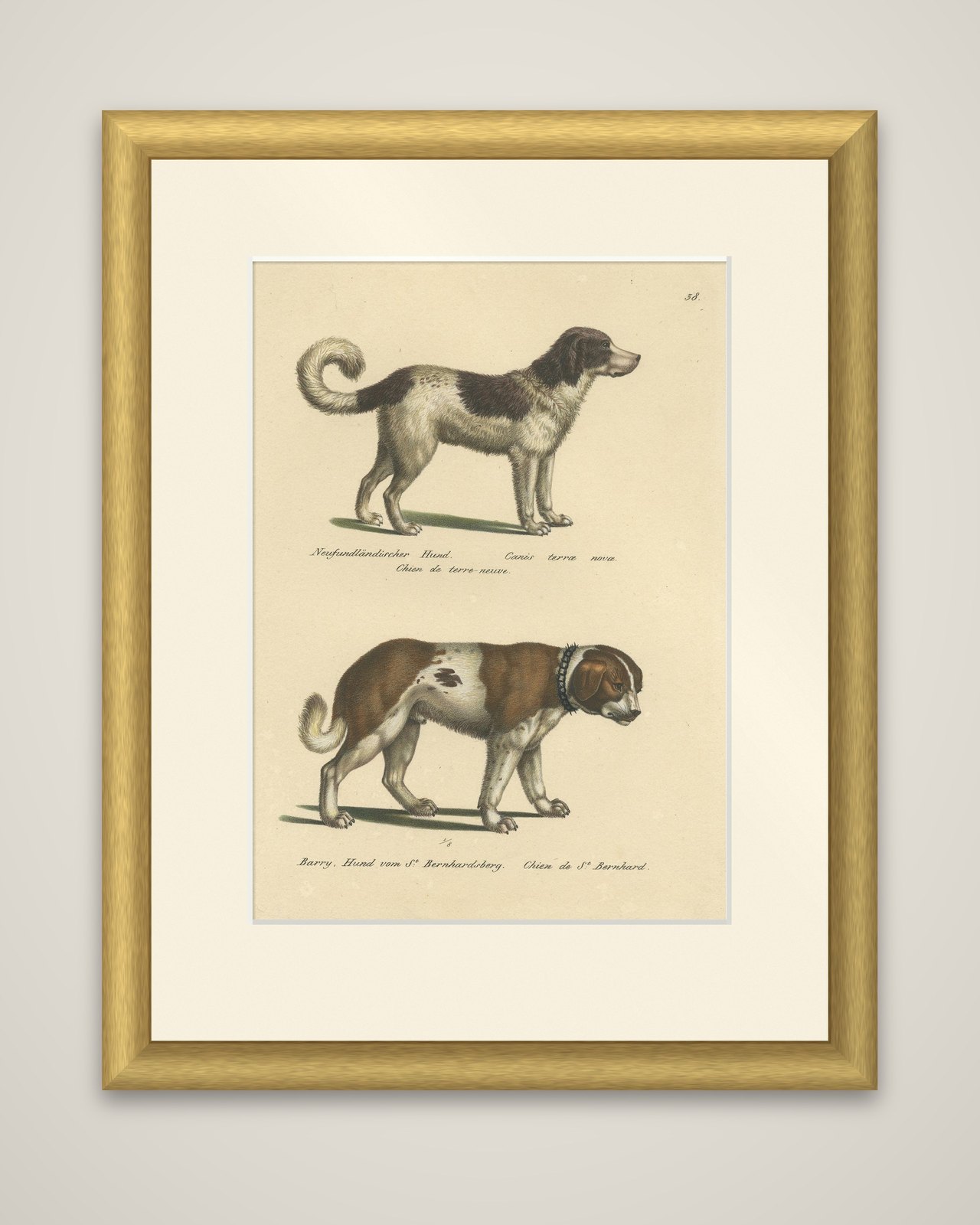

Frame and rooms are illustrations of how the print could look; the description says what is included.
Antique Hand Colored Print of a Newfoundland and St. Bernard Dog
£330 ($440, €390)
Period original, not a reproduction.
Shipped from the Netherlands, flat, insured and tracked, worldwide. Returns accepted within 14 days.
- Date
- Not stated
- Size
- 13.3 × 9.4 in (33.7 × 24 cm)
- Condition
- Good. Wear consistent with age and use. General age-related toning. Minor wear and soiling, blank verso. Please study image carefully.
- Section
- Mammals
- Reference
- f_32771562
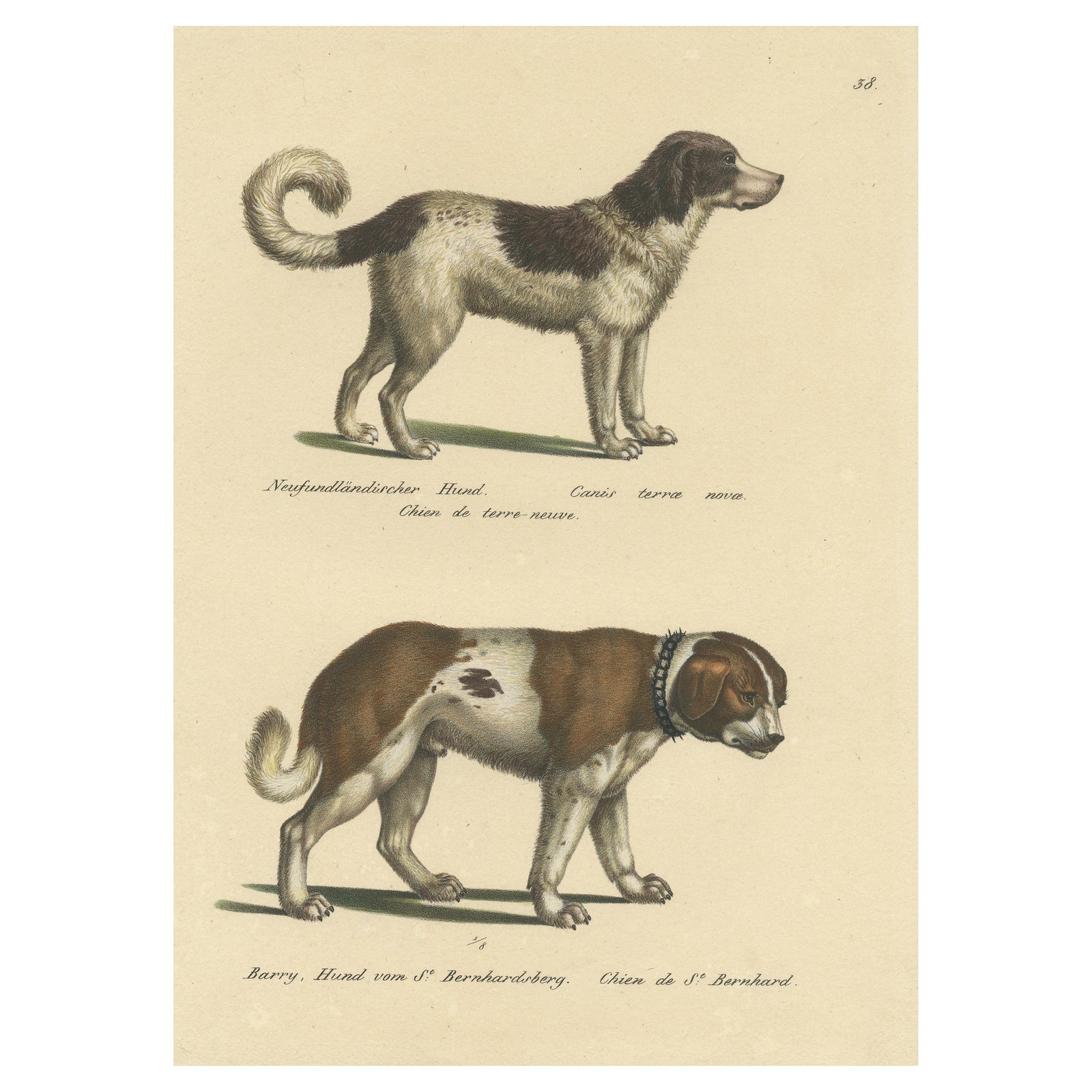
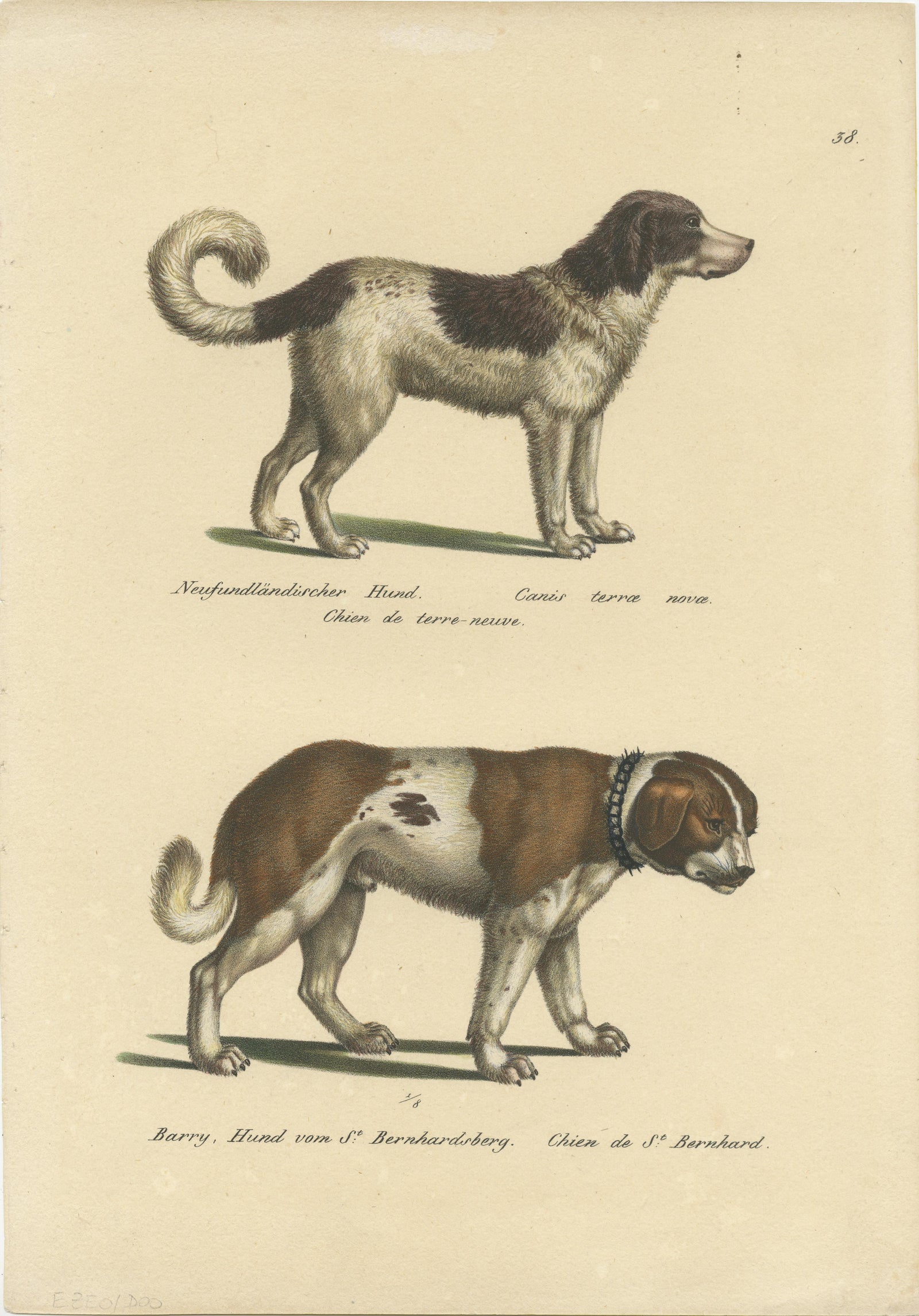
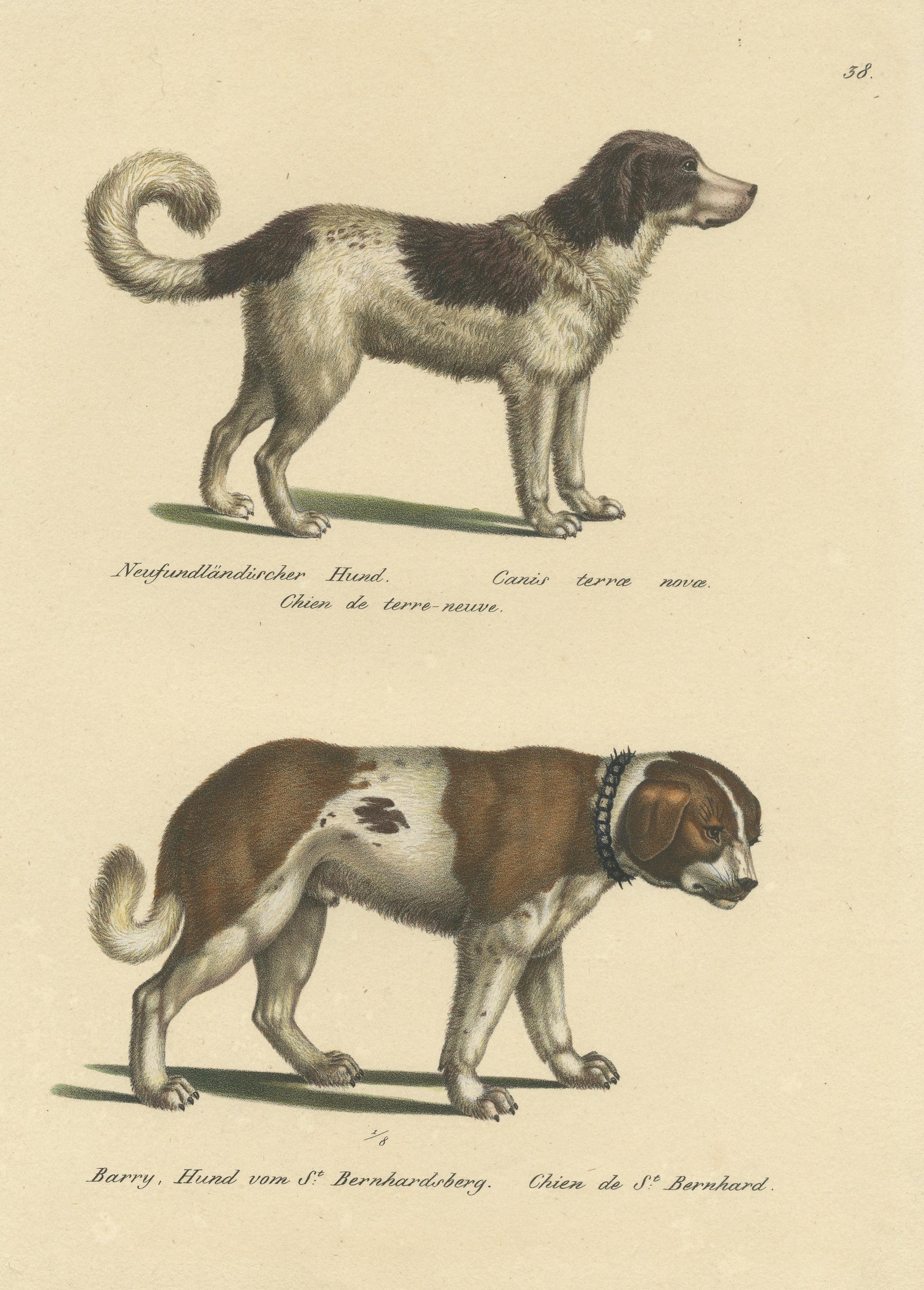
A Newfoundland dog and a St. Bernard on one sheet, an original hand-colored lithograph from H. R. Schinz's Naturhistorische Abbildungen der Säugethiere, published in 1824, with the lithographs by Brodtmann. The plate is numbered 38 in the upper right corner.
The upper dog is lettered "Neufundländischer Hund. Canis terrae novae. Chien de terre-neuve." It stands in profile on a patch of green shadow, white and liver-brown in coat with a curled plumed tail. Below it, lettered "Barry, Hund vom St. Bernhardsberg. Chien de St. Bernhard.", is the famous St. Bernard, a big red-and-white dog in a spiked collar, shown walking head down with the shadow of its feet in green wash.
Both animals are named in German, Latin and French, the usual practice of such natural history plates, and the careful coloring brings out the difference in coat between the two breeds.