Close-ups
Framed and on the wall
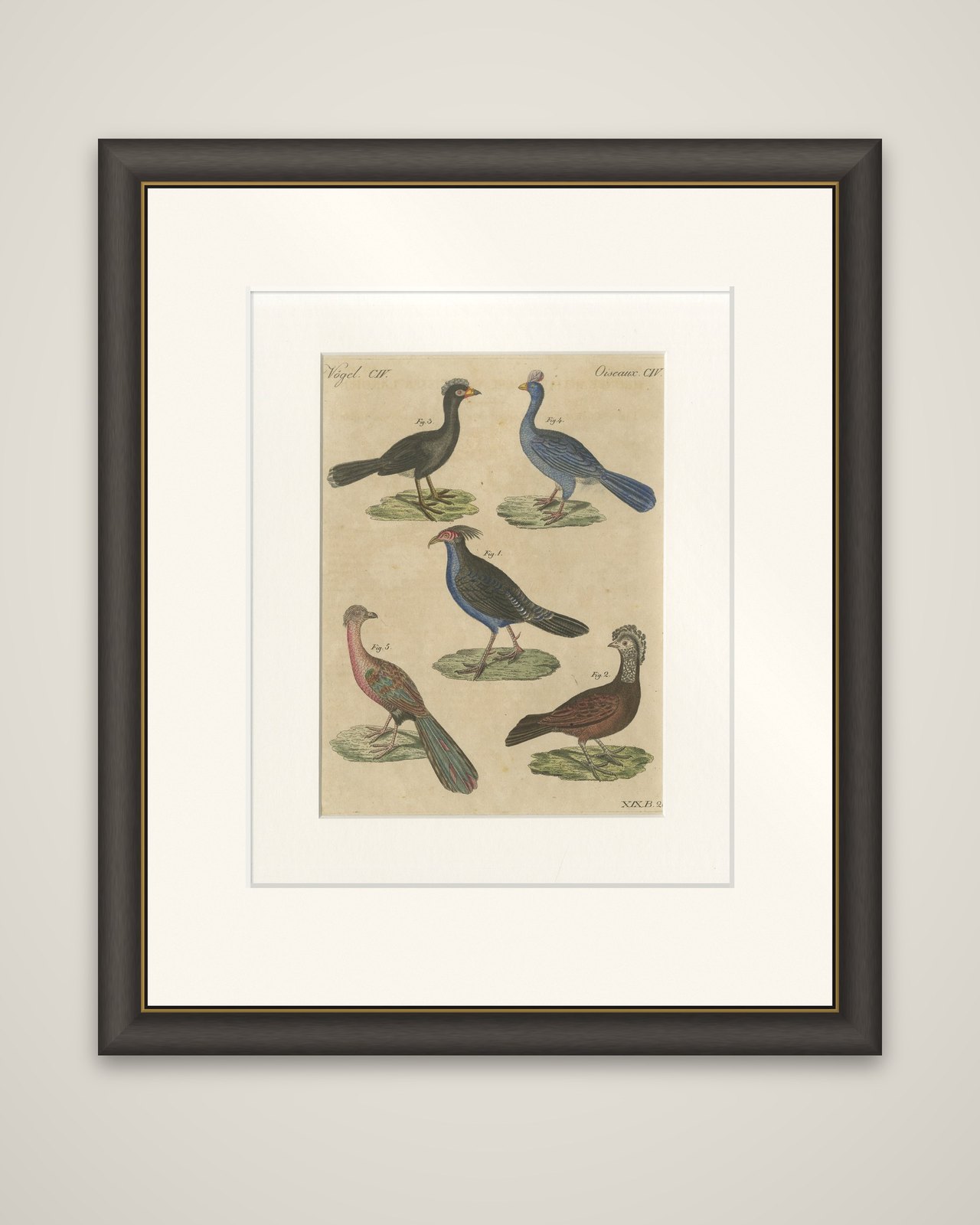
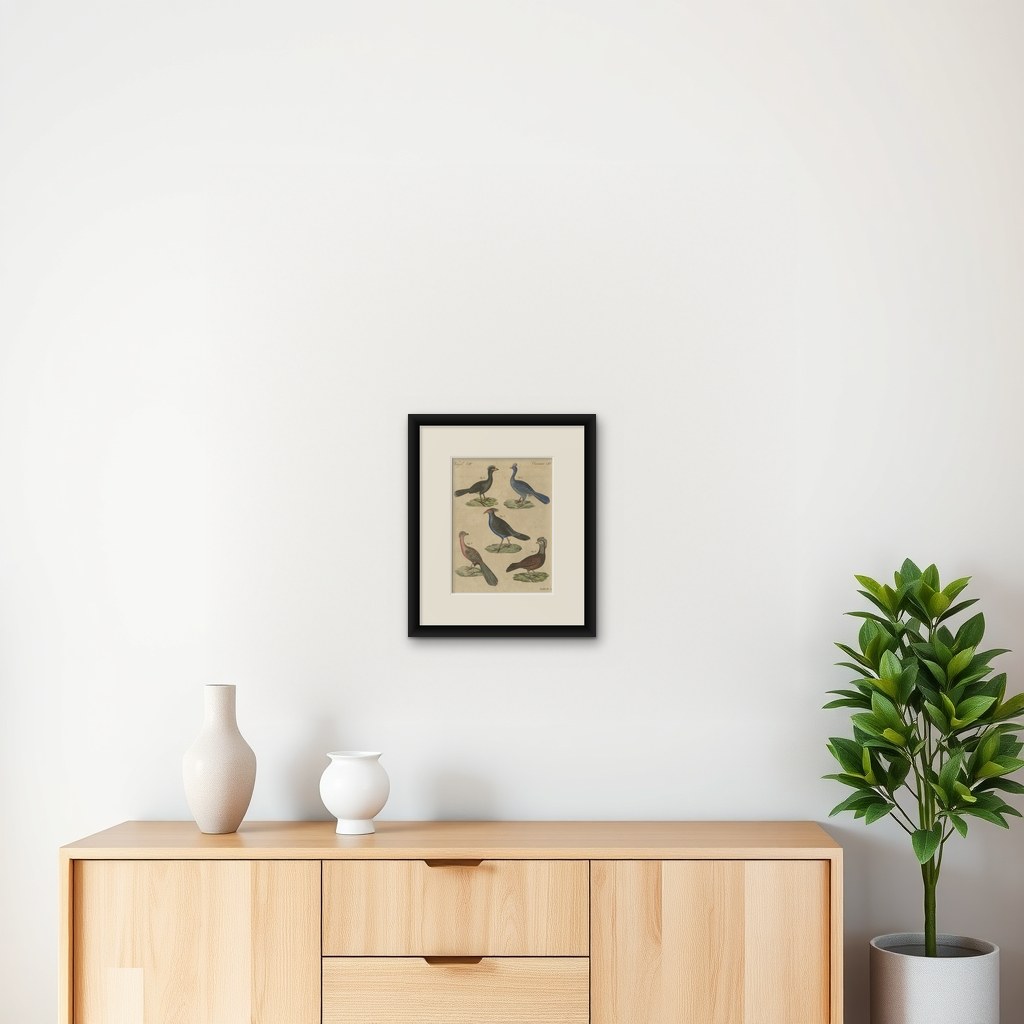

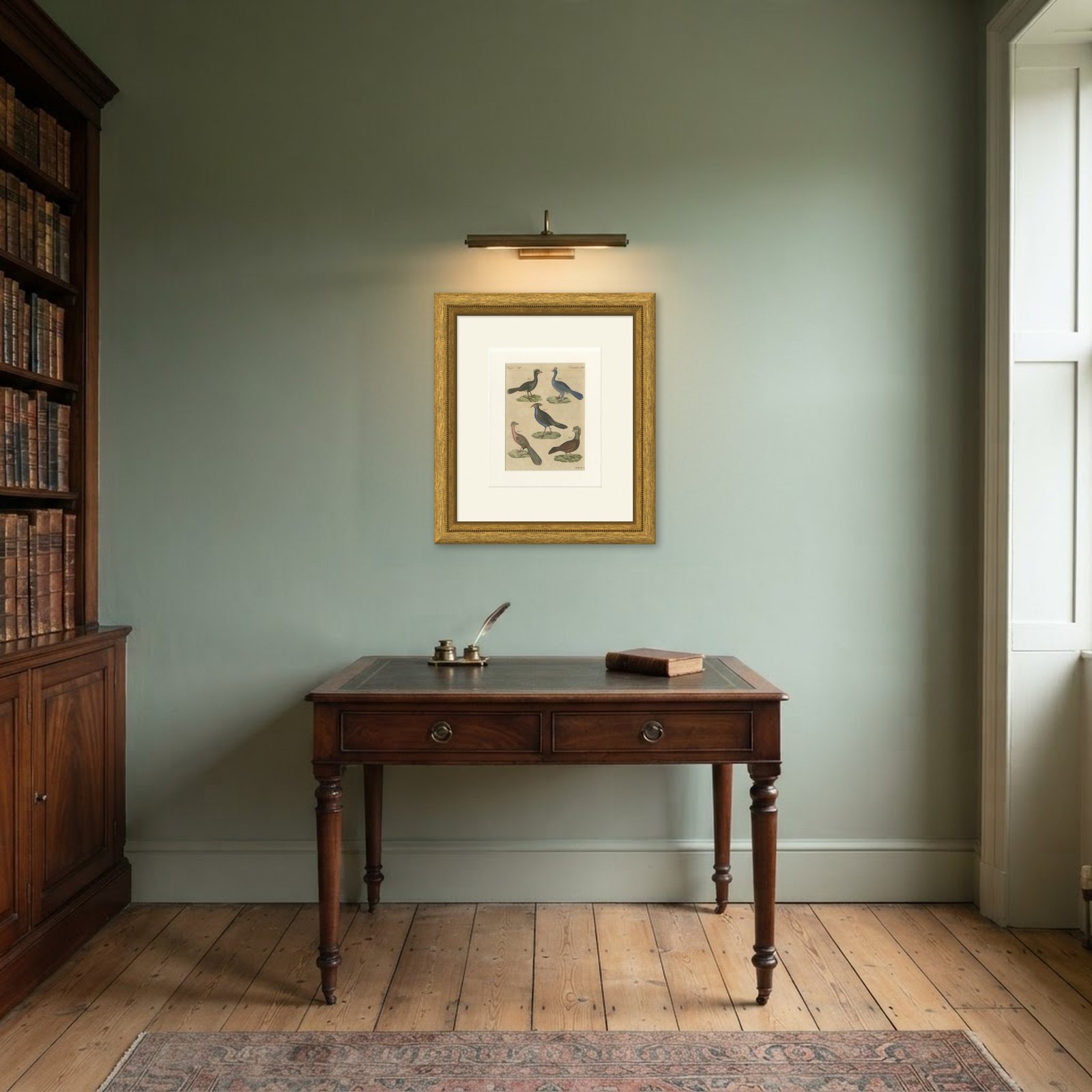
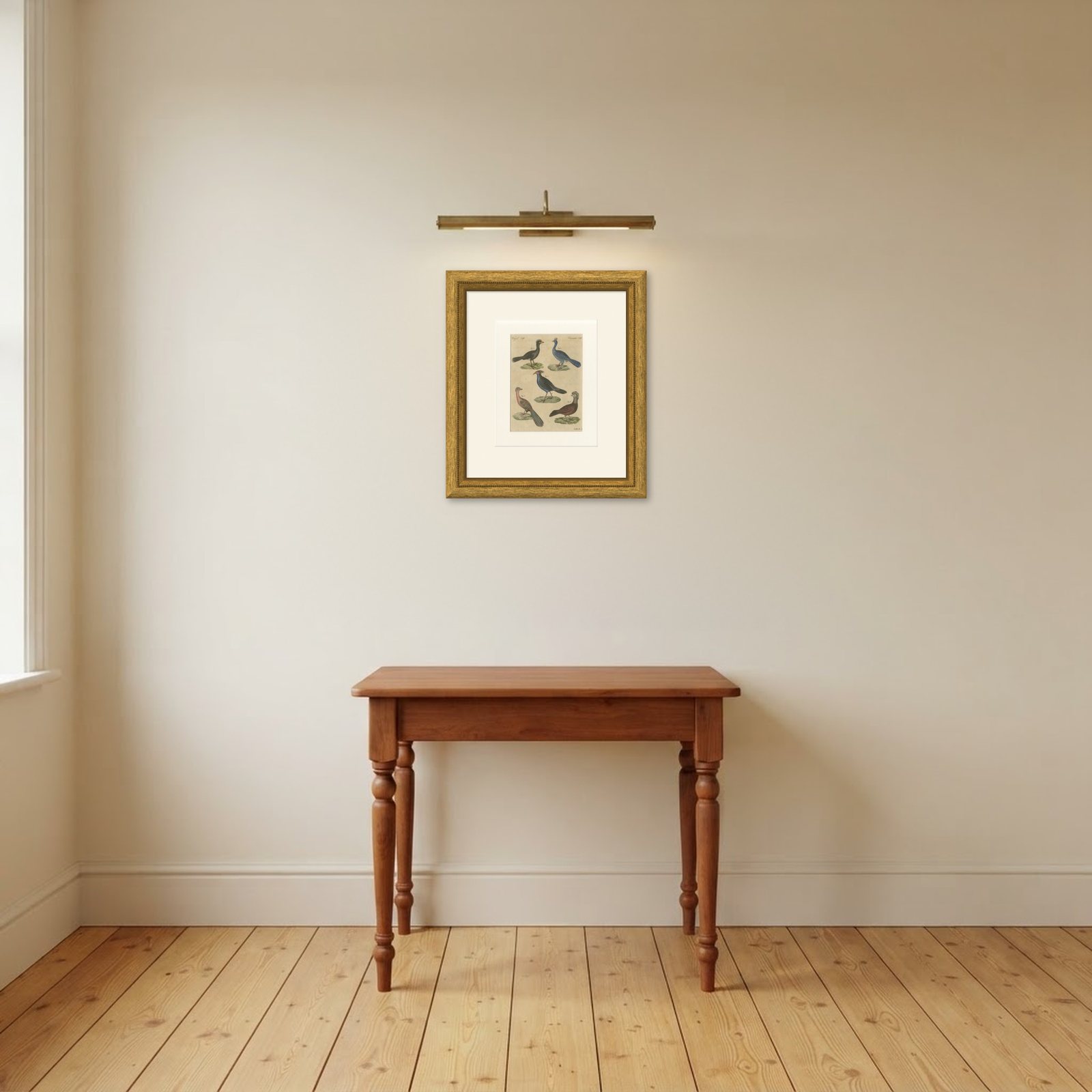
Frame and rooms are illustrations of how the print could look; the description says what is included.
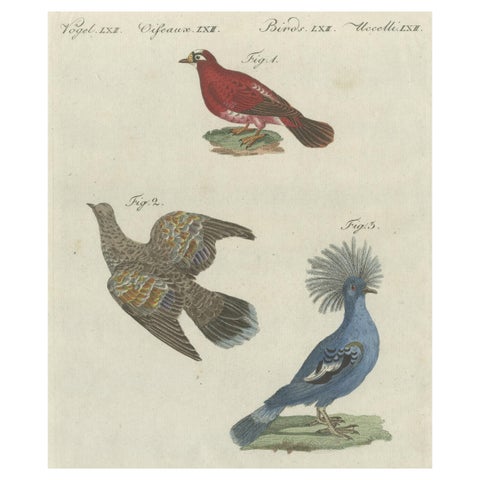
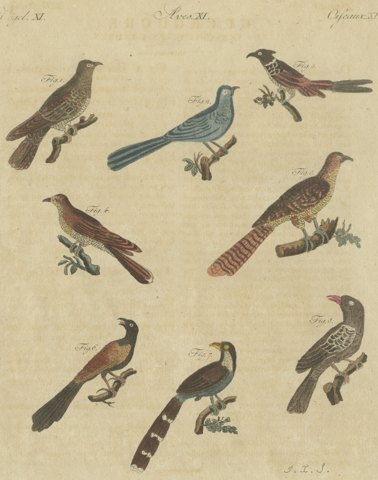
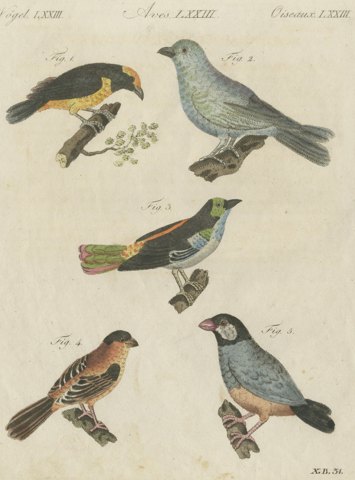
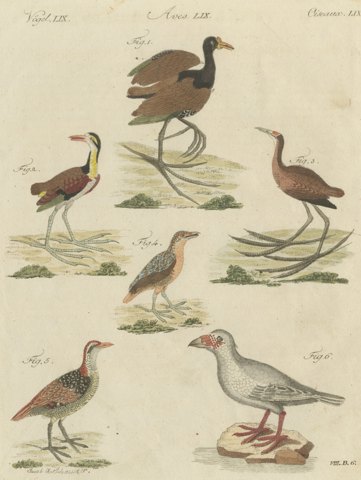
Antique Hand-Colored Crested Birds Engraving, Bertuch, c. 1800
€230€16130% off ($175, £135, €161)
Period original, not a reproduction.
Shipped from the Netherlands, flat or rolled, insured and tracked, worldwide. Returns accepted within 14 days.
- Date
- 1800
- Size
- 11.8 × 9.4 in (30 × 24 cm)
- Condition
- Good. Wear consistent with age and use. Good antique condition with overall age-related toning, scattered foxing and spotting, and minor marks and imperfections consistent with its age. The original hand coloring remains attractive and well preserved. Please study the photographs carefully.Seller Loca
- Period
- Early 19th century
- Artist or book
- Bertuch
- Section
- Birds
- Reference
- f_51465262
- Color
- Hand colored
What the condition grades mean
- Excellent
- Bright and clean, with no faults worth mentioning.
- Very good
- Only light signs of age, such as faint toning.
- Good
- Normal signs of age for a sheet of this period: toning, some foxing, small marks or neat old repairs.
- Fair
- Clear faults such as staining, tears or repairs, priced to match.
Every fault we see is written in the condition note, and the whole sheet is shown uncropped in the photos.
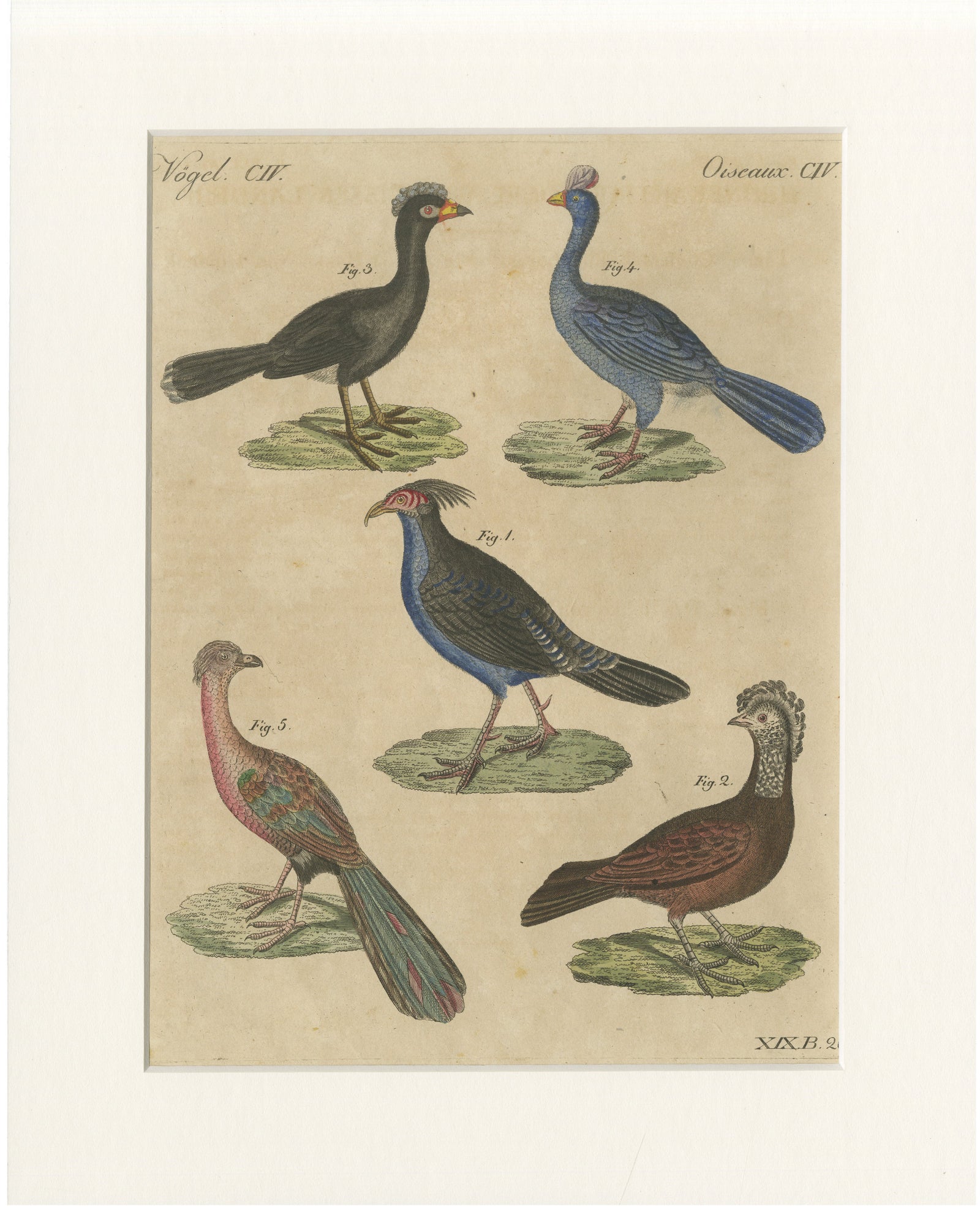
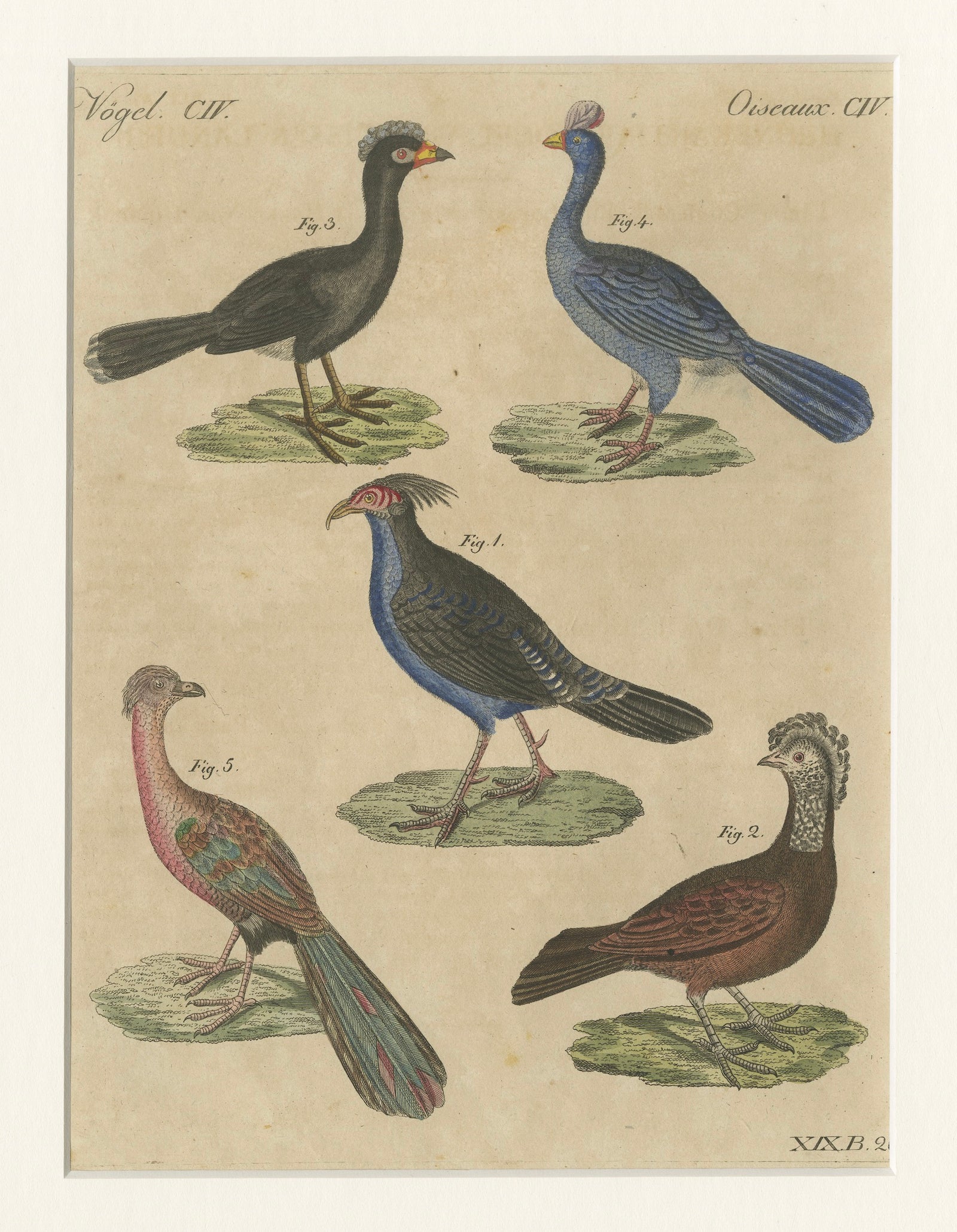
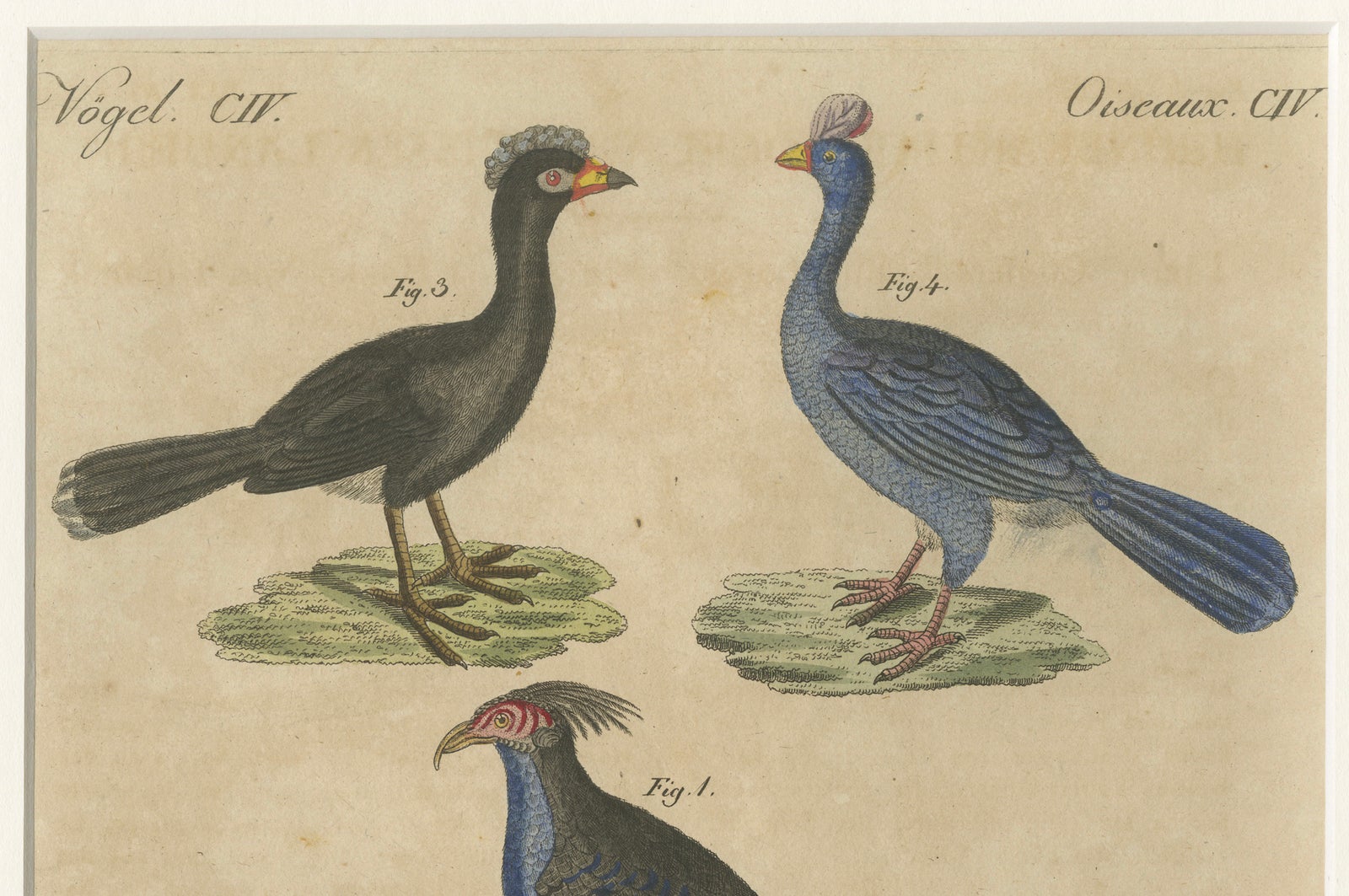
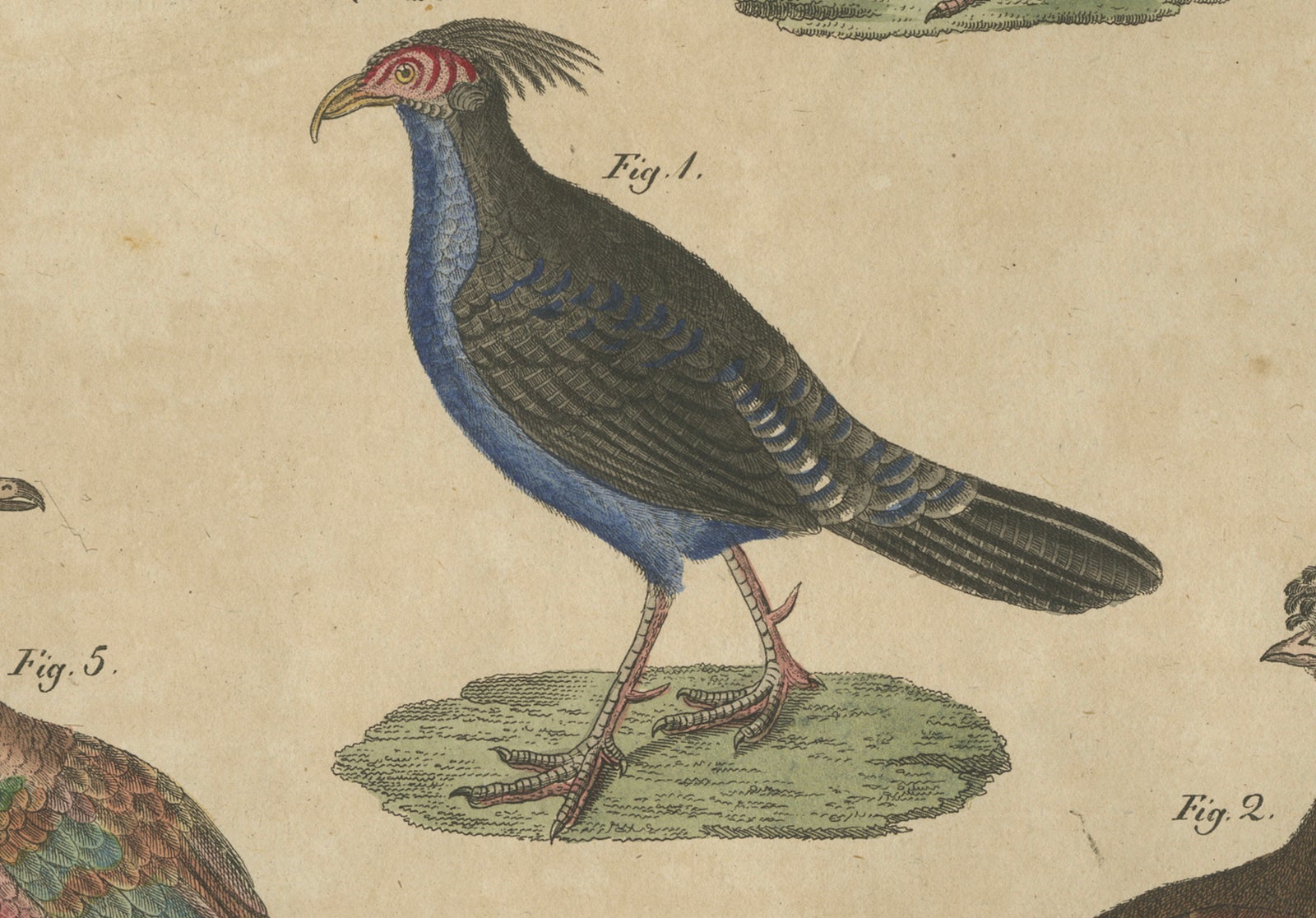
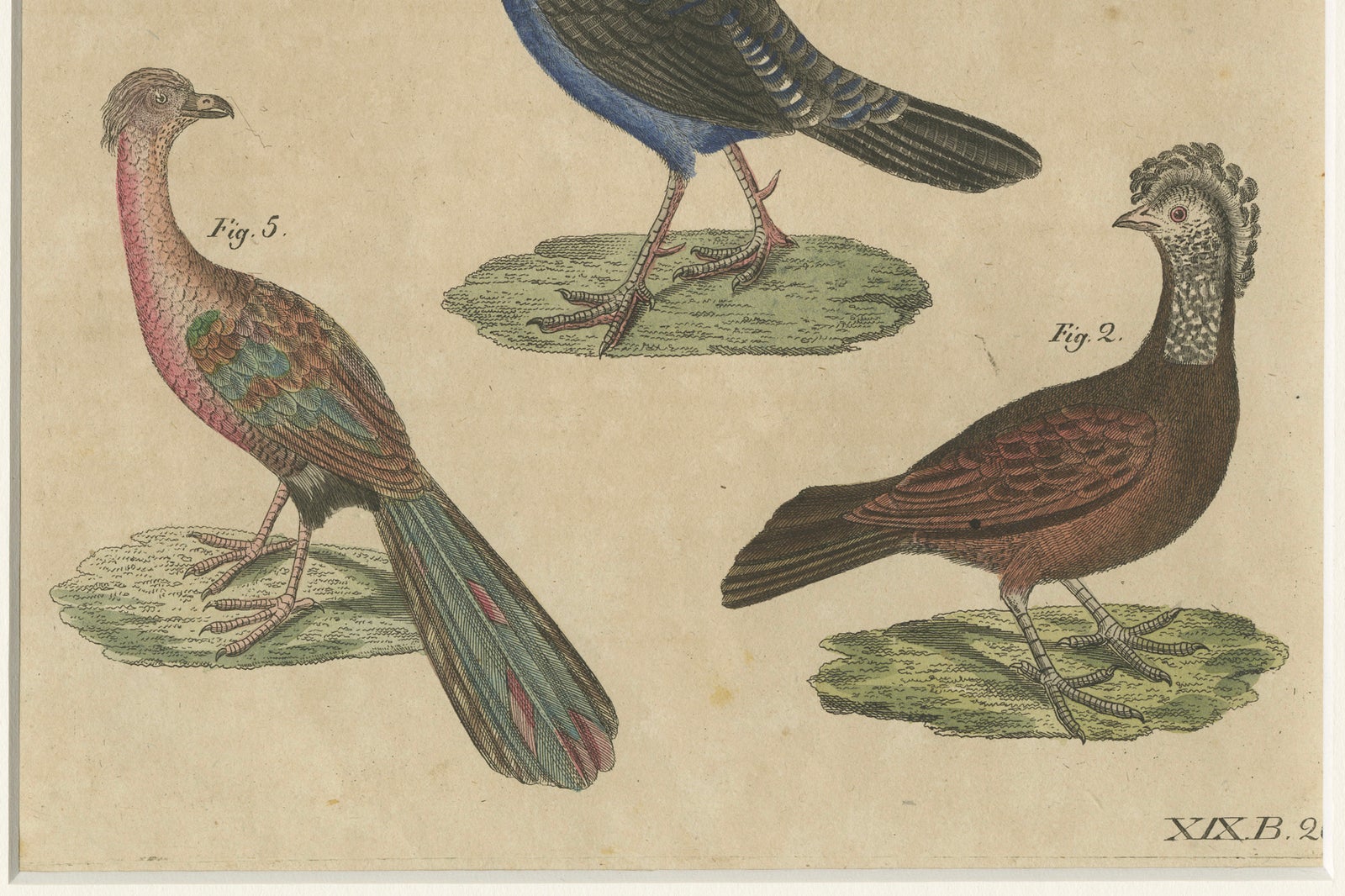
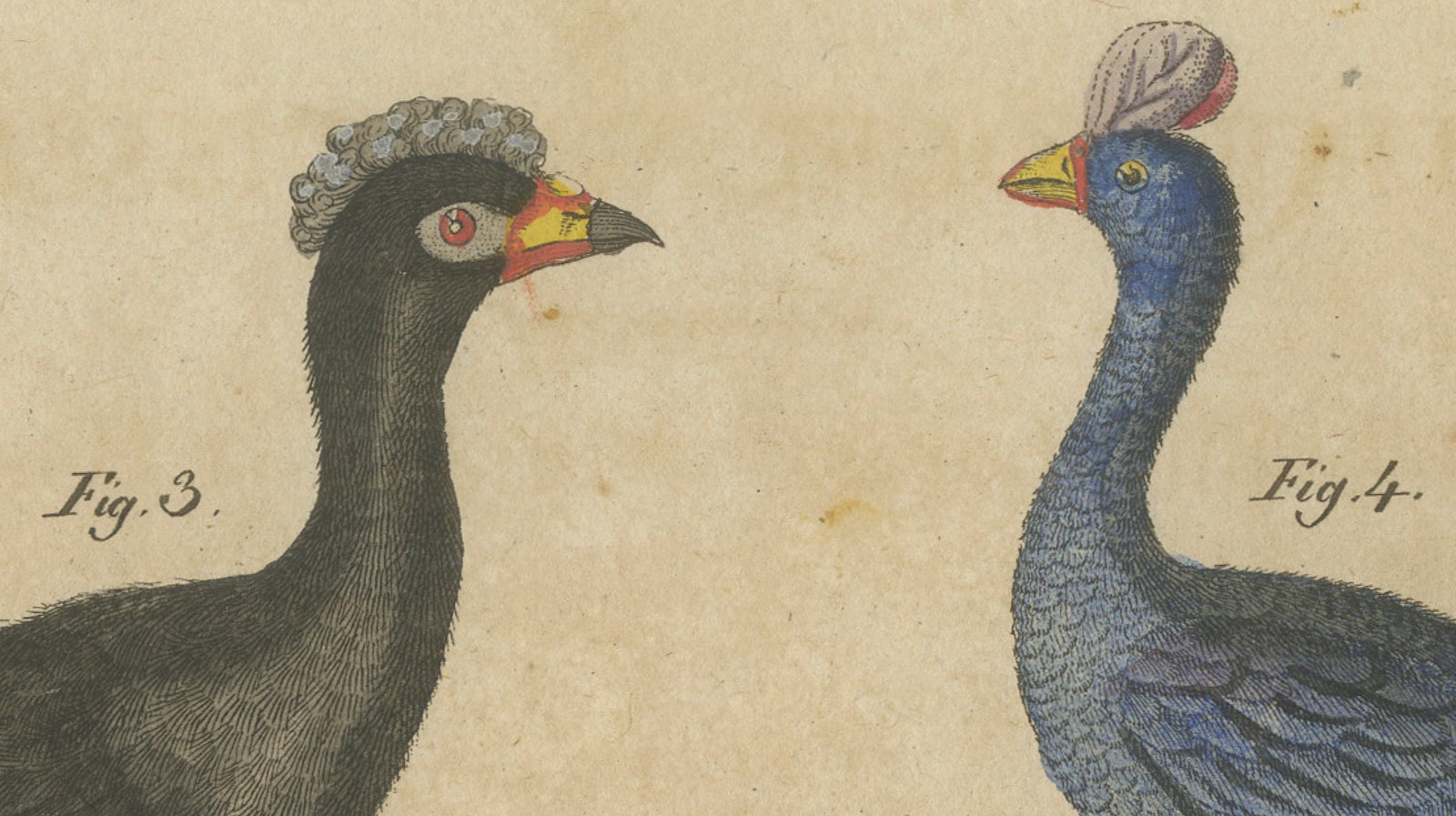
Five crested tropical American game birds on one plate, an original hand-colored copper engraving from Friedrich Justin Bertuch's Bilderbuch für Kinder, published in Weimar around 1800. The plate is lettered "Vögel CIV" and "Oiseaux CIV", and each bird is numbered Fig. 1 to Fig. 5, standing on its own small patch of grass.
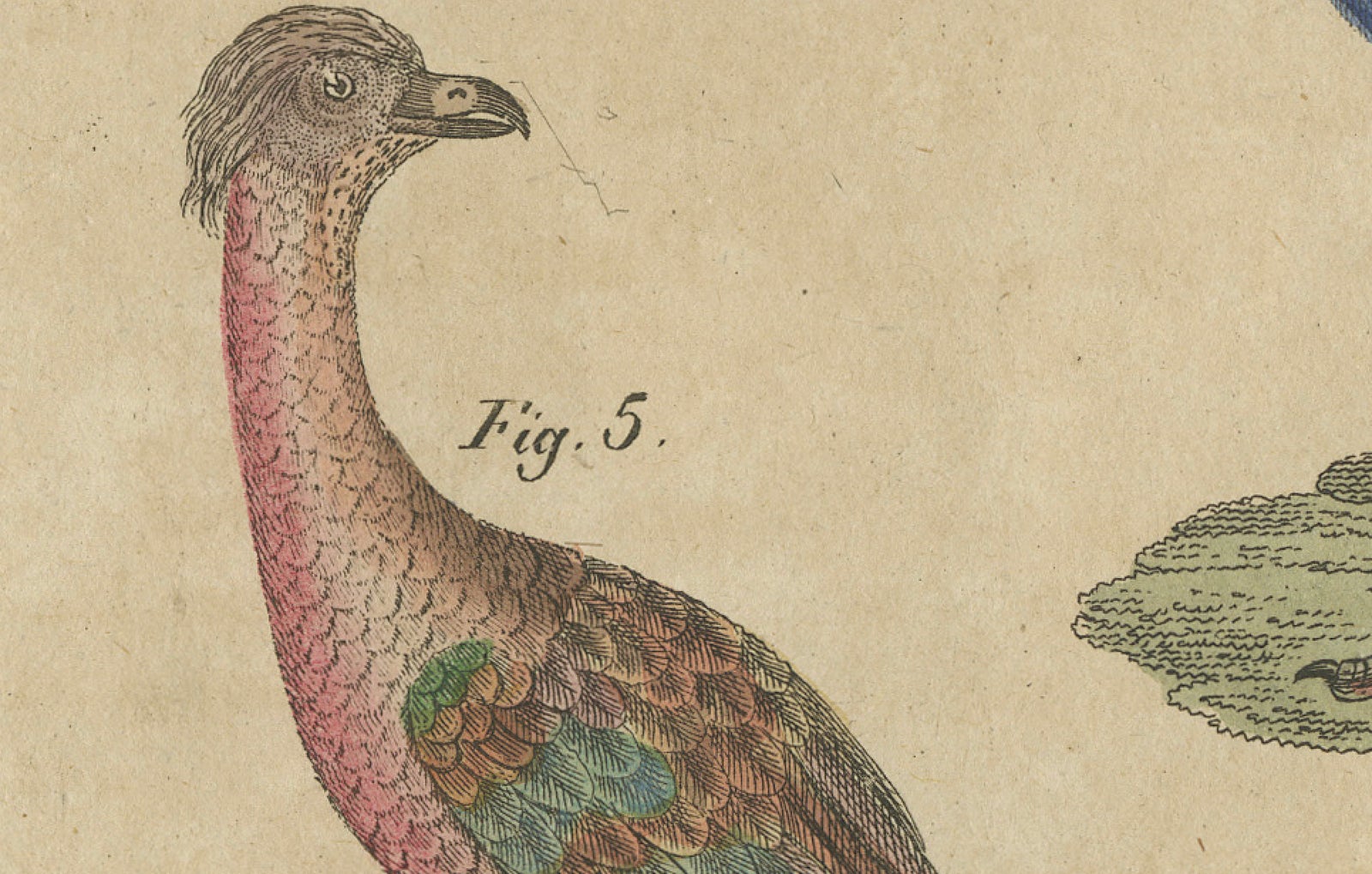
They are curassows and guans, birds of the forests of Central and South America. At the center a blue-breasted bird with a dark back and a pointed crest has a red face and bill. Above it at the left stands a black bird with a curled crest and yellow bill, and at the right a gray-blue bird with a tall white-tipped crest and long blue tail. At the lower right a dark reddish-brown bird has a white-spotted crest and neck, and at the lower left a long-tailed bird with a bare pink throat and iridescent green and red wings. The old description names the genera as Mitu, Crax, Pipile and Penelope, under late eighteenth-century classifications that have since changed.
The coloring is strong in blues, greens, reds and pink, and the plate belongs to Bertuch's long series of natural-history plates for young readers.