Close-ups
Framed and on the wall
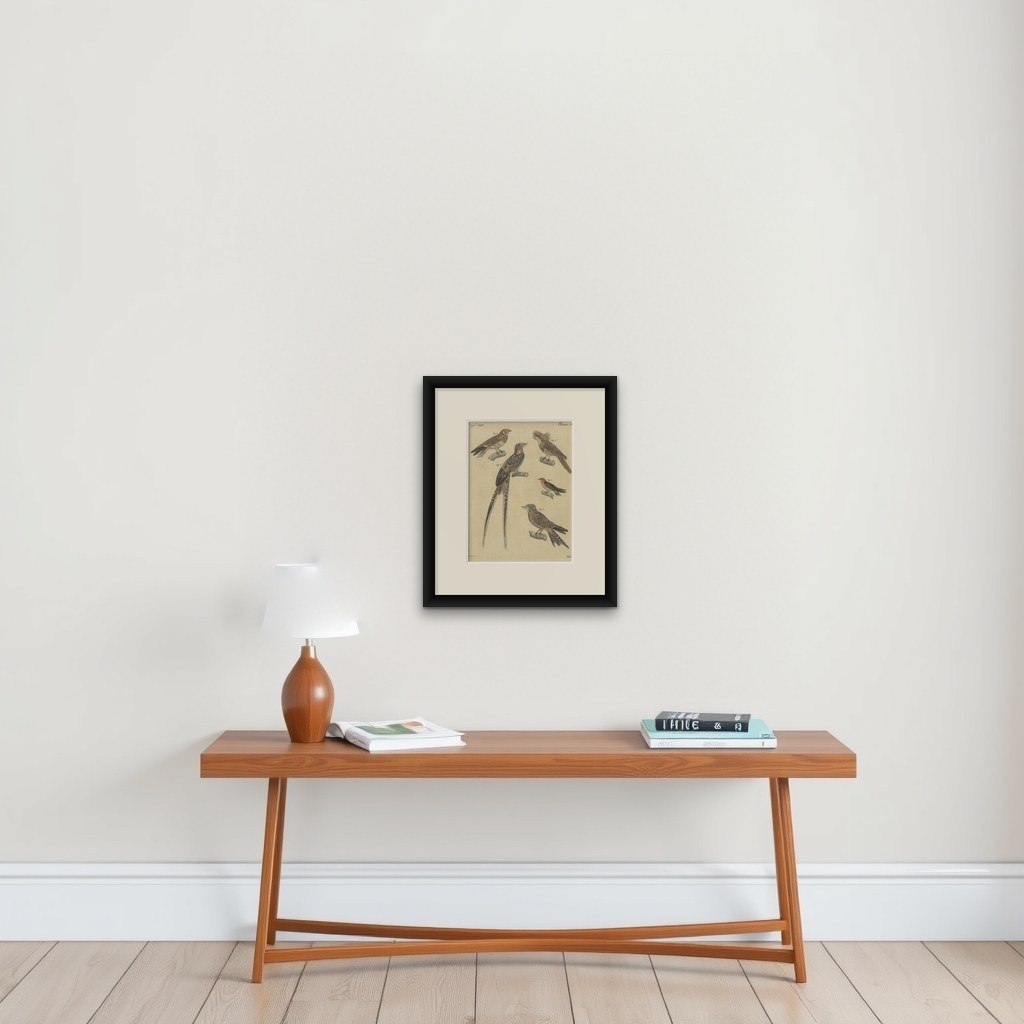

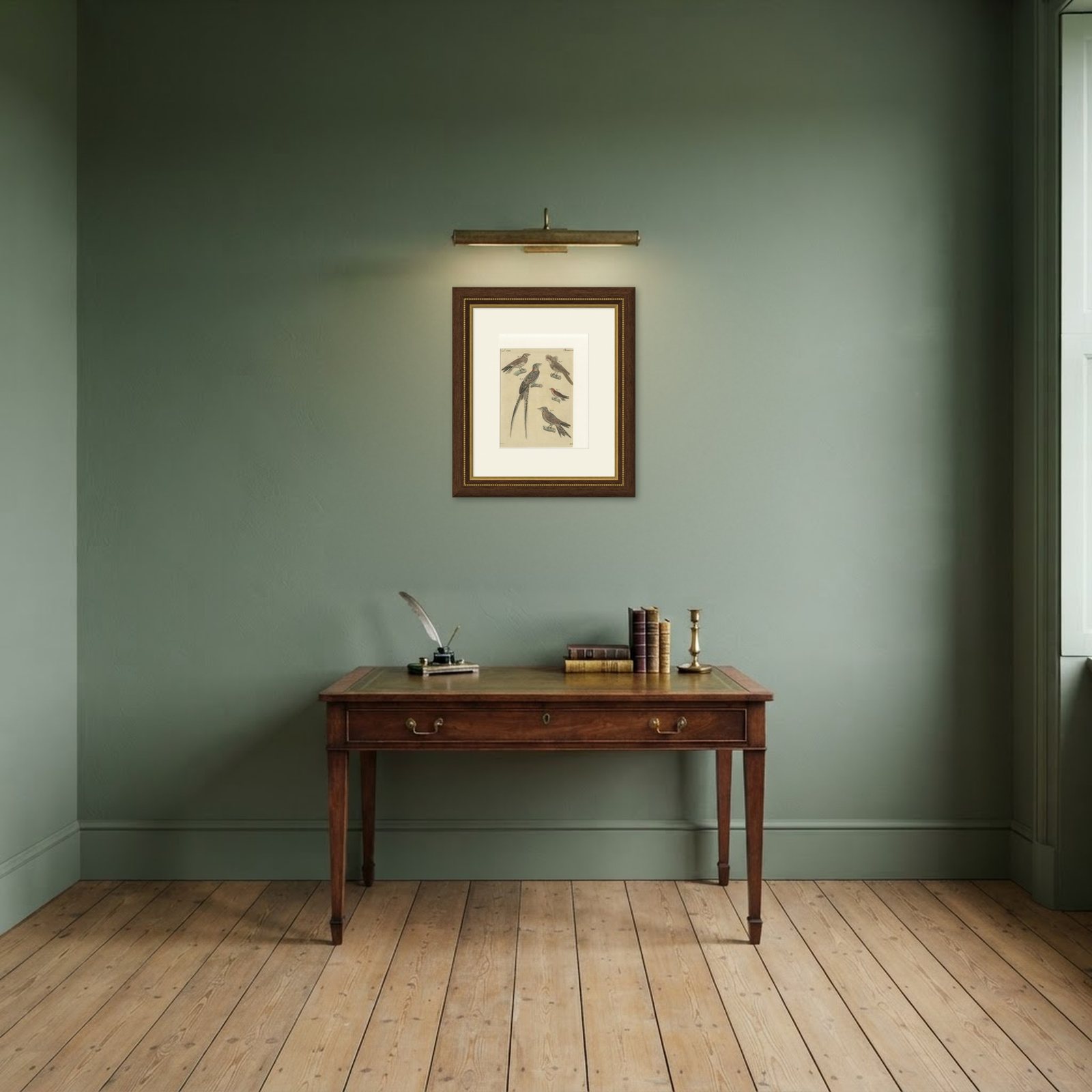
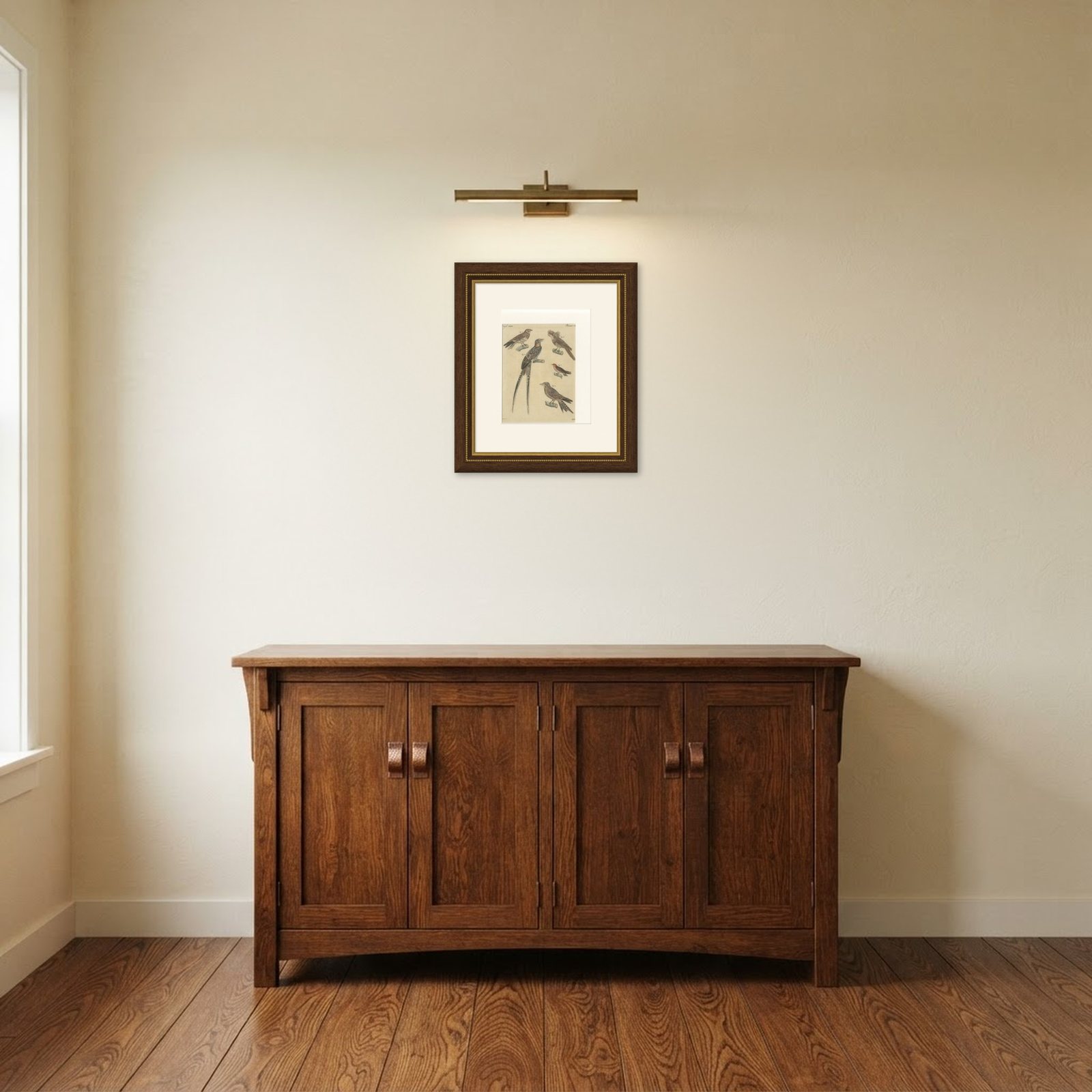
Frame and rooms are illustrations of how the print could look; the description says what is included.
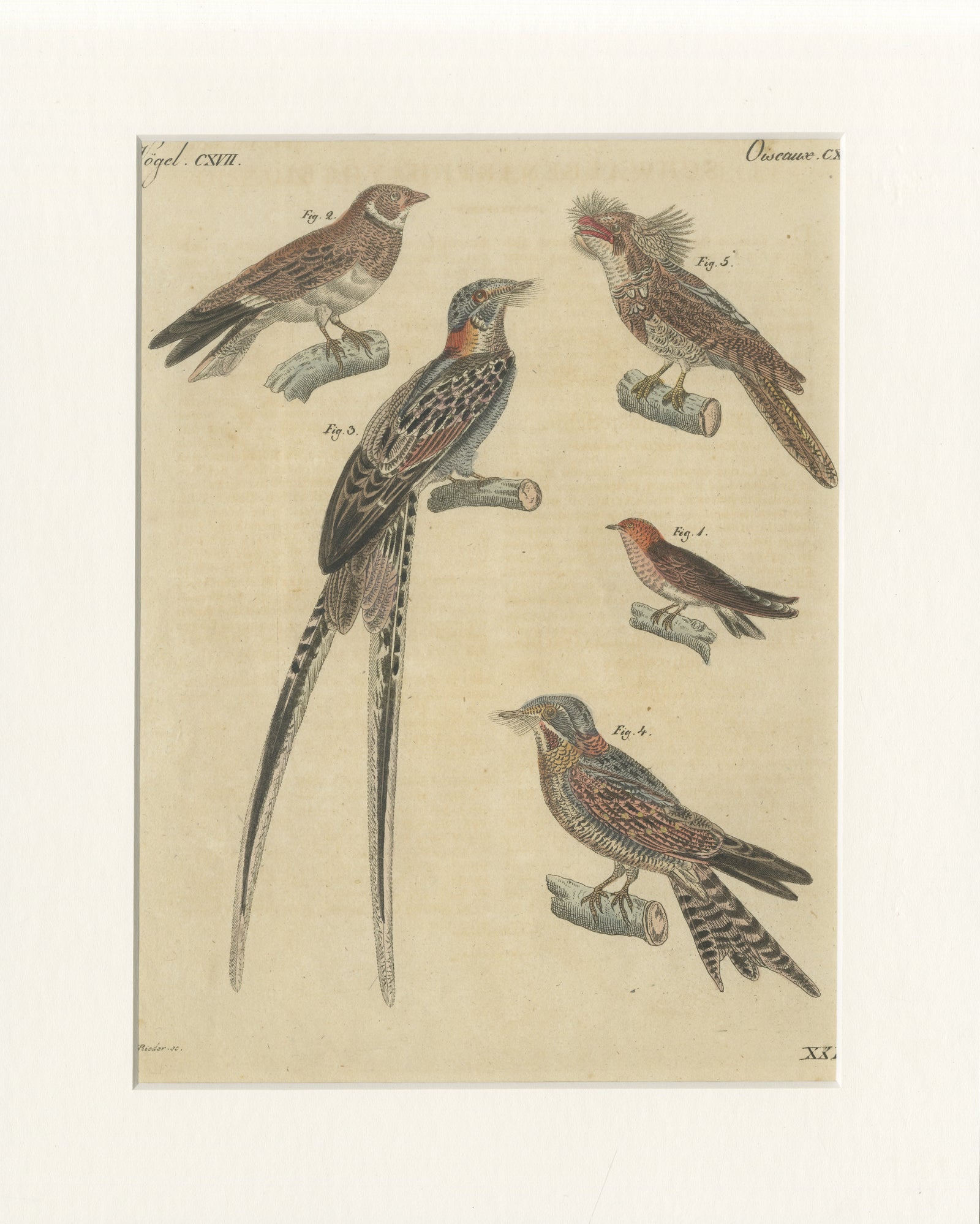
Antique Hand-Colored Bird Engraving, Swallow & Nightjars, Bertuch, c.1800
£195£13530% off ($175, €161)
Period original, not a reproduction.
Shipped from the Netherlands, flat or rolled, insured and tracked, worldwide. Returns accepted within 14 days.
- Date
- 1800
- Size
- 11.8 × 9.4 in (30 × 24 cm)
- Condition
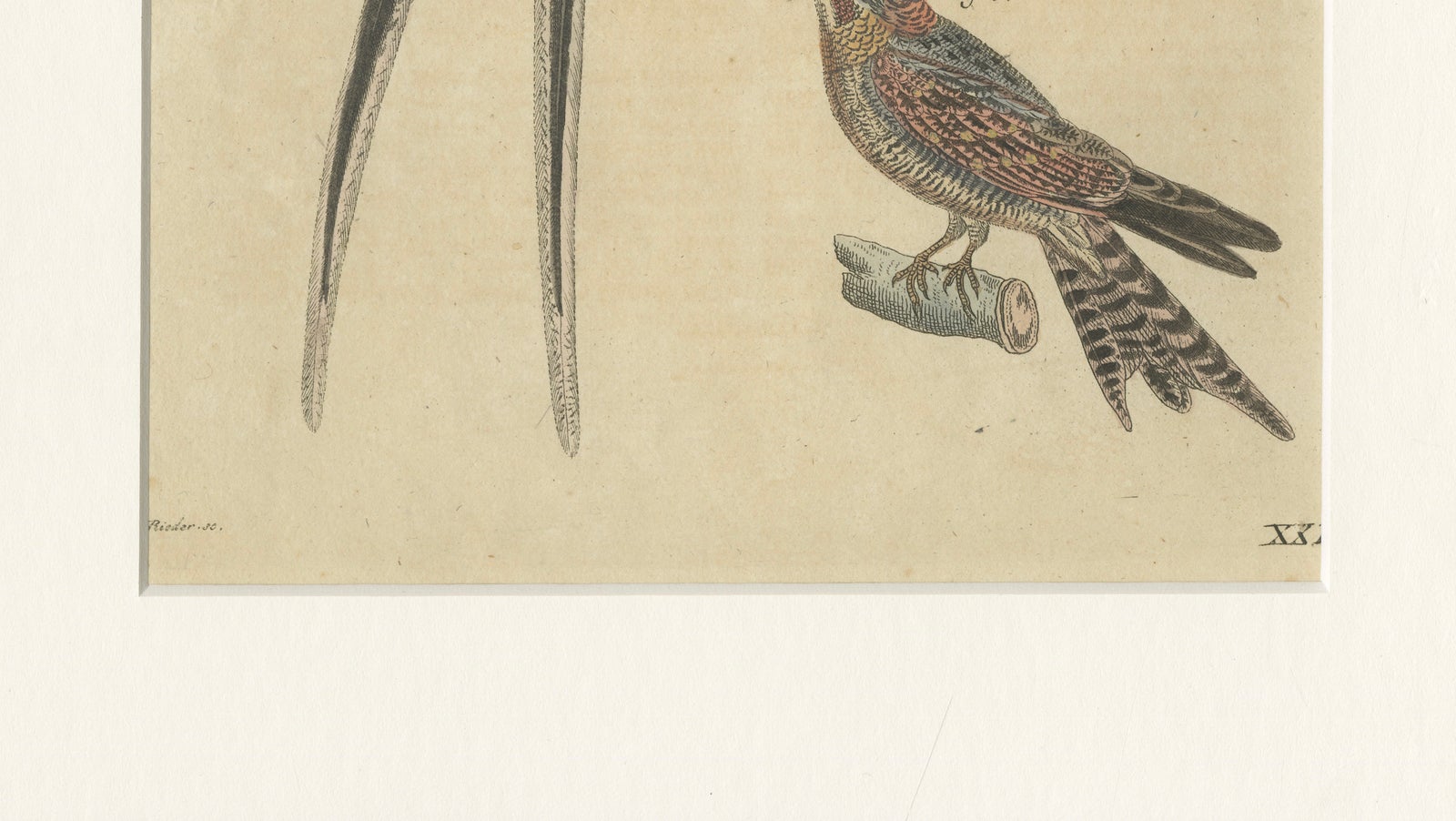
- Good. Wear consistent with age and use. Good. Wear consistent with age and use. General age-related toning with scattered foxing, spotting and minor marks. Some marginal wear and small edge irregularities are visible, consistent with age. Original hand coloring remains very attractive.
- Period
- Early 19th century
- Artist or book
- Bertuch
- Section
- Birds
- Reference
- f_51465172
- Color
- Hand colored
What the condition grades mean
- Excellent
- Bright and clean, with no faults worth mentioning.
- Very good
- Only light signs of age, such as faint toning.
- Good
- Normal signs of age for a sheet of this period: toning, some foxing, small marks or neat old repairs.
- Fair
- Clear faults such as staining, tears or repairs, priced to match.
Every fault we see is written in the condition note, and the whole sheet is shown uncropped in the photos.
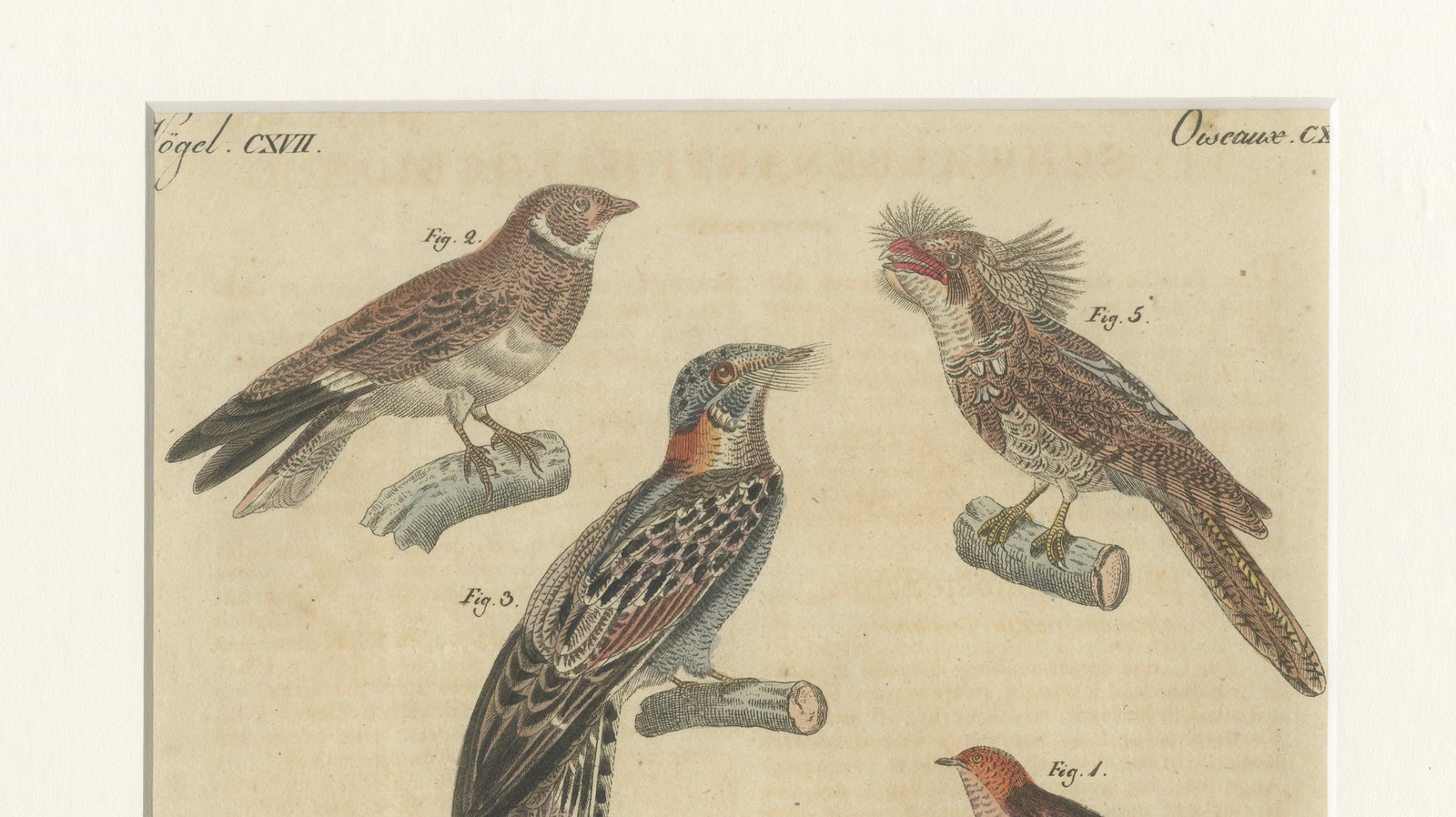
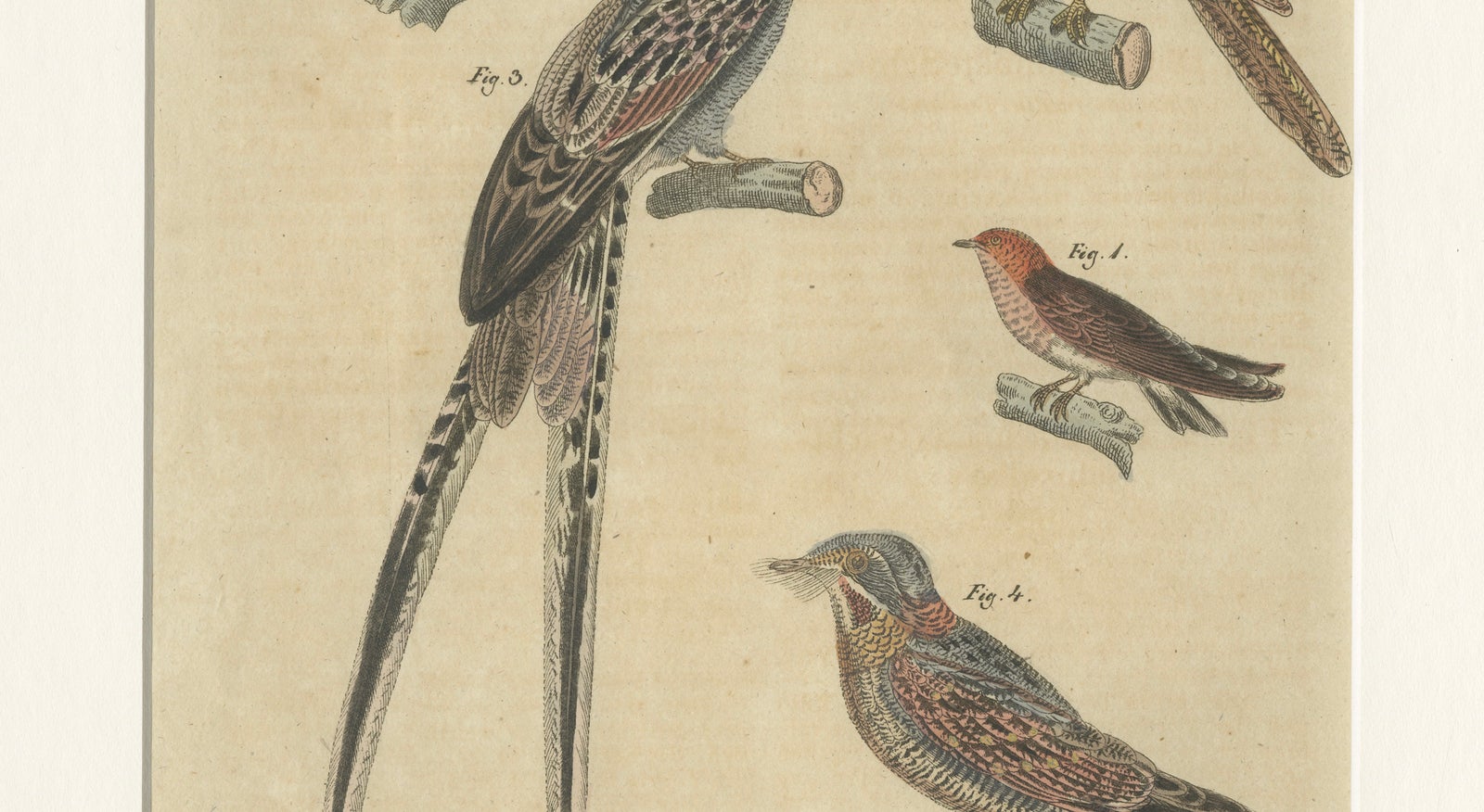
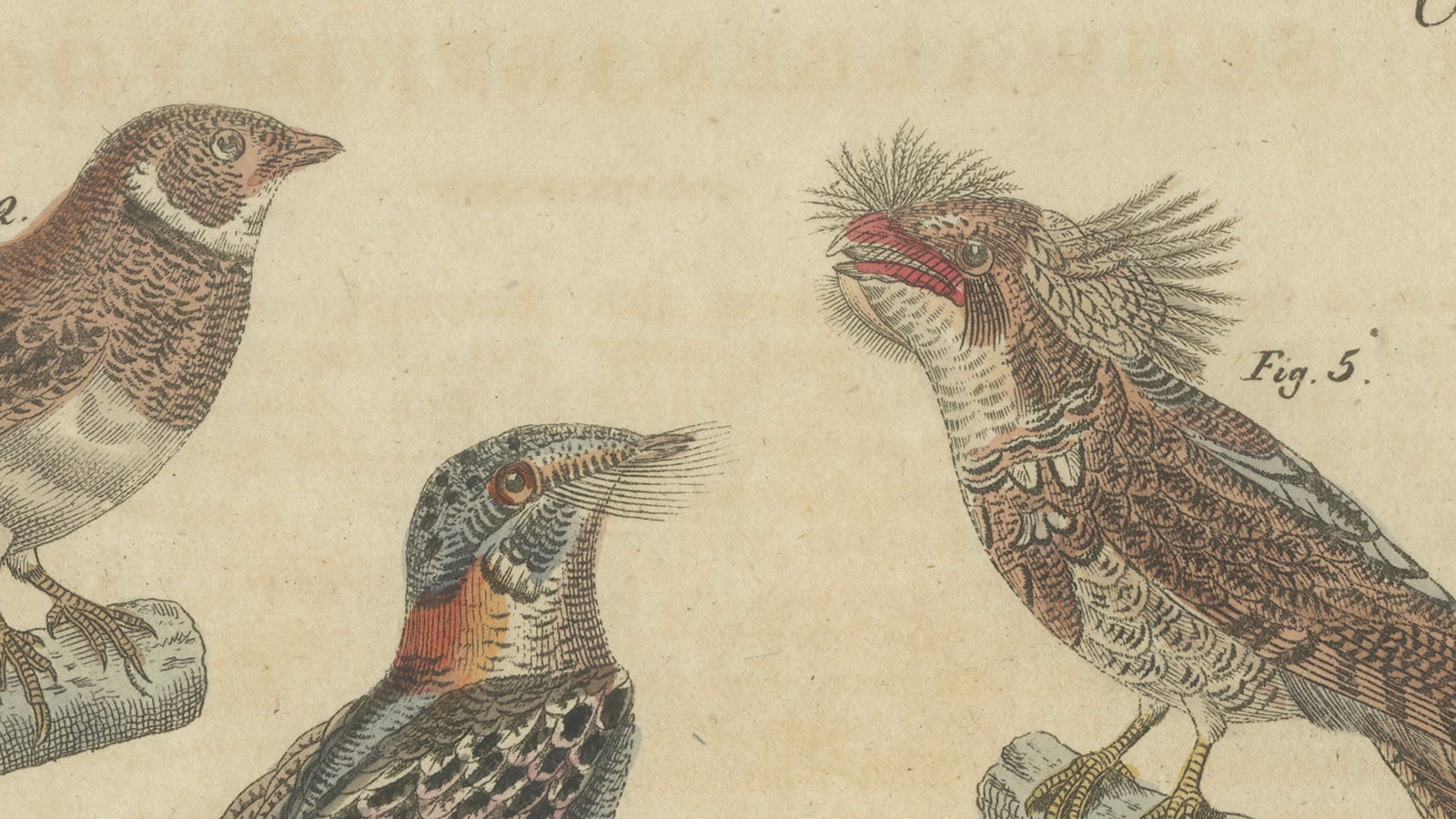
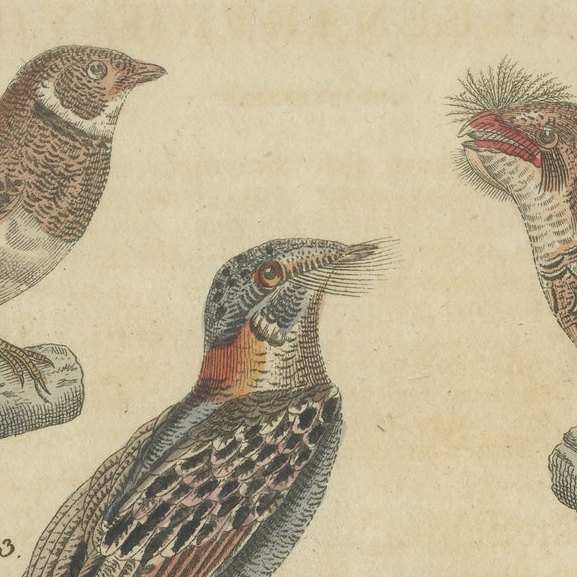
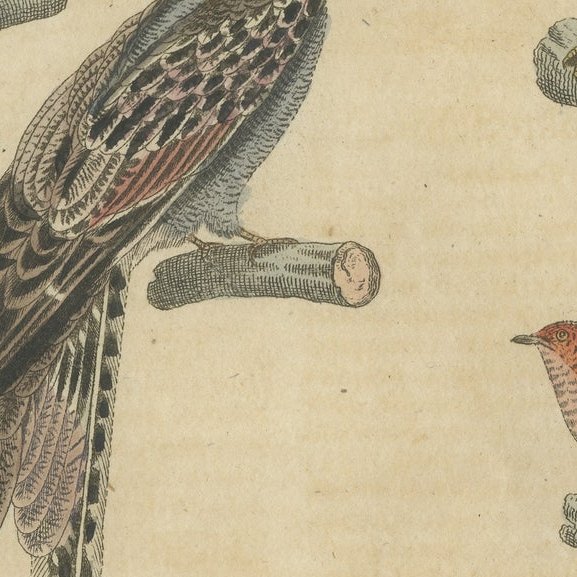
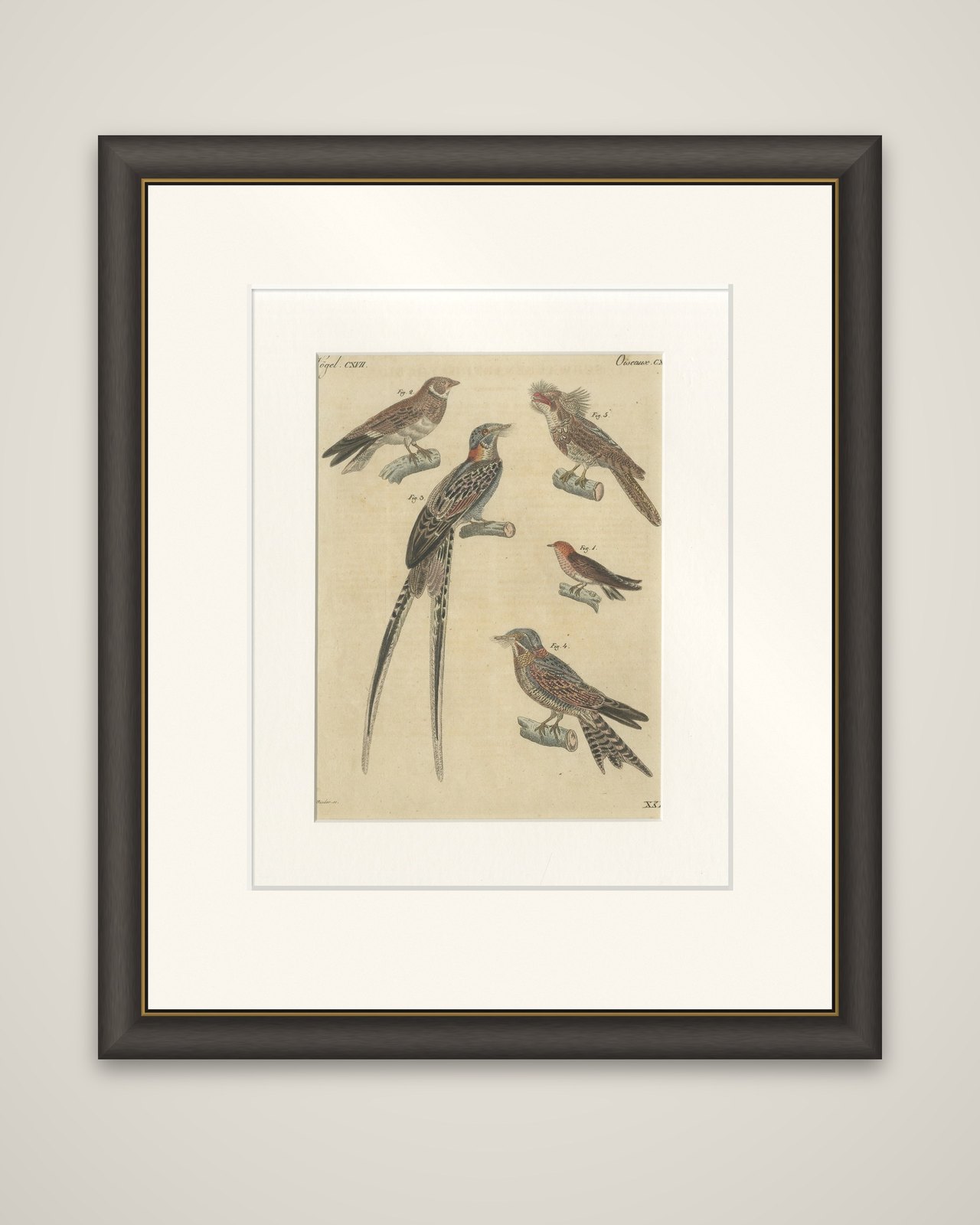
Swallow-like and nightjar-type birds on a single plate, an original hand-colored copper engraving from Friedrich Justin Bertuch's Bilderbuch für Kinder, published in Weimar around 1800. The plate is lettered "Vögel CXVII" and "Oiseaux CXVII", and each of the five birds carries a figure number.
Figure 1 is a small swallow with a reddish head, the "Painted Swallow" (Hirundo fucata). Figure 2 is a brown nightjar with a white throat, identified as the Nacunda nightjar, a South American species. Figures 3 and 4 are the male and female of the scissor-tailed nightjar (Caprimulgus psalurus): the male, at the center of the sheet, has two tail feathers many times the length of its body, while the female below it has a shorter tail. Figure 5, at the upper right, has a crest and wide-gaped bill and is lettered in the old text as the horned podargus, a frogmouth from Java and Sumatra. Each bird perches on a short cut branch, and the coloring is in earthy browns, reds, grays and greens.
Bertuch's heading for the plate is "Schwalbenartige Vögel", swallow-like birds, and the names follow his text and the usage of about 1800.