Close-ups
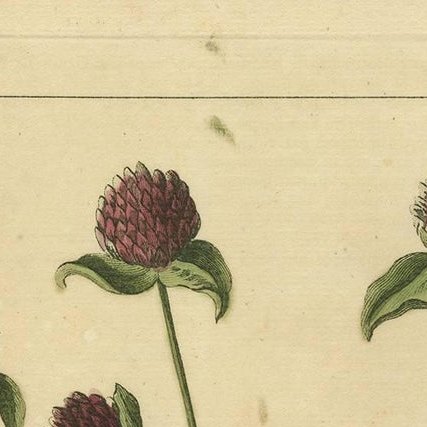
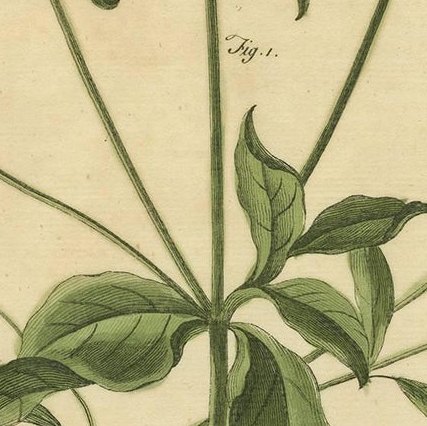
Framed and on the wall
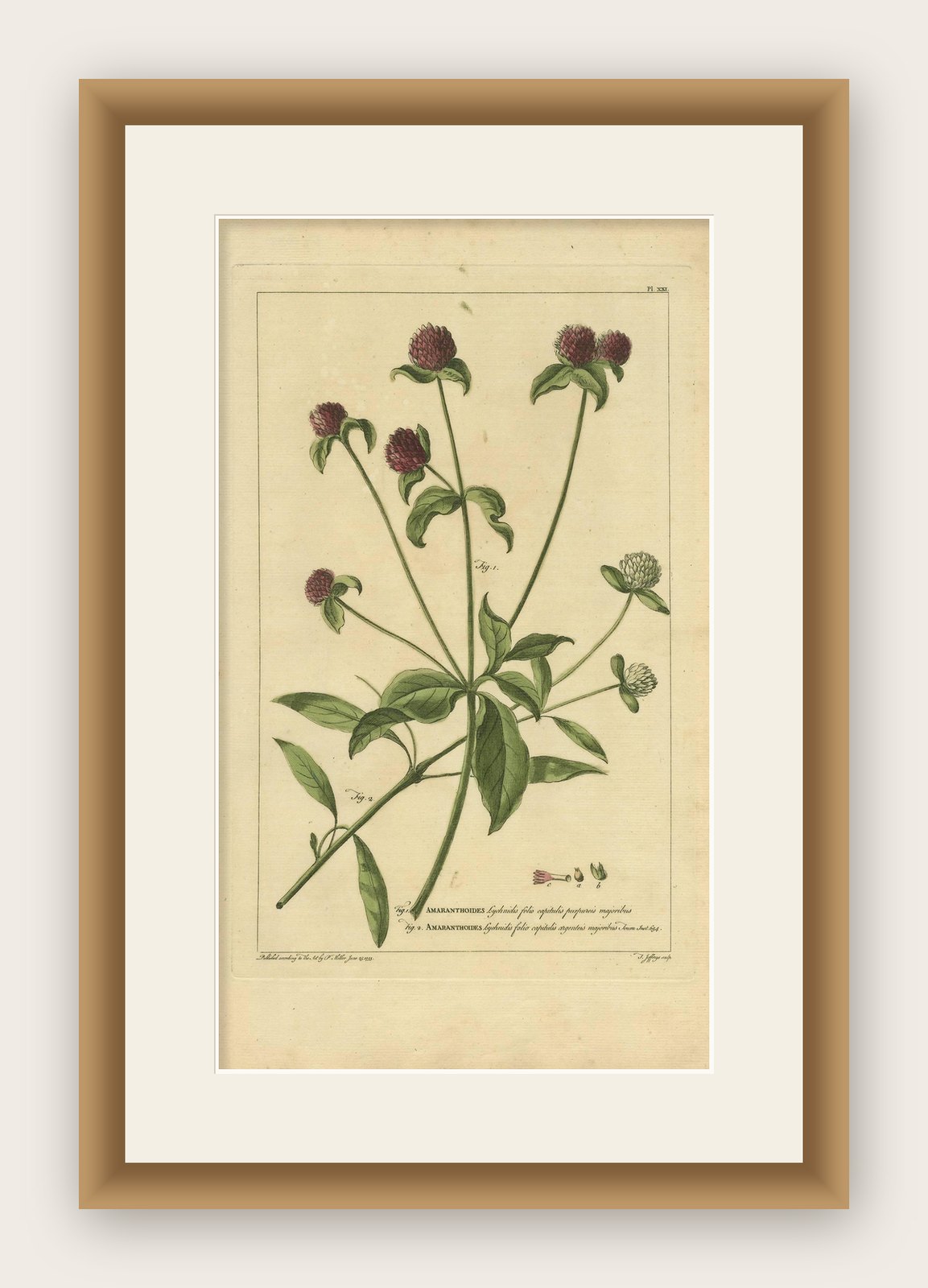

Frame and rooms are illustrations of how the print could look; the description says what is included.
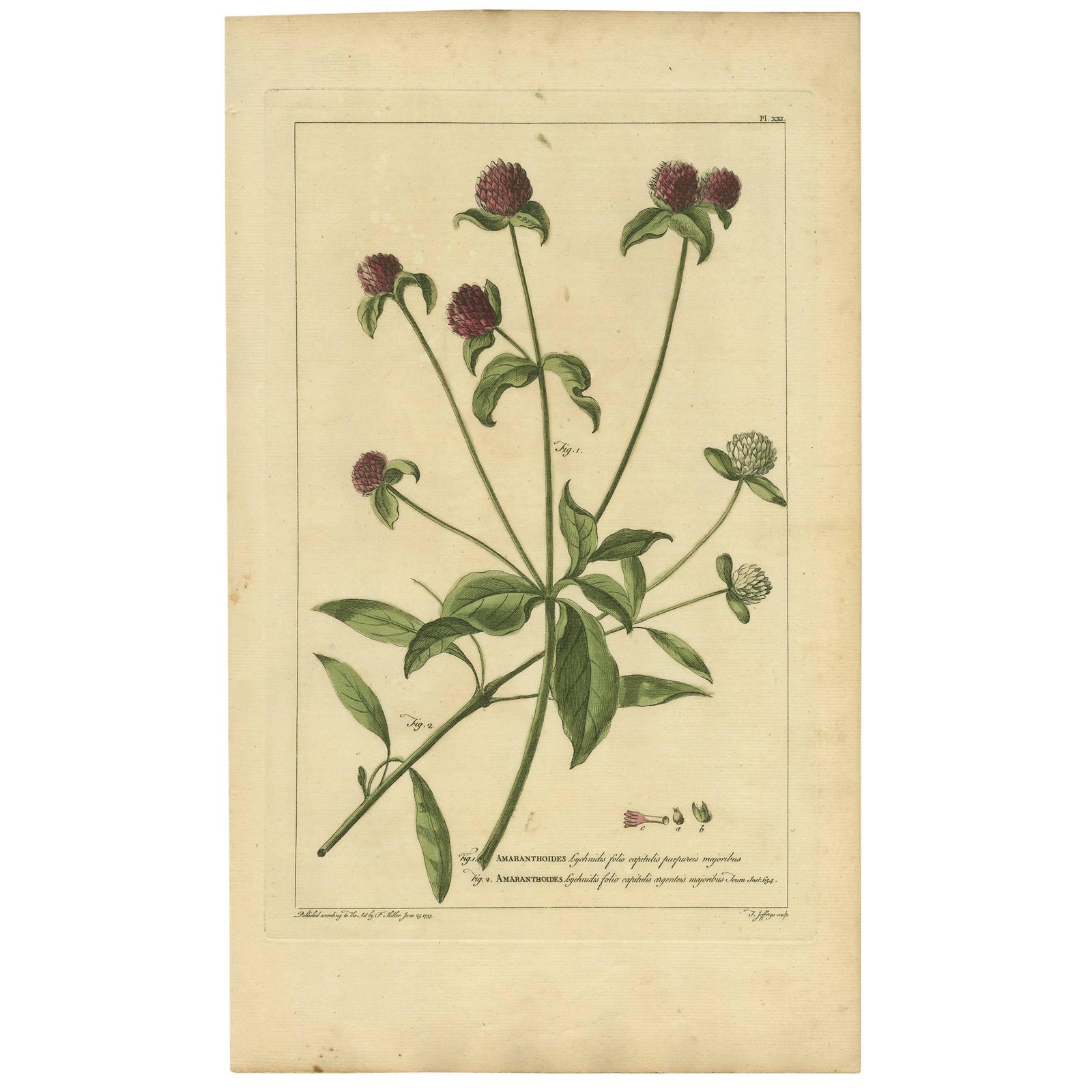
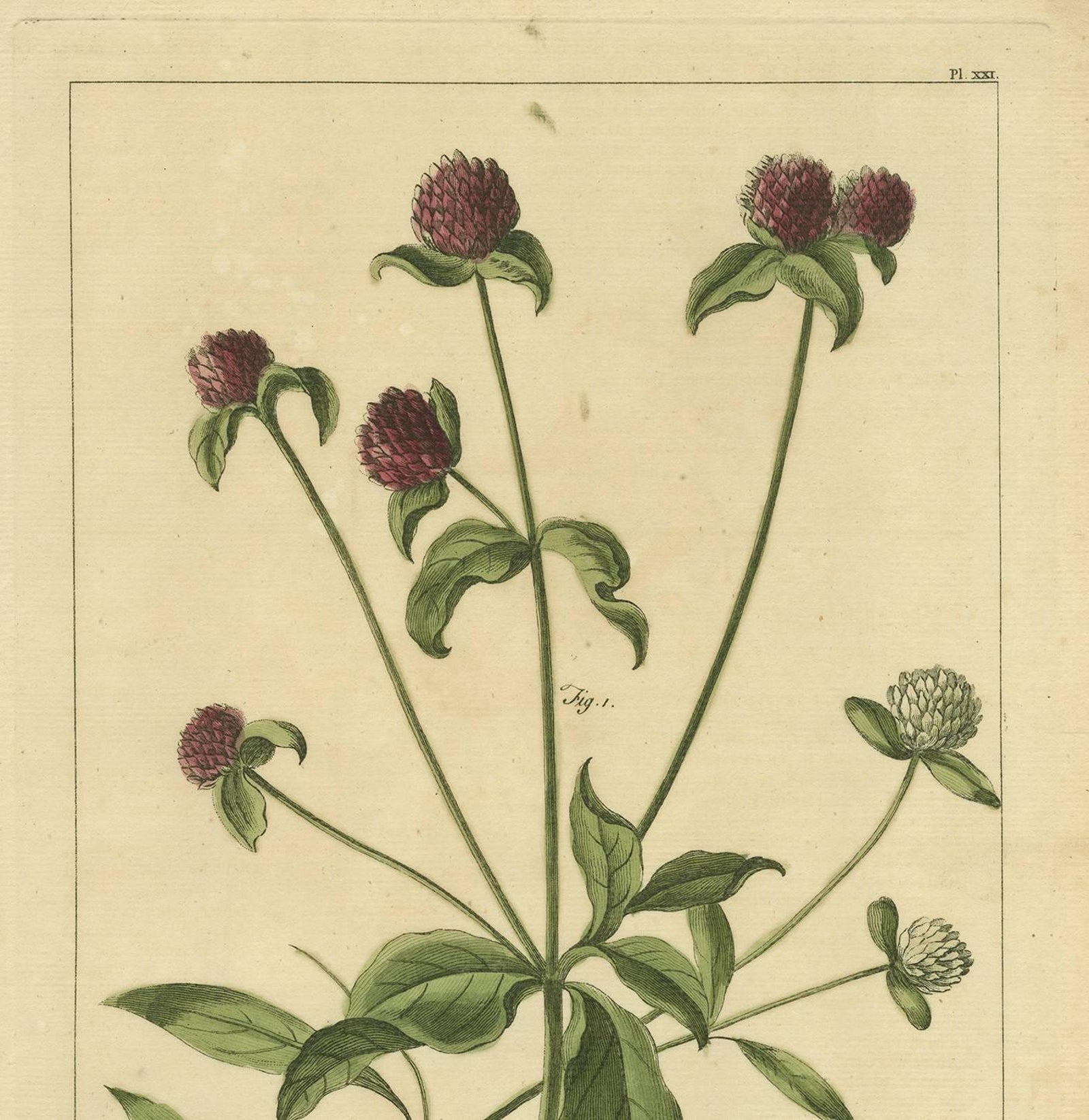
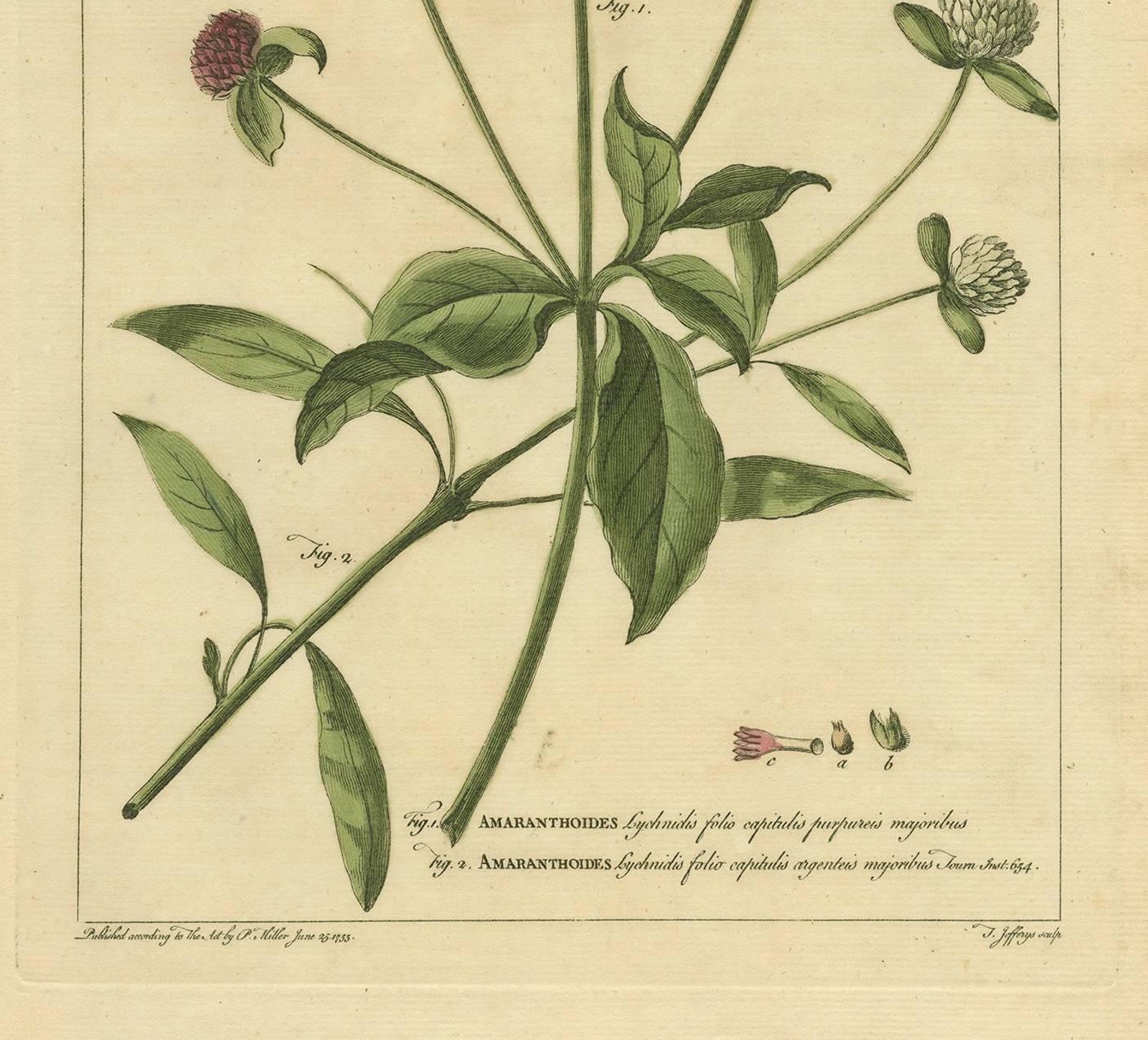
Antique Flower Print 'Amaranthoides' , 1755
£330 ($435, €390)
Period original, not a reproduction.
Shipped from the Netherlands, flat, insured and tracked, worldwide. Returns accepted within 14 days.
- Date
- 1755
- Size
- 16.5 × 10 in (42 × 25.5 cm)
- Condition
- Good. Minor losses. good condition. Please study images carefully or ask for extra scans.
- Period
- 18th century
- Section
- Botanical
- Reference
- f_8824013
Plate XXI 'Amaranthoides', originates from 'Figures of the most beautiful, useful and uncommon plants described in the Gardener's Dictionary (..)' by P. Miller.
Philip Miller was the principal horticulturalist in England in the mid-18th century. As the curator of the Chelsea Physic Garden and an active member of the Society of Gardeners, he had the opportunity to interact with important naturalists as well as some of the best botanical artists of the period including Georg Ehret and Robert Furber. The Society was a trade union formed in 1724 by prominent horticulturalists of the time to protect the interests of plant sellers. One of the projects undertaken by the group was to create an illustrated guide to plants currently being grown in Britain. They chose Philip Miller to organize the undertaking. He selected drawings by Ehret, Furber, John Miller, and Richard Lancake. The renowned engraver, Thomas Jefferys engraved the copperplates. The resulting work contains many beautiful plates which simply and accurately depict familiar plants and vegetables.