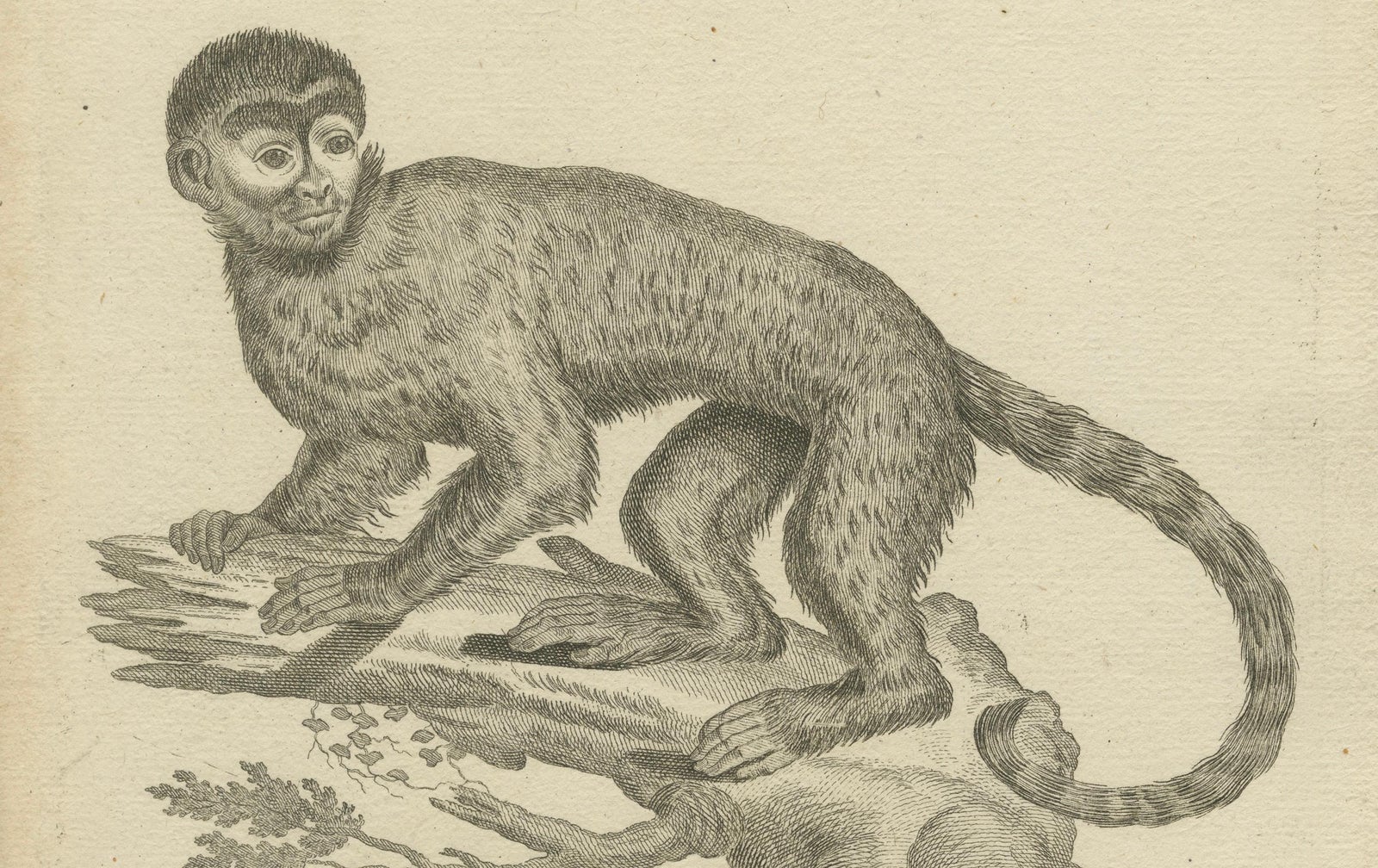
Close-ups
Framed and on the wall
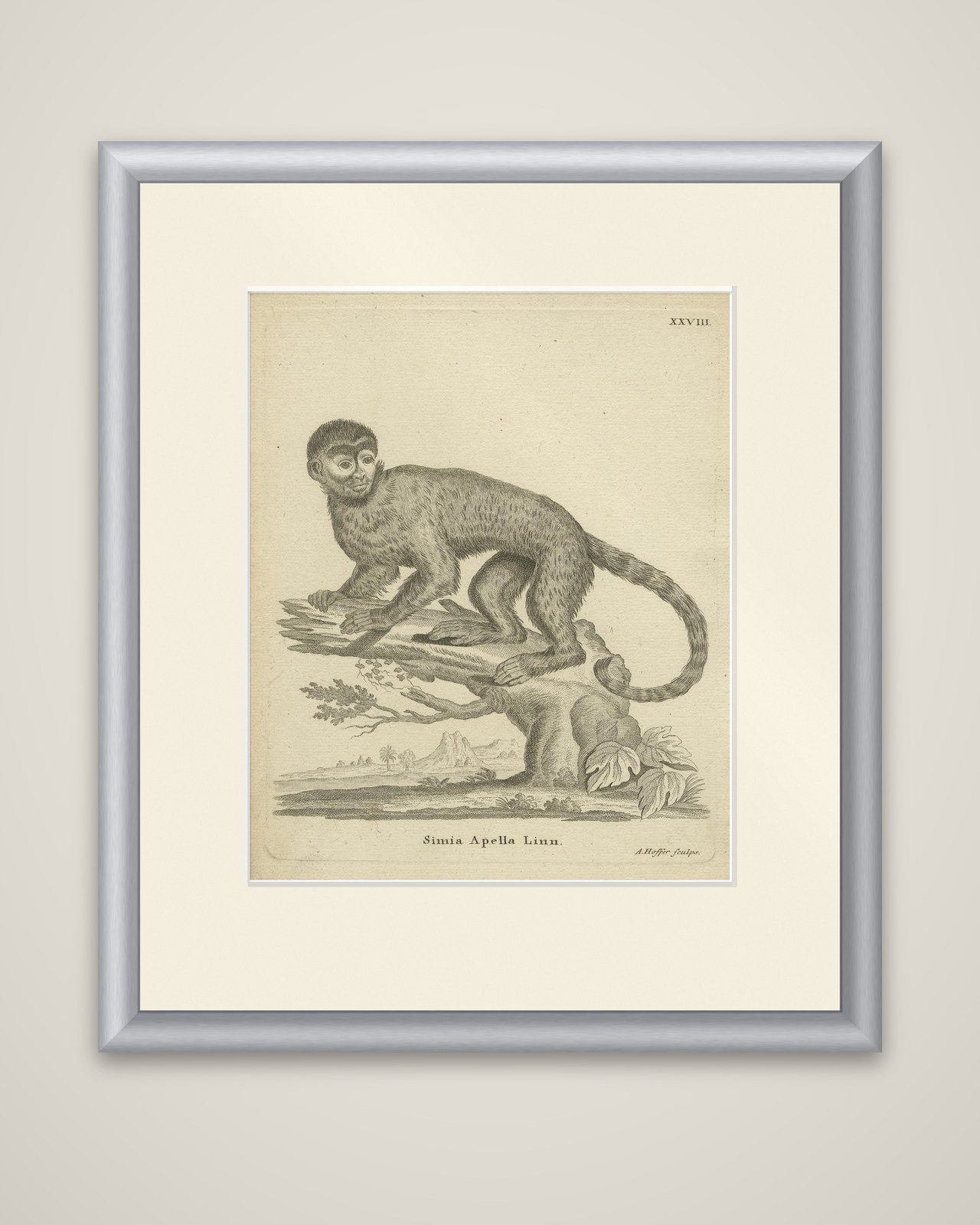

Frame and rooms are illustrations of how the print could look; the description says what is included.
Antique Engraving of a Capuchin Monkey (Simia apella Linn.), A. Hoffer, ca.1800
£200£14030% off ($185, €168)
Period original, not a reproduction.
Shipped from the Netherlands, flat or rolled, insured and tracked, worldwide. Returns accepted within 14 days.
- Date
- 1800
- Size
- 11.2 × 8.7 in (28.4 × 22 cm)
- Condition
- Good. Good condition with slight age toning and minor handling marks typical for the period. Strong impression on laid paper with wide margins and visible plate mark. Slight edge wear at the top, otherwise very well preserved.
- Period
- Early 19th century
- Section
- Mammals
- Reference
- f_46977562
What the condition grades mean
- Excellent
- Bright and clean, with no faults worth mentioning.
- Very good
- Only light signs of age, such as faint toning.
- Good
- Normal signs of age for a sheet of this period: toning, some foxing, small marks or neat old repairs.
- Fair
- Clear faults such as staining, tears or repairs, priced to match.
Every fault we see is written in the condition note, and the whole sheet is shown uncropped in the photos.
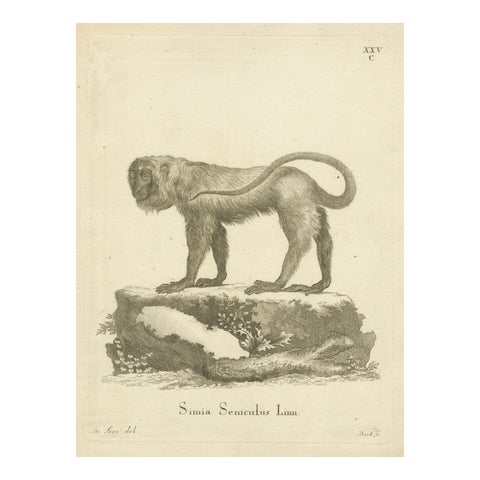
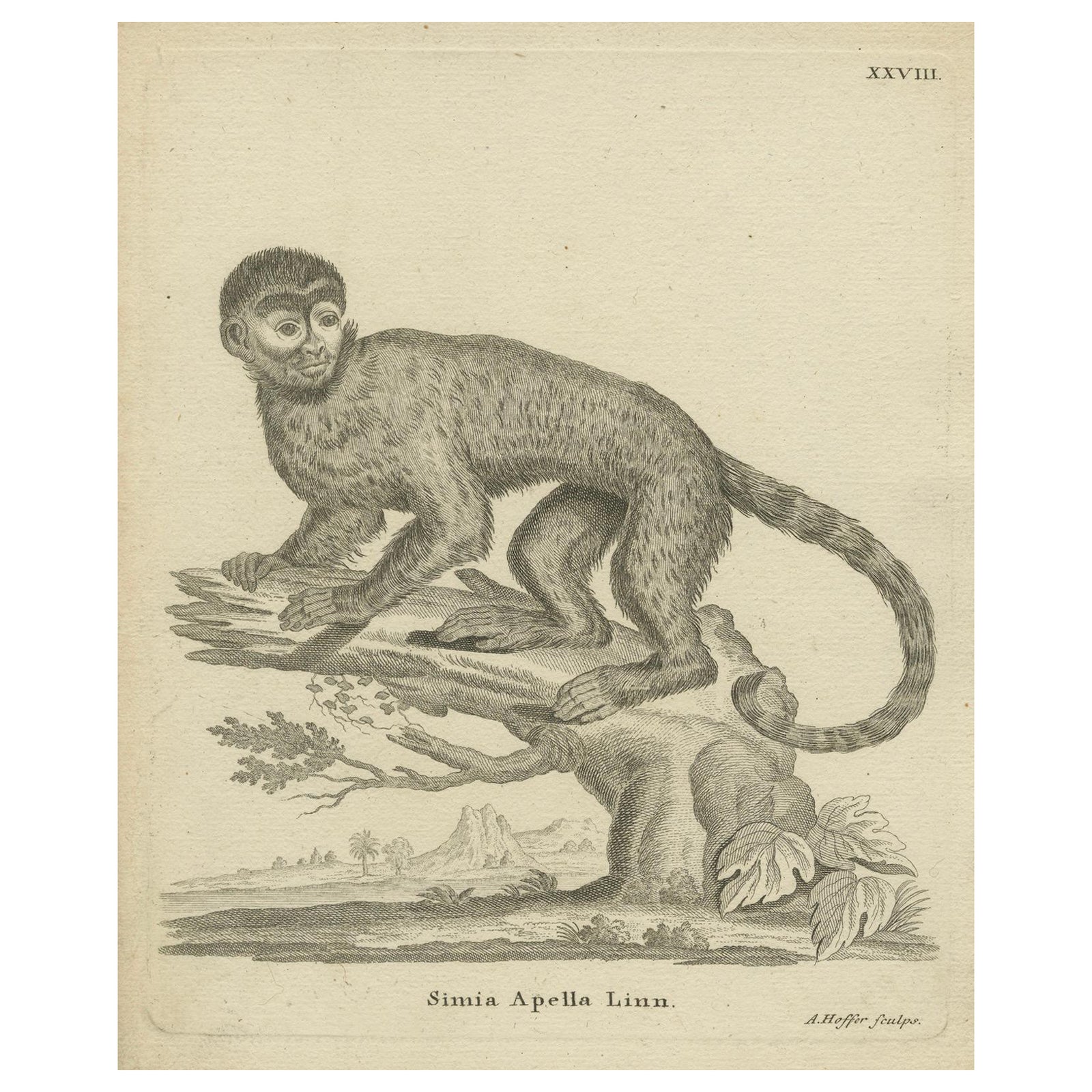
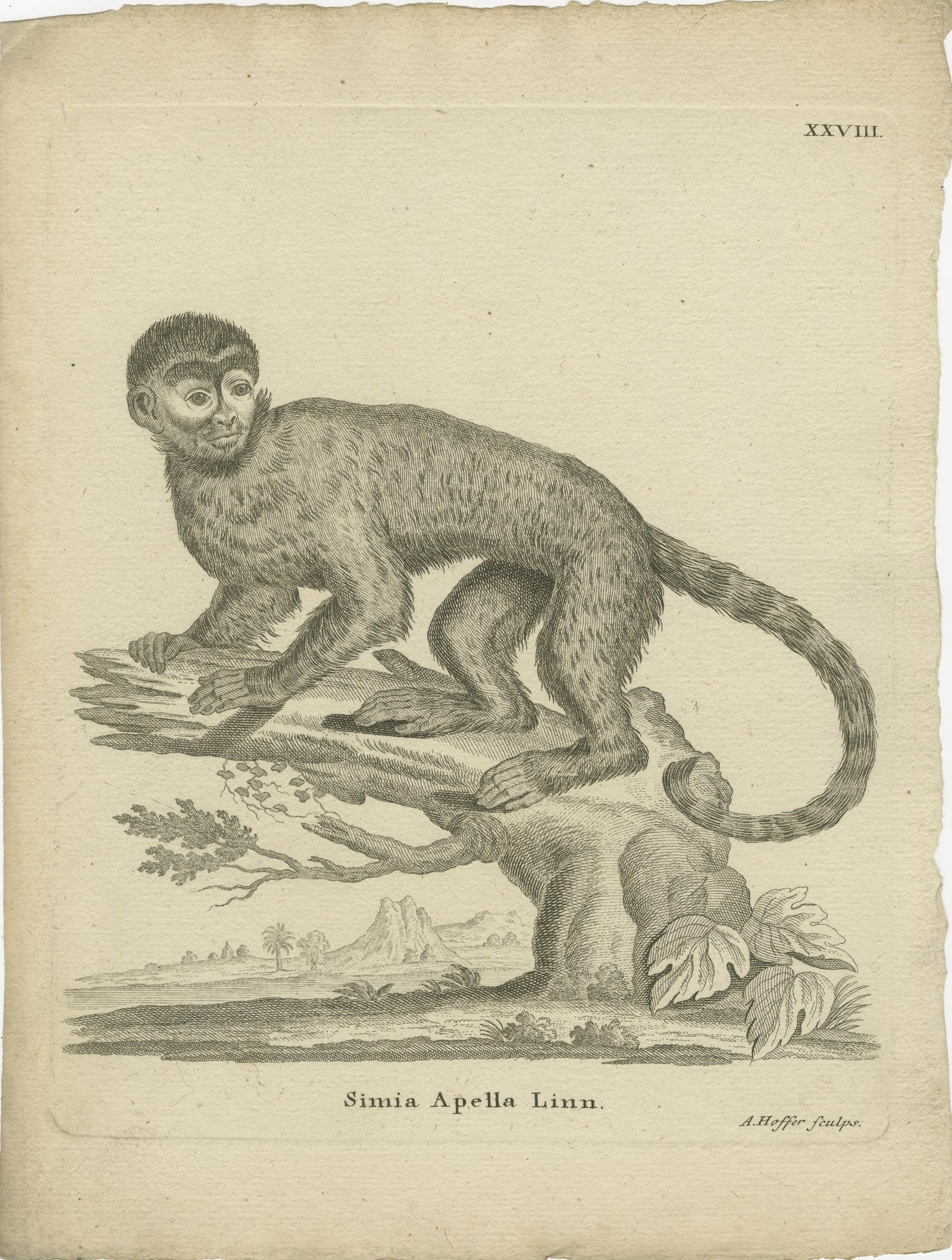
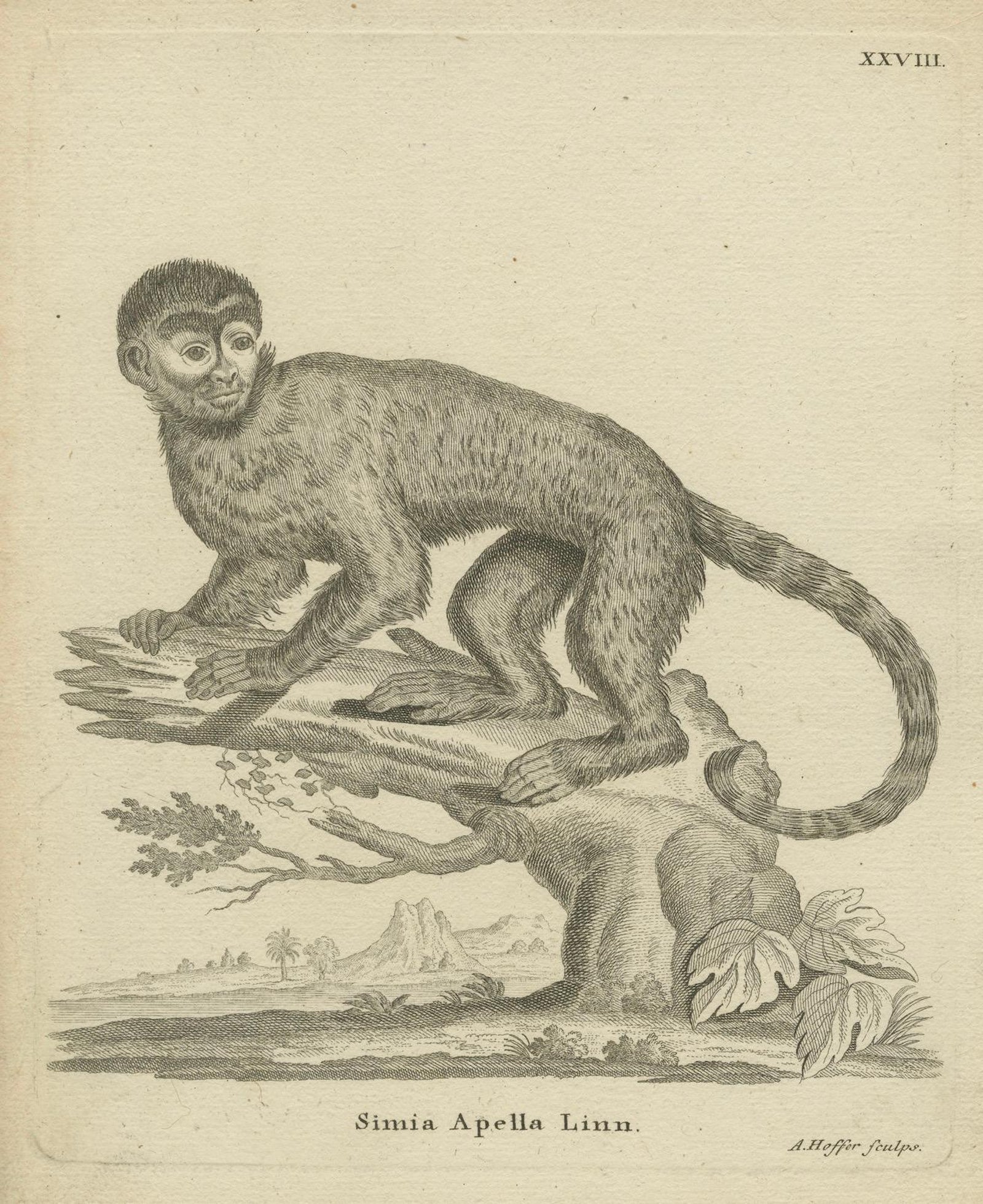
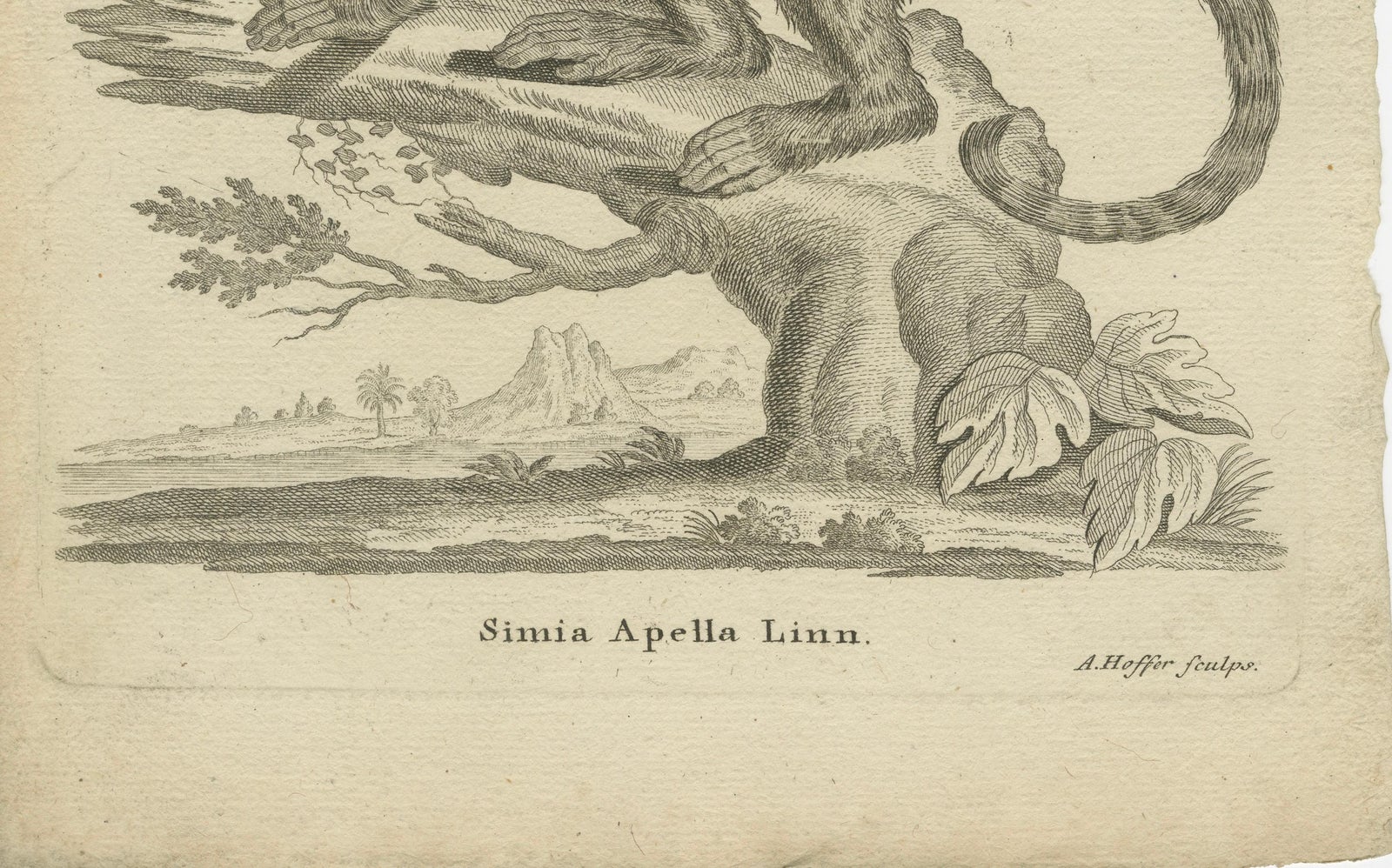
The capuchin monkey, labeled "Simia Apella Linn.", an original engraving by A. Hoffer, published around 1800. The Linnaean name is lettered beneath the figure, the engraver's credit "A. Hoffer sculps." appears at lower right, and the plate number appears at the upper right.
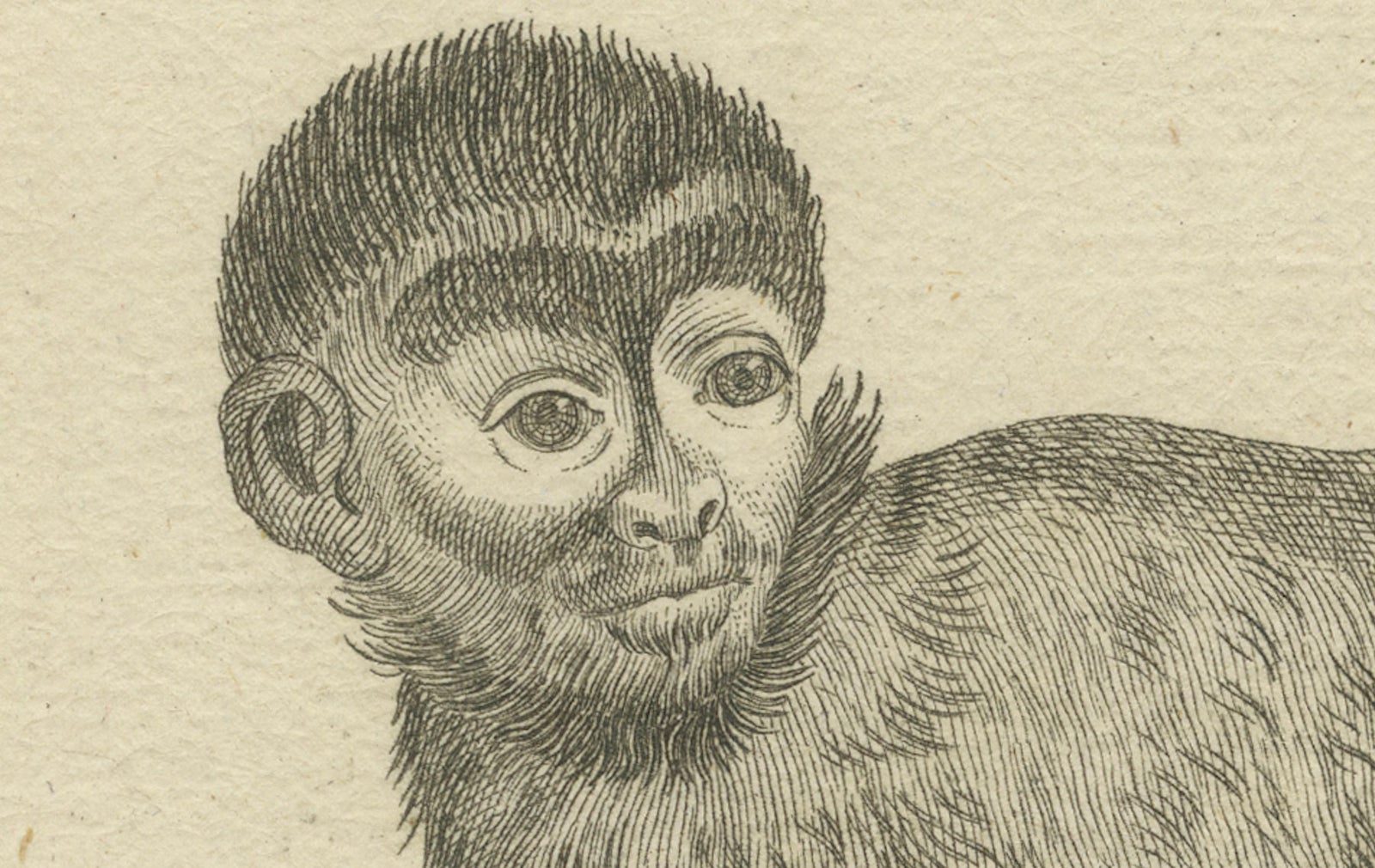
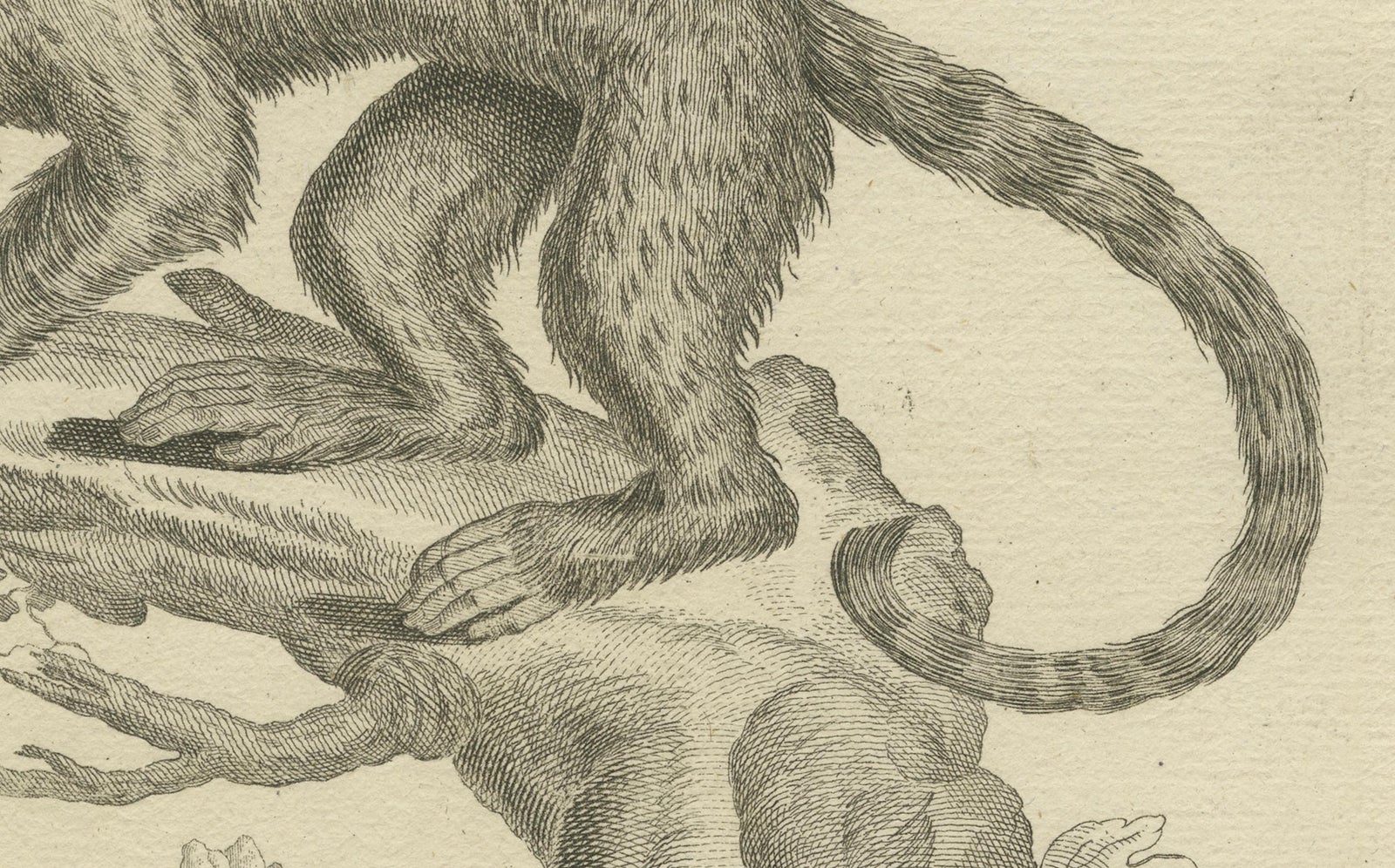
The monkey crouches on a gnarled branch, body turned slightly and head facing the viewer with a wide-eyed, alert expression. Its fur is drawn in short, dense strokes and its long tail is banded and curls in a wide arc down the right side. Below the branch lies a small landscape with a palm and rocky hills in the distance, and a few large leaves in the lower right corner.
Known today as the brown or tufted capuchin (Cebus apella), it is a South American primate that European naturalists described early. The Linnaean binomial follows Carl Linnaeus's system of the mid-18th century.