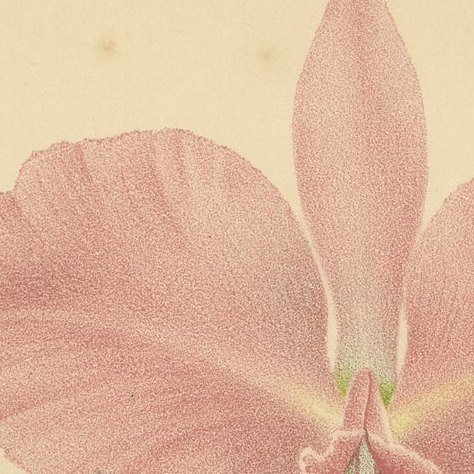
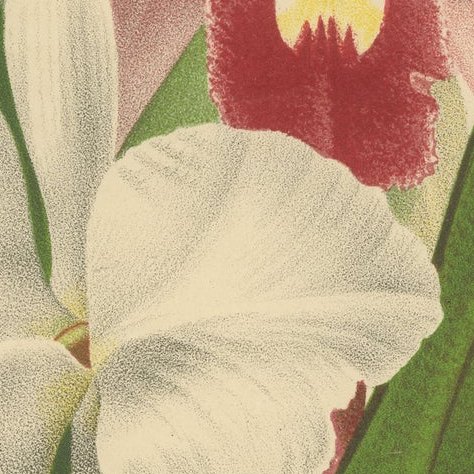
Close-ups
Framed and on the wall
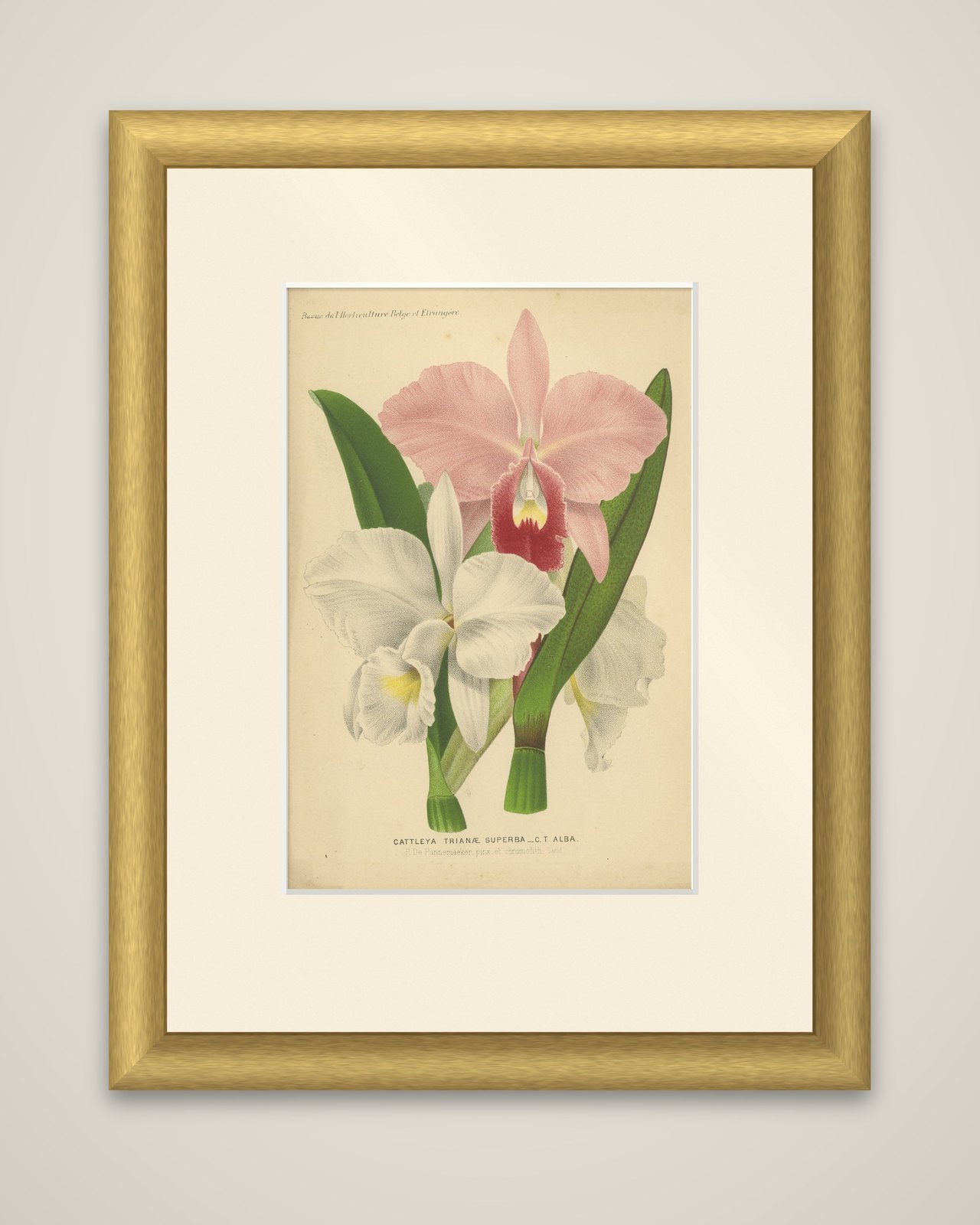


Frame and rooms are illustrations of how the print could look; the description says what is included.
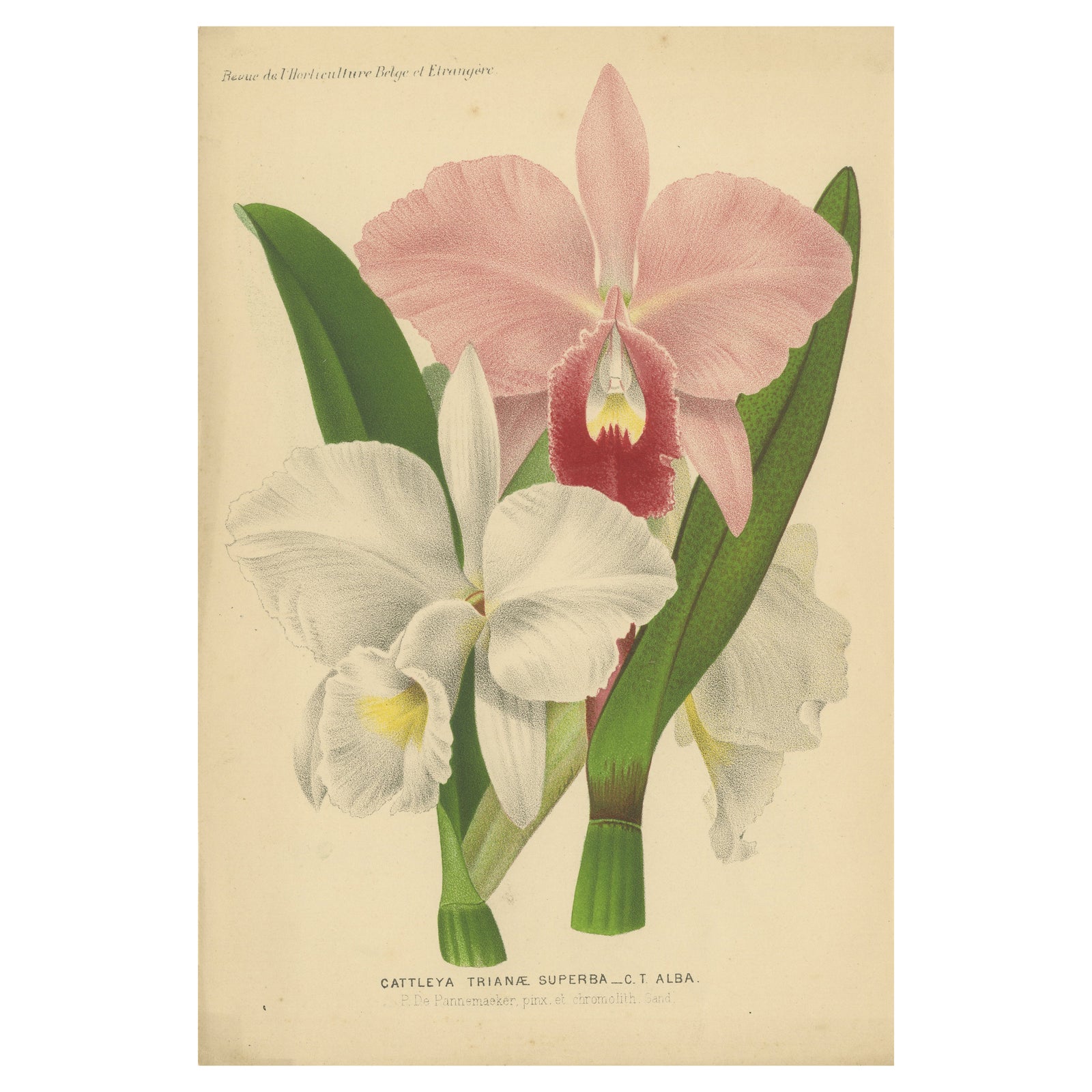
Antique Chromolithographic Print of a Christmas Orchid or May Flower, ca.1880
£155 ($205, €180)
Period original, not a reproduction.
Shipped from the Netherlands, flat, insured and tracked, worldwide. Returns accepted within 14 days.
- Date
- 1880
- Size
- 10.2 × 6.7 in (26 × 17 cm)
- Condition
- Good. General age-related toning. Minor wear, blank verso. Please study image carefully.
- Period
- Late 19th century
- Section
- Botanical
- Reference
- f_26530372
Cattleya Trianae Superba, an original chromolithograph of the Colombian orchid, published around 1880 in the Revue de l'Horticulture Belge et Étrangère. The plate is lettered "Cattleya Trianae Superba - C. T. Alba" below the image, with the credit to P. De Pannemaeker as painter and chromolithographer at Ghent, and the journal name is printed at the upper left.
Two blooms fill the sheet. The upper flower is a pink-petaled cattleya with a deep crimson lip edged with magenta and a yellow throat, set against long glossy green leaves. The lower flower is a pure white variety, with a pale yellow throat and ruffled lip, and a third white flower is partly visible at the right. The colors are laid in soft tints with careful shading in the petal folds.
Cattleya trianae is epiphytic and native to the cloud forests of Colombia, where it grows at about 1,500 to 2,000 meters. It is Colombia's national flower, and takes its name from the nineteenth-century Colombian botanist José Jerónimo Triana. Belgian horticultural journals of the period such as this one illustrated the orchids that were imported into Europe in the nineteenth century.