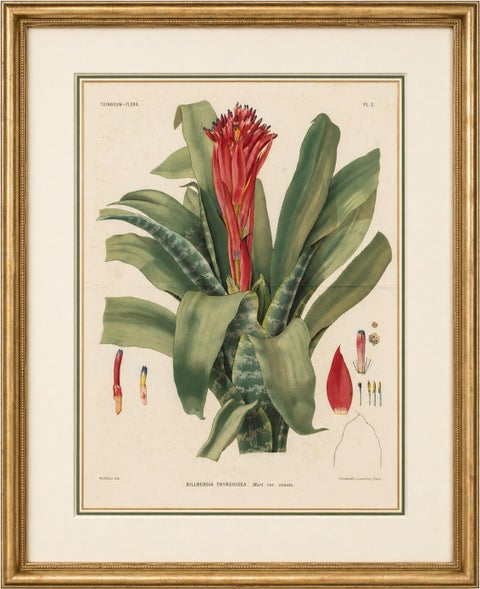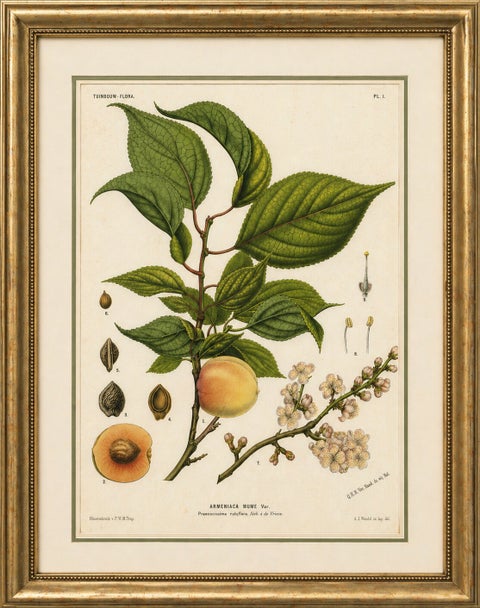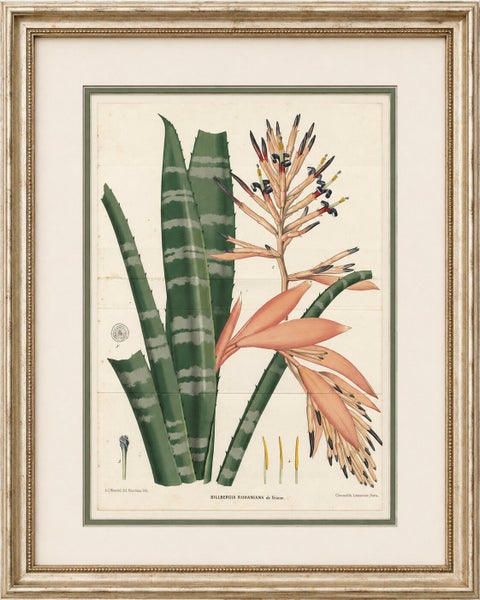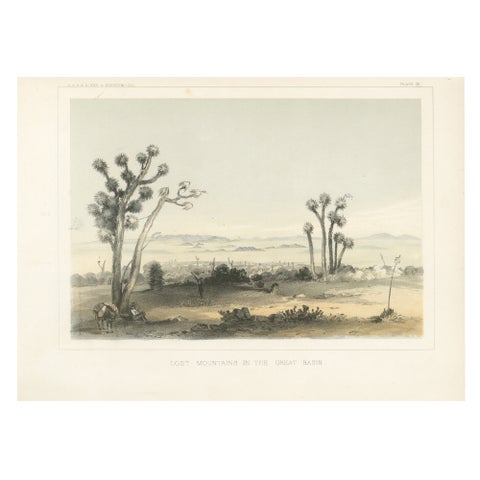
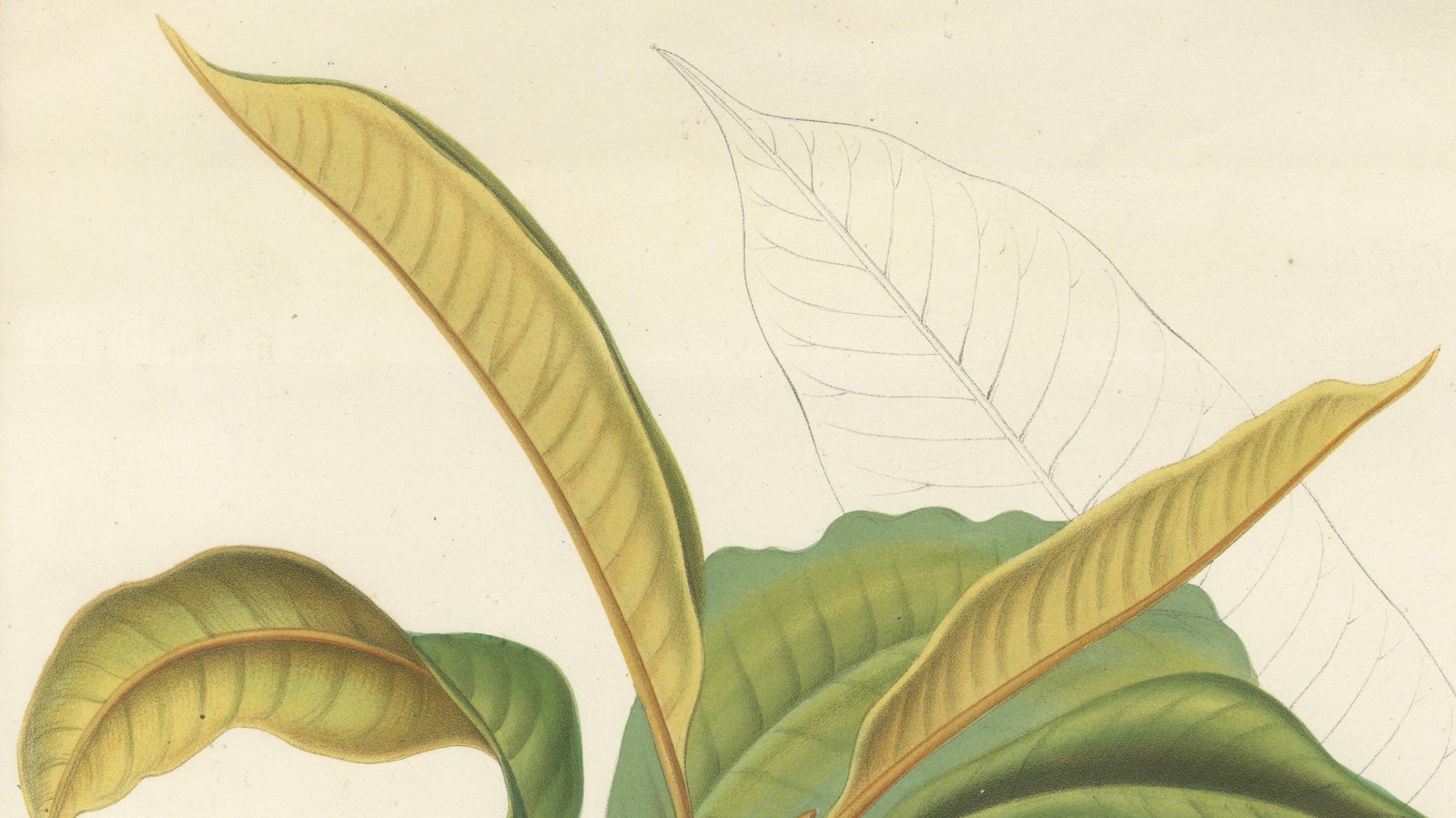
Close-ups
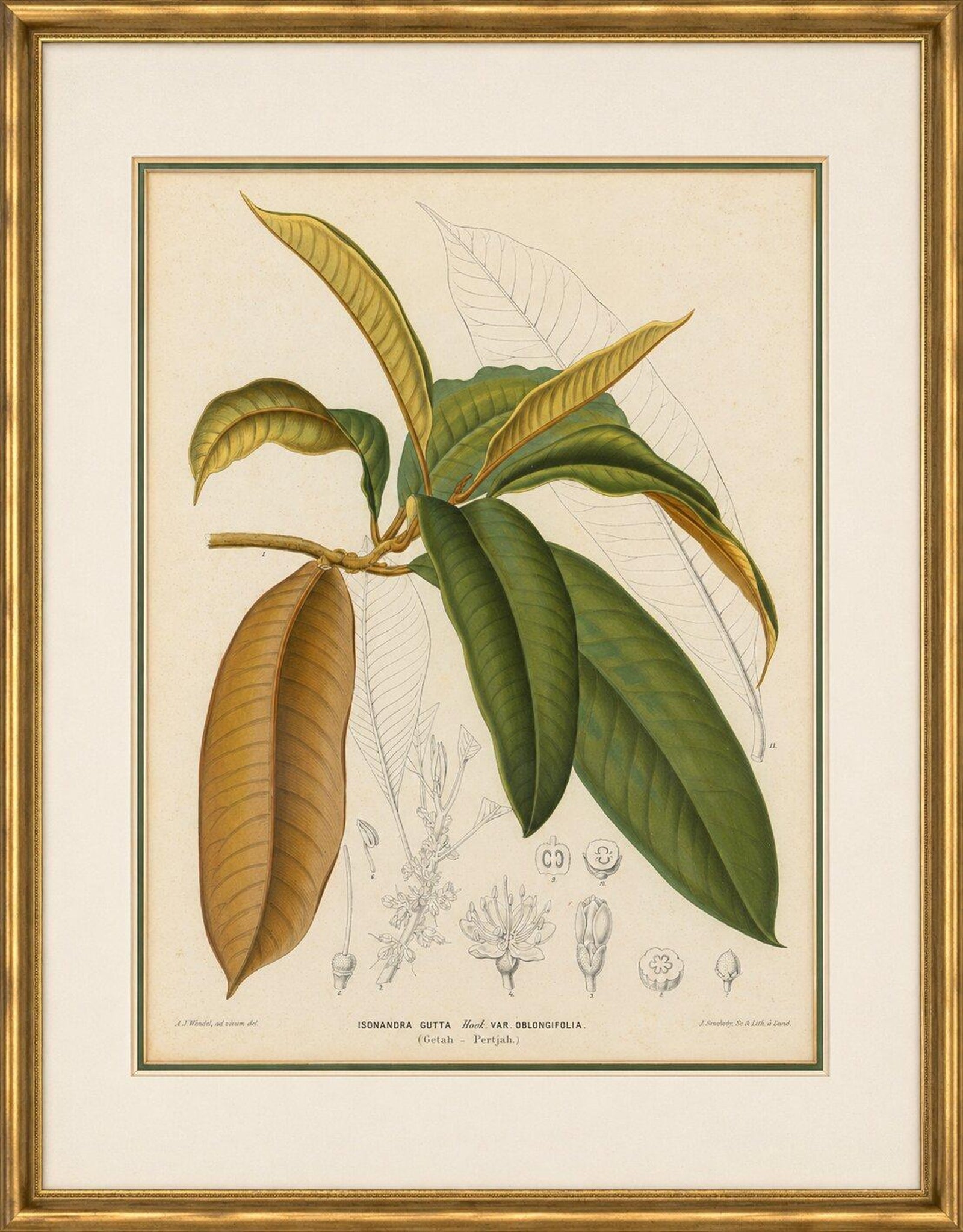
Framed and on the wall
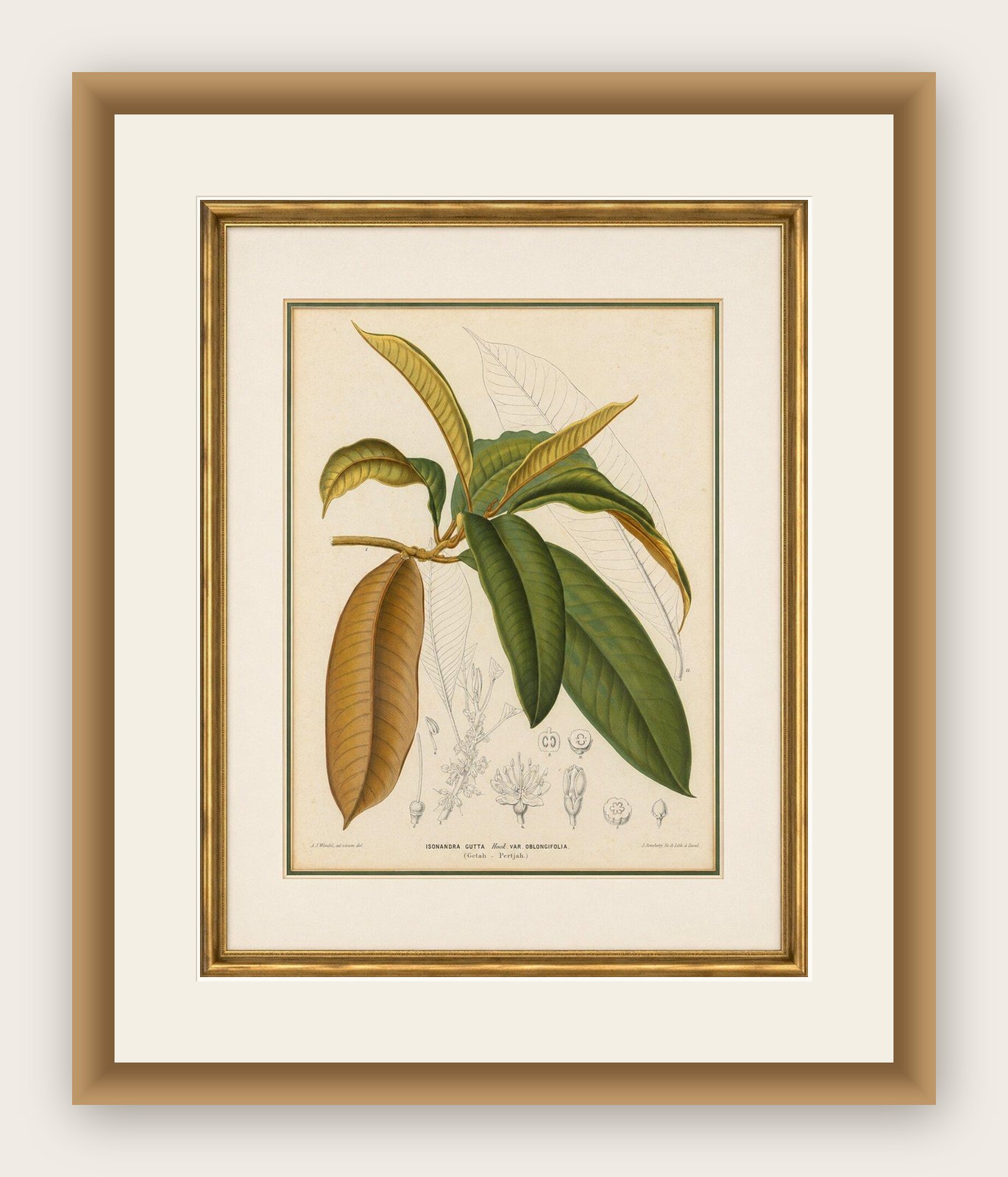
Frame and rooms are illustrations of how the print could look; the description says what is included.
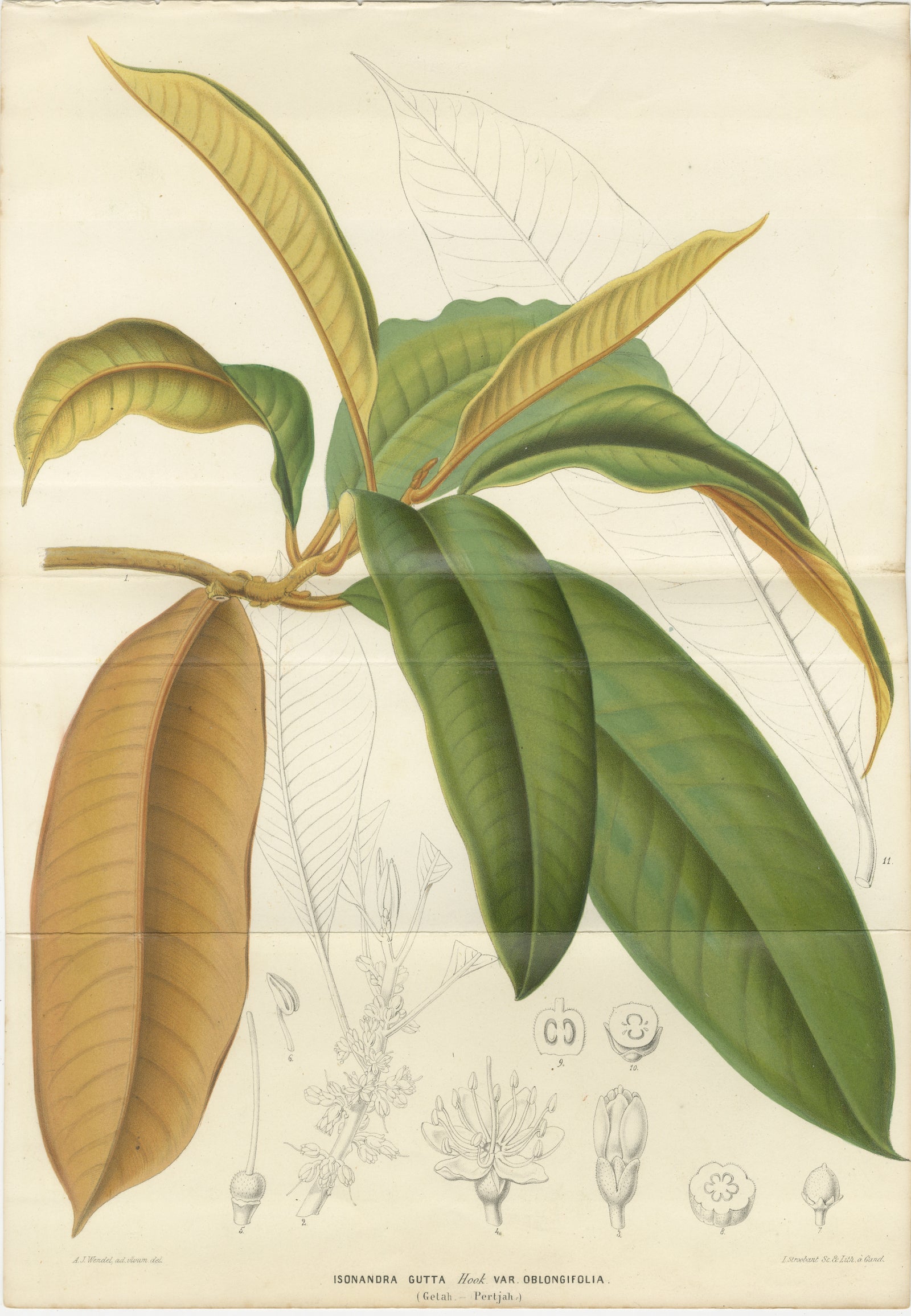
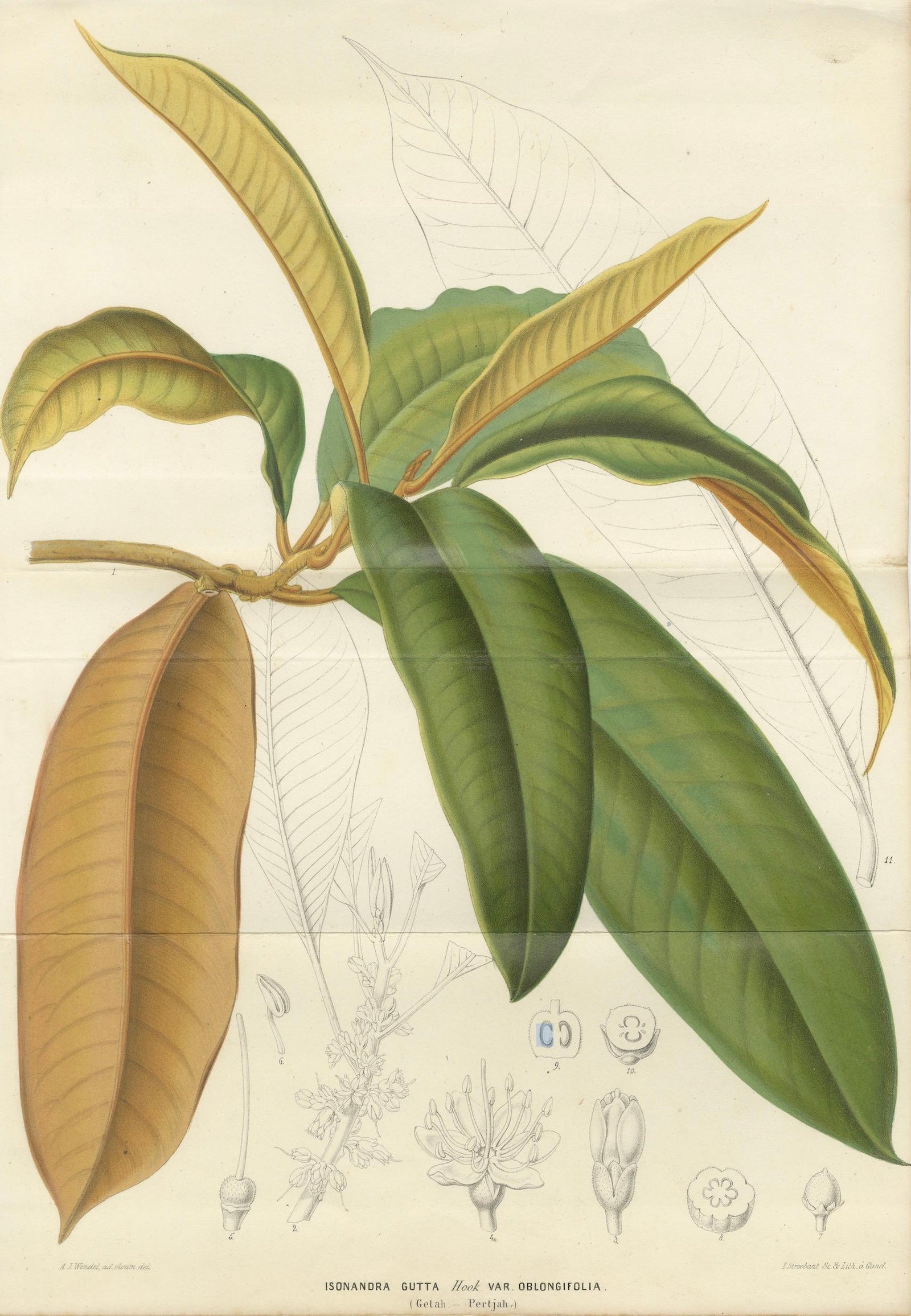
Antique Botanical Lithograph, Isonandra Gutta Percha Plant, de Vriese, 1856
$415 (£315, €369)
Period original, not a reproduction.
Shipped from the Netherlands, flat, insured and tracked, worldwide. Returns accepted within 14 days.
- Date
- 1856
- Size
- 13.9 × 9.7 in (35.3 × 24.7 cm)
- Condition
- Good. Good condition with light age toning and scattered spotting. Original fold lines visible, as issued. Margins intact. Image remains clear with well-preserved detail.
- Period
- Late 19th century
- Section
- Botanical
- Reference
- f_49843972
Antique Botanical Lithograph, Isonandra Gutta Percha Plant, de Vriese, 1856
Description:
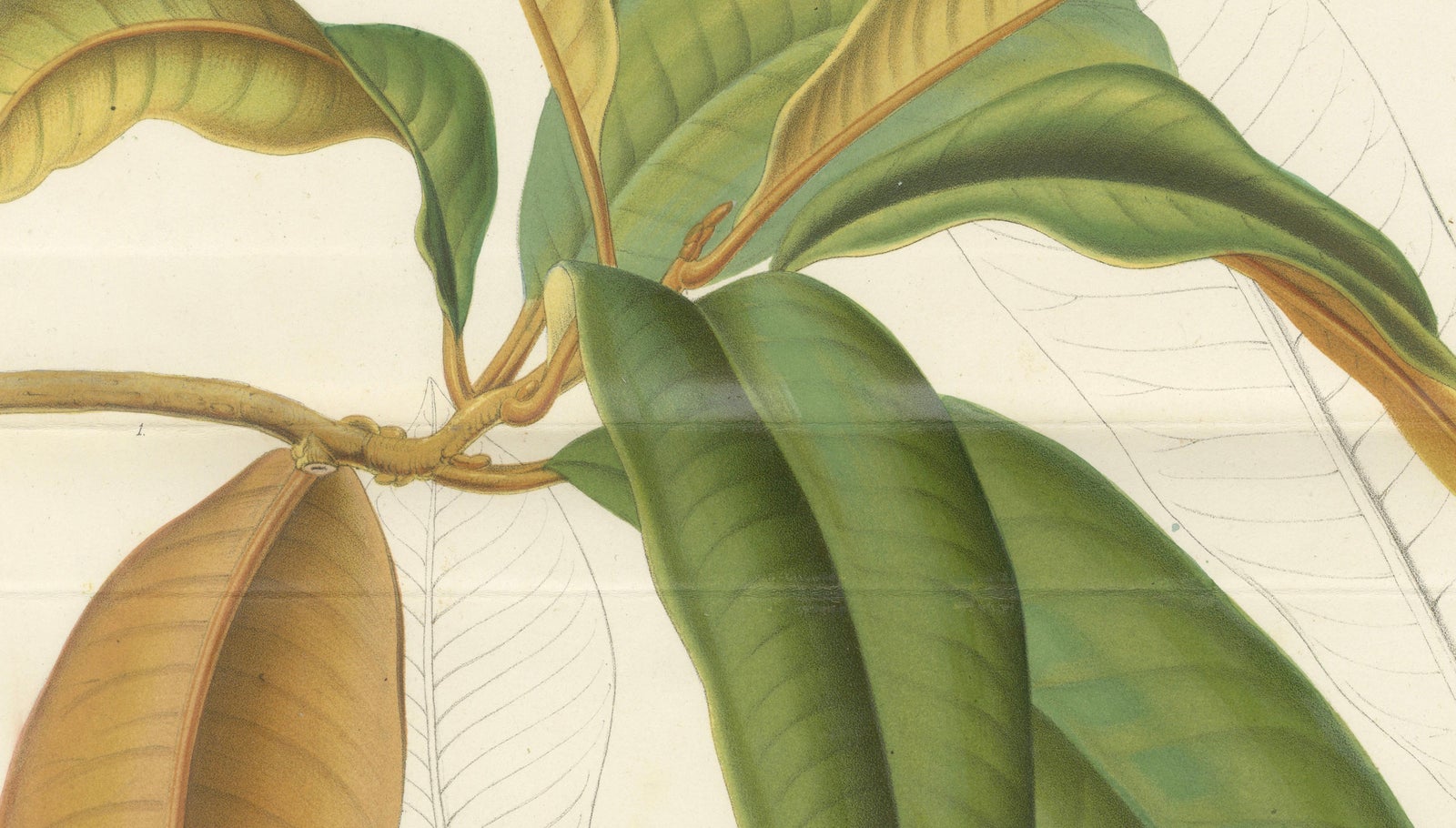
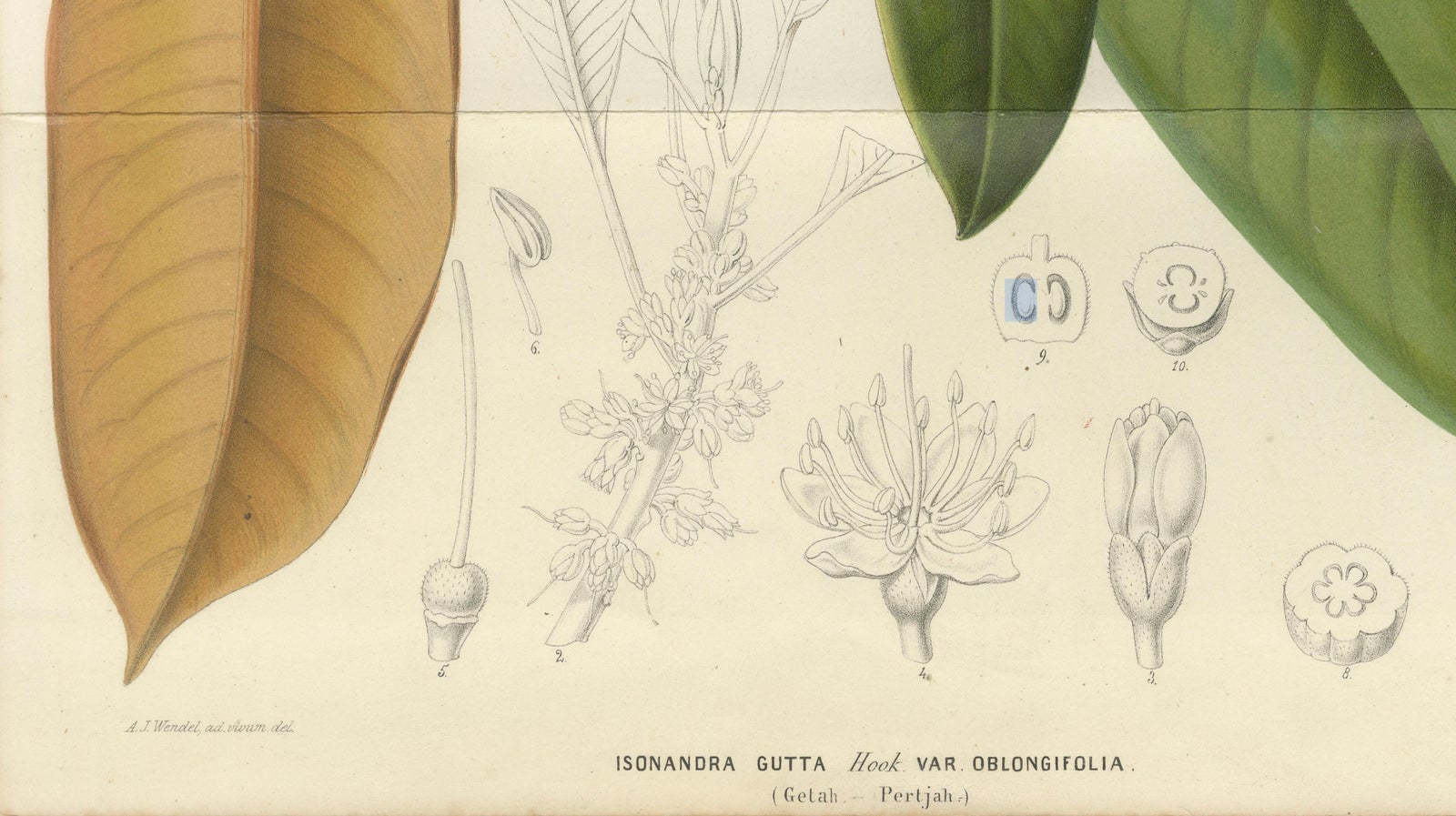
A rare and scientifically important mid-19th century botanical chromolithograph depicting Isonandra gutta (gutta-percha tree), here shown as var. oblongifolia. This plate originates from the Dutch horticultural publication Tuinbouw-Flora van Nederland en zijne overzeesche bezittingen, issued in 1856 under the direction of botanist Willem Hendrik de Vriese.
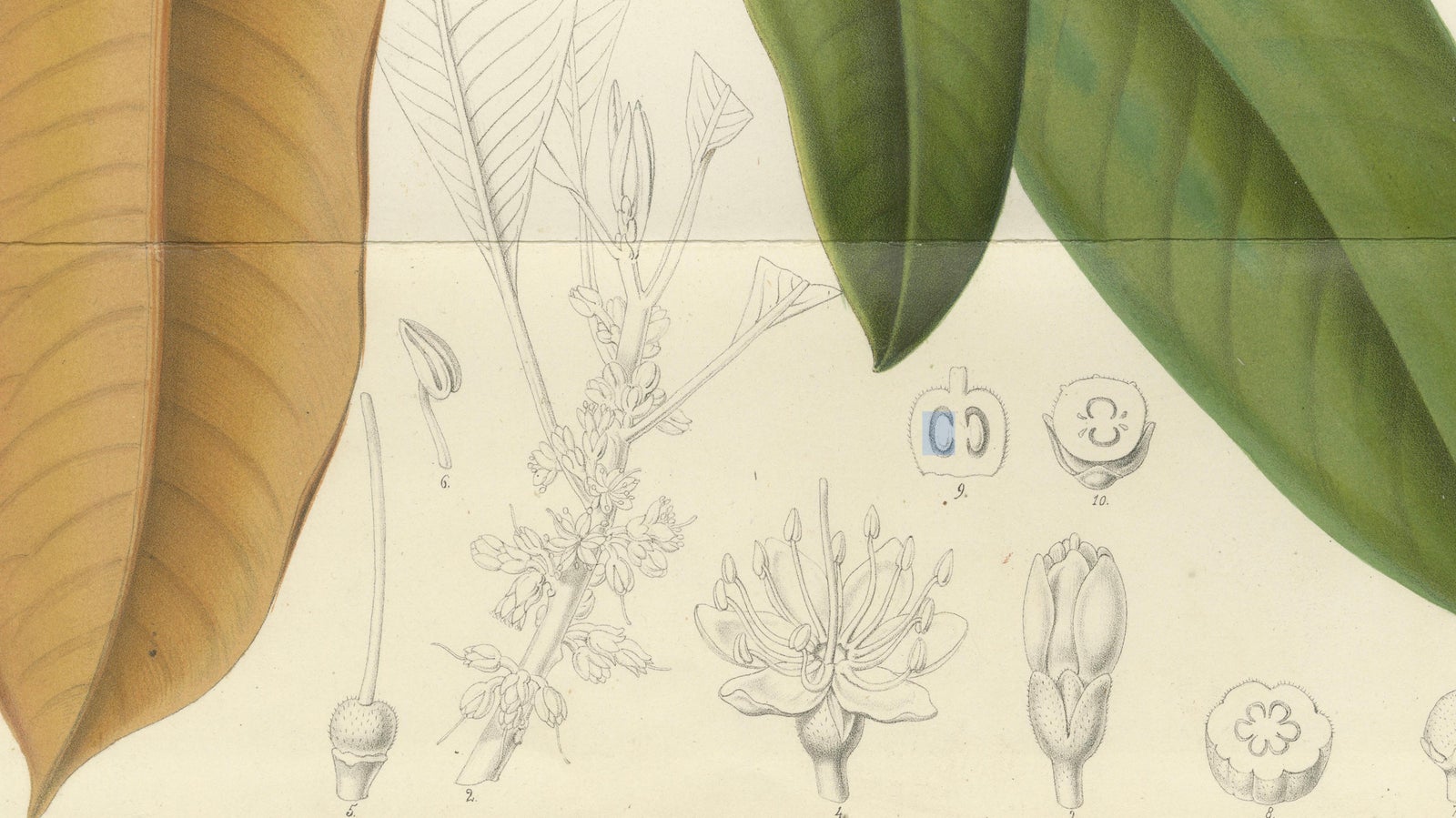
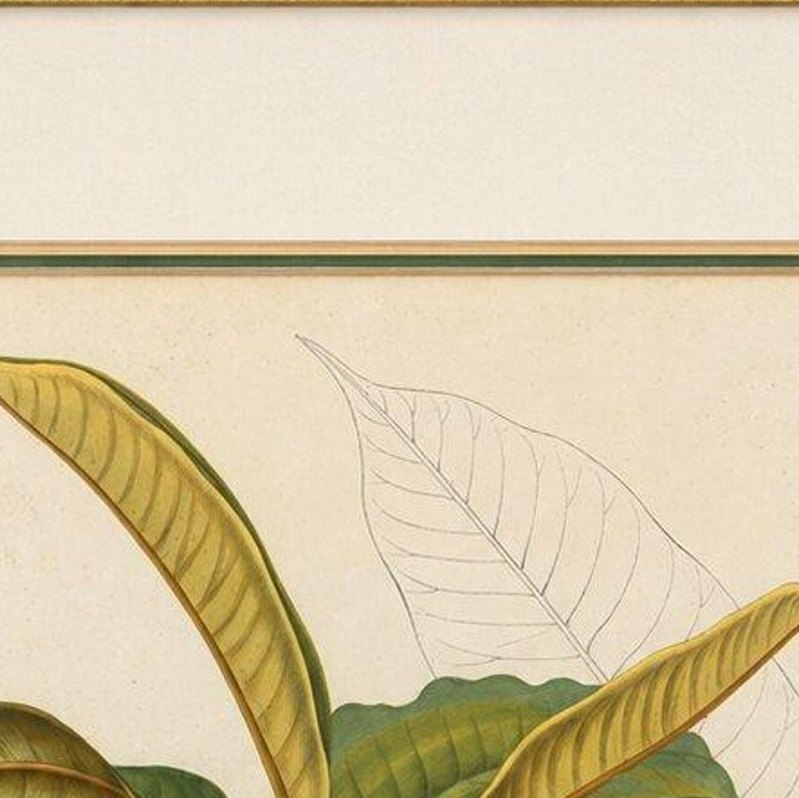
The composition presents a refined study of the plant’s elongated, leathery leaves, rendered in a subtle palette ranging from deep green to warm ochre tones, capturing both mature and aging foliage. The arrangement is both aesthetically balanced and scientifically informative, with additional detailed line studies below illustrating the plant’s flowers, fruit, and internal structures. The combination of full-color lithography and delicate outline drawings reflects the dual purpose of the work: decorative presentation and botanical documentation.
Isonandra gutta was of major economic importance in the 19th century as the primary source of gutta-percha, a natural latex widely used for insulating underwater telegraph cables and various industrial applications. Its inclusion in this work highlights the Dutch interest in economically valuable plants from Southeast Asia and their colonial territories.
Lithographed by Adolf Wendel and printed by S. & J. Lankhout in The Hague, this piece exemplifies the high quality of European botanical chromolithography of the period. Its restrained yet elegant color scheme and clean composition make it particularly suitable for refined interiors.
This print is highly desirable for collectors of botanical art, natural history, and colonial economic botany. Its subject matter and historical relevance make it especially compelling as both a decorative and educational piece.
Condition report:
Good condition with light age toning and scattered spotting. Original fold lines visible, as issued. Margins intact. Image remains clear with well-preserved detail.
Framing tips:
Best displayed in a dark wood or ebonized frame with a wide ivory mat to enhance contrast and highlight the subtle color transitions. For a more contemporary presentation, a slim black frame with a clean white mat offers a refined and minimal look.
Special note:
This is an original antique engraving, not a reproduction. All items we offer are authentic period works of art over 100 years old. The print is sold unframed; any framed images are shown for presentation and interior inspiration only and may not always be on scale with the original.
Technique: Chromolithograph
Maker: Adolf Wendel, after Willem Hendrik de Vriese, The Hague / Netherlands, 1856