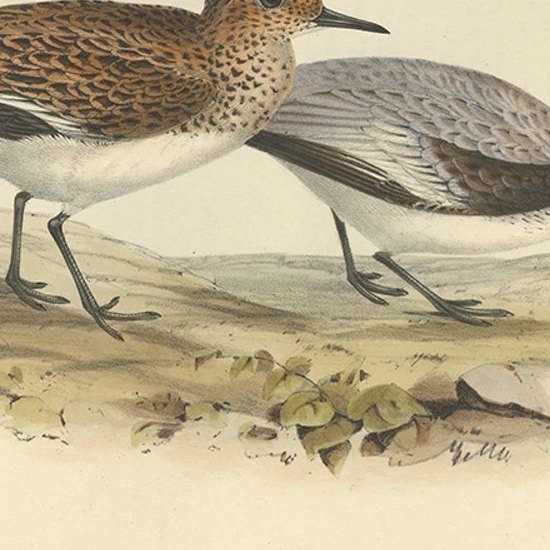
Close-ups
Framed and on the wall
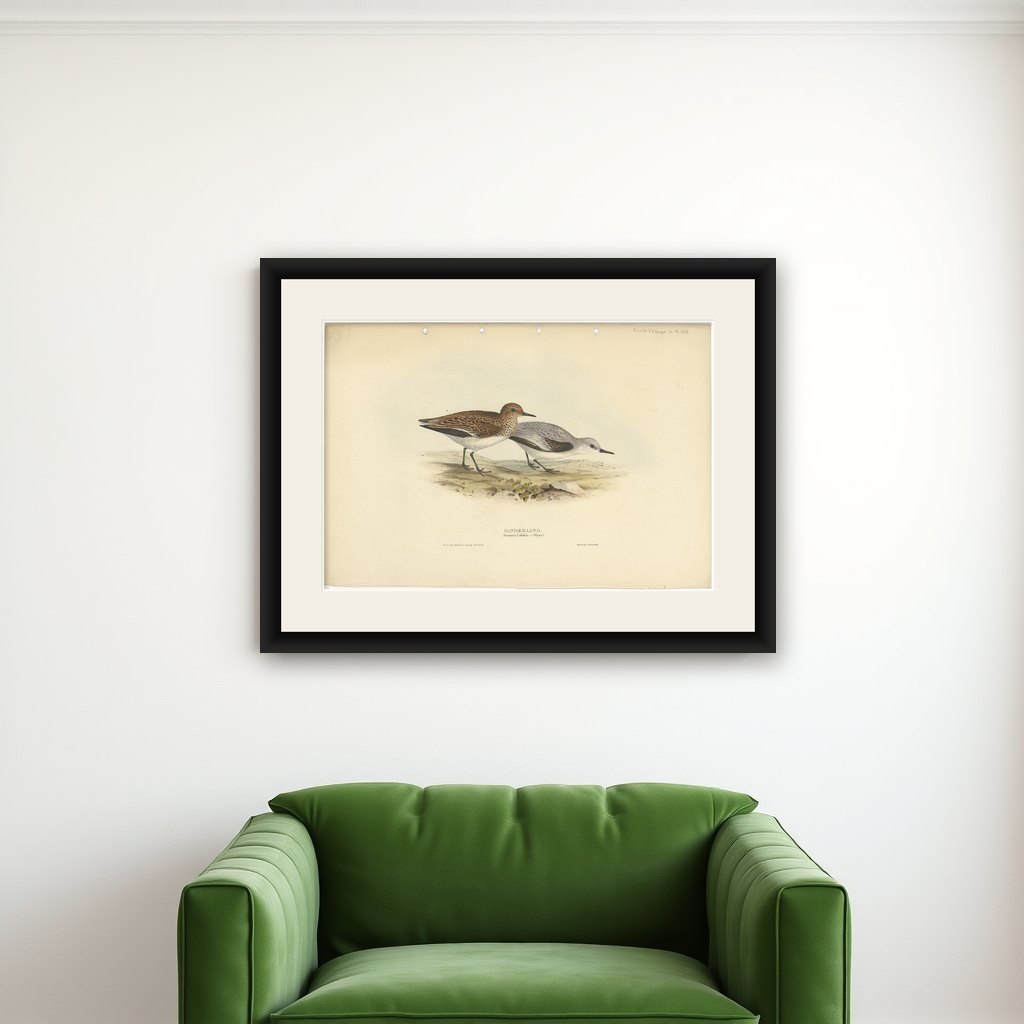

Frame and rooms are illustrations of how the print could look; the description says what is included.
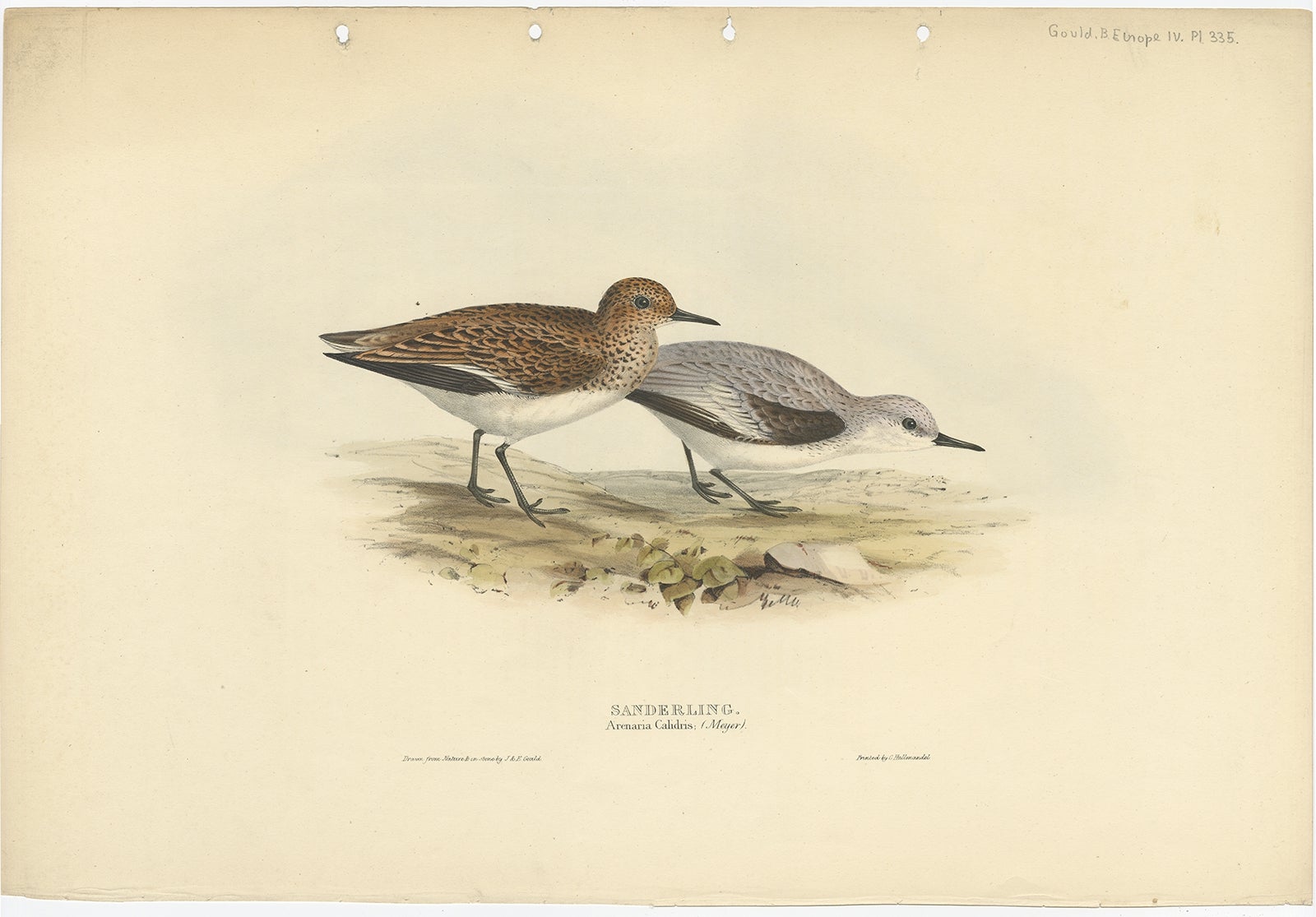
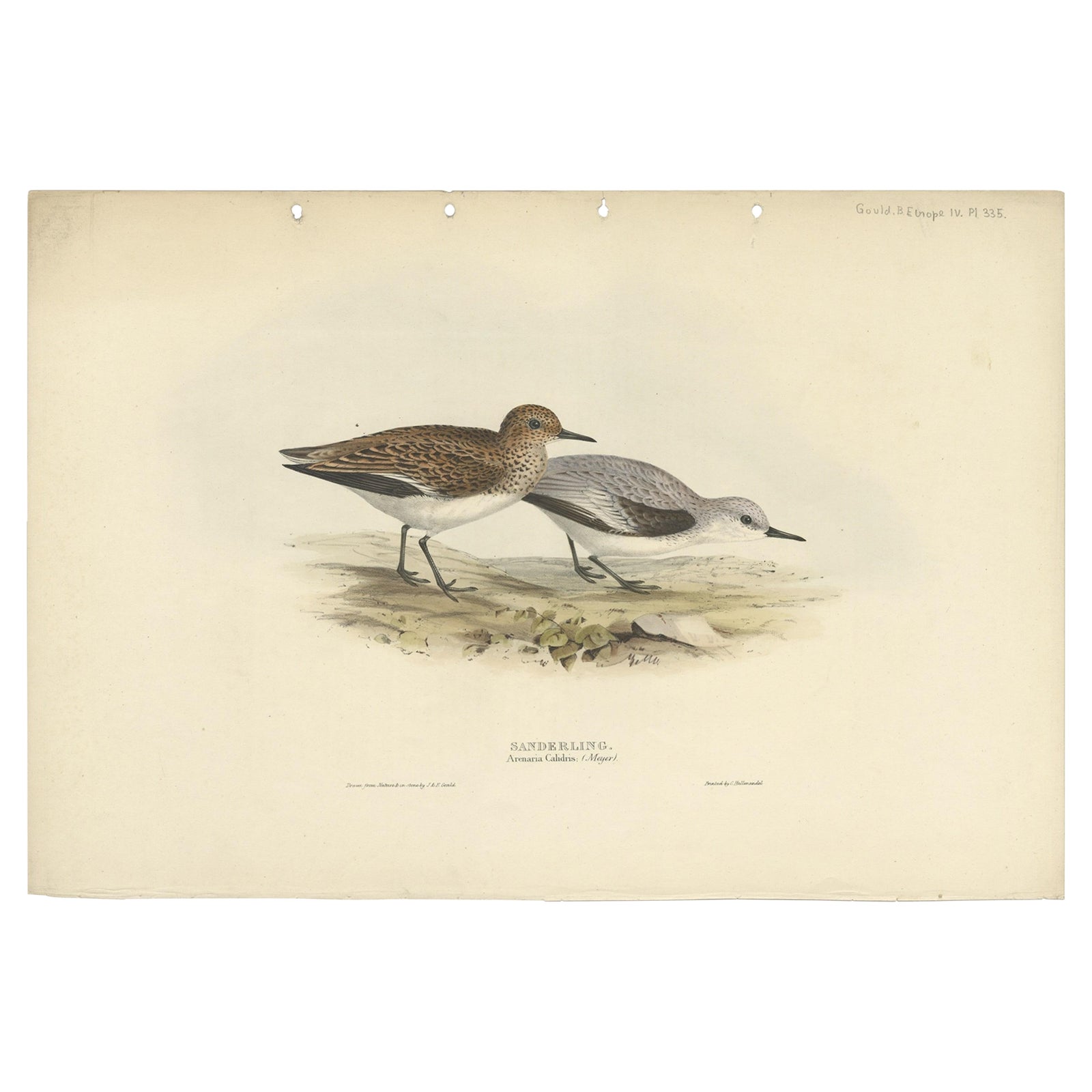
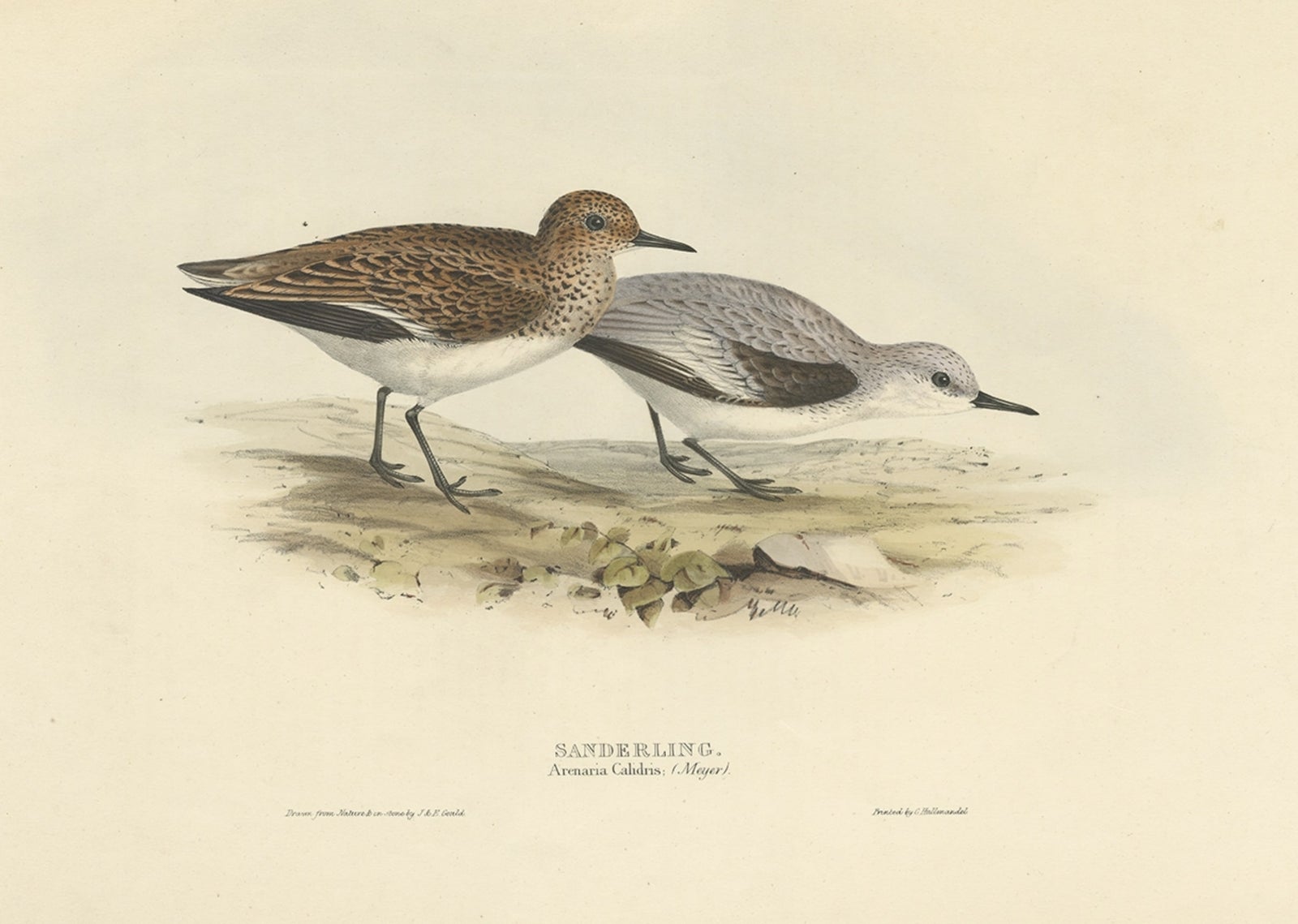
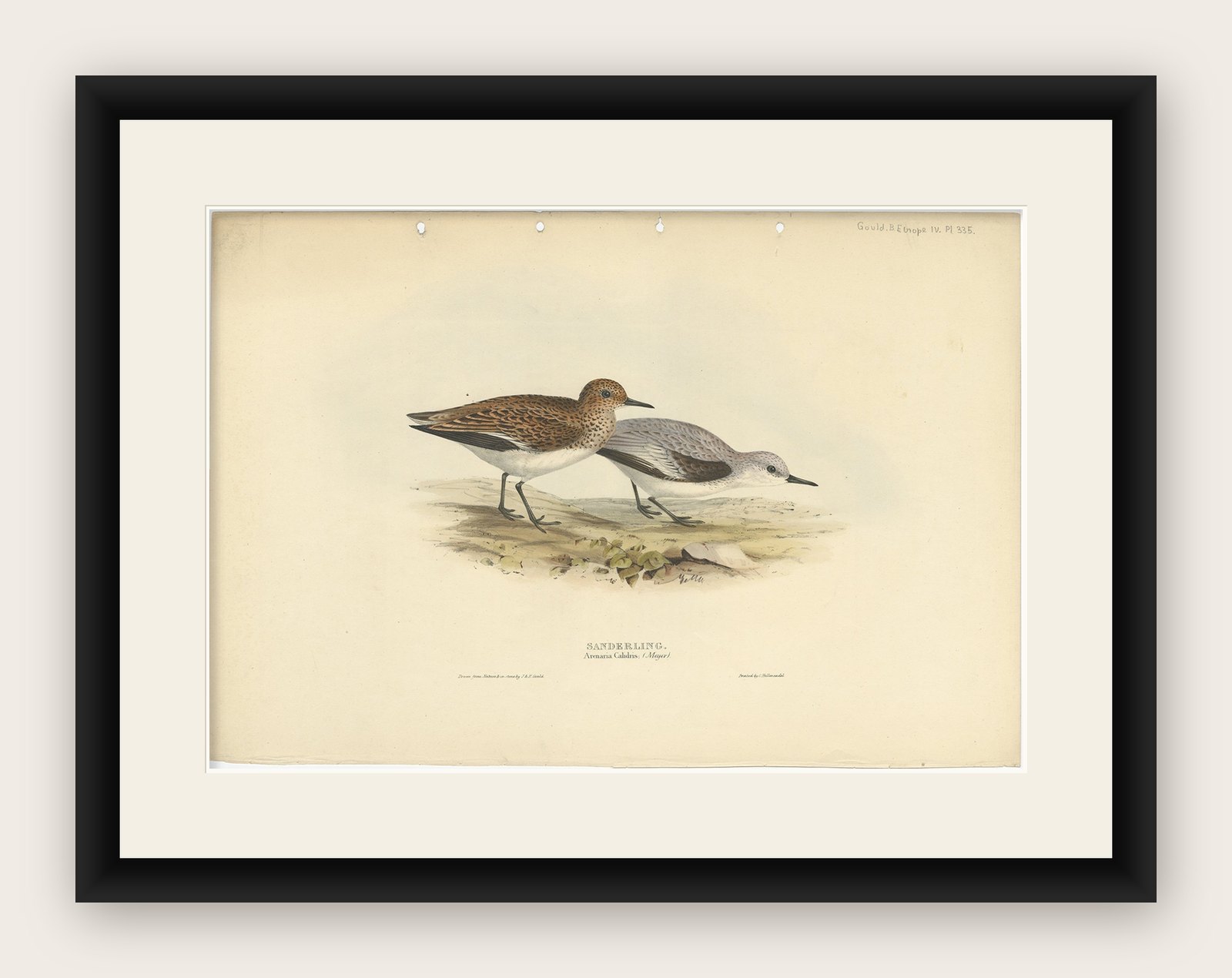
Antique Bird Print of The Sanderling by Gould, 1832
$950 (£720, €850)
Period original, not a reproduction.
Shipped from the Netherlands, flat, insured and tracked, worldwide. Returns accepted within 14 days.
- Date
- 1832
- Size
- 14.6 × 21.5 in (37 × 54.5 cm)
- Condition
- Very good, general age-related toning. Holes outside image and some tiny marginal tears. Please study image carefully.
- Period
- Early 19th century
- Artist or book
- John Gould
- Section
- Birds
- Reference
- f_26242492
Antique bird print titled 'Sanderlingl'. Old bird print depicting the sanderling. This print originates from 'Birds of Europe' by J. Gould (1832-1837).
The sanderling (Calidris alba) is a small wading bird. The name derives from Old English sand-yrðling, "sand-ploughman". The genus name is from Ancient Greek kalidris or skalidris, a term used by Aristotle for some grey-coloured waterside birds. The specific, alba, is Latin for "white".
It is a circumpolar Arctic breeder, and is a long-distance migrant, wintering south to South America, South Europe, Africa, and Australia. It is highly gregarious in winter, sometimes forming large flocks on coastal mudflats or sandy beaches.
Artists and Engravers: John Gould (1804 - 1881) was an English ornithologist and bird artist.
We also offer thousands of antique prints covering fields of interest as diverse as architecture, natural history, religion, ethnology and many more. Antique prints have long been appreciated for both their aesthetic and investment value. They were the product of engraved, etched or lithographed plates. These plates were handmade out of wood or metal, which required an incredible level of skill, patience and craftsmanship. Whether you have a house with Victorian furniture or more contemporary decor an old engraving can enhance your living space.