Close-ups
Framed and on the wall

Frame and rooms are illustrations of how the print could look; the description says what is included.
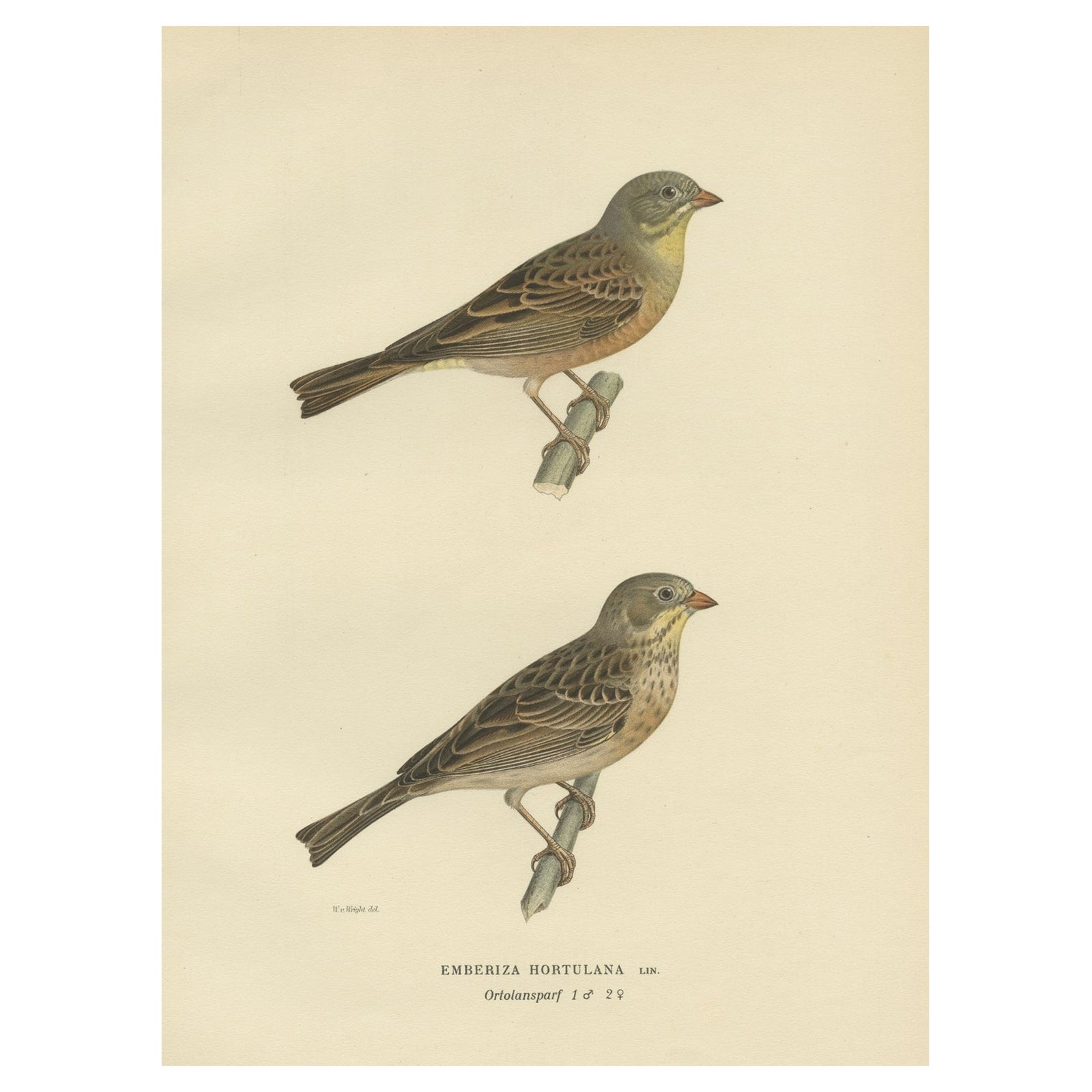
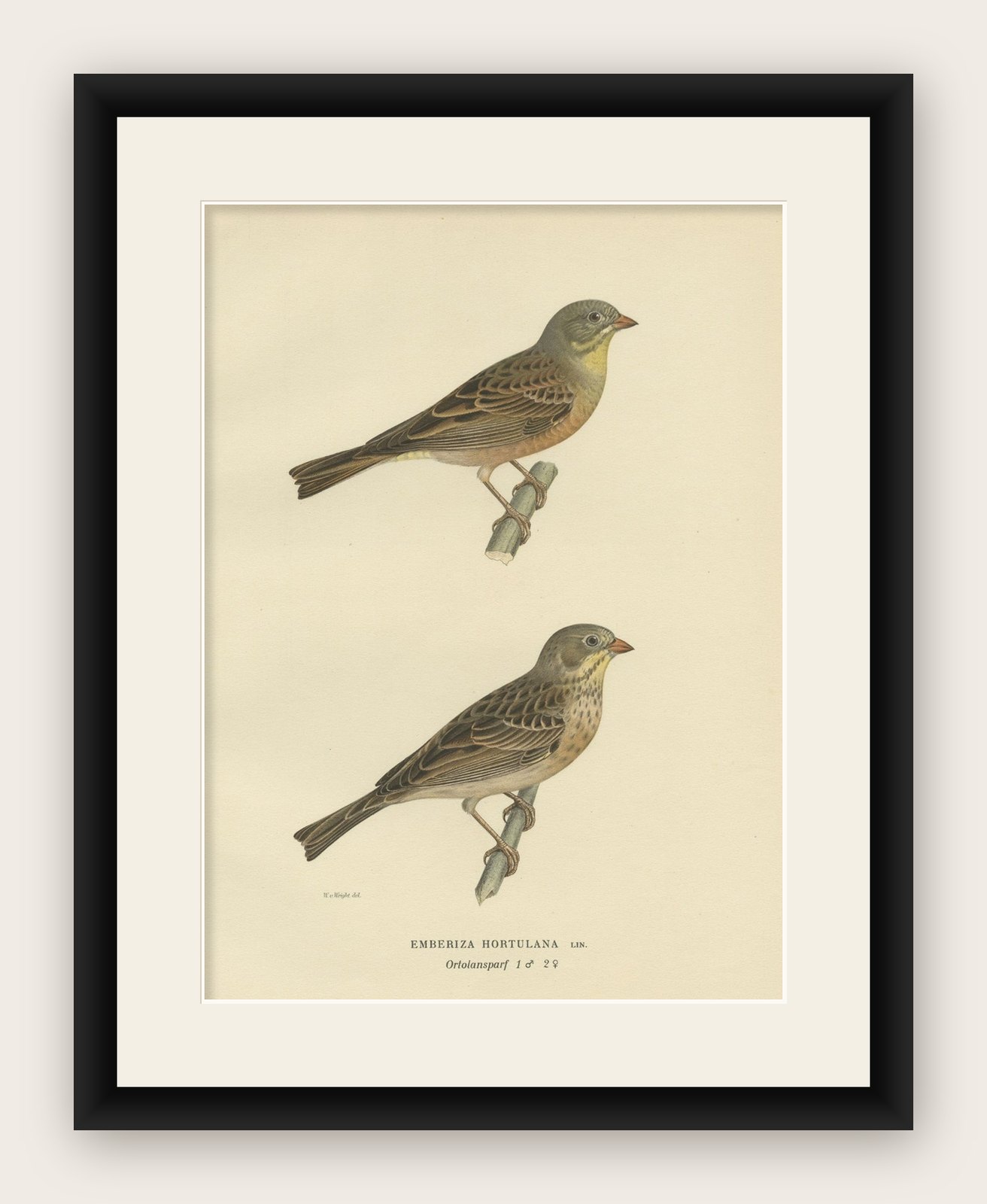
Antique Bird Print of The Ortolan Bunting, a French Delicacy, 1927
£120 ($155, €140)
Period original, not a reproduction.
Shipped from the Netherlands, flat, insured and tracked, worldwide. Returns accepted within 14 days.
- Date
- 1927
- Size
- 14.8 × 11 in (37.5 × 28 cm)
- Condition
- Very good, general age-related toning. Please study image carefully.
- Period
- 20th century
- Artist or book
- The von Wright brothers
- Section
- Birds
- Reference
- f_26456312
What the condition grades mean
- Excellent
- Bright and clean, with no faults worth mentioning.
- Very good
- Only light signs of age, such as faint toning.
- Good
- Normal signs of age for a sheet of this period: toning, some foxing, small marks or neat old repairs.
- Fair
- Clear faults such as staining, tears or repairs, priced to match.
Every fault we see is written in the condition note, and the whole sheet is shown uncropped in the photos.
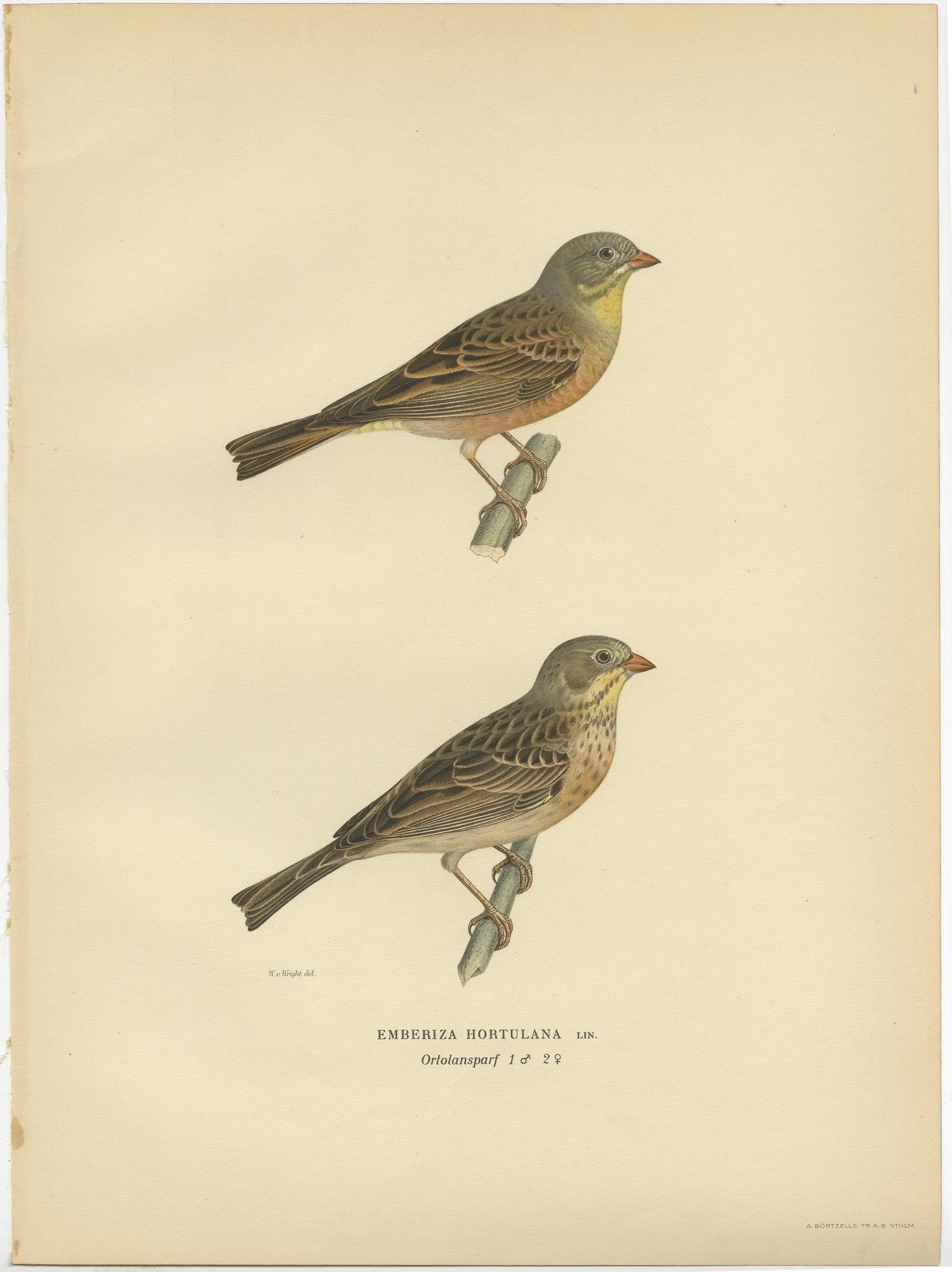
Antique bird print titled 'Emberiza Hortulana'.
Old bird print depicting the Ortolan bunting. This print orginates from 'Svenska Foglar Efter Naturen Och Pa Stenritade' by Magnus von Wright.
The ortolan (Emberiza hortulana), also called ortolan bunting, is a Eurasian bird in the bunting family Emberizidae, a passerine family now separated by most modern scholars from the finches, Fringillidae. The genus name Emberiza is from Alemannic German Embritz, a bunting. The specific hortulana is from the Italian name for this bird, ortolana. The English ortolan is derived from Middle French hortolan, "gardener".
The ortolan is served in French cuisine, typically cooked and eaten whole. Traditionally diners cover their heads with their napkin, or a towel, while eating the delicacy. The bird is so widely used that its French populations dropped dangerously low, leading to laws restricting its use in 1999. In September 2007, the French government announced its intent to enforce long-ignored laws protecting the bird.
Artists and Engravers: Printed in Stockholm. Magnus von Wright (1805 - 68) was the first taxidermist working with the vertebrate collections of Helsinki University. Starting out as a taxidermist in the 1820's, he stuffed birds for Societas pro Flora et Fauna Fennica, the oldest scientific society in Finland, and in 1845, became taxidermist at the university's zoological museum. Von Wright made several study journeys to Stockholm and St. Petersburg, and even wrote a short manual on how mount birds. Though a skilful taxidermist, his reputation, like that of his two brothers, Wilhelm and Ferdinand, rests on his skill as a zoological illustrator. In 1859 he published the first handbook on Finnish birds.
We also offer thousands of antique prints covering fields of interest as diverse as architecture, natural history, religion, ethnology and many more. Antique prints have long been appreciated for both their aesthetic and investment value. They were the product of engraved, etched or lithographed plates. These plates were handmade out of wood or metal, which required an incredible level of skill, patience and craftsmanship. Whether you have a house with Victorian furniture or more contemporary decor an old engraving can enhance your living space.