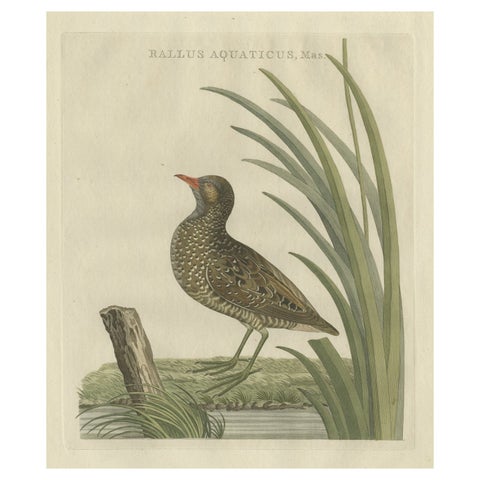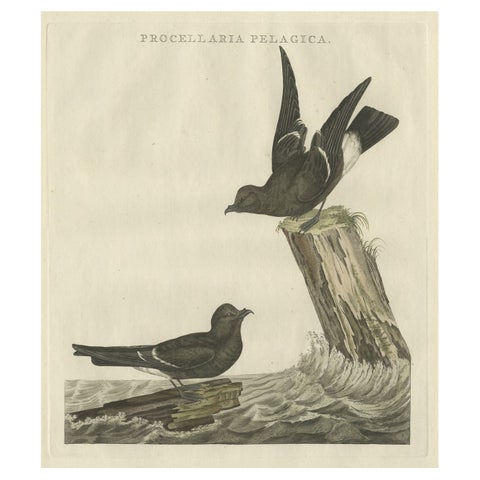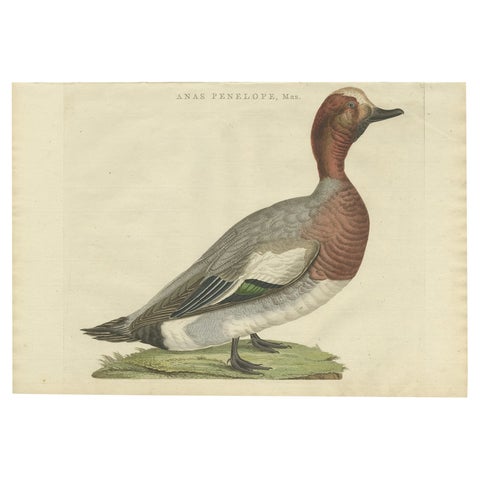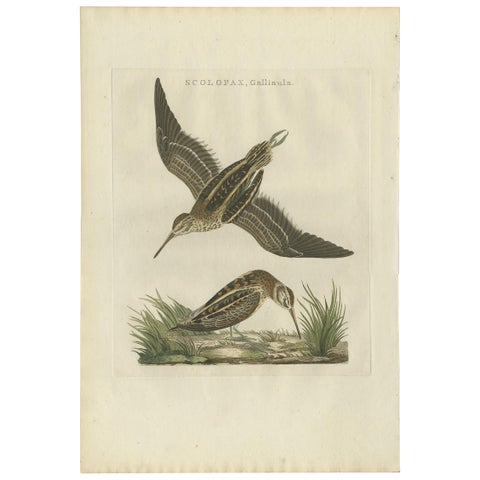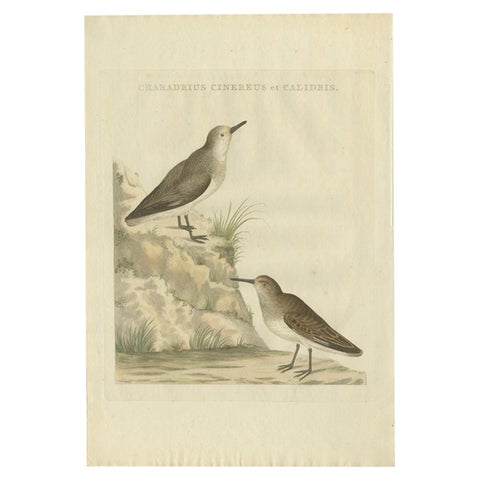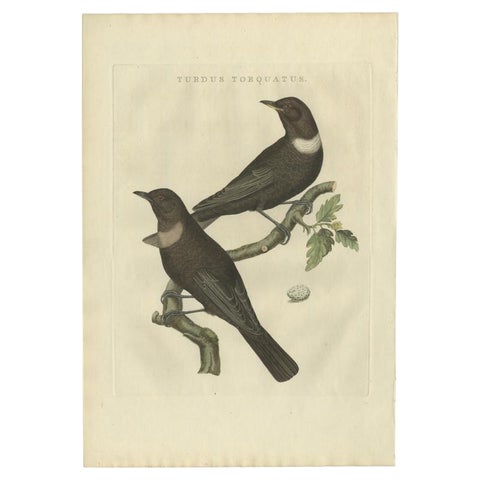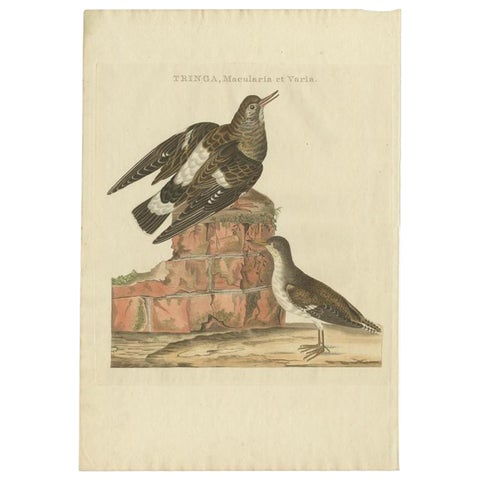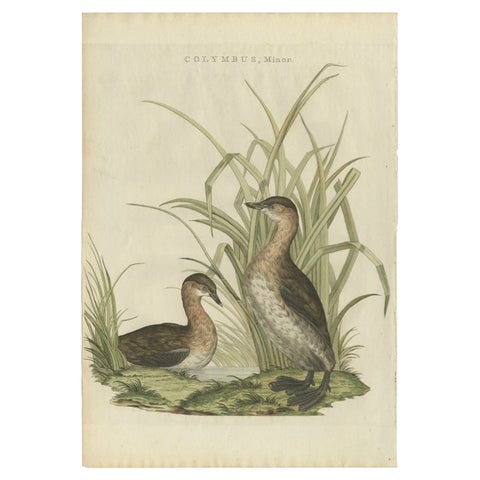
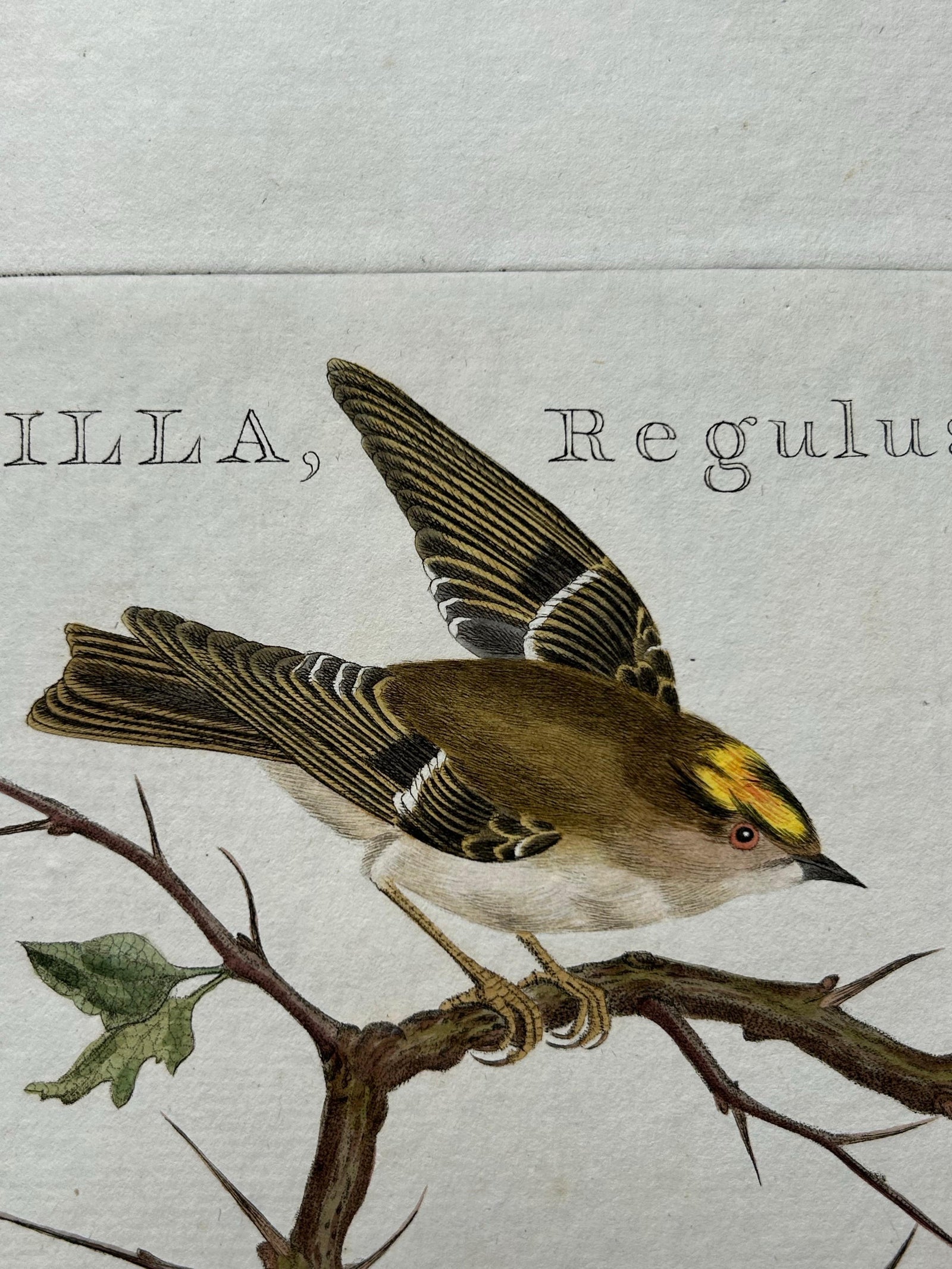
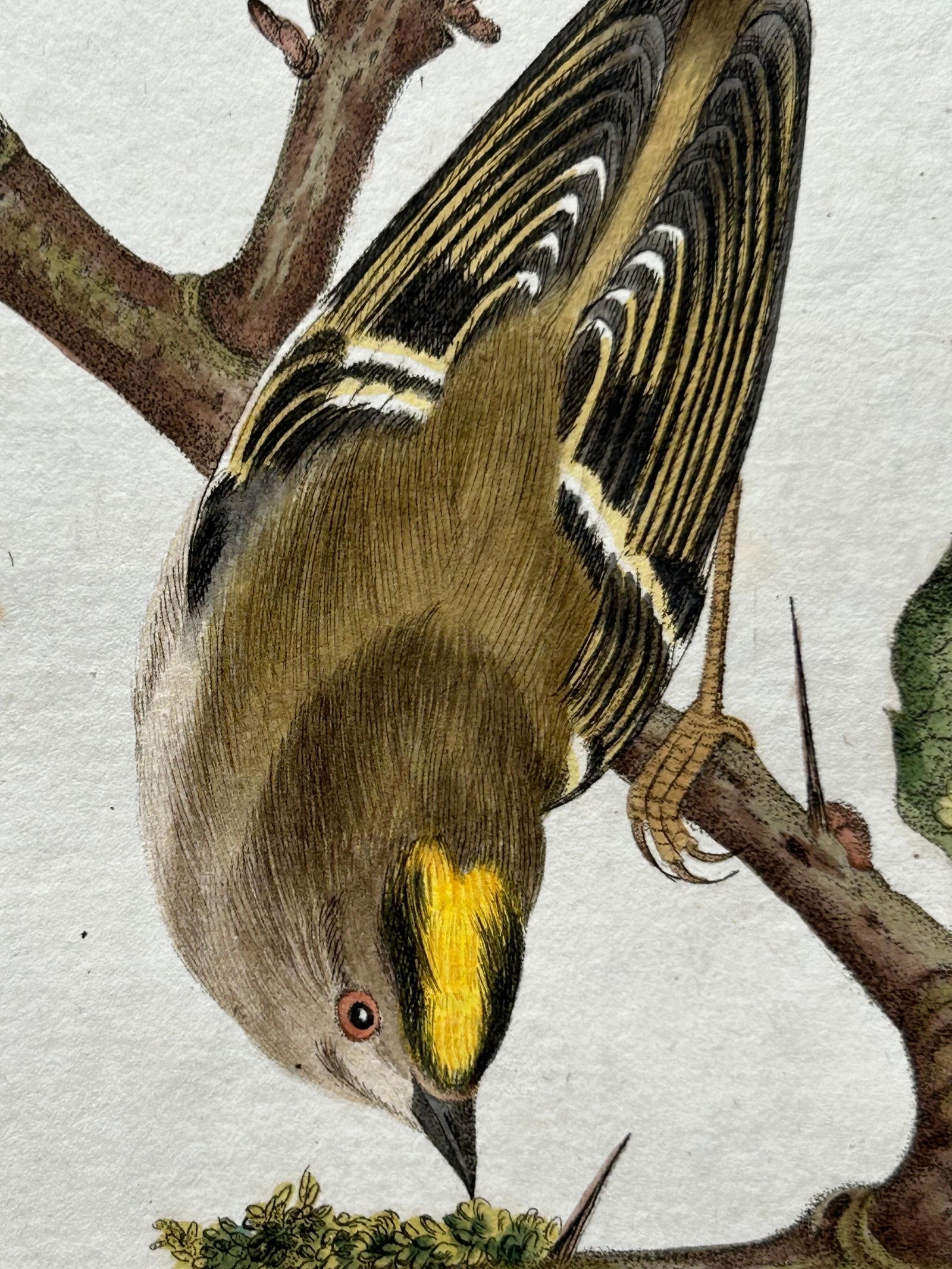
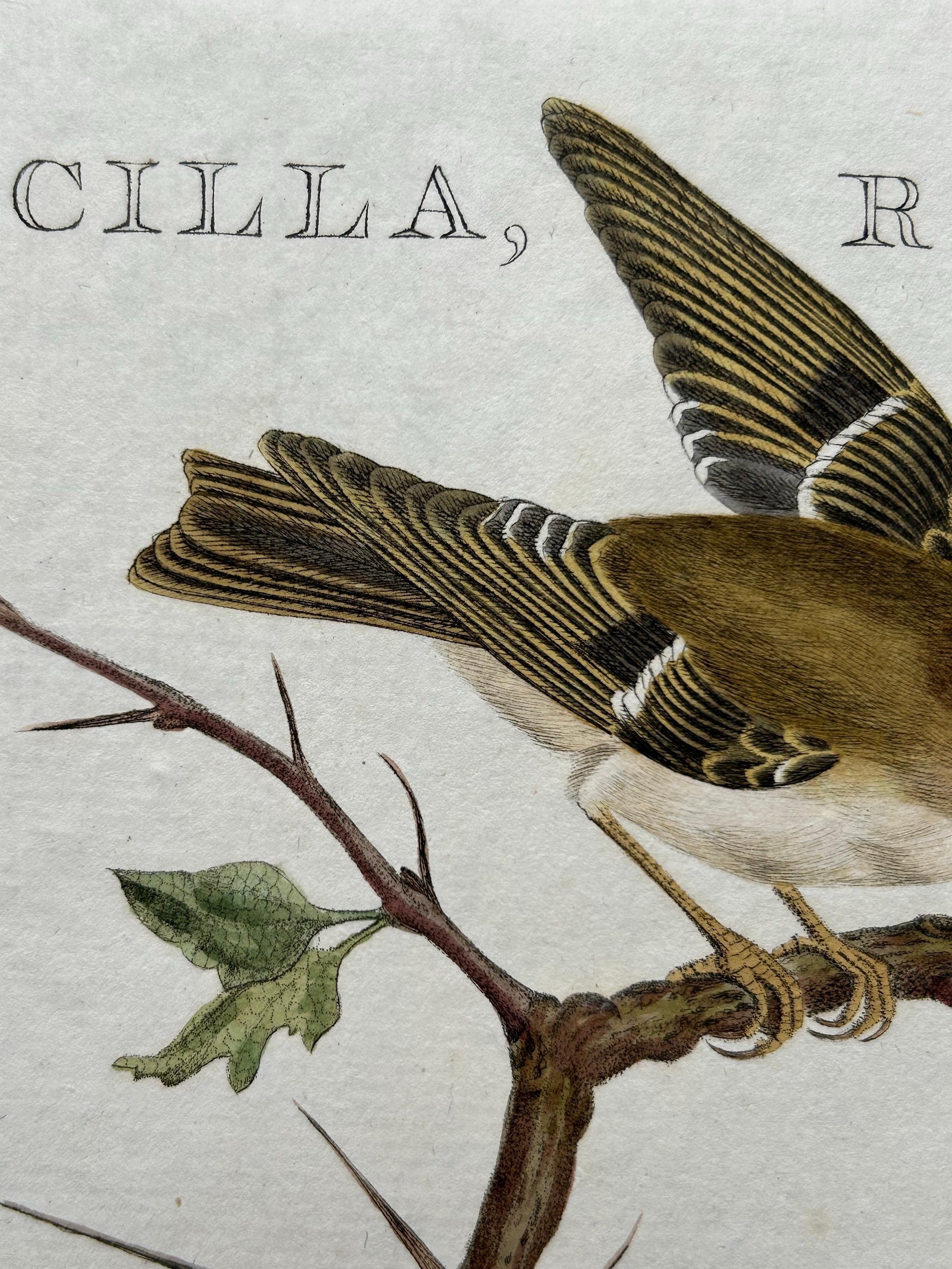
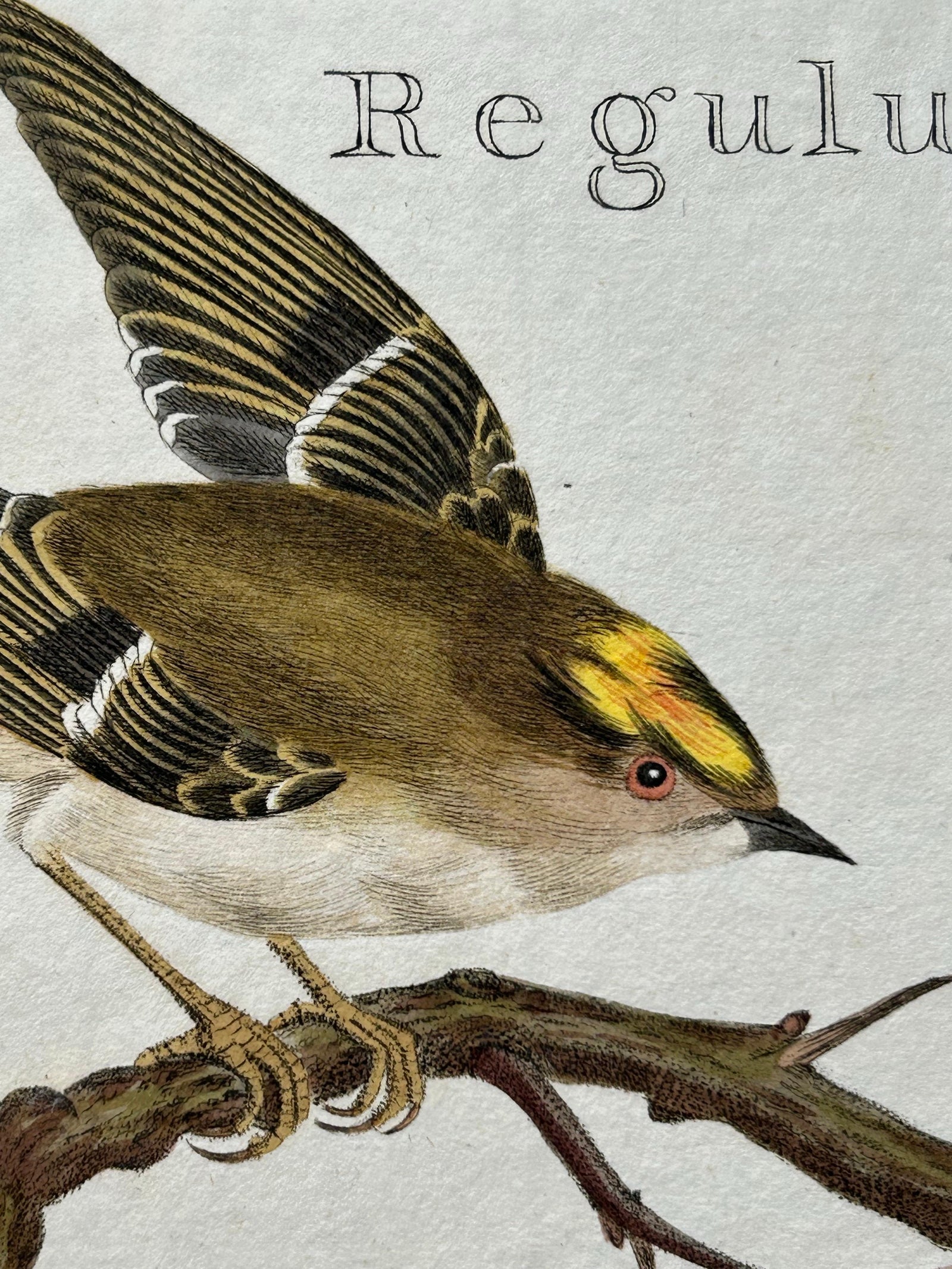
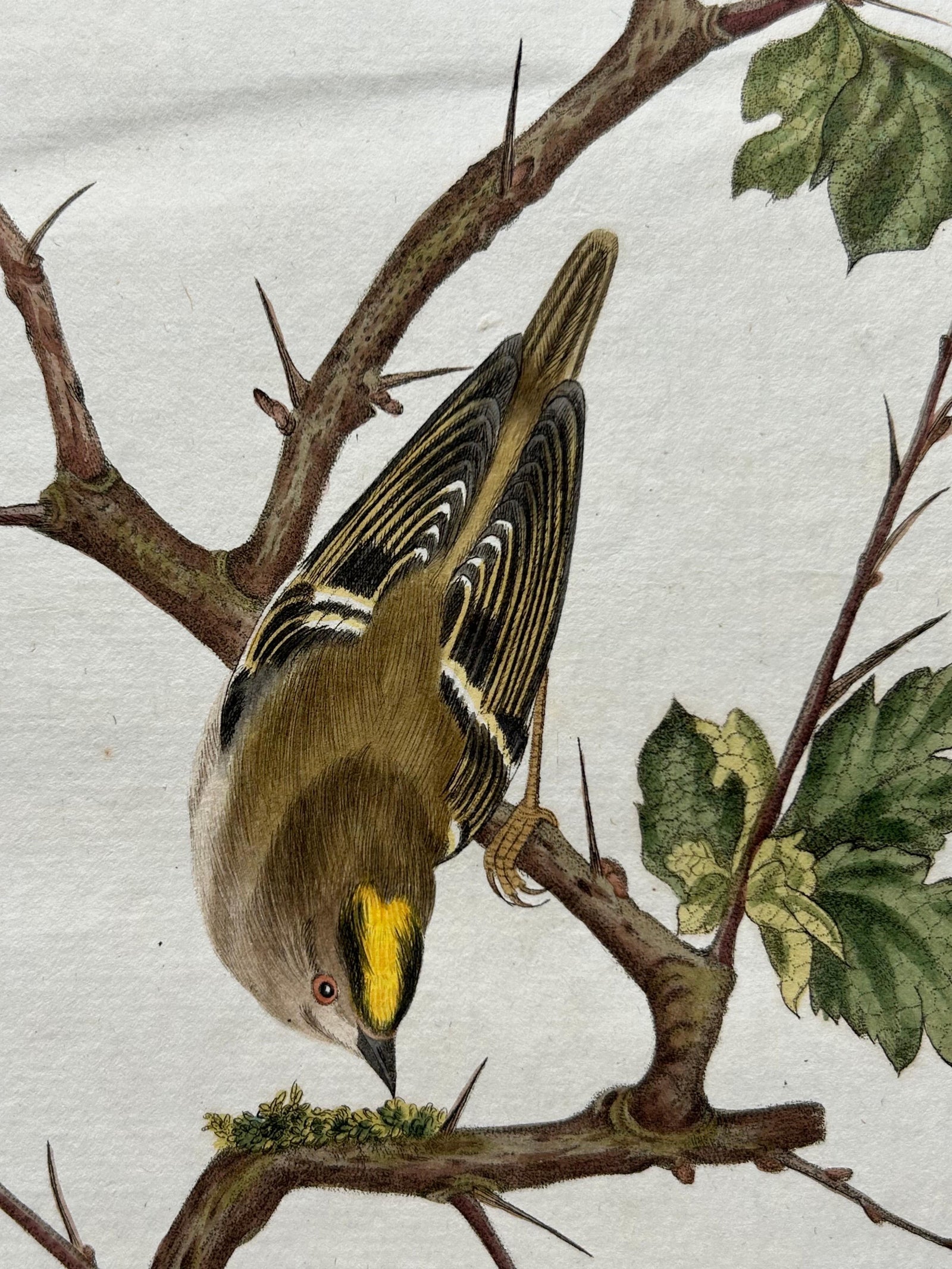
Close-ups
Framed and on the wall
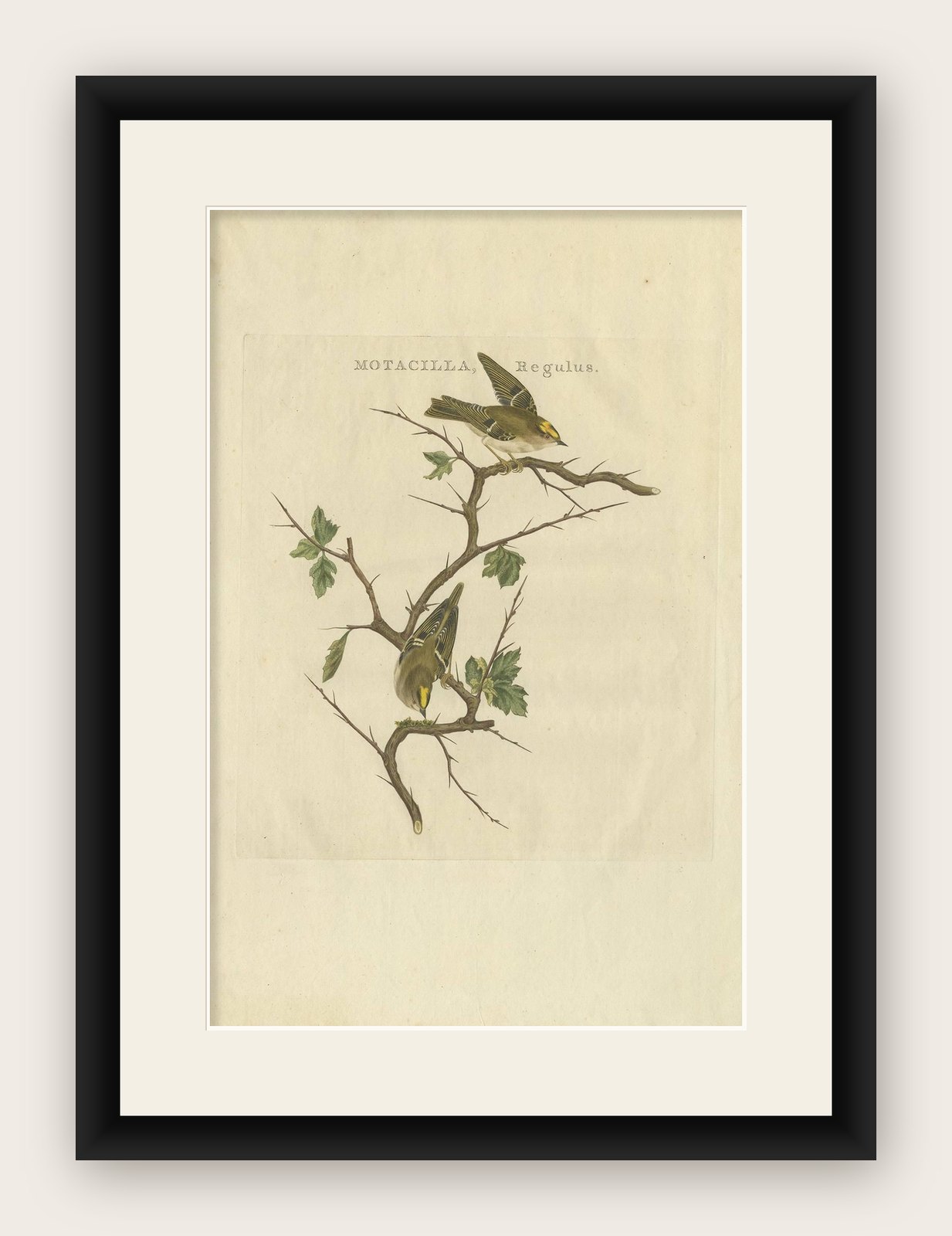
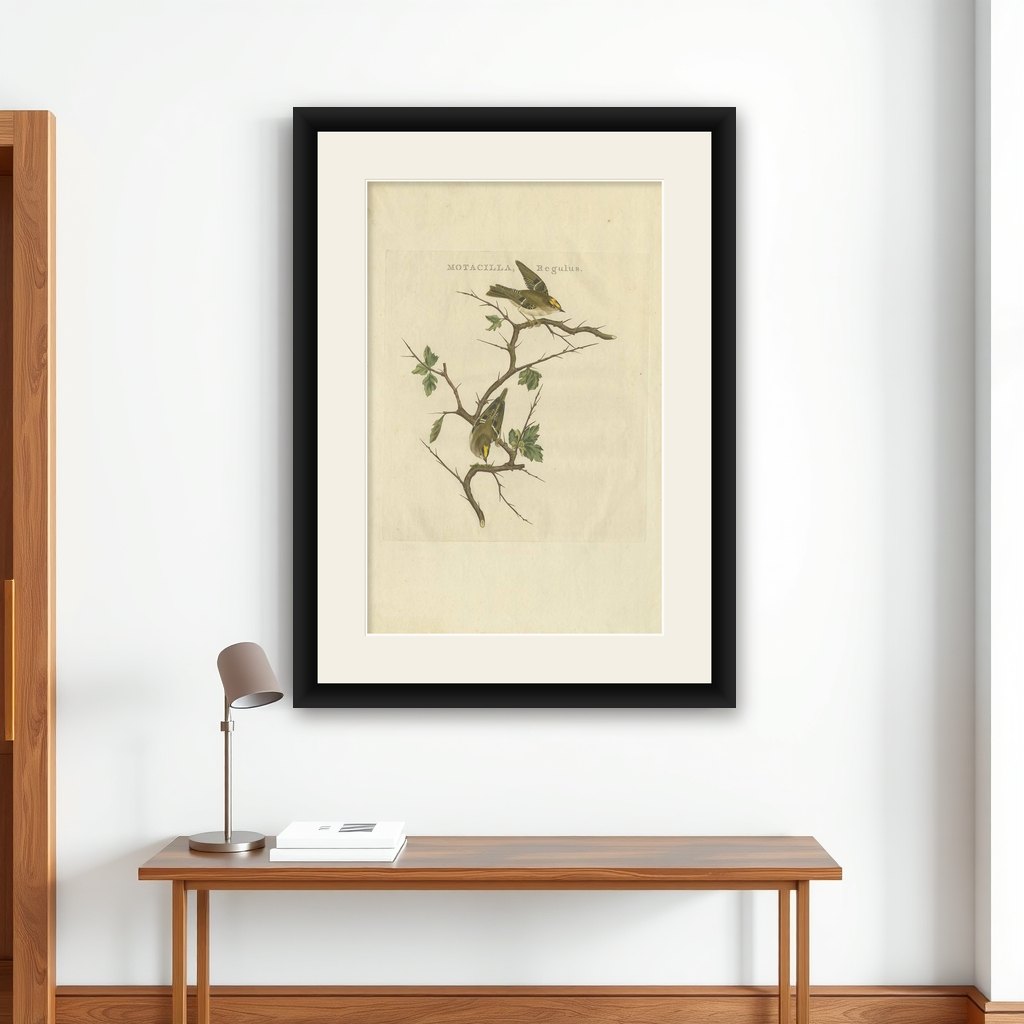

Frame and rooms are illustrations of how the print could look; the description says what is included.
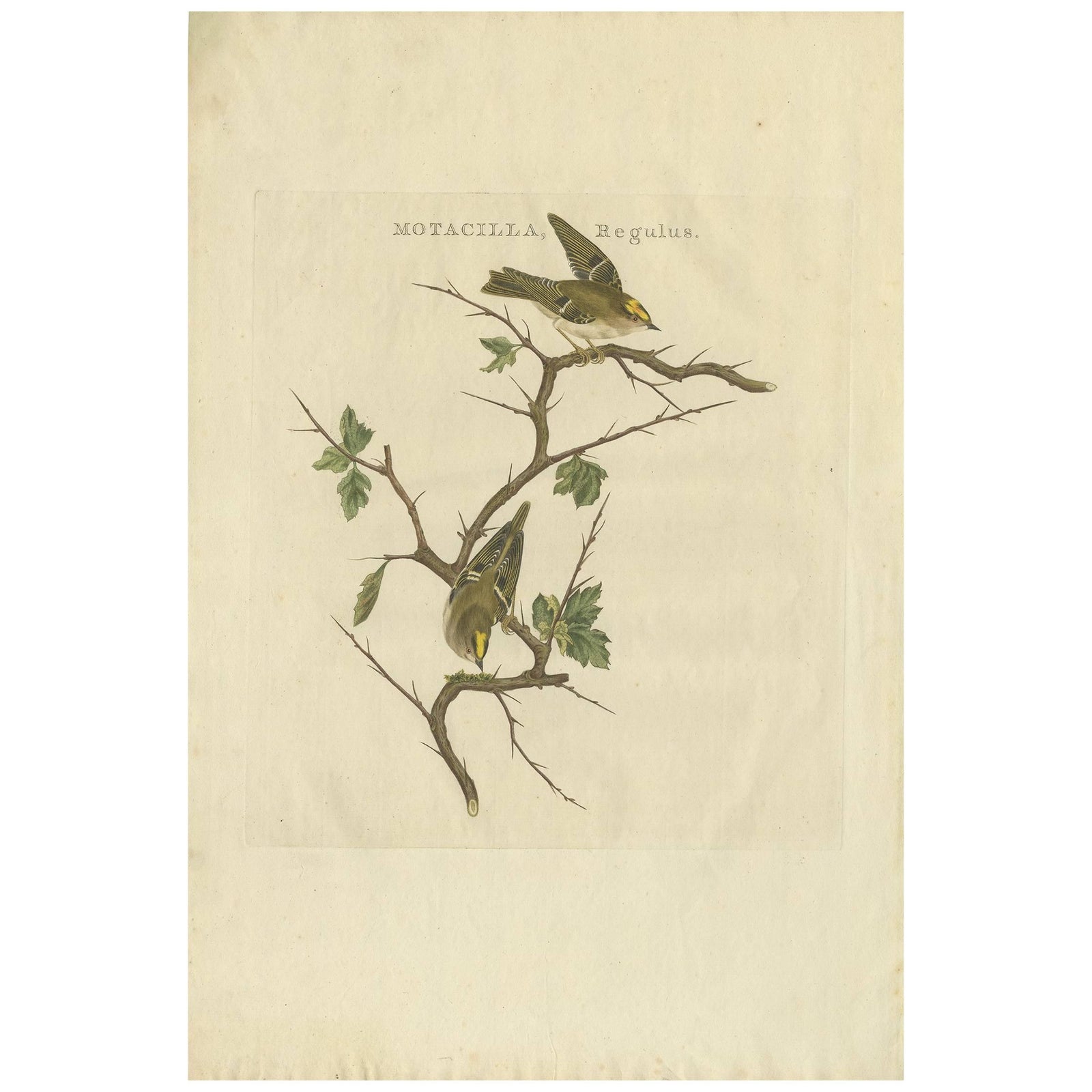
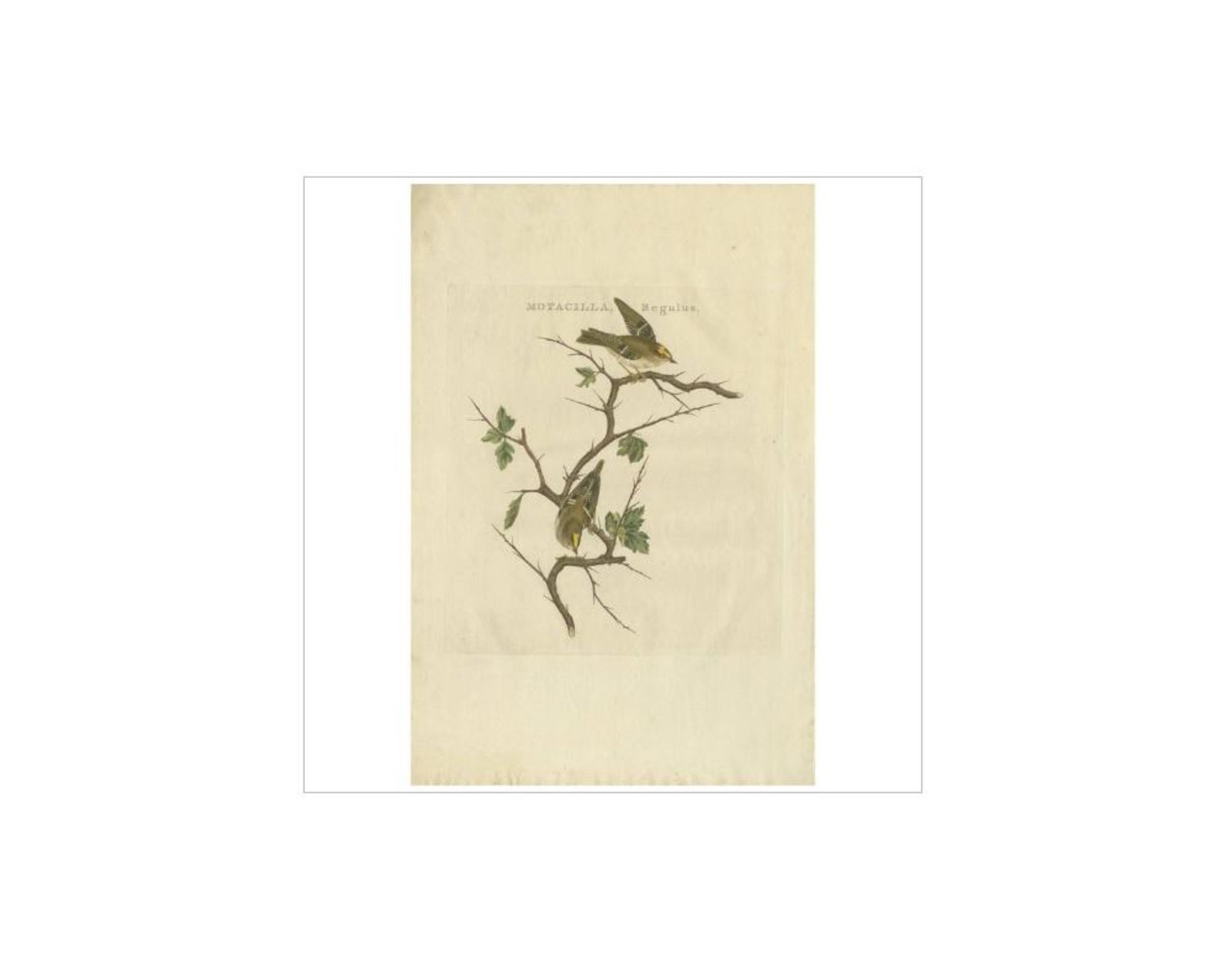
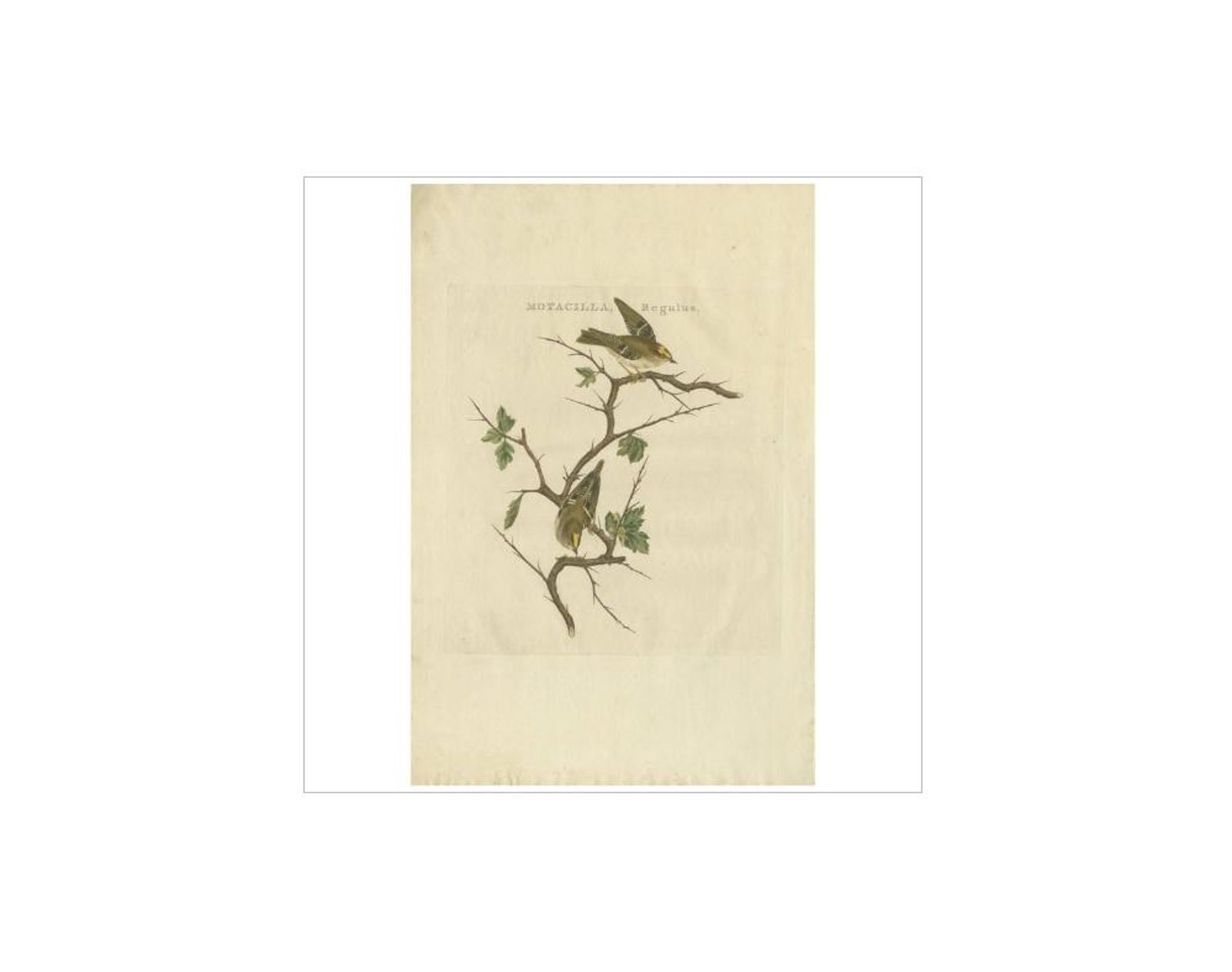
Antique Bird Print of the Goldcrest by Sepp & Nozeman, 1797
£550 ($730, €650)
Period original, not a reproduction.
Shipped from the Netherlands, flat, insured and tracked, worldwide. Returns accepted within 14 days.
- Date
- 1797
- Size
- 21.1 × 14.6 in (53.5 × 37 cm)
- Technique
- Engraved
- Condition
- Good. Very good for age. Hand-coloured plate with minor margin toning, light handling marks, and faint plate marks. Colours fresh, paper strong. Text pages clean with light toning.
- Period
- 18th century
- Artist or book
- Nozeman and Sepp
- Section
- Birds
- Reference
- f_10881503
Motacilla Regulus, Goldcrest, Hand-Coloured Engraving, 1770–1829
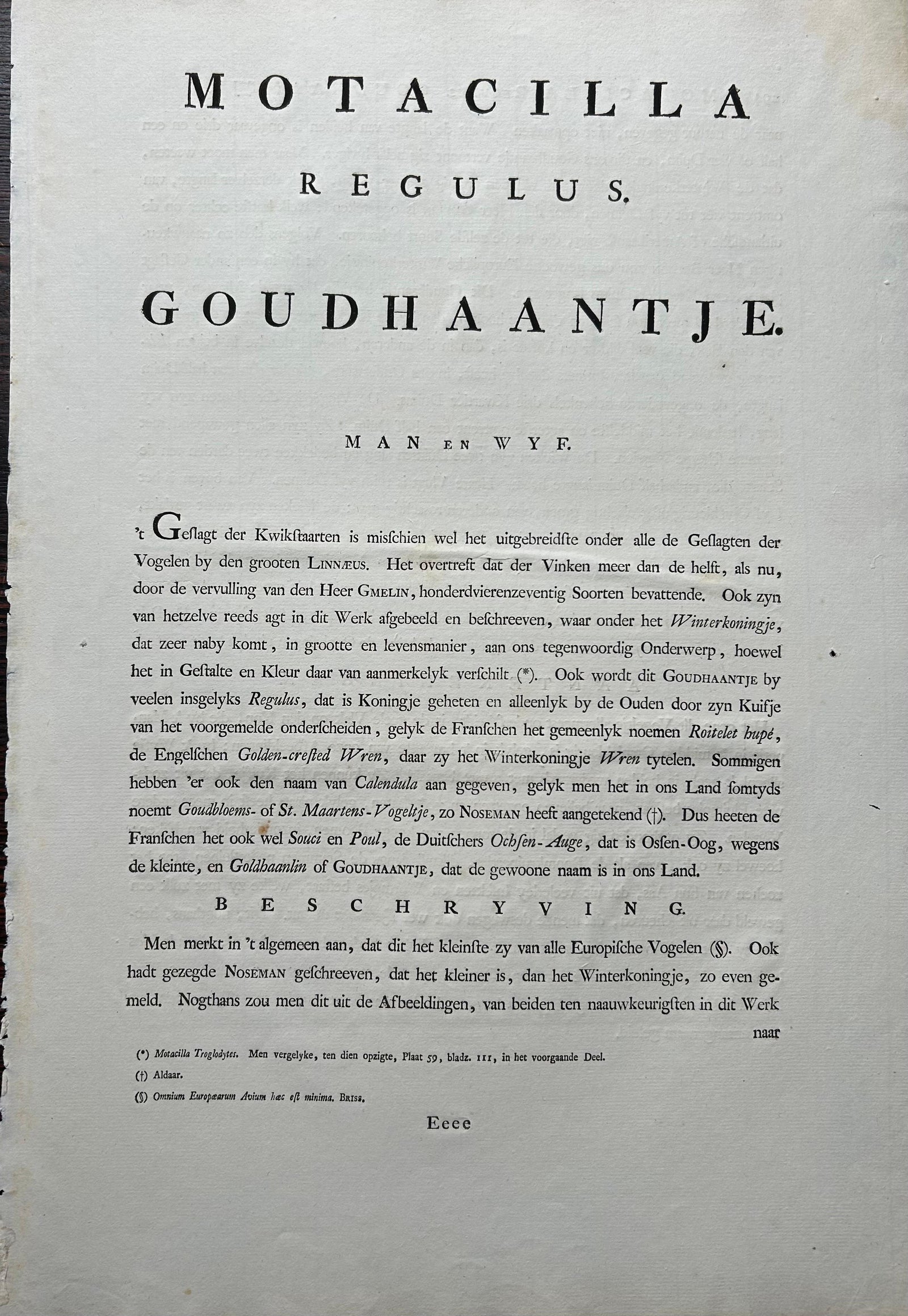
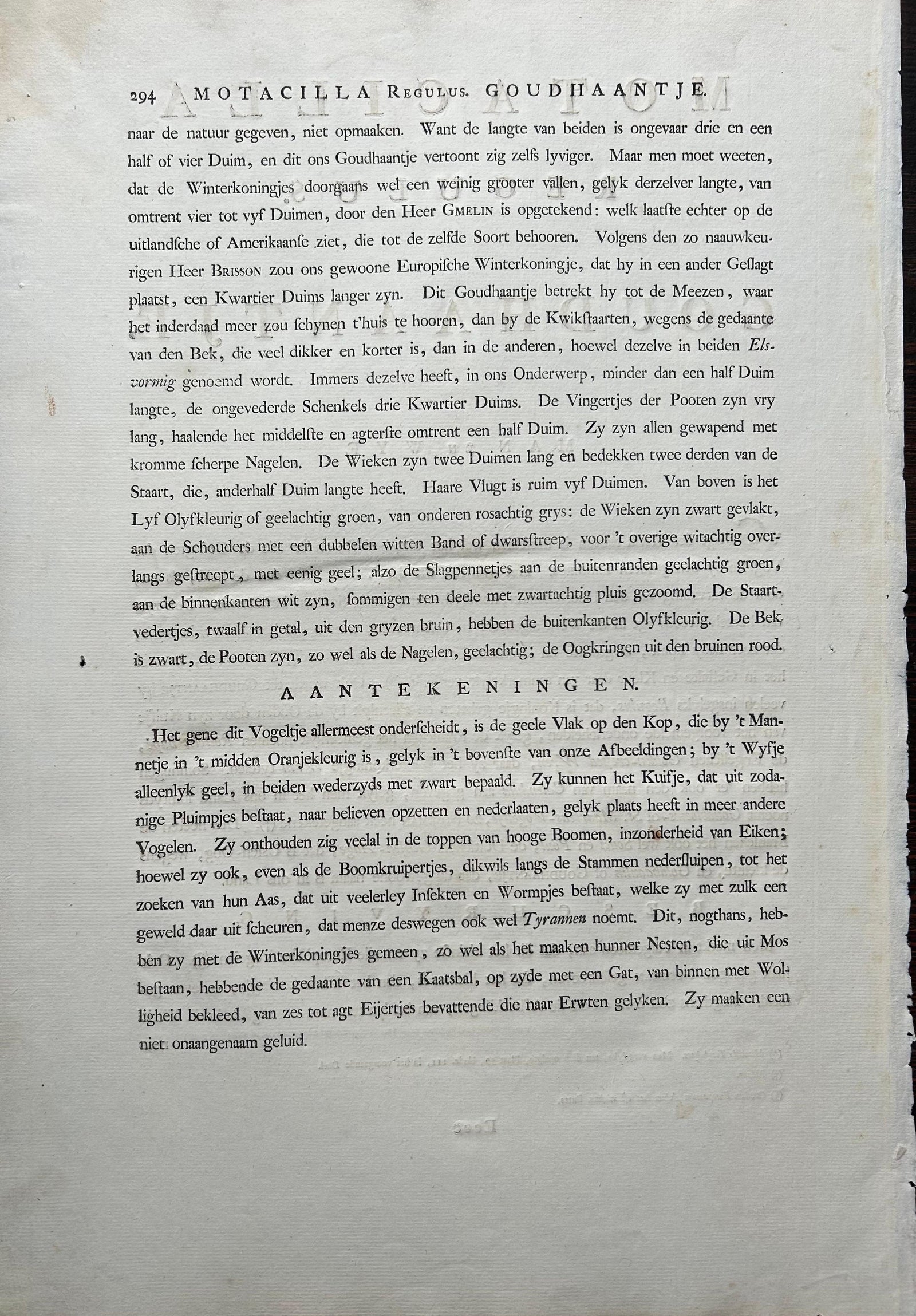
This fine hand-coloured engraving depicts the goldcrest (Regulus regulus), Europe’s smallest bird, shown perched delicately on leafy branches. The print comes from the monumental work ‘Nederlandsche Vogelen; volgens hunne huisdouding, aert, en eigenschappen beschreeven’ published in Amsterdam between 1770 and 1829 by Cornelius Nozeman, Martinus Houttuyn, and Jan Christiaan Sepp. This was the first comprehensive ornithological study in the Netherlands, illustrating native bird species as they appeared in life, often close to actual size and in their natural habitats. The goldcrest, with its distinctive golden-yellow crown bordered with black, is a lively passerine bird found across Eurasia and the Macaronesian islands. Its name and folklore associations as “king of the birds” stem from its regal crest and spirited nature. This plate captures both the male and female, their delicate plumage carefully rendered, showing the olive-green back, whitish underparts, and fine black-and-white wing markings. The goldcrest’s light build and constant movement among treetops make it a challenging subject, yet here it is portrayed with precision and elegance.
The accompanying original Dutch text pages provide rich historical and scientific observations on the species, its behaviour, nesting habits, and physical characteristics, as understood in the late 18th and early 19th centuries.
Condition: Very good for age. The hand-coloured plate shows only minor toning to margins, occasional light handling marks, and faint plate marks. Colours remain fresh, and paper is strong with no major defects. The two accompanying letterpress text pages are clean and well-preserved.
Framing tips: A narrow gilt or black-and-gold frame paired with an off-white or pale cream mount will highlight the fine detailing and golden crown of the bird. For a more naturalistic presentation, a mid-toned wood frame with a warm mount will complement the earthy and green tones.