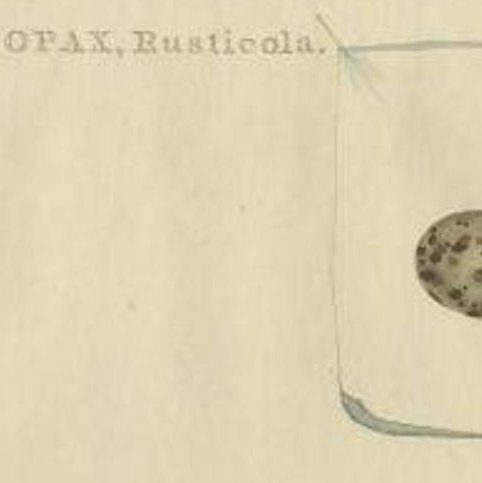
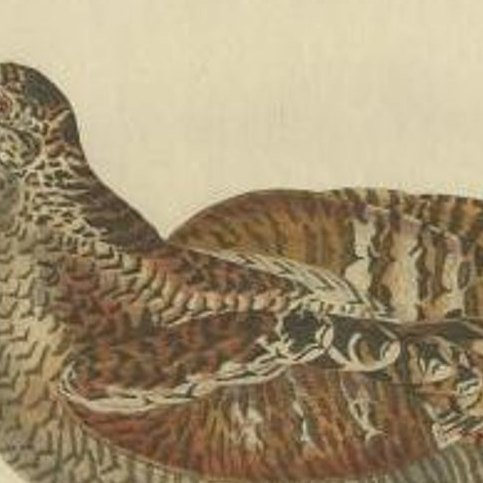
Close-ups
Framed and on the wall
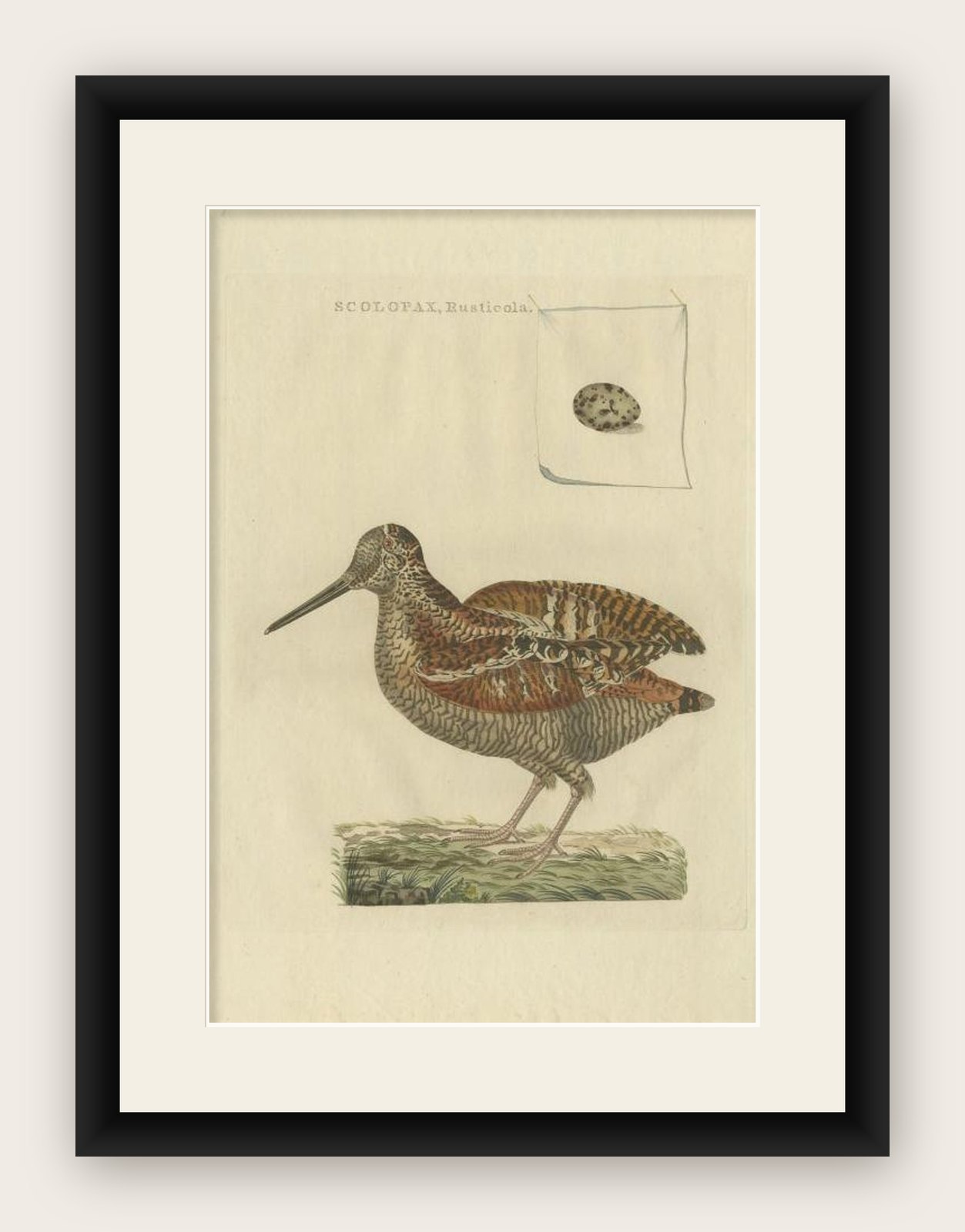
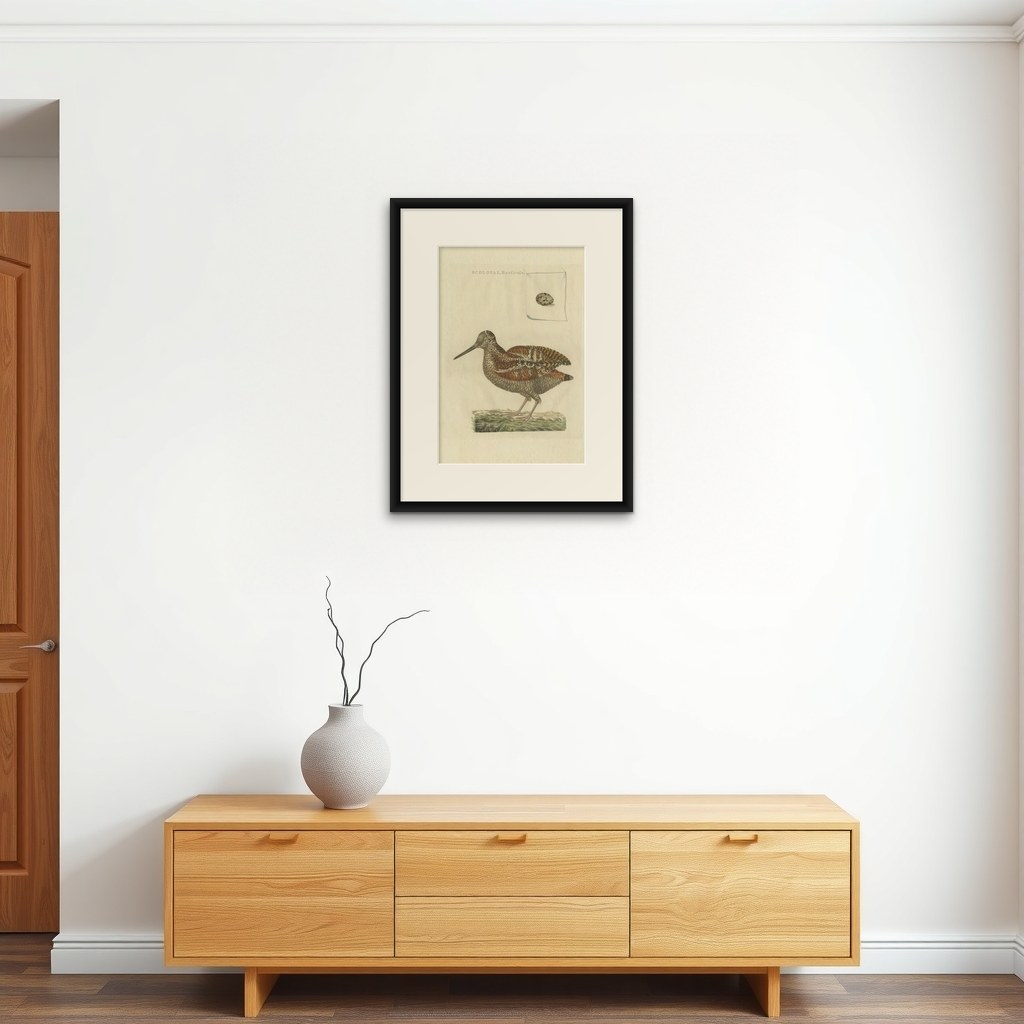
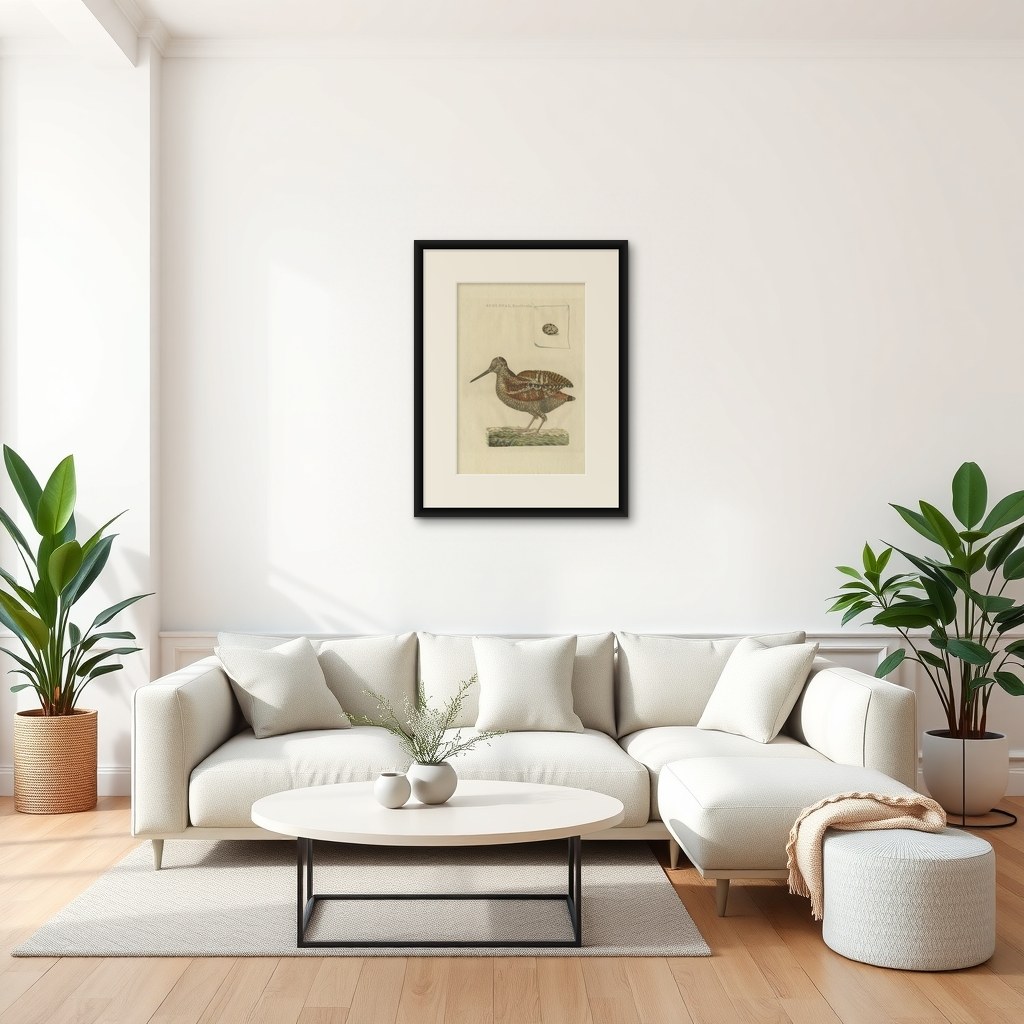
Frame and rooms are illustrations of how the print could look; the description says what is included.
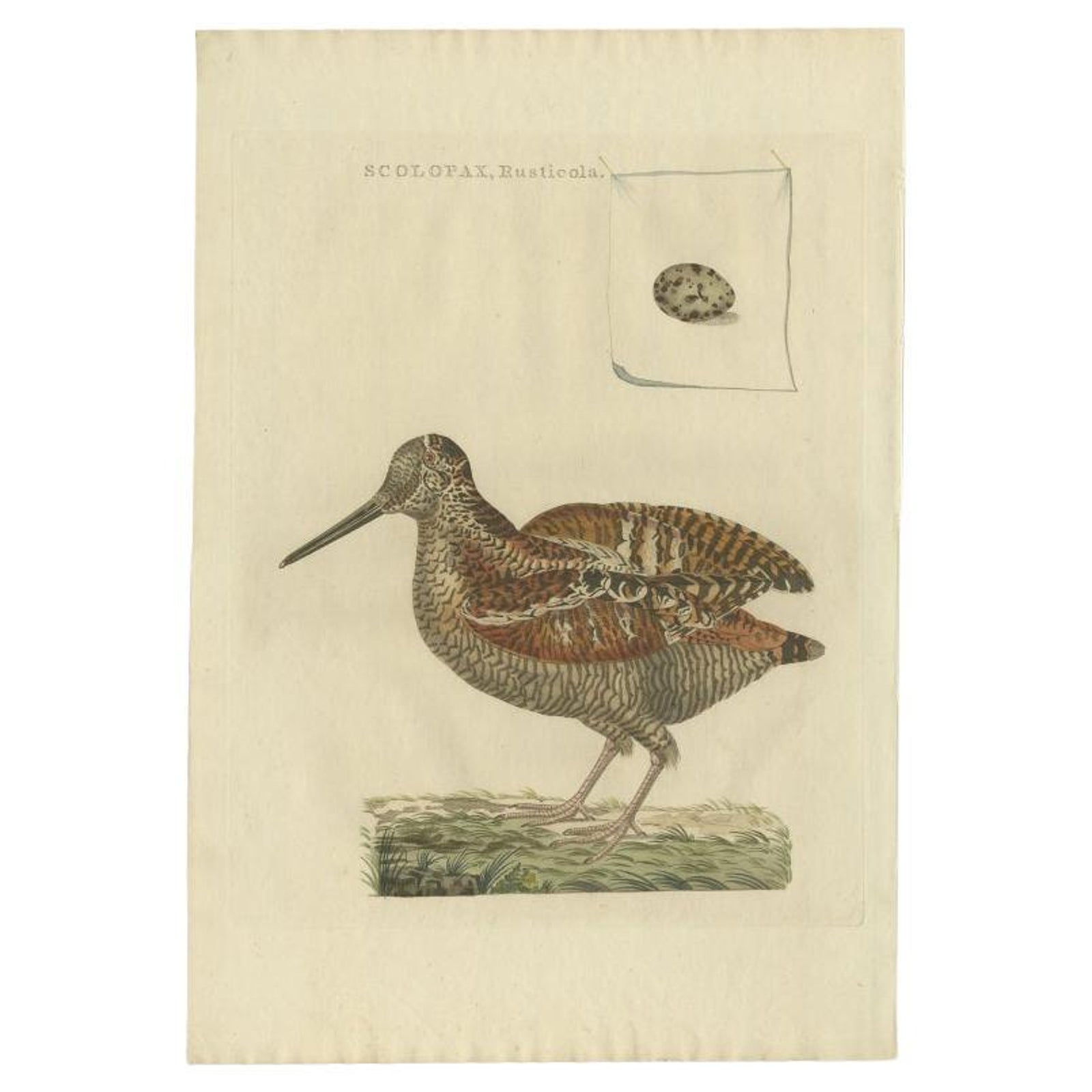
Antique Bird Print of the Eurasian Woodcock by Sepp & Nozeman, 1797
$755 (£570, €670)
Period original, not a reproduction.
Shipped from the Netherlands, flat, insured and tracked, worldwide. Returns accepted within 14 days.
- Date
- 1797
- Size
- 20.9 × 14.2 in (53 × 36 cm)
- Technique
- Engraved
- Condition
- Very good. General age-related toning. Please study image carefully.
- Period
- 18th century
- Artist or book
- Nozeman and Sepp
- Section
- Birds
- Reference
- f_25702922
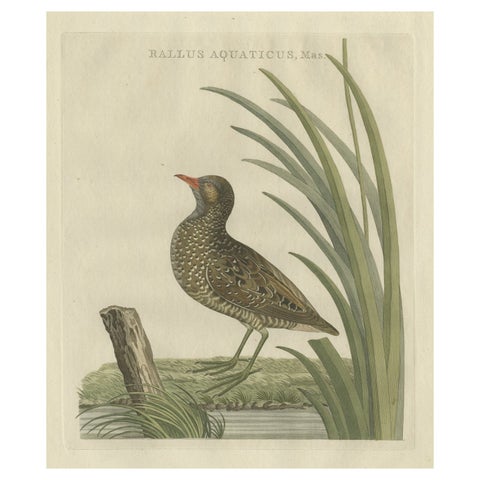
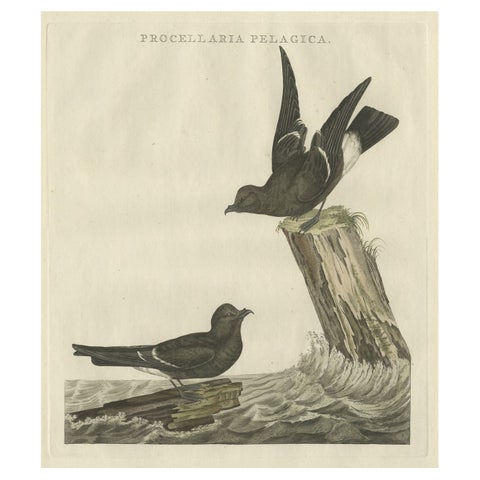
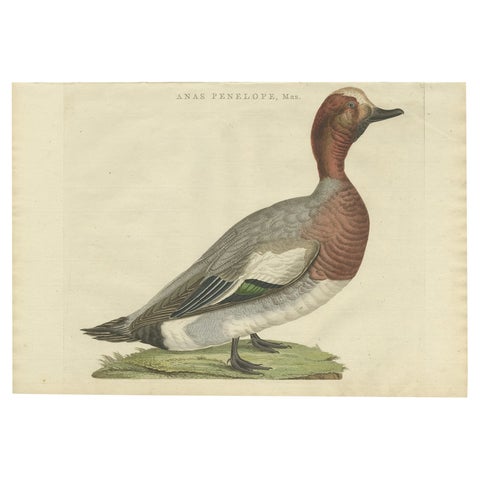
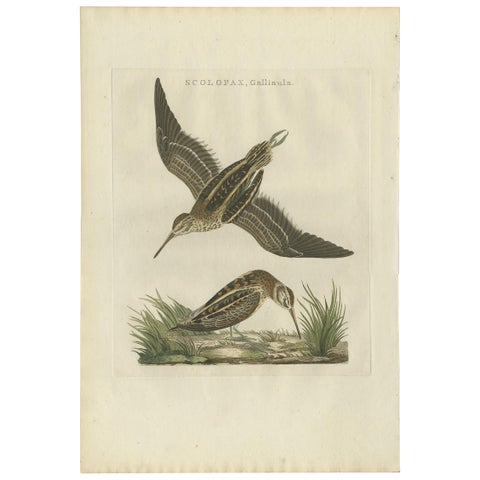
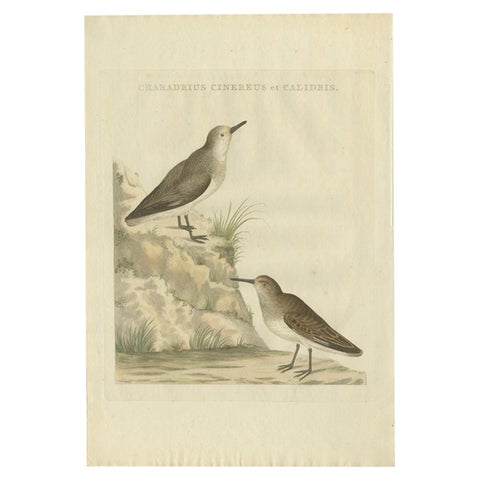
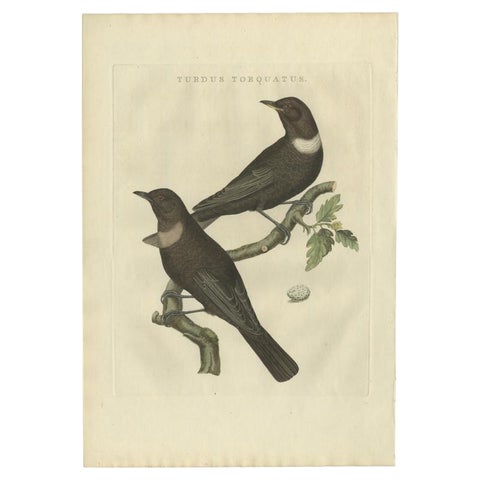
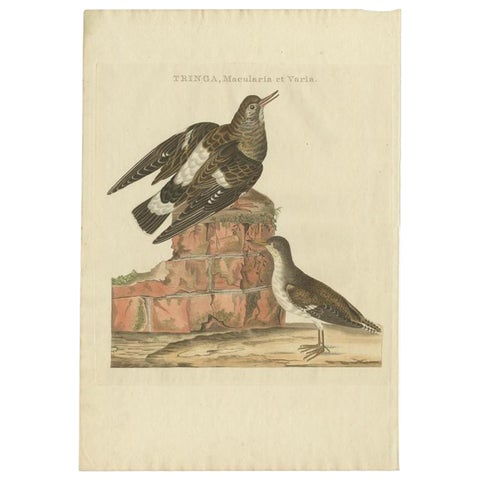
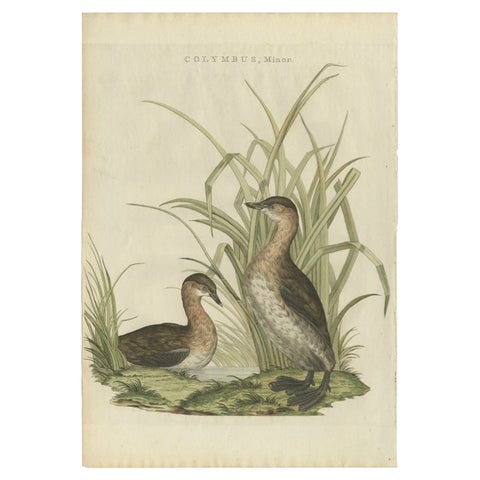
Antique print titled 'Scolopax, Rusticola'. This print depicts the Eurasian Woodcock with egg (Dutch: Houtsnip). The Eurasian woodcock (Scolopax rusticola) is a medium-small wading bird found in temperate and subarctic Eurasia. It has cryptic camouflage to suit its woodland habitat, with reddish-brown upperparts and buff-coloured underparts. Its eyes are set far back on its head to give it 360-degree vision and it probes in the ground for food with its long, sensitive bill, making it vulnerable to cold weather when the ground remains frozen. This print originates from 'Nederlandsche Vogelen; volgens hunne huisdouding, aert, en eigenschappen beschreeven", Amsterdam, 1770-1829 by C. Nozeman, M. Houttuyn and J.C. Sepp. This is the most important and first study in the Netherlands of ornithology at that time. The birds are depicted as they are in life, said to be depicted close to life sized and in their environment.
Artists and engravers: This monumental work is associated with Christiaan Andreas Sepp, Jan Christiaan Sepp, Jan Sepp, Cornelis Nozeman, Martinus Houttuyn and Coenraad Jacob Temminck.
Condition: Very good. General age-related toning. Please study image carefully.
Date: 1797
Overall size: 36 x 53 cm.
Image size: 0.001 x 32.8 x 41 cm.
We also offer thousands of antique prints covering fields of interest as diverse as architecture, natural history, religion, ethnology and many more. Antique prints have long been appreciated for both their aesthetic and investment value. They were the product of engraved, etched or lithographed plates. These plates were handmade out of wood or metal, which required an incredible level of skill, patience and craftsmanship. Whether you have a house with Victorian furniture or more contemporary decor an old engraving can enhance your living space.