Close-ups
Framed and on the wall
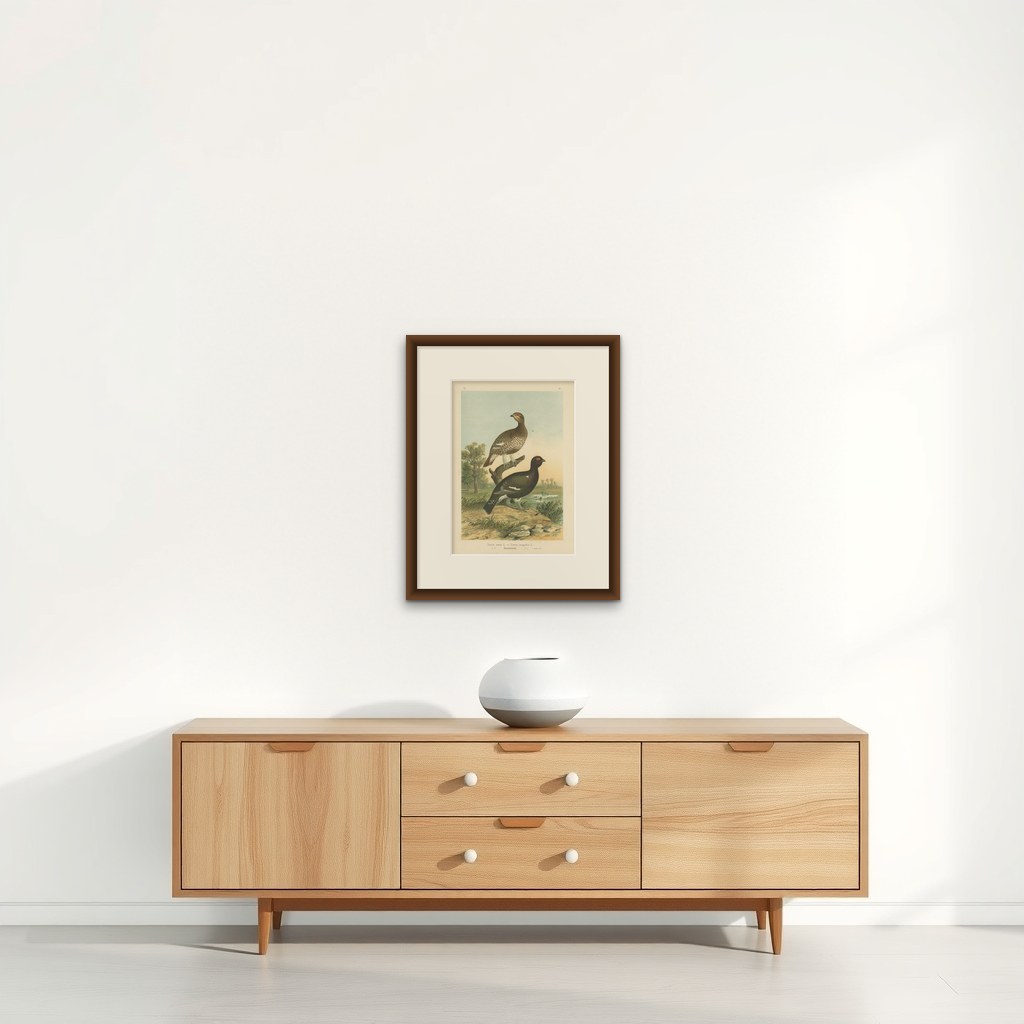

Frame and rooms are illustrations of how the print could look; the description says what is included.
Antique Bird Print of the Black Grouse 'Hybrid' by Naumann, circa 1895
$145 (£110, €130)
Period original, not a reproduction.
Shipped from the Netherlands, flat, insured and tracked, worldwide. Returns accepted within 14 days.
- Date
- 1895
- Size
- 15.7 × 11.4 in (40 × 29 cm)
- Condition
- Good. General age-related toning. Minor wear and foxing, blank verso. Please study image carefully.
- Period
- Late 19th century
- Artist or book
- Naumann
- Section
- Birds
- Reference
- f_21190382
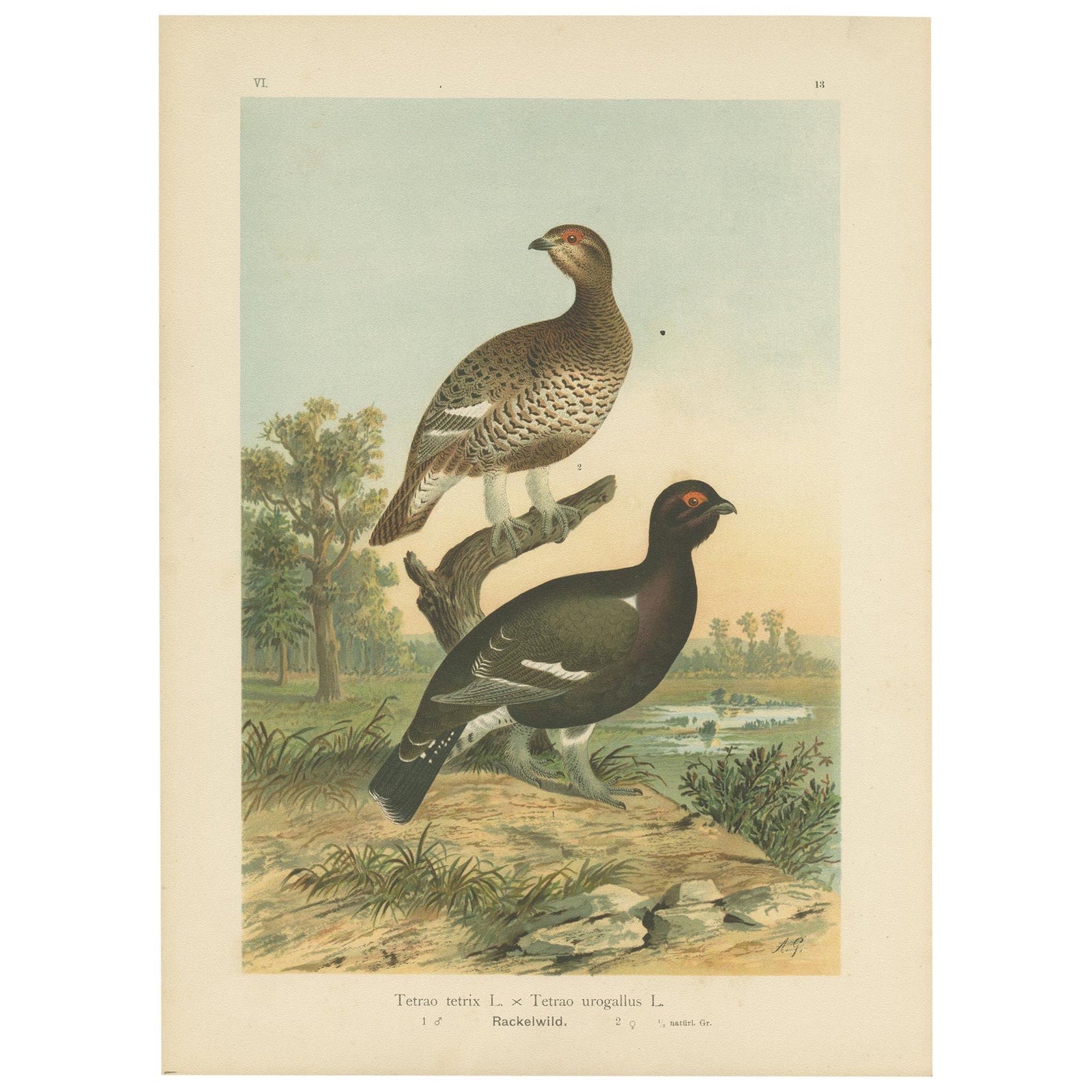
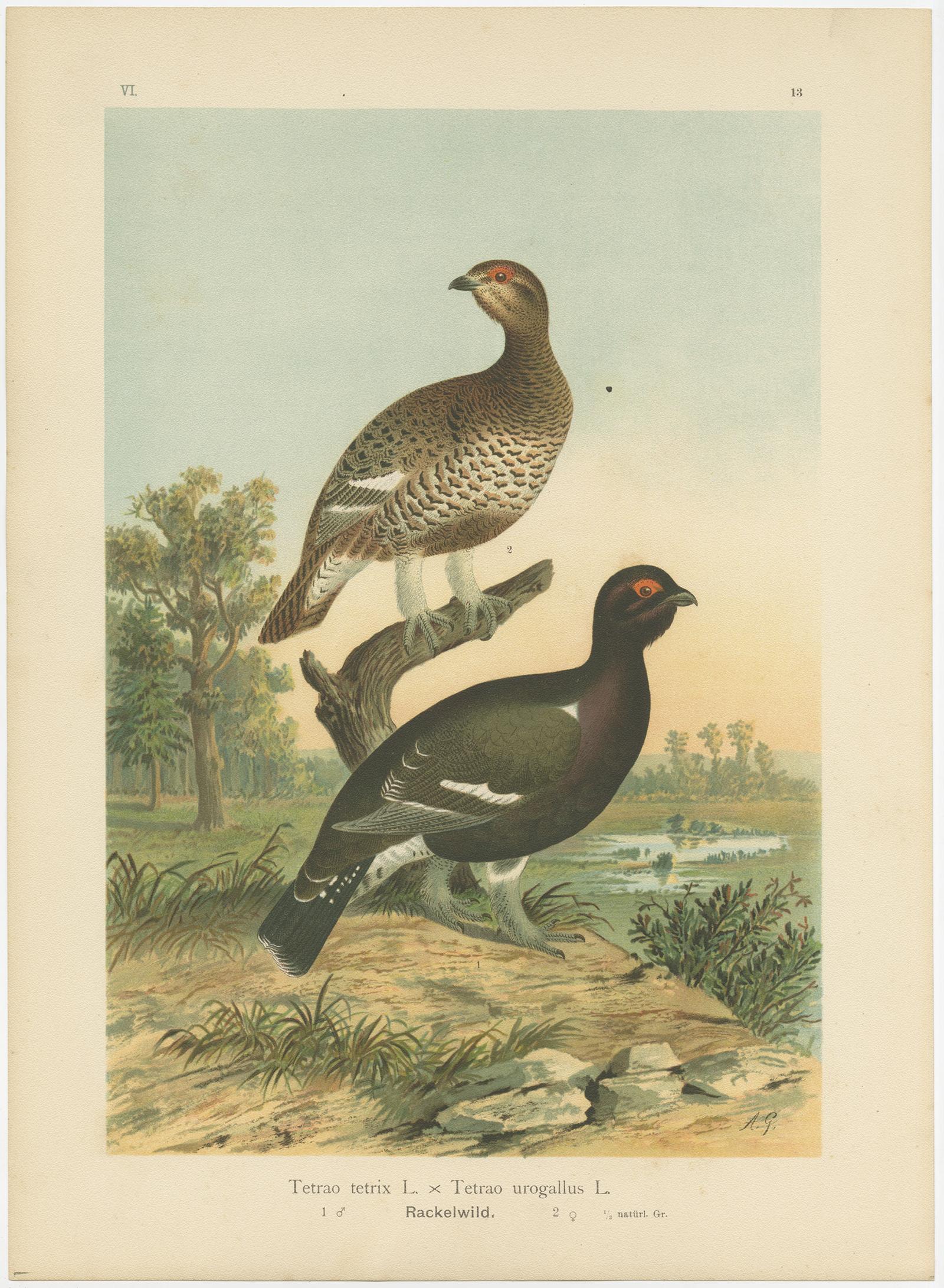
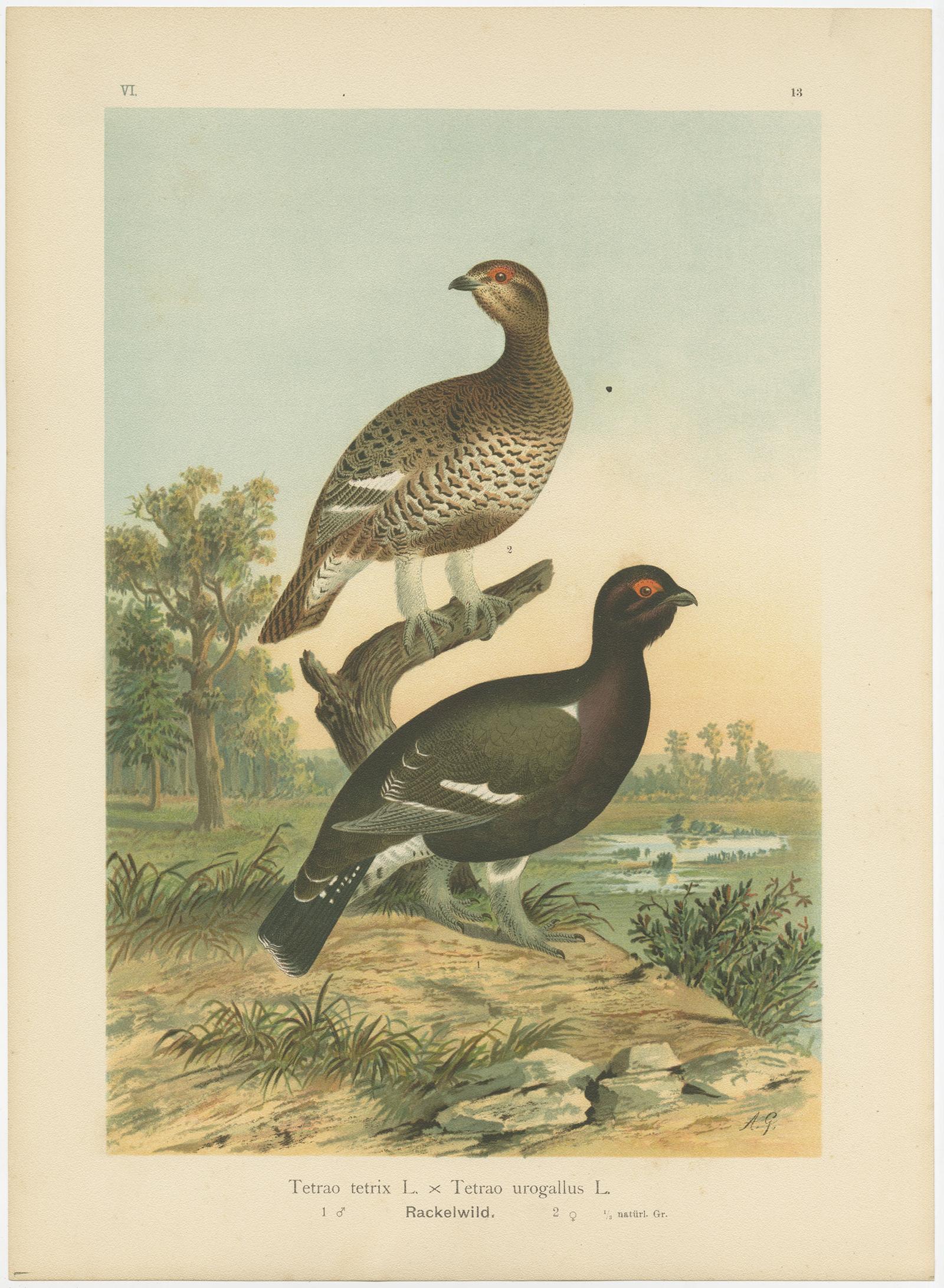
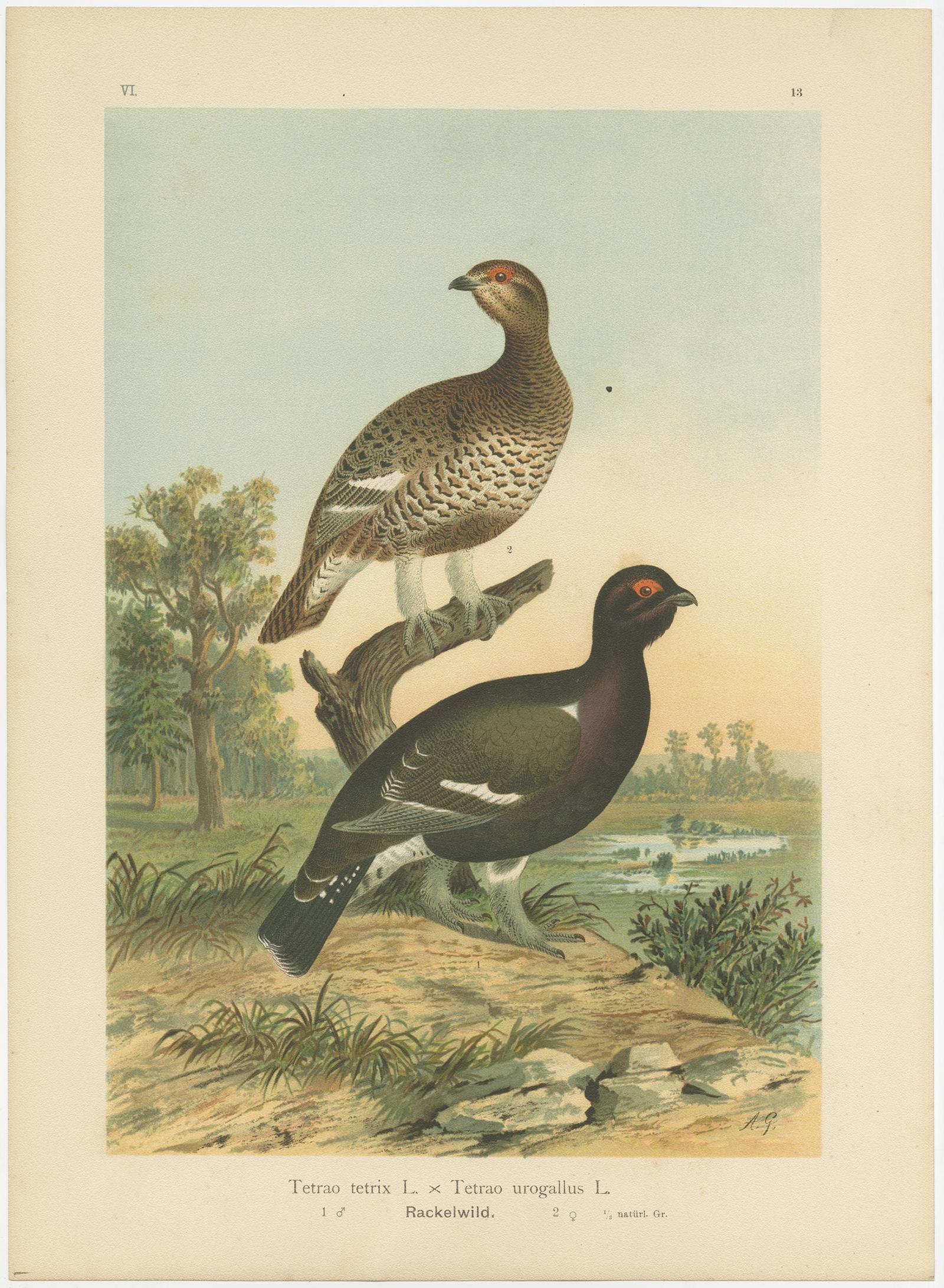
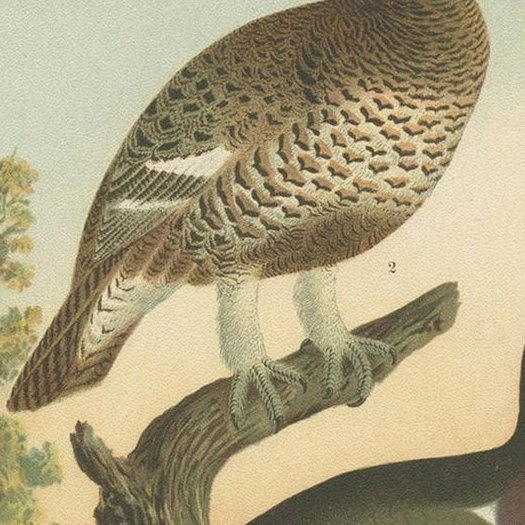
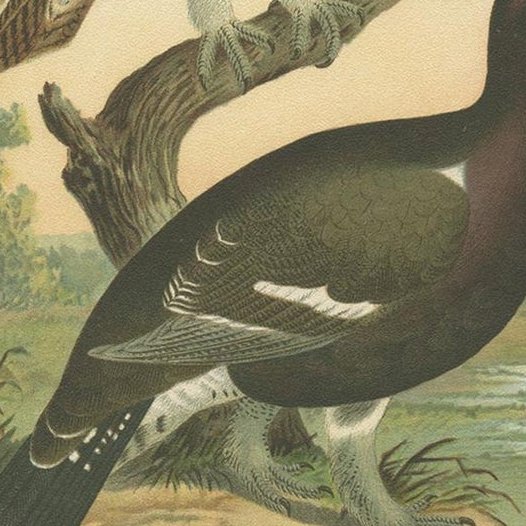
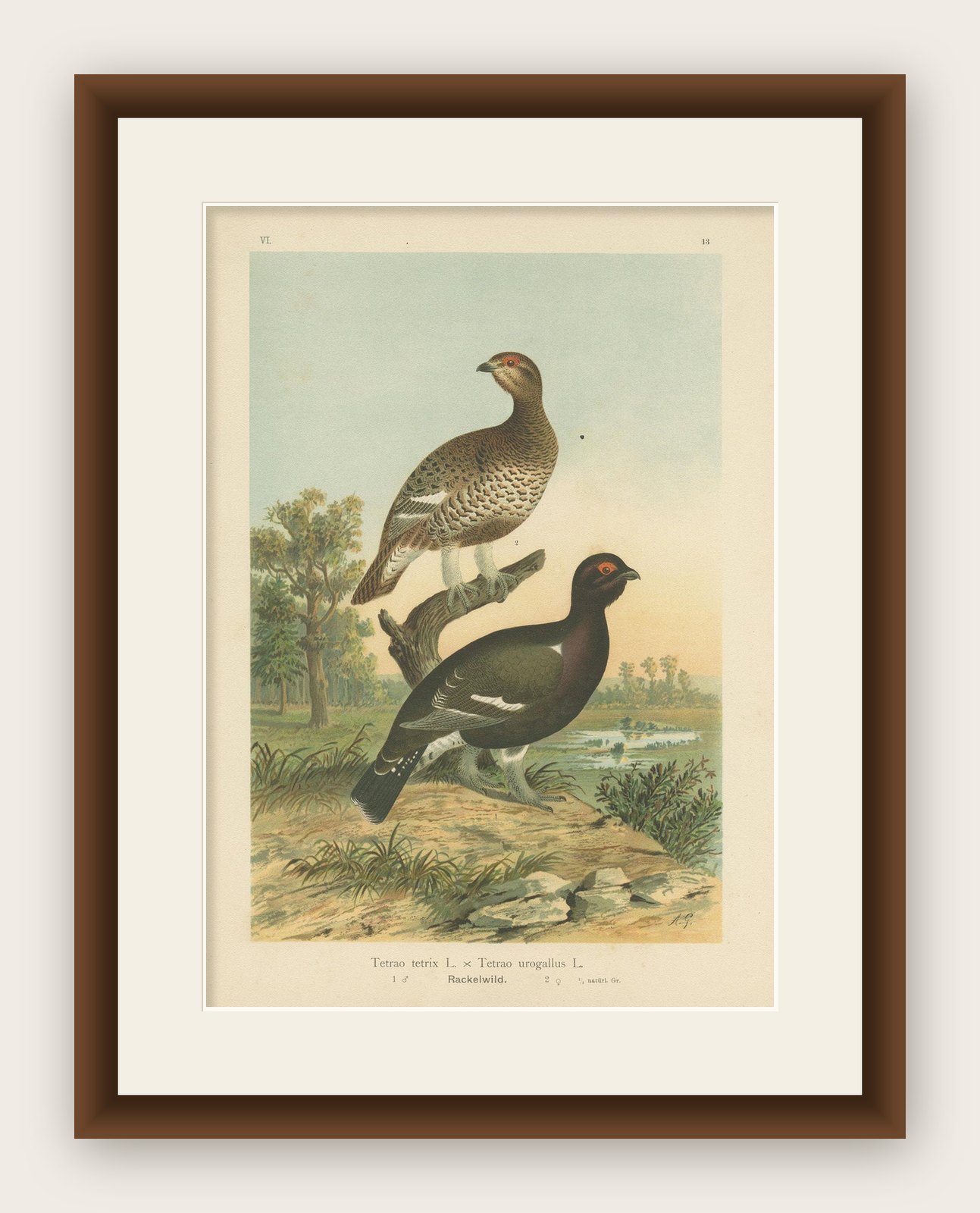
This antique bird print featuring 'Tetrao Tetrix x Tetrao Urogallus - Rackelwild' is a chromolithograph representing a hybrid between the Black Grouse (Tetrao tetrix) and the Western Capercaillie (Tetrao urogallus), commonly known as Rackelhahn. The Rackelhahn is rare and notable for its unique characteristics that blend features of both parent species. This hybridization occurs naturally in the wild, though it is not common.
The Black Grouse is known for its remarkable courtship display called lekking, while the Western Capercaillie is the largest member of the grouse family, famous for its elaborate mating rituals. The chromolithograph likely depicts the distinctive plumage and physical features that result from the combination of these two species, providing a visual study of such a rare occurrence.
Originating from J.A. Naumann's "Naturgeschichte der Vögel Mitteleuropas" and published around 1895, this print is part of an extensive work that aimed to document the avian fauna of Central Europe with scientific precision and artistic detail. The process of chromolithography, which was used to create this print, was a revolutionary technique at the time that allowed for the mass production of colored images and contributed significantly to the dissemination of scientific knowledge. The print serves as a historical piece that showcases the intricate beauty of nature as well as the achievements in the field of ornithological illustration during that period.