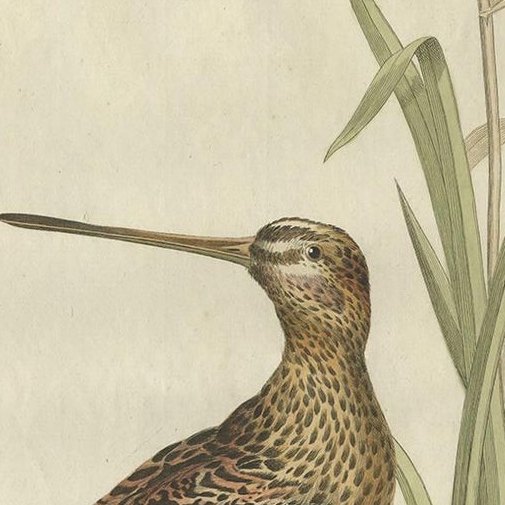
Close-ups
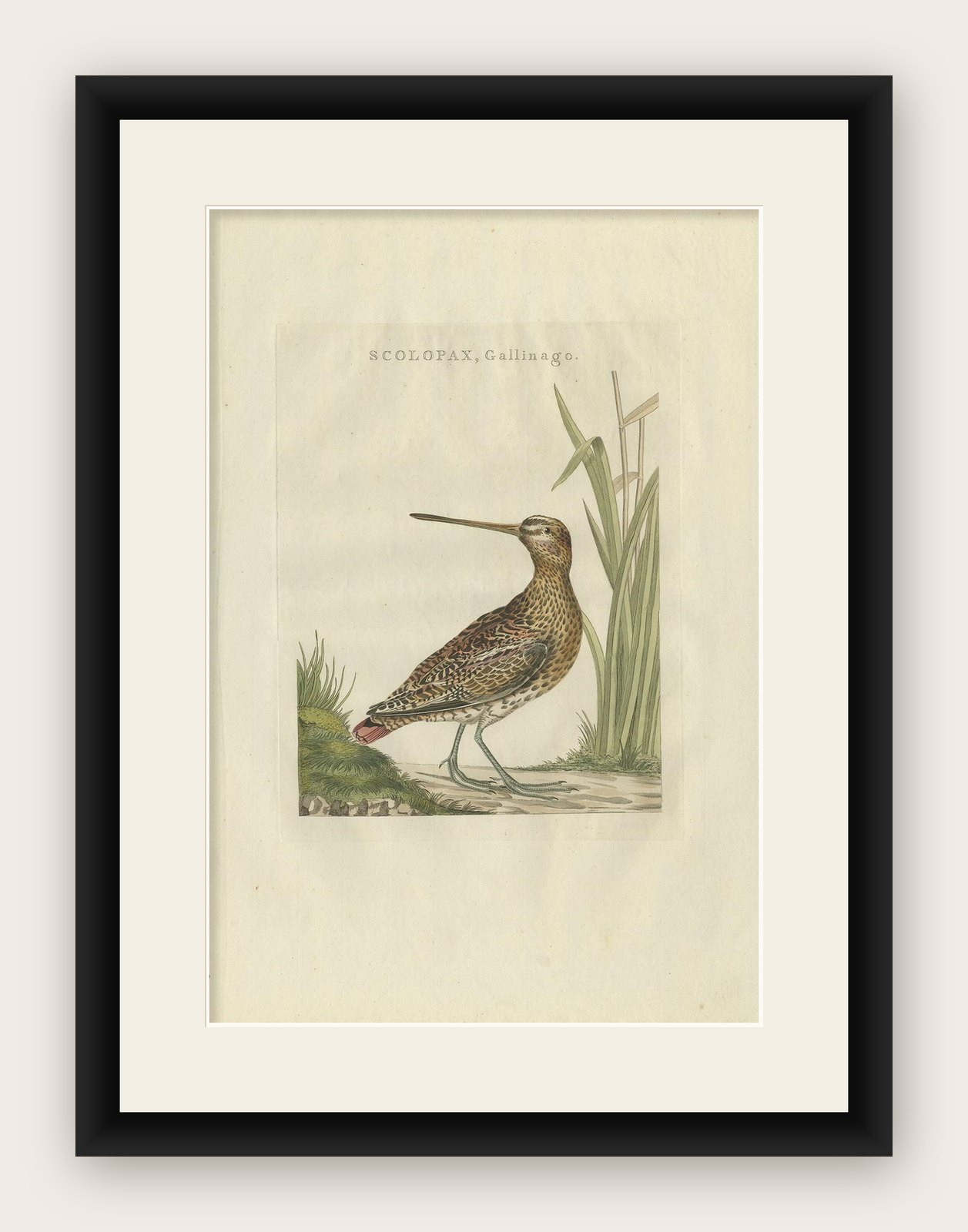
Framed and on the wall
Frame and rooms are illustrations of how the print could look; the description says what is included.
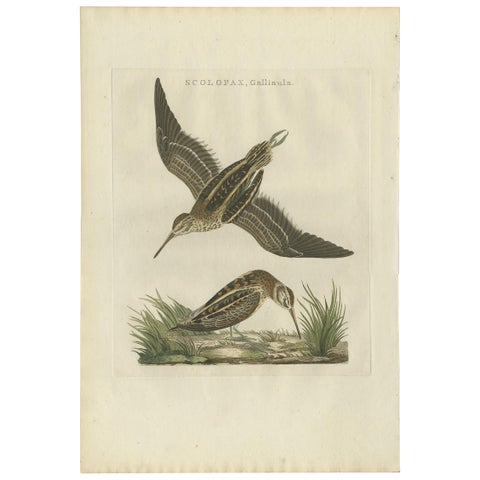
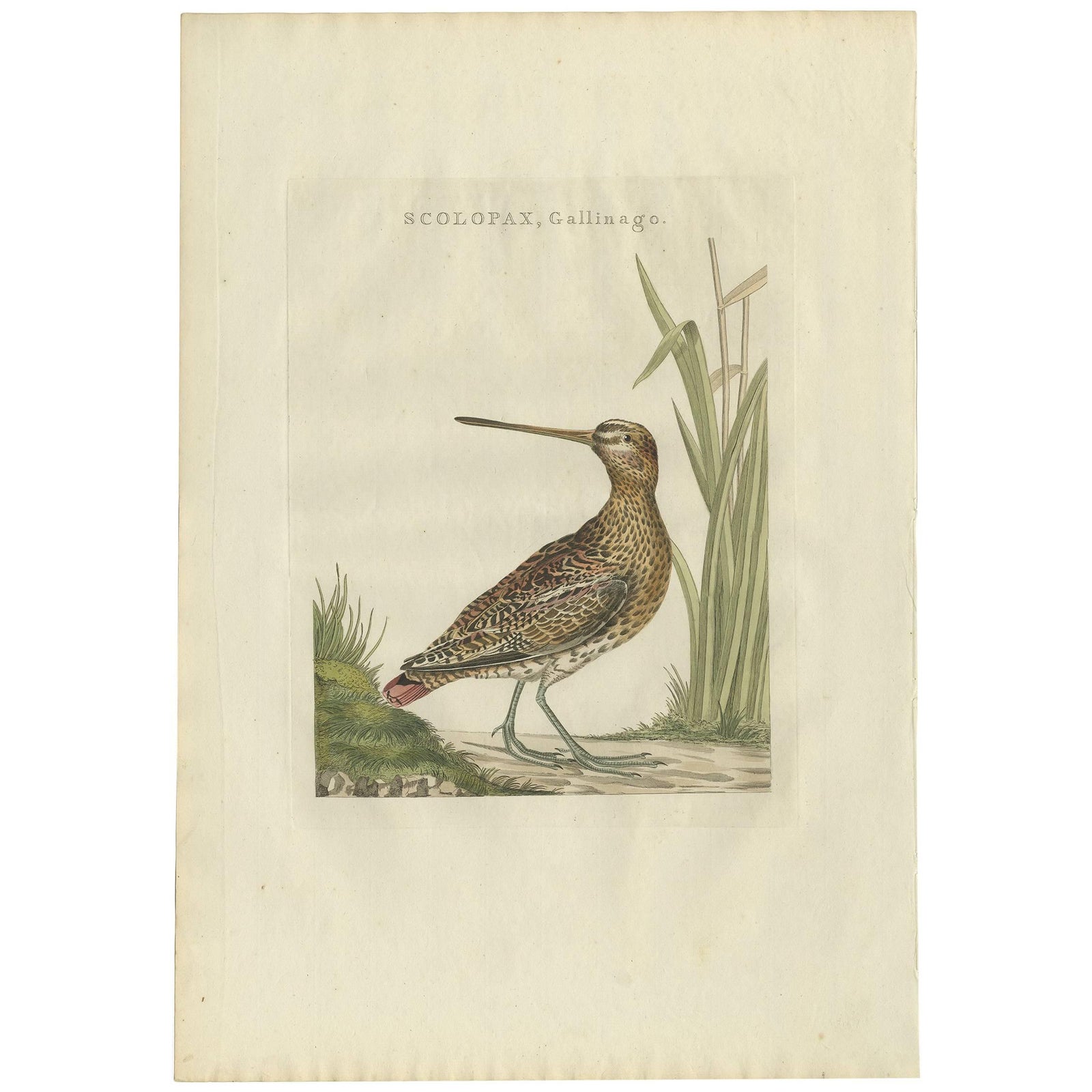
Antique Bird Print of a Common Snipe by Sepp & Nozeman, 1797
£550 ($725, €650)
Period original, not a reproduction.
Shipped from the Netherlands, flat, insured and tracked, worldwide. Returns accepted within 14 days.
- Date
- 1797
- Size
- 21.1 × 14.6 in (53.5 × 37 cm)
- Condition
- Good. Original text page included. Please study image carefully.
- Period
- 18th century
- Artist or book
- Nozeman and Sepp
- Section
- Birds
- Reference
- f_10880583
What the condition grades mean
- Excellent
- Bright and clean, with no faults worth mentioning.
- Very good
- Only light signs of age, such as faint toning.
- Good
- Normal signs of age for a sheet of this period: toning, some foxing, small marks or neat old repairs.
- Fair
- Clear faults such as staining, tears or repairs, priced to match.
Every fault we see is written in the condition note, and the whole sheet is shown uncropped in the photos.
Antique print titled 'Scolopax, Gallinago'. The common snipe (Gallinago gallinago) is a small, stocky wader native to the Old World. The scientific name gallinago is New Latin for a woodcock or snipe from Latin gallina, "hen" and the suffix -ago, "resembling". The breeding habitat is marshes, bogs, tundra and wet meadows throughout northern Europe and northern Asia. It is migratory, with European birds wintering in southern and western Europe and Africa (south to the Equator), and Asian migrants moving to tropical southern Asia. The North American Wilson's snipe was previously considered the same species, and is listed as such in older field guides.
This print originates from 'Nederlandsche Vogelen; volgens hunne huisdouding, aert, en eigenschappen beschreeven", Amsterdam, 1770-1829 by C. Nozeman, M. Houttuyn and J.C. Sepp. This is the most important and first study in the Netherlands of ornithology at that time. The birds are depicted as they are in life, said to be depicted close to lifesized and in their environment.