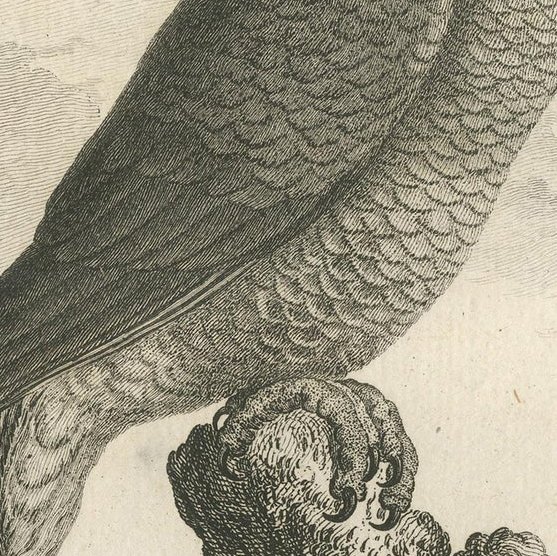
Close-ups
Framed and on the wall
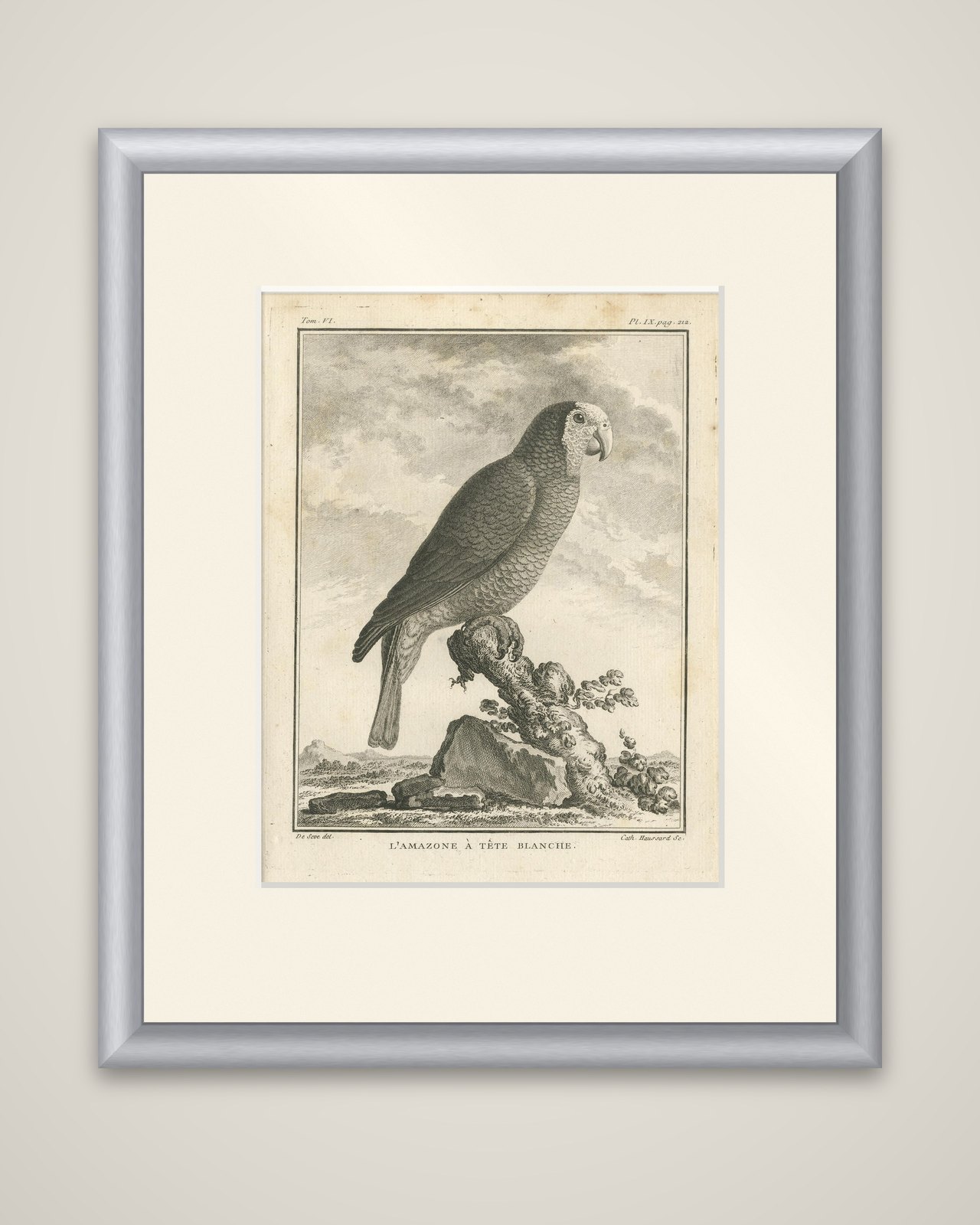


Frame and rooms are illustrations of how the print could look; the description says what is included.
Antique Bird Engraving of a White-Crowned Amazon
£205 ($270, €240)
Period original, not a reproduction.
Shipped from the Netherlands, flat, insured and tracked, worldwide. Returns accepted within 14 days.
- Date
- Not stated
- Size
- 10.2 × 7.8 in (26 × 19.7 cm)
- Condition
- Good. Wear consistent with age and use. General age-related toning. Minor wear and soiling, blank verso. Please study image carefully.
- Artist or book
- Buffon
- Section
- Birds
- Reference
- f_32877882
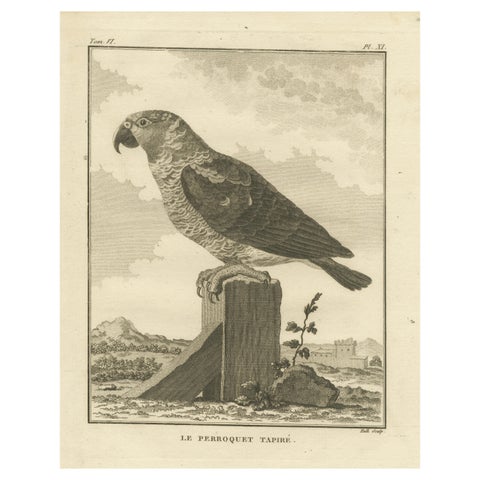
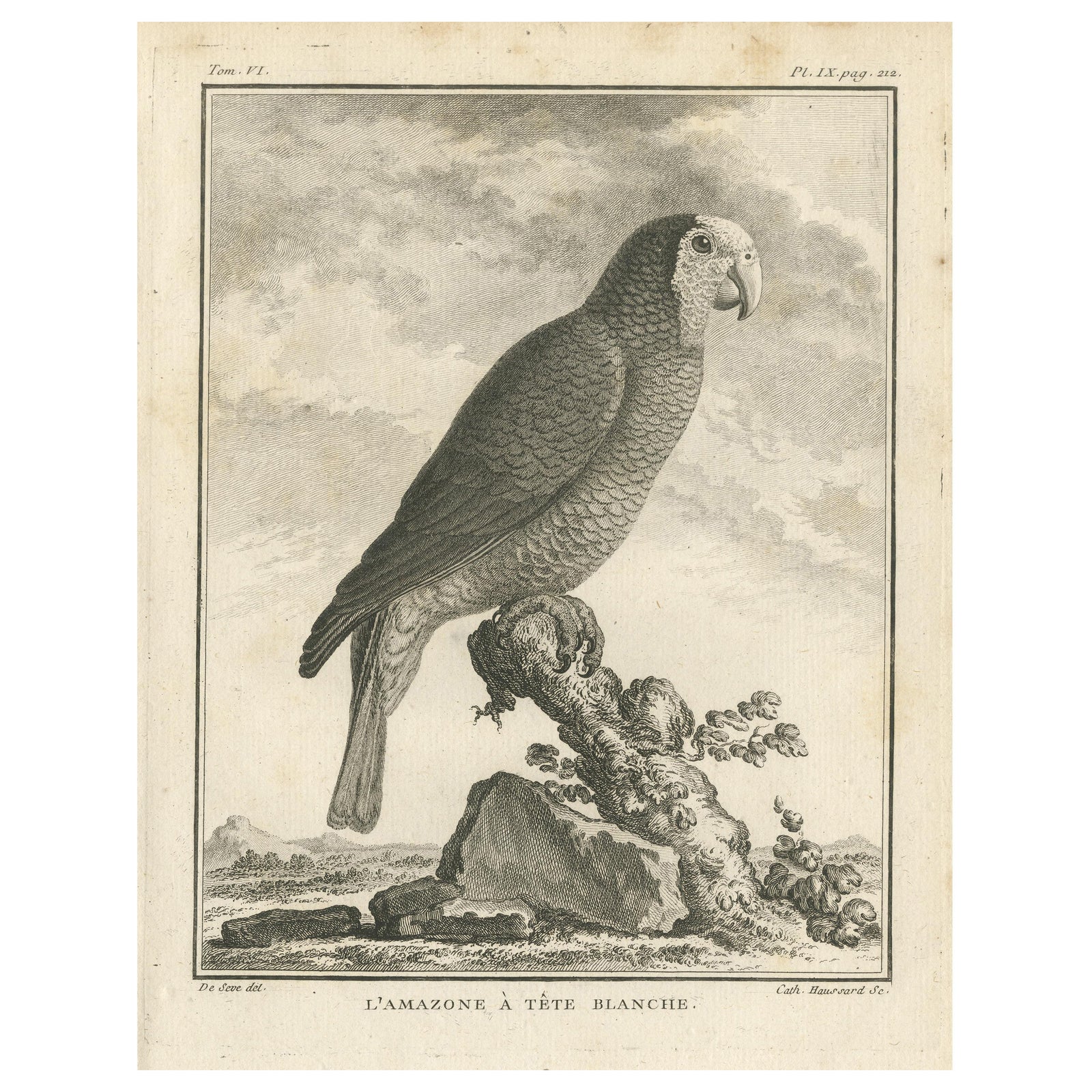
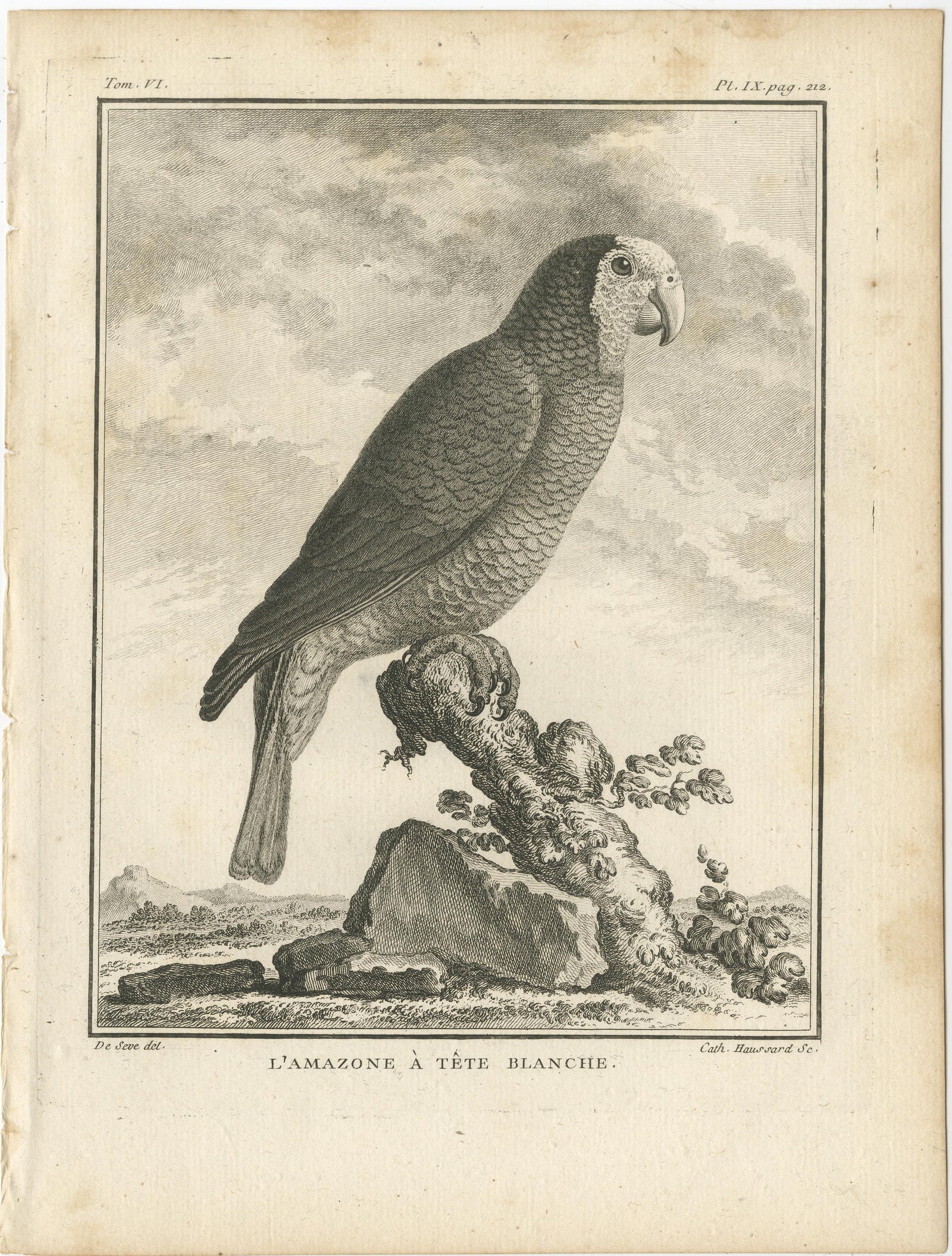
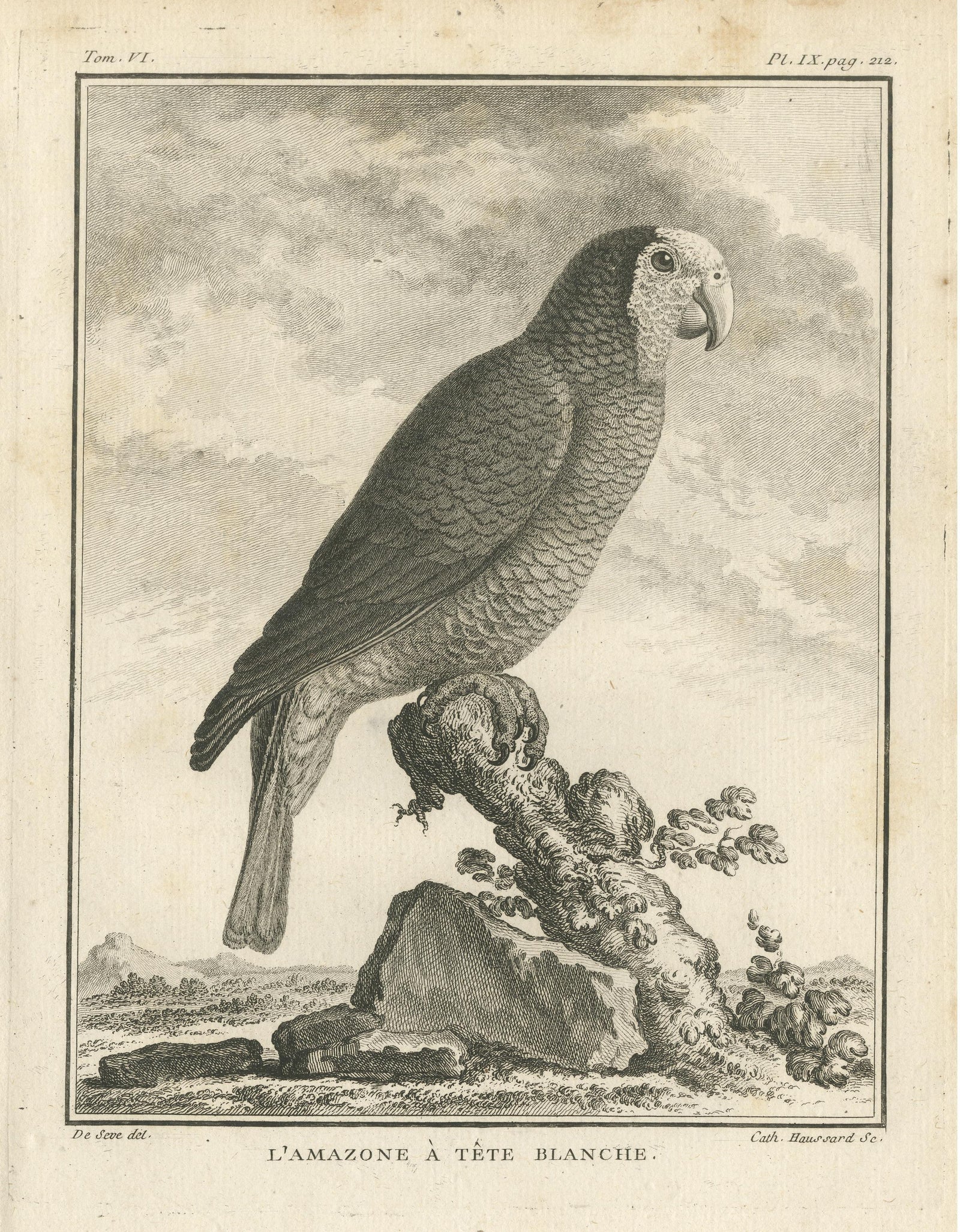
The white-fronted Amazon parrot, an original copper engraving from Buffon's Histoire Naturelle, générale et particulière, the great natural history issued with the Cabinet du Roi between 1749 and 1804. The sheet is lettered "L'Amazone à Tête Blanche" and marked "Tom. VI." and "Pl. IX. pag. 212" at the top. The artist is credited as De Seve at lower left and the engraver as Cath. Haussard at lower right.
The parrot perches on a gnarled tree stump beside a rock, its body drawn in dense scale-like feathering, with a pale cap and bare patch around the eye and a long, graduated tail. A few leaves hang at the right, and soft clouds and a low horizon of rocks close the composition. The plate is uncolored, printed in black on laid paper.
Buffon's Histoire Naturelle, in 44 volumes, was an ambitious project of the Enlightenment that tried to set down everything then known about the natural world and to spread that knowledge in popular form.